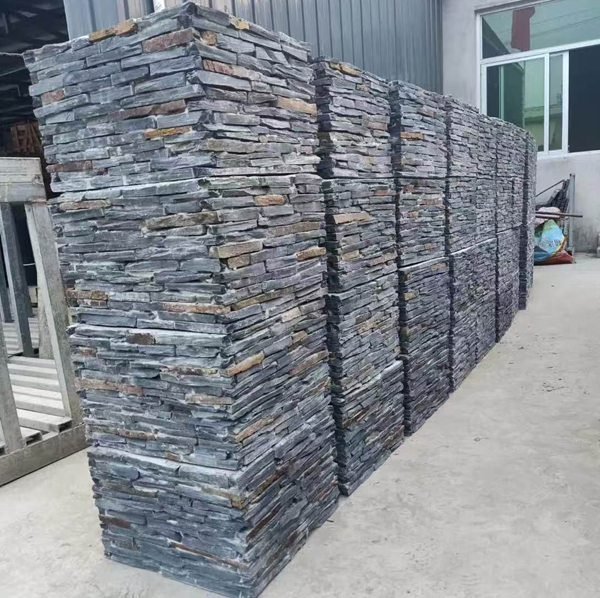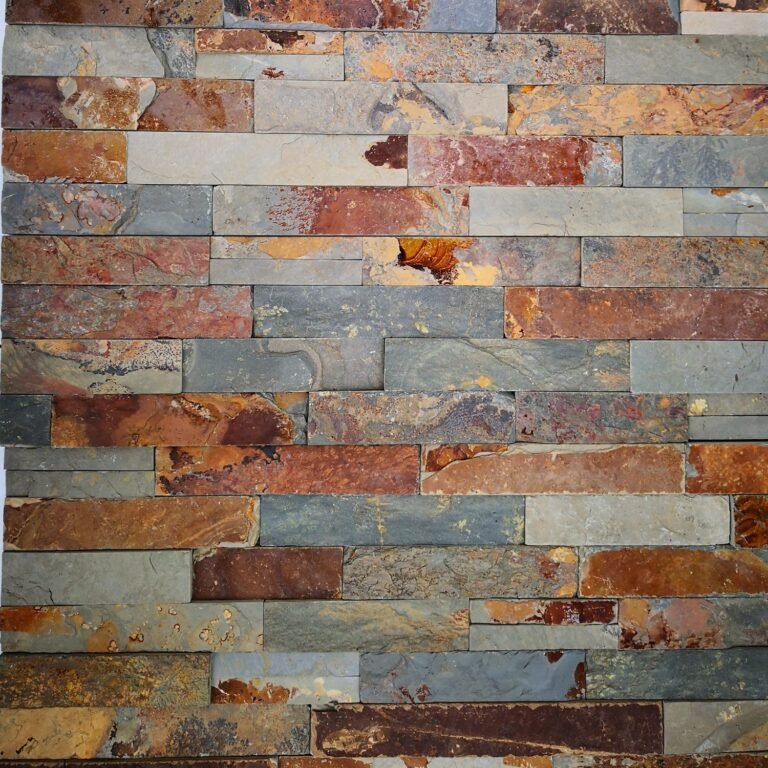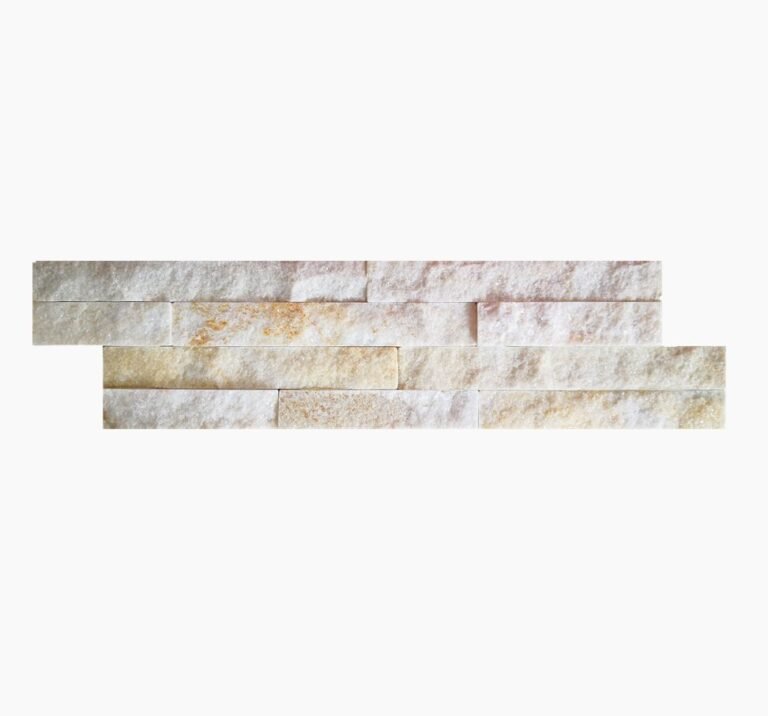
Veneer panels fail on freezing walls for one reason: trapped water expands. Every autumn-winter cycle turns absorbed moisture into ice, and ice pushes apart the surface layer until the face spalls, chips, and blooms with efflorescence. The fix is not thicker panels. It is denser stone with less absorption in the first place.
Top Stone Panels cuts exterior veneer in natural slate and quartzite from quarries in Hebei, China, and ships it to colder markets across North America and Europe. This guide covers the material data that survives real winters, the formats worth specifying, and the installation order that keeps water out of the wall system.
- Dense slate and quartzite tolerate -30°C to +50°C cycling; the panel’s water absorption rate, not its thickness, decides freeze-thaw survival.
- Interlocking Z-panels add thermal-expansion resistance for large exterior elevations.
- Factory L-corner kits and infrared CNC cuts reduce on-site waste by roughly 20% and corner labor by about 50%.
- Marine-grade epoxy, cement, or mesh backing each suit different jobsites; none replaces a drained and ventilated wall.
- Orders run on a one 20GP container minimum, 20-25 working days production, with physical samples in 1-3 days.
Why Cold Climates Kill the Wrong Cladding
Freeze-thaw damage is a water-storage problem. Stone with open pores or micro-cracks lets moisture soak in ahead of a hard freeze. When the temperature drops, the water expands about 9% by volume as it turns to ice, and that expansion writes itself as surface spalling and hairline fissures. One deep thaw cycle can do more visible damage than a decade of rain on a dry wall.
The countermeasure is simple: pick stone that does not drink. Dense quartzite and slate have tightly packed mineral grains and low absorption, so there is little water inside when the freeze arrives. That is why these two materials carry the cold-climate work on most of the buildings you see with stone on the front elevation.
This does not mean every dark rock works. Porous sandstone, weathered flagstone, and cast concrete units absorb noticeably more moisture. On a freezing facade they spall, and the repair bill lands on whoever specified the wall. Our freeze-thaw resistance guide digs into the mechanism and the density math.
One more fact to carry into a spec meeting: thickness does not rescue a porous panel. A 4cm porous slab freezes differently than A thin dense one, but both spall if internal moisture expands. Dense and thin plus a moisture-management wall beats thick and thirsty every winter.
Slate and Quartzite: Best Stones for Freezing Climates
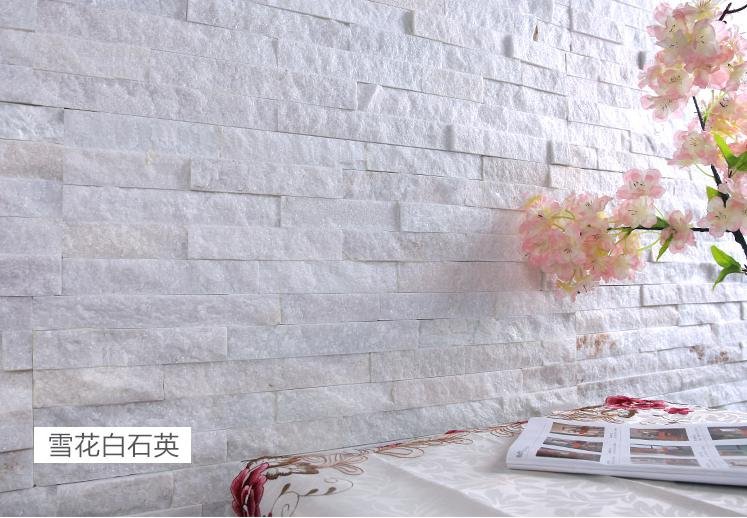
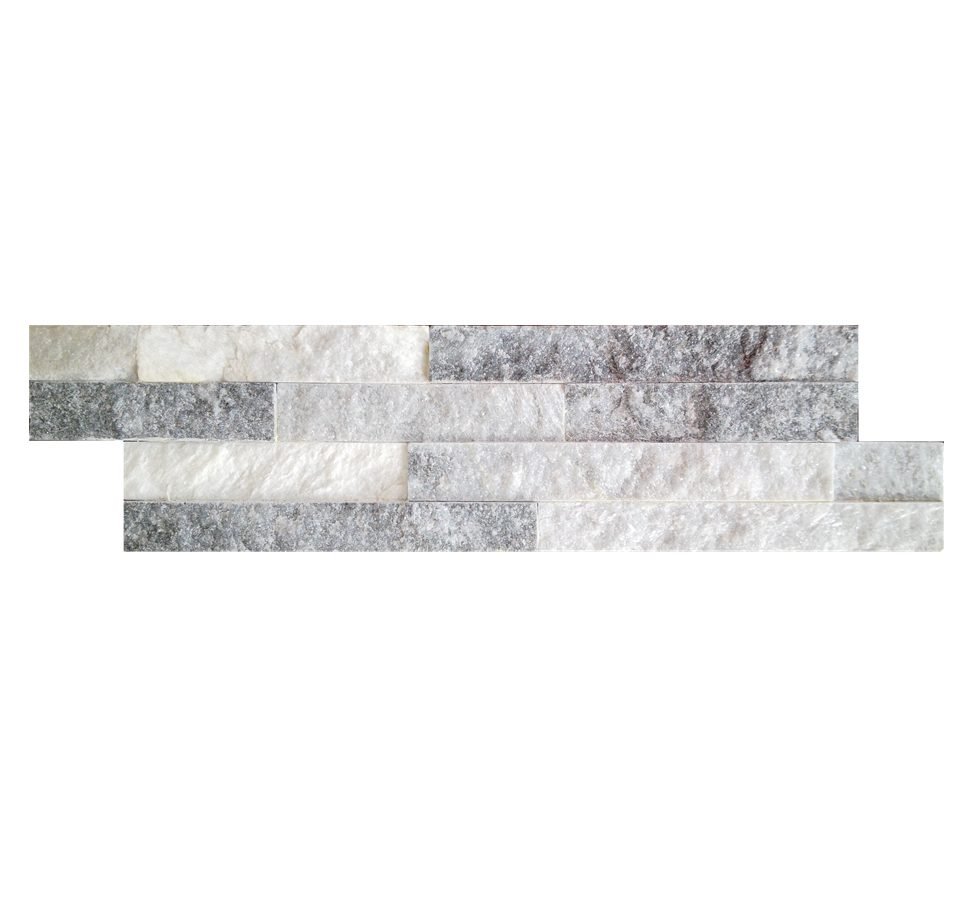
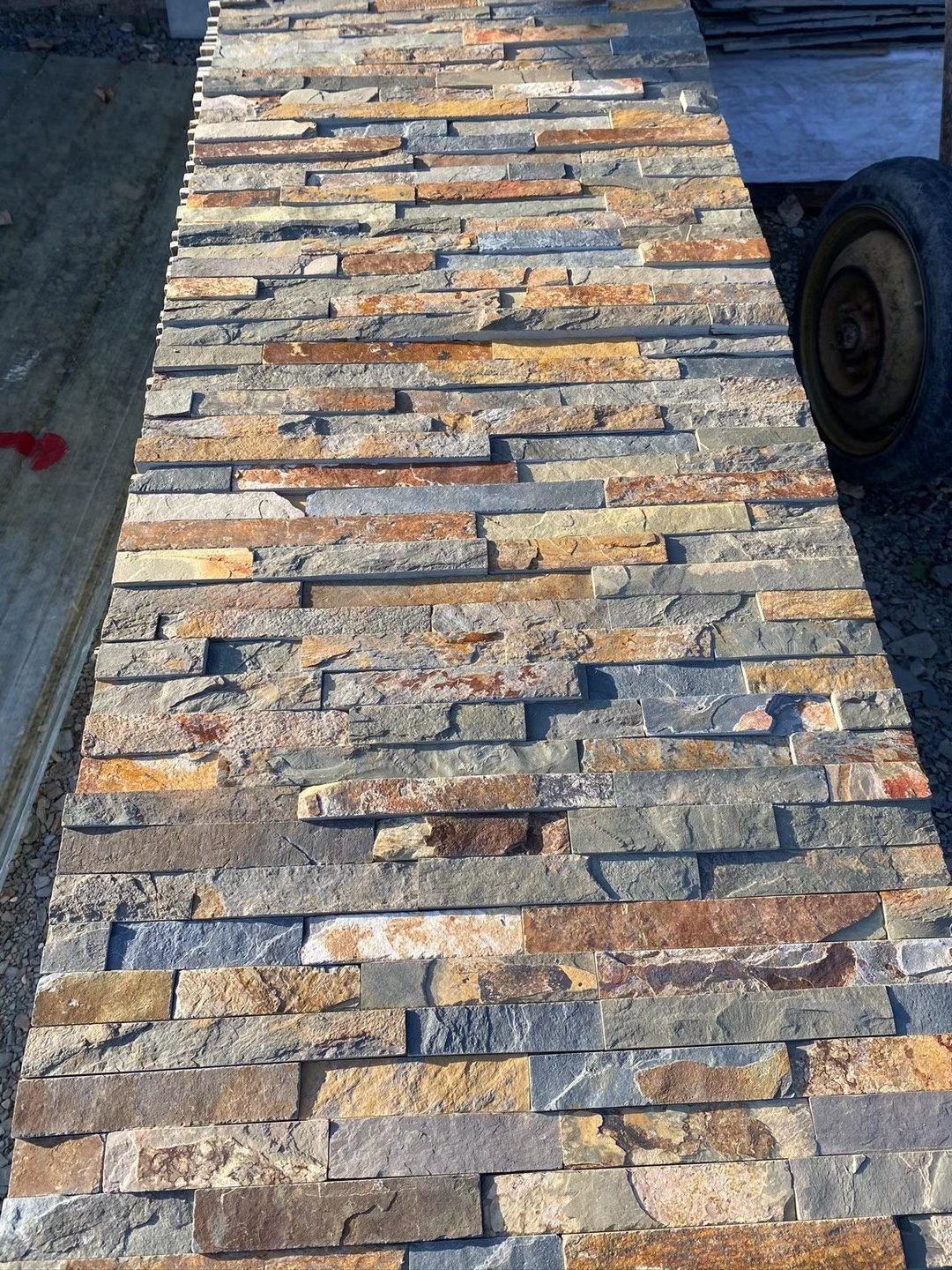
Slate and quartzite are the two workhorses of cold-climate cladding because they combine density with a practical appearance. Slate splits into layered, matte sheets with natural variation; quartzite is harder, denser, and carries crystalline sparkle that catches low winter light. Both are 100% natural, so the color is mineral content rather than a coating that fades or peels.
Their place in the line is straightforward. Slate brings a rustic-modern texture at a competitive FOB price point. Quartzite brings the highest density and lowest absorption for the harshest microclimates, including coastal zones where salt spray compounds the freeze problem.
| Property | Natural Slate | Quartzite |
|---|---|---|
| Absorption | Low, layered grain | Very low, dense |
| Freeze-thaw tolerance | -30°C to +50°C cycling | -30°C to +50°C cycling |
| Look | Matte, layered, varied | Dense with light sparkle |
| Typical formats | 15x60cm stacked, split face | 36x10cm ledgestone, strips |
| Best for | Rustic-modern facades | Modern and coastal builds |
Sandstone and marble stay in the catalog because they suit warm, dry and interior work. Do not put a high-absorption stone on a freezing elevation unless you accept the spalling risk. If you are comparing natural veneer against cast stone, our natural vs manufactured stone comparison lays out the density and porosity differences that matter in winter.
What to Check Before You Spec a Cold-Climate Wall
Specifiers keep missing the same three numbers. Absorption, density, and freeze-thaw test evidence. These three tell you whether a panel will survive your specific winters, and they all come from the supplier’s test documentation rather than its brochure.
- Water absorption. Lower is better for freezing faces. Ask the factory for the absorption figure on the exact stone and finish you are ordering, not a generic catalog sheet.
- Density. Dense mineral structure is what squeezes the pore space. Quartzite sits at the dense end of the natural-stone range.
- Freeze-thaw evidence. Ask how the supplier validates -30°C to +50°C claims. A test report, a long cold-market reference install, or both.
- Backing adhesion. On exterior walls the bond between stone, mesh, cement, or epoxy is part of the weather-tightness story.
The Natural Stone Institute publishes the standard test-method context that makes absorption and freeze-thaw reports comparable across suppliers. Use it to audit whatever report lands on your desk.
Panel Formats That Handle Freeze-Thaw Cycles
Format choice changes how the wall reads and how fast it goes up. Each of the main exterior formats has a cold-climate role.
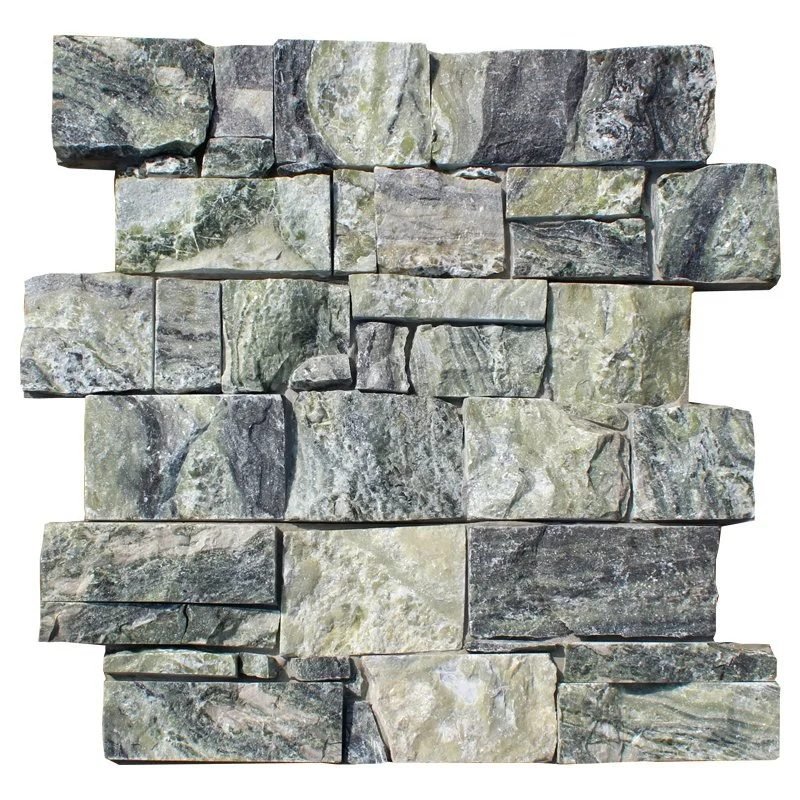
Stacked stone panels (15x60cm / 15x55cm). The heavy, textured look. Panels arrive with split faces, and factory L-corner kits wrap outside corners. This is the dominant choice for feature walls and gables where texture is the selling point.
Thin ledgestone (36x10cm ultra-thin). A clean linear rhythm and the lightest weight on the structure. It works across full facades and over brick retrofits because it adds little dead load.
Interlocking Z-panels (20x55cm / 15.2x61cm). The male-female interlock handles thermal expansion along long elevations and stays aligned in cold weather. It is the workhorse for commercial and whole-wall cladding jobs.
| Format | Size | Cold-Climate Role | Typical Use |
|---|---|---|---|
| Stacked panels | 15×60 / 15x55cm | Textured feature walls | Villas, gables, fireplaces |
| Thin ledgestone | 36x10cm | Light linear facades | Full walls, retrofits |
| Z-panels | 20×55 / 15.2x61cm | Thermal-expansion control | Commercial elevations |
| Loose split strips | Random lengths | Vertical accents | Detail trimming |
The interlocking Z-panels and the classic stacked stone panels are the two families most specified for cold exterior elevations, and both take factory L-corner kits.
Backing Systems and Outdoor Durability
The backing is structural, not decorative. It holds the split stone together, distributes point loads, and determines how the panel takes mortar or mechanical fasteners. Three systems ship from the factory, and each earns its place.
Marine-grade epoxy bond. The strongest bond, used where panels face heavy load or high humidity. Epoxy-backed panels tolerate the repeated moisture swings of a freezing exterior better than purely cement-set alternatives.
Cement backing. A rigid, familiar face for mortar setting. It is the standard for stacked and heavy formats and behaves predictably with traditional installation crews.
Mesh backing. Lightweight and flexible, used on thin veneer and interlocking systems. It is fast to set and keeps thin strips aligned.
All three are factory-applied during production, which is where consistency is won. The full epoxy bond vs cement backing comparison covers the engineering trade-offs in detail.
Drainage, Air, and Weather Barriers
Stone panels are the last layer of a four-part wall, and the first three layers earn their keep in winter. From the wall sheathing outward the order is: a weather-resistive barrier, a drainage plane or air gap, then the veneer. Joints stay open and tooled so moisture escapes instead of pooling behind the stone.
This is the number one cold-climate installation error. Crews that mortar the veneer tight against the wall with no drainage gap trap condensation and meltwater behind the stone. One hard freeze then turns that trapped film into ice pressure against the back of the panels. The stone spalls from the inside, where nobody sees it until it is too late.
Flashing at the base, weep openings at the bottom, and sealed terminations at windows and doors all route water out of the system. Our waterproofing behind exterior veneer guide spells out the barrier sequence installers should follow on freezing-climate projects.
Building a cold-climate stone facade?
Request physical samples of slate and quartzite before you commit a container. Samples ship in 1-3 days; production runs 20-25 working days at a one 20GP container minimum.
Slate | Quartzite | L-corner kits | FOB Xingang terms
Thermal Shock, UV, and Coastal Salt
Cold climates hit stone with more than ice. South-facing elevations in a freezing region can see a surface temperature swing of several dozen degrees in a single day — bright sun on dark stone at -15°C air temperature. Dense stone absorbs that thermal shock because it has no trapped moisture to expand and no coating to crack.
UV behaves the same way. Because the color is mineral, ultraviolet light cannot fade or yellow the face. A slate or quartzite wall installed this year still carries its original tone a decade later, which is the quiet advantage nobody puts on the sticker.
Coastal cold regions add salt spray to the freeze problem. Salt accelerates spalling on porous surfaces and corrodes metal flashings. The same dense, low-absorption stone that survives freezing also shrugs off salt, which makes slate and quartzite the sensible pair for harbor towns and lakefront builds.
Cost Factors in a Cold-Climate Build
Budget conversations go wrong when buyers compare only the FOB price per square meter. Two other numbers decide what the installed wall really costs: what the panels measure after cutting and how the corners are handled.
Stone type is the first variable. Quartzite prices differently from slate in the same format, and premium colors such as sparkle finishes carry their own line. Format and backing move the number too, and a mixed container that combines stacked panels with ledgestone spreads the fixed freight cost across more product lines.
The silent costs are waste and labor. Factory L-corner kits eliminate much of the on-site corner cutting, and infrared CNC cutting holds panel dimensions that reduce field waste by roughly 20%. A slightly higher FOB per panel can land cheaper installed than a bargain panel that eats blades and labor on site. The full stone cladding cost breakdown walks through FOB, freight, and landed cost line by line.
What We Check at the Factory
Quality control on exterior panels runs in three steps, and each one is visible to buyers.
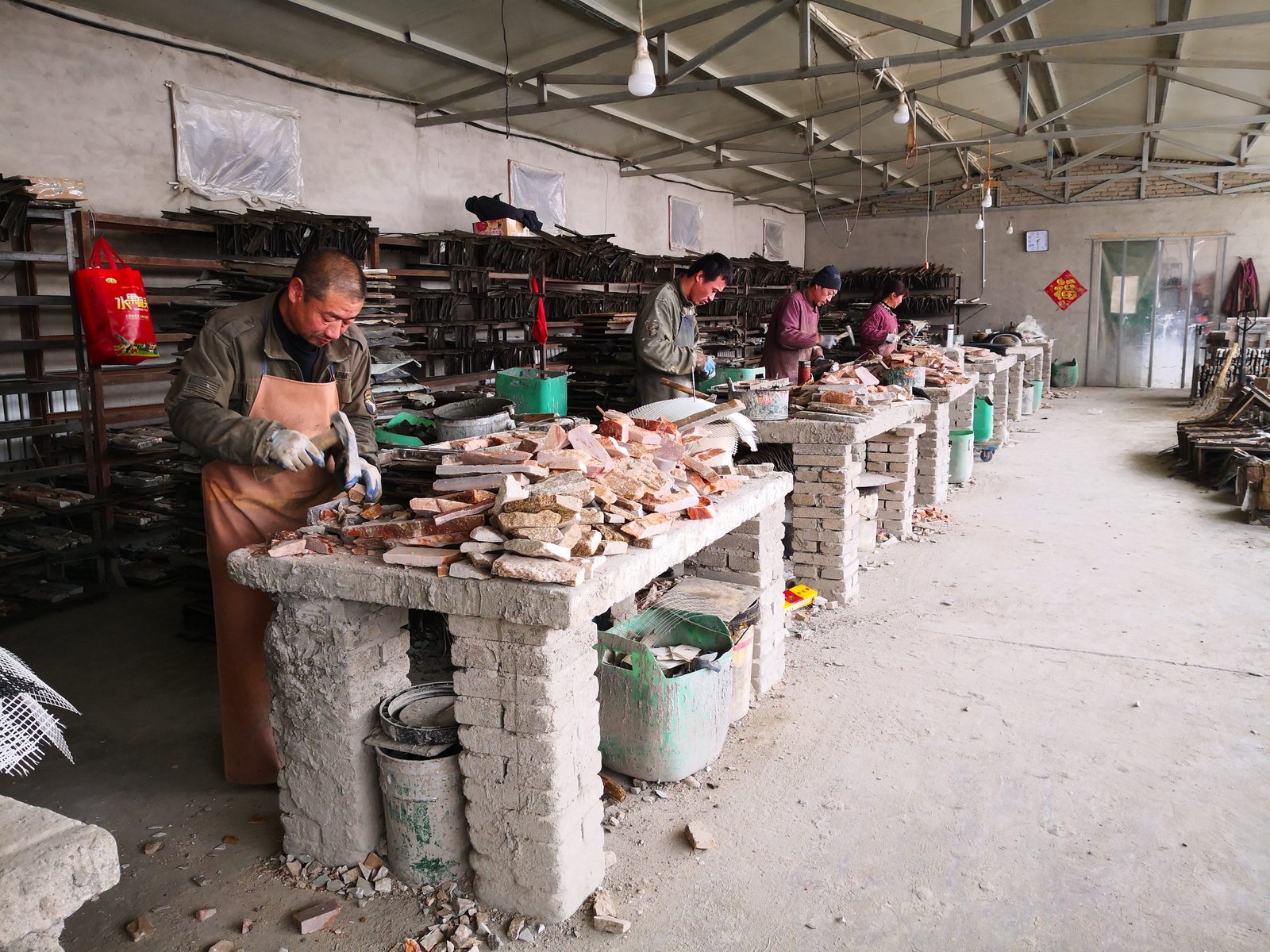
- Raw material selection. Blocks are chosen from the same vein to keep color batches stable, then split to expose the working face.
- In-process recheck. Thickness and edge tolerance are measured after cutting; infrared CNC diamond-blade cutting holds the panel dimensions that reduce on-site waste by roughly 20%.
- Final inspection. Panels are matched for tone, checked for cracks or delamination, and packed under the zero-breakage protocol before the container closes.
Those three steps are exactly the 3-step QC process this site documents for every product line, and they apply to every shipped format. Buyers can also request a pre-shipment inspection report video and physical samples for independent lab testing.
Sourcing, Samples, and Shipping Lead Times
Cold-climate buyers usually plan in seasons, and the timeline math is simple. Physical samples ship in 1-3 days, so tone and finish approval runs first. Standard production takes 20-25 working days, and a first order with custom carton printing runs 25-30 days. A container ordered in spring lands long before the winter install window closes.
The commercial terms are standard for the trade. FOB Xingang / Tianjin is the baseline, with EXW, CIF, and DDP available, and payment runs 30% T/T deposit with the 70% balance before shipment. Minimum order is one 20GP container, which covers roughly 26.5 metric tons of mixed panels depending on format.
Documentation travels with the order: certificate of origin, ISPM 15 fumigation certificate, and the pre-shipment inspection report video. The exterior specification guide on this site carries the full checklist buyers use before placing the container order.
Maintenance in Snow and Ice Regions
Winter maintenance is a short list, and most of it is about staying off the stone. Shovels and snowblowers scrape faces and chip edges, so keep tools a few centimeters off the cladding. De-icing salt splashes onto the lower courses; a spring rinse with plain water clears the residue before warm weather bakes it in.
Inspect the joints and caulk lines once after thaw. A hairline crack in a sealant joint at the base flashing lets meltwater behind the wall system, and that is the one failure that winter hides until spring. Repair loosened joints promptly, and leave face stones alone — split-face stone does not need the kind of brushing that would wear a tumbled finish.
Efflorescence, the white bloom that can appear on new masonry, usually washes away in the first rain season. Dense slate and quartzite resist it because they hold little moisture. The maintenance article on this site covers the full natural stone veneer care routine, including sealer decisions and seasonal checks.
Frequently Asked Questions
Can exterior stone veneer survive freezing winters?
Yes, when it is dense natural slate or quartzite. These stones tolerate -30°C to +50°C cycling because they absorb little moisture, so there is almost no water inside to freeze and expand.
How thick is cold-climate stone veneer?
Applied depth runs roughly 1.5-3cm, from 36x10cm ultra-thin ledgestone to 15x60cm stacked panels. Density, not thickness, is what protects the wall from freeze-thaw damage.
What is the difference between slate and quartzite veneer?
Slate splits into a matte, layered face with natural color variation; quartzite is harder and denser with a subtle sparkle. Both rate the same freeze-thaw tolerance, and either works for cold facades.
Do exterior stone panels need a special barrier behind them?
Yes. A weather-resistive barrier, a drainage gap, flashing, and weep openings all sit behind the veneer. The stone sheds water; the wall system manages the moisture that gets past it.
What is the minimum container order for cold-climate veneer?
One 20GP container, with production in 20-25 working days and physical samples in 1-3 days. FOB Xingang terms apply with 30% T/T deposit and 70% before shipment.
Conclusion
Cold climates are the honest test for cladding. Water freezes, moisture hides behind panels, and the wrong stone reveals itself in spalled faces and efflorescence. Dense slate and quartzite, drained and ventilated wall systems, and factory-tight panels close out most of the winter failure modes before the first frost.
- Specify low-absorption slate or quartzite for freezing elevations; density beats thickness.
- Use stacked panels for texture, ledgestone for light linear work, and Z-panels for long commercial runs.
- Keep the barrier-and-drainage sequence behind the stone; it decides winter survival.
- Order samples in 1-3 days, plan production at 20-25 working days, and hold the one 20GP container minimum.
Set slate and quartzite samples side by side at the same sun angle and let a full winter sell the difference. The stone that stays dry stays fixed to the wall.