This comparison cuts past the marketing gloss. We break down material origin, structural performance, weathering behavior, lifecycle cost, and installation logistics so you can spec the right product for the project in front of you, not a hypothetical one.
What Is Natural Stone Veneer?
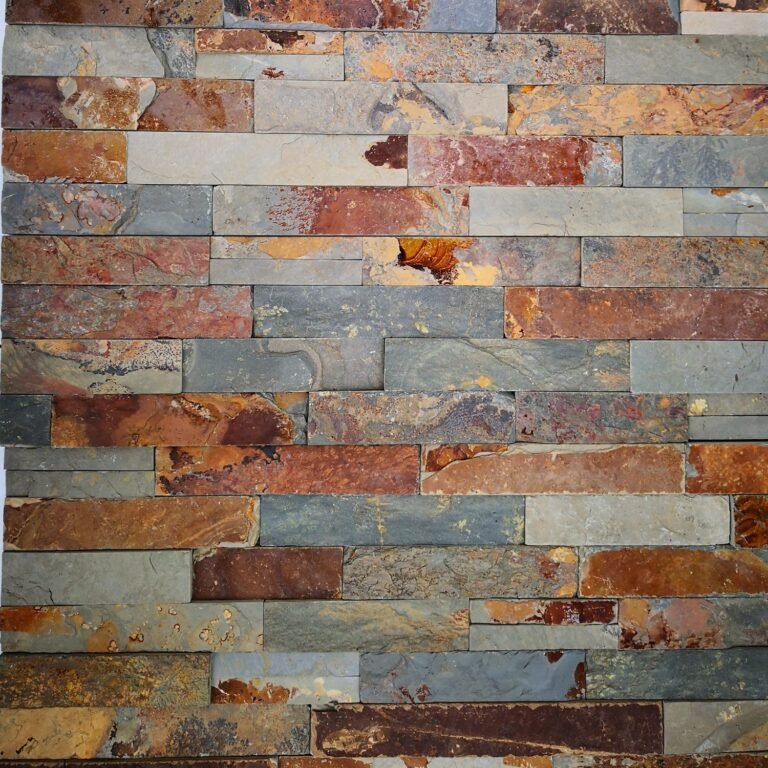
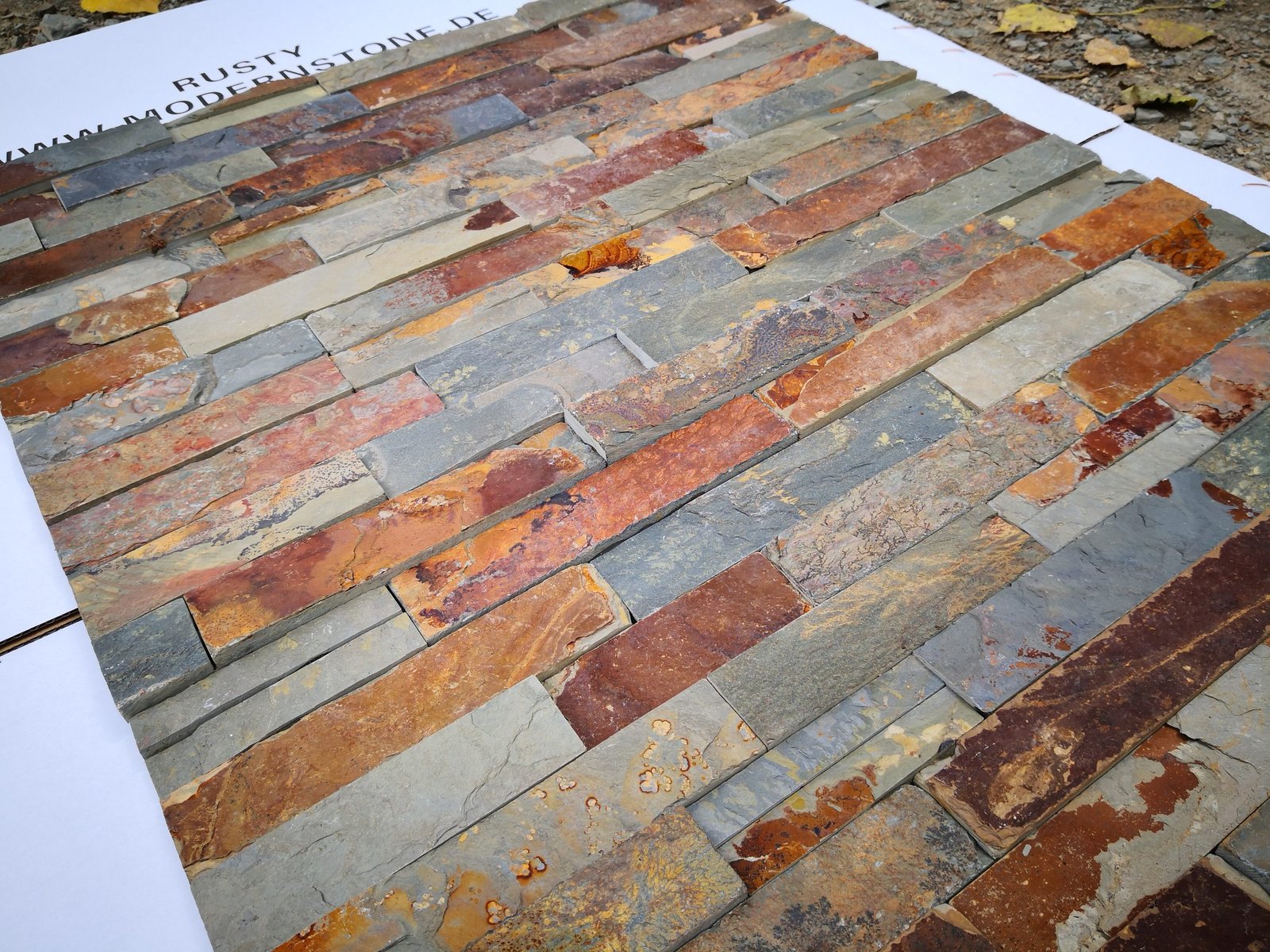
Natural stone veneer is real stone. Quarried from geological deposits, cut into thin panels or strips, and finished for direct adhesion to wall substrates. There is no synthetic base, no cement matrix, no pigment injection. What you see on the face of the panel is the same mineral composition that runs through the entire thickness.
The primary materials used in commercial-grade natural stone veneer are:
- Slate — dense, fine-grained metamorphic rock with natural cleft planes that produce a textured, layered face. Low water absorption (typically under 0.5%).
- Quartzite — recrystallized sandstone with exceptional hardness (Mohs 7). Resists abrasion and chemical etching. High quartz content gives it a subtle luminosity under direct light.
- Sandstone — sedimentary rock with warm, earthy tones. Slightly more porous than slate or quartzite but still performs well in exterior applications when properly sealed at the factory level.
- Marble — metamorphic limestone with distinctive veining. Primarily used for interior feature walls and lobby cladding where the visual drama of natural veination is the design goal.
Modern natural stone veneer is not the heavy, thick-cut masonry of previous decades. Precision cutting technology — specifically infrared CNC diamond blade systems — allows factories to produce panels as thin as 1-2 cm while maintaining structural integrity across the full face. This matters for two reasons. First, thinner panels weigh less, reducing structural load on the substrate. Second, thinner cuts mean more square meters per shipping container, which directly affects your landed cost per unit.
Top Stone Panels produces several formats of natural stone veneer from its own quarries in Hebei Province:
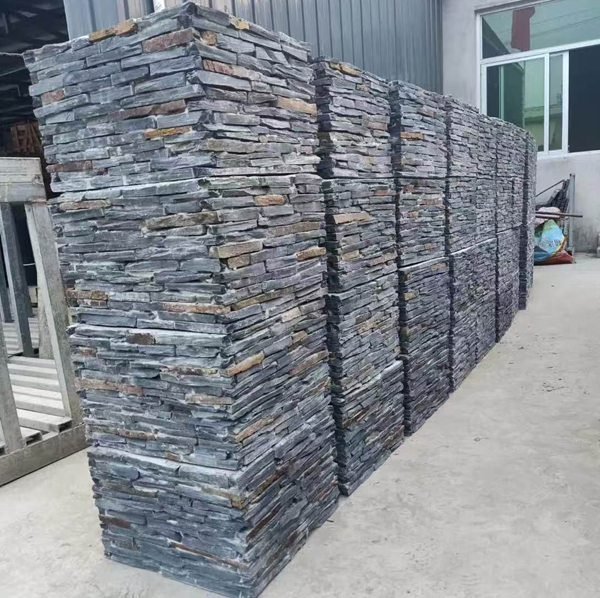
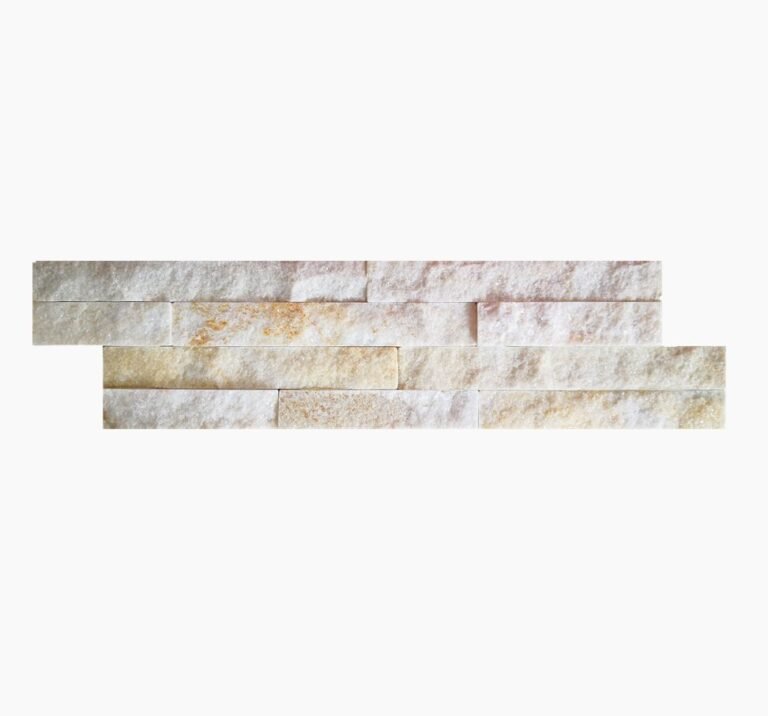
- Stacked Stone Panels (15x60cm / 15x55cm with L-corners) — pre-assembled ledger panels with marine-grade epoxy bond. See the stacked stone product page for specifications.
- Z-Panels (20x55cm / 15.2x61cm) — interlocking male-female connection panels for seamless coverage. View Z-Panels details.
- Thin Ledgestone (36x10cm) — narrow-format strips for linear design patterns. Thin ledgestone specs.
- Thin Stone Veneer (random strips) — loose-format pieces for organic, freeform installation. Thin stone veneer range.
What Is Cultured Stone?
Cultured stone — also called manufactured stone veneer or cast stone — is a factory-produced building material. The base composition is Portland cement mixed with lightweight aggregates (expanded shale, perlite, or pumice) and iron oxide pigments. The mixture is poured into rubber or polyurethane molds taken from real stone surfaces, then vibrated to eliminate air pockets and cured in a controlled environment.
The result looks like stone at a glance. Under closer inspection, the differences become apparent.
Cultured stone has been on the market since the 1960s and occupies a legitimate position in cost-sensitive residential construction. It is lightweight (typically 30-45 kg/m²), easy to cut with a standard masonry blade, and widely available through distribution networks in most North American and European markets.
However, cultured stone is fundamentally a concrete product. Its performance ceiling is the performance ceiling of Portland cement.
Key limitations B2B specifiers should document before writing it into a project schedule:
- Color is surface-applied pigment. Chips, scratches, and cut edges expose the grey cement substrate beneath.
- UV exposure degrades iron oxide pigments over 10-15 years, producing noticeable fading on south- and west-facing elevations.
- Freeze-thaw performance depends on the air-entrainment quality of the cement mix, which varies by manufacturer and batch.
- Fire rating is typically Class A for the product itself, but the rating can be compromised if the installation adhesive or scratch coat is not equally rated.
- Warranty periods run 20-50 years depending on the manufacturer, which signals an expected service life well short of the building lifecycle for most commercial structures.
Natural Stone Veneer vs Cultured Stone: Head-to-Head Comparison
The table below compares both materials across the criteria that actually affect specification decisions on commercial and high-end residential projects.
| Criteria | Natural Stone Veneer | Cultured Stone |
|---|---|---|
| Material Origin | Quarried natural rock (slate, quartzite, sandstone, marble) | Portland cement + lightweight aggregates + iron oxide pigments |
| Weight | 35-50 kg/m² (depending on stone type and panel thickness) | 30-45 kg/m² |
| Panel Thickness | 1-3 cm (CNC precision cut) | 2-5 cm (mold-cast) |
| Durability / Service Life | 75+ years (geological material, no degradation mechanism) | 20-50 years (cement matrix degrades over time) |
| Freeze-Thaw Resistance | -30°C to +50°C tested and rated | Varies by manufacturer; depends on air-entrainment quality |
| UV Stability | Inherent — mineral color does not fade under UV exposure | Pigment fading begins at 10-15 years on sun-exposed elevations |
| Fire Rating | A-grade (non-combustible mineral material) | Class A product rating; system rating depends on full assembly |
| Salt Spray Resistance | Rated for coastal and marine environments | Salt crystallization can accelerate surface spalling |
| Color Consistency | Natural geological variation (no two panels identical) | Batch-consistent color; pattern repetition visible across large surfaces |
| Chip / Scratch Appearance | Same color and texture throughout the full thickness | Exposed grey cement substrate visible at damage points |
| Upfront Cost (material only) | $15-40/m² FOB (depending on stone type and format) | $10-30/m² (domestic retail price) |
| Lifecycle Cost (50-year horizon) | Single installation, minimal maintenance | 1-2 replacement cycles, periodic resealing |
| Installation | Mortar bed or adhesive; pre-assembled panels speed coverage | Mortar bed or adhesive; individual pieces placed by hand |
Durability and Weathering Performance
The single largest gap between natural stone veneer and cultured stone is weathering performance. This is where the mineral composition of quarried rock outperforms the chemical composition of manufactured cement in measurable, testable ways.
Freeze-thaw cycling is the primary failure mechanism for exterior cladding in cold climates. Water penetrates the surface, freezes, expands by approximately 9%, and creates micro-fractures. Natural slate and quartzite resist this because of extremely low porosity — slate absorbs less than 0.5% water by weight. With minimal water ingress, there is minimal ice crystal formation. Top Stone Panels products are certified for continuous operation from -30°C to +50°C.
Cultured stone is inherently more porous, absorbing 5-10% water unless a surface sealer is applied. That sealer degrades under UV and requires reapplication every 3-5 years.
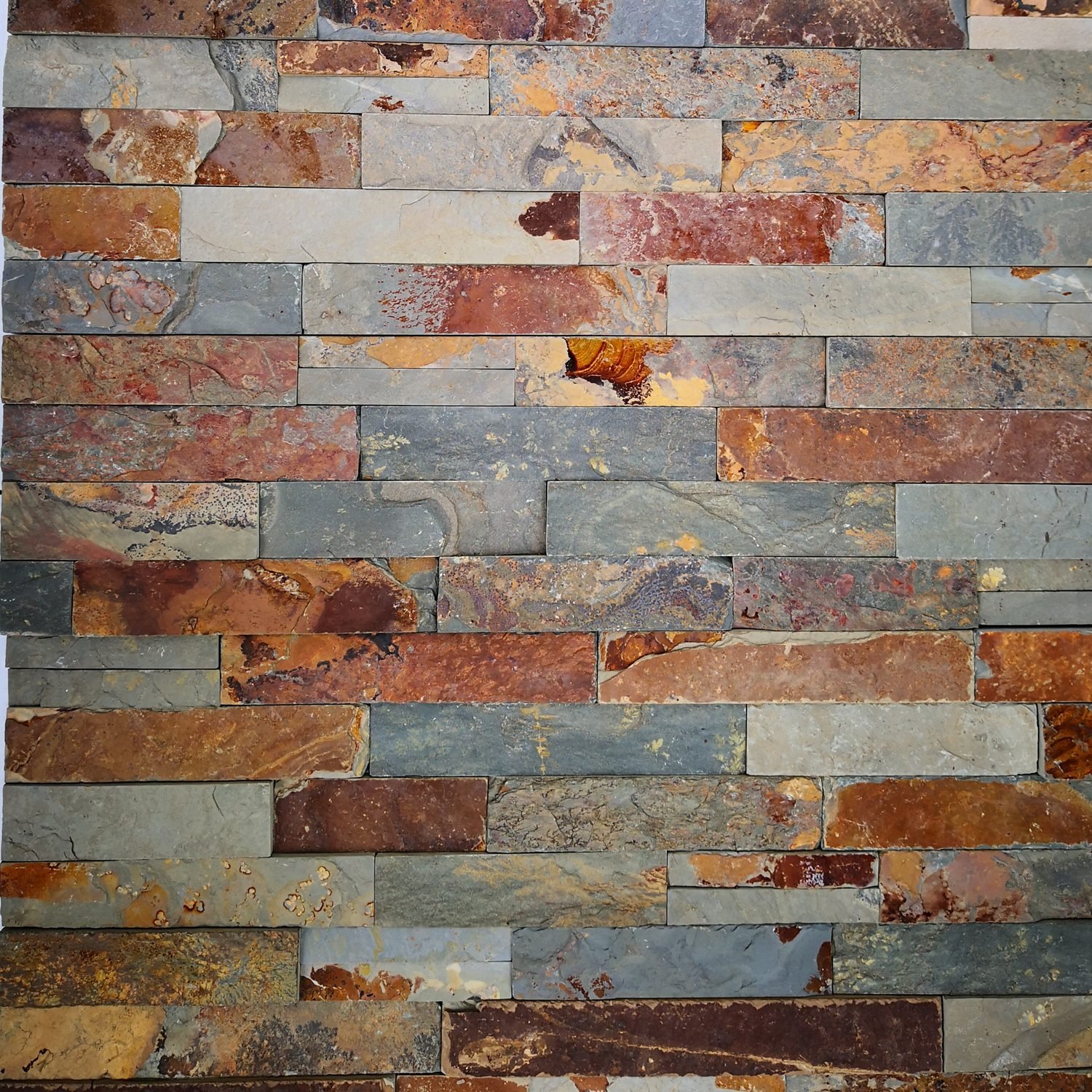
UV exposure is the second major factor. Natural stone color comes from mineral oxides integral to the rock — hematite in red slate, chlorite in green slate. These minerals do not bleach under sunlight.
Cultured stone color relies on surface-applied iron oxide pigments. Sustained UV on south- and west-facing walls causes progressive fading, which most manufacturers exclude from warranty coverage as “normal weathering.”
Salt spray matters for coastal projects and structures exposed to de-icing salts. Top Stone Panels natural stone veneer carries a salt spray resistance rating. Cultured stone is more vulnerable because salt crystals form inside the porous cement matrix, creating internal pressure that leads to spalling.
Aesthetics and Color Authenticity
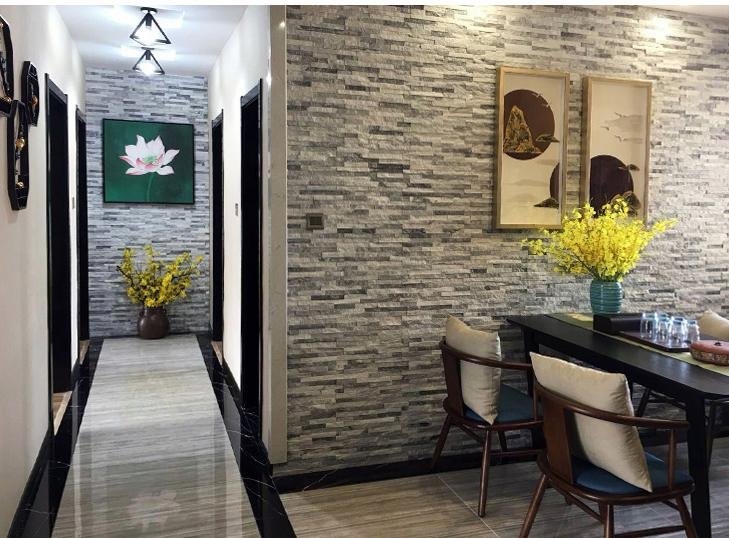
The visual gap between natural stone veneer and cultured stone narrows every year as mold-making improves. From three meters away, a well-made cultured stone installation can be convincing. The differences appear up close, when the light changes, or when the surface area exceeds about 20 square meters.
Natural stone carries geological variation that is impossible to manufacture. Each panel contains mineral deposits, oxidation patterns, and fracture planes formed over millions of years. Install 100 square meters of natural slate veneer and no two adjacent panels look identical.
Cultured stone uses molds from real stone surfaces, which means the same profile repeats across the production run. On a 200-square-meter facade, the repetition becomes visible.
Color depth is the other visual tell. Natural stone color runs through the full panel thickness. A chip reveals the same hue as the face. Cultured stone color is typically 3-5 mm deep; below that, the material is grey cement. Every cut during installation exposes that core.
For projects where visual authenticity is a primary design driver — boutique hotels, high-end residential lobbies, restaurant interiors, and premium retail facades — natural stone veneer is the material that architects consistently specify. The exterior wall design ideas guide illustrates seven project typologies where natural stone cladding delivers a design outcome that manufactured alternatives cannot match.
Cost Analysis: Upfront Price vs Long-Term Value
The budget conversation around natural stone veneer vs cultured stone usually stops at the material line item. That is a mistake for any project with a planning horizon longer than 15 years.
Upfront material cost: Cultured stone wins this category. Manufactured stone veneer retails for $10-30 per square meter in North American and European markets. Natural stone veneer from Top Stone Panels ships FOB Xingang at $15-40 per square meter depending on stone type and format. After freight and customs, the landed cost differential narrows but does not disappear.
Installation cost: Roughly comparable. Pre-assembled natural stone panels (such as stacked stone ledger panels) actually install faster than individual cultured stone pieces because the ledger format covers more area per placement action.
Maintenance over 50 years: This is where the economics flip. Cultured stone requires resealing every 3-5 years on exterior walls ($3-8/m² per cycle). Over 50 years, that is 10-16 resealing cycles. At a 20-50 year product lifespan, a 50-year building horizon also means at least one full cladding replacement.
Natural stone veneer requires no resealing for color or UV protection. Periodic cleaning with low-pressure water is typically the only maintenance needed.
Total 50-year cost: When you sum material, installation, maintenance, and replacement, natural stone veneer often costs less per year of service than cultured stone on commercial projects.
Installation Considerations for Each Type
Both natural stone veneer and cultured stone install on the same basic substrate: structurally sound wall (concrete, CMU, cement board, or framed sheathing with weather barrier) prepared with a scratch coat or polymer-modified adhesive.
Cutting: Cultured stone cuts easily with a standard masonry blade. Natural stone veneer requires a wet diamond blade for clean cuts, especially on quartzite (Mohs 7 hardness). Minor equipment difference, but it affects daily output.
Weight: The difference is smaller than specifiers assume. Thin-cut natural panels (1-2 cm) are in the same weight range as cultured stone. Substrate requirements are effectively identical.
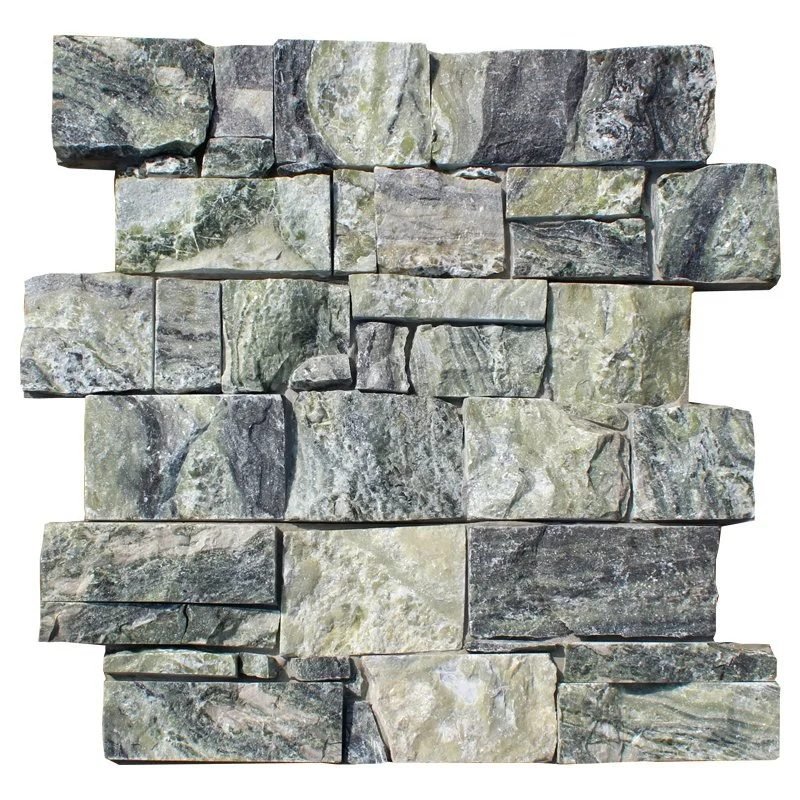
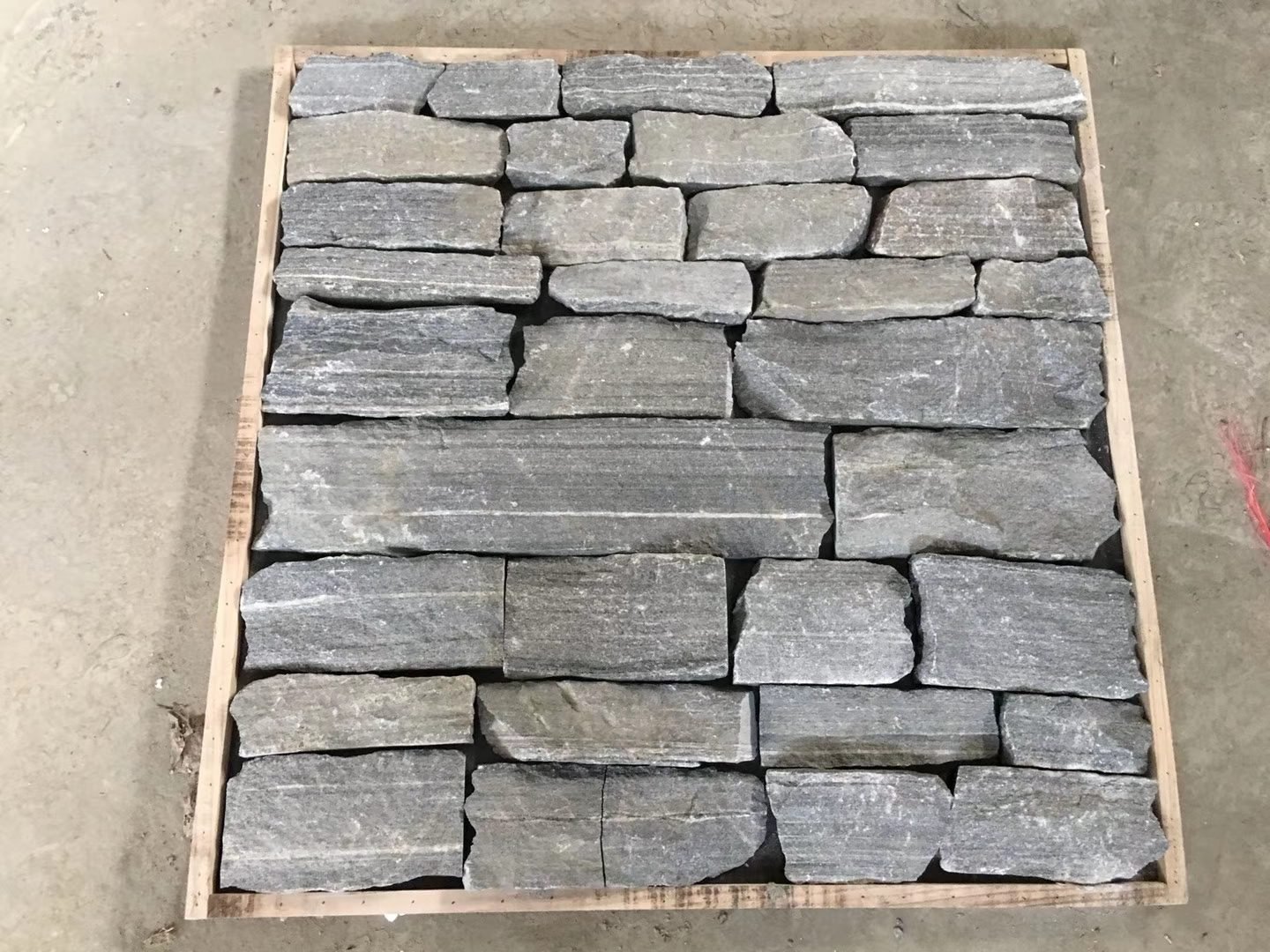
Panel format advantage: Pre-assembled natural stone panels offer significant installation speed over individual cultured stone pieces. A stacked stone panel at 15x60cm covers more area per placement than hand-setting individual manufactured stones. On large commercial facades, the labor savings can offset higher material cost.
Corners: Top Stone Panels supplies L-corner pieces for stacked stone ranges, wrapping external corners cleanly without field-cutting. Cultured stone corners are typically mitered on-site, exposing the grey cement core unless a touch-up kit is applied.
For a detailed installation walkthrough, the stacked stone veneer installation guide covers substrate preparation, adhesive selection, layout planning, and finishing techniques step by step.
When to Choose Natural Stone Veneer
Natural stone veneer is the right specification when the project demands long-term performance without replacement cycles. Specific scenarios where it outperforms cultured stone on both technical and financial criteria:
- Commercial exterior cladding in climates with freeze-thaw cycles. The -30°C to +50°C rating means the material performs from northern Canada to the Middle East without climate-specific product selection.
- Coastal and marine projects. Salt spray resistance is inherent to the mineral composition, not a surface treatment that degrades.
- Hospitality and premium retail facades where visual authenticity directly affects brand perception and customer experience. Boutique hotels, fine-dining restaurants, and luxury retail flagships.
- Fire-rated assemblies where an A-grade non-combustible cladding material is required by code. Natural stone meets this requirement as a material property, not a tested assembly rating.
- South- and west-facing elevations with high UV exposure where pigment fading on cultured stone would be visible within the first decade.
- Projects with a 50+ year planning horizon where lifecycle cost analysis favors single-installation materials over replaceable alternatives.
- Large-format facades (100+ m²) where the non-repeating visual pattern of natural stone prevents the visible repetition that betrays manufactured products on big surfaces.
Top Stone Panels ships over 220 containers per year from its Hebei Province production facility, with samples available in 1-3 days and bulk production in 20-25 working days. The minimum order is one 20GP container per product, and all shipments go through a 3-step quality control process: raw material selection, in-process recheck, and pre-shipment final inspection.
When Cultured Stone Might Work
Fairness requires acknowledging where cultured stone is a reasonable choice. It is not a bad product — it has a narrower performance envelope.
- Interior feature walls with no weathering exposure. In a climate-controlled environment, the performance gap between natural and manufactured stone largely disappears.
- Short-horizon projects. Pop-up retail, temporary exhibition builds, or leased commercial units with a 5-10 year plan may not justify the lifecycle investment in natural stone.
- Residential projects with constrained budgets where the homeowner wants a stone aesthetic but cannot accommodate natural material costs.
- Small-area applications. On a fireplace surround or a single accent wall, the repetition patterns that betray cultured stone on large surfaces are not visible.
- Markets with limited natural stone supply chains where importing is cost-prohibitive due to freight distance or tariff structures.
The key point for B2B specifiers: if you choose cultured stone, document its expected service life and maintenance schedule in the project handover documents. The building owner should know what they are inheriting.
Frequently Asked Questions
Is natural stone veneer heavier than cultured stone?
Natural stone veneer typically weighs 35-50 kg/m² depending on the stone type and panel thickness, while cultured stone weighs 30-45 kg/m². The difference is modest. Modern thin-cut natural panels from Top Stone Panels use infrared CNC diamond blade cutting to achieve consistent 1-3 cm thickness, keeping weight competitive with manufactured alternatives. Both products require similar structural substrate preparation, and neither demands special structural reinforcement on standard concrete or CMU walls.
Does cultured stone last as long as natural stone veneer?
No. Natural stone veneer consistently outlasts cultured stone. Quarried slate, quartzite, and sandstone have existed in stable geological formations for millions of years. The material does not degrade on a human timeline. Cultured stone, made from Portland cement and lightweight aggregates, typically carries a 20-50 year manufacturer warranty. When properly installed and maintained, natural stone performs for 75+ years without structural degradation, while cultured stone will likely require at least one full replacement cycle over that same period.
Can natural stone veneer be used in freeze-thaw climates?
Yes. Top Stone Panels natural stone veneer products are tested and rated for continuous freeze-thaw exposure from -30°C to +50°C. The low water absorption rates of natural slate (under 0.5%) and quartzite make them inherently resistant to ice crystal expansion damage. This is a material property, not a surface treatment, which means it does not degrade over time or require reapplication. Most cultured stone products depend on air-entrainment in the cement mix and surface sealers for freeze-thaw protection, both of which are variable across manufacturers and maintenance cycles.
Why does natural stone veneer cost more upfront than cultured stone?
The higher upfront cost reflects quarry extraction, precision diamond-blade cutting, batch-specific vein selection, and multi-step quality control. Natural stone is a raw geological material that must be located, extracted, sorted, cut, and finished. Cultured stone is a manufactured product made from inexpensive cement and aggregates poured into reusable molds. The cost difference narrows on a lifecycle basis: natural stone eliminates resealing cycles and replacement events that cultured stone requires over a 50-year building horizon.
Which is better for commercial exterior cladding: natural stone or cultured stone?
For commercial exterior cladding, natural stone veneer is the stronger specification. It delivers A-grade fire ratings as a material property, inherent UV stability with no color fading, salt spray resistance for coastal projects, and freeze-thaw capability down to -30°C. These performance characteristics are built into the mineral composition, not achieved through applied coatings or chemical treatments that degrade over time. For building owners and facility managers, natural stone cladding reduces long-term maintenance obligations and eliminates the replacement risk that comes with manufactured alternatives.
Source Natural Stone Veneer from Top Stone Panels
If your project calls for natural stone veneer, Top Stone Panels operates with full vertical integration from quarry to container. The production facility in Yixian, Baoding, Hebei Province has 18+ years of quarrying and export experience (since 2005), with own quarries controlling material quality from extraction through finished panel.
Production capacity: 220+ containers per year, marine-grade epoxy bond on all pre-assembled panels, infrared CNC diamond blade cutting, and batch-specific vein selection. The full range includes stacked stone, Z-panels, thin ledgestone, thin stone veneer, flagstone, and stone columns.
All products carry A-grade fire ratings, UV stability, salt spray resistance, and freeze-thaw capability from -30°C to +50°C. Quality control follows a 3-step process: raw material selection, in-process recheck, and pre-shipment final inspection.
MOQ: one 20GP container per product. Samples ship in 1-3 days. Bulk production: 20-25 working days (first order with custom packaging: 25-30 days). Incoterms: FOB Xingang, EXW, CIF, DDP. Payment: 30% T/T deposit, 70% before shipment. Zero-Breakage Protocol packaging with 3-5 layer corrugated cartons, fumigation-free pallets, 4-6 steel bands, and industrial airbag fill.
Request samples or a project quote: Contact Top Stone Panels with your stone type, panel format, and estimated square meterage for a quotation with FOB/CIF pricing and container load plan within 24 hours.
For more background on natural stone cladding, start with What Are Stacked Stone Panels?