Sustainability claims in stone are easy to make and hard to check. A brochure can print a green logo and the word “responsible” and move on, and most buyers have no way to tell whether the quarry behind the container is permitted, restored and managed, or simply running down a hillside until the vein plays out. That gap is exactly where an Environmental Impact Assessment, and the permit regime around it, earns a buyer’s attention, because it converts a marketing adjective into a document you can ask to see.
This guide is for the distributor, contractor and specifier who has to answer a client’s ESG question with something more than a logo. It explains what sustainable quarrying actually requires of an operation, what an EIA is and what it assesses, how the EU framework treats it, where a dimension-stone quarry genuinely differs from an aggregate pit, and what a buyer should ask a supplier about rehabilitation, waste and permit security. It closes with an honest read of what a factory can evidence about its own quarry and what it cannot, and a due-diligence checklist that separates a permitted, planned site from an unmanaged one.
- Sustainable quarrying is a permitting and practice question, not a logo: it turns on an environmental permit, an impact assessment, rehabilitation conditions and waste and water management you can ask to see.
- An EIA is the formal, pre-consent study of a project’s likely environmental effects; in the EU it runs under Directive 2011/92/EU as amended by 2014/52/EU, with screening, public participation and reasoned decisions.
- Whether a specific quarry needs a full assessment or a screening depends on the competent authority and the project’s scale, so verify the permit rather than assume the answer.
- Dimension stone quarried as whole blocks wastes far less of the resource than aggregate crushing; vein-level control of what is worked is both a colour and a material-efficiency lever.
- For a buyer, a secure, well-permitted quarry is a supply-continuity issue: sites that fail to meet permit or rehabilitation obligations get curtailed, and the order does not ship.
- Why an ESG Question Is Really a Supply Question
- What Makes Quarrying Sustainable
- What an EIA Is and What It Assesses
- The EU Framework and the Directive
- Dimension Stone Versus Aggregate
- Rehabilitation and After-Use
- Waste, Water and By-Products
- Certifications and Environmental Claims
- What a Factory Can Honestly Evidence
- A Buyer’s Due-Diligence Checklist
- Questions Answered
Why an ESG Question Is Really a Supply Question
The buyer who asks about sustainable sourcing is usually asking two things at once. One is reputational: an architect, a main contractor or a public client is increasingly required to document the environmental credentials of what they specify, and the supplier has to feed that paperwork. The other is operational, and it is the one a distributor should care about more: an unpermitted or poorly managed quarry is a supply risk. Sites that fail their environmental obligations get fined, suspended, or shut, sometimes with little warning, and the container that was going to fill your Q3 line stops existing.
That reframes responsible sourcing from a soft concern to a diligence question with a hard edge. The quarry’s permit status, its rehabilitation plan and its waste handling are leading indicators of whether the source will still be working next year. A supplier that can show you the permit and describe how the land is restored is telling you something about continuity as much as about conscience. Read that way, the environmental file is part of the same risk assessment you would run on any long-lead, single-source supply chain.
What Makes Quarrying Sustainable
Quarrying is extraction of a finite resource, and no amount of careful practice makes it renewable. So “sustainable quarrying” is not about removing the impact; it is about managing a defined set of impacts well enough that the site is permitted, the land is returned to a useful state, the surrounding community is not degraded, and the resource is used rather than wasted. The practical components of that are consistent across most jurisdictions:
- A valid environmental and extraction permit, with conditions that are actually enforced and monitored.
- An assessment of the site’s effects before work expands, and controls that follow from it.
- Management of water, dust, noise and blasting vibration so neighbours and groundwater are protected.
- Use of the resource: minimising waste rock through block recovery and vein selection rather than bulk crushing.
- A funded, planned path to rehabilitation and a defined after-use for the site once it is worked out.
A supplier that can speak to each of those lines, with documents behind them, is running a quarry in the modern sense. A supplier who reaches for a green logo when you ask about any specific one is not.
What an EIA Is and What It Assesses
An Environmental Impact Assessment is a formal study, required before certain projects are given consent, that predicts a development’s likely effects on the environment and feeds those predictions into the decision to approve, condition or refuse it. It is not a certificate you hang on a wall; it is the analysis the permitting authority relies on. For a quarry, the assessment typically looks at a consistent set of receptors and pressures:
| Aspect assessed | What the assessment looks at | What a buyer can ask to see |
|---|---|---|
| Water | Groundwater and surface-water levels and quality, dewatering, run-off | Water-management and monitoring conditions in the permit |
| Air and dust | Dust from cutting, hauling and dry faces; mitigation by suppression | Dust-control measures and any monitoring record |
| Noise and vibration | Plant noise, blasting vibration, distance to receptors | Limits and set-backs written into the consent |
| Landscape and biodiversity | Visual change, habitats, protected species and features | The restoration and after-use plan |
| Waste and resource use | Volume of waste rock versus saleable stone, overburden handling | Block-recovery and by-product reuse practice |
The value of the table to a buyer is that it converts a vague claim into a set of specific, documentable answers. Each row has a right-hand column you can ask a supplier about in a call or an RFQ, and a serious operation can meet most of them with reference to its permit and its site plan.
The EU Framework and the Directive
Because much of the demand for responsibly sourced stone sits in Europe, the framework a buyer will run into is the EU Environmental Impact Assessment Directive, Directive 2014/52/EU amending Directive 2011/92/EU. The directive sets out the shape of the process: projects likely to have significant environmental effects are assessed; some listed project types are assessed in every case, while others, including many extractive projects, are subject to a screening decision by the competent authority that weighs the project’s characteristics, its location and the potential impact before deciding whether a full assessment is needed. It also introduced requirements for reasoned decisions, public participation and tighter timelines.
The two things a buyer should take from the framework, rather than memorise, are that the threshold is not uniform and that the authority, not the operator, decides. Whether a given quarry needed a full EIA or a screening depends on its scale and where it sits, so the honest answer to “does this quarry have an EIA” is “ask to see the permit and its screening or assessment record,” not “assume it does.” The directive text itself is public and searchable on EUR-Lex, which is where you point a client who wants the primary source rather than a summary.
Dimension Stone Versus Aggregate
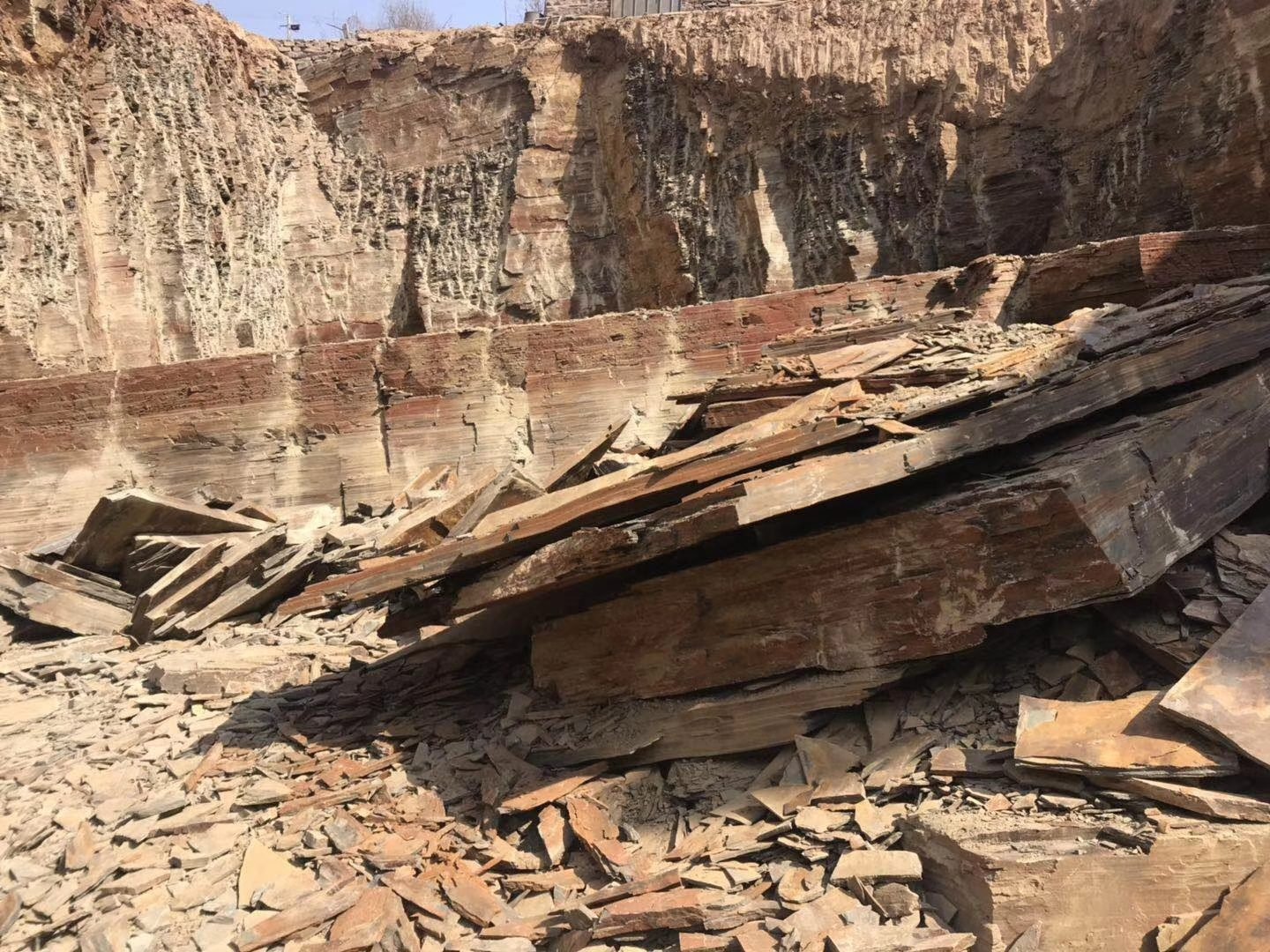
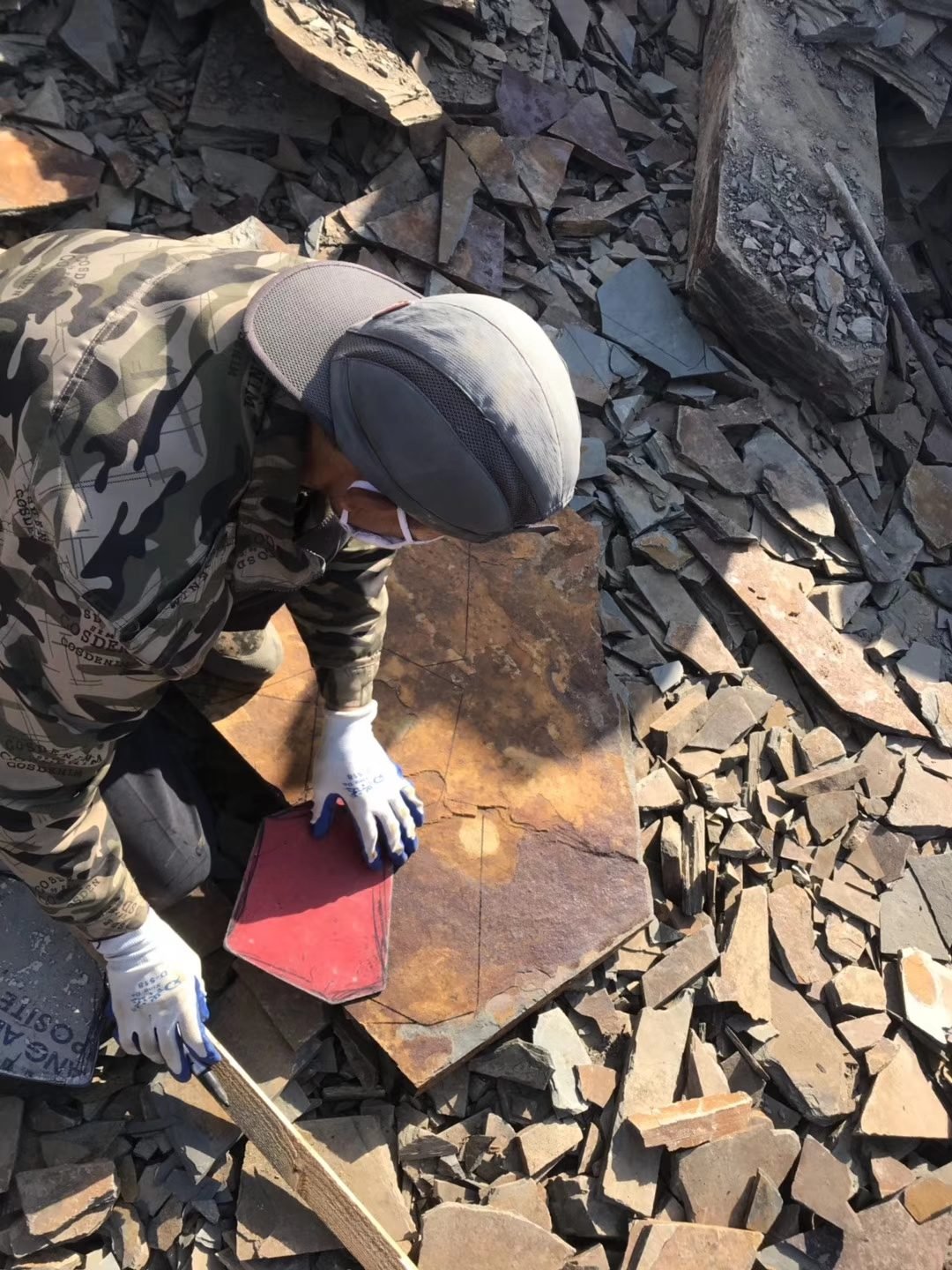
Not all quarrying is the same, and the difference matters for resource waste. An aggregate quarry crushes rock into graded stone for concrete and roadbase; the whole extraction is consumed, but the process is high-volume and the value per tonne is low. A dimension-stone quarry, which is what supplies cladding and veneer, extracts whole blocks and slabs with a diamond-wire or diamond-blade cut, then mills them into the panel and veneer formats a cladding order ships; the objective is to recover sound stone with minimal fracturing.
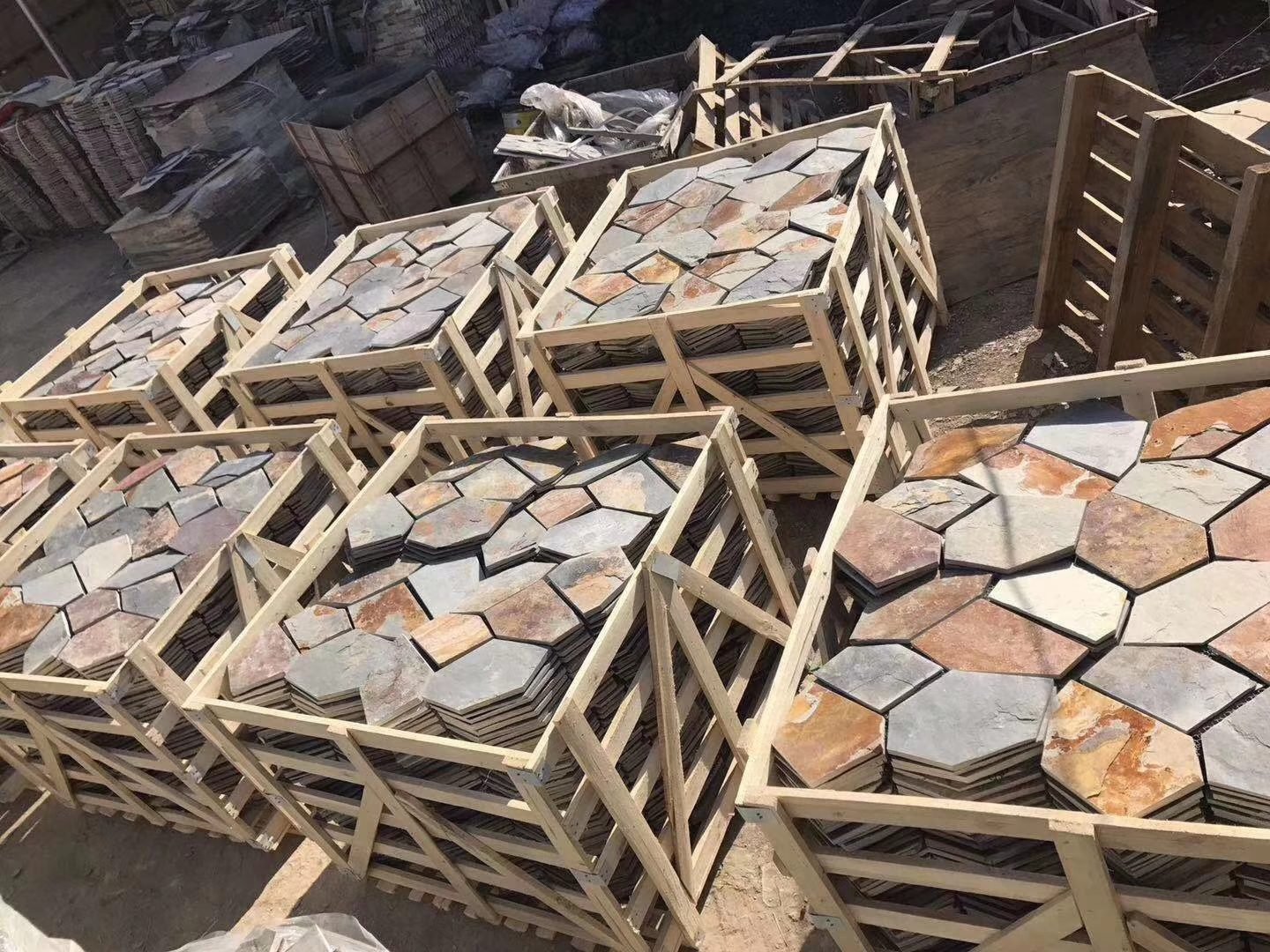
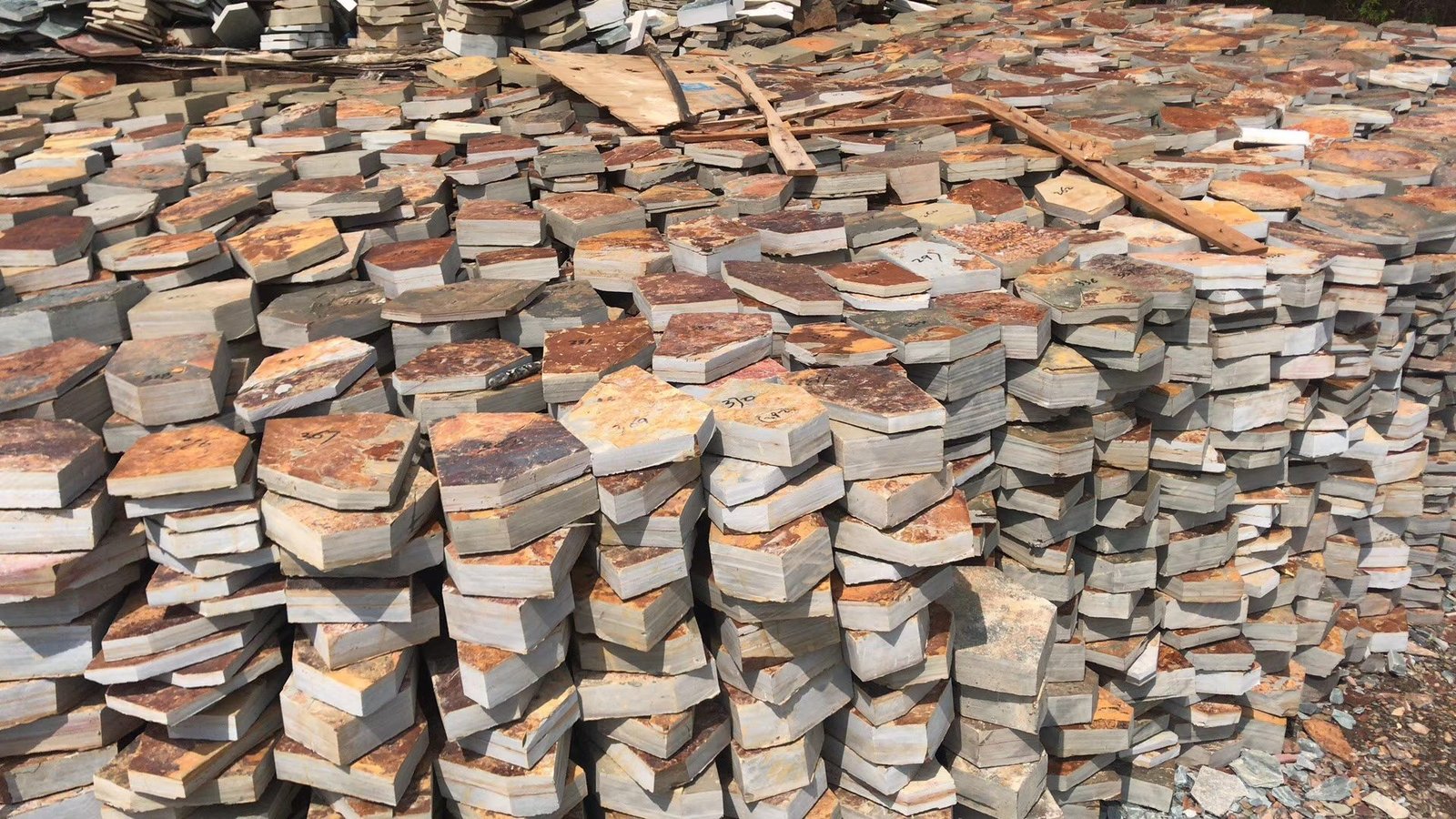
That block recovery is where a genuine sustainability lever lives for a cladding supplier. The proportion of the worked ground that becomes saleable stone versus waste rock is a real efficiency measure, and it is driven by vein selection: working the right part of the seam, with the right orientation to the natural bedding and fracture planes, yields more usable material from the same footprint. The same discipline that gives a distributor colour consistency, locking to one quarry vein per order and hand-sorting within it, is also the discipline that wastes less of the resource. This is why “quarry-to-container” control is a material-use argument as much as a quality one; the geological stewardship of the seam reduces the tonnage left as spoil. The dimension-stone families that depend on this vein control, mesh-backed flagstone and crazy paving among them, are exactly where a buyer sees the difference between a managed seam and a spent one. A body like the British Geological Survey frames resource use and land stewardship as part of responsible extraction, and it is the same logic at the scale of a single stone seam.
Rehabilitation and After-Use
A quarry has an end, and how it reaches that end is the clearest test of whether the operator planned or simply mined and left. In a modern permit regime, rehabilitation is not a promise made at closure; it is designed at approval, phased through operations, and often secured by a financial bond so the money to restore is set aside before it is needed. Progressive restoration, where worked-out benches are backfilled and re-vegetated as the site advances rather than all at the end, is the practice that separates a managed operation from a race to extract.
The after-use is the other half. A pit can return to nature, to grassland, to water, to solar generation, or to community use, and the plan should say which, and when. Overburden and topsoil handled properly are what make that restoration possible: stripped and stored so the seed-bearing layer can go back on the land rather than being buried under waste. For a buyer, asking “what happens to this site when the vein is finished, and is restoration bonded or just planned” is a fast way to tell whether the operator is running a permitted, time-limited land use or an open-ended one.
Waste, Water and By-Products
Stone processing generates waste and consumes water, and managing both is a core part of the environmental file. Sawing and cutting produce offcuts and stone fines, and the block that does not pass for cladding does not simply have to be landfill: lower-grade material can be downcycled into aggregate, chippings or landscaping stone, and the fines from cutting can, depending on the operation, be dewatered and reused. The block that does not pass as a face stone is still usable stock where the product spec is forgiving, as in a mortar-set veneer install, so a lower face grade is a yield stream, not automatically spoil. The honest version of this is that not every by-product stream has a market, and a supplier who says they recycle everything is usually overstating; the credible supplier tells you which streams have a use and what happens to the rest.
Water is the other load. Cutting natural stone needs water to cool and lubricate the diamond blades and suppress dust, and a well-run site recirculates process water through settlement rather than discharging it raw, protecting both the local water balance and the permit conditions. For a specifier, this connects to the material science on the product side: how dense and stable the finished stone is, and how it behaves in service, is documented in the material guidance on water absorption rates for stone panels and in the material guidance from the Natural Stone Institute, but the water that got it cut is an upstream question the quarry owns.
Certifications and Environmental Claims
The fastest way to be misled on quarry sustainability is to look only at certificates. There is a real hierarchy here, and a buyer should read it in order. The first tier is the enforceable document: the environmental permit and its EIA or screening record, which exist because the law required them and are monitored by an authority. The second tier is voluntary systems a site may or may not hold, an environmental-management standard such as ISO 14001, or an externally verified product declaration, which signal intent but vary widely in scope and rigour. The third tier is the self-declared claim and the green logo, which means nothing until it points back at one of the first two.
This is also where a quarry-level file and a product-level file part ways. An EIA and a permit govern how stone is extracted at the site. A product Environmental Product Declaration (EPD) and lifecycle analysis, covered separately in the guide to stone cladding EPD and lifecycle data, declare the embodied energy and impacts of the finished panel across its life. A buyer who wants a credible sustainability answer needs the two to line up: an EPD calculated from a quarry that cannot evidence a permit is a house built on an unpermitted foundation.
What a Factory Can Honestly Evidence
Applied to Top Stone Panels specifically, the honest position is the one that holds up under questioning. The operation works its own quarry and controls the seam from extraction to container, which is why batch-specific vein selection, locking each order to one part of one deposit and hand-sorting within it, is a capability rather than a slogan; it is the same control that reduces colour variation to the 95 percent-plus transition band buyers specify. It carries 18-plus years of extraction and export experience and an annual throughput of 220-plus containers, so it is a long-lived, permitted operation, not a spot trader chasing the next vein.
What it does not claim is the part that would not survive scrutiny: it does not stamp itself with a third-party environmental certificate it has not been audited against, and it does not quote a recycling percentage for waste rock it has not measured to a verifier’s standard. The material facts behind its stone, density, water absorption and thermal performance across a -30C to +50C range, are documented because they are testable on the product. The point for a buyer is that a supplier who is precise about what it can evidence, and quiet about what it cannot, is usually the one whose environmental file will answer your questions.
A Buyer’s Due-Diligence Checklist
Before you build a responsible-sourcing claim on a supplier’s quarry, put these questions to it and read the quality of the answers as much as their content.
- Can you provide the environmental and extraction permit reference, and the EIA or screening decision behind it?
- Is site rehabilitation planned and bonded, with a stated after-use, or deferred to closure?
- How are waste rock and cutting fines handled, and which streams actually have a reuse market?
- Is process water recirculated or discharged, and is dust and blasting vibration managed to set-backs?
- Does any voluntary certification or third-party verification exist, and what exactly does its scope cover?
- Which vein does my order come from, and is it worked and sorted to a controlled, not exploratory, plan?
A permitted, managed operator will engage with all six and point to documents. An operator that is selling an image will struggle past the first, and that hesitation is the most useful piece of due-diligence evidence you will get.
Frequently Asked Questions
What is an EIA for a quarry?
An Environmental Impact Assessment is a formal study, required before certain projects are permitted, that predicts a site’s effects on water, air, noise, landscape, biodiversity and waste, and sets conditions to limit them. For a quarry it is the permit-stage document governing how the ground is worked and restored.
Does every quarry need a full EIA?
Not always. In the EU framework many extractive projects are screened first, and a full assessment is required above thresholds set by the competent authority for the scale and location. Buyers should ask to see the permit and its conditions rather than assume the answer.
Is quarrying waste the same for every stone operation?
No. Dimension stone taken as whole blocks wastes far less of the resource than crushing stone to aggregate. Block yield, and controlling which vein is worked, is one of the most honest sustainability measures a cladding supplier can point to.
What should a B2B buyer ask about responsible sourcing?
Ask for the environmental permit and its rehabilitation conditions, how waste rock and water are managed, what happens to the site after closure, and whether any third-party verification backs the claims, then treat unanswered questions as a supply-risk signal.
How is an EIA different from an EPD?
An EIA and a permit govern how stone is extracted at the site. An EPD declares the environmental data of the finished product across its lifecycle. A credible sustainability story needs the two to line up: a product declaration built on a quarry with no evidenced permit is hollow.
Conclusion
Sustainable quarrying is a permitting and practice question dressed up as a values question, and that is precisely why it is answerable. An EIA is the pre-consent study behind an environmental permit, governed in the EU by the EIA Directive; whether a given quarry needed a full assessment or a screening is a matter for the competent authority, so a buyer verifies the permit rather than assumes it. On top of the legal file sit the levers that actually reduce impact: block recovery and vein selection that waste less of the seam, restoration that is planned and bonded, and waste and water that are managed and evidenced rather than declared.
- Treat quarry sustainability as a supply-continuity and due-diligence question, not a logo.
- Ask for the enforceable documents: permit reference and EIA or screening record.
- Value block recovery and vein control as a real material-efficiency measure, not just a colour one.
- Make rehabilitation, waste streams and water handling answerable, and read the hesitation in unanswered ones.
- Line up the quarry-level permit with the product-level EPD so the two stories match.
Building a responsible-sourcing position on your next stone order and need a supplier whose quarry file will survive your client’s questions? Reach out to the Top Stone Panels team and we will walk you through our own-quarry, vein-controlled supply and what we can evidence.