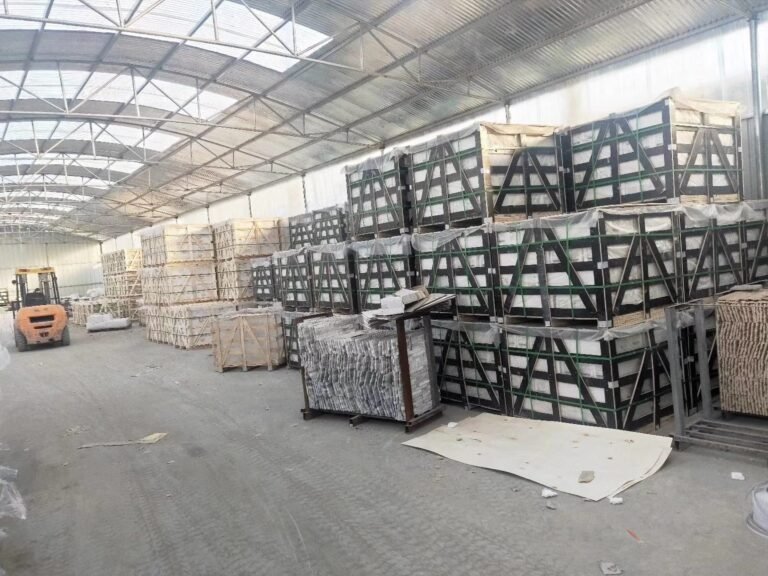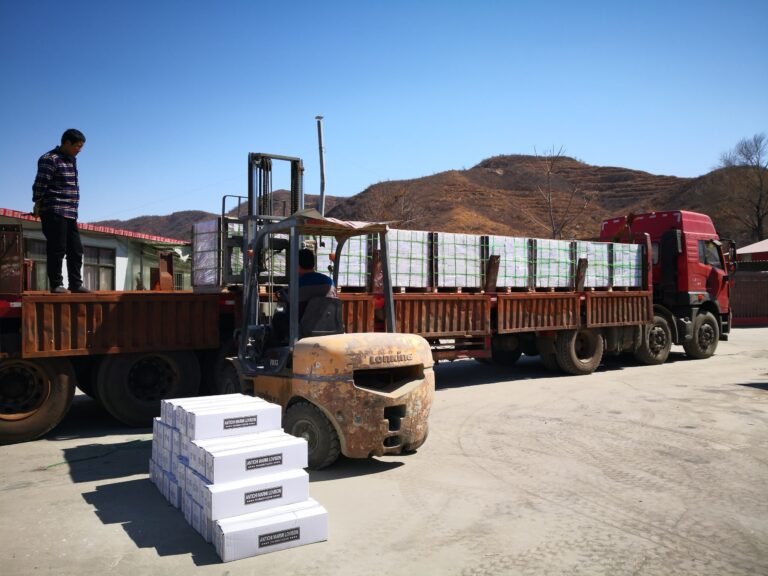
Choosing between a 20GP and a 40HQ for a stone order is a math problem, not a preference. Stone panels weigh 40-55 kg per square meter, so a container usually runs out of legal payload before it runs out of space. That single fact decides which box gives you the lower cost per square meter, and it is why a 20GP is often the right first container even when the 40HQ price tag looks more impressive.
A 20-foot standard dry container (20GP) holds about 13.9 m² of floor and 33 m³ of volume with a payload around 21,700-26,500 kg depending on the carrier and reinforcement. A 40-foot high cube (40HQ) gives you about 28.3 m² of floor, 76 m³ of volume, and a payload near 26,500-27,600 kg. For a dense load of stacked stone panels, both boxes weigh out at a similar 500-550 square meters of stone. For light thin veneer, the 40HQ can genuinely double your loaded area — and that difference is where the good buying decisions get made.
This guide walks through the numbers every buyer needs before asking a mill for a quote: container dimensions, the weight-versus-volume rule for stone, and worked cost-per-square-meter examples with both box sizes. The scenarios use typical Asia-Europe and transpacific freight levels as illustrations, so the ratios and method stay useful even when rates move. The loading practice described — reinforced 26.5-ton loads, zero-breakage packaging, and factory release after loading video — is what Top Stone Panels ships from its Hebei factory.
- Stone is weight-limited cargo: a 20GP and a 40HQ both reach their payload before the box is full for dense panels.
- 20GP: ~13.9 m² floor, ~33 m³, ~21,700-26,500 kg payload. 40HQ: ~28.3 m² floor, ~76 m³, ~26,500-27,600 kg payload.
- At ~50 kg/m², a 20GP loads roughly 500-530 m² of stone; a 40HQ loads only modestly more for the same dense product.
- Thin lightweight veneer can cube out first — in that case a 40HQ roughly doubles loaded area for ~1.6-1.9x the freight, and wins on cost per square meter.
- Ask your mill to quote both box sizes from the same carton weight and cube data, and hold the loading video before releasing the balance.
- 20GP vs 40HQ: Container Specifications
- Why Stone Loads by Weight, Not Volume
- Floor Area vs Cubic Capacity for Panel Loads
- Cost per Square Meter: Worked Examples
- When the 20GP Wins
- When the 40HQ Wins
- The Fine Print: Reinforcement, Surcharges, Seasons
- How to Get Both Quotes From a Factory
- FAQ
- Conclusion
20GP vs 40HQ: Container Specifications
The container industry works to ISO 668, so the numbers below are standard across carriers. Tare weights vary by line, and European lines sometimes quote slightly different door openings, but the internal dimensions and floor areas hold:
| Specification | 20GP | 40HQ | What it means for stone |
|---|---|---|---|
| Internal L x W x H | 5.90 x 2.35 x 2.39 m | 12.03 x 2.35 x 2.70 m | 40HQ is 2.04x longer, 0.31 m taller |
| Floor area | ~13.9 m² | ~28.3 m² | Pallet positions scale with floor area |
| Cubic capacity | ~33 m³ | ~76 m³ | 20GP only ~43% of the 40HQ volume |
| Typical payload | ~21,700-26,500 kg | ~26,500-27,600 kg | Heavy cargo hits this before the cube fills |
| Euro pallets (120x80cm) | 10-11 | 24-26 | Roughly doubles; less than 2.04x in practice |
| Indicative freight ratio | 1.0x baseline | ~1.6-1.9x | Larger box does not cost double on most lanes |
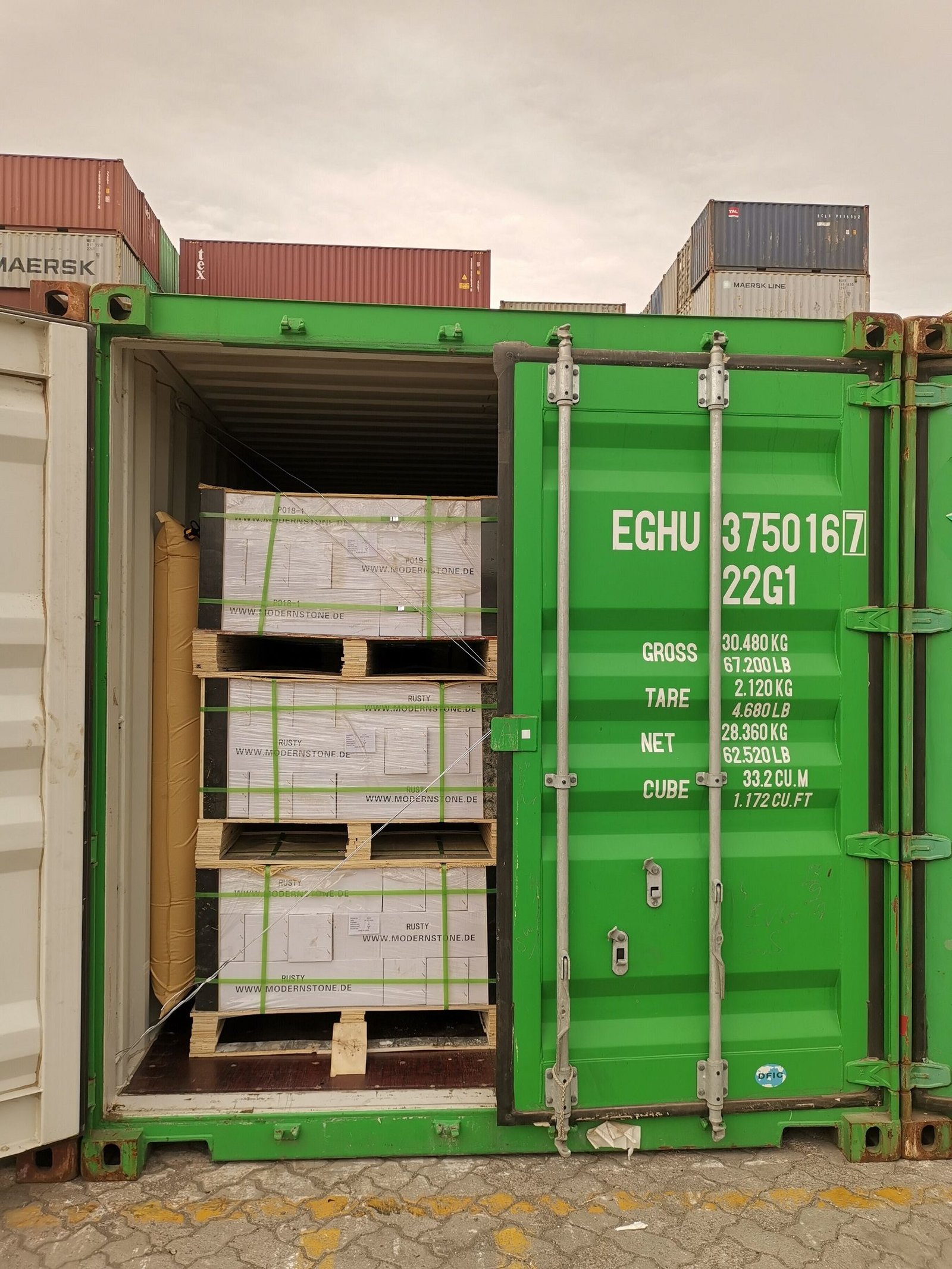
The payload line is the one most stone buyers misread. A 20GP does not legally carry 26,500 kg on every carrier; standard 20-foot boxes are rated with a max gross around 30,480 kg, which leaves roughly 21,700 kg of cargo after tare. Stone mills that load 25-26.5 tons in a 20GP rely on reinforced containers, overweight permits, or line-specific allowances — that is why the loading practice of the factory matters as much as the price. Ask which payload the quote is based on before you plan your squares.
Why Stone Loads by Weight, Not Volume
Run the arithmetic once and it sticks. Natural slate and quartzite panels at a typical 20 mm thickness weigh roughly 48-54 kg per square meter; thinner 15 mm formats run closer to 40-45 kg. A reinforced 20GP carrying 26.5 tons therefore fits about 500-530 square meters of dense stacked stone — and still has empty-looking space in the container, because the packing closes the weight game long before the cube.
| Product type | Approx. weight per m² | m² per 26.5-ton plan |
|---|---|---|
| Thin veneer panels (15 mm format) | ~38-45 kg | ~590-700 m² |
| Stacked stone panels (20 mm format) | ~48-54 kg | ~500-530 m² |
| Z-panels with cement/mesh backing | ~50-60 kg | ~440-530 m² |
| Flagstone / crazy paving mesh sheets | ~45-55 kg | ~480-590 m² |
The stone panel weight calculator explains how to estimate any of these numbers from panel thickness and stone density (use 2,600-2,800 kg/m³ for slate and quartzite). The practical rule: get the gross weight per carton and the cube per carton from the mill, then test which limit — payload or cube — bites first for your product. That test is the entire comparison below.

Floor Area vs Cubic Capacity for Panel Loads
Floor area decides how many pallets you can stage inside the box. A 20GP floor is about 13.9 m²; a 40HQ floor is about 28.3 m². Panels that ship on plywood pallets under the zero-breakage packaging protocol — 3-5 layer cartons, skids, 4-6 steel bands, air bags — eat floor in predictable rows. In practice you fit 10-11 Euro pallets in a 20GP and 24-26 in a 40HQ, because the width of 2.35 m takes two pallets across with a working gap for loading.
Cube matters for the stacked height and for products with bulky packaging. A 40HQ adds 0.31 m of internal height versus a 20GP, which rarely helps a flat panel load but does help flagstone bundles stacked with mesh rolls and columns kits where irregular shapes waste headroom. The 76 m³ of a 40HQ versus 33 m³ of a 20GP is the clearest advantage for anything that is not a flat, stackable panel.
Two real patterns worth remembering:
- Dense flat panels weight out first. Stacked stone, z-panels, and full-thickness veneer hit payload at roughly 500-530 m² per 20GP. A 40HQ with 26.5-27.6 tons loads maybe 530-570 m² — barely more area for roughly 1.6-1.9x the freight.
- Light panels can cube out first. Thin 15 mm veneer at ~40 kg/m² with dense packaging still consumes about 0.09-0.12 m³ per m² once cartons, pallets, and dunnage are in. A 20GP then caps around 300-360 m² by cube, while a 40HQ loads 650-700 m² — a genuine double.
Both statements are assumptions made from published container volumes and typical panel weights; the mill’s per-carton gross weight and cube confirm which one applies to your mix. The mixed-container guide shows how buyers combine product types in one shipment, which changes the weight-to-cube ratio of the whole load.
Cost per Square Meter: Worked Examples
Freight rates move with the season and the lane, so instead of a price list, use the ratio method. On most Asia-Europe and transpacific lanes, a 40HQ costs about 1.6-1.9 times a 20GP for the same port pair. The example below sets a 20GP at $1,600 and a 40HQ at $2,700 to make the division readable; swap in your own quoted rate and rerun it.
| Scenario (illustrative rates) | 20GP | 40HQ | Cost per m² winner |
|---|---|---|---|
| Dense stacked stone, 50 kg/m², weight-limited | ~500 m² @ $1,600 = $3.20/m² | ~540 m² @ $2,700 = $5.00/m² | 20GP by ~36% |
| Thin veneer, 40 kg/m², cube-limited | ~330 m² @ $1,600 = $4.85/m² | ~680 m² @ $2,700 = $3.97/m² | 40HQ by ~18% |
| Flagstone bundles, mixed geometry | ~260 m² @ $1,600 = $6.15/m² | ~600 m² @ $2,700 = $4.50/m² | 40HQ by ~27% |
Add the non-freight costs and the picture sharpens. Documentation, port handling, and trucking have fixed components per shipment, so two 20GP shipments cost more than one 40HQ at the destination. The buyer who is splitting a 1,000 m² order across two boxes should compare the true landed cost, not just the ocean rate. The FOB quote breakdown and the overall cost breakdown guides cover the full line-item view.
The takeaway is not “20GP always wins.” It is that the product’s weight-to-cube ratio decides which box gives the best cost per square meter, and the mill should be able to prove it from the carton data. Any factory that hands you a square-meter load figure without showing gross weight per carton is guessing.
When the 20GP Wins
The 20GP is the default first container for most distributors, and not only because the budget is smaller. Five situations push buyers to the 20-foot box:
- Trial and model testing. A new product line deserves one container to test sell-through and local pricing before committing to five. The MOQ at Top Stone Panels is one 20GP, and that is deliberate: it lets a distributor validate a product without betting the warehouse.
- Dense panels. Any product that weights out first — stacked stone, z-panels, full-thickness veneer — gets cheaper per square meter in a 20GP, as the worked example above shows.
- DDP and door delivery. Smaller boxes clear more easily through inspection points, and inland trucking is often easier to arrange and schedule.
- Cash flow. Payment terms run 30/70 T/T; a smaller ocean bill and a faster cash cycle keep working capital moving.
- Storage limits. A distributor receiving 500 m² of panels has an easier stocking problem than one receiving 1,000 m². Empty retail space costs money too.
If your margin math says the 20-foot box wins on cost per square meter, taking the bigger box to “save freight” is usually an accounting illusion. The retail pricing markup and T/T versus LC guides both assume you are comparing landed costs, not sticker freight rates.
When the 40HQ Wins
The 40HQ earns its keep when the math flips. Four situations favor the long box:
- Light or bulky formats. Thin veneer, crazy paving mesh sheets, and column kits that cube out in a 20GP are the classic 40HQ products. You are paying for cube; get all of it.
- Established demand. A repeat product with proven sell-through should ship in the largest efficient unit to cut the number of orders, inspections, and arrivals per year.
- Fewer shipments. Each container is a document set, an inspection event, and an unloading operation. One 40HQ replaces two containers for about 1.7x the freight — real savings in handling and paperwork.
- Full order visibility. A 680 m² drop lets the branch or job site plan material in one phase instead of two, which matters on a construction schedule (see the production scheduling guide).
Read the two lists together as a single decision: the 20GP wins on dense products and low risk, the 40HQ wins on light products and scale. When a buyer tells me they “always use 40HQ for stone,” they are usually describing a light-format business. When they say “always 20GP,” they are usually shipping dense panels. Your product, your call — but make it from the carton data.
The Fine Print: Reinforcement, Surcharges, Seasons
Container math has a few traps that show up in the invoice, not the plan.
Overweight cargo. Loading a 20GP beyond the standard payload needs line approval, reinforced flooring, or a heavier container spec. Stone exporters in China routinely load 26.5 tons in a 20GP on specific lines; others cap at 24 tons. The refusal at the gate costs a day and an unload. Confirm the payload the mill actually loads, not the largest number on the brochure.
Seasonal swings. Freight rates on stone lanes move with the container trade cycle — demand peaks before year-end, and blank sailings tighten space. The seasonal demand guide tracks when Chinese mills quote firm versus flexible. Buyers lock rates at the right moment in the calendar, and box-size economics can shift when the 40HQ premium narrows or widens.
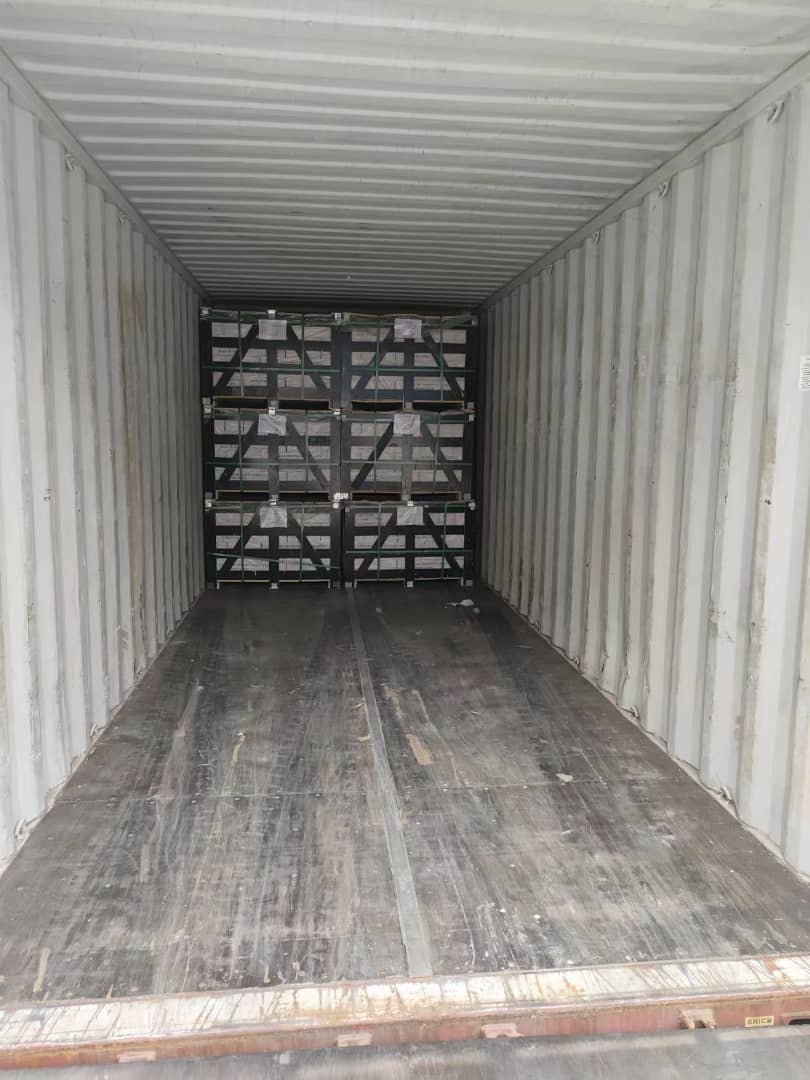
Loading inspection. The release of the 70% balance in the 30/70 T/T schedule is tied to the loading video and layout photos. That video also shows how the load was dunnaged and air-bagged, which directly affects the damage claim outcome if the arrival count is short. The pre-shipment inspection routine belongs in every order, regardless of box size.
Documents. The commercial invoice, packing list, and bill of lading must agree on container number, seal, and weights. The stone export documents guide runs through the set; the weight fields on the packing list are the ones your health-check will want to match.
How to Get Both Quotes From a Factory
The fastest way to settle the 20GP-versus-40HQ question is to ask for both, from the same carton data. A competent mill can answer in one email:
- Gross weight and cube per carton for your product mix — this is the raw material of the calculation.
- Maximum m² per 20GP and per 40HQ for that mix, with the loading plan the number is based on.
- FOB price per square meter at 20GP quantity and at 40HQ quantity — volume should move the unit price, sometimes enough to change the box decision.
- Current payload allowance per box on the planned carrier (Xingang export), because reinforcement rules differ by line.
- Samples first: physical samples within 1-3 days let your team verify weight and color before trusting the carton math.
Top Stone Panels quotes this way as standard practice: MOQ one 20GP, production 20-25 working days, first-order custom cartons about 25-30 days, and the Zero-Breakage Packaging Protocol on every box. The incoterms guide picks up from here — FOB Xingang, EXW, CIF, and DDP each change where the box-size math stops being about freight and starts being about your local logistics.
FAQ
How many square meters of stone fit in a 20GP container?
At roughly 50 kg per square meter, a reinforced 20GP carrying about 26.5 tons of stone fits roughly 500-530 square meters. Thinner 15 mm formats can load more; very dense formats less.
How much floor area does a 40HQ container have?
A 40HQ has about 28.3 square meters of internal floor area, roughly double a 20GP’s 13.9 square meters, plus about 76 cubic meters of volume and a payload near 26,500-27,600 kg.
Is a 20GP or 40HQ better for stone panels?
Dense stacked stone panels usually give a lower cost per square meter in a 20GP because both boxes weigh out at a similar area. Light thin veneer that cubes out first is often cheaper per square meter in a 40HQ.
Why is stone called weight-limited cargo?
A 20GP has about 33 cubic meters of volume, but natural stone panels weigh 40-55 kg per square meter, so the ~21,700-26,500 kg payload is reached while the box still has visible space.
What is the MOQ for a stone container from Top Stone Panels?
The minimum order is one 20GP container. For buyers scaling up, mixed-product loads and 40HQ volumes are quoted from the same carton weight and cube data.
Conclusion
The container choice for stone is decided by two pounds of numbers: the product’s gross weight per carton and its cube per carton. Dense panels weight out first, and the 20GP usually delivers the lowest cost per square meter. Light panels and bulky formats cube out first, and the 40HQ doubles the load for roughly 1.7x the freight.
- Get per-carton gross weight and cube from the mill before comparing box sizes.
- Test both quotes: m² per 20GP and m² per 40HQ, priced per square meter at each volume.
- Confirm the payload the carrier allows on your lane — reinforced 26.5-ton loads are a facility capability, not a given.
- Hold the loading video and layout photos before the 70% balance, and match the packing list against the load.
At Top Stone Panels every order starts the same way: samples in 1-3 days, a one-20GP minimum, production in 20-25 working days, and a quote that includes the m² plan for both box sizes so you can run the math before you commit. Send the contact page your product mix and destination port, and ask for the 20GP and 40HQ loading plans side by side.