Lead Time and Production Scheduling: Planning Your Stone Panel Import Timeline
Your installer is booked for October. The architect approved the stone selection in July. You place the order in August and discover that production alone takes three weeks, ocean freight another month, and customs clearance adds a week you did not budget for. Now your installer is rescheduling, your GC is asking questions, and your margin is eroding on overtime labor to catch up.
This scenario repeats every year in the natural stone import business, almost always for the same reason: buyers plan backward from their installation date without accounting for the full supply chain. Production lead time is only one component. Shipping availability, customs documentation, inland logistics, and seasonal disruptions each add days that compound into weeks when unmanaged.
This guide maps the complete stone panel import timeline from purchase order to job site delivery, based on actual scheduling data from Top Stone Panels’ Yixian factory and our shipping records to North American and European ports over the past five years.
- Total lead time from deposit to job site: 50–75 days for standard orders, 70–90 days for custom or large-volume orders.
- Place orders at least 90 days before required on-site date; 120 days for fixed-deadline projects.
- Chinese New Year creates a 3–4 week production blackout from late January through mid February — plan around it.
- Peak shipping season (August–October) adds 7–14 days to transit due to container scarcity and port congestion.
- Phased shipping lets you lock color consistency in one production run while aligning deliveries to construction milestones.
The Complete Import Timeline: Deposit to Job Site
Understanding the full chain prevents the most common planning error — treating “lead time” as synonymous with “production time.” Here is the actual sequence for a standard stacked stone panel order shipped FOB Xingang to a US East Coast port:
| Phase | Duration | Key Dependencies |
|---|---|---|
| Sample approval | 7–14 days | Buyer response speed; courier transit for physical samples |
| Deposit receipt and production slot booking | 1–3 days | Bank transfer processing; factory capacity availability |
| Raw material sourcing and block allocation | 3–7 days | Quarry vein availability; existing inventory match |
| Production (cutting, sorting, QC, packing) | 15–25 days | Order volume; customization level; seasonal workforce |
| Pre-shipment inspection and documentation | 2–3 days | Inspector scheduling; certificate issuance |
| Inland transport to Xingang Port | 1–2 days | Truck availability; distance from Yixian (~300 km) |
| Export customs clearance and loading | 2–5 days | Documentation accuracy; port congestion; vessel schedule |
| Ocean freight to destination port | 25–40 days | Route; transshipment; weather; port rotation |
| Import customs clearance | 3–7 days | Documentation completeness; duty payment; inspection holds |
| Inland delivery to job site or warehouse | 1–5 days | Distance from port; truck/rail availability |
Total elapsed time: 57–107 days, with the median falling around 70 days for a well-planned standard order. The wide range reflects variables that buyers can influence (sample approval speed, documentation preparation) and variables they cannot (weather, port congestion, customs processing times).
Production Lead Time: What Happens Inside the Factory
Once your deposit clears and the production slot is confirmed, the factory timeline depends primarily on two factors: order volume and customization level.
Standard Products (Stock Colors and Sizes)
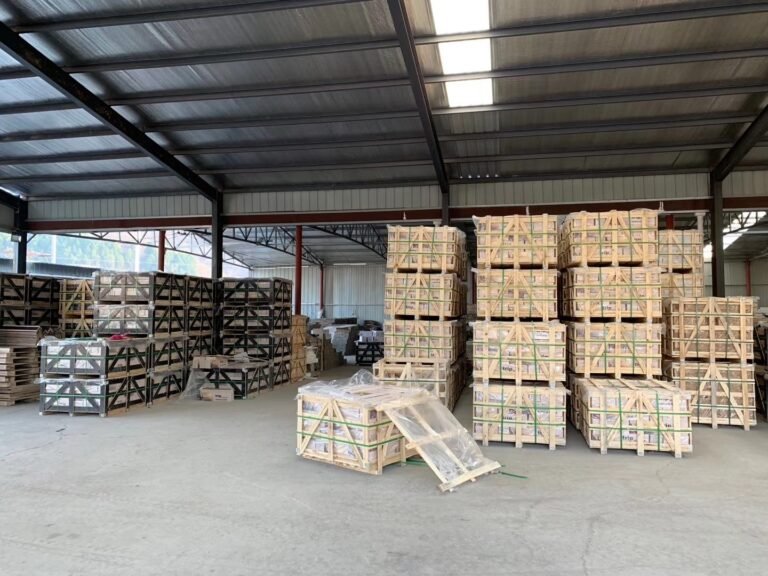
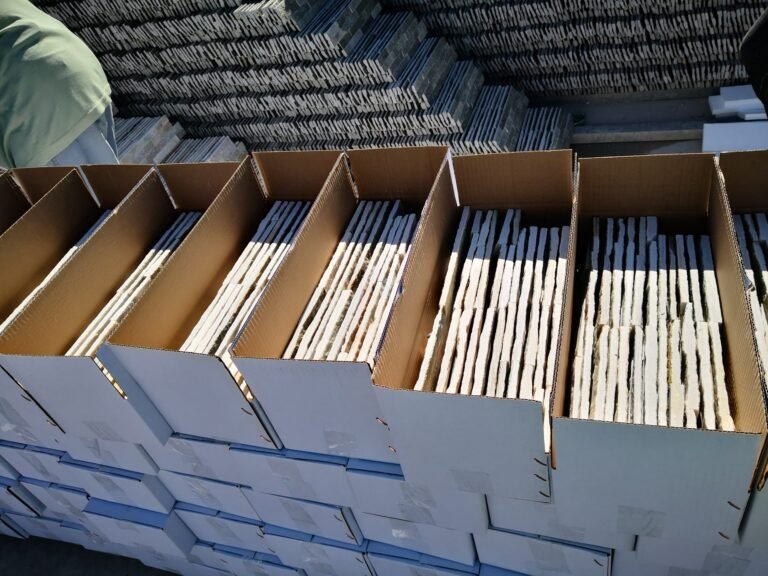
Orders for standard thin ledgestone, stacked stone, or thin stone veneer in stocked colors typically require 15–20 days from deposit to goods-ready. The shorter end applies to orders under one container (approximately 500 m²); the longer end covers multi-container orders where dry sorting and QC checks scale with volume.
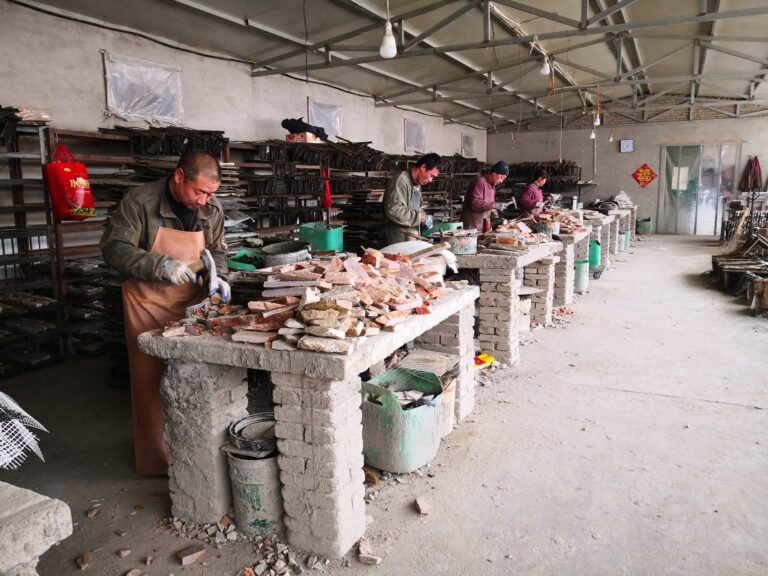
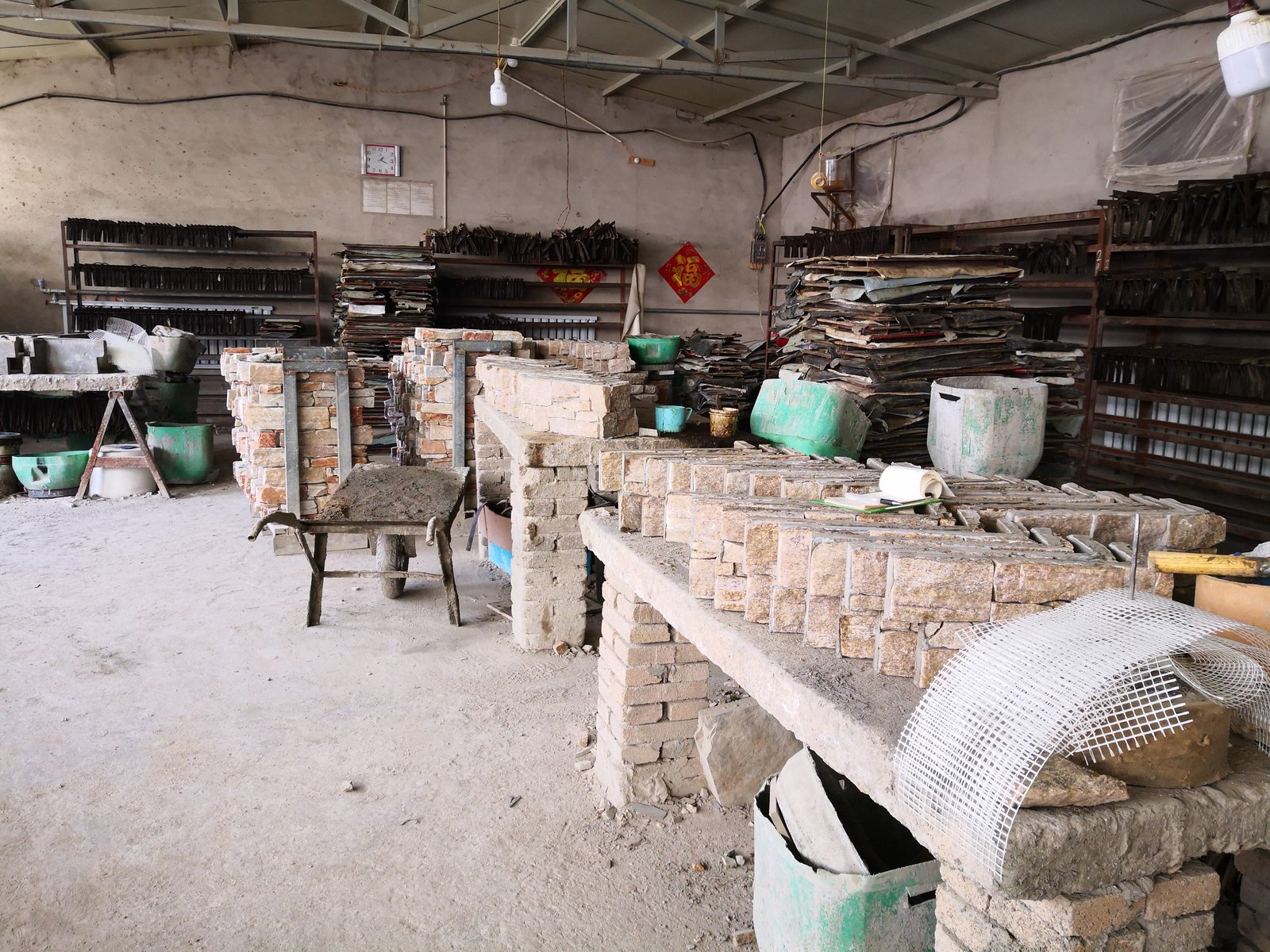
During this period, the factory runs parallel workstreams: block extraction and incoming inspection happen in days 1–5, cutting and splitting in days 3–12, dry sorting and QC measurement in days 10–15, and packing and labeling in days 13–18. These streams overlap rather than running sequentially, which is why a 20-day production window produces more output than the individual step durations would suggest.
Custom Colors and OEM Orders
Custom color matching, private label packaging, or non-standard dimensions add 10–20 days to the base production timeline. The additional time goes to:
- Color development (5–10 days): Quarry vein survey, test cutting, sample production, and buyer approval cycle for the custom color
- Packaging setup (3–5 days): Custom box printing, label design approval, and branded crate fabrication for private label orders
- Tool adjustment (2–5 days): CNC reprogramming for non-standard panel dimensions, mold modification for custom Z-panel profiles
If you are ordering custom colors, build the sample approval cycle into your critical path. A buyer who takes 10 days to approve a color sample has added 10 days to their total lead time just as surely as if the factory had been 10 days slower.
Shipping Schedules: Transit Times from Xingang Port
Xingang Port in Tianjin is the primary export gateway for stone products from Hebei province. Transit times vary by destination and are affected by routing, transshipment, and seasonal congestion.
| Destination | Typical Transit (Days) | Common Route | Peak Season Delay |
|---|---|---|---|
| US West Coast (LA/Long Beach) | 25–30 | Direct or single transshipment | +7–10 days Aug–Oct |
| US East Coast (New York/Savannah) | 35–40 | Via Panama Canal or Suez | +7–14 days Aug–Oct |
| Canada (Vancouver) | 22–28 | Direct Pacific crossing | +5–7 days Aug–Oct |
| Northern Europe (Rotterdam/Hamburg) | 30–35 | Suez Canal direct | +5–10 days Sep–Nov |
| Australia (Sydney/Melbourne) | 28–35 | South China Sea direct | +5–7 days Q4 |
Container Availability and Booking Windows
During peak season (August through October), container availability tightens across all routes from Chinese ports. Booking a container 2–3 weeks in advance becomes necessary, whereas off-peak bookings can often be confirmed within 3–5 days. If your production completion falls in peak season, book your container at the time of order placement rather than waiting for goods-ready confirmation.
Our experience shows that the single largest source of unplanned delay for North American buyers is not production slippage — it is container unavailability during Q3. Factories finish goods on schedule, but containers sit empty at the port for 7–14 days waiting for equipment. This is entirely preventable with forward booking.
For detailed cost breakdowns including how shipping terms affect your landed price, see our guide on Incoterms for stone exports.
Seasonal Disruptions: Chinese New Year and Peak Season
Two annual events dominate the stone export calendar and should anchor your long-term planning.
Chinese New Year (Late January – Mid February)
Most stone factories in Yixian close for 3–4 weeks surrounding Chinese New Year. Workers travel home, quarries suspend extraction, and logistics companies reduce operations. The exact dates shift annually with the lunar calendar, but the practical impact window is consistent:
- Pre-holiday rush (early January): Factories push to complete orders before closure. Quality can suffer if production is compressed. Schedule completion by December 31 for best results.
- Closure period (late January – mid February): No production, no shipping, limited communication. Any order not shipped before closure waits.
- Ramp-up (mid February – early March): Workers return gradually. First 1–2 weeks operate at reduced capacity. Full production resumes by early March.
Planning rule: If you need material delivered before April, your order must ship by early January. Orders placed after mid-December for pre-CNY shipment are at risk of either missing the deadline or receiving rushed production.
Peak Export Season (August – October)
Q3 and early Q4 represent the busiest period for Chinese stone exports. Demand from European buyers restocking before winter combines with North American builders completing fall projects. The effects cascade through the supply chain:
- Production slots fill faster — book 3–4 weeks ahead instead of 1–2
- Container rates increase 20–40% above off-peak levels
- Port congestion adds 5–14 days to departure timelines
- QC inspector availability decreases as demand outpaces staffing
Buyers with predictable annual volumes benefit from placing blanket orders in Q1 or Q2 with scheduled release dates, locking in both pricing and production capacity before peak demand compresses availability.
Customs Clearance: Documentation That Prevents Delays
Customs delays are almost always documentation problems, not product problems. Having your paperwork correct before the vessel arrives eliminates the most variable phase of the import timeline.
Required Documents Checklist
| Document | Issued By | Timing | Common Error |
|---|---|---|---|
| Commercial Invoice | Seller | With shipping docs | HS code mismatch; value discrepancy vs. packing list |
| Packing List | Seller | With shipping docs | Gross/net weight mismatch; crate count error |
| Bill of Lading | Carrier | After loading | Consignee name misspelling; notify party omission |
| Certificate of Origin | CCPIT or Customs | Before departure | Missing stamp; incorrect HS code reference |
| Fumigation Certificate | Quarantine Bureau | Before loading | Wood packaging not treated; certificate issued post-loading |
| Test Reports (if required) | SGS / Intertek | Before shipment | Report expired; product description does not match invoice |
Request all documents from your supplier at least 7 days before vessel departure. Review them against your import declaration requirements before the ship sails — correcting a document error while goods are in transit costs days; correcting it while goods are held at the destination port costs days plus demurrage charges.
For first-time importers, engaging a licensed customs broker before placing your order is worth the fee. They will tell you exactly which documents your jurisdiction requires and flag any product-specific requirements (such as radon testing certificates for certain US states or CE marking for EU markets) that your supplier needs to prepare in advance.
Project Planning Framework: Working Backward from Installation
Rather than estimating forward from order date, plan backward from your required on-site date. Here is a practical framework:
Example: Material needed on site by October 15
- October 15: Material on site ← target date
- October 8–15: Inland delivery buffer (7 days)
- October 1–8: Customs clearance buffer (7 days)
- September 1 – October 1: Ocean freight (30 days, US East Coast)
- August 25 – September 1: Port loading and export clearance (7 days)
- August 23–25: Inland transport to Xingang (2 days)
- August 20–23: Pre-shipment inspection and docs (3 days)
- July 25 – August 20: Production (25 days)
- July 22–25: Deposit processing and slot booking (3 days)
- July 8–22: Sample approval cycle (14 days)
- July 8: ← ORDER DEADLINE
Result: Place order by July 8 for October 15 on-site delivery. That is 99 days of total lead time — roughly 14 weeks.
Add 15–20 days of buffer for any project with a hard deadline. Construction schedules slip, vessels get rerouted, and customs officers take holidays. The buffer costs nothing when unused and prevents catastrophic delays when needed.
Phased Shipping: Aligning Deliveries to Construction Milestones
Large projects rarely need all material at once. Phased shipping lets you receive material in sync with construction progress while maintaining color consistency across all deliveries.
How It Works
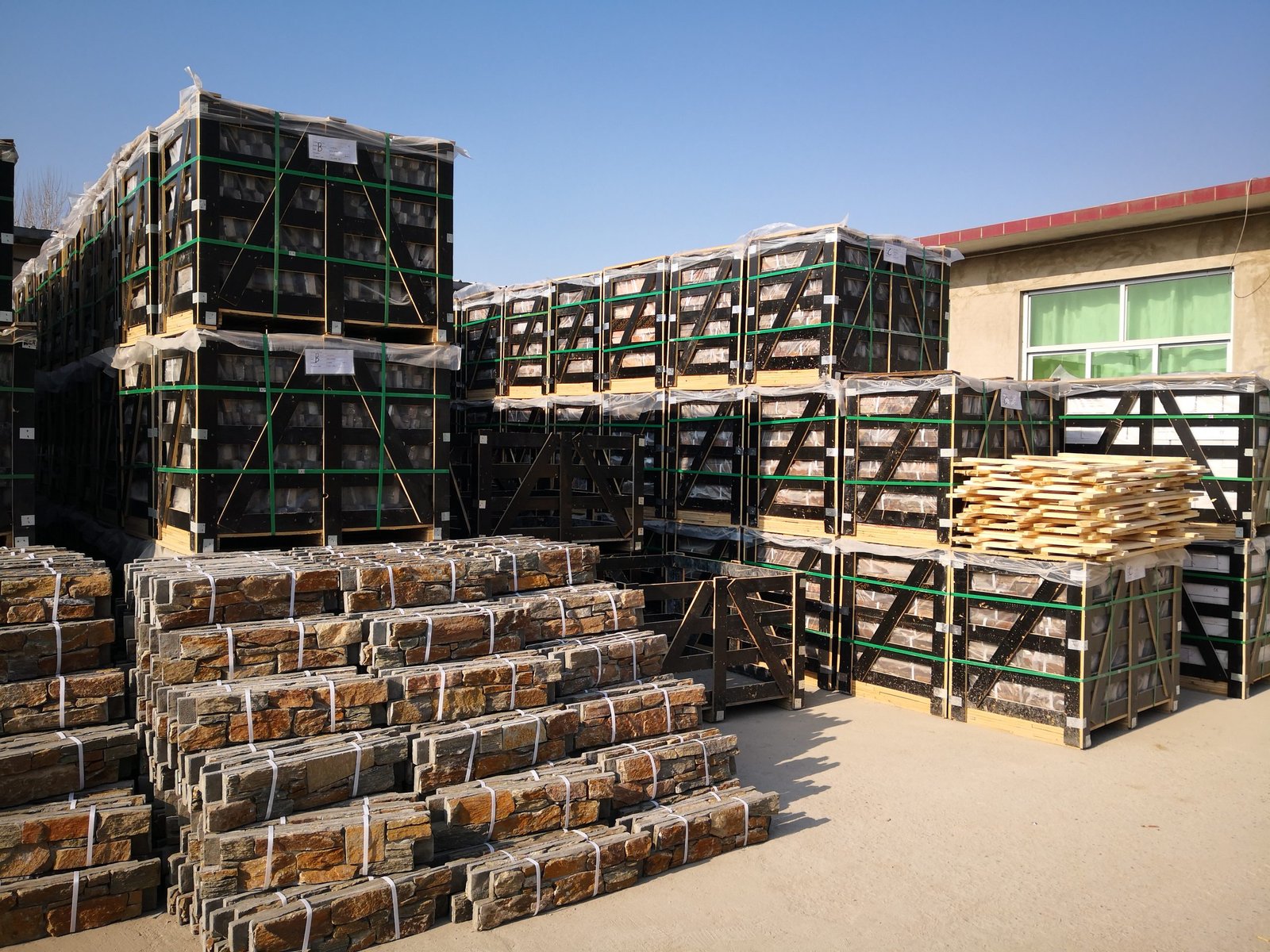
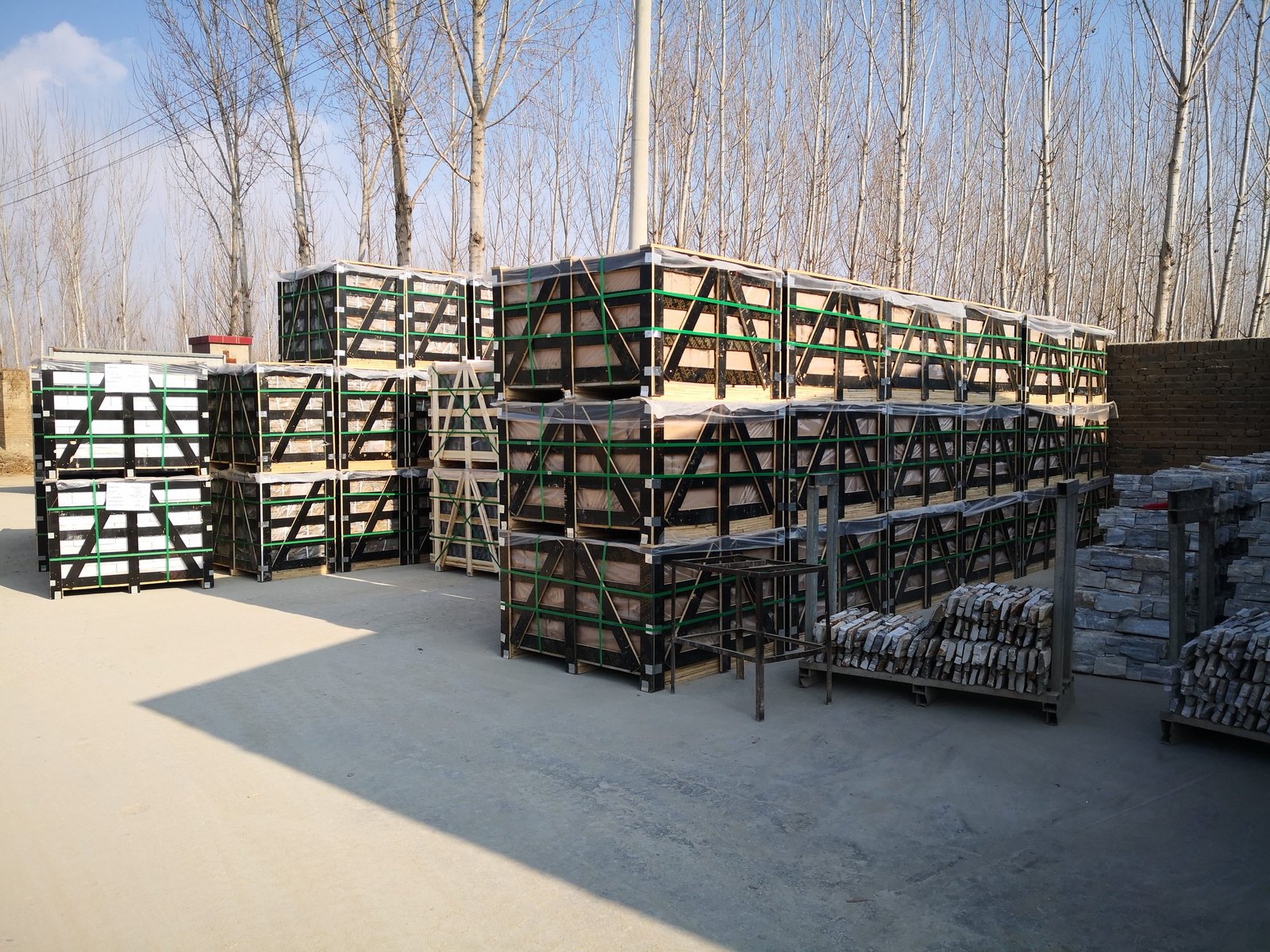
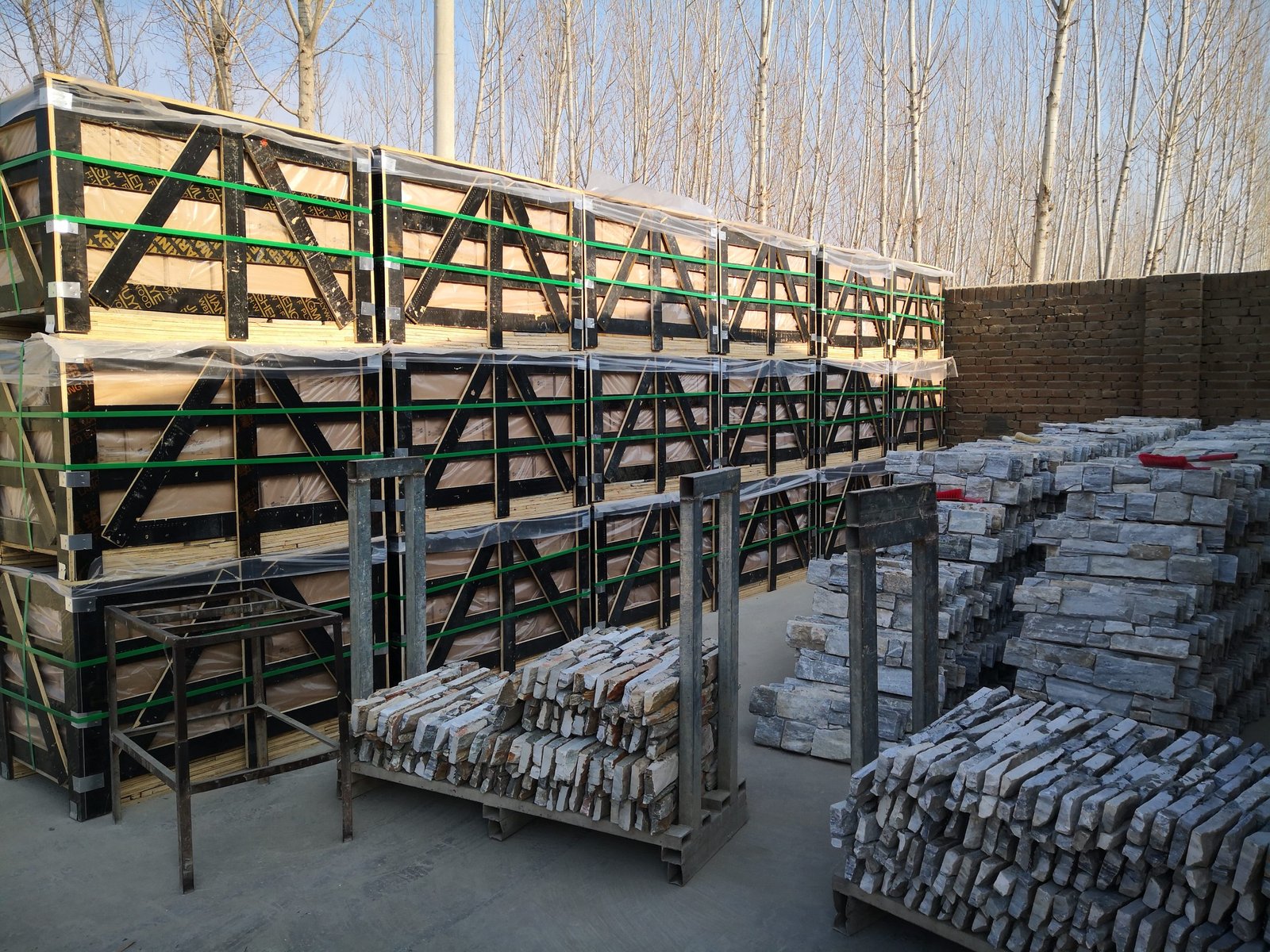
The factory produces the entire order quantity in a single production run, ensuring all panels come from the same quarry vein allocation and sorting batch. Completed panels are packed and labeled by phase, then stored at the factory or a bonded warehouse until each phase ships on its scheduled date.
This approach solves the tension between color consistency (which demands single-run production) and cash flow management (which favors spreading payments and deliveries). You get matched material across all phases while paying for and receiving each phase as needed.
Scheduling Considerations
- Storage fees: Most factories offer 30–60 days free storage after production completion. Beyond that, expect USD 0.50–1.00 per m² per month.
- Minimum phase size: Each shipment should fill at least a 20-foot container (approximately 250–300 m² of standard panels) to keep per-unit freight costs reasonable.
- Documentation per phase: Each shipment requires its own complete set of export documents. Budget 2–3 days of administrative time per phase.
- Color verification per phase: Request pre-shipment photos and spectrophotometer readings for each phase to confirm consistency against the original reference samples, even though all material came from the same production run.
For details on how we manage MOQ and mixed container orders across phased shipments, see our buyer’s guide on container mix strategies.
Reducing Your Effective Lead Time
Beyond placing orders earlier, several strategies compress the timeline without adding risk.
Pre-Approve Samples Before You Need Them
If you know you will be ordering grey slate for an upcoming project, request and approve samples months before you need to place the actual order. Approved reference samples eliminate the 7–14 day approval cycle from your critical path when you finally commit to production.
Maintain Standing Specifications
Distributors who order regularly from the same supplier benefit from maintaining standing specifications on file — agreed ΔE tolerances, packaging standards, documentation templates, and preferred shipping routes. Each repeat order then skips the negotiation and specification phase entirely, saving 5–10 days of administrative lead time.
Book Containers Early During Peak Season
If your production completion falls between August and October, book your container at the time of order placement. Container rates may be slightly higher for early booking, but the alternative — goods sitting at the factory for 2 weeks waiting for equipment — costs more in storage fees and delayed revenue than the rate premium.
Prepare Customs Documentation in Parallel
Do not wait for the Bill of Lading to begin preparing your import declaration. Share the commercial invoice and packing list with your customs broker as soon as you receive them from the supplier. They can pre-file the entry so that when the vessel arrives, clearance begins immediately rather than starting from zero.
Frequently Asked Questions
What is the typical lead time for a stone panel order from China?
For standard products in stock colors, expect 15–25 days production plus 25–35 days ocean freight to North America or Europe, totaling 40–60 days from deposit to port arrival. Add 3–7 days for customs clearance and 1–5 days for inland delivery. Custom colors or large-volume orders requiring dedicated quarry allocation add 10–20 days to production.
How far in advance should I place a stone panel order for a construction project?
Place your order at least 90 days before you need material on site. This accounts for sample approval, production, shipping, customs clearance, inland transport, and a reasonable buffer for unexpected delays. For projects with fixed installation dates where rescheduling is costly or impossible, 120 days provides comfortable margin.
Can I split a large order across multiple shipments?
Yes. Phased shipping is standard practice for large projects. The factory produces the full quantity in one run to ensure color consistency across all phases, then ships in scheduled batches aligned to your construction milestones. Discuss phased scheduling at the time of order placement to lock in production slots and storage arrangements.
What causes the most common delays in stone panel imports?
The three most frequent delay sources are: (1) late sample approval pushing back production start — buyers who take 2 weeks to approve samples add 2 weeks to their total timeline; (2) peak-season container shortages during August–October causing 7–14 day waits for equipment; and (3) customs documentation errors requiring correction while goods are held at the destination port. All three are preventable with proactive planning.
Does Chinese New Year affect stone panel production schedules?
Yes, significantly. Most stone factories in Yixian, Hebei close for 3–4 weeks around Chinese New Year, typically from late January through mid February. Orders placed less than 45 days before the holiday will not ship until after workers return and production ramps up in early March. Plan orders to ship by early January, or budget for the gap and place orders in February for March–April shipment.
Share your project schedule and required on-site date. We will provide a detailed production and shipping timeline tailored to your order specifications, destination port, and seasonal considerations — no obligation.