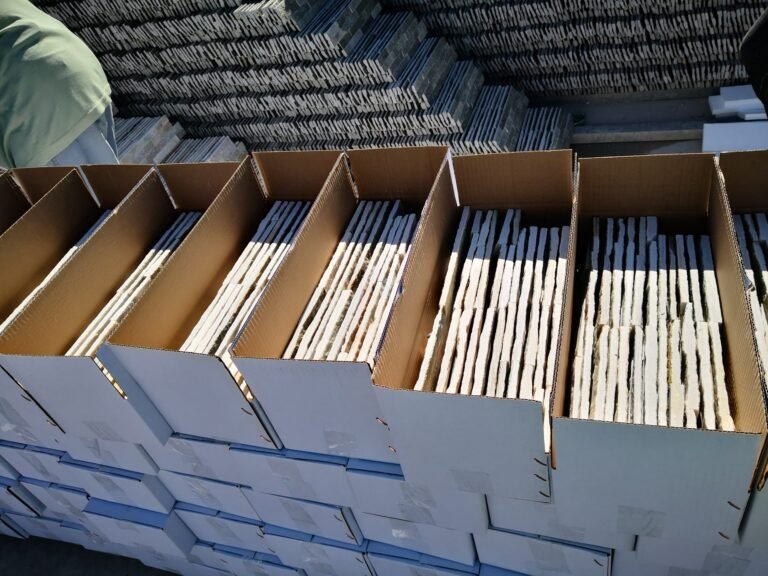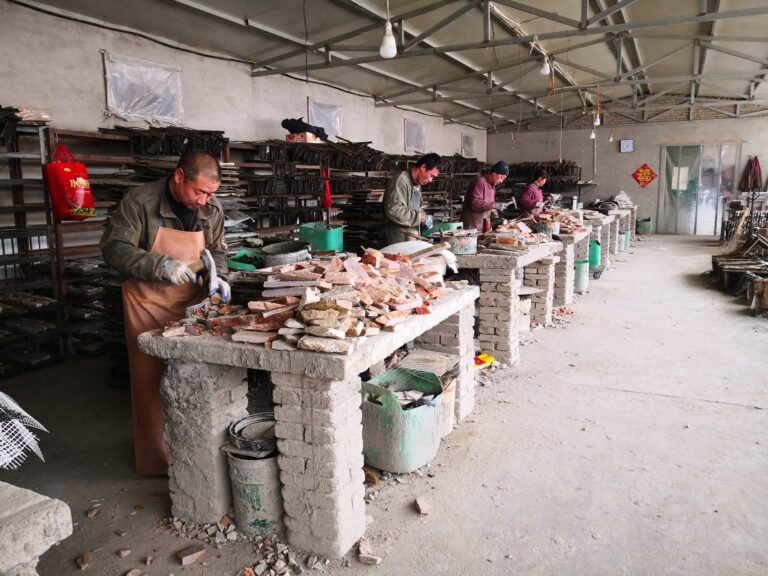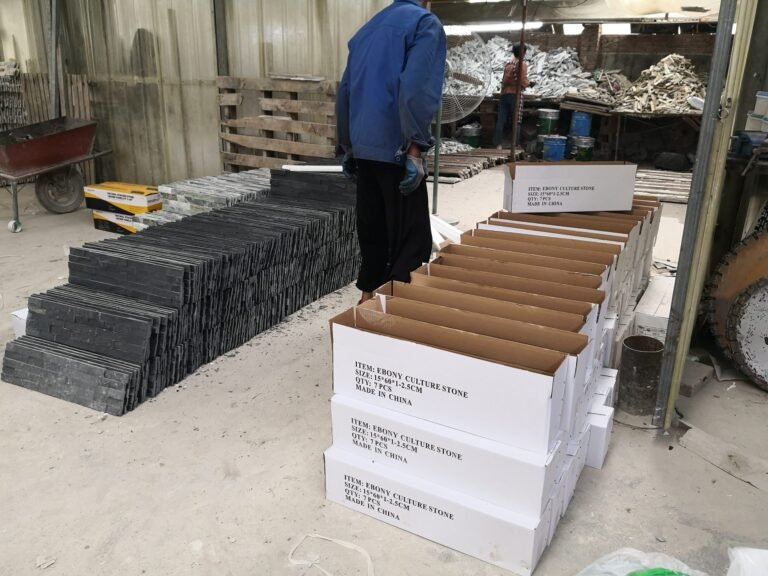
The same stone panel, quoted twice a year apart, can differ in price for reasons that have nothing to do with the stone. A container ordered in April waits behind everyone else who ordered in April, sails during the freight rush, and lands when the season has already started. A container ordered in November moves through a quiet factory, a quiet freight market, and arrives when the yard has space to hold it. The material is identical. The calendar is the difference.
Demand cycles in the stone trade run on three clocks: the Chinese factory calendar, the ocean freight calendar, and your local construction season. Wholesale buyers who read all three get better pricing and shorter effective lead times; buyers who read one get stuck in the same queue as everyone else. This guide maps the year, names the windows that matter, and gives you a month-by-month ordering calendar you can copy into your procurement plan.
Below you get the annual cycle, the Chinese New Year mechanics that stall January orders, the freight pattern that inflates summer containers, how factory pricing cycles work, and the ordering calendar that bundles it into one decision.
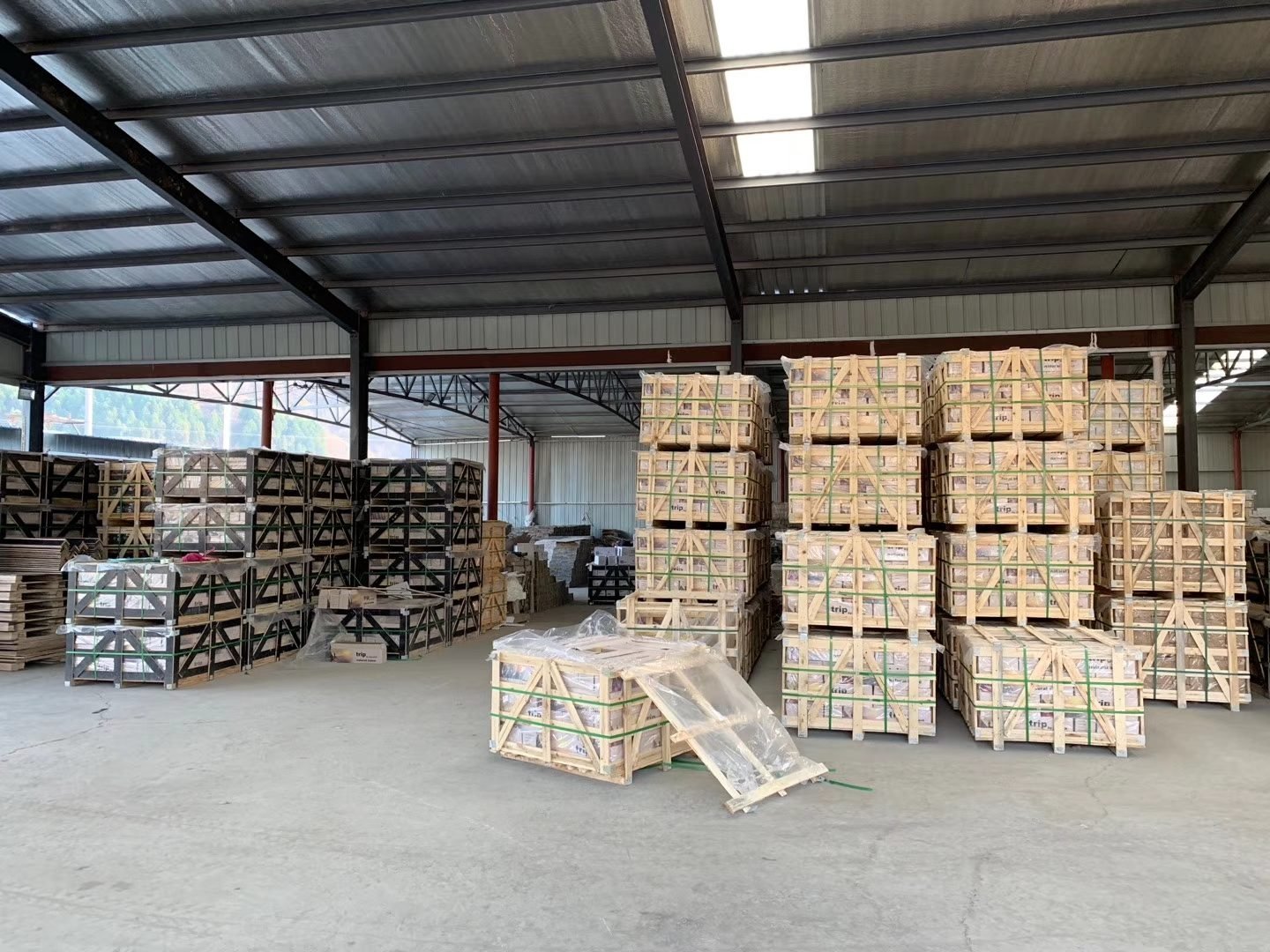
- Stone buying runs on three clocks — the factory calendar, the freight calendar, and the construction season — and the best order window lines up all three.
- Chinese New Year 2027 begins February 6; Hebei stone factories typically close for two to four weeks, so orders confirmed in January wait until late February to restart.
- Freight firms in the Q3 peak season and eases in Q4 and Q1; the freight line is a major share of landed cost, so the booking window matters alongside the FOB quote.
- Top Stone Panels runs 20-25 working days of standard production (25-30 for a first order), with physical samples shipped in 1-3 days before production.
- The practical ordering window for spring installation is roughly September through early December — after quoting, before the CNY queue.
- Factories run annual or semi-annual pricing cycles; a written validity period on the quote is what actually locks the price.
The Annual Cycle in Three Clocks
Every stone order passes through three calendars before it reaches your dock. Naming them is the first step to reading the season instead of guessing it.
| Clock | What it controls | Cost of missing it | When it eases |
|---|---|---|---|
| Factory production | Fabrication and packing lead time | 20-25 working days lost to a waiting queue | Quiet months outside CNY windows |
| Ocean freight | Space, booking, and rate levels | Peak-season surcharges and rollover delays | Q4 and Q1 after the peak rush |
| Construction season | When your customers install | Panels land mid-season or a season late | Moves north as spring builds arrive |
Seasonal demand pricing on stone panels is simply the price of ignoring one of the clocks. The rest of this guide runs each one in order.
Chinese New Year: The Calendar Every Buyer Forgets
Chinese New Year is the single largest disruption in the stone supply calendar, and it moves every year. In 2027 it begins on Saturday, February 6. For a buyer in North America or Europe, that date matters more than the FOB quote on the desk, because it defines when production physically runs.
How the shutdown works
Factory workers in Hebei — the slate and quartzite region — travel home for the holiday, and most stone plants close for two to four weeks around it. A few weeks before the date, production starts winding down as workers leave in waves. After the holiday, reopening is gradual: factories restart, workers return on different days, and the first production slots go to orders already confirmed in writing. The queue is real: everyone who ordered during the gap is behind everyone who ordered before it.
What it does to your lead time
Normal production at Top Stone Panels runs 20-25 working days after sample approval, and 25-30 days for a first order with custom outer carton printing. Add those working days to a February shutdown and a January-confirmed order lands sometime in late March even when everything goes well. An order confirmed by early December, in contrast, finishes production before the break and sails before the backlog forms.
Sample logic changes too. Physical samples ship in 1-3 days all year, but sending samples for approval in mid-January means your approval arrives when the factory is about to close — the green light waits, not a worker.
Treat the two weeks before CNY as a booking wall: order early enough to produce before it, or plan to produce after it and price that waiting time into the plan. The lead time and production scheduling guide walks the full timeline math.
Two booking strategies: pre-CNY or post-CNY
There are two honest ways to order around the holiday, and the worst plan is the one that pretends mid-January is a normal month. Strategy one is booking pre-CNY: confirm the order in November or early December, so production runs its 20-25 working days before the wind-down and the container sails before the break. The price of this strategy is committing early — but the sample approval, deposit, and carton artwork all happen inside a window where the factory is still fully staffed.
Strategy two is post-CNY: order in late January or February, accept that production restarts in late February or March, and price the extra two to four weeks into the schedule. It is the right call when colors, samples, or project funding will not be ready earlier. The mistake is assuming the post-CNY factory is instantly at full capacity — reopenings are gradual, and the first slots go to orders that were confirmed, not to orders still being asked about.

North America’s Spring Restocking Season
In most of the United States and Canada, exterior stone work runs from roughly March through November. Contractors and hardscape crews pick up through spring, so distributors restock in late winter and early spring — and the container that misses that window waits a full season.
Work the math forward: a spring install season that starts in April needs panels on hand in March; ocean transit from Tianjin Xingang plus customs clearance eats roughly a month; production takes 20-25 working days. Count backward and the order needs to be confirmed somewhere between September and December. That is not a loose recommendation, it is the arithmetic of the three clocks.
Spring is also when the renovation jobs thick, and the accounts buying them restock across the wall-product range — showers and wet-area feature walls, fireplace surrounds, and waterproofed wet-area installations are typical spring scopes. Fireplace and hearth projects ride the same wave, and hearth design work draws installers back into the category every spring. Distributors who bought during the autumn window can sell into that demand from stock instead of quoting a fourteen-week lead time — and the stock that runs out first is usually the finishing tier: caps and coping, which sit on every wall and sell out of a dedicated bin, not a pallet.
European buyers run the same clock with different dates. Nordic and alpine regions pause exterior work through winter, then restock in early spring for a March-to-October build window; the calendar shifts a month by latitude, but the arithmetic — production, transit, season — does not move. Whatever the market, read your winter as the planning quarter and your spring as the payoff.
The empty season has a purpose: catch it while competitors are quiet. Quoting in summer, sampling in early autumn, and confirming before the CNY wall is the calmest path to a spring delivery.
Freight Cycles: Q3 Peak, Q4/Q1 Soft
Ocean freight is one of the largest single cost lines on a stone container, often rivaling the factory price difference between suppliers. Its calendar is well known but rarely plotted against the factory calendar: container rates on major Asia-North America lanes firm through the Q3 peak season as retailers front-load for the holidays, then ease in Q4 and Q1 as volumes fall.
A container booked in the soft window not only pays a lower rate; it gets confirmed space instead of rolling to the next sailing. For a heavy, dense cargo like stone, where every lot is one sailing away from a schedule miss, space certainty is part of the price. The ICC Incoterms rules set the boundary for who owns that booking risk; our FOB / CIF / DDP guide applies it to stone deals.
Two procurement habits cut freight exposure. First, compare landed cost, not FOB price: a supplier’s FOB quote is only the start of a container’s cost once freight, customs clearance, and inland haulage are added. Second, book the container when it moves, not when you pay: a confirmed booking in the soft window protects against both rate increases and rollover. The pricing negotiation guide shows which factors in a quote are real levers and which are freight theater.
A stone container has one more calendar risk: sailing frequency. A missed booking in the peak window can push the container to the next sailing, and for a project with a fixed install date, that rollover costs more than any rate difference the market offers. Booking early in the soft window buys the two things that matter — the rate and the space — at the same time.
Factory Pricing Cycles and MOQ Math
Chinese factories mostly quote into annual or semi-annual pricing cycles. Raw material, energy, and labor are re-priced at intervals, and a quotation usually carries a validity period — often one to three months. The buyer who confirms inside that window locks the number; the buyer who delays past it gets re-priced.
That is why the written validity period is the most underrated line on a stone quotation. Ask for it in writing, and place a confirming order before it expires. A short validity is not a tactic to fear; it is the factory telling you exactly when their price calendar rolls over.
MOQ math runs on the same calendar logic. Top Stone Panels starts at one 20GP container per product line, and the range runs from stacked stone to columns and z-panels — so a distributor can consolidate several lines in one booking window instead of spreading them across the year. Annual capacity above 220 containers means the factory can absorb clustered orders, but the schedule still belongs to the buyer. Mixing stone types in one shipment is covered in the MOQ and mixed-container guide; it works best when the mix is decided in the same month as the booking.
Raw inputs keep the pricing clock ticking. Slate and quartzite are quarry products, so their cost chain — block supply, diesel, electricity for CNC cutting, and the epoxy or cement of the backing — reprices a few times a year, and factories pass the changes through in their quotation cycles. That is exactly why a confirmed order beats a soft inquiry: the deposit converts a market price into a contract price. Top Stone Panels works on 30% T/T with 70% before shipment, and the loading video is reviewed before the balance clears — so the deposit can lock the slot in the good window while the final payment waits for the proof.
Lock your spring slot now. Top Stone Panels quotes with a written validity period, ships physical samples in 1-3 days, and runs 20-25 working days of production from an MOQ of one 20GP container — with the loading video reviewed before the 70% balance clears under 30/70 T/T.
Highlights: 220+ containers of annual capacity | FOB Xingang, CIF, or DDP | 6 product lines in one booking
A Buyer’s Ordering Calendar
Here is the year as a calendar of action, written for a distributor who wants spring inventory without paying peak-season prices or waiting in the CNY queue.
| Window | What is happening | What a buyer should do |
|---|---|---|
| Jun – Aug | Quiet season; factories flexible | Send samples, run tests, build the spec for autumn orders |
| Sep – Nov | Sweet spot for spring orders | Confirm orders, lock quotes inside their validity window |
| Early Dec | Last clean slot before CNY wind-down | Confirm pre-CNY production; approve samples immediately |
| Jan – Feb | CNY closure (Feb 6, 2027); plant shuts 2-4 weeks | Place orders early in the window for post-CNY; expect late-Feb/Mar starts |
| Mar – Apr | Production restarts; first slots go to confirmed orders | Follow up on post-CNY schedules; start shipping spring lots |
| May – Jun | Install season in full swing | Restock late-season gaps and set up the next cycle’s samples |
The calendar is a template, not a prison. West-coast buyers add shipping days and southern buyers start the season earlier, so shift the windows by your own transit time — the logic stays the same. Buyers placing orders on a repeating cycle should also protect the arrangement with the expectations covered in our stone panel warranty guide, so a seasonal restock never turns into a seasonal dispute.

What about a mid-year order? It exists for a reason — top-ups, late project scopes, and new product trials — and the rule is simple: quote freight first, because a single container bought in the peak window can cost more to land than a full-season contract booked in the soft one. Southern-hemisphere markets flip the calendar entirely: Australian and New Zealand buyers planning an October-to-April build run their ordering window through the northern spring, which is precisely when Chinese factories have spare capacity. Off-cycle demand is a buyer’s market — use it.
Trade-show travel has its own season too. If you are planning a sourcing trip, book it around the industrial calendar: the Canton Fair survival guide covers timing a visit against factory schedules instead of against the weather.
FAQ
When is the best time to order stone panels from China?
For a spring installation, order between roughly September and early December. That window clears the CNY shutdown, avoids the Q3 freight peak, and lands panels before the season starts.
How long does the Chinese New Year shutdown last?
Stone factories typically close for two to four weeks around CNY — February 6 in 2027 — and need additional time to restart after workers return. Orders confirmed in the weeks before CNY either ship before the break or wait until late February.
When are ocean freight rates lowest for stone?
Rates typically ease in Q4 and Q1 after the Q3 peak-season rush. Booking in that softer window trims the freight line, which is a major share of the landed cost on a stone container.
Do stone factories change prices during the year?
Many run annual or semi-annual pricing cycles tied to raw material and energy costs. Confirming an order while a quotation is valid locks the price, which is why a written validity period matters on every quote.
How early should I order for a spring installation?
Work backwards from your install date: 20-25 working days of production, plus ocean transit and customs. For a March-to-May install season, that lands orders in the September-to-December window.
Conclusion
Stone panel demand runs on three clocks, and the buyers who win on price and schedule are the ones who read all three at once. Order in the September-to-December window for spring inventory, confirm before the CNY wall, book freight in the soft season, and hold every factory to its written quote validity.
Your checklist before the next order:
- Map your install season back through transit and production to a confirmation month — not a “sometime soon.”
- Confirm order and approve samples before the CNY wind-down; use the February 6, 2027 date as your wall.
- Ask for the quotation’s validity period in writing and confirm inside it.
- Compare landed cost, not FOB alone, and book the container in the soft freight window.
The material waits. The calendar does not. Get a dated quote from Top Stone Panels and lock your production slot →