Every builder and distributor eventually faces the same question on exterior cladding projects: do you go with natural stone or manufactured stone? Both materials cover walls. Both look acceptable on day one. But the similarities end fast once weather, time, and building codes enter the picture.
Exterior stacked stone veneer panels made from 100% natural rock — slate, quartzite, marble, or sandstone — deliver performance that concrete-based imitations cannot match. Freeze-thaw cycling, UV exposure, salt spray, and fire all test a material’s true quality. Natural stone passes every test. Manufactured stone passes some, for a while.
This comparison breaks down the seven factors that matter most for exterior applications: durability, color authenticity, cold-climate performance, fire rating, UV stability, installation characteristics, and long-term cost. You will find specific data, not marketing claims — plus guidance on when each product makes sense for your projects. If you are evaluating stacked stone panels for a distribution line or a building envelope, this article gives you the numbers you need.
What Are Exterior Stacked Stone Veneer Panels?
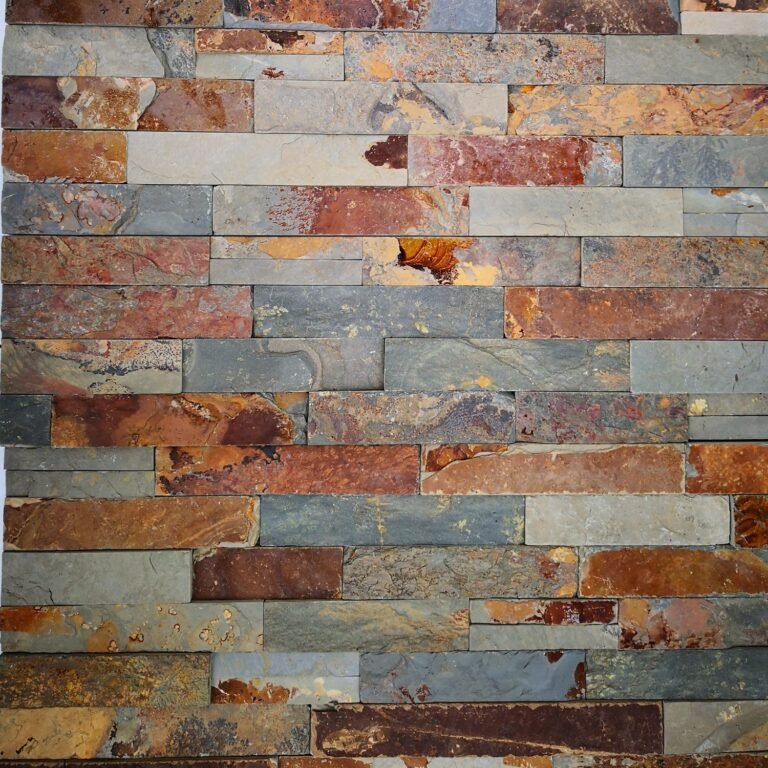
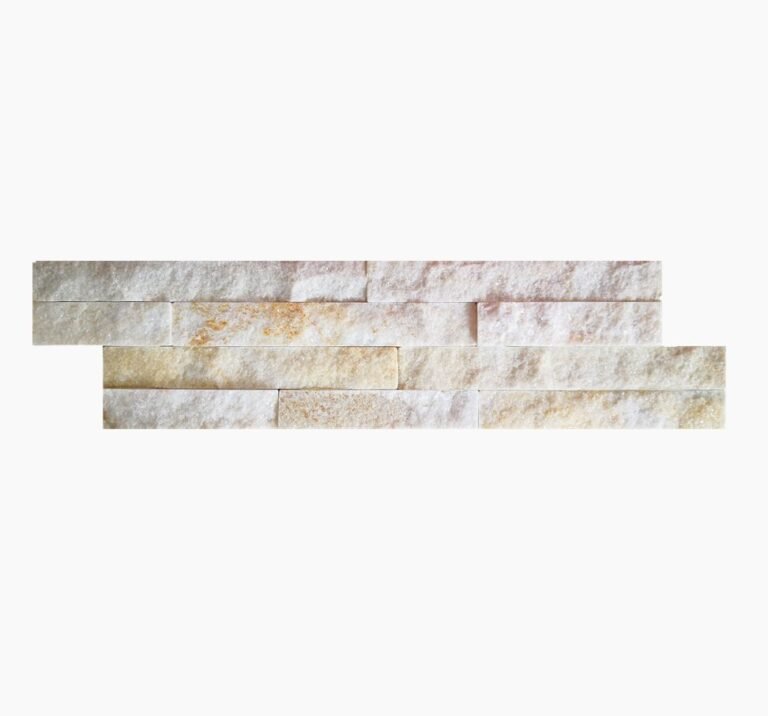
Exterior stacked stone veneer panels are thin, interlocking panels cut from natural quarried stone. Each panel consists of multiple stone pieces bonded to a cement or mesh backing in a staggered, ledger-style pattern. The result is a modular unit — typically 15×60 cm or 15×55 cm — that installs like tile and produces the appearance of hand-laid dry-stack stonework.
The “stacked” profile means no visible grout lines between individual stones. The stones sit flush against each other, creating tight shadow lines that read as a continuous textured surface from a distance. For exterior walls, this profile sheds water efficiently and minimizes moisture trapping behind the cladding layer.
At Top Stone Panels, every stacked stone panel begins as raw block material from our own quarries in Hebei province. Infrared CNC diamond blades cut the stone to exact dimensions, and marine-grade epoxy bonds each piece to a reinforced backing. The panels carry a Class A fire rating by virtue of being solid natural rock. They handle temperature swings from -30°C to +50°C without cracking, spalling, or delamination — a critical spec for distributors serving markets across the northern United States, Canada, and Scandinavia.
For a deeper look at the product category, our guide on what stacked stone panels are covers the full range of profiles and materials available. The key point here: “natural stone veneer” is not a marketing label. It means the panel is literally sliced from quarried geological formations that took millions of years to form.
What Is Manufactured Stone Veneer?
Manufactured stone veneer (MSV) is a cast product. The recipe is straightforward: Portland cement, lightweight aggregates such as pumice or perlite, and iron oxide pigments for color. The mixture gets poured into rubber molds taken from real stone, then cured. The finished product mimics the shape and texture of natural stone at a lower unit weight and typically a lower unit price.
MSV has improved over the past two decades. Premium brands produce convincing molds and multi-layer pigment applications that look reasonable at viewing distance. The material is lighter than natural stone — roughly 6 to 10 kg/m² versus 15 to 25 kg/m² for thin natural veneer — which can simplify structural calculations on wood-frame construction.
The limitation is material science. Cement-based products behave differently than geological stone under thermal stress, moisture intrusion, and ultraviolet radiation. Pigments sit in or on the surface rather than running through the full thickness of the material. These are not defects in manufacturing — they are inherent properties of the composite. Understanding where those properties matter is the core of this comparison.
7 Key Differences: Natural vs Manufactured Stone Veneer
The following seven categories cover the performance criteria that architects, builders, and material specifiers evaluate for exterior cladding. Each section presents the measurable difference between natural stone veneer panels and manufactured alternatives.
1. Durability & Lifespan
Natural stone is one of the most durable building materials on Earth. Slate, quartzite, and sandstone formations have existed for 200 to 600 million years before quarrying. Once cut and installed, exterior stacked stone veneer panels maintain structural and aesthetic integrity for 50 to 100 years with basic maintenance. There is no degradation mechanism for the stone itself — only for the bonding adhesive or substrate, both of which are replaceable.
Manufactured stone veneer carries a typical manufacturer warranty of 20 to 50 years, but real-world performance depends heavily on installation quality and climate. Cement-based products are susceptible to efflorescence (white salt deposits), surface erosion from acid rain, and micro-cracking from thermal expansion. Industry data shows MSV facades in moderate climates lasting 20 to 30 years before visible degradation appears. In harsh coastal or freeze-thaw environments, that window narrows to 15 to 20 years.
2. Color Consistency & Authenticity
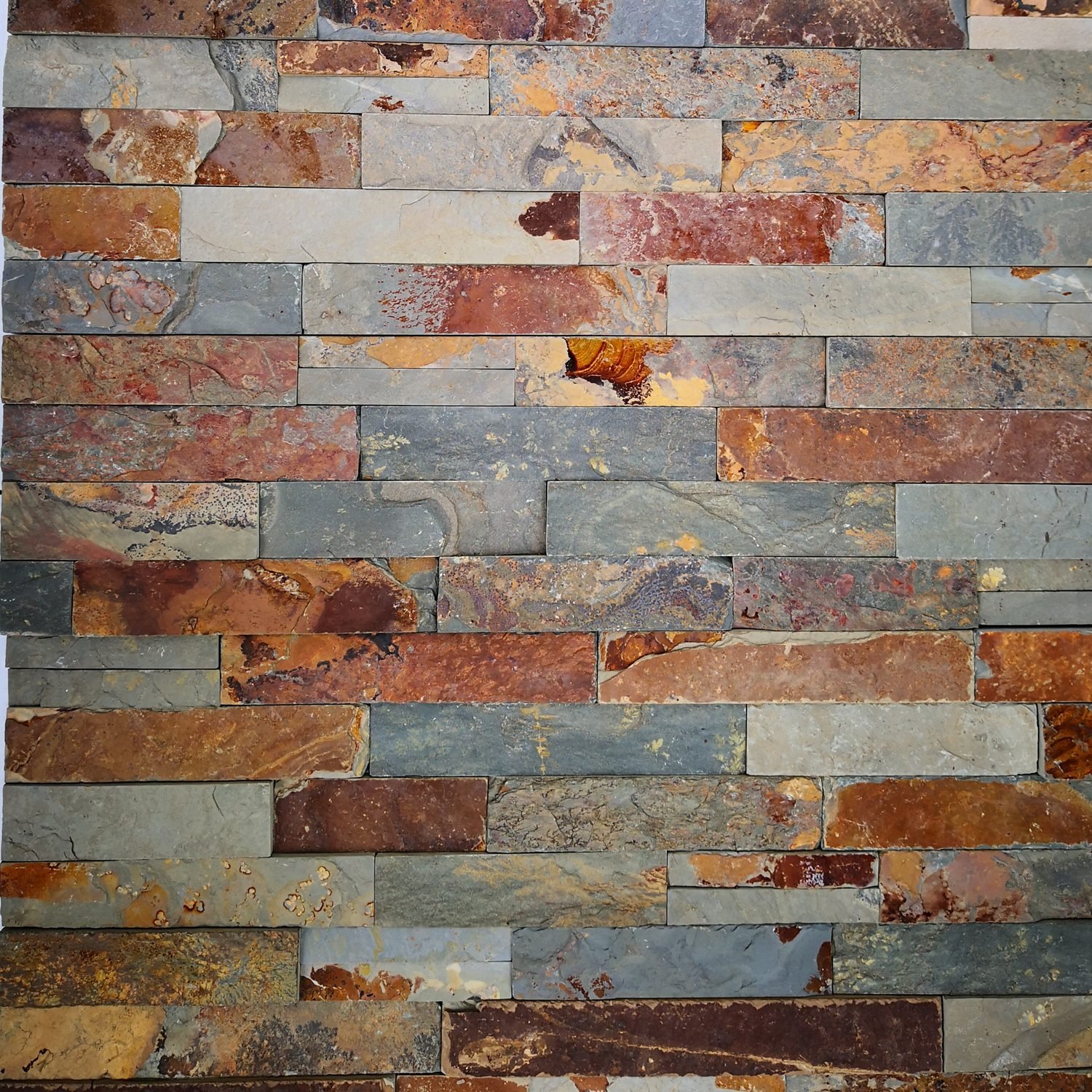
Natural stone color runs through the full thickness of the material. Cut a piece of yellow quartzite in half and the interior matches the surface. The color comes from iron oxide, manganese, chlorite, and other minerals embedded in the rock matrix during formation. No two panels are identical, which produces the organic variation that architects and homeowners find compelling. Top Stone Panels manages this variation through batch-specific vein selection — our QC team groups panels from the same quarry vein to maintain visual consistency across a project without eliminating the natural variation that makes stone attractive.
Manufactured stone achieves color through surface-applied or integral pigments. High-end MSV brands layer multiple pigment coats for depth, but the color rarely penetrates beyond 2 to 3 mm. Chips, scratches, or cut edges expose the concrete substrate underneath — a grey base that breaks the visual illusion. Over large exterior walls, the repetition in mold patterns also becomes noticeable. Installers sometimes rotate panels from different boxes to reduce pattern repeat, a workaround that adds labor cost.
3. Freeze-Thaw Performance
This is where exterior stacked stone veneer panels separate decisively from manufactured alternatives. Natural stone, when properly sealed, has water absorption rates below 0.5% for quartzite and below 2% for most slate varieties. Low absorption means less water penetrates the material, and less water inside the material means less expansion damage when temperatures drop below freezing.
Top Stone Panels’ exterior-grade stacked stone withstands freeze-thaw cycling between -30°C and +50°C. This specification is not theoretical — it reflects testing conditions matched to the harshest North American and Northern European winter climates. Our freeze-thaw resistance guide details the testing methodology and explains why natural stone outperforms concrete products in cold regions.
Manufactured stone absorbs more water — typically 8 to 15% by weight — because the lightweight aggregates in the cement mix create internal porosity. When that trapped water freezes, it expands by roughly 9%, creating internal micro-fractures. After 50 to 100 freeze-thaw cycles, those fractures become visible cracks. In Minneapolis, Montreal, or Oslo, a single winter can deliver 40 to 60 cycles. Do the math: manufactured stone on an exterior wall in a cold climate faces structural compromise within a decade.
4. Fire Rating
Natural stone is non-combustible by definition. Slate, quartzite, marble, and sandstone carry an inherent Class A fire rating (ASTM E84) — the highest classification for surface burning characteristics. No chemical treatment or coating is required to achieve this rating. The stone itself simply does not burn, produce smoke, or contribute fuel to a fire.
Manufactured stone also achieves Class A ratings in most product lines because Portland cement is non-combustible. However, the lightweight aggregates and any organic additives in the mix can produce minimal smoke under extreme heat. For most building code applications, both materials satisfy fire requirements. The advantage for natural stone appears in insurance documentation and wildfire zone specifications, where the geological origin of the material provides an additional layer of confidence for specifiers and underwriters.
5. UV Stability
Natural stone does not fade. The minerals that produce color — iron oxide for reds and yellows, chlorite for greens, carbon for blacks and greys — are stable under ultraviolet radiation at wavelengths present in sunlight. A quartzite panel installed on a south-facing exterior wall in Arizona will display the same color in year 30 as it did on day one.
Manufactured stone pigments have improved, but iron oxide pigments in a cement matrix still experience gradual UV degradation. Most MSV manufacturers warrant color for 20 to 30 years, acknowledging that fading beyond “acceptable limits” will occur eventually. In practice, south-facing and west-facing walls in high-UV climates (American Southwest, Southern Europe, Australia) show perceptible color shift within 10 to 15 years. The fading is uneven — sheltered areas under eaves retain color while exposed areas lighten — creating a patchy appearance that natural stone never produces.
6. Installation & Weight
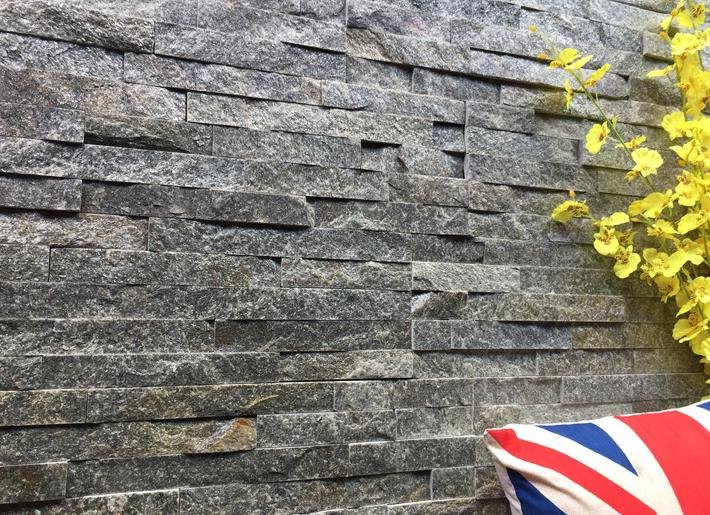
Natural stacked stone veneer panels weigh 15 to 25 kg/m² depending on stone type and thickness. Manufactured stone weighs 6 to 10 kg/m². The weight difference matters for structural calculations on certain applications — particularly upper-story installations on wood-frame construction where additional dead load must be accounted for in the wall framing.
That said, modern natural stone veneer panels install with the same thinset mortar methods used for tile. No specialty masonry skills are required. Top Stone Panels’ stacked stone units come in standardized 15×60 cm and 15×55 cm panels with matching L-corner kits that wrap building corners cleanly. Our installation guide walks through the full process — substrate prep, adhesive selection, cutting, and grouting — for installers who have not worked with natural veneer before.
The weight advantage of manufactured stone is real but often overstated. For single-story exterior walls, standard wood framing supports natural stone veneer without reinforcement. For multi-story applications, the structural engineer factors the additional load into the framing design — a line item that typically adds 1 to 3% to total wall system cost.
7. Total Cost of Ownership
Upfront, manufactured stone costs 20 to 40% less per square meter than natural stone veneer at the material level. For a 200 m² exterior project, that difference might represent $3,000 to $8,000 in material savings. This is why MSV wins on initial bids for commercial projects with short-term ownership horizons.
Total cost of ownership tells a different story. Natural exterior stacked stone veneer panels last 50+ years with essentially zero maintenance beyond occasional cleaning. Manufactured stone typically requires evaluation at the 15 to 20-year mark, with partial or full replacement possible by year 25 in harsh climates. A single replacement cycle on a 200 m² facade costs $12,000 to $20,000 in combined material and labor — more than the original savings.
For distributors, the margin story also favors natural stone. Quarry-direct sourcing from manufacturers like Top Stone Panels eliminates middlemen. With an MOQ of one 20GP container and pricing structured for wholesale volumes, distributor margins on natural stone veneer consistently exceed those on commodity manufactured stone products where local competition compresses pricing.
Exterior Stacked Stone Veneer Panels vs Manufactured Stone: Comparison Table
| Performance Factor | Natural Stacked Stone Veneer | Manufactured Stone Veneer |
|---|---|---|
| Durability & Lifespan | 50–100 years; no material degradation | 15–30 years depending on climate |
| Color Authenticity | Full-depth mineral color; organic variation | Surface pigment (2–3 mm); pattern repeat from molds |
| Freeze-Thaw Resistance | -30°C to +50°C; <2% water absorption | 8–15% absorption; micro-cracking after 50–100 cycles |
| Fire Rating | Class A (inherent, untreated) | Class A (cement-based) |
| UV Stability | No fading; minerals are UV inert | Gradual fading; 10–15 years in high-UV exposure |
| Weight | 15–25 kg/m² | 6–10 kg/m² |
| 30-Year Total Cost | One installation; minimal maintenance | 1–2 replacement cycles likely; higher lifetime cost |
When to Choose Natural Exterior Stacked Stone Veneer Panels
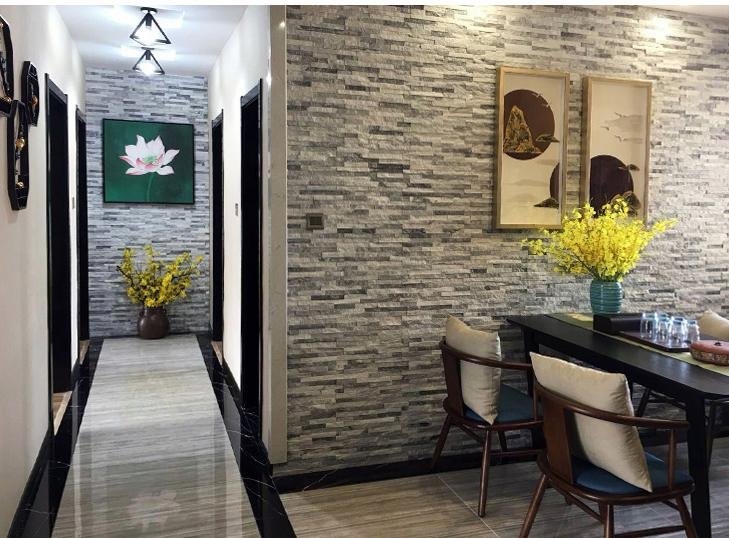
Premium residential and commercial facades. When the client expects a building exterior to look as good in year 25 as it does on completion day, natural stone is the only cladding that delivers. Architects specifying high-end residential developments, boutique hotels, and corporate headquarters consistently select natural stone veneer for its authenticity and permanence. See our exterior design ideas guide for project inspiration across residential and commercial applications.
Cold-climate and coastal projects. If the building site experiences harsh winters (USDA Zone 4 or colder), coastal salt spray, or desert UV exposure, natural stacked stone veneer outperforms every alternative. The -30°C to +50°C temperature tolerance and salt spray resistance make it the default choice for projects from northern Canada to the Gulf Coast to Mediterranean shorelines.
Long-term ownership and institutional builds. Universities, government buildings, hospitals, and corporate campuses plan in 40 to 60-year maintenance cycles. Specifying a cladding that requires replacement at year 20 creates budget problems the original architect will never face — but the building owner will. Natural stone eliminates that liability.
Distributor product lines targeting premium segments. For building material distributors, stocking natural stone veneer positions your catalog above the commodity MSV market. Quarry-direct pricing from Top Stone Panels — with 220+ containers shipped annually and 80,000 m² monthly production capacity — supports competitive wholesale pricing while maintaining healthy distributor margins. Our full range of thin stone veneer products complements stacked stone for a complete exterior catalog.
When Manufactured Stone Might Work
Fair comparison requires acknowledging where MSV fits. Two scenarios:
Budget-constrained short-horizon projects. A speculative commercial build with a 10-year hold period and a tight construction budget may justify manufactured stone on upper-story accent walls where weight matters and weather exposure is limited. The cost savings are real in the short term, and if the building will be renovated or reclad within 15 years, the lifespan limitation is irrelevant.
Interior accent walls in mild environments. Manufactured stone performs adequately on interior feature walls where freeze-thaw cycling, UV exposure, and moisture intrusion are not factors. For distributors who carry both product lines, MSV fills the interior budget segment while natural stone owns the exterior and premium interior segment.
How Top Stone Panels Manufactures Exterior-Grade Stacked Stone
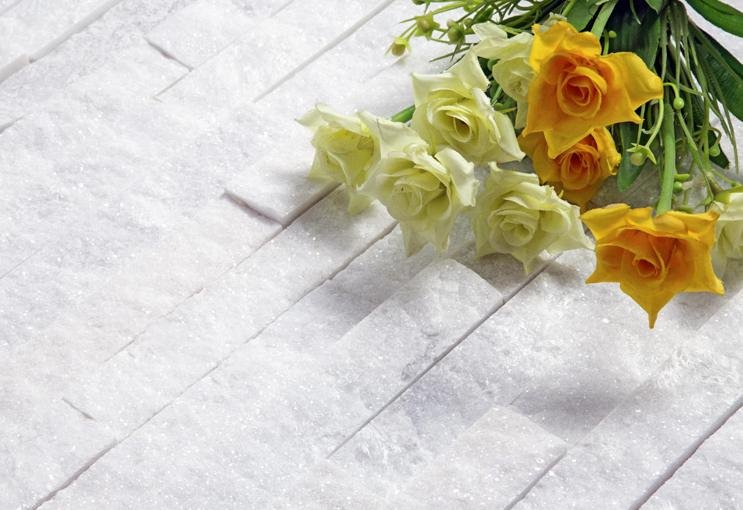
Every panel that ships from our Yixian facility passes through a production system built around three priorities: material integrity, dimensional precision, and zero-breakage delivery.
Quarry selection and raw material control. We operate our own quarries in Hebei province, giving us direct control over which stone blocks enter production. Not every block meets exterior-grade standards — vein consistency, mineral composition, and compressive strength all vary within a single quarry face. Our QC team performs batch-specific vein selection, grouping blocks from the same geological layer to maintain color and performance consistency across an entire container order.
Precision cutting. Blocks are cut into panels using infrared CNC diamond blade systems. Infrared guidance ensures each cut follows the exact programmed dimension — 15×60 cm or 15×55 cm — with tolerances under 1 mm. Dimensional accuracy matters for exterior installations because it determines how tightly panels abut each other, which directly affects water shedding and visual continuity across large wall surfaces.
Bonding and backing. Individual stone pieces are bonded to a reinforced backing using marine-grade epoxy adhesive. This is the same adhesive class used in boat building — formulated to maintain bond strength under constant moisture exposure and temperature fluctuation. Each panel receives either a cement backing or mesh backing depending on the specified application. Cement backing adds rigidity for exterior wall installations; mesh backing reduces weight for applications where load is a concern.
Three-step quality control. Our QC process runs at three checkpoints: (1) raw material selection at the quarry gate, (2) in-process re-inspection during cutting and bonding, and (3) pre-shipment final inspection before containerization. Any panel with dimensional deviation, bond weakness, or surface defect is pulled from the batch. This is how we ship 220+ containers per year with consistent quality across every order.
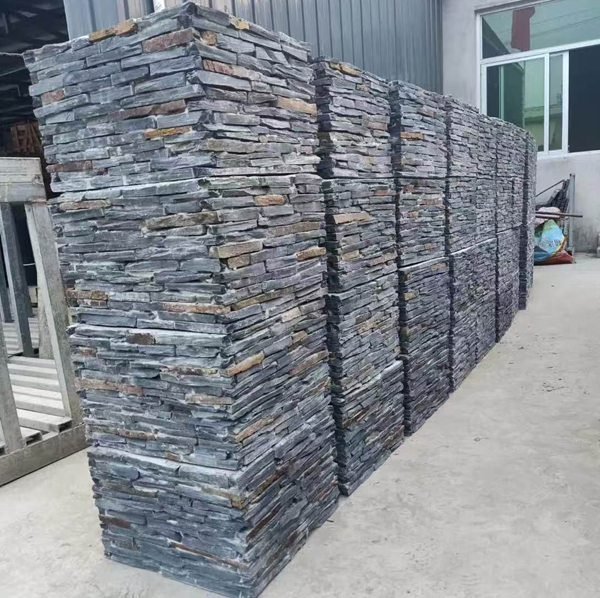
Zero-Breakage Protocol shipping. Exterior stacked stone veneer panels are packed in 3-5 layer corrugated cartons, stacked on fumigation-free pallets, secured with 4-6 steel bands, and braced with industrial air bags inside the container. The system is designed so that panels arrive at the destination port in the same condition they left the factory. We ship from Xingang/Tianjin with a lead time of 20 to 25 working days (25 to 30 days for first orders with custom packaging). Every shipment includes a Certificate of Origin, ISPM 15 fumigation certificate, and pre-shipment inspection report.
Beyond stacked stone, our production line covers thin ledgestone, flagstone, column wraps, and Z-panels — giving distributors a complete natural stone cladding catalog from a single factory source.
Frequently Asked Questions
Source Exterior-Grade Stacked Stone Direct from the Quarry
If you are a distributor evaluating natural stone veneer for your product line, or a builder specifying exterior cladding for a project that demands longevity, Top Stone Panels offers quarry-direct pricing with the quality control to back it up. Eighteen years of production experience, 220+ containers shipped annually, and a zero-breakage shipping protocol mean your order arrives on spec and intact.
Request a quote or product samples: Explore our stacked stone veneer collection or contact our sales team to discuss your project requirements, container pricing, and custom packaging options. MOQ starts at one 20GP container — ideal for trial orders.