Kitchen renovations drive a significant share of residential stone panel sales. For distributors and builders, that means backsplash projects represent repeatable, high-margin opportunities. The right stone backsplash ideas can turn a standard kitchen into a design showcase — and a single container order can supply dozens of projects.
Natural stone panels have moved beyond feature walls and fireplace surrounds. Homeowners now want the same organic texture behind their countertops, between upper and lower cabinets, and around kitchen islands. The trend favors real material over manufactured alternatives, and buyers are willing to pay for it. The island base is the next face buyers ask to see in stone; our stacked stone kitchen island design guide covers full-wrap and two-tone treatments for that surface. The island base is the next face buyers ask to see in stone; our stacked stone kitchen island design guide covers full-wrap and two-tone treatments for that surface.
This guide covers eight kitchen backsplash designs using stacked stone, thin ledgestone, and other panel formats. Each concept includes material recommendations, design context, and product specs that help you source, stock, and sell with confidence.
Why Natural Stone Panels Work for Kitchen Backsplashes
Stone is not the obvious first pick for a backsplash. Tile, glass, and stainless steel dominate that space. But natural stone panels have carved out a growing niche for specific reasons — and those reasons matter when you are explaining the product to a builder or showroom buyer.
Heat resistance. Natural stone carries an A-grade fire rating. It does not melt, warp, or discolor near cooktops. Quartzite and slate panels in particular tolerate direct radiant heat from gas ranges without degradation. That matters in a kitchen where a tile glaze might craze or a synthetic surface might scorch.
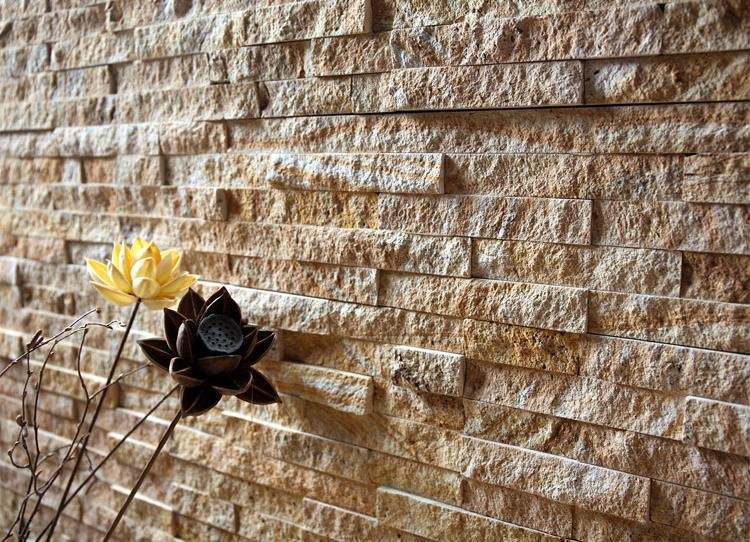
Texture depth. Split-face and stacked stone panels create shadow lines that flat surfaces cannot replicate. A 15x60cm stacked stone panel projects 15-25mm from the wall, producing depth that changes with kitchen lighting throughout the day. This three-dimensional quality is what draws designers toward stone over smooth alternatives.
Low maintenance once sealed. Apply a penetrating stone sealer during installation, and the backsplash resists grease splatter, steam, and food stains. Routine cleaning requires only a damp cloth. No grout lines to scrub — a common pain point with ceramic tile that stone panels eliminate entirely.
Panel format speeds installation. Unlike individual stone tiles, pre-assembled panels like Z-panels and stacked stone units cover larger areas per piece. Interlocking edges reduce visible seams. For a contractor billing by the project, faster installation directly improves margins.
If you are a distributor evaluating which products to stock, the backsplash application opens a category that complements exterior wall cladding and fireplace veneer — three revenue streams from overlapping inventory.
1. Classic Split-Face Stacked Stone Behind White Cabinets
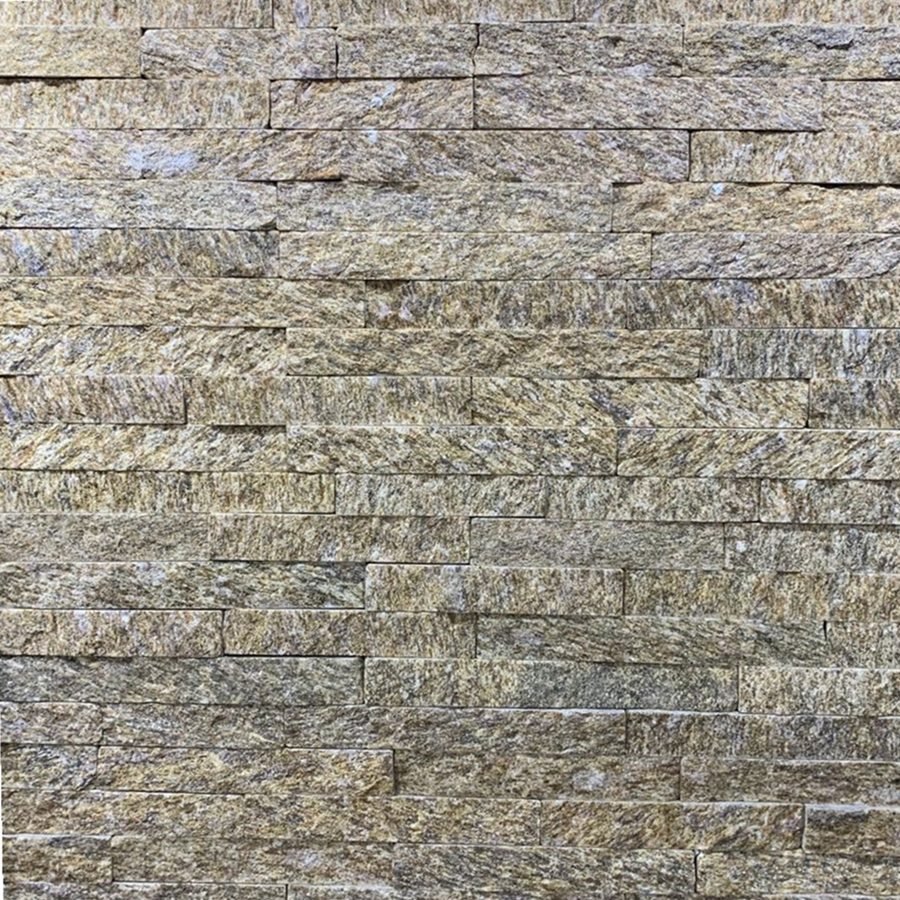
White cabinets are the most common kitchen specification worldwide. They also create the perfect backdrop for a textured stone backsplash. The contrast between smooth painted surfaces and rough split-face stone generates visual tension that photographs well and sells kitchens.
For this design, use stacked stone panels in a natural grey or warm sandstone tone. The 15x60cm format works best here — each panel covers roughly 0.09 m², and the interlocking Z-joint edges create a continuous stone face without visible seams.
Run the panels from the countertop to the base of the upper cabinets. A standard 450mm backsplash height uses about five courses of stacked stone. The split-face profile projects 15-25mm from the wall, so plan for a slight reveal at the countertop edge. A silicone bead along the bottom joint handles moisture where stone meets the counter surface.
This design works particularly well for residential resale projects. Builders report that a stone backsplash adds perceived value that exceeds the material cost — useful when you are selling the concept to developers furnishing model homes.
For a deeper look at how stacked stone panels work across different applications, see our guide on what stacked stone panels are and their manufacturing process.
2. Dark Quartzite Ledger Panels for Modern Industrial Kitchens
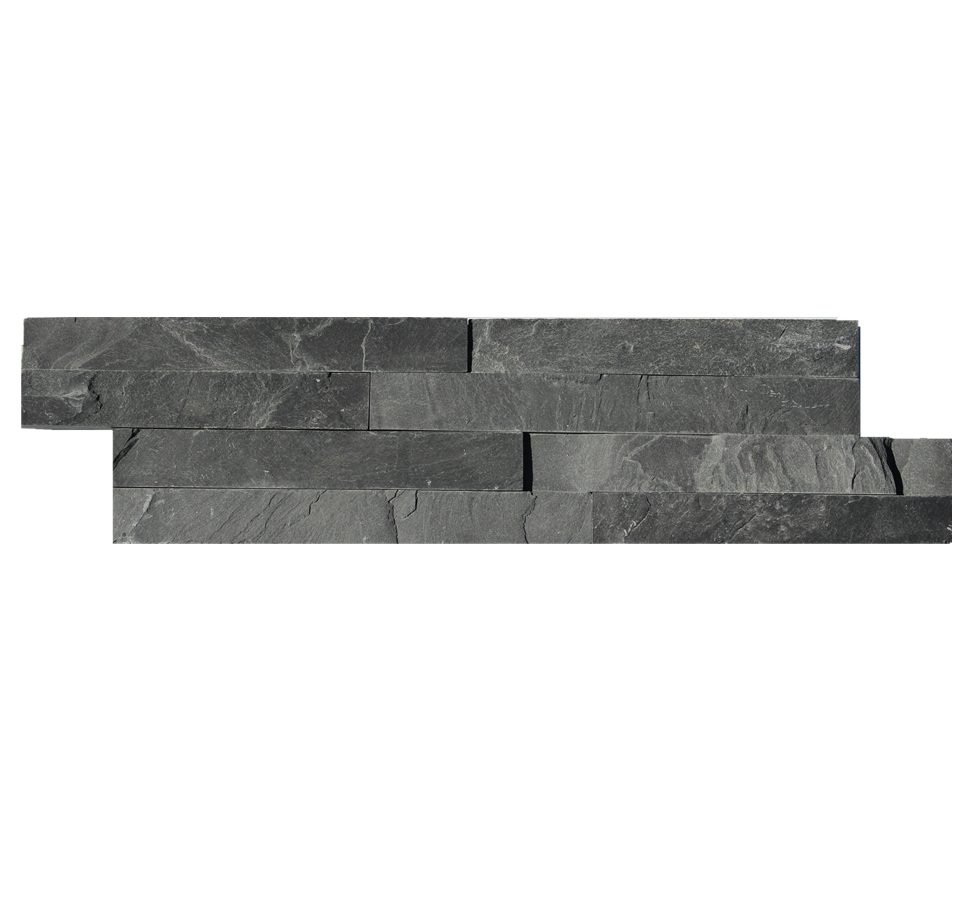
Industrial-style kitchens — exposed ductwork, concrete floors, matte black hardware — need materials that hold their own against raw architectural elements. Dark quartzite delivers.
Black and charcoal quartzite panels absorb light rather than reflect it. The natural mica flecks in bronze-sparkle quartzite catch under-cabinet lighting, creating subtle shimmer without looking polished. This is stone that reads as architectural rather than decorative.
Thin ledgestone panels in 36x10cm format are the practical choice for this application. At 8-12mm thickness, they protrude minimally from the wall — important in tight industrial kitchens where every centimeter of counter depth matters. The slim profile also makes cutting around electrical outlets straightforward with a standard wet saw.
Pair dark quartzite with brushed stainless steel appliances and open shelving. The combination has become a standard specification in urban loft renovations and commercial kitchen showrooms. For distributors, stocking black and charcoal thin ledgestone positions you for the modern kitchen segment that has grown consistently over the past five years.
Understanding how natural stone veneer compares to cultured stone helps when buyers ask why they should pay more for the real material.
3. Cream Marble Veneer Backsplash for Farmhouse Style
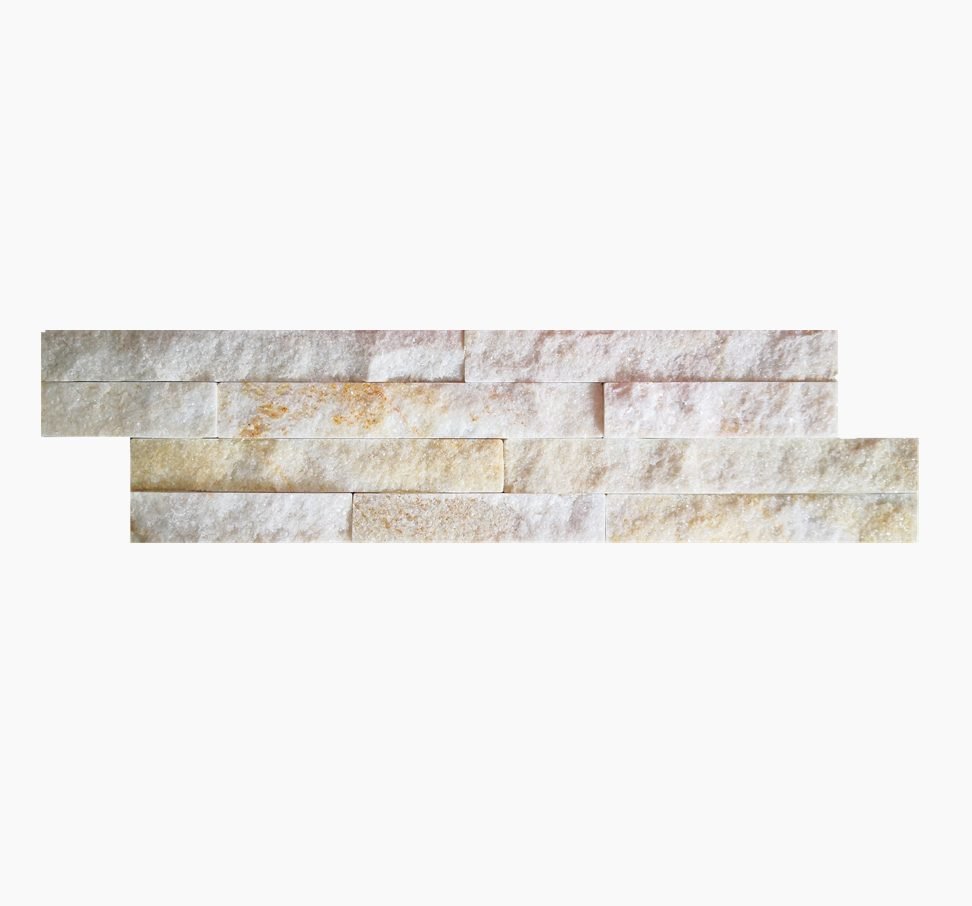
Farmhouse kitchens lean on warm neutrals — cream, beige, soft white. Stone backsplashes in this context need to feel inviting rather than imposing. Cream marble and light quartzite deliver exactly that.
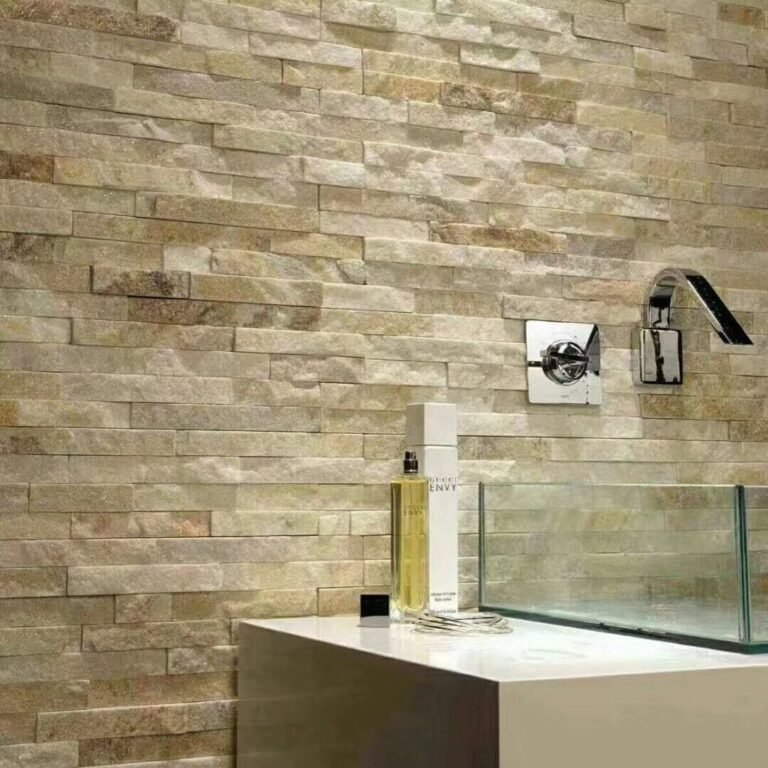
The 10x36cm thin ledgestone format suits farmhouse designs because the horizontal stone strips echo the linear quality of shiplap walls and open wood shelving. A cream quartzite panel carries subtle veining that adds character without overwhelming the space.
Install these panels in a running bond pattern or straight-stack configuration depending on the desired level of formality. Running bond reads more casual and traditional. Straight-stack reads slightly more contemporary — a good option for the “modern farmhouse” hybrid that dominates current kitchen design trends.
Marble veneer panels require a quality penetrating sealer, particularly behind the sink area where water contact is frequent. Once sealed, maintenance is minimal. Advise your customers to reseal every 12-18 months for optimal stain resistance.
For distributors exploring how thin stone veneer products compare across kitchen and bathroom applications, the farmhouse backsplash segment offers strong repeat-order potential from renovation contractors.
4. Mixed-Color Slate Panels for Eclectic Kitchen Islands
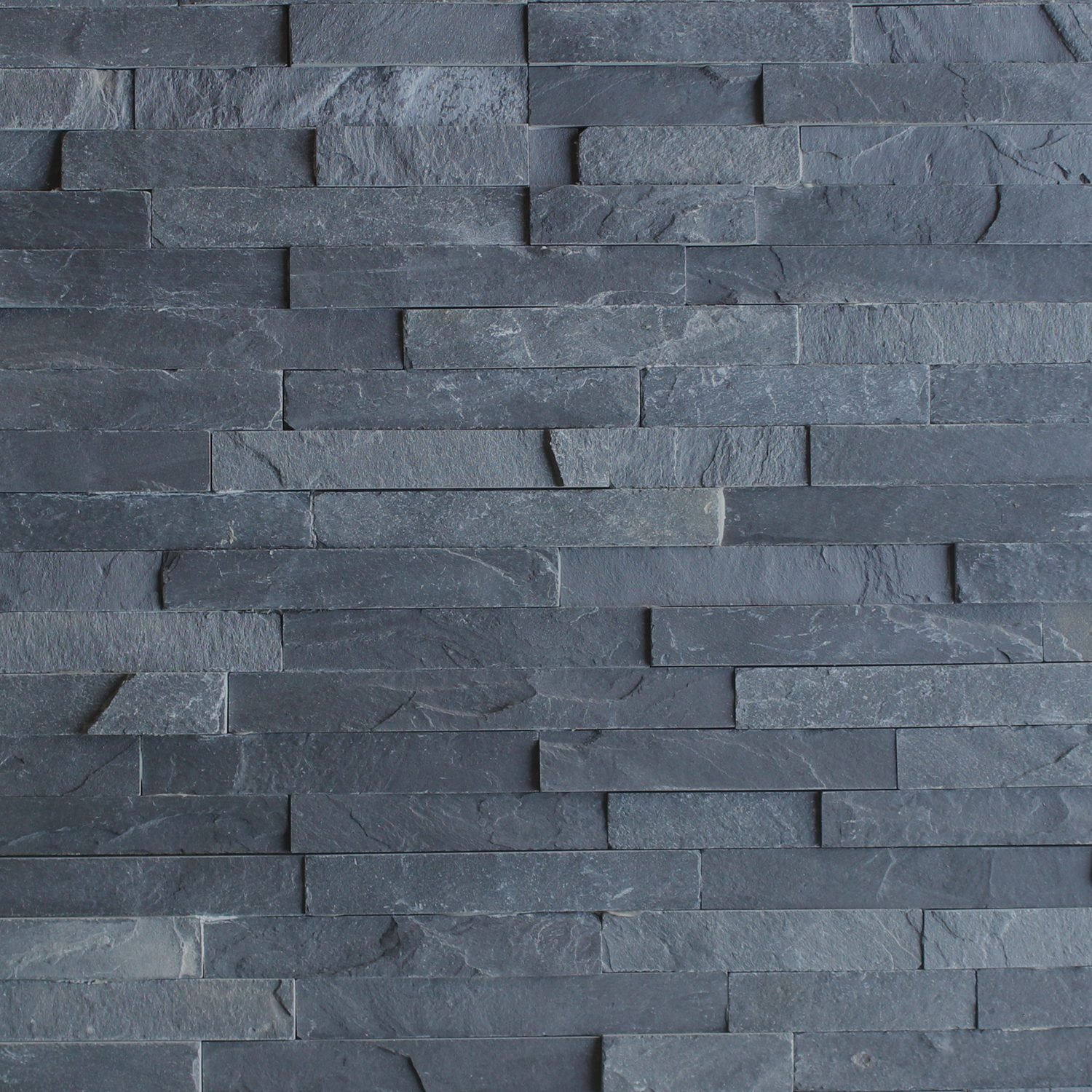
Kitchen islands have evolved from prep surfaces into design statements. Wrapping an island base in stone panels is a growing trend, and mixed-color slate is the material that makes it work best.
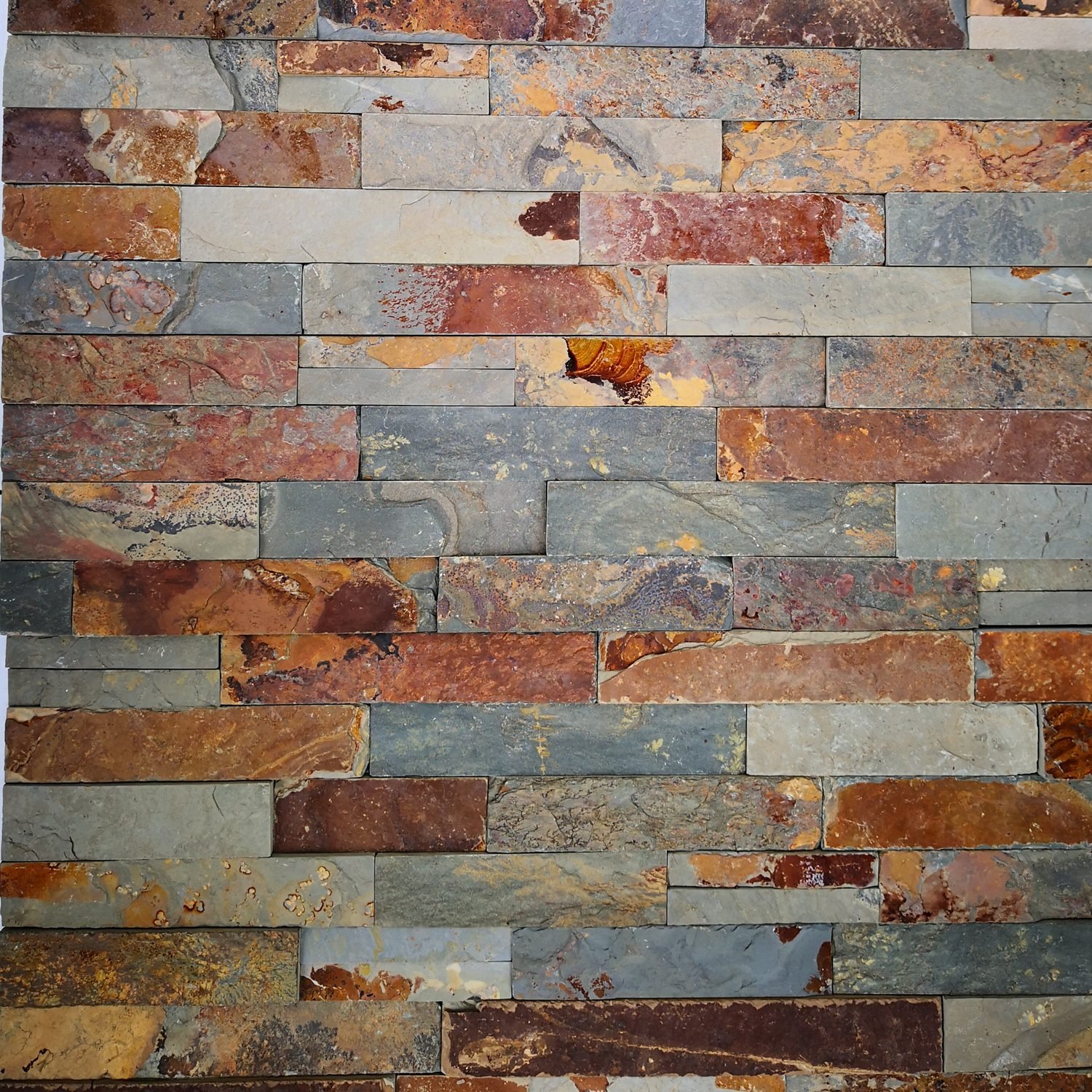
Slate naturally varies between grey, green, rust, and purple tones within a single batch. When installed as stacked stone panels, this color variation creates an organic mosaic effect that reads as intentional design rather than inconsistency. Each panel becomes unique.
For island applications, use the 15x55cm or 15x60cm stacked stone format. The panels wrap around corners using standard miter cuts or overlapping butt joints. A typical island base (900mm wide x 600mm deep x 850mm high) requires approximately 2.5 m² of coverage — roughly one box of panels depending on your packaging configuration.
The island stone wrap pairs well with waterfall quartz countertops and integrated LED toe-kick lighting. It is a specification that kitchen designers use to differentiate their work, and it gives builders a clear upsell from painted island bases.
For more ideas on using stone as an interior feature, explore our article on stone accent walls for residential and commercial spaces.
5. Thin Ledgestone Accent Strip Between Upper and Lower Cabinets
Not every kitchen design calls for a full-height stone backsplash. Sometimes a narrow accent strip — 150mm to 300mm of stone — delivers the visual impact without the material cost of a full panel installation.
This design uses thin ledgestone panels installed as a horizontal band between the countertop and the upper cabinet line. The remaining wall area above or below the stone strip can be painted, tiled, or finished with a complementary material. Bronze sparkle quartzite works especially well for accent strips because its natural shimmer catches under-cabinet task lighting.
For B2B buyers, the accent strip approach has a practical advantage: it reduces per-kitchen stone consumption while still featuring stone as a visible design element. This lets builders include stone in every kitchen of a multi-unit development without blowing the material budget. Distributors can position this as an entry-level stone specification that often leads to full backsplash upgrades.
The 10x36cm thin ledgestone format is ideal for accent applications. Two to three courses produce the desired strip height, and the slim 8-12mm thickness keeps the stone flush with surrounding surfaces.
Review our overview of six stone veneer panel types to identify which formats best suit accent versus full-coverage applications.
6. Full-Height Stone Feature Wall Behind the Range
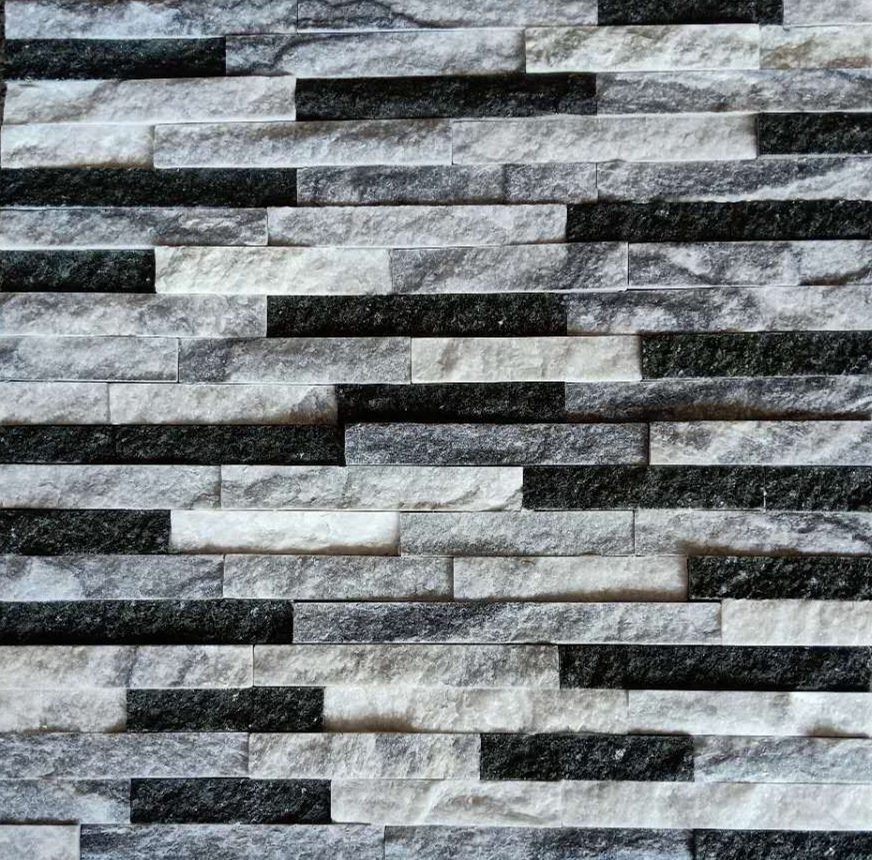
When a kitchen has a professional-grade range or cooktop, the wall behind it becomes a natural focal point. Running stacked stone from countertop to ceiling in that zone — while using a simpler material elsewhere — creates a dramatic design statement without the cost of a full kitchen stone installation.
This approach requires fire-rated stone. Natural stacked stone panels carry an A-grade fire rating, making them compliant for the area directly behind cooking appliances. The heat from gas burners and high-output ranges will not damage the stone surface or its bonding adhesive.
Use the 15x60cm stacked stone format and select a material with strong color variation — multi-color slate or autumn quartzite — to maximize visual impact. Extend the stone panel 300mm beyond each side of the range for a framed effect. The transition from stone to painted wall can be finished with a metal edge trim or a simple silicone joint.
Full-height installations typically require 4-6 m² of panels for a standard range zone. This is a manageable quantity that does not require special shipping arrangements — it fits within normal container loads when combined with other product orders.
For a comparison of natural stone against manufactured alternatives in heat-exposed applications, see our piece on exterior stacked stone veneer vs manufactured stone.
7. Rustic Copper Quartzite for Mediterranean-Inspired Kitchens
Mediterranean kitchens celebrate warm earth tones — terracotta, ochre, copper, sienna. Copper quartzite is one of the few natural stone materials that carries these colors natively, without artificial staining or heat treatment.
Copper quartzite panels feature a blend of rust, amber, and bronze tones with natural mica inclusions that catch ambient light. When used as a backsplash, the material connects the kitchen to the warm palette of Mediterranean architecture: clay roof tiles, lime-washed walls, and aged copper fixtures.
This specification appeals to custom home builders and high-end renovation contractors. The material cost per square meter is comparable to other quartzite options, but the design impact is disproportionately high. It is a specification that wins projects.
For projects that extend stone beyond the kitchen, explore our guides on flagstone pavers for outdoor patios and stone columns for architectural entries.
8. Minimalist Linear Stone Panels for Contemporary Open-Plan Spaces
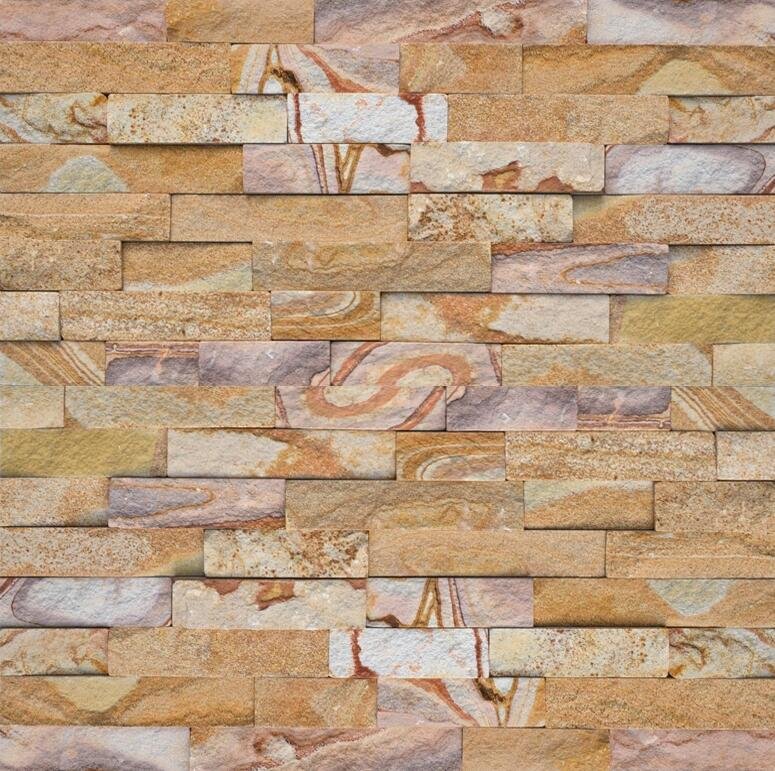
Open-plan kitchens share visual space with living and dining areas. The backsplash in this context needs to work as a design element without competing for attention. Linear stone panels — thin, horizontally oriented strips with consistent color — achieve this balance.
Use thin ledgestone panels in a uniform grey or cream tone. The 36x10cm format produces clean horizontal lines that echo the geometry of contemporary cabinetry and linear pendant lighting. The result is a backsplash that reads as an architectural detail rather than a decorative feature.
Install the panels in a straight-stack pattern with tight joints. Avoid staggered or random patterns — they introduce visual noise that conflicts with the minimalist intent. The consistent 10cm height of each course creates rhythm across the backsplash zone.
For open-plan applications, consider extending the stone panel material onto an adjacent wall as a visual continuation — 600-900mm beyond the kitchen boundary. This technique anchors the kitchen within the larger space and increases per-project stone consumption, which matters for your order volumes.
See our article on installing stone veneer on interior walls for guidance on DIY versus professional installation decisions.
Choosing the Right Stone Type for Kitchen Backsplashes
Four natural stone materials dominate the backsplash category. Each has distinct properties that affect appearance, durability, and suitability for different kitchen styles.
Quartzite. The hardest of the four. Quartzite resists scratching, heat, and acid etching better than marble or sandstone. Available in white, grey, cream, black, copper, and bronze tones. The natural mica content gives quartzite panels a subtle shimmer under kitchen lighting. Best for high-traffic kitchens and modern designs.
Slate. Naturally cleft surface with excellent slip resistance — less relevant for backsplashes but indicative of the material’s grip. Slate offers rich color variation: grey, green, rust, purple, and multi-color blends. It is slightly softer than quartzite but more than adequate for wall-mounted applications. Best for rustic, eclectic, and industrial kitchens.
Marble. The classic choice. Marble delivers a refined aesthetic with natural veining that varies from subtle to dramatic. It is more porous than quartzite and requires regular sealing, particularly behind sinks and cooktops. Best for traditional, farmhouse, and luxury kitchen designs.
Sandstone. Warm, earthy tones in beige, tan, and golden hues. Sandstone is the softest option and benefits from a high-quality sealer in kitchen environments. Its advantage is cost — sandstone panels are typically the most affordable natural stone option. Best for budget-conscious projects that still want genuine stone.
All four materials are available through Top Stone Panels in stacked stone, thin ledgestone, and Z-panel formats. Marine-grade epoxy bonding ensures the individual stone pieces remain securely attached to the backing mesh or cement substrate throughout the product’s lifespan.
Installation Tips for Stone Backsplash Panels
Stone backsplash installation follows the same principles as any interior stone veneer application, with a few kitchen-specific considerations.
Substrate preparation. The wall surface must be clean, flat, and structurally sound. Remove any existing tile, wallpaper, or loose paint. If the substrate is drywall, verify that it is moisture-resistant (green board) in areas behind sinks and cooktops. Cement board is the preferred substrate for any zone with direct water exposure.
Adhesive selection. Use a polymer-modified thin-set mortar for the strongest bond. Construction adhesive rated for stone is acceptable for low-moisture zones. Apply adhesive to both the wall and the panel backing using a notched trowel for maximum coverage.
Cutting. Kitchen backsplashes require cuts around electrical outlets, light switches, pipe penetrations, and cabinet edges. A wet saw with a diamond blade produces the cleanest cuts. For thin ledgestone, a tile nipper handles small notches. Our panels are precision-cut using infrared CNC diamond blade cutting, so factory edges are straight and require minimal on-site adjustment.
Sealing. Apply a penetrating stone sealer before grouting (if applicable) and after installation is complete. This two-stage sealing process protects the stone from grease and moisture that are constant in kitchen environments.
For a comprehensive installation walkthrough, see our detailed guide on how to install stacked stone veneer panels. It covers substrate preparation, adhesive application, cutting techniques, and finishing in full detail.
Frequently Asked Questions
Is natural stone suitable for a kitchen backsplash?
Yes. Natural stone panels carry an A-grade fire rating, withstand temperatures from -30°C to +50°C, and resist moisture when properly sealed. Stacked stone and thin ledgestone panels are the most common choices for kitchen backsplashes due to their slim profile and interlocking installation.
What stone types work best for kitchen backsplash designs?
Quartzite, slate, and marble are the top choices. Quartzite provides high durability and natural sparkle. Slate offers earthy tones with a split-face texture. Marble delivers a classic, polished aesthetic. All three materials are available as pre-assembled panels in standard formats.
How do you install stone panels behind kitchen cabinets?
Stone veneer panels install over a clean, flat substrate using thin-set mortar or construction adhesive. Panels interlock via Z-joints or tongue-and-groove edges. Cutting around outlets and fixtures requires a wet diamond blade saw.
How thick are stone backsplash panels?
Thin ledgestone panels are typically 8-12mm thick. Stacked stone panels range from 15-25mm at the thickest point. The slim profile means they take up minimal counter space and sit flush against cabinetry.
What is the minimum order for stone backsplash panels?
Top Stone Panels ships with a minimum order of one 20GP container per product type. This suits distributors and builders purchasing for multiple kitchen projects. Delivery takes 20-25 working days for standard orders.
Source Natural Stone Backsplash Panels
Top Stone Panels manufactures stacked stone, thin ledgestone, Z-panels, and thin stone veneer from our facility in Yixian, Hebei. With 18+ years of production experience and a capacity of 80,000 m²/month for stacked stone alone, we support distributors, builders, and project specifiers across global markets.
Every panel undergoes 3-step quality control — raw material selection, in-process inspection, and final pre-shipment inspection. Our Zero-Breakage Protocol packaging (3-5 layer reinforced cartons, fumigation-free plywood pallets, 4-6 high-tensile steel bands, industrial airbag dunnage) ensures panels arrive in installation-ready condition.
Request a quote or product samples by visiting topstonepanels.com. We ship FOB Xingang, CIF, or DDP with flexible payment terms (30% T/T deposit, 70% before shipment).