Flagstone pavers remain one of the most specified materials in professional landscape architecture — and for good reason. Natural stone delivers a visual depth and geological authenticity that manufactured alternatives simply cannot replicate. For landscape architects, distributors, and builders working on high-value residential and commercial projects, understanding the types, sizes, and performance characteristics of flagstone pavers is essential for specifying the right product and managing client expectations.
This guide covers the material science behind natural flagstone, standard sizing conventions, the landscape applications where it performs best, and the sourcing logistics that B2B buyers need to evaluate before placing a container order.
What Are Flagstone Pavers?
Flagstone pavers are flat, slab-like units cut from natural sedimentary or metamorphic rock — primarily slate and quartzite. The term “flagstone” refers to the stone’s natural tendency to split along bedding planes into relatively thin, flat layers. This geological characteristic makes it ideal for paving applications where a natural, irregular aesthetic is desired.
Unlike concrete pavers, which are molded from a cement-aggregate mix, natural flagstone pavers carry the mineral veining, color gradients, and surface texture formed over millions of years of geological pressure. Each piece is unique. For landscape architects, this means no two installations look identical — a specification advantage that adds perceived value to any project.
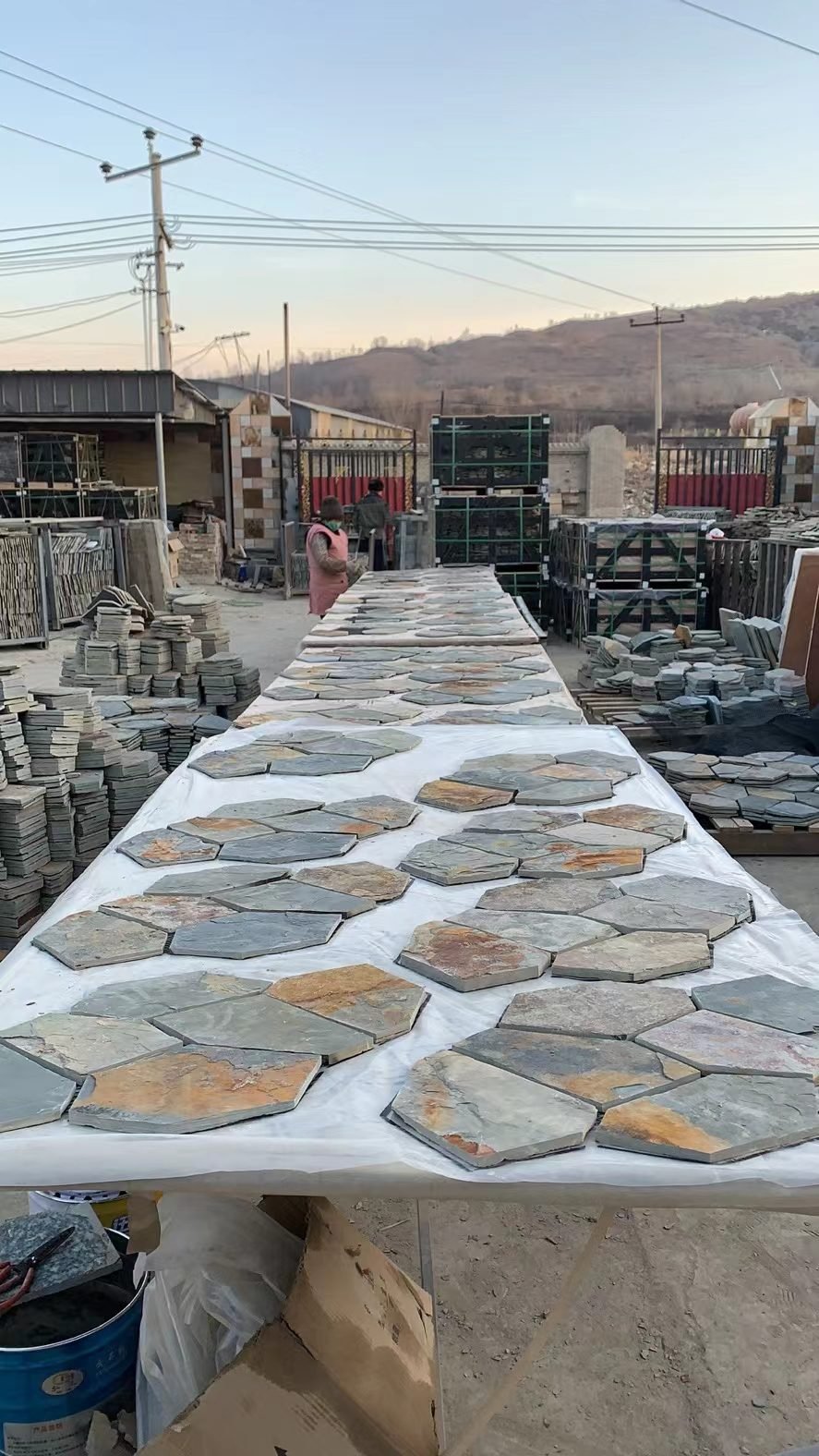
Modern flagstone production has evolved well beyond hand-split random shapes. At Top Stone Panels’ flagstone production facility in Hebei Province, infrared CNC diamond blades cut stone with millimeter precision, while batch-specific vein selection ensures color consistency across large orders. The result is a product that retains its natural character while meeting the dimensional tolerances required by professional installers.
For a deeper exploration of flagstone as a material category, the complete buyer’s guide to flagstone covers geological origins, quarrying methods, and grading standards in detail.
Types of Natural Flagstone Pavers
Natural flagstone pavers fall into several categories based on stone type, cutting method, and format. Understanding these distinctions is critical for specifiers who need to match material properties to site conditions.
Slate Flagstone Pavers
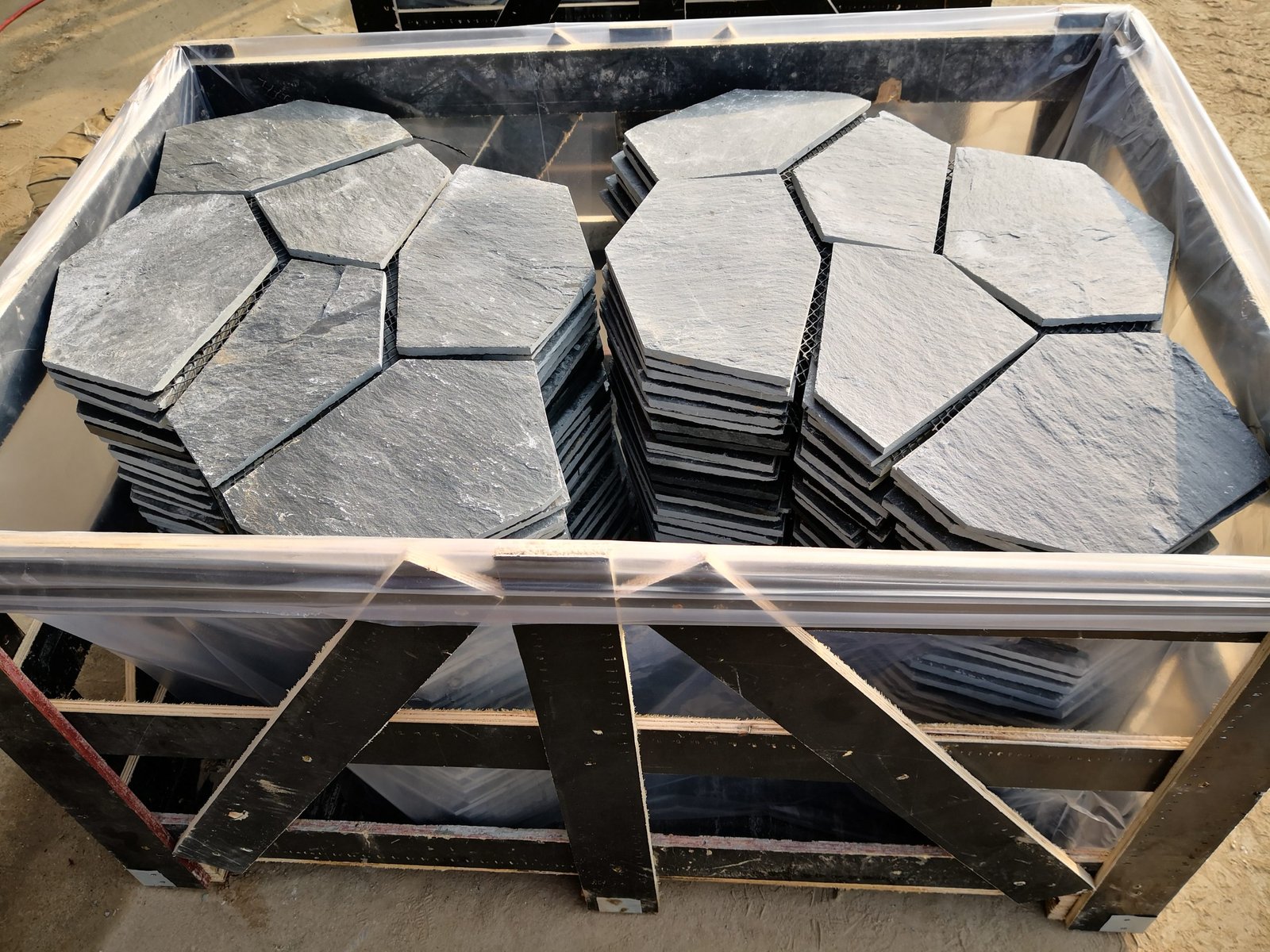
Slate is a fine-grained metamorphic rock formed from compressed shale or mudstone. Its defining characteristic is excellent foliation — the ability to split into thin, uniform layers. Slate flagstone pavers offer a relatively smooth surface with subtle cleft texture, making them well-suited for formal patios, pool decks, and interior-to-exterior transitions where a refined look is required.
Slate’s low porosity (typically below 1%) gives it strong resistance to water absorption, staining, and freeze-thaw damage. This is the material of choice for coastal projects where salt spray and moisture cycling degrade lesser materials within a few seasons.
Quartzite Flagstone Pavers
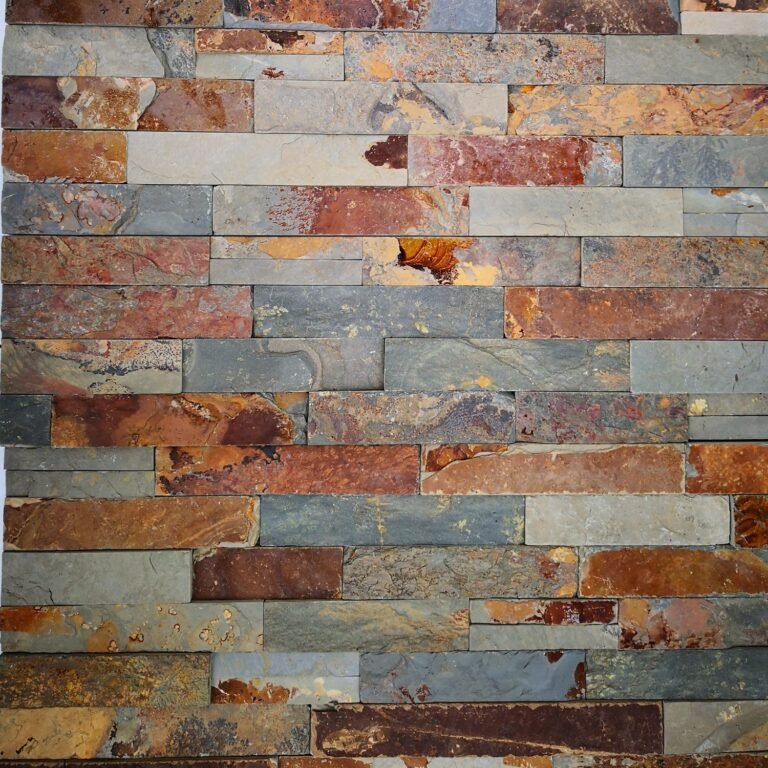
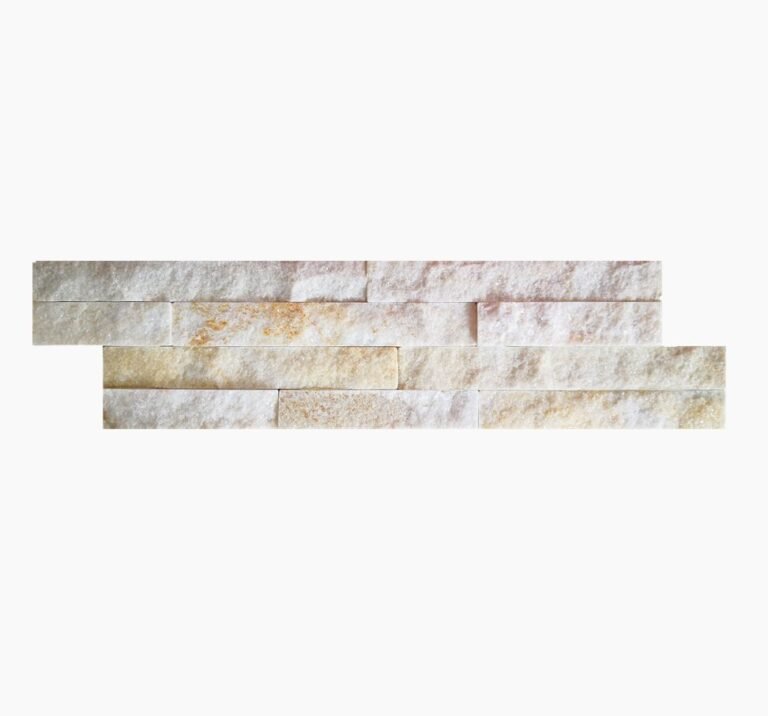
Quartzite is a harder, more durable metamorphic rock formed from sandstone under extreme heat and pressure. Quartzite flagstone pavers display a slightly more textured surface with visible grain structure and often exhibit warmer color tones — golds, tans, and rust-reds that complement desert and Mediterranean landscape palettes.
With a Mohs hardness rating of 7 (compared to slate at 5.5–6), quartzite pavers handle heavy foot traffic and vehicular loads with minimal surface wear. They are the preferred choice for commercial walkways, public plazas, and driveway applications.
Crazy Paving Flagstone
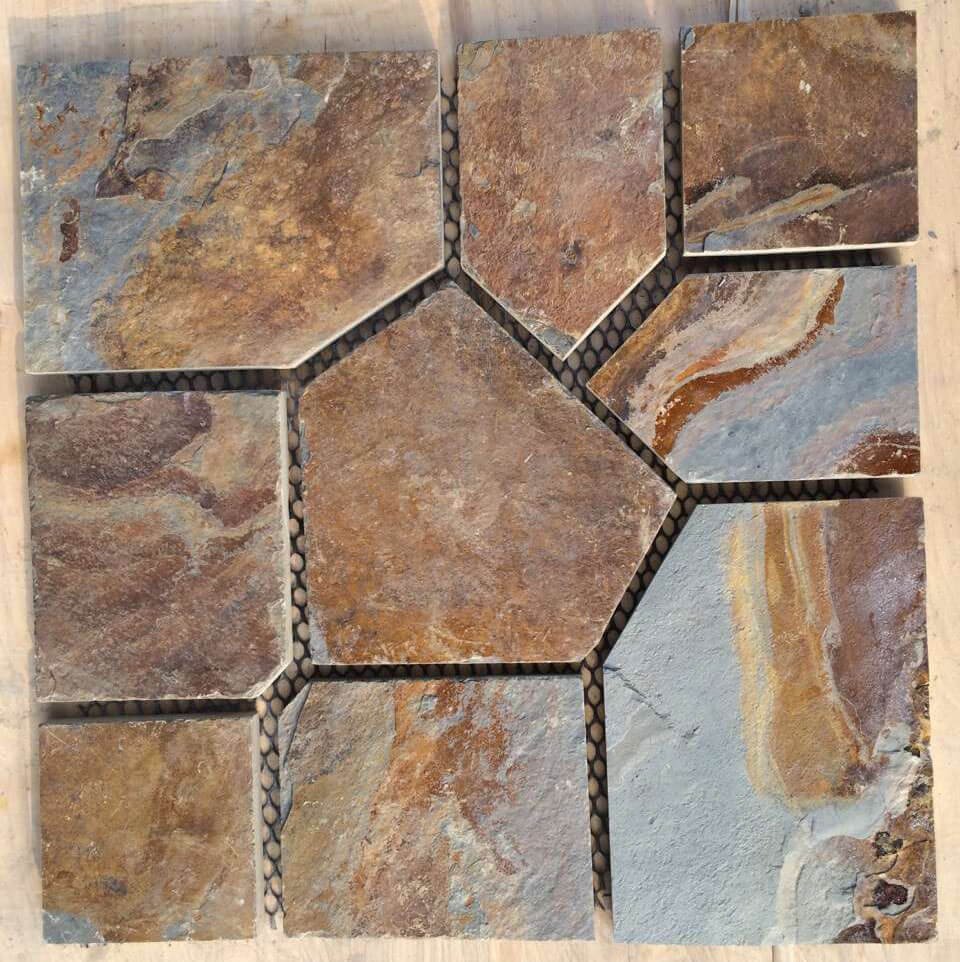
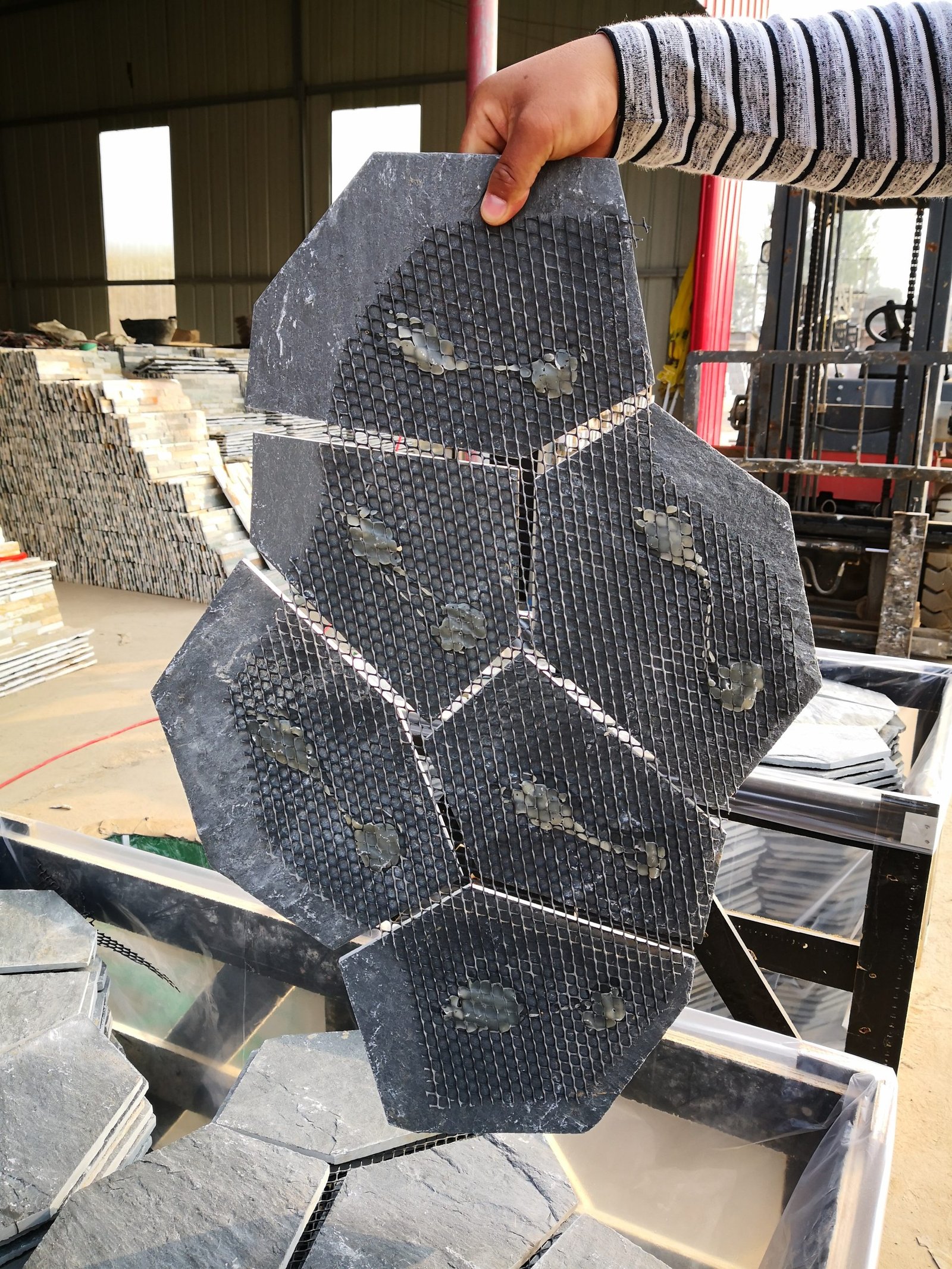
Crazy paving — also called random paving or broken paving — arranges irregularly shaped flagstone pieces into interlocking geometric patterns. Rather than uniform rectangles, crazy paving uses a mosaic of random shapes that fit together with tight joints, creating a dynamic visual effect that reads as organic and natural.
Top Stone Panels produces mesh-backed crazy paving modules where random flagstone pieces are pre-arranged and bonded to a fiberglass mesh backing. This modular approach dramatically reduces installation time: instead of hand-fitting each irregular piece on site, installers lay pre-assembled modules that interlock with adjacent units. Production capacity reaches 30,000 m² per month, sufficient for large-scale commercial and distribution orders.
For specifiers exploring complementary natural stone products, stacked stone panels and thin ledgestone provide matching vertical cladding options that tie hardscape and wall treatments together in a cohesive design.
Standard Sizes and Thickness Options
Flagstone paver sizing involves two dimensions: surface area and thickness. Both variables affect structural performance, installation method, and final cost per square meter.
Surface Dimensions
Natural flagstone pavers are available in several standard format categories:
- Irregular / Random Shapes: The classic flagstone format. Pieces range from 200 mm to 600 mm across, with no uniform geometry. Crazy paving modules from Top Stone Panels use random shapes pre-set on mesh backing, typically in modular panel sizes that tile seamlessly.
- Cut Rectangles and Squares: Machine-cut to standard dimensions (e.g., 300×300 mm, 400×400 mm, 600×300 mm, 600×600 mm). Preferred for formal layouts, grid patterns, and projects requiring ADA-compliant even surfaces.
- Stepping Stones: Larger individual pieces, typically 500–800 mm in diameter, used for garden paths and lawn-set stepping stone installations.
Thickness Specifications
Thickness selection is driven by load requirements:
- 15–20 mm: Suitable for wall cladding overlays, interior flooring, and light-duty decorative applications. Not recommended for exterior paving subject to point loads.
- 20–30 mm: Standard thickness for pedestrian patios, pool surrounds, and residential walkways. Handles typical foot traffic and light furniture loads.
- 30–50 mm: Heavy-duty specification for driveways, commercial plazas, and areas subject to vehicular traffic or concentrated point loads from heavy planters and outdoor kitchen equipment.
For specifiers evaluating how natural stone thickness compares with manufactured alternatives, the natural stone cladding cost breakdown provides per-square-meter pricing context that accounts for both material and installation variables.
Best Landscape Applications for Flagstone
Flagstone pavers perform across a wide range of exterior applications. The following represent the highest-value use cases where natural stone delivers measurable advantages over competing materials.
Pool Decks and Surrounds
Pool environments subject paving materials to a punishing combination of constant moisture, chlorine or saltwater exposure, UV radiation, and barefoot traffic. Natural slate and quartzite flagstone pavers excel in all four areas. The naturally textured cleft surface provides slip resistance even when wet — a critical safety specification for commercial pool facilities and high-end residential projects.
UV stability is inherent to natural stone: the mineral pigments that create slate’s grays, blacks, and greens do not degrade under solar exposure, unlike the surface dyes used on colored concrete pavers. Salt-spray resistance further extends service life in coastal pool installations where airborne chlorides corrode metal-reinforced concrete within years.
Driveways and Vehicular Areas
When specified at 30–50 mm thickness and installed on a properly compacted aggregate base, flagstone pavers handle vehicular loads effectively. Quartzite is the preferred material for these applications due to its superior compressive strength and surface hardness. The random pattern of crazy paving also distributes loads across multiple contact points, reducing the risk of individual paver failure.
Walkways, Patios, and Garden Paths
This is the most common specification for flagstone pavers in residential landscape design. Irregular and crazy paving formats create informal, naturalistic pathways that integrate with planted borders and lawn edges. Cut rectangular formats suit modern, minimalist designs with clean geometry. In both cases, natural stone adds a material authenticity that elevates the perceived quality of the entire landscape.
Commercial and Public Realm Projects
Municipal plazas, hotel courtyards, restaurant terraces, and retail precincts increasingly specify natural flagstone for its longevity and low lifecycle cost. Unlike concrete pavers that require replacement every 15–20 years, properly installed natural stone pavers last 50+ years with minimal maintenance — a specification advantage when project owners evaluate total cost of ownership.
Maintenance and Longevity
Across all landscape applications, natural flagstone pavers require minimal ongoing maintenance. Unlike concrete pavers that demand periodic re-sealing and joint sand replenishment, natural stone needs only routine sweeping and occasional rinsing to maintain its appearance. For projects in high-debris environments — such as pool surrounds where sunscreen residue and organic matter accumulate — a diluted pH-neutral cleaner applied seasonally is sufficient.
The expected service life of properly installed flagstone pavers exceeds 50 years, with no degradation in structural performance or surface appearance. This longevity makes the material’s total cost of ownership competitive with — and often lower than — cheaper alternatives that require replacement or significant maintenance within the first decade.
Why Natural Flagstone Outperforms Concrete Pavers
The comparison between natural flagstone and concrete pavers arises frequently in landscape specification. While concrete pavers offer lower initial cost, natural flagstone delivers superior performance across every long-term metric that matters to architects and project owners.
Freeze-Thaw Durability
Freeze-thaw cycling is the primary failure mechanism for exterior paving in cold climates. Water penetrates the material’s pore structure, freezes and expands, and progressively spalls the surface. Natural slate and quartzite have extremely low porosity — often below 1% — which limits water ingress to negligible levels. Freeze-thaw resistance in natural stone has been validated across a temperature range of -30°C to +50°C, making flagstone pavers viable from Scandinavian winters to Middle Eastern summers without performance degradation.
Concrete pavers, by contrast, absorb 5–8% water by volume and rely on surface sealers that degrade within 3–5 years, requiring recurring maintenance that adds significantly to lifecycle cost.
Fire Performance
Natural stone is non-combustible and carries a Class A fire rating — the highest classification for building materials. This specification matters increasingly in wildfire-prone regions of North America and Australia, where building codes mandate non-combustible materials within defined defensible space perimeters. Concrete pavers also perform well in fire exposure, but natural stone carries the rating without relying on any applied coating or additive.
UV and Color Stability
Concrete pavers achieve color through iron-oxide pigments mixed into the cement matrix. These pigments fade measurably under UV exposure, typically showing visible degradation within 5–8 years in full-sun installations. Natural flagstone derives its color from geological mineral content — iron compounds create reds and golds, carbon creates blacks and grays, chlorite creates greens. These mineral colors are stable indefinitely under UV exposure because they were formed under geological conditions far more extreme than solar radiation at the Earth’s surface.
Aesthetic Differentiation
Every natural flagstone paver carries unique veining and color variation. For landscape architects, this means the installation cannot be replicated by neighboring properties using the same product line — each project is genuinely one-of-a-kind. Concrete pavers, by definition, produce identical units. For high-value residential and hospitality projects where design exclusivity is part of the client brief, natural stone is the only specification that delivers it.
For projects combining horizontal paving with vertical stone cladding, exploring thin stone veneer options and the broader six types of stone veneer panels allows designers to carry consistent stone aesthetics across the full building envelope.
How to Choose the Right Flagstone for Your Project
Selecting the correct flagstone paver involves evaluating five variables: material type, format, thickness, surface finish, and environmental conditions at the project site.
Match Material to Climate
For projects in freeze-thaw zones (USDA Hardiness Zones 3–6, most of Northern Europe, Canada), specify low-porosity slate or quartzite with verified freeze-thaw testing data. For coastal installations within 5 km of saltwater, prioritize salt-spray resistance — both slate and quartzite perform well, but confirm the supplier’s testing protocol includes salt exposure.
Select Format Based on Design Intent
Crazy paving and irregular formats suit naturalistic, informal landscapes — English gardens, Mediterranean courtyards, resort-style pool areas. Cut rectangular formats align with contemporary, minimalist design — think clean grid layouts with uniform joint widths. The project’s architectural style should drive format selection, not the other way around.
Specify Thickness for Load Conditions
Pedestrian-only areas: 20–30 mm. Mixed-use with occasional vehicle access: 30 mm minimum. Full vehicular driveways: 40–50 mm with a compacted crushed-stone base of at least 150 mm depth. Under-specifying thickness is the most common cause of flagstone paver failure — always engineer the section for the worst-case load scenario.
Evaluate Supplier Capabilities
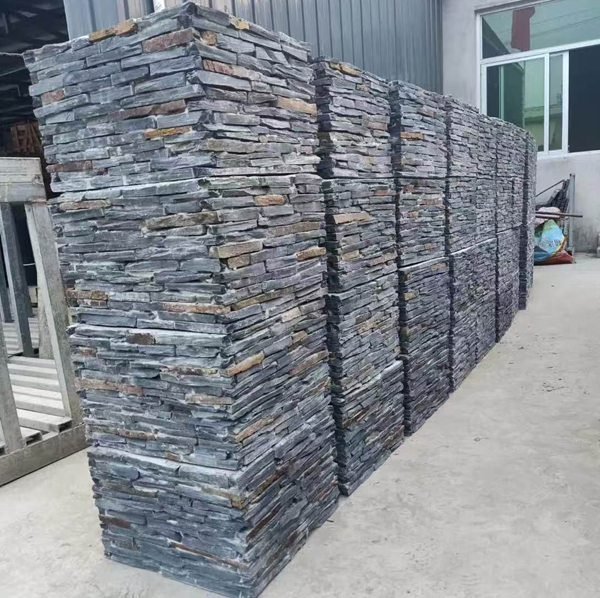
For B2B buyers sourcing flagstone at container scale, supplier evaluation should extend beyond price. Key criteria include: own-quarry access (ensures raw material control and consistent supply), production capacity relative to order size, QC protocols, and packaging standards that prevent transit breakage. These operational factors determine whether the product arrives on site in sellable condition and on schedule.
Sourcing Flagstone Pavers: What B2B Buyers Need to Know
International sourcing of natural stone pavers introduces logistics variables that do not exist with domestic concrete paver suppliers. Understanding these variables upfront prevents costly surprises at the port of entry.
Factory Profile: Top Stone Panels
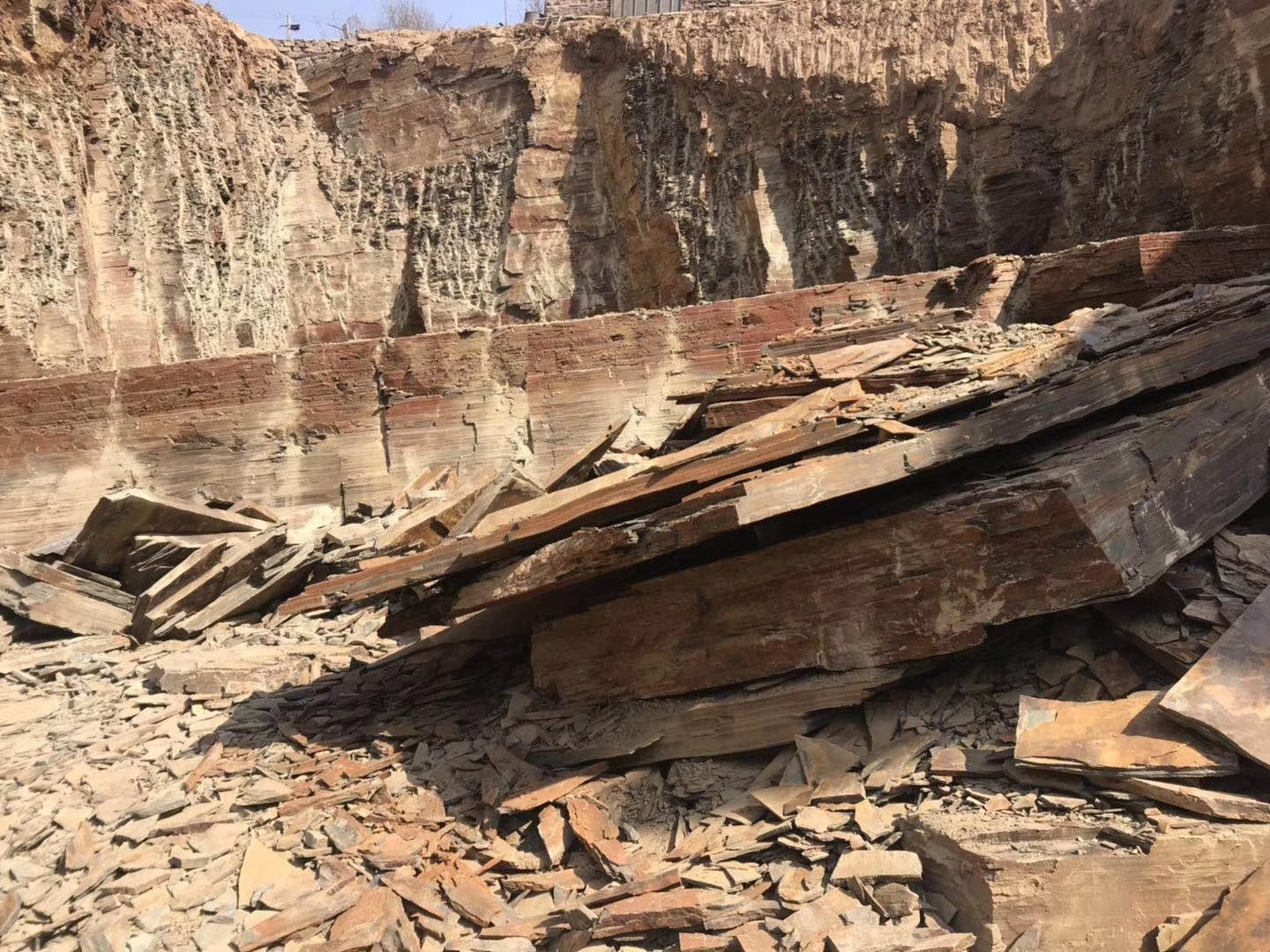
Top Stone Panels operates from Yixian, Baoding, Hebei Province — one of China’s established natural stone quarrying regions. The company has 18+ years of production and export experience (since 2005), owns its quarries, and ships 220+ containers annually. This vertical integration — quarry to container — gives B2B buyers direct pricing without intermediary markups and ensures consistent vein selection across repeat orders.
Production capacity stands at 30,000 m² per month, with cutting performed on infrared CNC diamond blade equipment. Batch-specific vein selection means that when a distributor orders multiple containers for a single project, the factory matches stone from the same quarry vein to minimize color variation between shipments.
Quality Control and Inspection
Top Stone Panels runs a three-step QC process: raw material selection at the quarry, in-process re-inspection during cutting and mesh-backing, and final pre-shipment inspection before container loading. Buyers can request a pre-shipment inspection report, a Certificate of Origin (COO), and an ISPM 15 fumigation certificate for the pallets — all standard documentation for customs clearance in North American and European markets.
Packaging and Transit Protection
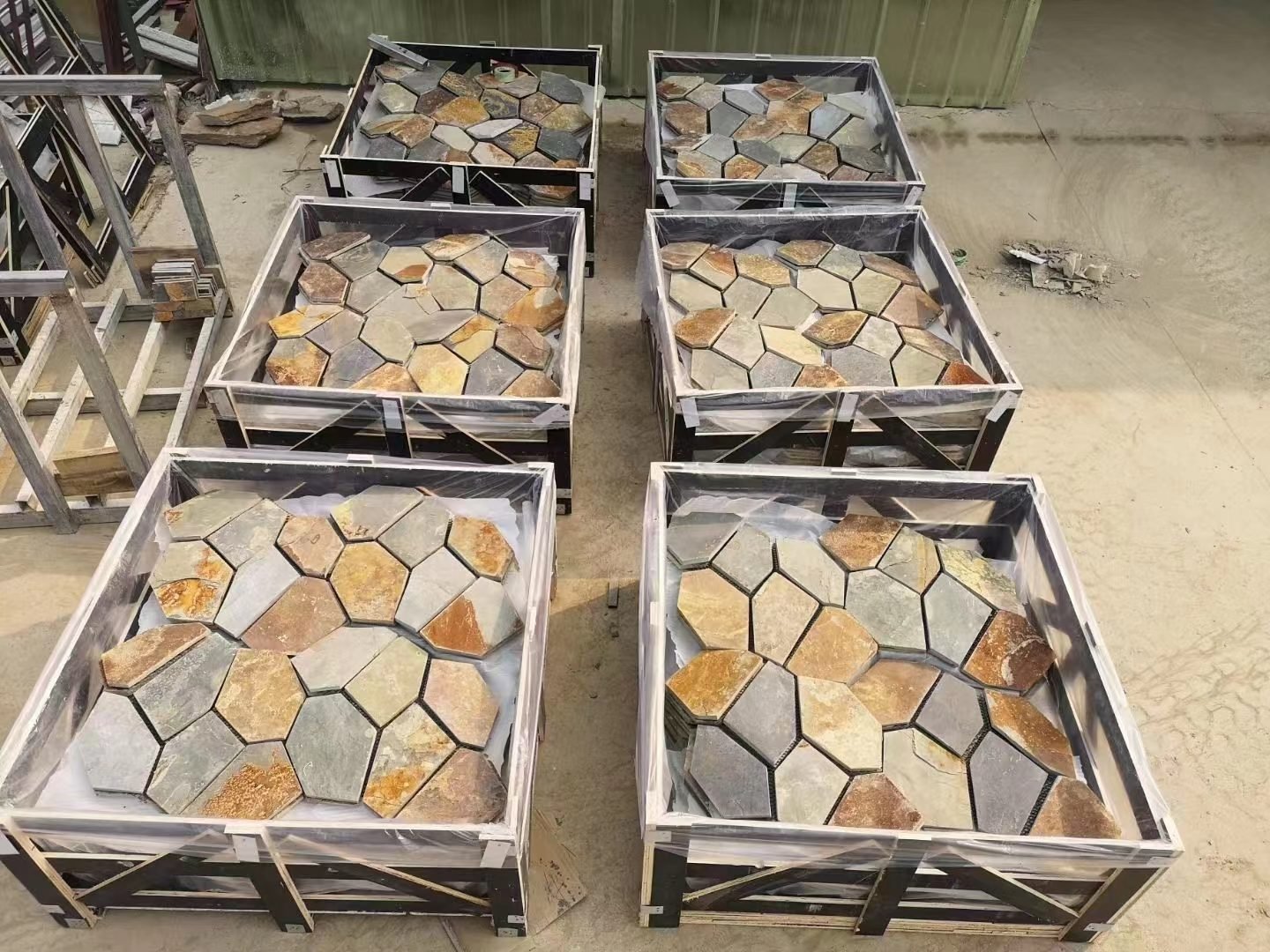
Natural stone is heavy and brittle during transit — a combination that demands purpose-built packaging. Top Stone Panels follows a Zero-Breakage Protocol: 3–5 layer corrugated cartons protect individual paver sets, fumigation-free pallets provide structural support, 4–6 steel straps secure the load, and industrial airbags fill void spaces within the container to prevent shifting during ocean transit. This packaging standard is designed to eliminate the transit damage that plagues less disciplined suppliers and generates costly claims and re-shipments.
Order Logistics
Key commercial terms for B2B buyers:
- MOQ: 1× 20GP container — suitable for distributors testing new product lines or builders sourcing a specific project.
- Lead Time: Samples ship within 1–3 days. Full production orders require 20–25 working days from deposit confirmation.
- Shipping Terms: FOB Xingang (Tianjin Port), EXW, CIF, or DDP — depending on the buyer’s preferred level of logistics control.
- Payment: 30% T/T deposit at order confirmation, 70% balance before shipment.
- Port of Loading: Xingang / Tianjin — one of China’s largest container ports with direct sailings to all major global destinations.
Container loading efficiency matters for B2B economics. Top Stone Panels optimizes pallet configuration within each 20GP container to maximize square meters shipped per unit of freight cost. Mixed-product containers — combining flagstone pavers with complementary products like stacked stone or Z-Panels — are available for distributors building a diversified natural stone inventory from a single shipment.
For distributors evaluating natural stone as a new product category, understanding how flagstone pavers complement adjacent product lines is important. Stacked stone panels for vertical wall cladding, stone column wraps, and Z-Panels create a complete natural stone offering that serves the full landscape and building envelope market.
Frequently Asked Questions
What are flagstone pavers made of?
Flagstone pavers are cut from 100% natural stone — most commonly slate and quartzite. Unlike concrete or resin-based pavers, natural flagstone retains the geological veining, color variation, and mineral density of the original quarry block. This gives each installation a unique appearance backed by inherent structural durability that manufactured products cannot match.
What thickness should flagstone pavers be for driveways and walkways?
For pedestrian walkways and patios, 20–30 mm is the standard thickness specification. Driveways and areas subject to vehicular loads require 30–50 mm pavers installed on a properly engineered aggregate base. Mesh-backed flagstone modules are available in calibrated thicknesses to match each application’s structural requirements, reducing the need for on-site thickness sorting.
Can natural flagstone pavers withstand freeze-thaw cycles?
Yes. High-density natural slate and quartzite flagstone pavers resist freeze-thaw damage across a validated temperature range of -30°C to +50°C. The key factor is porosity: natural slate absorbs below 1% water by volume, which prevents the internal ice expansion that causes spalling and cracking in more porous materials. This makes flagstone pavers a reliable specification for projects across Canada, Northern Europe, and the northern United States.
What is the minimum order quantity for wholesale flagstone pavers?
Top Stone Panels requires a minimum order of one 20-foot general-purpose container (1× 20GP). This MOQ is accessible for regional distributors adding natural stone to their catalog and for builders sourcing a specific project. Samples are available within 1–3 days for evaluation before committing to a production order.
Are flagstone pavers suitable for pool surrounds?
Natural flagstone pavers are among the best materials available for pool decks and surrounds. Slate and quartzite provide naturally textured, non-slip surfaces even when wet. They are UV stable (no color fading under sun exposure) and resistant to salt spray and chlorine chemicals — the two primary degradation factors in pool environments. For commercial pool facilities and luxury residential projects, natural flagstone outperforms both concrete pavers and composite decking on every durability metric.
How long does production and shipping take?
Sample orders ship within 1–3 days. Full production requires 20–25 working days from deposit confirmation, depending on order volume and any custom specifications. Ocean freight transit times vary by destination: approximately 25–35 days to North American East Coast ports, 18–25 days to European ports. Top Stone Panels ships from Xingang/Tianjin Port and provides full documentation (COO, ISPM 15 fumigation certificate, pre-shipment inspection report) for smooth customs clearance.