Top Stone Panels | Natural Stone Cladding Factory | Updated August 2026
Stone cladding for exterior walls transforms a standard building envelope into a high-value architectural surface. For distributors, builders, and landscape architects specifying natural stone on commercial and residential projects, the gap between a successful installation and a costly callback comes down to one thing: knowing the exact specifications before you order.
This guide covers every technical parameter that matters at the procurement stage — panel types, material properties, dimensions, backing systems, color control, climate performance, fire ratings, and shipping logistics. All data points come from Top Stone Panels’ production floor in Hebei, China, where we have manufactured natural stone cladding for over 18 years and ship 220+ containers annually to North American and European markets.
1. What Is Stone Cladding for Exterior Walls?
Stone cladding is a non-structural layer of natural stone applied to a building’s exterior wall surface. Unlike full-thickness masonry, modern stone cladding panels are thin-cut (typically 8-15 mm face thickness) and bonded to a backing substrate, reducing weight to a fraction of traditional stonework while preserving the authentic texture and color variation that only natural stone delivers.
The panels serve two functions simultaneously: they protect the underlying wall assembly from weather exposure and provide a finished aesthetic surface that requires zero maintenance over decades of service. Natural stone cladding does not fade under UV radiation, does not warp under thermal cycling, and carries a Class A fire rating without chemical treatment.
For a detailed introduction to the product category, see our primer on what stacked stone panels are and the broader overview in thin stone veneer explained.
2. Types of Stone Cladding for Exterior Walls
Exterior wall projects use four primary panel formats, each optimized for different design intents and installation conditions.
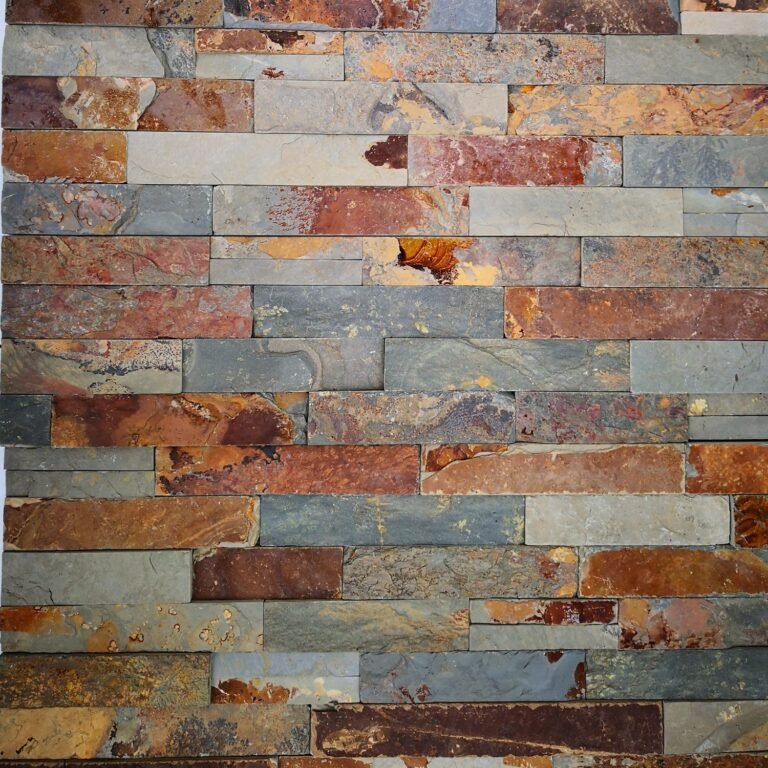
Stacked Stone Panels
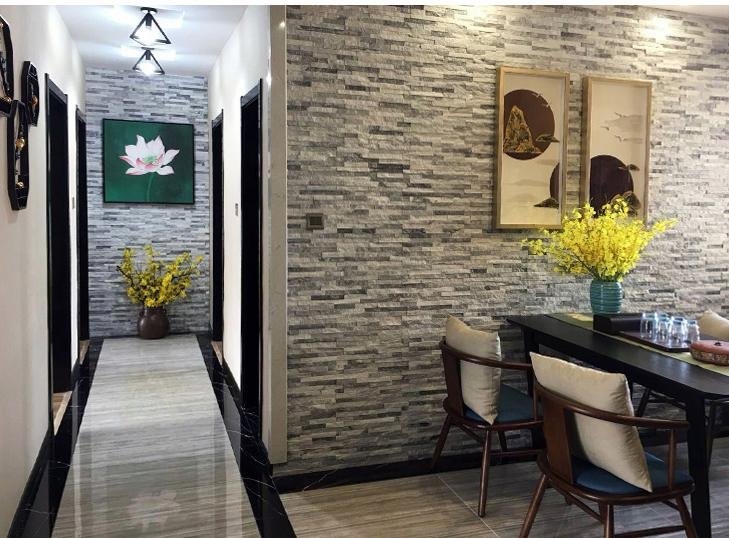
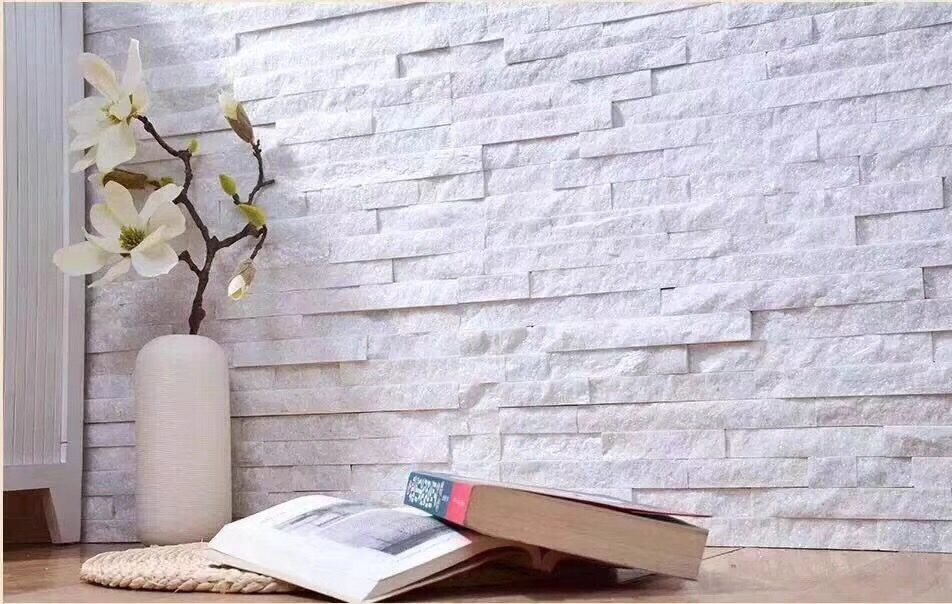
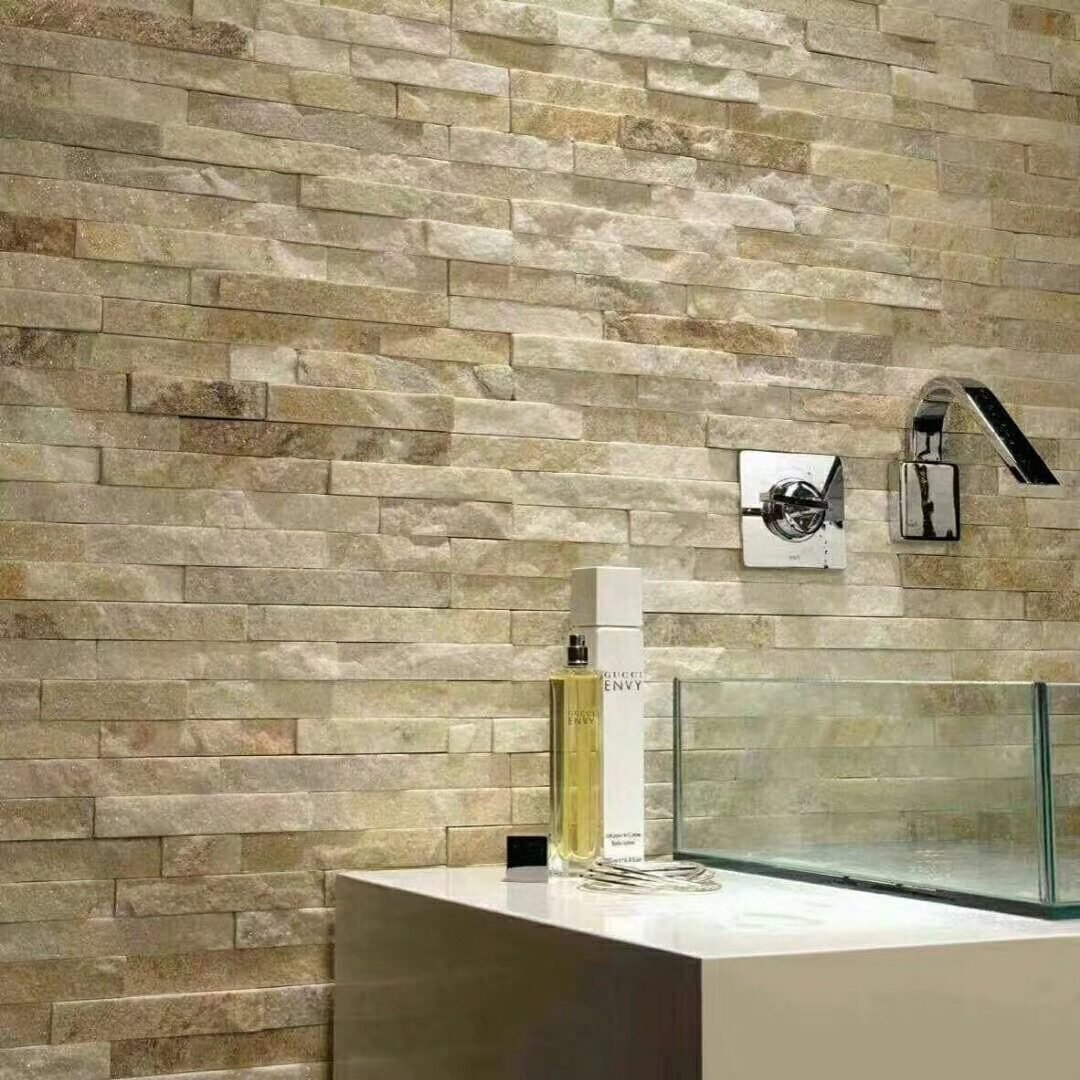
Stacked stone panels feature multiple thin stone strips bonded edge-to-edge on a backing sheet, creating a linear, horizontal-line aesthetic with no visible grout joints. This is the highest-volume format in our catalog and the most requested product among distributors stocking stacked stone panels for residential and light commercial projects. Standard panel dimensions are 15×60 cm and 15×55 cm.
Z-Panels (Cement-Backed)
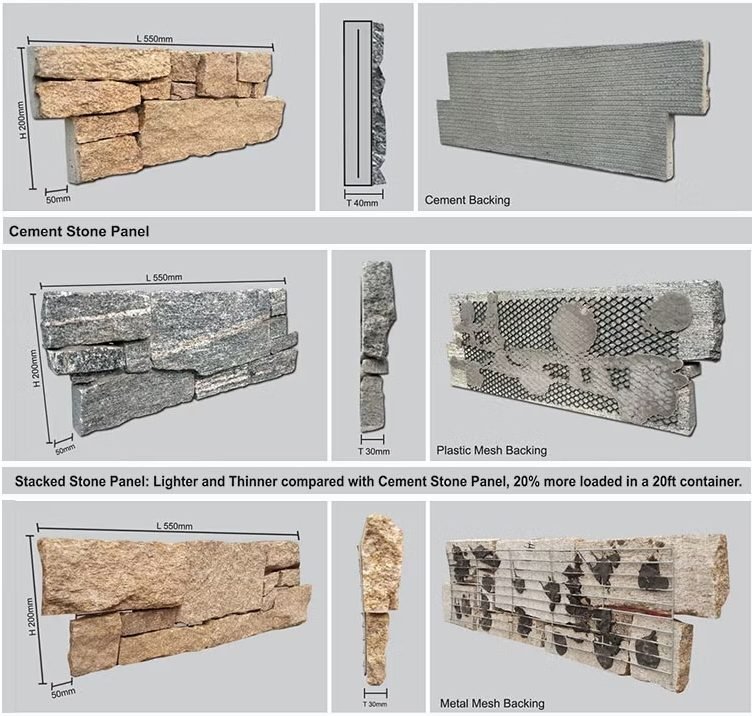
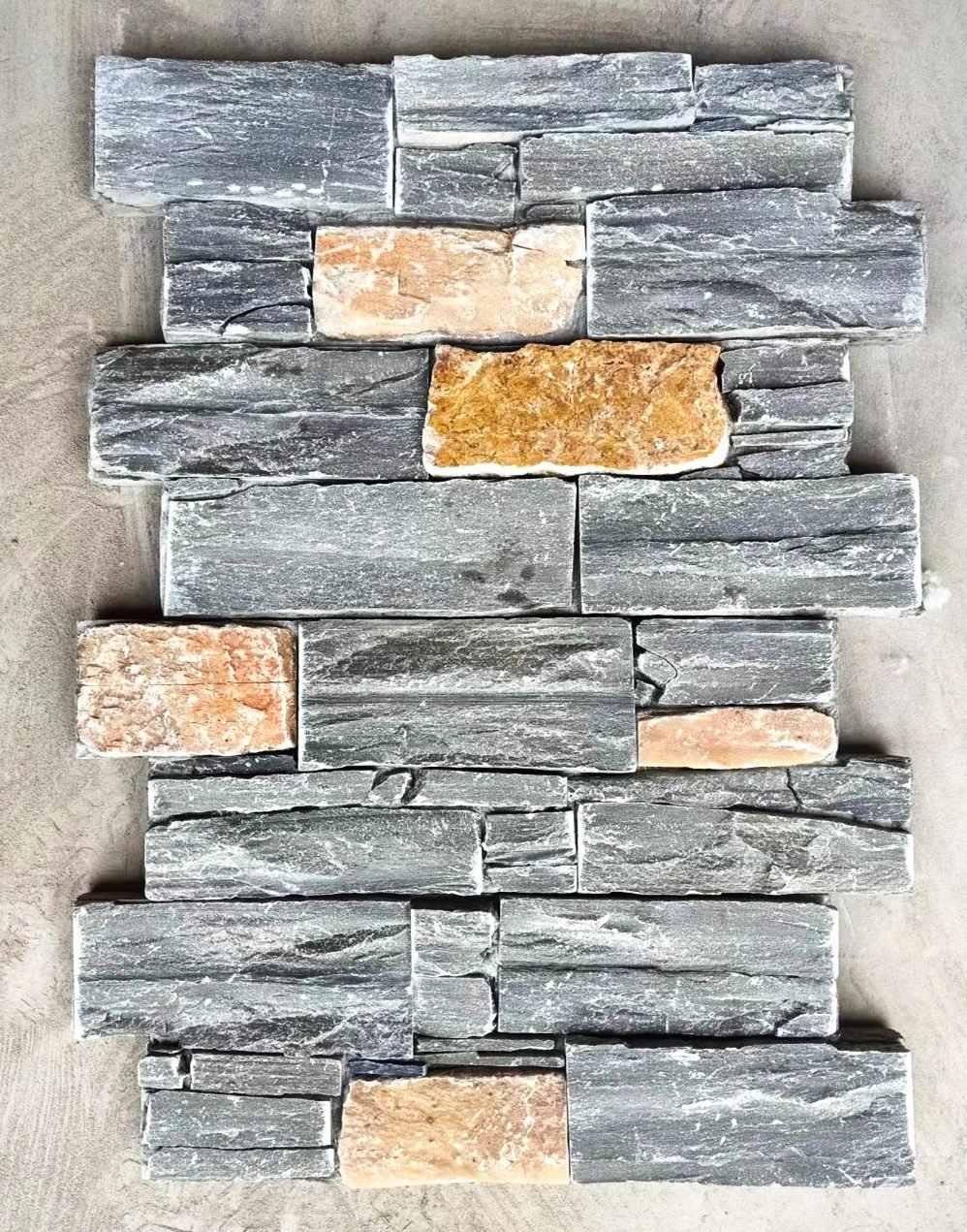
Z-panels are interlocking stone panels with a cementitious backer board that provides a rigid, flat substrate. The interlocking profile conceals joints between adjacent panels for a continuous stone appearance. Standard sizes are 20×55 cm and 15.2×61 cm. Browse the full Z-panels product range for color and texture options.
Thin Stone Veneer
Thin stone veneer consists of individually cut stone pieces, typically thicker than stacked stone strips, applied directly to a prepared wall surface with mortar or adhesive. This format offers more three-dimensional depth and shadow. See our thin stone veneer collection and the installation walkthrough at how to install stacked stone veneer panels.
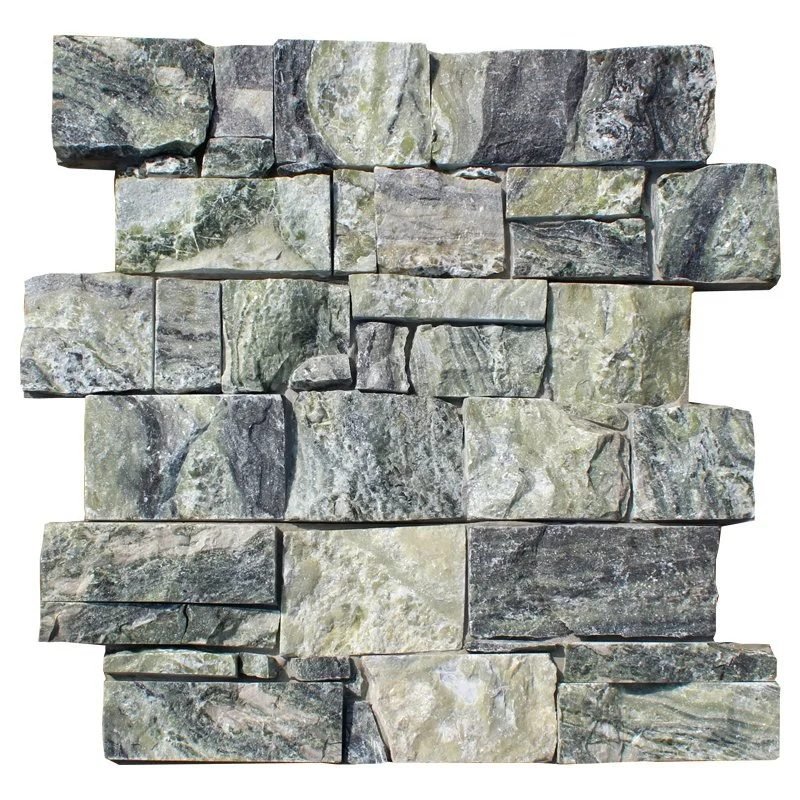
Flagstone Accents
Flagstone provides irregular, organic shapes for feature walls, entry surrounds, and landscape retaining walls where a rustic or naturalistic look is specified. Our flagstone range is available in sandstone and slate with naturally cleft surfaces.
For a side-by-side comparison of panel formats, read stone veneer panels: 6 types distributors should stock.
3. Material Options: Slate, Quartzite, Sandstone, Marble
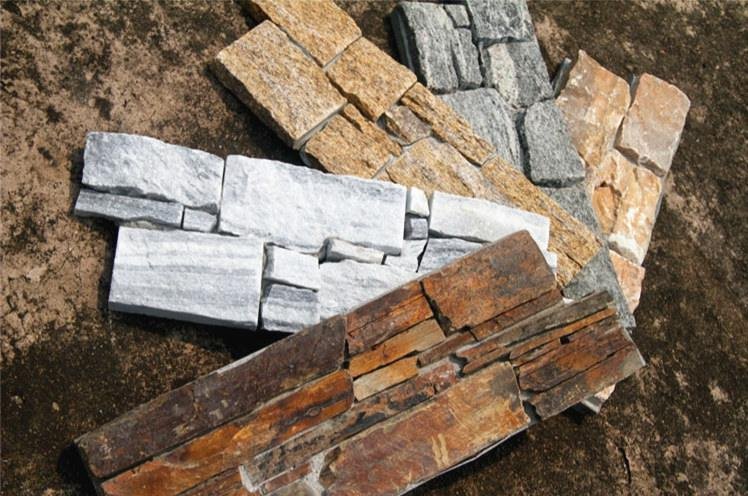
Top Stone Panels works exclusively with 100% natural stone. No reconstituted aggregates, no concrete casts, no printed faces. Each material has distinct performance characteristics relevant to exterior wall specification.
Slate
Low porosity (water absorption typically below 0.5%), excellent split-plane cleavage for thin cutting, and naturally textured surface. Slate is the dominant material for stacked stone panels and performs reliably across the full -30°C to +50°C service range. Available in charcoal, black, grey, green, and rust tones.
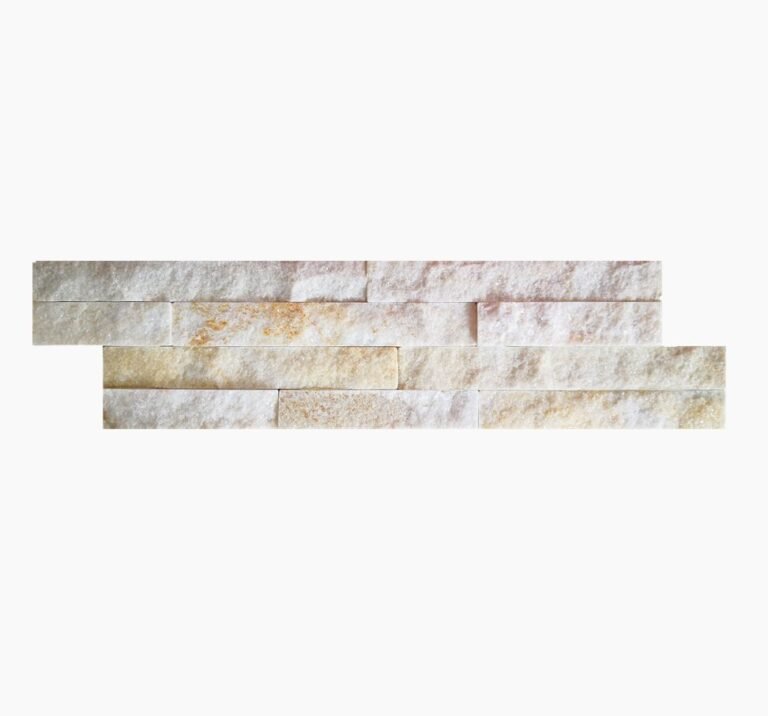
Quartzite
Denser and harder than slate, with water absorption below 0.3%. Quartzite resists abrasion and acid exposure, making it suitable for high-traffic commercial facades. The crystalline structure produces reflective surface highlights. Colors span white, gold, grey, and earth tones.
Sandstone
A warmer, more porous stone with a naturally textured grain. Sandstone delivers earth-tone palettes (beige, tan, buff, brown) that complement landscape architecture. Its higher absorption rate requires proper sealing or drainage detailing in freeze-thaw zones. Explore thin ledgestone options that include sandstone profiles.
Marble
Specified primarily for premium commercial facades and interior-exterior transition walls. Marble offers distinctive veining and polished or honed finishes. Exterior marble cladding is best suited to sheltered wall planes with limited direct rain exposure.
4. Panel Sizes and Specifications
The table below summarizes the standard panel dimensions, typical weight ranges, and backing configurations available from Top Stone Panels.
| Panel Type | Dimensions | Face Thickness | Approx. Weight | Backing Options |
|---|---|---|---|---|
| Stacked Stone | 15 × 60 cm | 8–15 mm | 35–50 kg/m² | Epoxy bond, Mesh |
| Stacked Stone | 15 × 55 cm | 8–15 mm | 35–50 kg/m² | Epoxy bond, Mesh |
| Z-Panel | 20 × 55 cm | 8–12 mm | 40–55 kg/m² | Cement backed |
| Z-Panel | 15.2 × 61 cm | 8–12 mm | 40–55 kg/m² | Cement backed |
| Thin Stone Veneer | Custom cuts | 10–20 mm | 30–60 kg/m² | Loose pieces / Mesh |
| Flagstone | Irregular shapes | 15–30 mm | 45–70 kg/m² | Loose pieces |
All panels are cut using infrared CNC diamond blade equipment, which holds dimensional tolerances within ±1 mm and produces clean edges that minimize on-site trimming. For projects requiring stone column wraps, panels can be fabricated to curved or angular profiles.
5. Cement-Backed vs Mesh-Backed vs Epoxy-Bonded: Which to Choose
The backing system determines how the stone panel interfaces with the wall substrate. Selecting the correct backing for the project conditions is critical for long-term adhesion and structural integrity.
Cement-Backed Panels
Z-panels use a cementitious backer board bonded to the stone face. This creates a rigid, flat panel that installs directly onto a mortar bed or thin-set adhesive layer. Cement backing provides the strongest mechanical bond for exterior applications and is the standard choice for large-format panels on commercial buildings. The rigid substrate also simplifies handling on-site, reducing breakage during installation.
Mesh-Backed Panels
Fiberglass mesh is laminated to the back of thin stone strips, holding the panel assembly together as a flexible sheet. Mesh backing is lighter than cement backing and conforms to slightly curved or irregular wall surfaces. It is the preferred choice for thin stone veneer applications on residential exteriors where the wall substrate is sound but not perfectly flat.
Marine-Grade Epoxy Bond
Individual stone pieces are bonded to a carrier sheet using marine-grade epoxy adhesive. This backing method is used for stacked stone panels and provides strong inter-piece adhesion while keeping panel weight lower than cement-backed alternatives. The epoxy formulation is rated for continuous moisture exposure, making it suitable for exterior walls in all climate zones.
6. Color Selection and Batch Consistency
Natural stone varies in color by quarry, by vein within a quarry, and even by depth within a single vein. For a 5,000 m² commercial facade, uncontrolled variation produces visible banding between panels from different production runs. Top Stone Panels addresses this through a batch-specific vein selection protocol.
How Vein Selection Works
- Quarry mapping: We identify and document the active veins at each partner quarry, cataloging color range, mineral composition, and textural character.
- Block inspection: Before cutting begins, QC inspectors examine raw blocks from the designated vein for internal consistency, rejecting blocks with unexpected mineral inclusions or color shifts.
- Dry-lay sampling: A sample area of finished panels is dry-laid under natural light to verify color uniformity before the batch ships.
- Single-vein allocation: For any single project order, all panels are sourced from the same quarry vein. This eliminates cross-vein color mismatch.
For orders exceeding one container, we recommend confirming single-batch production at the time of order placement. This ensures all containers draw from the same production run and quarry vein, delivering the tightest color match achievable with natural stone.
Review available color palettes across our stacked stone and Z-panels product lines.
7. Performance in Extreme Climates
Exterior stone cladding must perform across the full range of environmental conditions at the project site. Top Stone Panels products are rated for continuous service from -30°C to +50°C, covering the climate spectrum from northern Canada and Scandinavia to the Middle East and southern United States.
Freeze-Thaw Resistance
The primary failure mode for stone cladding in cold climates is water absorption followed by freeze expansion. Slate and quartzite, with absorption rates below 0.5% and 0.3% respectively, exhibit minimal internal water retention. When installed with a proper drainage plane or air gap behind the panel, these materials withstand repeated freeze-thaw cycles without spalling, cracking, or delamination.
Sandstone, with higher porosity, benefits from a penetrating sealer applied after installation in freeze-thaw zones. Specify this at the design stage and include it in the installation scope.
UV Stability
Natural stone is inorganic and UV-stable by composition. Unlike manufactured stone veneer, which relies on surface-applied pigments and oxide coatings that degrade under sustained ultraviolet exposure, natural stone color extends through the full thickness of the material. Panels installed on a south-facing wall in Arizona will show no measurable color shift after 25 years of direct sun exposure.
Thermal Expansion
The coefficient of thermal expansion for natural slate and quartzite is approximately 6–8 × 10⁻⁶ /°C, comparable to concrete and steel. Standard expansion joint detailing at 6-meter intervals accommodates thermal movement without panel stress. For detailed comparison with manufactured alternatives, see exterior stacked stone veneer vs manufactured stone.
8. Fire Rating and Building Code Compliance
Natural stone cladding carries a Class A fire rating (ASTM E84 / UL 723), the highest classification available for interior and exterior wall finish materials. This rating is inherent to the material — slate, quartzite, sandstone, and marble are non-combustible geological formations that do not ignite, contribute fuel, or produce toxic smoke under fire conditions.
What Class A Means for Your Project
- Flame Spread Index: 0–25 (Class A threshold)
- Smoke Developed Index: 0–450 (well within limits)
- Combustibility: Non-combustible per ASTM E136
For commercial projects, this rating satisfies International Building Code (IBC) Section 803 requirements for exterior wall coverings. In wildfire-prone zones where building codes mandate non-combustible exterior finishes (e.g., California Chapter 7A, WUI zones), natural stone cladding is a compliant material without additional testing or certification.
No fire-retardant chemicals, coatings, or additives are required to achieve this rating. The stone’s fire performance is permanent and unaffected by age, weathering, or maintenance practices.
9. Installation Overview
Natural stone cladding panels install over a prepared, structurally sound substrate. The general sequence is:
- Substrate preparation: Ensure the wall surface is flat (within 3 mm over 2 m), clean, dry, and structurally rated to support the cladding dead load (35–70 kg/m² depending on panel type).
- Weather barrier: Install a water-resistive barrier (WRB) and metal lath per local code requirements.
- Mortar/adhesive application: Apply polymer-modified thin-set mortar or Type S mortar to the wall surface and/or panel back, following the adhesive manufacturer’s coverage requirements (minimum 95% coverage for exterior applications).
- Panel placement: Press panels into position, maintaining consistent joint spacing. For stacked stone panels, butt joints tightly; for Z-panels, engage the interlocking profile.
- Corner treatment: Use pre-fabricated L-shaped corner pieces for clean outside and inside corners. See our column wraps and corner solutions.
- Cutting on site: Use a wet saw with a continuous-rim diamond blade for field cuts. CNC-cut factory edges should face outward on visible surfaces.
For a complete step-by-step installation walkthrough with substrate specifications and adhesive recommendations, refer to our guide on how to install stacked stone veneer panels. For a broader material comparison before specifying, read thin veneer stone vs full thickness stone.
10. Sourcing and Logistics
For distributors and project buyers, understanding the supply chain from factory to job site eliminates surprises at the procurement stage. Below are the key logistics parameters for ordering stone cladding from Top Stone Panels.
Minimum Order Quantity
One 20-foot general-purpose container (1×20GP). Depending on panel type and thickness, a single container holds approximately 800–1,200 m² of stacked stone or 600–900 m² of Z-panels.
Production Capacity
Our facility produces 80,000 m² per month of stacked stone panels and 50,000 m² per month of Z-panels. This capacity supports multi-container project orders with consistent lead times.
Lead Time
20–25 working days from order confirmation and deposit receipt to container loading. This timeline includes raw material sourcing, CNC cutting, backing application, QC inspection, dry-lay sampling, and packaging.
Shipping Port
Xingang / Tianjin port, approximately 300 km from the factory. Transit times to major destinations: 25–30 days to U.S. West Coast, 35–40 days to U.S. East Coast, 30–35 days to Northern European ports.
Payment Terms
30% T/T deposit at order confirmation; 70% balance T/T before container release from factory. This structure is standard for natural stone manufacturing in China and aligns with international trade practices.
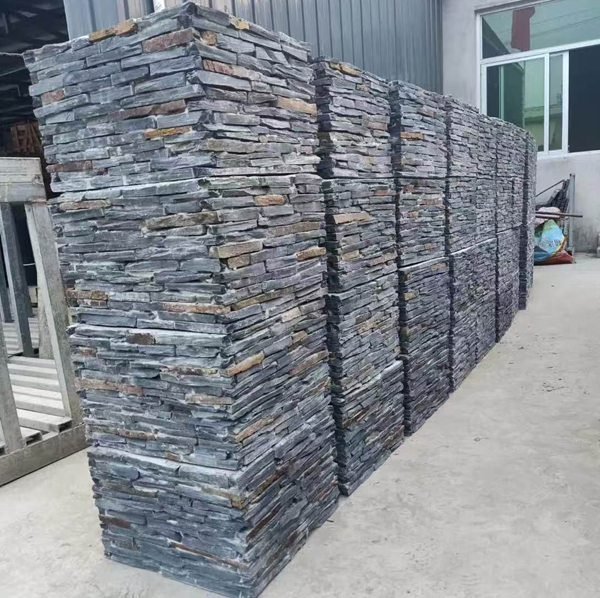
Packaging: Zero-Breakage Protocol
Natural stone panels are brittle by nature, and transit damage directly impacts project timelines and margins. Our packaging protocol includes:
- 3–5 layer corrugated cartons with foam inserts between panel layers
- Palletized loading on heat-treated wooden pallets (ISPM 15 compliant)
- 4–6 steel bands per pallet for structural integrity
- Airbag filling between pallets inside the container to eliminate lateral movement
This system has maintained a breakage rate below 0.5% across 220+ containers shipped annually over 18 years of export operations.
Frequently Asked Questions
What is the minimum order quantity for natural stone cladding panels?
The minimum order quantity is one 20-foot general-purpose container (1×20GP). This typically holds 800–1,200 square meters of stacked stone panels depending on panel thickness and packaging configuration. Shipping departs from Xingang/Tianjin port with a lead time of 20–25 working days after order confirmation.
Can natural stone cladding withstand freeze-thaw cycles in cold climates?
Yes. Natural stone cladding from Top Stone Panels is rated for continuous service between -30°C and +50°C. Slate and quartzite have low water absorption rates (below 0.5% for slate, below 0.3% for quartzite), which minimizes internal expansion during freeze-thaw cycles. Proper installation with a drainage plane behind the panels further protects against moisture-related damage in freezing conditions.
What fire rating does natural stone cladding achieve?
Natural stone cladding achieves Class A fire rating, the highest classification for building materials. Natural slate, quartzite, sandstone, and marble are non-combustible by nature and do not contribute to flame spread or smoke development. This rating satisfies building code requirements for both residential and commercial exterior wall applications in North America and Europe.
How do you ensure color consistency across a large stone cladding order?
Top Stone Panels uses batch-specific vein selection, sourcing all panels for a single project order from the same quarry vein. Our quality control team inspects raw blocks before cutting and performs dry-lay sampling to verify color uniformity. For large projects exceeding one container, we recommend confirming a single production batch at the time of order to guarantee the tightest possible color match.
Specify Your Next Stone Cladding Project
Stone cladding for exterior walls is a long-service-life material decision. Getting the panel type, backing system, material, and logistics right at the specification stage prevents rework, delays, and margin erosion downstream.
Top Stone Panels supports distributors, builders, and architects with sample panels, technical data sheets, and container-load quotations. With 18 years of production experience, 80,000 m²/month stacked stone capacity, and a packaging protocol that delivers panels intact across oceans, the factory is built for volume orders with consistent quality.
Request samples or a project quote: Contact the Top Stone Panels sales team at topstonepanels.com/contact.