Container weight, not container volume, is the number that decides your landed cost for natural stone cladding. Stone runs around 2,600 to 2,800 kg per cubic meter, which means a single 20GP loads out long before the cubage is full. Every extra kilogram sits on the freight bill, the trucking bill, and the terminal charges.
Top Stone Panels loads 220+ containers a year from its slate and quartzite works in Hebei, China, and every order is planned against a target weight. This guide turns that factory math into a usable calculator. It covers the density figures, the per-format examples, the container payload limits, and the packaging reality that makes gross weight different from stone weight.
- Stone is a weight-limited cargo: a 20GP holds about 33 m³ but only about 28,200 kg of payload, and practical heavy loads run 24-26.5 metric tons.
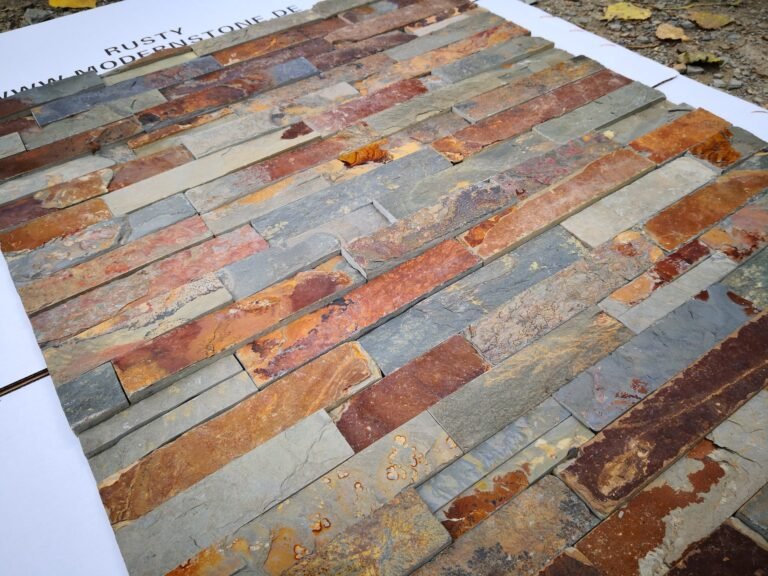
- Slate and quartzite typically weigh 2,600-2,800 kg/m³; a 20mm stacked panel runs about 48-54 kg per m², while 15mm ultra-thin ledgestone runs about 40 kg per m².
- Backing changes the math: cement-backed Z-panels can double the effective weight of a thin face layer.
- Packaging under the zero-breakage protocol adds meaningful gross weight; always book against the packing list gross weight.
- Carriers bill ocean freight on weight or cubic volume, whichever is greater, so per-m² freight falls as panel weight falls.
Why Container Weight Matters More Than Volume
Carriers quote ocean freight on a revenue ton, which is the weight in metric tons or the volume in cubic meters, whichever is larger. For a pillow shipment the volume wins. For stone the weight always wins, because a full container of slate hits the payload limit long before the volume is full. That single fact is why the community of buyers who estimate before ordering always beats the ones who first see the bill at the port.
Weight also decides what will physically move. A 20GP at full cubage would hold about 90 tons of stone, but container payload limits, road axle limits, and crane ratings cap the reality near 28 tons. Suppliers in heavy-load ports stretch that to 24-26.5 metric tons per container; other routes stop near 21-22 tons. If you quote a job without knowing which regime you are in, the difference is a whole extra container of freight.
Finally, weight touches money you cannot see. Terminal handling, overweight surcharges, trucking, and demurrage all respond to gross weight. Our stone cladding cost breakdown shows how freight and terminal fees slot into landed cost, and picking the right shipping term decides who carries the risk on each leg.

The Weight Formula in Three Steps
The whole calculator fits in three multiplications. Step one: find the volume of the cladding by multiplying the face area in square meters by the thickness in meters. A 15x60cm panel has 0.09 m² of face, and at 20mm thick its volume is 0.09 × 0.02, which is 0.0018 m³.
Step two: multiply that volume by the density of the stone in kg per cubic meter. Use 2,700 kg/m³ as a working figure for slate and quartzite, and confirm the actual number from the supplier’s physical test report before you order. Your order of books: 0.0018 × 2700 gives 4.86 kg per panel.
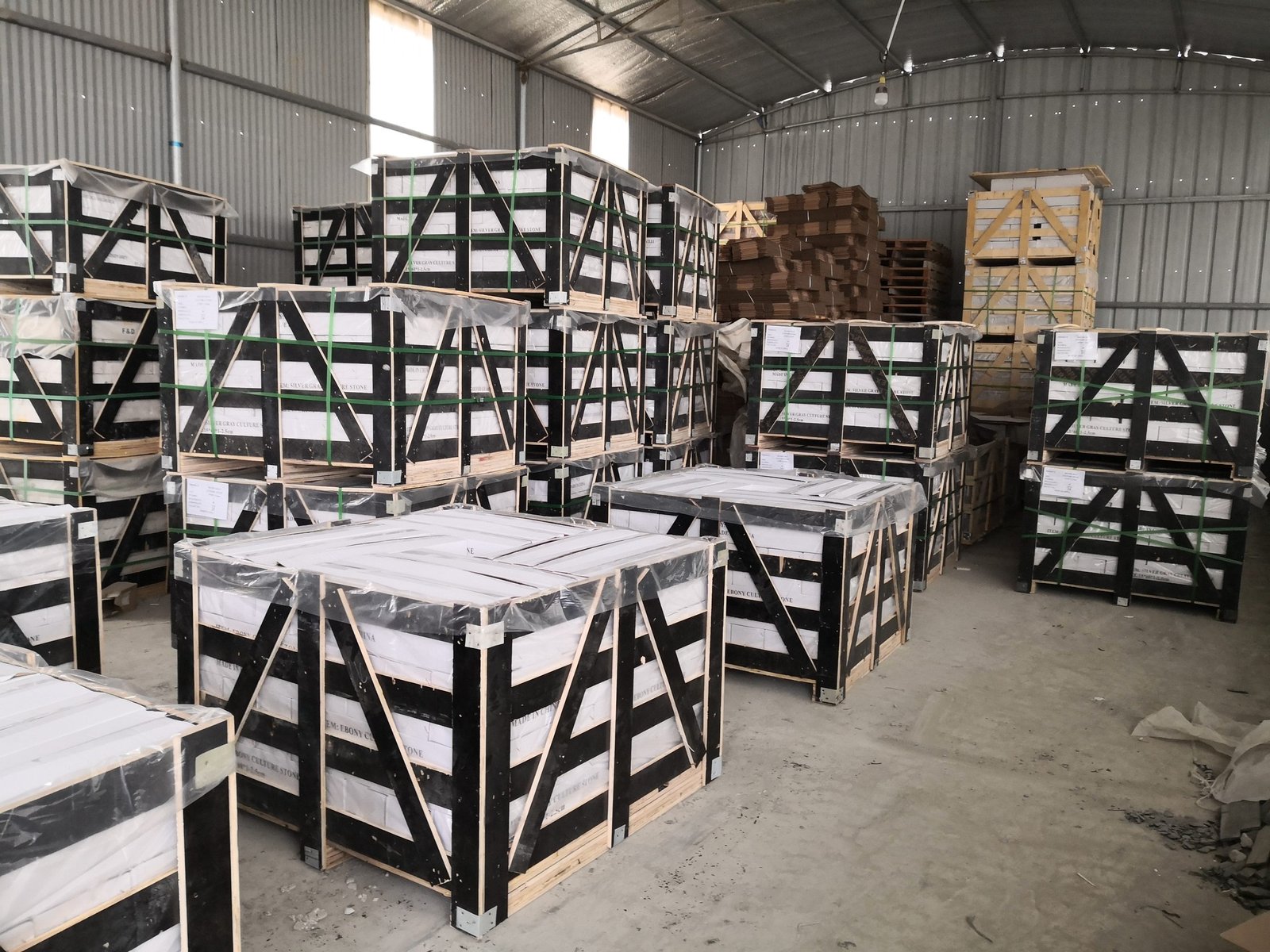
Step three: add the packaging. Cartons, pallets, steel strapping, and airbags turn net stone weight into the gross weight that actually moves. Never guess this add-on; the packing list states it. The container loading and packaging guide on this site covers the zero-breakage protocol in detail.
One warning before you scale your estimate: a meter of installed coverage needs several panels, and losses for cutting and waste belong in the quantity before weight, not after. The veneer quantity formula on this site handles that first step.
Density Reference for Natural Cladding Stone
Density is the number that makes or breaks your estimate, so it deserves its own table. These ranges are typical mineral values, not factory test results. Ask for the tested density on the exact stone and finish you are buying, because vein to vein variation shifts every number that follows.
| Material | Typical Density (kg/m³) | Shipping Note |
|---|---|---|
| Natural slate | 2,600-2,800 | Standard stacked and split-face formats |
| Quartzite | 2,600-2,800 | Dense end of the range; premium sparkle finishes |
| Sandstone | 2,200-2,700 | Lighter per m³ when porous |
| Cement-backed panel | Composite, lower than solid | Face plus backing; same format weighs more |
Panels ship in three backing families from this factory: marine-grade epoxy bond, cement backing, and mesh backing. Cement-backed panels add a rigid mortar layer behind the face, so they weigh more per square meter than a bare split face of the same visible size. Mesh-backed panels stay the lightest. The backing comparison documented on this site explains the structural trade-offs; the weight difference is a bonus consideration for freight.
The Natural Stone Institute maintains the test-method context that makes density and absorption figures comparable across suppliers. Use it to audit the physical test report your factory sends, and treat the density on that report as the number for your booking.
Worked Examples by Product Format
Theory lands best with numbers, so here is the calculator applied to the four formats this factory ships every week. All weights are estimates built with a 2,700 kg/m³ working density and loose square-meter math. Confirm each line with the supplier’s test report and packing list before booking the container.
| Format | Panel Size | Thickness | Est. Weight per m² | Freight Profile |
|---|---|---|---|---|
| Stacked panels | 15×60 / 15x55cm | 18-20mm | 48-54 kg | Heavy; texture-first jobs |
| Thin ledgestone | 36x10cm ultra-thin | 12-15mm | 35-40 kg | Lightest; most m² per container |
| Z-panels (cement back) | 20×55 / 15.2x61cm | Face + 10-15mm backing | 65-75 kg | Heaviest; commercial walls |
| Flagstone / crazy paving | Mesh sheets, random | 25-40mm | 65-110 kg | Weight follows thickness |
The pattern is worth naming. A thin ledgestone face runs about 40 kg per m², a stacked face about 50 kg per m², and a cement-backed Z-panel about 70 kg per m². At a fixed container payload, that spread changes how many square meters you land per shipment by more than 40 percent.
Run the derivation once to make it stick. One square meter of 20mm stacked slate holds 0.02 m³ of stone. Multiply by 2,700 kg/m³ and the face alone is 54 kg; add carton and pallet share and the installed meter books closer to 60 kg. That is why the packing list, not the brochure, decides the booking number.
This is the logic behind the factory’s freight-optimization work on thin formats. The thin ledgestone panels product page shows the 36x10cm line built to maximize square meterage per 20GP, which is why European distributors run it as their volume line.
Container Payload Rules: 20GP and 40GP
Container dimensions are standardized enough to plan around; payloads vary by carrier, route, and port. These figures are typical industry numbers, so confirm the current rating with your freight forwarder before committing any order.
| Container | Usable Volume | Typical Max Payload | Stone Loading Regime |
|---|---|---|---|
| 20GP | About 33 m³ | About 28,200 kg | 24-26.5 t heavy-load routes |
| 40GP | About 67.5 m³ | About 26,500-27,600 kg | Higher tare eats payload |
| 40HC | About 76 m³ | Near 40GP payload | Extra height unused by stone |
Stone is weight-limited on every box. A 40GP doubles your cubage but barely bends the payload limit, so the 20GP is usually the right first container for anyone trying the product line. It matches the one-20GP minimum order structure that keeps sample-to-scale ordering simple.
Rough numbers for planning: at 50 kg per m², a 20GP loaded to 26.5 metric tons carries about 530 m² of stacked panels before packaging. At 40 kg per m², the same box carries about 660 m² of thin ledgestone. Subtract the packaging weight to find the true net stone the container will hold, then let the factory’s mixed-container guide show how to blend formats in the same box.
From Net Stone Weight to Gross Weight
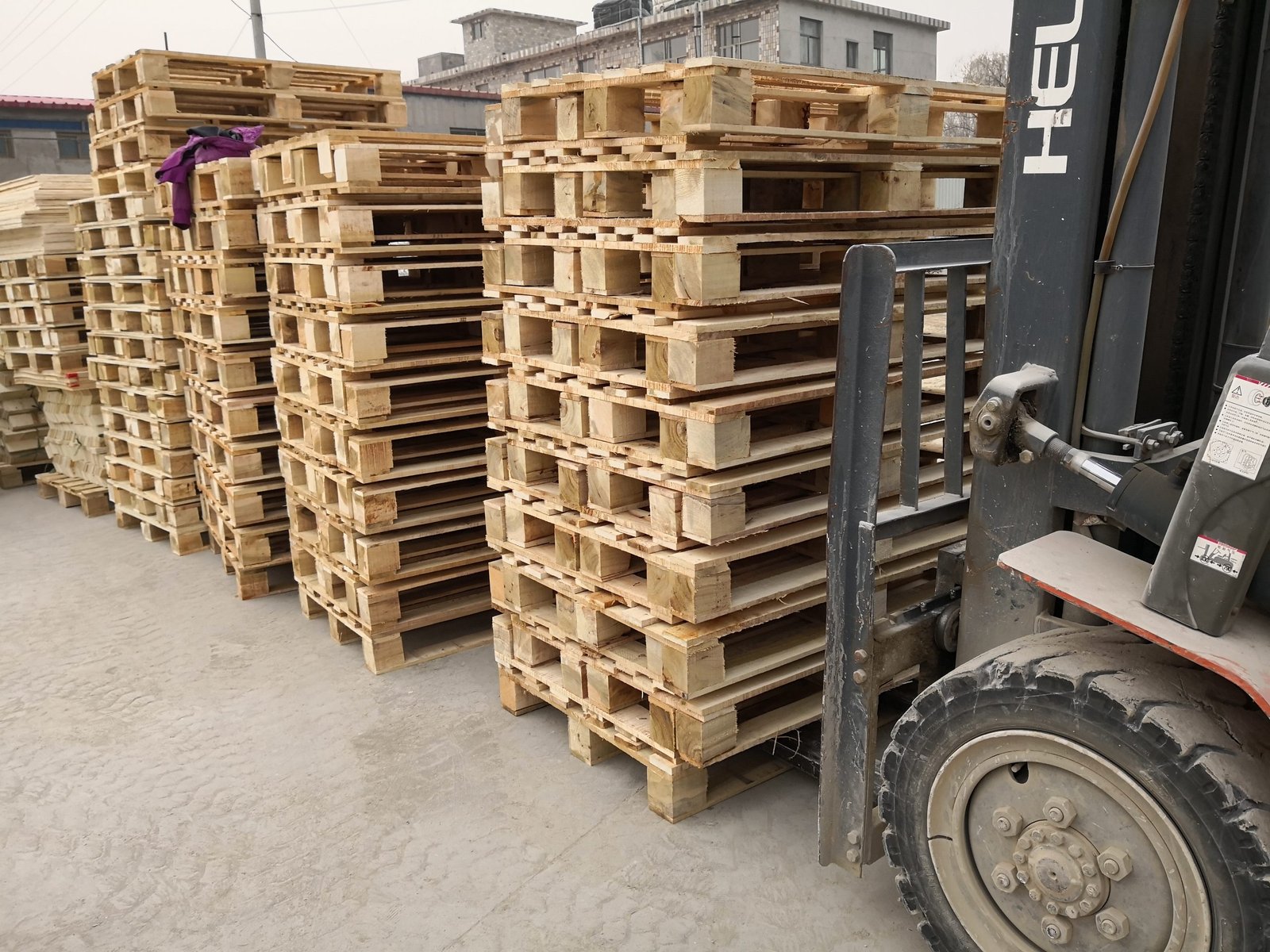
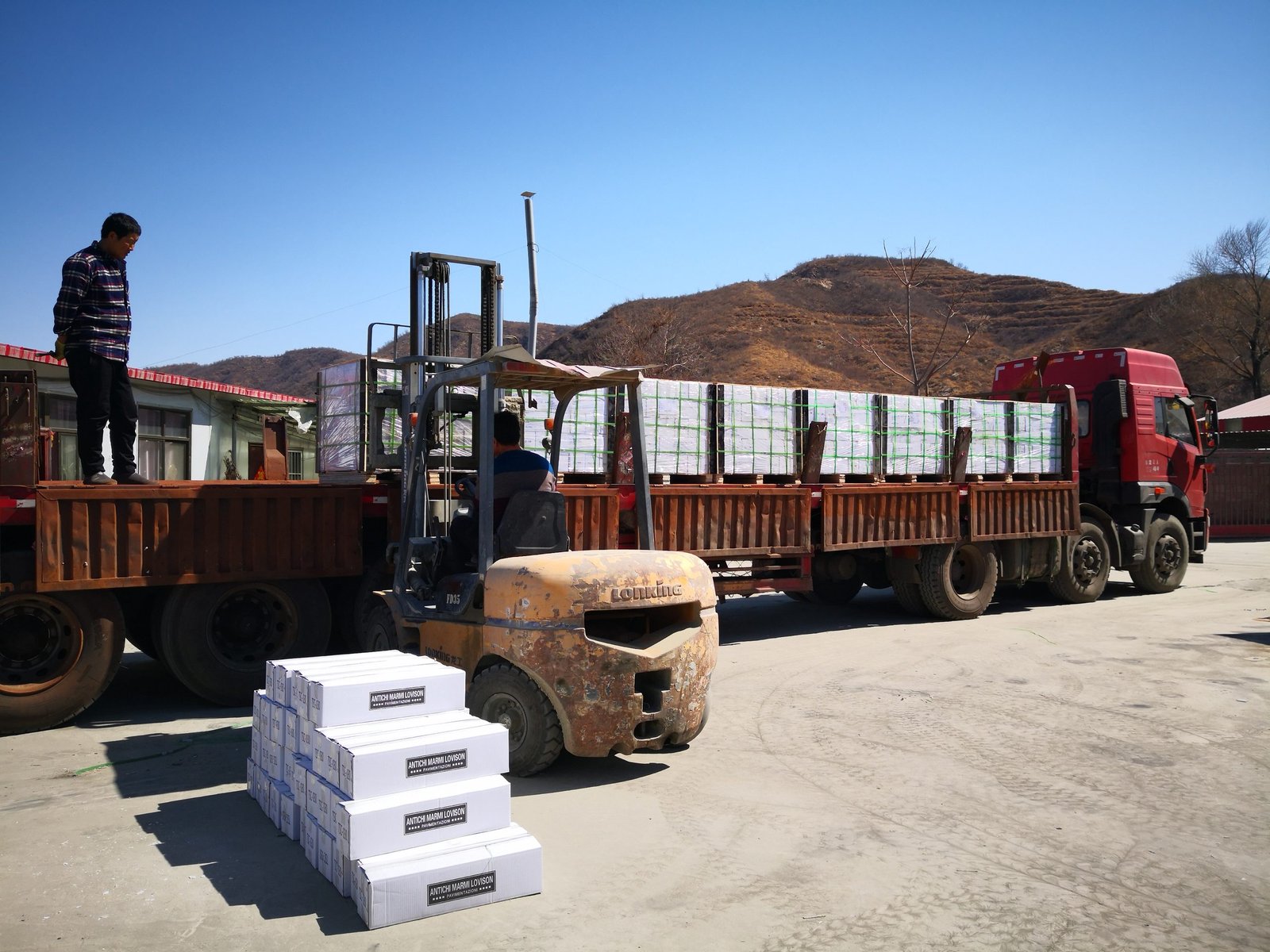
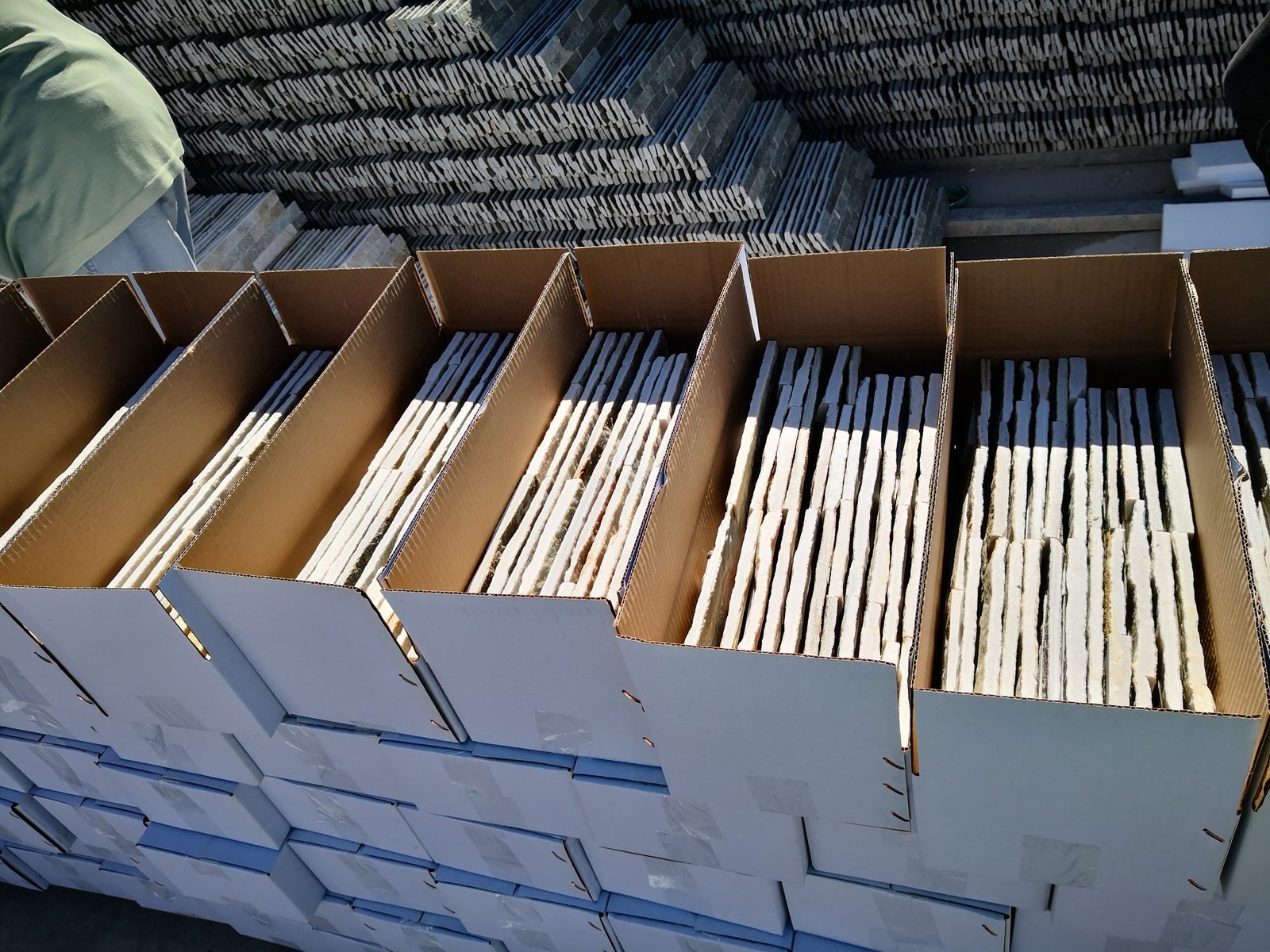
Net weight is the stone alone. Gross weight is stone plus everything that protects it, and gross is the number the carrier, the port, and customs care about. Under the zero-breakage protocol, each palletized load carries reinforced cartons, plywood pallets, 4-6 steel straps, and airbag bracing inside the container. That engineering earns its keep in damage prevention, and it weighs something.
The practical rule: never book a container against net stone weight. Ask for the packing list with both figures, and add the LCL or FCL allowances your forwarder uses. Keep 3-5 percent of headroom inside the payload for variations in moisture, carton quality, and pallet tare. The pre-shipment inspection guide lists what to check on the loaded container before the door closes.
Buyers who push a container to its absolute limit get stung at destination. One overweight arrangement, one extra airbag, one heavy pallet, and the trucker at the far port charges you for the axle police ride.
How Weight Drives Freight Cost
Put a number on the mechanism. If a carrier quotes 60 USD per revenue ton on a route, a 50 kg per m² stacked panel costs 3 USD per m² just for the ocean leg. A 40 kg per m² ledgestone panel costs 2.40 USD per m² on the same rate. That 20 percent of per-meter freight is pure margin for the distributor who chooses the lighter format.
Two levers follow. First, negotiate on the truckable weight, since overweight limits hard-cap your savings. Second, remember that FOB quotations pass freight risk to the buyer, while CIF and DDP transfers get bundled into the landed price. The FOB Xingang versus CIF comparison walks through which term fits which buyer, and a separate lead-time plan ties the freight leg to production scheduling.
Less-than-container loads follow the same weight logic with worse economics. An LCL shipment pays per chargeable unit, with added handling and unpacking fees at both ends. Buyers comparing freight should weigh the entire container cost against the smaller shipment before they split an order. On heavy stone, a full 20GP almost always wins per square meter.
One regulatory note belongs in any weight conversation. Since 2016 the SOLAS convention requires every packed export container to carry a Verified Gross Mass from the shipper before it can be loaded aboard. The VGM protects the vessel and the crane cable. When your supplier provides the loading plan and the container’s VGM together, treat that as standard export discipline, not a favor.
Planning your first container of stone panels?
We will run the weight and square-meterage plan for your formats before you book. Samples ship in 1-3 days; production runs 20-25 working days at a one-20GP minimum with FOB Xingang terms.
Slate | Quartzite | L-corner kits | 24-26.5t heavy-load routes
Why the Number Must Match Your Documents
The weight you estimate is the weight you declare. Commercial invoice, packing list, and bill of lading must tell the same story, because customs compares them. A mismatch of a few hundred kilograms between invoice total and packing list is a classic trigger for a hold, an exam, and a penalty on top of the delay.
Shipments from this factory travel with a certificate of origin, an ISPM 15 fumigation certificate, and a pre-shipment inspection report video. The certificate of origin guide on this site explains how origin documentation feeds duty preference, and the ISPM 15 guide covers the wood-packaging paperwork that trips up first-time importers.
Declared weight also feeds the customs value on ad valorem duties. Under-declare to save a fee and you buy an audit; over-declare and you pay duty on air. The customs clearance guide on this site walks importers through the whole declaration sequence.
What to Ask Your Supplier
Walk into the RFQ with a weight short list and ask for answers in writing.
- Net and gross weight per carton. Not per square meter, per carton, so you can stack boxes on a pallet plan.
- Density from the physical test report. Ask for the tested value on your exact stone and finish, not a catalog sheet.
- Pallet count and palletized dimensions. Height-per-pallet drives both weight and the loading plan.
- Heavy-load availability on your route. Confirm whether 24-26.5 metric tons is permitted or only 21-22 tons.
- Max square meterage per 20GP. The supplier’s own number, with packaging weight already deducted.
- Loading plan and inspection video. Evidence that the loaded gross weight matches the booking.
Real suppliers answer these without hesitation because they plan every shipment against weight anyway. A supplier who cannot state gross weight per carton has never held a scale to their own packing line. The factory audit checklist on this site puts the same questions into the broader supplier verification process.
Frequently Asked Questions
How much does natural stone veneer weigh per square meter?
Slate and quartzite veneer typically runs 40-55 kg per square meter at 15-20mm thickness. Cement-backed panels run heavier, and flagstone at 25-40mm runs from about 65 kg upward.
How many square meters of stone fit in a 20GP container?
At roughly 50 kg per square meter, a 20GP loaded to about 26.5 tons of stone carries around 500-530 square meters before packaging. Thin ledgestone at 40 kg per square meter pushes that closer to 660 square meters.
Is stone shipped by weight or by volume?
Ocean freight is billed on weight or volume, whichever is higher. Stone panels are always weight-limited, so the weight calculation drives the freight quote.
Does packaging add much weight to a stone container?
Yes, and it varies by format. Keep 3-5 percent headroom for cartons, pallets, strapping, and airbags, and always book against the gross weight on the packing list, never the net stone weight.
What is the minimum order for stone panels from Top Stone Panels?
One 20GP container, with production in 20-25 working days and physical samples in 1-3 days. FOB Xingang terms apply with 30% T/T deposit and 70% before shipment.
Conclusion
Weight is the quiet cost driver in every stone import, and it is fully predictable with three inputs: area, thickness, and density. Add packaging from the packing list, keep the gross weight inside the container’s payload regime, and the freight number stops being a surprise.
- Work from a density around 2,600-2,800 kg/m³ for slate and quartzite, confirmed by the supplier’s test report.
- Plan formats by weight: 35-40 kg per m² for thin ledgestone, 48-54 kg per m² for stacked panels, heavier for cement-backed systems.
- Book against gross weight, keep 3-5 percent headroom, and confirm heavy-load availability on your route.
- Keep invoice, packing list, and bill of lading weight consistent to avoid customs holds.
Ask your supplier for the per-carton weights and the max square-meterage plan before you book. A straight answer on weight is the fastest sign of a factory that controls its own loading.