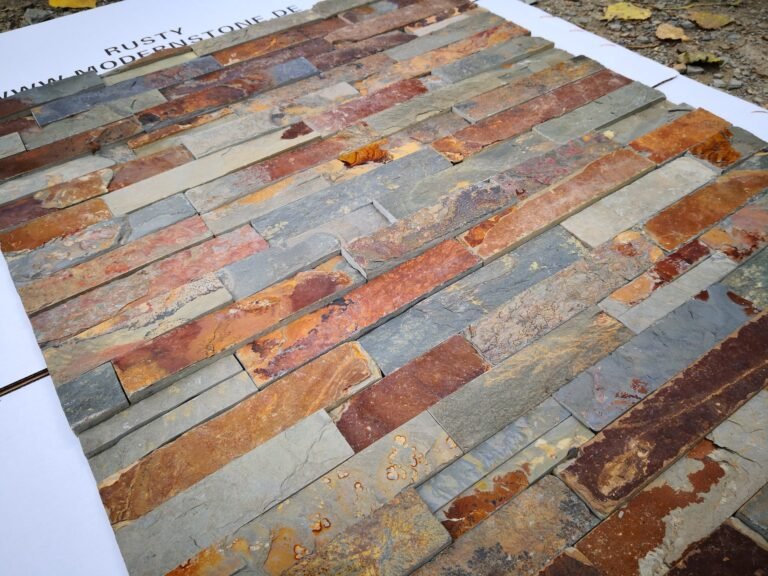
A wavy wall does not start at the wall. It starts on a factory floor, in the gap between a straightedge and the face of a panel that was never checked. Installers notice it an hour in: the grout line steps up and down, the seams refuse to close, and a crew that planned a two-day cladding job starts burning half a day shimming panel backs. The material itself is fine stone. The geometry is what failed.
Flatness and warpage control is one of the quiet quality battles in natural stone cladding, and it is decided almost entirely before the container is sealed. A panel that bows 3 mm across a 600 mm span leaves a lip your thumbnail catches — and on a hundred panels that lip becomes a wall you cannot photograph straight. This guide covers the three types of warpage, where each one comes from, the factory controls that keep panels flat, and the acceptance checks buyers should run before and after shipment.
Below you get the language of panel geometry, the production loop that controls it at a quarry-direct factory, the measurement methods that catch it, and the purchase-order lines that make the issue somebody’s responsibility in writing.
- Warpage breaks into three types — bow, cup, and twist — and each leaves a different signature in the grout lines of the finished wall.
- Flat panels are the factory’s job; flat walls are the installer’s. The two must be specified separately in the purchase order and the installation spec.
- Warpage comes from internally stressed raw stone, heat from cutting, backing cure movement, and poor storage — all controllable when the QC loop is designed for it.
- Top Stone Panels runs a 3-step QC loop (raw material selection, in-process rechecks, pre-shipment final inspection) with batch-specific vein selection and infrared CNC diamond-blade cutting.
- Panel flatness is measured with a straightedge and feeler gauge; wall flatness is checked before grouting; EN 1469 and ASTM C1242 give specifiers the framework for dimensional requirements.
- Buyers should write an acceptance limit into the PO, verify it on 1-3 day physical samples, and repeat the straightedge check at pre-shipment inspection.
Why Flatness Belongs in Your Spec
Flatness is a geometry spec, separate from color, thickness, and surface texture. A panel can have the perfect vein match and the wrong shape — a slight arc across its face that looks harmless on a sample board and destructive across 40 m² of wall. Put the geometry requirement in writing, because nobody fixes it on site without paying twice.
The cost of ignoring it
Lippage is the visible step between two adjacent panels. Beyond about a hairline, it reads as an installation defect even when the stone is flawless, and correcting it means shimming, furring, or pulling panels and resetting them. Grout lines amplify the problem: a flat wall laid with even joints hides minor variations, while a bowed panel interrupts every joint crossing it.
Time is the second cost. A crew installing stacked stone panels expects tight, repeatable geometry straight out of the carton; the moment panels fight the layout, the dry-fit planning that should take minutes stretches into hours. Installers notice it an hour in, and the schedule notice never gets smaller.
Three shapes of warpage
Panel geometry problems break into three measurable shapes. Bow is a curve along the length, like a banana: the ends lift off a flat surface while the middle (or the reverse) carries the weight. Cup is a curve across the width, so the panel rocks like a boat hull. Twist is worse — opposite corners sit off a flat plane, and a twisted panel cannot be shimmed flat without breaking its own bond.
| Warpage | How it looks | How to spot it | Typical cause |
|---|---|---|---|
| Bow | Lengthwise curve; ends lift off a flat surface | Straightedge along the length | Internal slab stress, cutting heat |
| Cup | Center lifts across the width | Straightedge across the width | Backing cure movement, moisture |
| Twist | Opposite corners off-plane | Rock the panel on a flat table | Uneven stacking, storage set |
Ask which shape your supplier measures. A QC sheet that says “flatness checked” without naming bow, cup, or twist tells you which panels were not looked at.
The knowledge is free; the discipline is not. Most quarries can hold geometry tightly when the order demands it. The spec is what forces the demand.
Where Warpage Comes From in a Stone Panel
Natural slate and quartzite are stubborn materials, and most warpage originates before the panel is even assembled. Once you name the sources, the factory control loop becomes obvious.
Internal stress in the raw stone
Slate splits along cleavage planes formed under geological pressure, and the rock carries residual stress from that history. When a slab is sawn thin, the stress can release unevenly and the piece walks out of flat. Batch-specific vein selection at the quarry matters for color — and it matters for geometry too, because an experienced selector learns to read the symptoms of stressed blocks before they are cut.
Heat from cutting
Sawing generates heat, and heat releases stress at the blade line. A blade that is dull, over-fed, or starved of water leaves a rush of thermal energy in the cut face; the panel can curl within an hour of cutting. This is why the cutting line matters as much as the blade quality: consistent feed, consistent water, consistent panel.
Backing layer movement
Most veneer panels carry a backing layer — marine-grade epoxy bond, cement backing, or mesh. Each moves differently while it cures. Cement-backed panels pick up moisture during cure and can shrink or swell across the back face; epoxy-bonded panels move less but still need controlled temperature. Panels packed before the backing has finished curing take a set that shows up weeks later in a distributor’s warehouse.
Storage and stacking
Panels stored leaning against a wall, or stacked on an uneven floor, learn the shape of the surface they rest on. Thin veneer panels are especially susceptible: a 15-20 mm cross-section will conform to a warped pallet or a floor ridge over a few weeks. Flat storage on a level pallet is not a nicety — it is a dimensional control.
A warped panel is not a broken panel. It is geometry drift, and it is almost always fixable at the source if the source is named. The factory loop is where the naming happens.
The Factory QC Loop: Selection, Cutting, Final Check
Factories that ship consistently flat panels run the same three gates in the same order. Top Stone Panels’ 3-step QC — raw material selection, in-process rechecks, pre-shipment final inspection — maps directly onto the geometry problem.
Gate 1: raw material selection
The battle is mostly won before cutting. Blocks and slabs are walked and inspected for signs of stress: born cracks, persistent bow in split pieces, and structural variation along the bedding plane. Rejects never reach the cutter. This is the same gate that keeps thickness and color stable, which is why the company’s 3-step quality control documents thickness tolerance as one of its headline outputs.
Gate 2: in-process rechecks
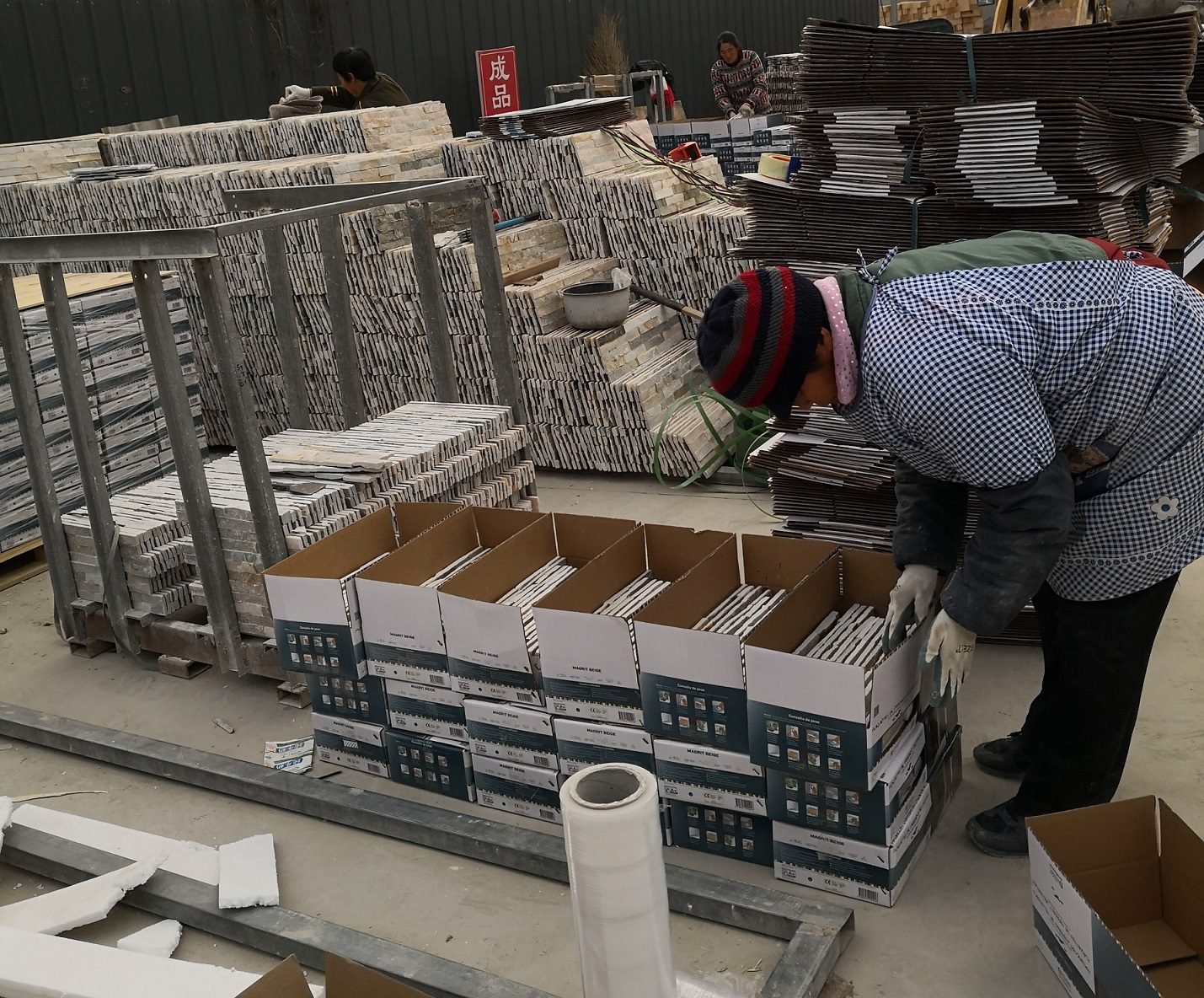
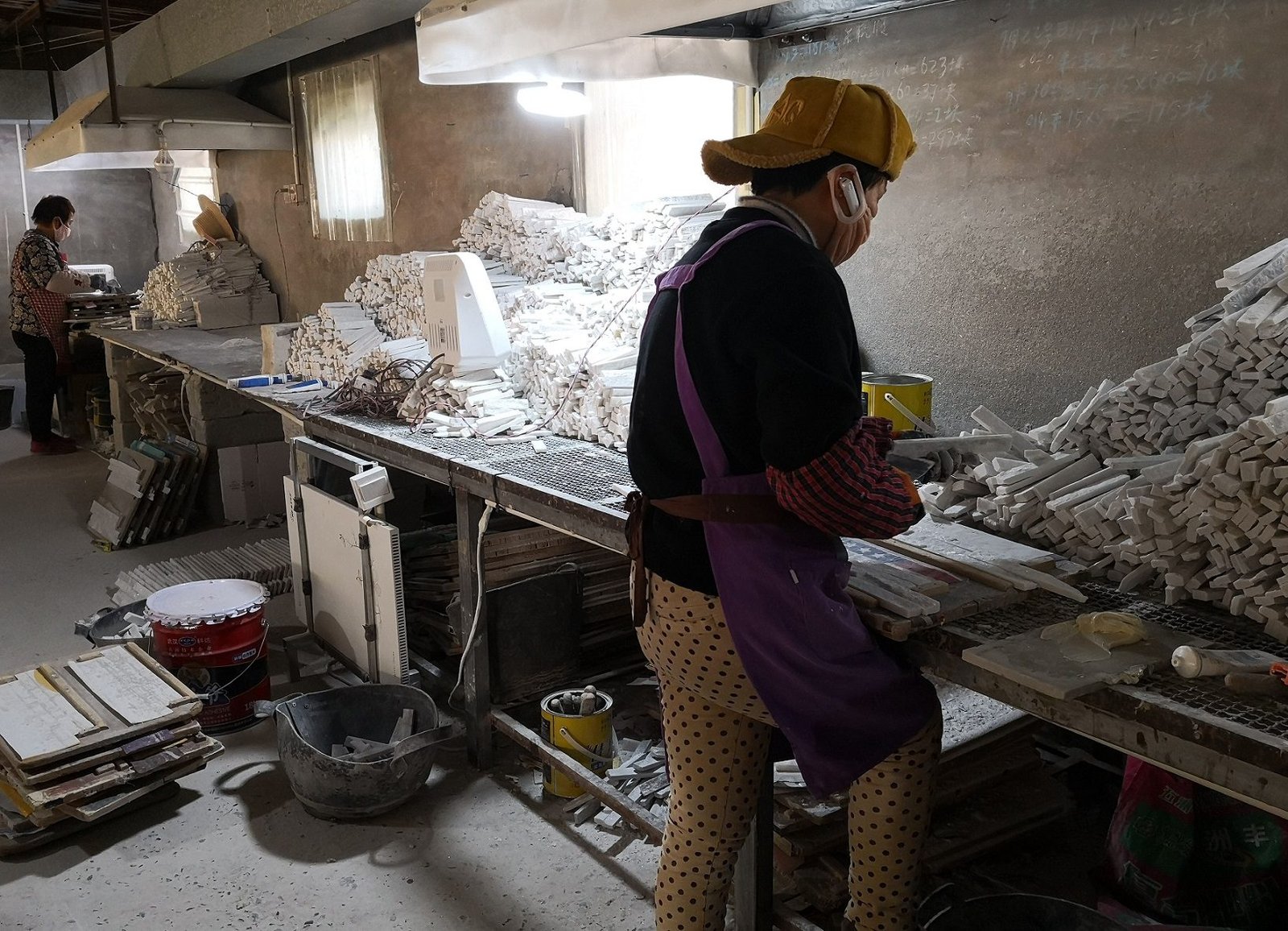
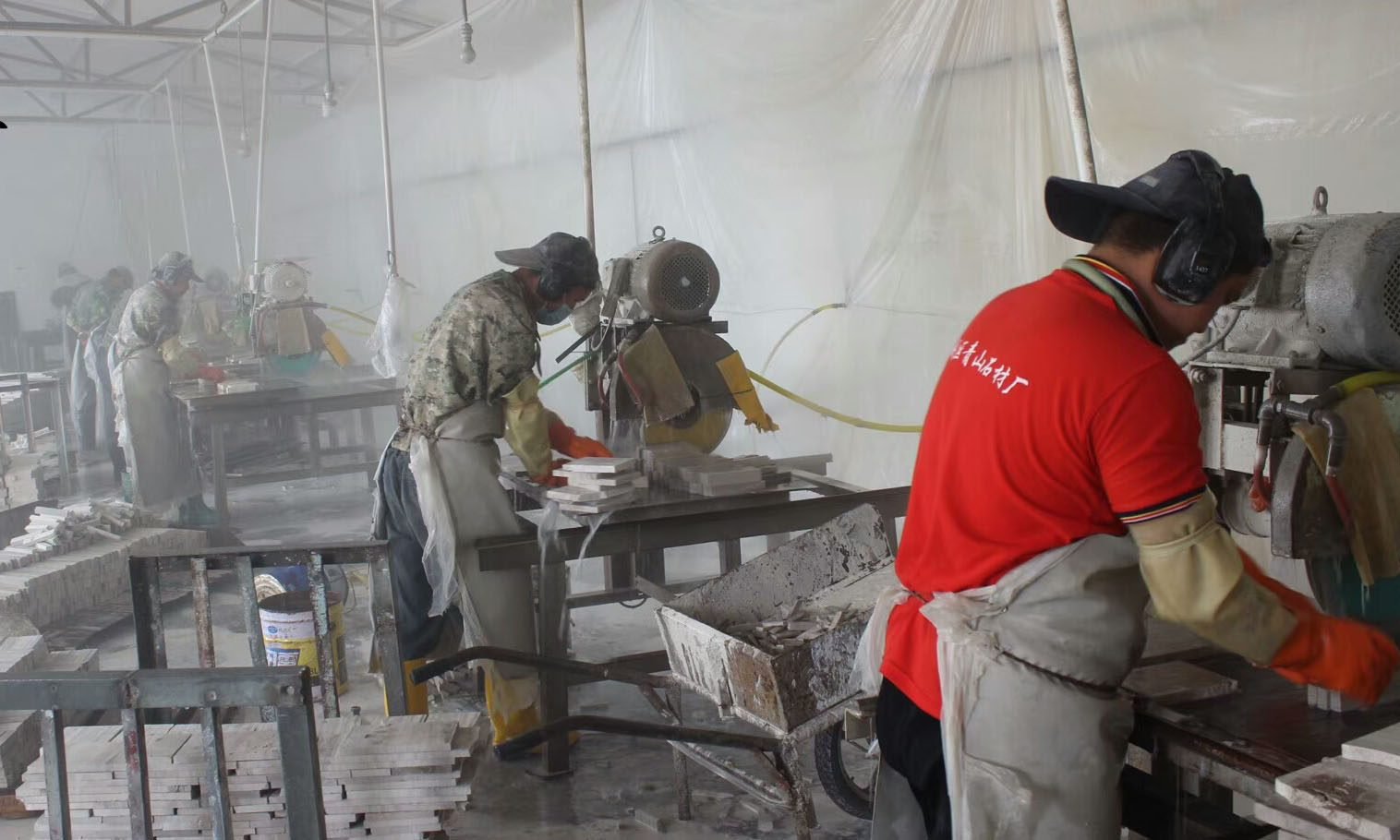
On the cutting line, fine infrared CNC diamond-blade machinery holds each panel to dimension as it is cut. Operators recheck as panels come off: thickness at the edges, backer flatness, and visible face geometry before panels move to assembly. Hand-assembly crews lay panels face-down on flat steel tables, so any previously hidden bow is caught by eye and straightedge before the panel enters a carton. This precision is what lets the factory claim roughly 20% lower on-site waste from infrared CNC cutting — geometry that fits is waste that never happens.
Gate 3: final check before packing
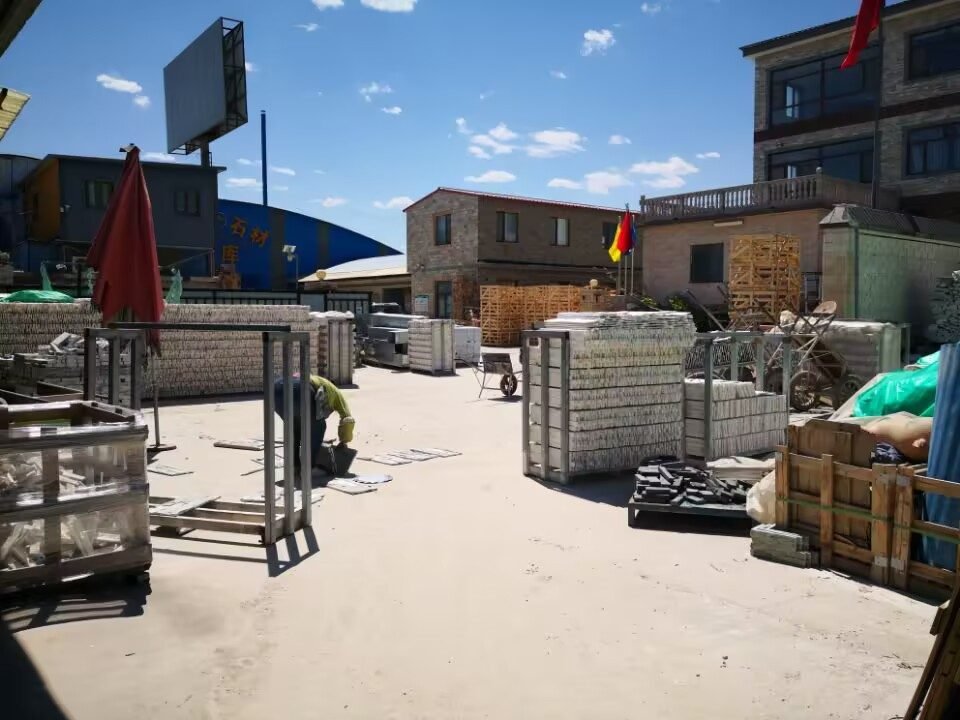
The last gate is the one buyers should ask about: what happens between QC and the pallet. Panels are straightedge-checked at a sampling rate the buyer can specify, laid flat into the carton, and stacked onto level pallets so the geometry survives the warehouse, not just the cutting room. Panels that fail the gate are culled on the line — they never ride in the same carton as good panels to “see what the customer says.”
Ask for the QC video at this stage, not the brochure photograph. A dated line video showing the straightedge check is the cheapest proof of a factory that actually runs the gate.
How Flatness Is Measured: Panel and Wall
Measurement separates “we check flatness” from “we ship flat panels.” The method is simple enough that a buyer can run it in five minutes with hardware-store tools.
On the panel
Run a steel straightedge across the panel face, along the length and the width, and look for light under it. A feeler gauge measures the gap in measurable units. Then place the panel face-down on a known-flat surface and rock the corners: a twist reveals itself immediately, because one corner lifts and the panel rocks around it. Do the same along both diagonals, and you have the three shapes covered.
Panel-level measurement belongs in the factory QC process, in the carton, and at arrival. A few panels per carton is a fast, honest audit.
On the wall
Panel flatness and wall flatness are different problems. A perfectly flat panel installed on a bowed substrate reproduces the substrate’s bow; an uneven base delivers the same lippage no matter how straight the stone is. The fix belongs to the installer: check the substrate with a straightedge or laser level before the first panel goes up, then dry-fit a row and run the straightedge across the laid stone before grouting catches the errors forever.
Compliance framing differs by market. In Europe, EN 1469 for natural stone cladding slabs gives specifiers a dimensional framework they can reference in the project file; in North America, the ASTM C1242 guide for dimension stone systems plays the same anchoring role. Neither tells you the right number for your job — they tell you how to specify one and why it is defensible.
Putting a number in the PO
Write the acceptance method, not a vague “flat panels required” line. Name the straightedge span you will use, the maximum gap you will accept, and the sampling rate for cartons. Then ask the factory to confirm they can hold it — in writing, on the quotation. A supplier that refuses a measurement-based line is telling you something useful before you sign.
Cutting, Backing, and Curing: Where Panels Stay Flat
The three production choices that decide panel geometry are the cutting method, the backing system, and the curing discipline around it.
Cutting system
Infrared CNC diamond-blade cutting does two things for geometry. It holds each cut to a tight dimension, so panel-to-panel size drift stays small, and it controls the heat story: consistent blade feed and water keep the thermal shock in the cut face repeatable instead of explosive. The same line that cuts the stone also cuts the L-corner pieces used on outside corners, which keeps the whole assembly within one geometry family.
Backing system
Marine-grade epoxy bond gives the most stable backing for thin panels: low moisture movement and a fast, controlled cure. Cement-backed panels are heavier and cheaper but carry moisture through the cure, so the factory must let them condition before packing. Mesh-backed flexible panels tolerate more base movement on site but transfer less rigidity. There is no universally “right” backing — there is the right match between the backing, the exposure, and the QC discipline behind it.
Curing and stacking discipline
Every backing needs time at controlled temperature before the panel is judged flat. Pack early and the panel takes a set in the carton; leave the stack on an uneven floor and the bottom panels learn the floor. Factories control this with flat racking and, for export, with the kind of pallet discipline described in the zero-breakage packaging protocol — because panels that arrive flat but are stored badly at the warehouse can still warp before the installer opens them.
Bring geometry into your next order. Top Stone Panels runs the 3-step QC gate on every line, ships physical samples in 1-3 days for you to straightedge-test before production, and documents panel QC standards for stacked stone, ledgestone, z-panel, and column lines.
Highlights: 3-step QC with straightedge checks | Up to 80,000 m2/month stacked-stone capacity | MOQ from one 20GP container
What Buyers Should Verify: Acceptance Criteria
A flat-panel guarantee lives in three places: the purchase order, the physical sample, and the pre-shipment inspection. Verify all three and the container is back-up evidence instead of the first surprise.
- PO line — name the straightedge span, the maximum gap, and the carton sampling rate. A measurement-based line survives an arbitration; “good quality panels” does not.
- Physical samples in 1-3 days — straightedge-test the actual material Top Stone Panels would cut for you. Panels that recite their QC standard in the lab pass before production starts, not after.
- Factory documentation — ask which standard the QC runs against (EN 1469-style dimensional framework, ASTM C1242 guidance, or a written factory SOP) and request the dated line video of the geometry check.
- Pre-shipment inspection — repeat a straightedge audit at the pre-shipment inspection stage, before the container is sealed, while replacement panels are still cheap.
- Storage instruction — put flat, level storage in the shipping and receiving notes, and include the requirement in your container weight and loading plan so the pallets arrive level enough to stay flat.
- Red-flag reader — treat “natural stone variation” as a color and texture defense, never a geometry defense. If a supplier reaches for it when you catch a 5 mm bow, you have found the QC gap.
The enforcement point is arrival. Unpack a spread of cartons from different pallets — front and back of the container — and run the straightedge before the installer starts. The first signs of a geometry problem surface at the finishing edges: cap runs and hearth courses amplify lippage because every joint is visible in a horizontal line. Reading how caps and coping expose fit quality, and how hearth designs demand tight geometry, is the best preparation for inspecting the pieces that matter most.
When the audit finds warped panels, stay disciplined about attribution. Photograph the panel in its storage condition, compare against the pre-shipment record, and decide: pre-loading geometry (factory), transit damage (carrier), or on-site storage (site). The test report reading guide shows buyers how to keep material claims and geometry claims in separate files — the distinction decides who pays.
FAQ
What does warpage mean for a stone panel?
A warped panel deviates from flat before installation. It shows as a bow across the length, a cup across the width, or a twist at the corners, and each type leaves a different signature in the grout lines of the finished wall.
How do I check stone panel flatness when panels arrive?
Run a steel straightedge across the face and along both diagonals, and use a feeler gauge to measure any gap under it. Place the panel face-down on a flat surface and rock the corners to detect twist.
Is a slightly bowed stone panel a defect?
It depends on the tolerance in your purchase order. Color and bedding variation are natural, but visible bow, cup, or twist is a geometry issue a factory can control. Define the limit before ordering, not after delivery.
Who is responsible for warped panels that arrive on site?
Warpage on a flat, correctly stored panel is usually a pre-loading factory issue; warpage from leaning, impact, or uneven storage is site-related. Photos at arrival and the pre-shipment inspection record decide the dispute.
Can I put a flatness limit in my purchase order?
Yes. State the measurement method (straightedge span, maximum allowed gap, carton sampling rate), ask the factory to confirm the QC standard they run against, and verify it on physical samples and at pre-shipment inspection.
Conclusion
Flatness and warpage control is the factory half of a flat wall. Warpage — bow, cup, or twist — starts in stressed raw stone, cutting heat, backing cure, or storage, and every one of those inputs sits inside the factory’s control loop, not the installer’s.
Your checklist before the next container:
- Write a measurement-based flatness line into the PO: straightedge span, maximum gap, carton sampling rate.
- Straightedge-test the physical samples in the 1-3 day sample window before production starts.
- Confirm the factory’s 3-step QC gate and request the dated line video of the geometry check.
- Repeat the audit at pre-shipment inspection, and store the arriving panels flat and level.
Ask the factory how they check geometry, then check it again yourself. The straightedge is cheap; a straight wall is not.