Every distributor who has sourced natural stone cladding from China has stared at a FOB quote and thought it looked attractive. Then the shipping invoice arrived. Then customs. Then the freight forwarder’s surcharge. Then the warehouse handling fee. By the time the product reaches a job site in Toronto or Rotterdam, the per-square-meter cost has often doubled from the factory-gate number.
This guide dissects every layer of the natural stone cladding cost stack, from the quarry to the installer’s truck. The goal is not to quote prices that will be outdated by next quarter. The goal is to give building material distributors, contractors, and landscape architects a repeatable framework for calculating total landed cost, identifying the variables that move the needle, and avoiding the budget surprises that kill project margins.
1. Why Understanding Total Landed Cost Matters
A FOB price tells you what the factory charges to produce stone cladding and load it onto a vessel at the port of origin. That number alone is nearly useless for budgeting a project in North America or Europe. The gap between FOB cost and the price a contractor pays on the job site routinely exceeds the FOB price itself.
Distributors who evaluate suppliers based solely on FOB quotes make purchasing decisions on 30-40% of the actual cost equation. A supplier quoting slightly higher on FOB might use better packaging that eliminates breakage, ships from a port with faster transit times, or holds certifications that reduce customs friction. These factors compress downstream costs in ways the FOB line item never reveals.
Landed cost is the only number that matters when you are setting resale prices, bidding on commercial projects, or comparing sourcing options. It includes:
- Factory-gate product cost (FOB)
- Ocean freight and port handling charges
- Marine insurance and documentation fees
- Customs duties, tariffs, and import taxes
- Inland transportation from destination port to warehouse or job site
- Warehousing, handling, and last-mile delivery
Build a spreadsheet with all of these line items before you request a single quote. The guide to sourcing stone cladding from China covers the supplier evaluation side. This article focuses on the money.
2. The Five Cost Components of Natural Stone Cladding
Strip away the complexity and every natural stone cladding order breaks into five cost buckets. The percentages below are directional ranges based on a standard 20-foot container shipped FOB Xingang to a North American port. Actual splits vary by destination, material, and order configuration.
| Cost Component | Share of Landed Cost | Key Variables |
|---|---|---|
| FOB Product Cost | 35-50% | Material type, thickness, finish, order volume, customization |
| Ocean Freight + Port Charges | 15-25% | Container type, weight, route, season, fuel surcharges |
| Duties, Tariffs & Taxes | 10-25% | HS code, destination country, trade agreements, anti-dumping |
| Insurance & Documentation | 3-5% | Cargo value, coverage level, certificates required |
| Inland Transport & Warehousing | 10-20% | Distance from port, delivery access, storage duration |
The critical insight for first-time importers: the FOB component, while the largest single line, is often not the component that causes budget overruns. Freight volatility, unexpected duty rates, and demurrage charges at the destination port are where margins evaporate. Understanding each component separately is the foundation of accurate natural stone cladding cost estimation.
For a detailed overview of the product lines available, review the six types of stone veneer panels that distributors stock. Each product line carries different weight profiles and packaging requirements that directly affect the cost components above.
3. FOB Price: What Determines the Factory-Gate Cost
The FOB price for natural stone cladding is not a single number. It is the output of at least seven variables, each of which a buyer can adjust to move the price up or down. Request a quote for current pricing once you understand these levers.
Material Type
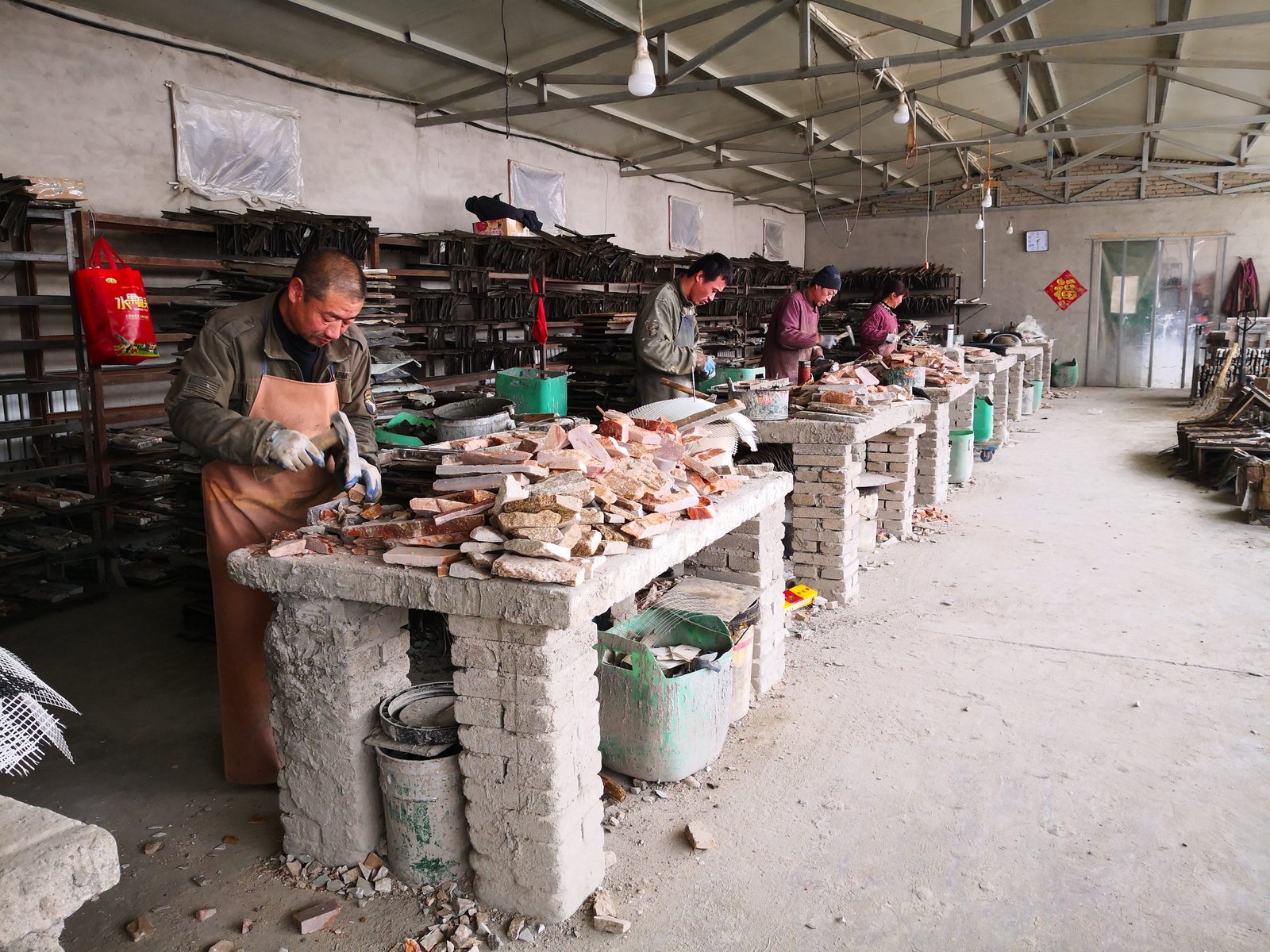
Slate, quartzite, marble, and sandstone all carry different base costs. Slate and sandstone from Hebei quarries are generally more cost-competitive because the raw material is abundant locally. Quartzite commands a premium due to hardness (higher processing time and tool wear). Marble sits at the higher end because of its visual appeal and the care required during fabrication. Top Stone Panels operates its own quarry in Yixian, Hebei, which eliminates one layer of the supply chain and keeps slate and sandstone pricing tight.
Thickness and Panel Size
Thicker panels use more raw material and weigh more per square meter, which compounds through shipping. Standard stacked stone panels at 15x60cm are the workhorse format for a reason: they balance coverage area, weight, and handling ease. Thin ledgestone at 36x10cm uses less material per piece but may require more pieces per square meter. Z-panels at 20x55cm or 15.2x61cm interlock differently and involve additional machining, which adds to the FOB cost.
Finish Complexity
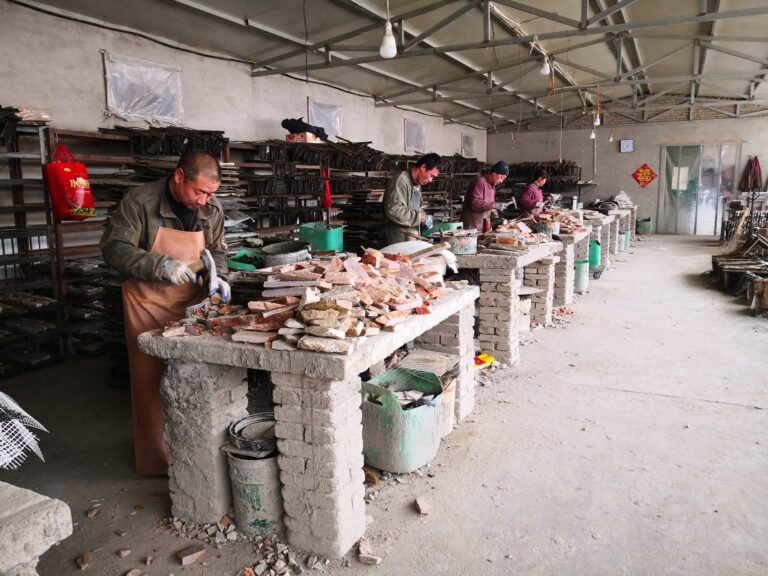
A natural split face is the most economical finish because it requires minimal processing. Honed, polished, or tumbled finishes add labor, consumables, and machine time. Cement-backed stone veneer adds a bonding layer that increases material cost but reduces installation time on the job site, a trade-off worth calculating.
Order Volume
The minimum order at Top Stone Panels is one 20-foot container. Capacity ranges from 30,000 to 80,000 square meters per month depending on the product line. Larger orders spread fixed production setup costs over more units and allow the factory to optimize quarry extraction schedules. A buyer ordering four containers per quarter will receive materially better per-square-meter pricing than a buyer ordering one container as a trial.
Customization and Packaging
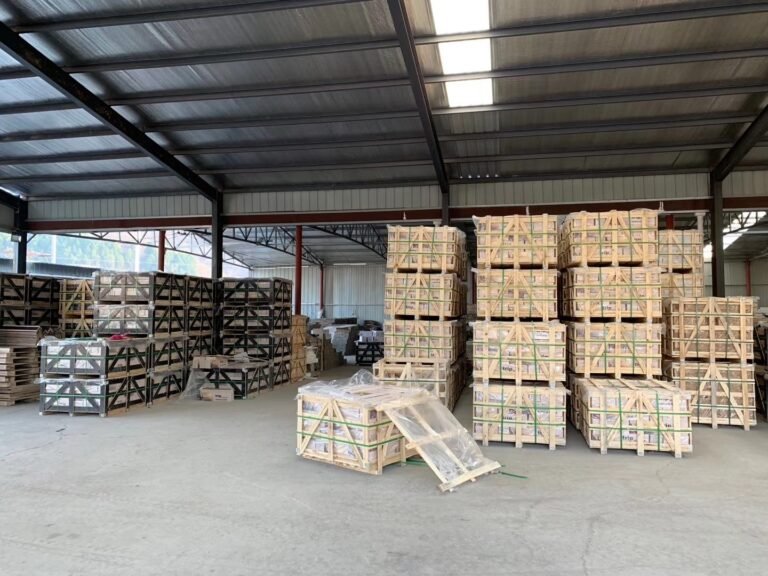
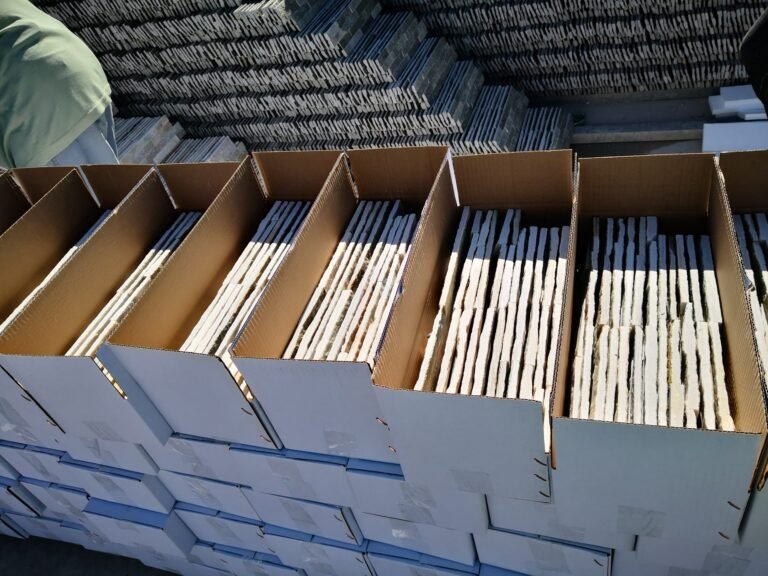
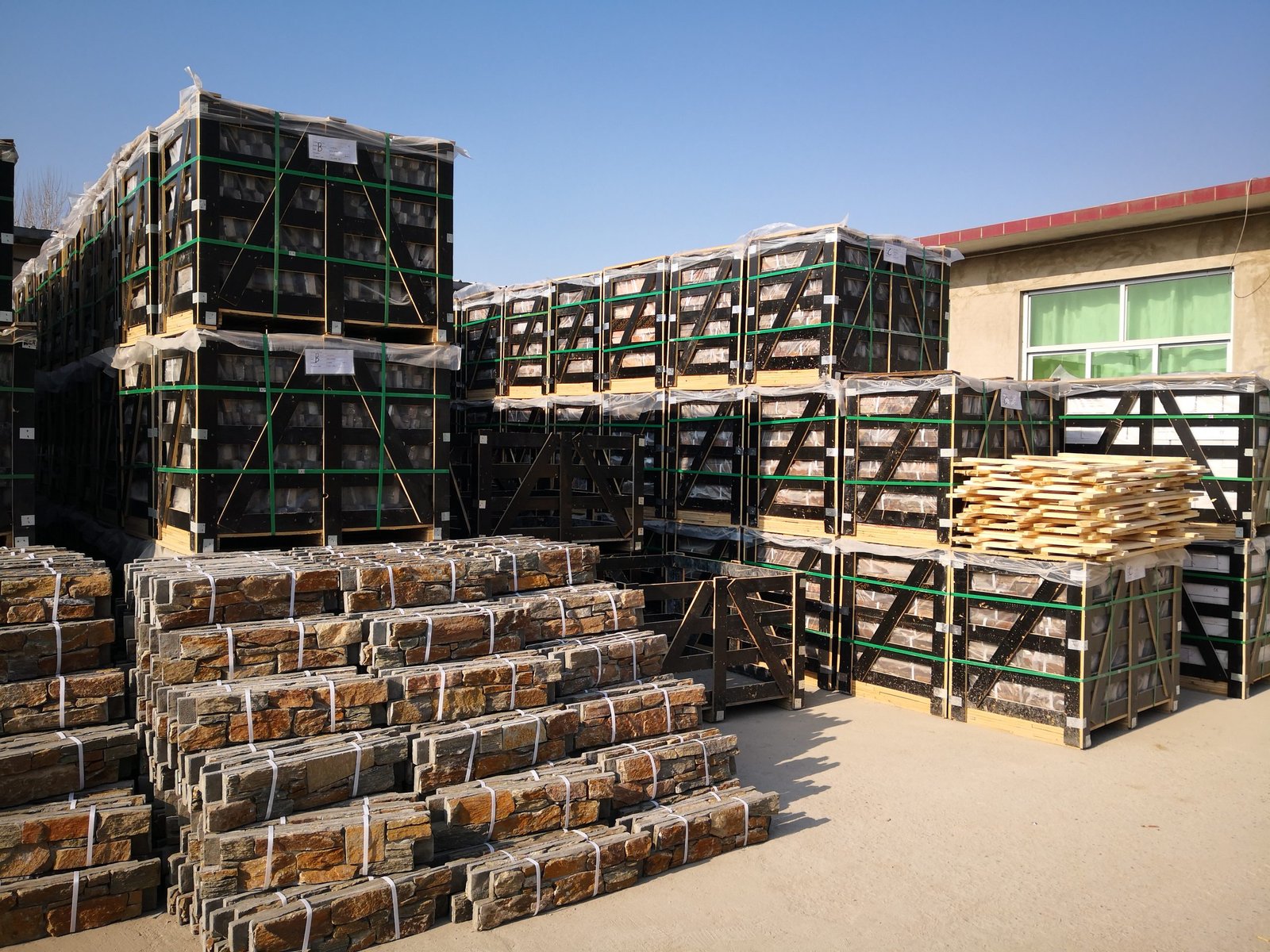
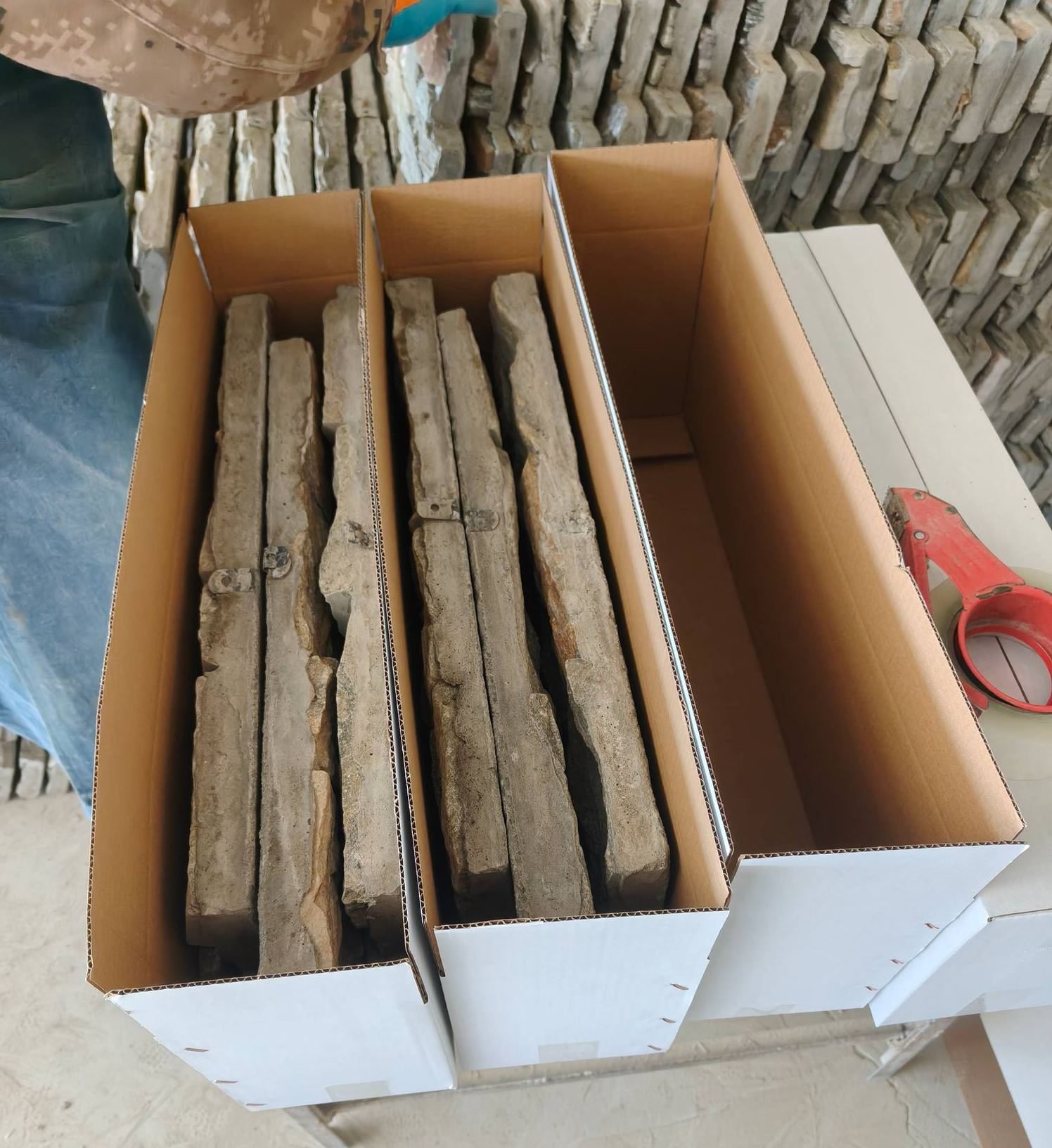
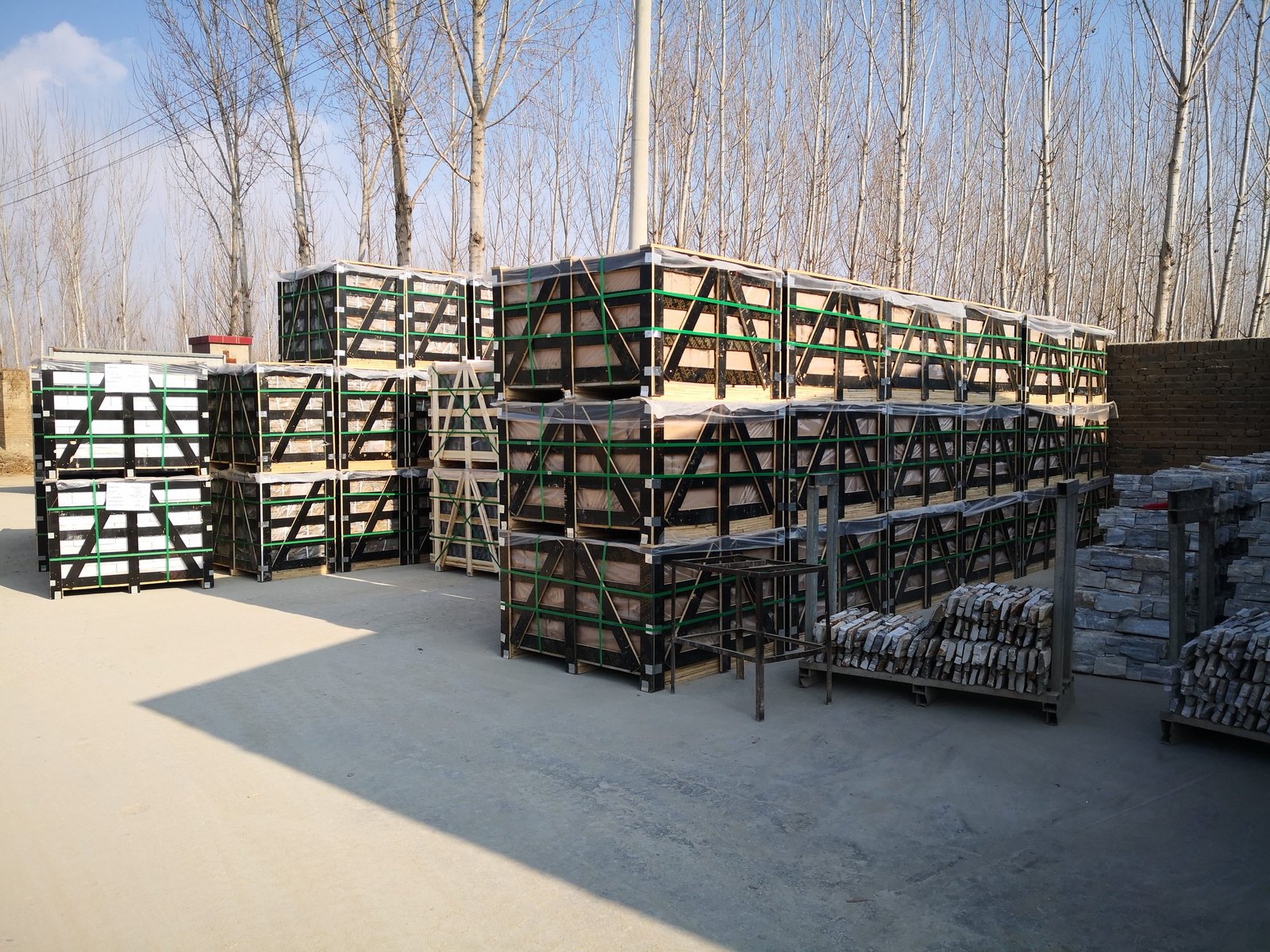
Standard packaging follows the Zero-Breakage Protocol: 3-5 layer corrugated cartons, fumigation-free wooden or plywood pallets, 4-6 high-tensile steel straps, and industrial air bags. Custom packaging, private-label cartons, or specific pallet configurations for retail distribution add cost. First orders with custom packaging require 25-30 working days for production versus the standard 20-25 days.
Color Selection and Sorting
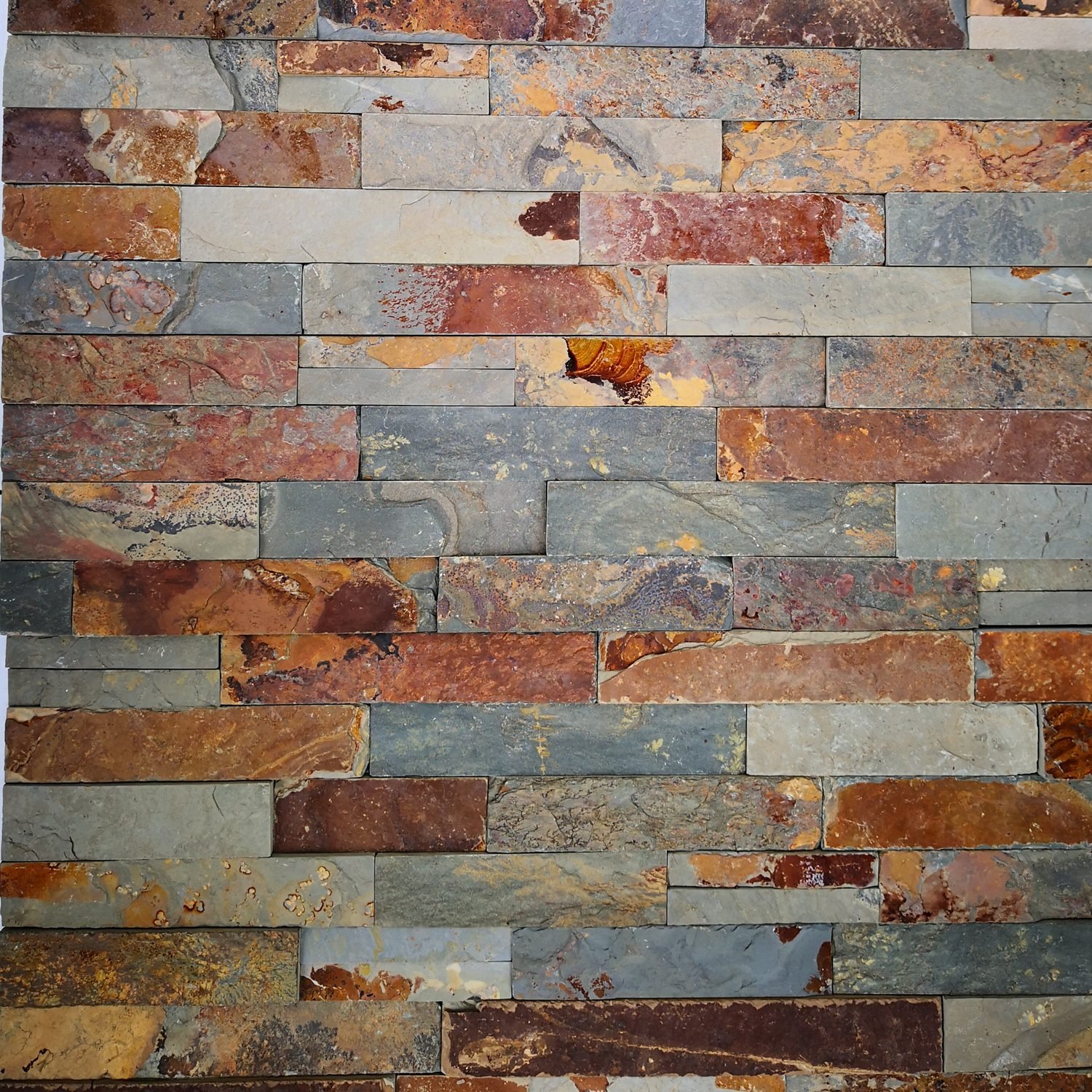
Natural stone is a geological product. Consistent color across a large order requires additional sorting at the factory. If your project demands tight color control, communicate this during the sampling phase (samples ship in 1-3 days) so the production team can match and hold the selection. Premium color sorting adds labor and may reduce yield from raw blocks.
4. Ocean Freight: Xingang to Destination Port
All Top Stone Panels shipments originate from Xingang Port (Tianjin), the primary commercial port serving northern China. The port handles heavy bulk cargo well, which matters for natural stone because weight, not volume, is the limiting factor in container loading.
Container Selection
Stone cladding almost always ships in 20-foot standard containers (20GP). A 40-foot container sounds more efficient but has a lower maximum payload weight, meaning you fill it by weight long before you fill it by volume. Paying for half an empty 40-foot container is a common first-time buyer mistake.
| Specification | 20GP (Standard) | 40GP (Standard) | 40HC (High Cube) |
|---|---|---|---|
| Max Payload (approx.) | ~21,000-22,000 kg | ~20,000-21,000 kg | ~20,000-21,000 kg |
| Usable for Stone? | Yes, standard choice | Rarely cost-effective | Rarely cost-effective |
| Typical Use | All stone cladding orders | Lightweight products only | Lightweight products only |
Transit Times (Indicative)
Ocean freight transit times from Xingang vary by destination. North American West Coast ports typically take 18-25 days. East Coast ports via the Panama Canal add 7-10 days. Northern European ports (Rotterdam, Hamburg) average 30-38 days. Mediterranean and Southern European ports may take 35-45 days depending on the carrier and routing.
These are port-to-port numbers. Add 5-10 days for customs clearance and port handling at destination, plus however long inland transport requires.
Freight Rate Volatility
Ocean freight rates fluctuate based on fuel costs, seasonal demand peaks (Q3 pre-holiday and Q1 post-Chinese New Year), carrier capacity, and geopolitical disruptions. The Bunker Adjustment Factor (BAF) and Currency Adjustment Factor (CAF) are surcharges carriers add on top of the base rate. Request freight quotes no more than 2-3 weeks before your target sailing date for accuracy. Booking too early means locking in rates that may have dropped; booking too late means facing equipment shortages and peak-season surcharges.
Weight Distribution and Container Loading
Stone is dense. A 20GP container loaded with stacked stone panels will hit its weight limit while still having physical space remaining. The loading pattern matters: weight must be evenly distributed across the container floor to avoid overweight axle violations during trucking at both ends. Top Stone Panels’ packaging system accounts for this, distributing pallet weight across the container base.
5. Insurance and Documentation Costs
These are the smallest line items in the cost stack but the ones that cause disproportionate problems when neglected.
Marine Cargo Insurance
Standard marine cargo insurance typically costs 0.3-0.5% of the cargo’s declared value. For a container of natural stone cladding, that is a modest premium for protection against loss, damage, or water ingress during transit. Insurance is structured under Institute Cargo Clauses (A, B, or C). Clause A provides the broadest coverage. For stone products, which are heavy and susceptible to shifting damage if improperly secured, Clause A is the prudent choice.
If you ship under CIF terms, the seller arranges insurance. Under FOB terms, you arrange it through your own broker. Either way, confirm the policy covers “warehouse to warehouse” transit, not just the ocean leg.
Export Documentation from China
Top Stone Panels provides a complete documentation package with every shipment:
- Certificate of Origin (COO): Required by most importing countries to determine applicable duty rates. Form A for GSP preferences where applicable, standard COO otherwise.
- ISPM 15 Fumigation Certificate: All wooden pallets and crates are fumigation-treated and certified. This is non-negotiable for entry into North America, Europe, Australia, and most other markets. Without it, customs will reject or quarantine the shipment.
- Pre-Shipment Inspection Report: A video-documented inspection confirms product quality, quantity, and packaging condition before the container is sealed. This is part of the factory’s 3-step QC process (raw material inspection, in-process checks, pre-shipment final inspection).
- Commercial Invoice, Packing List, Bill of Lading: Standard trade documents. The Bill of Lading serves as the title document for the cargo.
Documentation fees are typically bundled into the FOB price or charged as a modest flat fee per shipment. Confirm this with your supplier before the order is placed.
Payment Terms and Associated Costs
The standard payment structure is 30% T/T deposit upon order confirmation, with the remaining 70% due before shipment, after the buyer reviews the loading video and high-resolution layout photos. This structure protects both parties: the factory has working capital for production, and the buyer verifies the product before releasing final payment. Factor in wire transfer fees from your bank, typically a flat fee per transaction rather than a percentage.
6. Customs Duties and Import Taxes
This is the cost component that varies most dramatically by destination country, and the one that catches first-time importers off guard. Natural stone cladding cost calculations are incomplete without an accurate duty rate.
HS Codes for Natural Stone Cladding
Natural stone cladding products typically fall under HS Chapter 68 (Articles of Stone). The specific subheading depends on the product:
- Worked slate and articles of slate: HS 6803
- Worked monumental or building stone (marble, travertine, granite): HS 6802
- Other worked stone (quartzite, sandstone articles): varies by country interpretation
Classify your product with a licensed customs broker before the first shipment. Misclassification can result in overpayment (paying a higher duty rate than required) or penalties (underpaying and getting caught during a post-entry audit).
Duty Rates by Region
| Market | Standard Duty Range | VAT / GST | Key Considerations |
|---|---|---|---|
| United States | Varies by HS code; check for Section 301 tariffs on Chinese origin | No federal VAT | Section 301 additional duties may apply to stone products from China; confirm current rates with a customs broker |
| Canada | Generally low for natural stone | GST 5% / HST varies by province | Duty applies to CIF value; GST/HST applies to duty-inclusive value |
| European Union | Generally low for natural stone under MFN | VAT 19-27% depending on member state | VAT is reclaimable for VAT-registered businesses; duty is not |
| United Kingdom | Post-Brexit UK Global Tariff applies | VAT 20% standard | Check UK GTT for specific HS code rates |
| Australia | Generally 0-5% for natural stone | GST 10% | ISPM 15 compliance strictly enforced at border |
Anti-Dumping and Countervailing Duties
As of this writing, no broad anti-dumping duty orders specifically target natural stone cladding from China in the US or EU markets. However, trade remedy cases can be filed at any time by domestic producers. Monitor the US International Trade Commission (USITC) and EU Official Journal for any new investigations related to stone products. If your import volume is significant, consult a trade attorney for a current risk assessment.
Section 301 Tariffs (United States)
Products originating from China imported into the United States may be subject to additional duties under Section 301 of the Trade Act. The specific List number and additional duty percentage depend on the HS code classification. This is the single most important variable for US-based distributors to confirm before calculating landed cost, as it can add a significant percentage on top of the standard MFN duty rate.
7. Inland Transportation and Warehousing
Once the container clears customs at the destination port, it still needs to reach your warehouse, distribution center, or the job site. This leg is often underestimated in natural stone cladding cost projections.
Port to Warehouse (Drayage)
Drayage is the short-haul trucking of a container from the port to a nearby warehouse or rail terminal. Rates vary wildly based on distance, port congestion, chassis availability, and whether the delivery requires a pre-appointment at the receiving facility. In congested ports like Los Angeles or Long Beach, drayage costs can spike during peak periods due to driver shortages and appointment scarcity.
Request that your freight forwarder include drayage in their door-to-door quote, or negotiate it separately with a local drayage carrier. Either way, confirm whether the quote includes a “free time” window for container return (typically 2-5 free days before daily demurrage charges begin on the container chassis).
Container Devanning (Unloading)
Someone has to unload the container. If your warehouse has a loading dock and a forklift, you can handle this in-house. If the delivery is to a job site without dock facilities, you need a live unload (driver waits while your crew unloads by hand) or a drop-and-pick (driver leaves the container and returns later). Live unloads of stone cladding are labor-intensive due to weight: expect each pallet to weigh several hundred kilograms.
Warehousing and Inventory Holding
If you are a distributor building stock, warehouse costs include racking space, handling, insurance on inventory, and the opportunity cost of capital tied up in stone that is sitting on a shelf. Stone cladding is heavy and dense, meaning it occupies less shelf space per dollar of inventory value than many building materials, but floor load capacity matters.
Last-Mile Delivery to Job Site
For contractors ordering directly for a project, the final delivery from your staging area to the job site is an additional cost. Palletized stone requires a truck with a lift gate if the site lacks a loading dock. Curbside delivery is cheaper than inside delivery. Confirm access restrictions (low bridges, weight limits on residential streets, crane requirements for upper-floor delivery) before the truck is dispatched.
8. Hidden Costs That Surprise First-Time Buyers
These are the costs that do not appear on any quote until they materialize as an invoice. Every one of them is avoidable with planning.
Demurrage and Detention
Demurrage is the daily charge when a container sits at the port beyond its allotted free time (typically 3-5 free days). Detention is the daily charge when you keep the container chassis beyond the free period. At busy ports, these charges can escalate quickly, sometimes exceeding the ocean freight cost itself if the container sits for two weeks. Common causes: customs holds, missing documentation, no available drayage driver, or the receiver not being ready to accept delivery.
Prevention: have all documentation pre-submitted to customs before the vessel arrives. Confirm receiving capacity at your warehouse before the container is dispatched from the port.
Customs Exam Fees
Customs authorities randomly select containers for physical examination. The importer pays for the cost of moving the container to the exam site, the exam itself, and any storage charges during the examination period. A customs exam can add several days to the clearance timeline and generate charges in the hundreds or low thousands. There is no way to prevent random exams, but you can budget for the possibility.
Re-Export or Disposal of Non-Compliant Shipments
If a shipment arrives without proper ISPM 15 certification on its wooden packaging, customs may order re-export or destruction of the packaging material at the importer’s expense. This scenario is entirely preventable. Top Stone Panels provides ISPM 15 certified fumigation-free wooden and plywood pallets with every shipment. Verify this documentation is included in your document package before the vessel sails.
Currency Fluctuation Exposure
If you agree to a price in USD and the dollar strengthens between order placement and payment, your effective cost in local currency increases. For large or recurring orders, discuss forward contracts with your bank to lock in exchange rates. The 30/70 payment structure (deposit at order, balance before shipment) naturally splits currency exposure across two points in time.
Breakage and Claims
Natural stone is durable but not indestructible. If packaging is inadequate and panels arrive cracked or chipped, filing a freight claim is a slow process with uncertain outcomes. The Zero-Breakage Protocol used at Top Stone Panels (multi-layer cartons, steel-strapped pallets, industrial air bags inside the container) is designed to prevent this scenario. Inspect the container immediately upon delivery and document any damage with photographs before signing the delivery receipt.
9. Cost Calculator Framework: Calculating Your Landed Cost
Use this framework to build a landed cost calculator for natural stone cladding. Populate each line with your specific figures.
| Line Item | Calculation Method | Source for Data |
|---|---|---|
| A. FOB Product Cost | Price per m² x total m² | Factory quote (request current pricing) |
| B. Ocean Freight | Flat rate per 20GP container | Freight forwarder quote (refresh every 4-6 weeks) |
| C. Origin Port Charges | Usually included in FOB; confirm | Factory or freight forwarder |
| D. Destination Port Charges | THC, handling, documentation | Destination port agent or freight forwarder |
| E. Marine Insurance | Cargo value x rate (typically 0.3-0.5%) | Insurance broker |
| F. Customs Duty | (A + B) x duty rate % | Customs broker; confirm HS code |
| G. Additional Tariffs (if applicable) | (A + B) x additional tariff % | Customs broker; check Section 301, etc. |
| H. VAT / GST (if applicable) | (A + B + F + G) x VAT rate % | Accountant; reclaimable for registered businesses |
| I. Customs Brokerage Fee | Flat fee per entry | Customs broker |
| J. Drayage (Port to Warehouse) | Flat rate per container | Drayage carrier or freight forwarder |
| K. Container Devanning | Labor cost or flat fee | Warehouse or internal labor rate |
| L. Last-Mile Delivery | Per pallet or per trip | Local carrier or internal fleet cost |
| Landed Cost = A + B + C + D + E + F + G + H + I + J + K + L | ||
| Landed Cost per m² = Landed Cost / total m² in container | ||
A practical example of how to use this: if a 20GP container holds 450 m² of stacked stone, and the total landed cost sums to a specific amount, divide that total by 450 to arrive at the cost per square meter delivered to your warehouse door. That is the number to compare against your resale price or project budget.
10. How to Reduce Total Cost Without Sacrificing Quality
Cost reduction in natural stone sourcing is about structural decisions, not squeezing the factory on unit price. Here are the levers that actually work:
Volume Planning and Consolidation. Ordering two containers in one quarter instead of one every quarter reduces per-unit freight costs (you negotiate better forwarder rates with recurring volume), spreads fixed documentation costs over more product, and gives the factory production planning certainty that translates into better pricing.
Mixed Containers. If you distribute multiple product lines, consolidate different stone types into a single container order. A container mixing stacked stone, thin ledgestone, and flagstone still meets the one-container MOQ and lets you serve multiple customer segments from one shipment.
Seasonal Ordering. Ocean freight rates typically soften in Q2 (April-June) after the Chinese New Year peak and before the Q3 pre-holiday rush. Placing orders during this window can reduce freight costs. Production lead time at Top Stone Panels is 20-25 working days for standard orders, so timing an order for a Q2 sailing means placing it in late Q1.
Standard Sizes Over Custom. The 15x60cm stacked stone format, 36x10cm thin ledgestone, and 20x55cm Z-panel are standard production sizes. Custom dimensions require retooling and generate waste from cutting standard blocks to non-standard proportions. Unless the project specification demands custom sizing, standard formats deliver better cost efficiency.
Trade Terms That Match Your Capability. FOB Xingang is the default and gives you control over freight selection. If you lack an experienced freight forwarder, CIF to your destination port shifts the freight arrangement to the seller. DDP (Delivered Duty Paid) is available for buyers who want a turnkey price delivered to their door, though this bundles all costs into one number and reduces your visibility into individual cost components.
For installers planning a project, the installation guide for stacked stone veneer panels covers labor and substrate costs, which are the other half of the total project budget.
Frequently Asked Questions About Natural Stone Cladding Cost
What is the minimum order quantity for natural stone cladding from China?
The standard MOQ is one 20-foot general purpose container (20GP). The square meter capacity varies by product line, ranging from approximately 30,000 to 80,000 m² of production capacity per month at Top Stone Panels. The exact m² per container depends on the product type, panel size, and packaging configuration. Review the six panel types to determine which product fits your market.
How long does it take from order placement to delivery at my warehouse?
Production takes 20-25 working days (25-30 days for first orders with custom packaging). Ocean transit from Xingang takes 18-25 days to North American West Coast, 25-35 days to East Coast, and 30-45 days to European ports. Add 5-10 days for customs clearance and inland transport. A realistic total lead time from deposit payment to warehouse delivery is 8-14 weeks depending on destination.
Does the FOB price include packaging and loading into the container?
Yes. A proper FOB quote from Top Stone Panels includes production, quality control (3-step inspection), standard export packaging under the Zero-Breakage Protocol, and loading the container at the factory. It also includes all export documentation: Certificate of Origin, ISPM 15 fumigation certificate, pre-shipment inspection video, commercial invoice, and packing list. Ocean freight from Xingang onward is the buyer’s responsibility under FOB terms.
How do I protect against breakage during shipping?
Packaging quality is the primary defense. Top Stone Panels uses a multi-layer system: 3-5 layer corrugated cartons protect individual panels, fumigation-free wooden or plywood pallets provide structural support, 4-6 high-tensile steel straps secure the load, and industrial air bags fill void spaces inside the container to prevent shifting during transit. Additionally, carry marine cargo insurance (Clause A coverage) and inspect the container immediately upon delivery. Photograph any damage before signing the delivery receipt.
Is it cheaper to buy natural stone cladding locally instead of importing?
The answer depends on your volume, local availability, and product specification. For standard formats in significant volume (multiple containers per year), direct import from a quarry-integrated factory typically delivers a lower landed cost per square meter than purchasing from a local distributor who has already imported the product and added their margin. For small, one-off projects requiring less than a container load, purchasing from a local distributor’s stock is usually more practical. The comparison between natural stone veneer and cultured stone also factors into local vs. imported sourcing decisions.
For projects involving stone columns and pillars, custom sizing requirements may affect both FOB cost and container utilization. Review the sizing and installation guide for stone columns to plan your order accordingly.
Request a Landed Cost Estimate
The framework above gives you the structure. The specific numbers require a current quote based on your product selection, volume, and destination. Top Stone Panels ships 220+ containers per year from Xingang to ports worldwide, with 18+ years of export experience and a quarry-to-container production chain that controls cost at every stage.
To start the conversation: specify your product type, preferred panel size, estimated annual volume, and destination port. The factory team will provide a FOB quote and can recommend freight forwarders experienced with stone cargo on your route.
Explore thin stone veneer options | Thin stone veneer explained | Freeze-thaw resistance testing