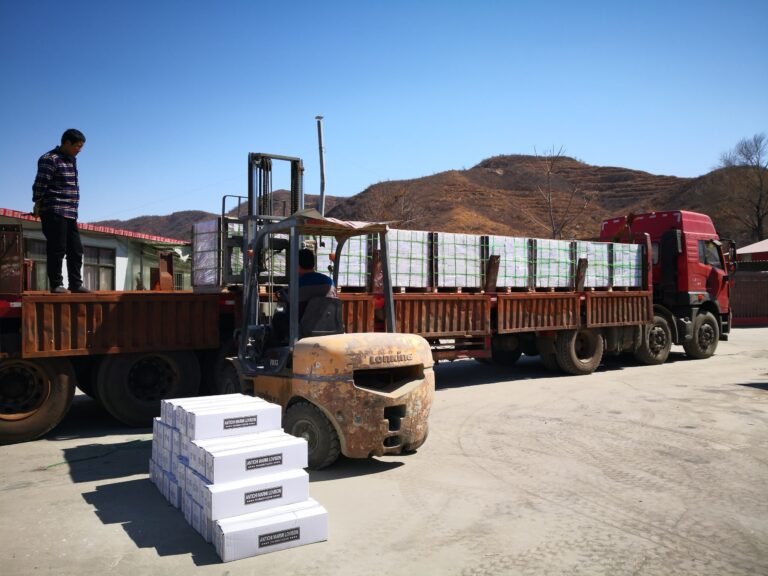
Stone panels ecommerce sounds like a contradiction. A palletized, weight-limited building material has no business in an online checkout flow, and most distributors who have priced out the idea gave up at the freight line. The suppliers who make it work have stopped treating their factory as a block-and-panel producer and started treating it as the fulfillment layer for someone else’s storefront. That shift, not any magic in shipping math, is what lets a distributor sell natural stone online without owning a warehouse, a forklift, or a claims desk.
This article is written for that distributor — the owner who wants a thin-veneer catalog live by next season but cannot justify a container yard in the budget. It walks the operational model with real numbers, names exactly what a factory must do for you to run supplier fulfillment, and flags the points where an online stone business either works on paper or dies in transit. The figures below all trace to a real exporter’s published terms, so treat them as planning inputs, not sales copy.
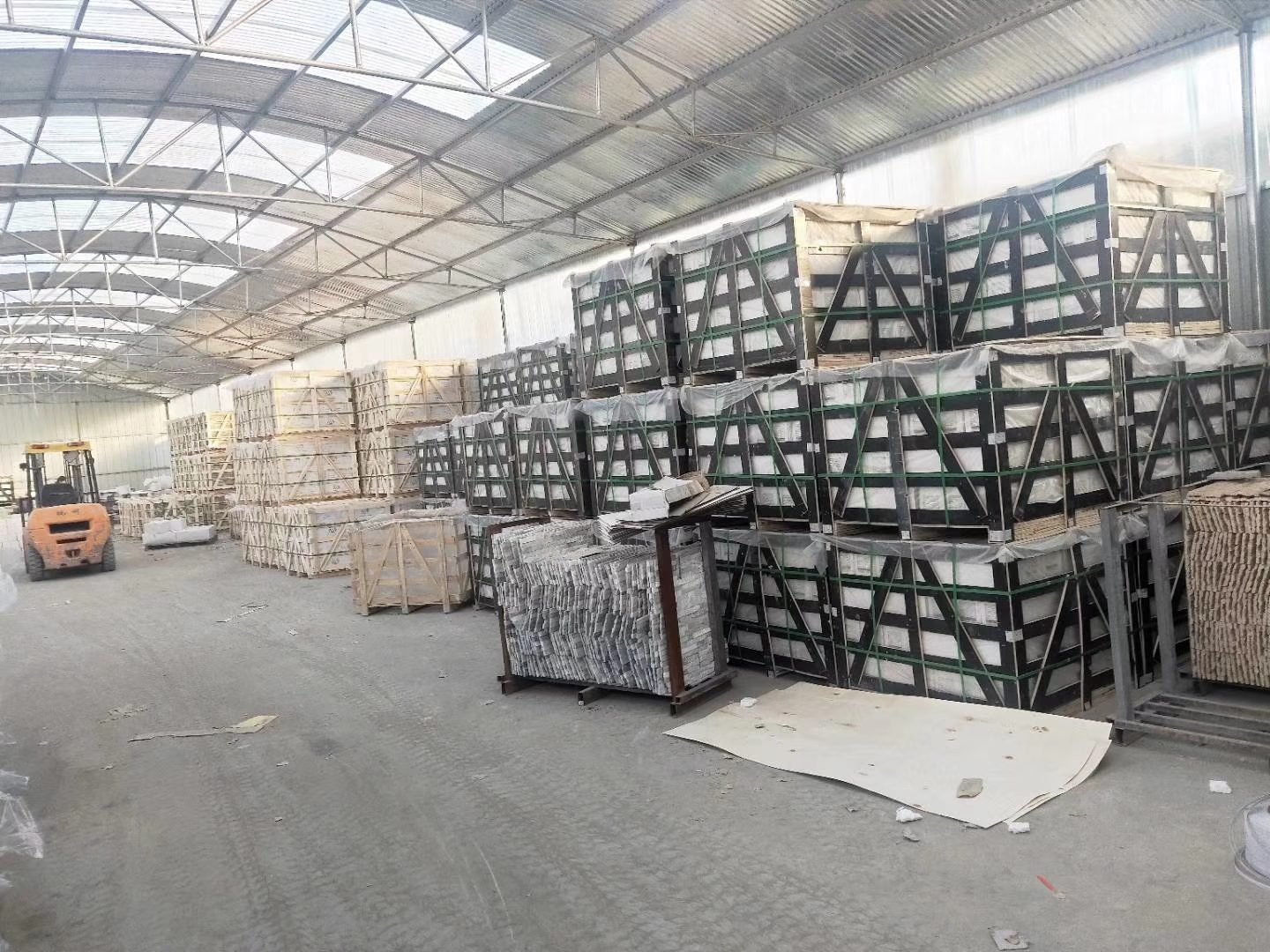
- Supplier fulfillment moves inventory, freight, and damage risk to the factory, leaving the distributor with the catalog, the price, and the customer.
- Stone is weight-limited, not volume-limited: a 20GP at ~26.5 tons carries about 500-530 m² at 50 kg/m², and ultra-thin formats load roughly 900-1,000 m² per container at lower freight per m².
- A workable MOQ baseline is one 20GP per product line, with 20-25 working-day production and 1-3 day physical samples before you commit.
- Batch-specific vein selection is the difference between a consistent catalog and a color-drift complaint thread.
- The packing protocol belongs in the supply agreement: documented pre-shipment inspection and a written claims process decide who absorbs damage, not luck.
- Confirm duty rates for your HS number and origin with a customs broker in writing; tariffs on China-origin stone changed repeatedly through 2025.
The Supplier-Fulfilled Model Explained
Supplier fulfillment is a division of labor, not a new shipping method. You run the storefront: product pages, pricing, customer calls, marketing. The factory runs the physical operation: quarrying, cutting, backing, packing, and handing cargo to the forwarder against each order you confirm. You never touch the stone, and you never hold the exposure a container of inventory creates. The closest general model is drop shipping, with one critical difference for stone: you are not shipping finished consumer goods from a third-party warehouse but natural stone produced to order and packed at the quarry mill.
The shift that makes this viable is trust in the exporter’s packing and QC. An online order is a photograph, a size table, and a promised lead time; the factory’s job is to make the physical product match all three every time. That is why the model works only with a supplier whose quality documentation, batch control, and packaging you can audit — not with the lowest FOB quote on a marketplace.Ordering samples before committing is the cheapest insurance the model has.
Three parties carry three different risks. The distributor owns marketing costs and customer satisfaction. The factory owns production quality, packing integrity, and on-time handover to freight. The forwarder owns transit between the loading port and your customer’s region. When all three know their role, the model runs quietly; when one is undefined, the other two pay for it.
The scaling a stone distribution business guide shows how the same division of labor looks from the other side, and the complete stone panel buying guide covers the product-knowledge layer you will need for your catalog.
Why Containers Break the Retail Model
Most distributors start by pricing a full container and stop there. A 20GP of panels at about 50 kg/m² holds roughly 500-530 m² and weighs out near 26.5 tons — a single stockkeeping unit that ties up capital, floor space, and a forklift. Before you can sell anything online, you have parked that much money in one gamble on what your customers will want in three months.
That gamble is the real reason stone ecommerce fails, not freight rates. The margin you hope to make on a two-pallet online order will not offset the risk of 500 stagnant m² of one color. Ultraviolet-stable and frost-resistant as the material is — the slate panels line handles -30°C to +50°C swings — inventory still ages in dollars, not in weather.
Supplier fulfillment removes the inventory bet by construction. You convert demand one order at a time, and the factory commits production capacity only when you confirm. The trade-off is lead time: instead of shipping from your shelf tomorrow, you ship from the factory in 20-25 working days plus transit. That delay is acceptable to customers when the catalog says so, and it is the honest trade merchants have always made for not holding stock.
What the Factory Must Handle for You
For the model to hold, the factory takes on five jobs it may not advertise. Check each one before you sign anything.
- Marking and carton branding. An online brand ships boxes that carry its identity. Confirm the supplier can print private-label cartons and mark pallets for your SKU system, not only its own product names.
- Batch control. You need the same quarry block source and vein selection across reorders. Thin veneer and ledgestone appear in your catalog as one color; if batch two is a shade warmer, the returns desk hears about it.
- Documentation. Certificate of origin, ISPM 15 fumigation proof, pre-shipment inspection video, and the HS-classified commercial invoice belong on every shipment. The exporter here can issue COO and ISPM 15 and records a pre-shipment inspection video on request.
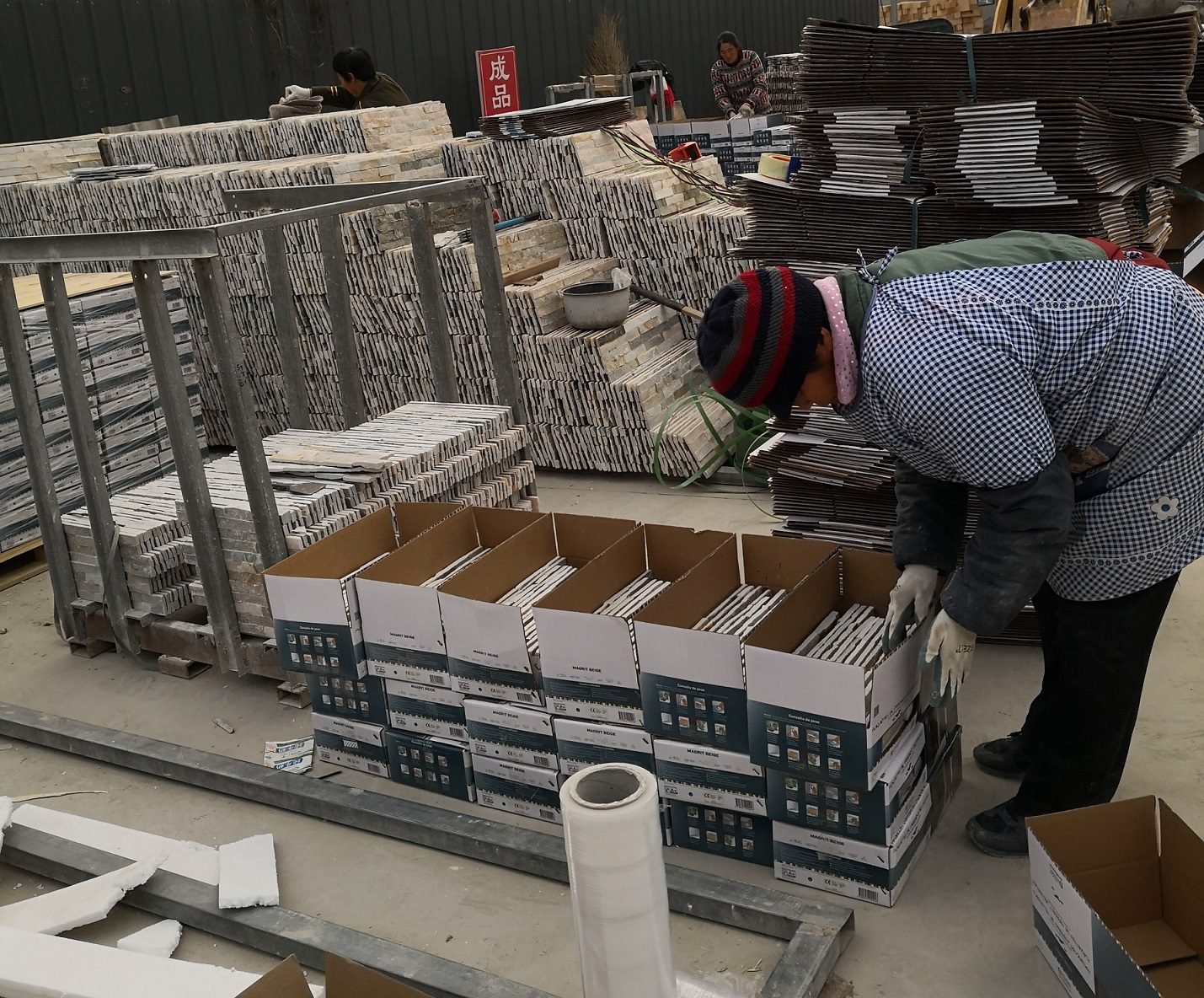
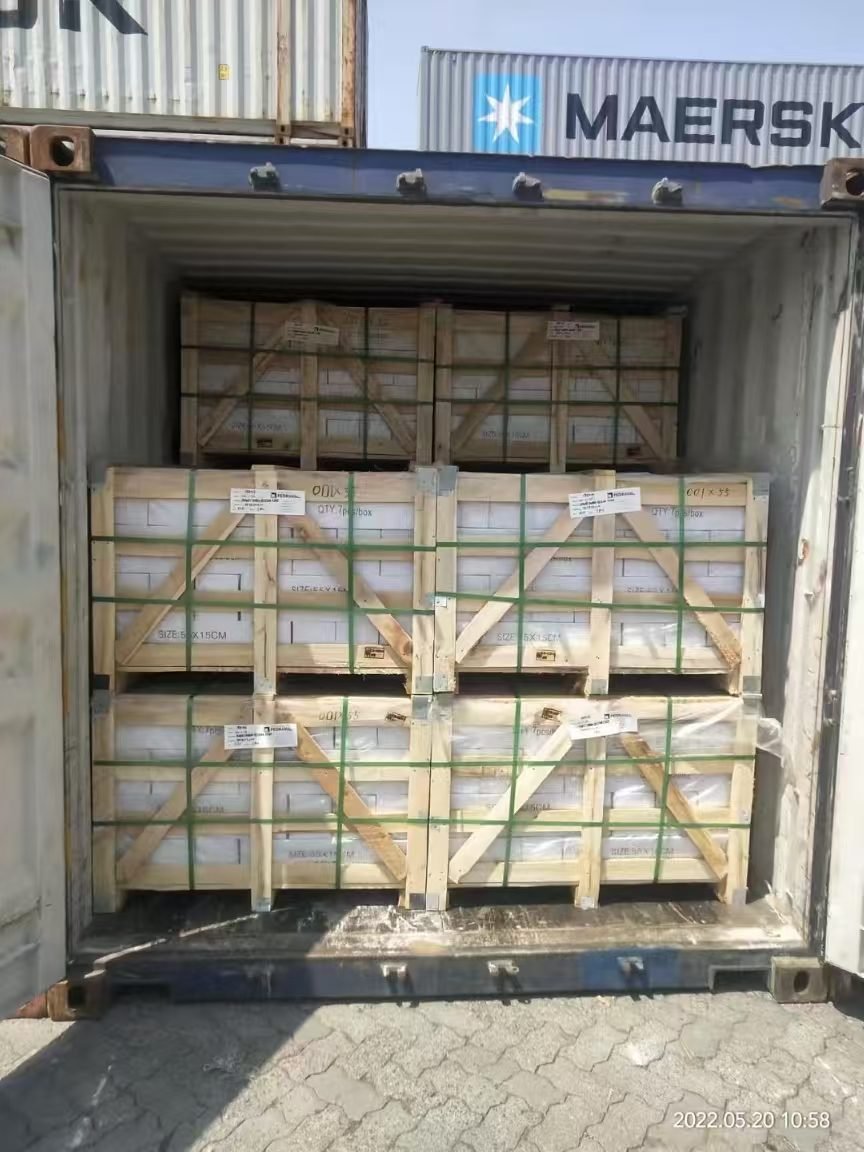
- Packing protocol. The zero-breakage standard — reinforced cartons, plywood pallets, steel banding, and container air bags — is what makes parcel-adjacent and LTL legs survivable. The zero-breakage packing guide explains the protocol in detail.
- Communication discipline. A fulfillment partner answers production and loading questions within one working day, because your customer is waiting on them.
These five jobs are where most supplier conversations go quiet, so run them as a formal checklist rather than a casual email thread. A factory that passes all five is a fulfillment partner; a factory that pushes back on three of them is a supplier of boxes.
Freight Math for Stone SKUs
Online stone works when you let the freight mode match the order size, and the number that rules all three modes is simple: stone weighs out before it cubes out. Every mode below takes a different slice of your margin, so the SKU decisions you make in the catalog determine which freight lane is even available.
| Freight mode | Order size | Stone caveat | Who pays |
|---|---|---|---|
| Parcel (UPS/FedEx) | Samples only | Deadly per kg; use for sample boards, never stock | Customer or you, per shipment |
| LTL | 1-3 pallets | Reasonable from a regional warehouse; fragile to handle if packed loose | You, rolled into delivered price |
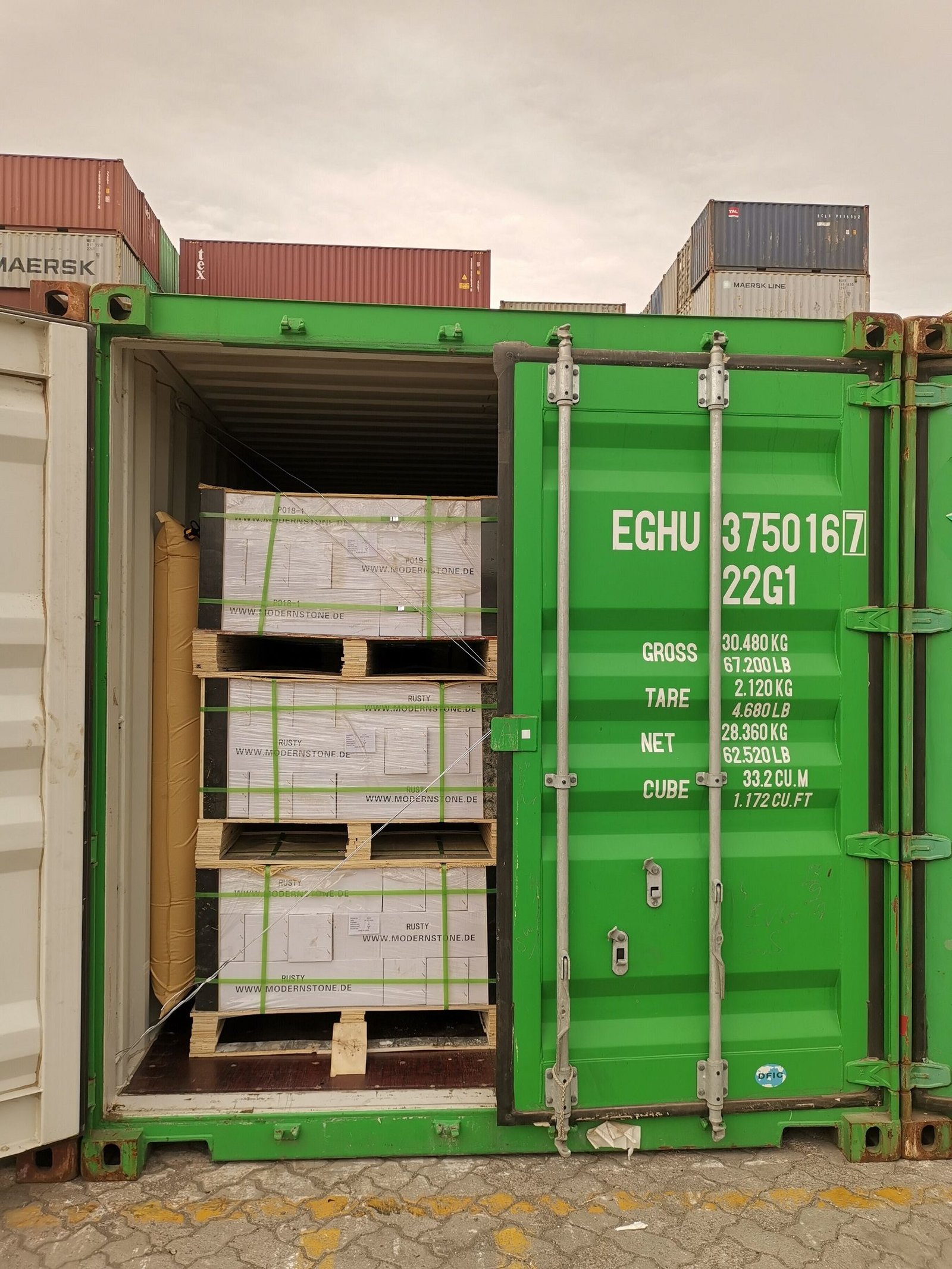
| Full container (20GP/40HQ) | 500-1,000+ m² | Lowest cost per m²; the default import lane for stone | You on FOB/EXW; supplier-assisted on DDP |
The realistic architecture for a distributor, then, has two legs. Containers move from the factory to your port and regional warehouse at the lowest per-square-meter cost. LTL then feeds customer orders from that warehouse. What you cannot do profitably is ship single boxes of 50 kg/m² stone across the country — the parcel math collapses before the first label prints.
The 20GP vs 40HQ container guide runs the full arithmetic, including how ultra-thin formats at 25-35 kg/m² load roughly 900-1,000 m² per container and cut freight per square meter by nearly half. Your thin veneer and ledgestone SKUs are the freight-viable ones; dense 40 mm panels belong in project orders, not online checkouts.
MOQ, Lead Time, and Reorder Rhythm
Export factories price against container economics, not pallet economics. The published MOQ across the six main product lines is one 20GP per order, from stacked stone panels to flagstone. Do not read that as rigidity — it is capacity math. A factory producing 30,000-80,000 m² per month across lines cannot schedule a two-pallet run into an efficient slot.
| Product line | Typical panel size | MOQ | Monthly capacity |
|---|---|---|---|
| Stacked stone panels | 15×60 / 15×55 cm + L-corners | 1 x 20GP | 80,000 m² |
| Thin ledgestone panels | 36×10 cm ultra-thin | 1 x 20GP | 60,000 m² |
| Interlocking Z-panels | 20×55 / 15.2×61 cm | 1 x 20GP | 50,000 m² |
| Thin stone veneer | Loose split-face strips | 1 x 20GP | 40,000 m² |
| Flagstone / crazy paving | Mesh-backed random shapes | 1 x 20GP | 30,000 m² |
The reorder rhythm that works is regular, planned, and batched — not reactive. Production runs 20-25 working days (25-30 on a first order with custom cartons), samples arrive in 1-3 days, and payment runs 30% deposit with 70% against loading. Plan two cycles ahead: confirm the next container before the current one lands, and your online promise stays truthful.
If you are new to a factory, run the full sample-to-container flow once before betting the catalog on it. The stone sample guide details what a proper sample request should include, and the export documents guide lists every paper your first shipment will need.
Building an Online Stone Catalog
Your catalog is where the supplier’s operational quality becomes your selling story. Four content jobs carry most of the weight, and all four are writeable facts rather than adjectives.
- True dimensions. Publish panel size, coverage per carton, and kg/m². A buyer who cannot calculate coverage from your page will not buy from it.
- Real photos of real batches. Use the supplier’s actual production photos, not stock renders. Color fidelity in the image is the first promise every order tests.
- Batch tone disclosure. State plainly that natural stone varies between batches and that your supplier holds vein lots to minimize drift. This simple line converts a future complaint into an expected property.
- Installation content. Link each SKU to a proper install guide. Less experienced buyers make safer customers when they can self-serve the basics.
Stone ecommerce rewards honesty about variation more than any other category, because the product is a photograph of a mined material. The thin ledgestone line is the classic opening SKU for this reason: uniform panel size, split-face texture that photographs well, and the lightest per-square-meter weight in the range.

Damage, Returns, and Color Variation
The three fear points of stone ecommerce — damage, returns, and color drift — are all manageable when they are engineered in advance. Damage starts at the packing line, not at the delivery dock. A documented zero-breakage protocol with reinforced cartons, plywood pallets, steel banding, and container air bags is the first defense, and a pre-shipment video inspection is the second. The damaged shipment claims guide shows how to run a claims process that settles who absorbs what while the customer waits.
Returns are rarer than distributors fear once the catalog sets expectations — orders based on accurate dimensions and photographed batches rarely bounce back because the product was misrepresented. What returns you do get are usually color-expectation issues, which batch vein control prevents at the source. Insist in writing that reorders come from the same quarry and block source, and keep the tone-disclosure line on every product page.
Color acceptance is the one point where a factory’s honesty beats its marketing. Ask directly how it handles tone variation, whether it offers pre-shipment photos of your actual batch, and what it does when reorder color cannot be matched. The third-party inspection guide covers the independent check option if you want a second set of eyes on quality before cargo is booked.
The Supplier Fulfillment Checklist
Use this as the vetting sheet for every exporter you evaluate. Two documented answers beat ten verbal assurances.
| Check | What you need to see | Red flag |
|---|---|---|
| Ownership of supply | Own quarry or documented long-term block supply | Only buys from other mills |
| Quality system | Named QC steps, test reports, inspection video option | No process, only promises |
| Packing protocol | Written zero-breakage spec | Packaging decided at loading stage |
| Batch control | Vein-and-block holding across reorders | Each order comes “from stock” of unknown origin |
| Compliance papers | COO, ISPM 15, HS-grade invoice | Documents deferred to the forwarder |
| Communication SLA | Named contact, answer within 1 working day | Silence during production |
Run the checklist on a sample order before a container order. Samples pull every system — cutting, packing, paperwork, communication — into one small, cheap test, and the loading and packing guides on this site show you what a grade-A result looks like before you sign.
Ready to start supplier fulfillment?
Ask for sample boards and a dated supplier-fulfilled quotation across the thin-veneer, ledgestone, and stacked stone lines. Top Stone Panels answers with production schedules and packing specs, not adjectives.
FAQ
Can I sell stone panels online without holding inventory?
Yes. In the supplier-fulfilled model, the factory produces, packs, and ships against your orders, so you sell from a catalog without warehousing pallets or carrying freight and damage risk.
Do stone factories fulfill small online orders?
Most export factories quote against a 20GP container baseline, but the same order can split into regional warehouse loads or project deliveries. Ask the factory whether your order size fits its terms.
What is the minimum order for stone panels?
Top Stone Panels quotes a minimum of one 20GP container across all product lines, with physical samples available in 1-3 days before you commit to production.
How is freight handled in stone ecommerce?
Stone is weight-limited, so parcel shipping works only for samples. Distributors use full containers from the factory to a regional warehouse, then LTL or local delivery to customers.
What if a panel arrives damaged?
The packing protocol at the factory, documented pre-shipment inspection, and a written claims process decide who covers the loss. Make packing terms part of the supply agreement, not an afterthought.
How do I keep stone color consistent in my catalog?
Require batch-specific vein selection and ask the factory to hold the same quarry block source across reorders. Put that commitment in writing and state tone variation on product pages.
Conclusion
Stone panels ecommerce works the moment you stop trying to be a warehouse and start being a catalog backed by a fulfillment-grade factory. The model converts your two biggest costs — inventory and damage — into two supplier qualifications, and it rewards the distributor who vets packing, batch control, and paperwork before the first container ever leaves port.
Key takeaways:
- Push inventory, freight, and claims risk to the factory; keep the catalog, pricing, and customer relationship.
- Plan freight in two legs: container to your regional warehouse, LTL to customers — and keep dense formats out of parcel shipping.
- Vet suppliers on the six-point checklist, and prove them with a sample order before container economics kick in.
- Confirm duty rates for your HS number and origin with a customs broker in writing on the sailing date.
Start with samples on the thin ledgestone and thin stone veneer lines — the lightest formats ship the most square meters per container — then ask Top Stone Panels for a supplier-fulfilled quotation on your first container. The DDP shipping guide is the right next read if you want the delivered-price version of the model.