Slate stone panels are the factory-assembled way to put natural slate on a wall. Instead of hand-laying individual stones, a distributor, facade contractor, or building supplier orders panels: slate mounted on a backing, cut to repeatable sizes, and sorted by quarry vein. The panels go up with mortar or adhesive, and the wall reads like full stone because it is full stone.
Slate earns its place on facades through density. The panels produced by Top Stone Panels from its own quarries in Yixian, Hebei — a region known for slate and cultural stone — carry a -30°C to +50°C rating, A-class fire behavior, and salt-spray resistance, which is why the material shows up on cold-climate homes, coastal retail, and the Australian market in the same container programs. The factory ships 220+ containers a year across five panel lines.
This guide walks through what slate panels are, where the color comes from, which finishes and backings exist, how the formats differ, and what an exterior facade actually needs. It closes with the wholesale ordering numbers a buyer should hold a supplier to.
- Slate panels are natural slate on a marine-grade epoxy, cement, or mesh backing — the backing decides on-site behavior, not the stone.
- Quarry origin matters: batch-specific vein selection from the same quarry holds color transition consistency above 95%.
- Formats run from 15x60cm stacked stone with L-corners to 36x10cm ultra-thin ledgestone and 20x55cm or 15.2x61cm interlocking Z-panels.
- High-density slate handles -30°C to +50°C, carries A-class fire behavior, and resists UV fading and salt spray.
- Infrared CNC cutting reduces on-site waste by roughly 20%; pre-made L-corners save about 50% of corner labor versus miter cutting.
- Wholesale MOQ is one 20GP container; samples ship in 1-3 days, production runs 20-25 working days.

- What Are Slate Stone Panels?
- Why Quarry Origin and Vein Control Matter
- Slate Colors From Black to Multicolor
- Slate Finishes and Panel Backings
- Slate Panel Formats, Sizes, and Coverage
- Slate Facade Performance in Hard Climates
- Specifying Slate Panels for a Facade Project
- Wholesale Ordering: MOQ, QC, and Packaging
- FAQ
- Conclusion
What Are Slate Stone Panels?
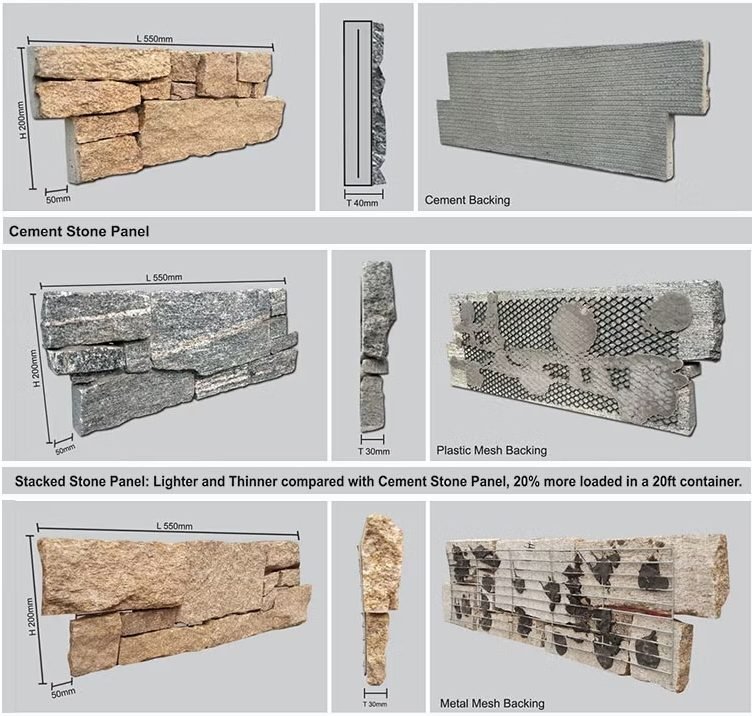
Slate is a metamorphic rock formed under heat and pressure, which gives it a flat grain and the tendency to split into thin, durable plates. A slate stone panel takes that natural plate and turns it into a repeatable building unit: the cleft face stays exposed, while a backing — marine-grade epoxy, cement, or mesh — holds the shape and stabilizes the assembly.
The difference from loose stone is speed and control. A crew fixing individual mixed stones must sort thickness, judge the bed, and manage joint rhythm unit by unit. A panel fixes the geometry in advance, so the installer concentrates on substrate, mortar transfer, and layout. That is why the thin veneer panel lines from Top Stone Panels exist: they give the same split-face slate look with factory-controlled dimensions and color sorting.
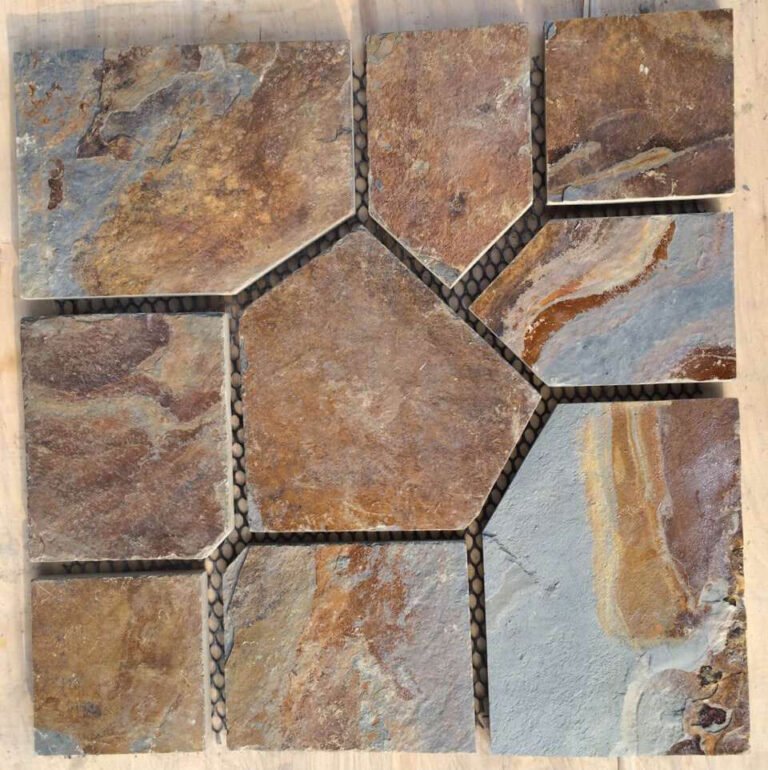
Buyers usually meet slate in four panel formats. Stacked stone panels carry tight horizontal ledger joints. Thin ledgestone panels run as ultra-thin 36x10cm strips for small walls and fireplace surrounds. Interlocking Z-panels use a male-female edge for large exterior areas. Thin stone veneer scatter adds random-length natural pieces to the same palette. All four are natural slate from the same quarry program.
Who buys them matters for the format choice. Building material distributors stock sheets and sell to contractors, so they favor stacked stone and Z-panels that move predictably by the square meter. Facade contractors quote on labor and schedule, so they favor pre-assembled panels with L-corners and repeatable cutting. Outdoor and hardscape suppliers pair the wall lines with flagstone for patios and pool surrounds. The distinction between a panel system and bulk slabs is worth keeping straight: panels arrive ready for mortar or adhesive, while slabs need cutting and fabrication before anyone books installers.
The same material also exists as full-thickness stone and as thin veneer. Buyers choosing between them are deciding on weight, substrate capacity, and installation speed, and the thin veneer vs full thickness guide walks through that trade-off.
Why Quarry Origin and Vein Control Matter
Slate color is not a paint code. It is a geological fingerprint from a specific quarry block, and the block determines the range of tones a buyer receives. When a facade needs 300 square meters of consistent grey, the supplier’s job is to hold that range across the whole order — which is a quarry operation, not a finishing operation.
Top Stone Panels quarries its own slate in Yixian, Baoding, Hebei, and locks each order to one vein. Batch-specific vein selection keeps color transition consistency above 95% across a shipment. The practical meaning for a distributor: the first and last panels in the container belong to the same tonal program, and a reorder placed later can be matched to the same vein instead of gambling on a new range.
That discipline is why the factory’s process starts before cutting, in the quarry. The quarry-to-panel traceability behind this program and the way batch color stays consistent are covered in detail elsewhere on this site.
Slate Colors From Black to Multicolor
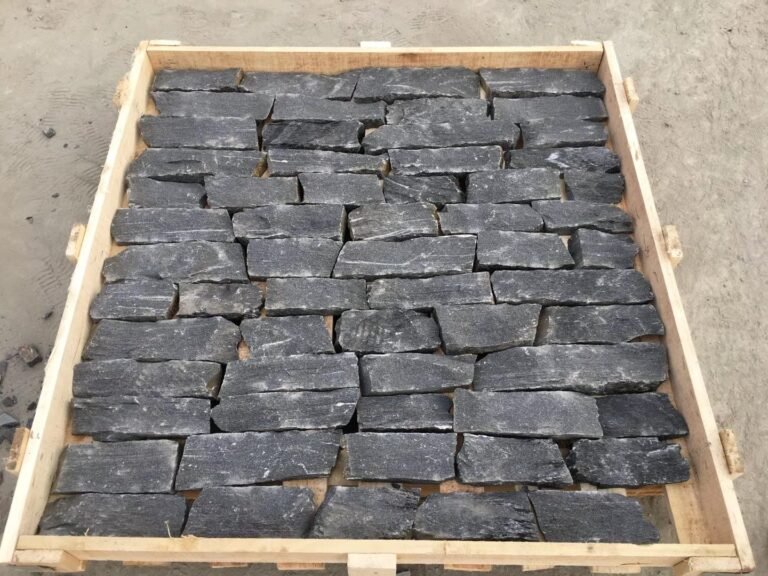
Natural slate spans narrow tonal bands: near-black, dark and light grey, green, and rust with purple undertones. The exact family depends on the quarry. Top Stone Panels works with a palette that moves from deep black slate, through the grey range, to multicolor mixes where several tones arrive in one program.
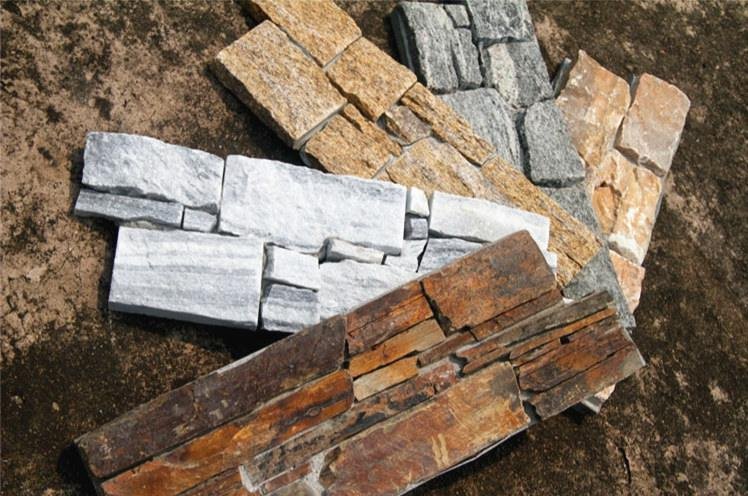
Two buying rules apply. First, keep one facade on one vein: mixing a reorder from a different quarry block is the classic source of a wall that reads as patched. Second, decide the color program before production, because the factory’s custom color mix process assigns quarry blocks to the order at that stage. The custom color mix workflow is the OEM route for distributors who need an exclusive blend.
For design direction, two existing guides cover the extremes of the range: the grey veneer color guide for the neutral workhorse tones, and the black exterior facade guide for high-contrast elevations. Black slate also appears as flagstone, which matters for buyers pairing wall and patio programs from one container.
Color approval belongs before production, and it is fast. Physical samples from Top Stone Panels ship in 1-3 days, so a distributor can put a stone sample next to the facade render and commit the order before quarry allocation runs. The rule that saves money: approve the sample under the same light the wall will live in, and keep the sample cabinet for the entire production window, because it becomes the acceptance reference for the pre-shipment inspection.
Slate Finishes and Panel Backings
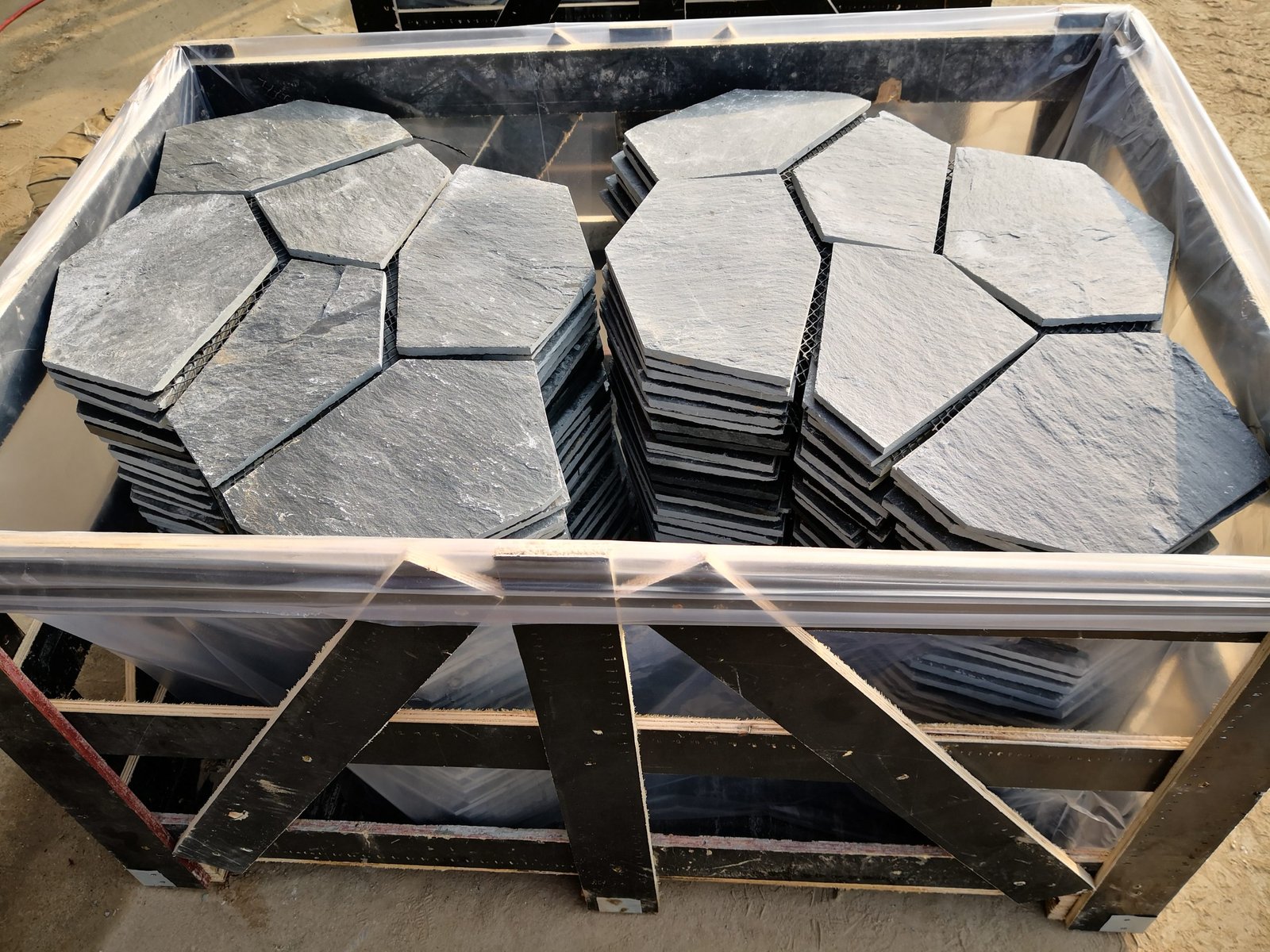
Slate panels are judged on two surfaces: the exposed face and the back. The face is natural cleft — the rough split surface that gives slate its character and its slip resistance. The edges are where the factory’s infrared CNC diamond-blade cutting comes in, producing straight, precise perimeters that butt into clean joint lines. Infrared CNC cutting is why a panel system wastes less than cut-to-fit field work: roughly 20% less material is lost on site.
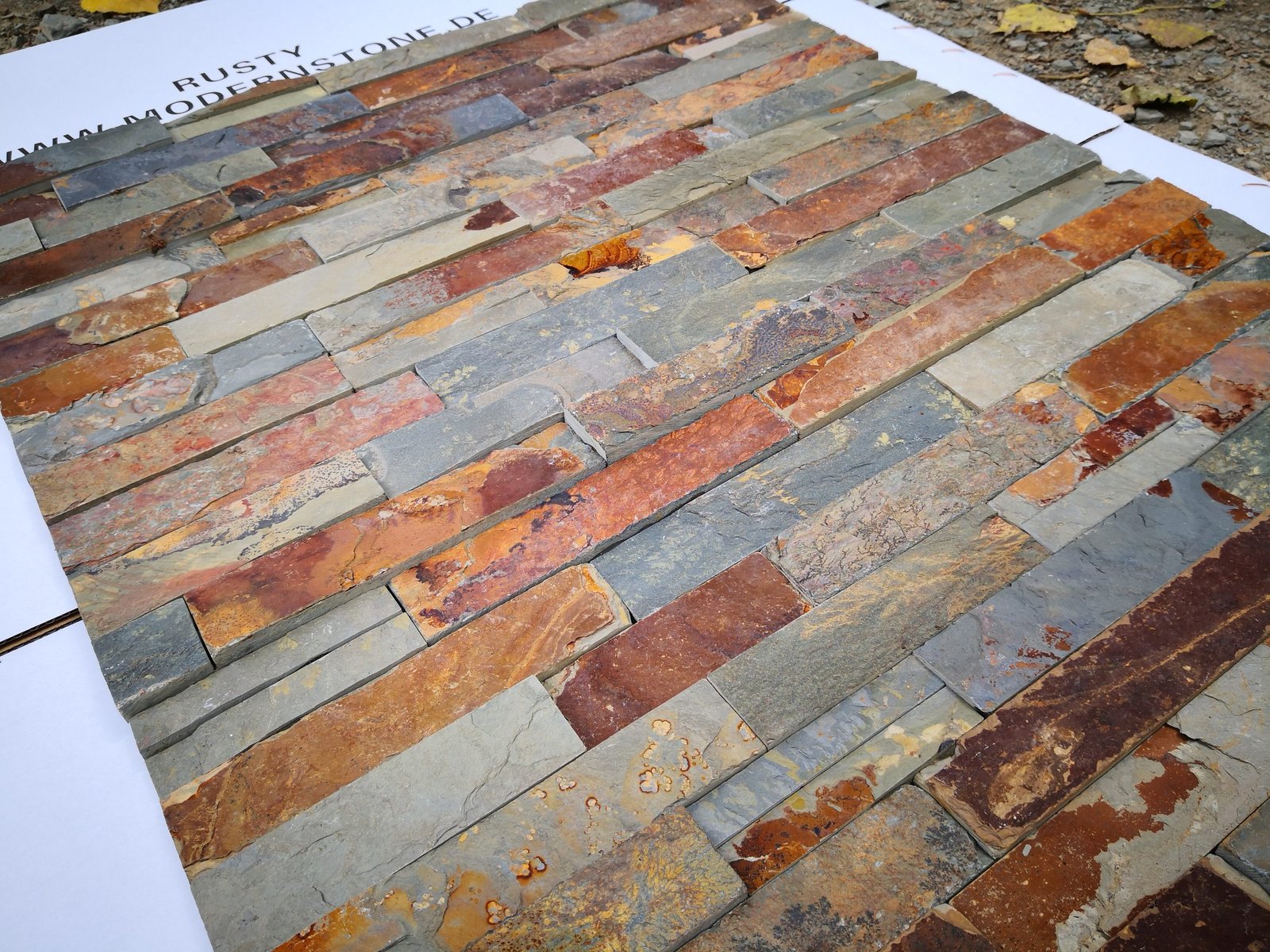
The backing changes how the panel behaves on site. Marine-grade epoxy bond produces a stable, lightweight veneer panel built for adhesive or mortar fixing. Cement-backed stone cladding adds rigidity and is the common choice for large mechanical or adhesive installs. Mesh-backed random stone keeps each piece’s natural outline while tying the assembly together. The trade-offs are weight, cutting behavior, and the substrate they accept — a decision covered in the epoxy vs cement backing comparison.
Slate Panel Formats, Sizes, and Coverage
Slate panels are sold by line, and each line exists for a different wall. Stacked stone suits facades that want a tight ledger rhythm. Thin ledgestone covers small and vertical surfaces with less weight. Interlocking Z-panels speed up large exterior walls. Thin veneer scatter delivers the split-face look in random-length strips. Flagstone rounds out the program for patios, pool surrounds, and walkways.
| Format | Size | Backing | Typical facade use | Capacity / month |
|---|---|---|---|---|
| Stacked stone | 15x60cm / 15x55cm | Epoxy, L-corners included | Exterior walls, fireplace walls | 80,000 m2 |
| Thin ledgestone | 36x10cm ultra-thin | Epoxy | Small walls, surrounds, verticals | 60,000 m2 |
| Interlocking Z-panels | 20x55cm / 15.2x61cm | Cement or mesh | Large exterior and commercial walls | 50,000 m2 |
| Thin stone veneer | Random lengths | Mesh / none | Split-face feature walls | 40,000 m2 |
| Flagstone & crazy paving | Random geometry | Mesh | Patios, pool surrounds, walkways | 30,000 m2 |
Coverage math keeps an order honest. A 15x60cm stacked stone panel covers 0.09 m2, so 1,000 panels cover 90 m2. A 20x55cm Z-panel covers 0.11 m2, so 1,000 panels cover 110 m2. Convert the net wall area, add cutting waste, then convert to panels and to containers — the factory works in square meters and 20GP or 40HQ loads. Buyers who send net area plus a waste allowance get a cleaner quote than buyers who guess panels.
The five lines below are live product pages with the current configurations: stacked stone, thin ledgestone, interlocking Z-panels, thin stone veneer, and flagstone.
Slate Facade Performance in Hard Climates
Slate’s case for exterior walls rests on density. Dense stone absorbs less water, resists freeze-thaw damage, and stands up to driving rain and thermal cycling. The natural slate used by Top Stone Panels carries a -30°C to +50°C operating rating, which covers Canadian winters, desert summers, and everything between.
| Property | What it means for the facade |
|---|---|
| -30°C to +50°C rating | Dense quartzite and slate survive freeze-thaw and heat cycling |
| A-class fire behavior | 100% natural stone does not fuel spread of flame |
| UV stability | Cleft face does not fade under long sun exposure |
| Salt-spray resistance | Suitable for coastal and high-humidity environments |
The site’s compliance library carries the deeper tests behind each line. Freeze-thaw behavior in freeze-thaw resistance, fire classification in the natural stone fire rating guide, and coastal durability in the salt-spray resistance guide. The mechanism is consistent across all of it: moisture is the enemy, density is the defense.
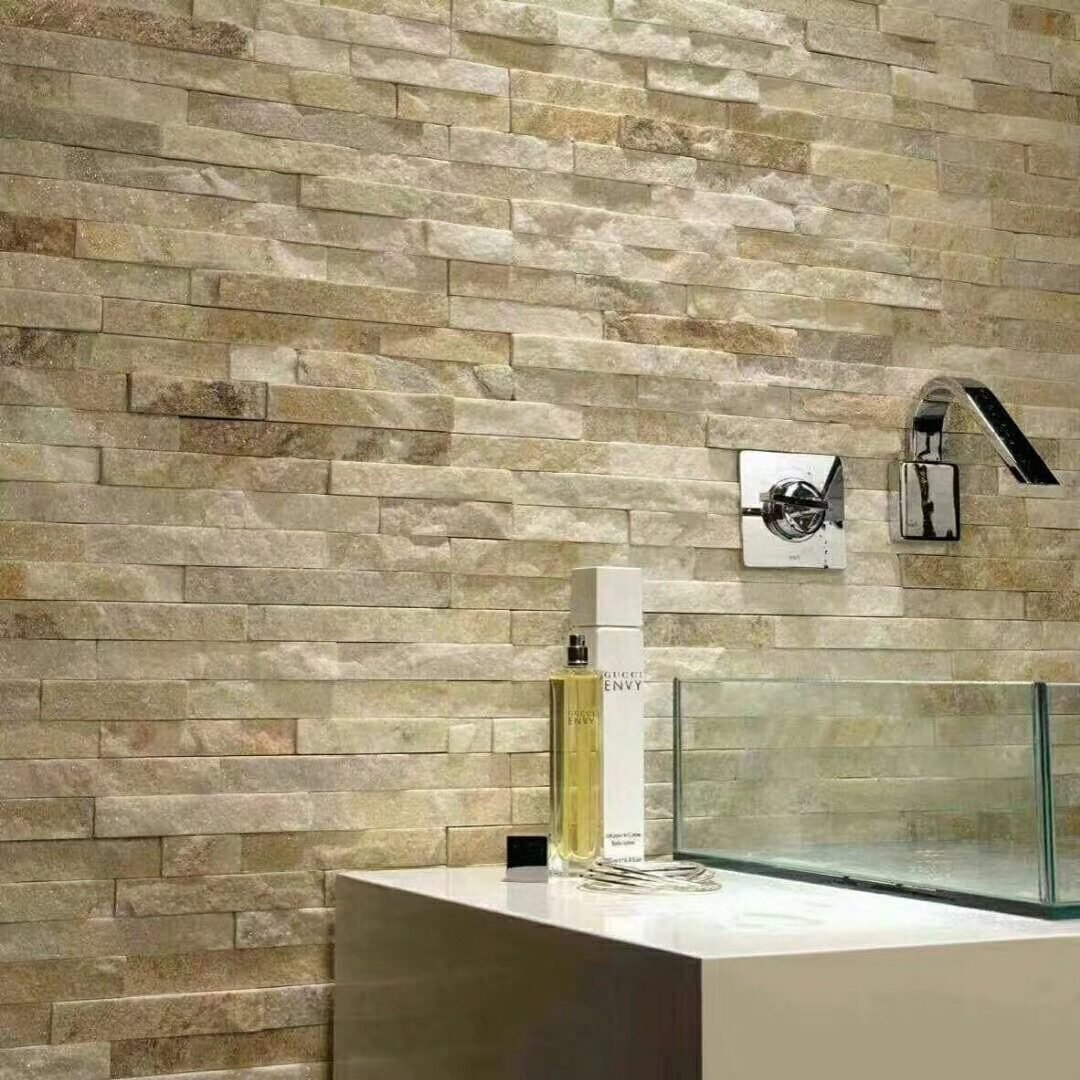
Moisture management still governs how the panels are installed. Slate panels handle the weather, but the assembly behind them needs a weather-resistive barrier, flashing at penetrations, and a substrate that accepts the bond. Exterior installers should read the waterproofing guide and the substrate preparation guide before quoting a slate facade; those two details decide whether the wall outlives the mortar warranty.
Specifying Slate Panels for a Facade Project
A facade order succeeds or fails on information sent before production. The list a quarry-direct factory needs: net wall area, panel format, color program, finish, substrate type, climate, corner count, and caps or trim needs. Send those eight items and the quote comes back with the right panels, corners, and freight mix.
Corners are where most projects drift. On-site miter cutting of slate panels eats labor and risks joint misalignment. Pre-made L-corners built from the factory to match the panel’s staggered pattern remove that entire field operation; the labor saving runs about 50% on corner work. Count inside and outside corners at quoting time, not when the crew reaches the top course. Finishing pieces follow the same rule — caps and coping belong in the same order as the panels.
The panel’s own geometry does the remaining work. Because the factory cuts with infrared CNC diamond blades, the panels arrive square and repeatable, and the designer can plan a tighter layout than with field-chipped stone. The dry-fit layout discipline recommended for installers turns that factory precision into a straight wall.
Send the area, format, and color program to the factory and get a coverage sheet, sample match, and container quote in one pass.
Wholesale Ordering: MOQ, QC, and Packaging
Wholesale slate panel buying runs on a small set of numbers. The MOQ is one 20GP container per product line. Physical samples arrive in 1-3 days, so the color approval happens before production, not after. Standard production takes 20-25 working days; a first order with custom carton printing runs 25-30 days. Payment is 30% T/T deposit with 70% before shipment, after the factory sends loading video and layout photos. The usual export route is FOB Xingang, with EXW, CIF, and DDP also available.
One container can hold more than one slate format. Distributors building a wall-and-patio program often mix stacked stone for the facade with flagstone for the terrace in a single 20GP, or combine thin ledgestone and Z-panels against a project schedule. Mixed loading changes the carton, pallet, and QC plan, so it belongs in the order conversation from the start; the container mix-order guide explains how multiple stone types share one shipment without crossing the 20GP limit.
Quality control is a process, not a promise. Top Stone Panels runs a 3-step factory inspection — raw material selection, in-process re-inspection, and pre-shipment final inspection — detailed in the 3-step QC guide. Buyers can request the certificate of origin, ISPM 15 fumigation certificate, and pre-shipment inspection video; the pre-shipment inspection guide explains what those documents should contain.
Finally, the packaging spec is part of the product. The Zero-Breakage Packaging Protocol stacks 3-5 layer reinforced cardboard, fumigation-free pallets, 4-6 high-strength steel bands, and industrial air bags inside the container. A buyer who has watched a cracked shipment arrive knows why that is a commercial fact, not a comfort detail. The full protocol lives in the container loading and packaging guide.
FAQ
What are slate stone panels?
Slate stone panels are natural slate mounted on a backing in factory-made formats such as stacked stone, thin ledgestone, interlocking Z-panels, and thin veneer, used for interior and exterior wall cladding.
Is slate stone good for exterior walls?
Yes. High-density slate handles -30°C to +50°C, carries A-class fire behavior, stays UV-stable, and resists salt spray, which suits cold, hot, and coastal climates.
What colors does natural slate come in?
Natural slate ranges through black, grey, green, purple, and rust families. Matching an order to a single quarry vein keeps color transition consistency above 95%.
Are slate panels better than quartzite panels for exterior walls?
Both work on exterior walls and share the dense-stone advantages. Choose on appearance and absorption requirements; the detailed comparison is in the quartzite vs slate guide.
How much wall area do slate stone panels cover?
A 15x60cm stacked stone panel covers 0.09 m2 and a 20x55cm Z-panel covers 0.11 m2. Convert net area, add cutting waste, then convert to panels and containers.
How do I order slate stone panels wholesale?
Physical samples ship in 1-3 days, MOQ is one 20GP container, production runs 20-25 working days, and payment is 30% T/T deposit with 70% before shipment.
Conclusion
Slate panels win facade work when the buyer controls three variables: the quarry vein, the backing, and the corner program. A single-vein order eliminates color drift, the right backing matches the substrate and installation method, and pre-made L-corners protect the schedule where labor is most expensive.
- Specify the format by wall: stacked stone and Z-panels for large surfaces, thin ledgestone for small walls, thin veneer for feature faces.
- Hold the supplier to one vein per facade — batch-specific vein selection holds transition consistency above 95%.
- Check the QC chain: 3-step factory inspection, loading video, COO, and ISPM 15 documentation before shipment.
- Order corners, caps, and trim with the panels to avoid a second container and a second vein.
The factory-side numbers are straightforward: samples in 1-3 days, MOQ of one 20GP container, production in 20-25 working days. Start the conversation on the product page that matches your wall, or request samples and a coverage sheet for the next facade.