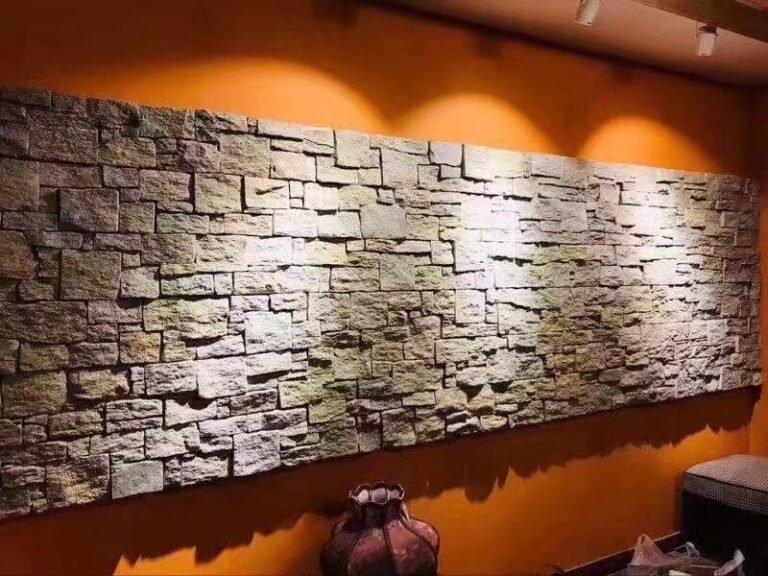
A stone facade spends half its life in the dark, and most of the ones that look expensive by day turn anonymous at night. The reason is rarely the fixtures. It is the technique: light thrown at a split-face wall from the middle of a lawn flattens years of quarry relief into a grey smear, while the same wall lit from inches away grows a second surface made entirely of shadow.
First the technical spine, grazing versus washing and how the depth of the stone decides which one you use, then five design directions, each with the stone product, the technique, placement guidance and the night-time effect.
- Grazing puts the fixture close to the wall at a tight angle; washing stands it further out with a wide beam. Texture wants grazing, area wants washing.
- The deeper the stone profile, the more grazing pays. Flat formats need a wash or a controlled linear graze.
- Warm 2700-3000K light flatters gold and brown stone; neutral 4000K suits grey and charcoal faces, and a high CRI keeps mineral variation honest.
- Exterior wet locations call for IP65 fixtures as a typical baseline, IP66 where exposure is harsher.
- Five designs cover the common cases: a grazed feature pier, a washed commercial facade, uplit entrance columns, a linear ledgestone wall and a silhouetted garden wall.
Grazing vs Washing: The Core Decision
Every choice downstream of this one is detail. Grazing means mounting the luminaire close to the wall and aiming it at a tight angle so the beam skims the surface. Light strikes the high points of the stone and leaves the recesses in shadow, which is how relief becomes visible at night. One architectural lighting manufacturer defines wall grazing as placing fixtures close to the wall at a tight angle so brightness and shadow accentuate the texture of the surface. That shadow is not a defect of the scheme. It is the scheme.
Washing does the opposite. A wall washer throws a wide, even beam across the wall from a greater standoff, and one manufacturer’s wall washer guide puts that standoff at roughly 2.5 to 3 feet, with grazing luminaires placed much closer. Even light means few shadows, and few shadows means a deeply textured stone reads almost flat. Put crudely: grazing sells the quarry, washing sells the wall.
| Factor | Grazing | Washing |
|---|---|---|
| Fixture standoff | Close to the wall, tight aim angle | Further out, about 2.5-3 ft as a guide |
| Beam | Narrow, skims the surface | Wide and even |
| Effect on texture | Exaggerates relief with shadow | Flattens relief, lights the field |
| Best on | Split face, riven, stacked stone | Large flat or low-relief facades |
| Risk to manage | Scalloping if fixtures are too far apart | Glare and light trespass |
How the Stone Profile Picks the Technique
The lighting technique follows the stone, not the other way around. What matters is relief: how far the face of the stone stands proud of the bed, and how regular that profile is. A deeply cleft split face throws long shadows under a tight graze. A near-flat panel under the same graze shows nothing but its joints.
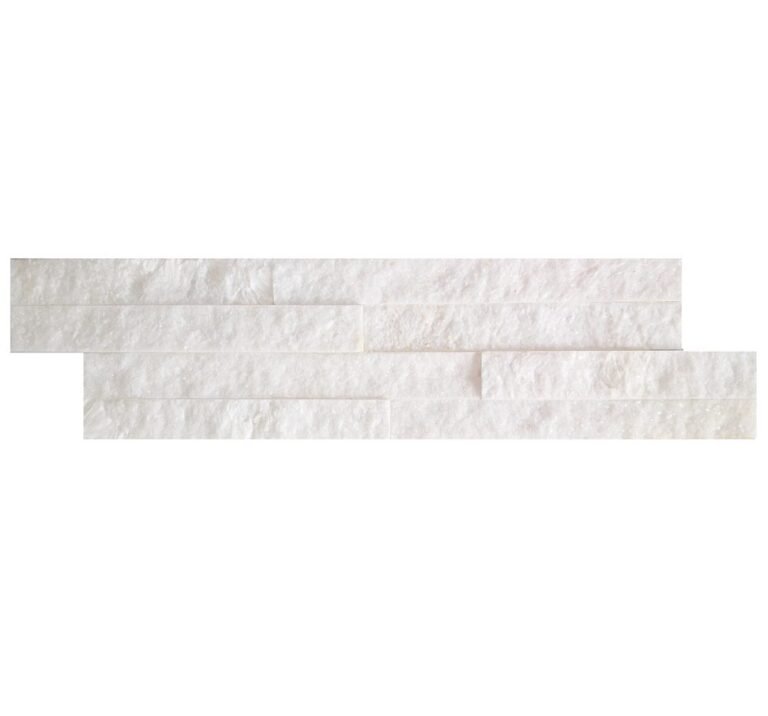
Deep-relief stacked stone ledgers, the standard 15x60cm (6″x24″) and 15x55cm panels, are the natural home of grazing. The hand-split faces sit at varied depths, so a beam skimming up the wall turns every stone edge into a highlight with a shadow under it.
Thin ledgestone in the ultra-thin 36x10cm format carries lower, finer relief. It still grazes well, but the shadow lines are tighter and more linear, which suits a controlled uplight or downlight run rather than a hard rake. Interlocking Z-panels at 20x55cm and 15.2x61cm sit in between: the male-female joint casts a faint shadow line and the interlock hides vertical joints, so a soft graze or a shallow wash both work. Loose split-face veneer, naturally split random quartzite and slate, has the wildest relief of all and rewards grazing most, but needs the most on-site aiming because each stone tilts differently.
| Stone format | Relief | Preferred technique |
|---|---|---|
| Stacked stone ledger 15x60cm | Deep, varied | Grazing, up or down |
| Thin ledgestone 36x10cm | Fine, linear | Controlled linear graze |
| Z-panel 20x55cm / 15.2x61cm | Low to medium | Soft graze or shallow wash |
| Loose split-face veneer | Deep, random | Grazing, aimed on site |
| Columns and pillar kits | Deep, four faces | Uplighting from the base |
The 5 Nighttime Highlight Designs
These five directions cover the situations that come up on real elevations: a residential feature pier, a large commercial wall, an entrance with columns, a modern linear entry wall and a landscape wall at the garden’s edge. Placement distances below are rule-of-thumb design guidance, not photometric specification; aim every scheme after dark on site.
Design 1: Grazed Stacked Stone Feature Pier
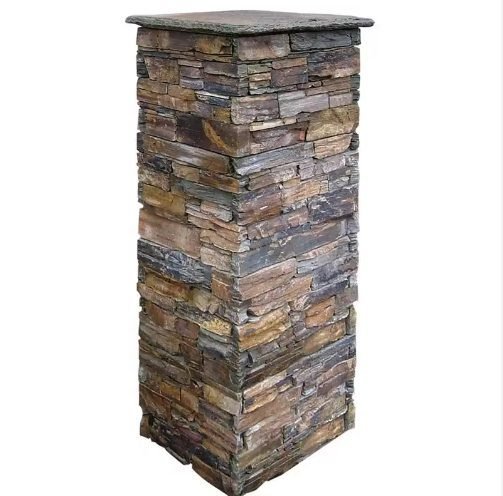
The stone: a split-face stacked stone pier or chimney breast clad in standard 15x60cm stacked stone ledger panels, in warm quartzite or Midnight Black for a sharper night read. The technique: pure grazing. Recessed in-grade or surface-mounted uplights sit close to the pier face, a hand’s breadth out as a rule of thumb, aimed steeply so the beam climbs the stones rather than escaping over the top. Placement: space fixtures so their beams overlap slightly at the pier’s height; on a narrow pier one fixture per face is often enough, and pre-made L-corners keep the corner stones crisp where two grazed faces meet. The effect: every ledger edge throws a shadow line, and a two-storey pier reads as carved masonry instead of a cladded box. This is the highest-impact, lowest-fixture-count design in the set.
Design 2: Washed Commercial Facade in Z-Panels
The stone: interlocking Z-panels at 20x55cm or 15.2x61cm across a large commercial elevation, cement-backed or mesh-back. The technique: washing. A big wall wants even brightness, not drama on every stone, and a wide-beam wall washer standing off roughly 2.5 to 3 feet from the face lays a smooth field of light up the elevation. Placement: a row of ground-mounted washers spaced along the facade, each aimed so its beam overlaps its neighbours about a third of the way in, with the fixtures tuned to avoid a bright band at the parapet. The effect: the building reads as a single calm volume at night, visible from a road, while the Z-panel interlock keeps faint shadow lines that stop a wash from looking like painted render.
Design 3: Uplit Stone Columns at an Entrance
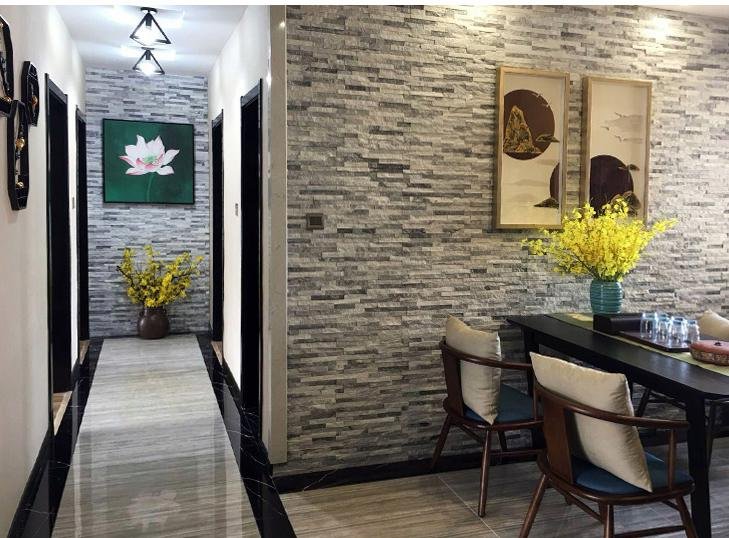
The stone: gate or porch columns built from pre-assembled stacked stone column kits, in sections such as 40x40cm or 50x50cm, capped with a stone pillar cap. The technique: uplighting, which is grazing rotated to a vertical element: shielded well lights at the column base, set close to the shaft, throwing light straight up the stone. Placement: one fixture per visible face as a rule of thumb, each pulled back just enough to clear the cap’s underside, with the cap deliberately left darker so the column dissolves into the night instead of ending in a bright lid. The effect: the entrance gets two lit landmarks that frame the arrival sequence, and the deep relief of the column stones catches the uplight more strongly than any flat pier could. Pairing and proportion matter as much as the light; stone entrance and pillar cladding combinations covers both.
Design 4: Linear Ledgestone Media or Entry Wall
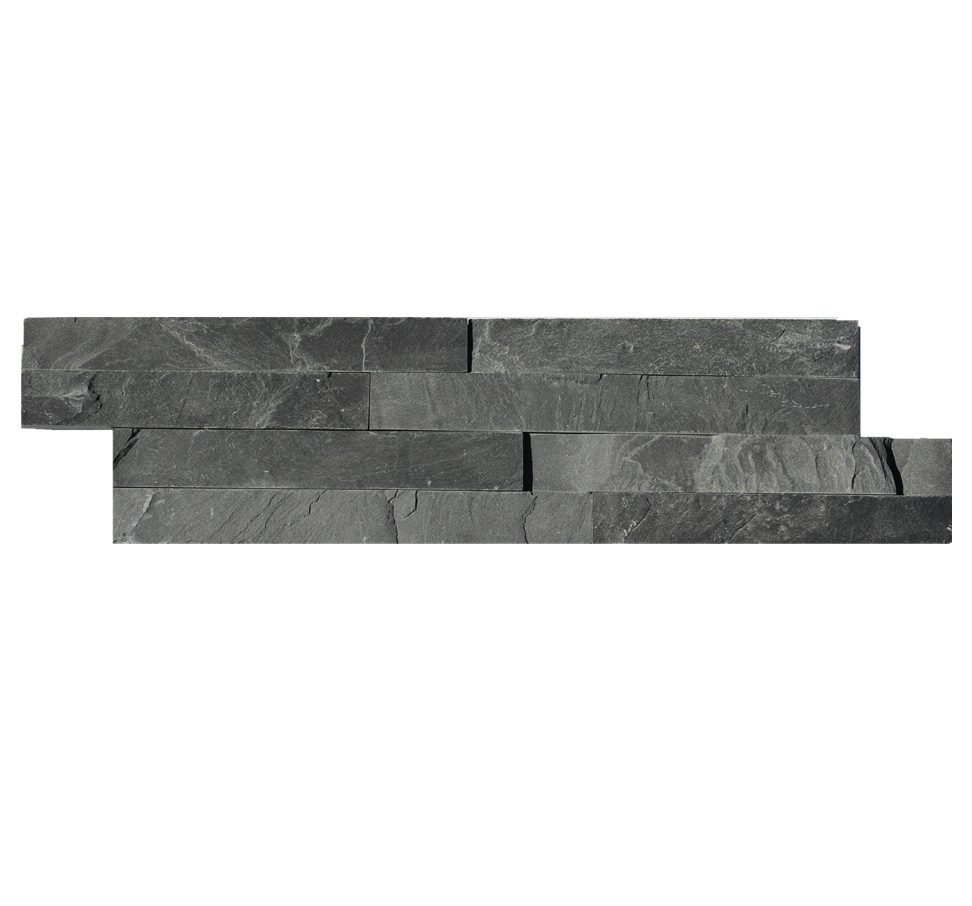
The stone: the ultra-thin 36x10cm mini ledgestone format, the European modern-linear aesthetic, on an entry wall, courtyard screen or exterior media feature. Dark faces such as charcoal slate behave almost like a black mirror under tight light. The technique: a controlled linear graze. Because the relief is fine and rhythmic, a continuous shallow graze from a shielded linear fixture at the top or bottom of the wall turns each course into a bright line with a hairline shadow under it. Placement: mount the linear fixture close to the wall and tilt it only slightly off vertical; too steep an angle and the light escapes past the fine texture instead of combing it. Keep the fixture run continuous around any return so the stripes do not stop dead. The effect: horizontal striation, the night version of the modern-linear look that thin ledgestone panels are specified for in daylight. It reads as architecture rather than decoration, which is why it suits entry sequences and hospitality walls.
Design 5: Silhouetted Garden Stone Wall
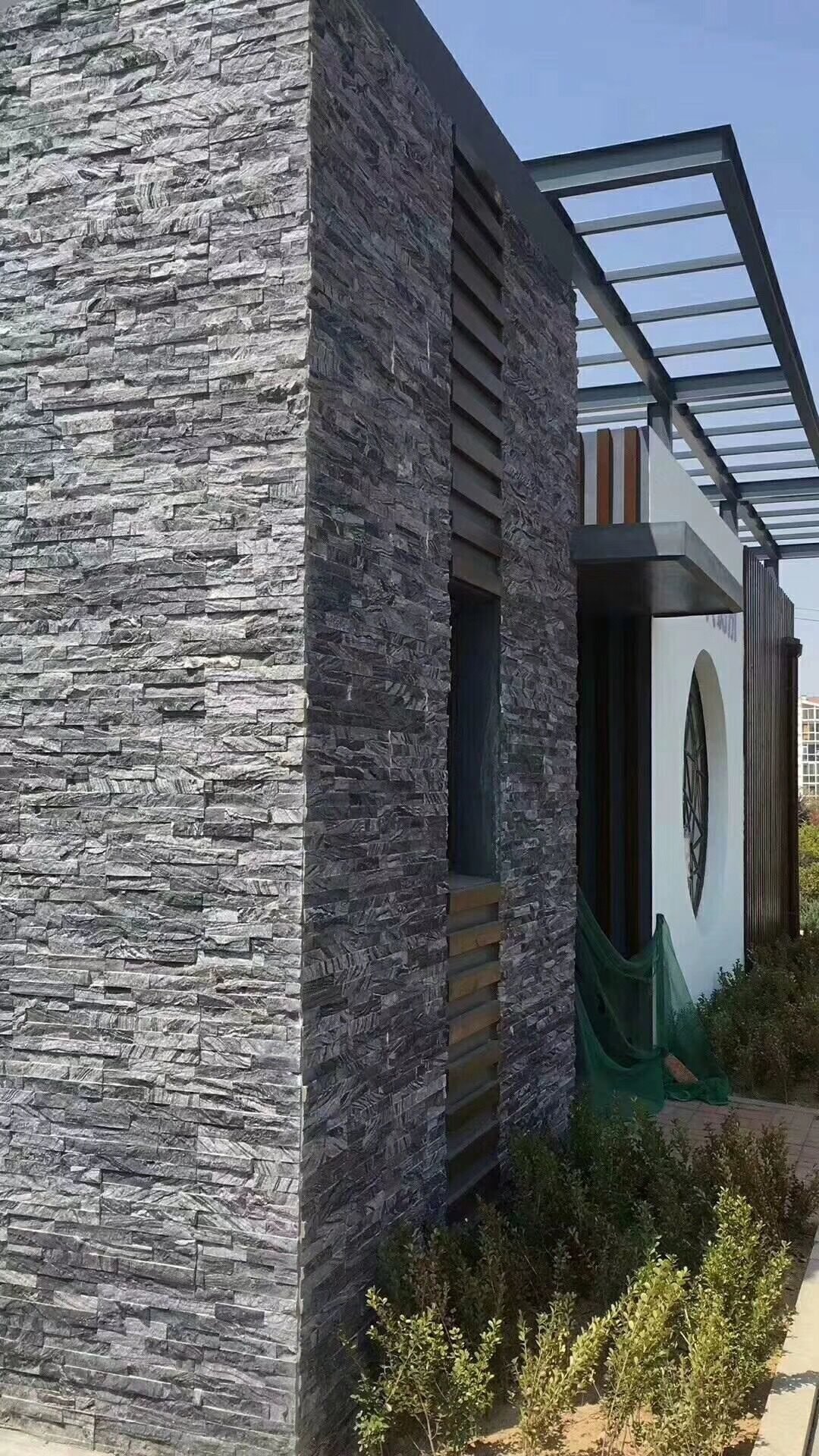
The stone: a boundary or retaining wall in loose split-face veneer, naturally split random quartzite and slate, whose irregular profile is the whole point of the design. The technique: silhouetting. Grazing fixtures low on the wall face carry the near texture, while a second, softer source behind plantings or at the wall’s top edge separates the wall’s profile from the dark sky. Placement: keep the face grazers close and tightly aimed, then stand the background source far enough back that it never spills onto the stone; the two layers must not wash each other out. The effect: the wall stops being a flat barrier and becomes a layered edge of the garden, with texture in front and depth behind, tying into the wider exterior scheme the same split-face material carries onto the house wall, as shown in villa facade stone cladding ideas.
Color Temperature and CRI on Stone
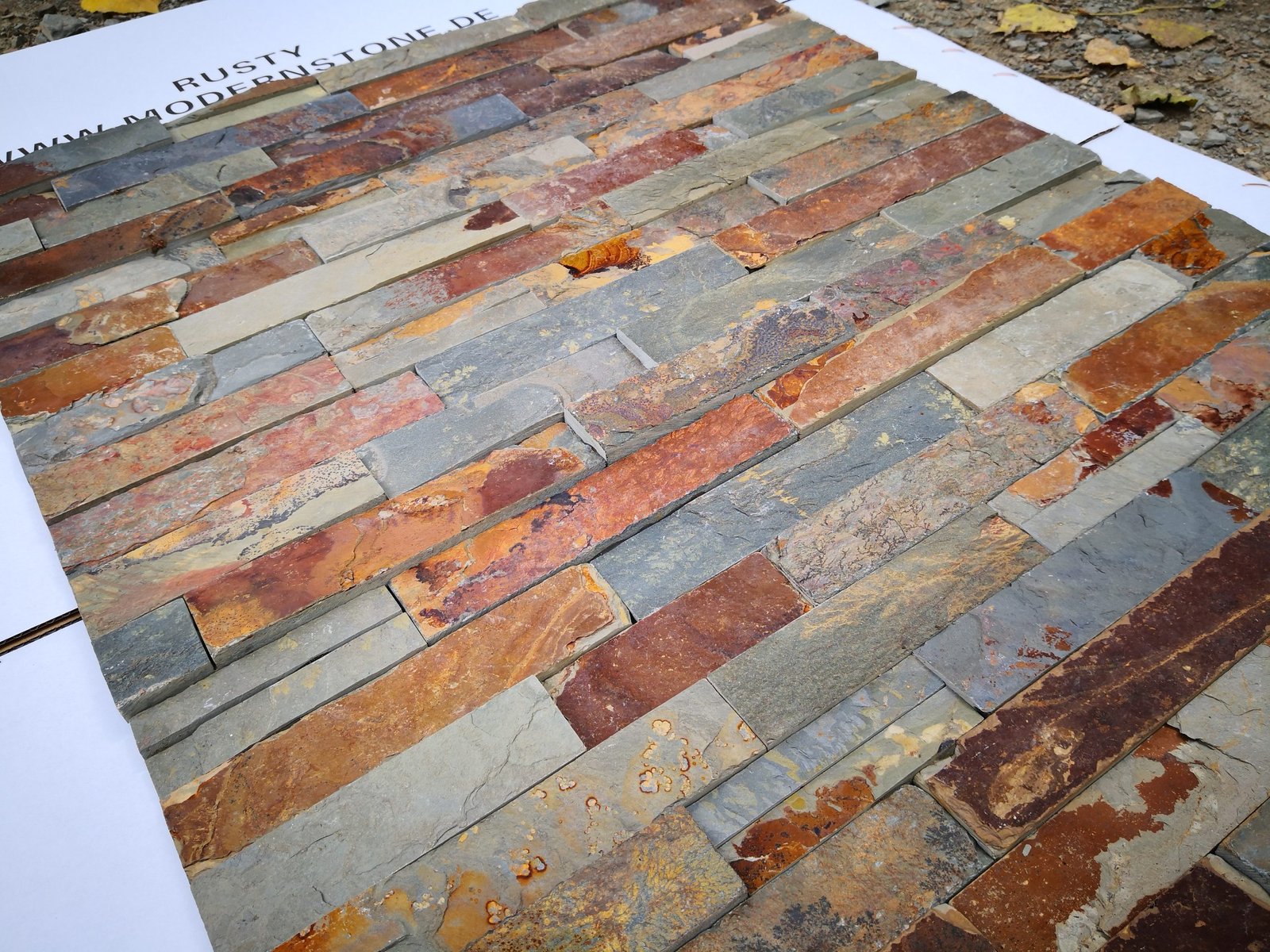
Color temperature is measured in Kelvin, and the scale runs backwards from intuition: lower Kelvin values produce warm, yellow-toned light, higher values cool and bluish. The common bands are warm white at 2700-3000K, neutral at 4000K and cool daylight at 5000K and above. On stone, the pairing rule is tonal. Warm golds, browns and rusts come alive under 2700-3000K, matching the warm tones in gold and brown stone veneer. Grey, charcoal and black faces, Alaska Gray and Midnight Black among them, go falsely yellow under warm light and read cleaner under a neutral 4000K, a pairing black stone exterior facade designs lean on heavily.
CRI, the Color Rendering Index, is the second half of the choice and the one most budgets quietly drop. It scores colour accuracy from 0 to 100, with 100 equal to sunlight. Natural stone is a colour-variation material by definition: batch-specific quarry vein selection keeps faces in at least 95 percent colour harmony, and that harmony is wasted if a low-CRI source renders three quartzite tones as one flat grey. Specify the highest CRI the budget allows and check the stone sample under the actual lamp, not a showroom downlight.
Glare Control, Shielding and IP Ratings
Facade lighting is watched from below and from the street, so the source sits in the field of view in a way indoor lighting almost never does. Shielded fixtures are the fix: housings, baffles and hoods that hide the lamp from normal viewing angles so the eye sees the lit stone and not the LED. Grazing helps here too, because a fixture aimed tight against the wall leaks less stray light than one throwing a beam across a lawn. Keep spill off neighbouring windows and footpaths, dim where the scheme allows it, and remember that a facade viewed from a dark street needs far less output than the datasheet suggests; over-lighting is the most common failure in this category.
Wet-location rating is non-negotiable. The IP code rates enclosure protection, the first digit for solids and dust, the second for water. For exterior facades exposed to rain and hose-down, IP65 is typically sufficient; IP66 is the step up for harsher conditions, per one entertainment lighting manufacturer’s guide to outdoor-rated lighting. In-grade well lights under a grazed pier sit in standing water and snowmelt, so they deserve the higher rating. The stone itself is not the weak point: panels bonded with marine-grade epoxy are rated for -30 degrees C to +50 degrees C thermal cycling with zero pop-off, so fixture heat and freeze-thaw attack the luminaire long before they attack the cladding.
The practical sequence for a facade package: choose the stone format against the design intent, pick the technique the profile allows, then size the fixture schedule. Top Stone Panels supplies the stone side factory direct, from 15x60cm stacked ledgers to 36x10cm thin ledgestone and 40x40cm column kits, with samples shipping in 1-3 working days and stock production of 20 working days from Tianjin Xingang. A sample held under the intended lamp at night answers the color temperature and CRI questions before a container is committed.
Frequently Asked Questions
What is the difference between grazing and washing a stone facade?
Grazing skims light across the stone from a fixture held close to the wall at a tight angle, exaggerating split-face relief through shadow. Washing floods the wall evenly from a greater standoff, about 2.5 to 3 feet as a guide, and flattens texture in exchange for even coverage.
Should stone facade lighting be warm white or neutral?
Match the light to the stone’s undertone. Warm 2700-3000K flatters gold, brown and rust-toned quartzite, while neutral 4000K keeps grey and charcoal faces like Alaska Gray or Midnight Black from turning muddy or falsely yellow.
What IP rating do outdoor stone facade lights need?
IP65 is typically sufficient for exterior wet locations, where the first digit rates dust protection and the second water resistance. Step up to IP66 where the fixture faces harsher exposure, such as in-grade well lights under a grazed pier.
Which stone formats benefit most from grazing light?
Deep-relief split-face stacked stone and loose split-face veneer gain the most, because grazing turns every stone edge into a shadowed highlight. Fine linear ledgestone grazes well too, while low-relief Z-panels suit a soft graze or a shallow wash.
Does CRI matter for lighting natural stone at night?
Yes. CRI scores colour accuracy from 0 to 100, with 100 equal to sunlight, and natural stone is a colour-variation material. A low-CRI source can render several quartzite tones as one flat grey, cancelling the batch colour harmony the stone was selected for.
Conclusion
Stone facade lighting is one decision with a long tail. Decide grazing versus washing from the stone’s relief, match color temperature to the stone’s undertone, hold CRI high enough that colour variation survives the night, and keep fixtures shielded and wet-location rated.
Key takeaways:
- Grazing exaggerates texture from a close, tight-angled fixture; washing covers area evenly from about 2.5-3 feet out and flattens relief.
- Deep split-face ledgers want grazing; fine 36x10cm ledgestone wants a controlled linear graze; low-relief Z-panels take either.
- Warm 2700-3000K on gold and brown stone, neutral 4000K on grey and charcoal; high CRI keeps multi-tone stone honest.
- IP65 is the typical exterior baseline, IP66 for harsher exposure, and shielding beats re-aiming when glare appears.
Top Stone Panels supplies the stone these schemes are built on, factory direct from the quarry, with samples in 1-3 working days so the face can be checked under the intended lamp before a container is committed. Request a facade sample set and a vein batch match for your next night-time elevation.