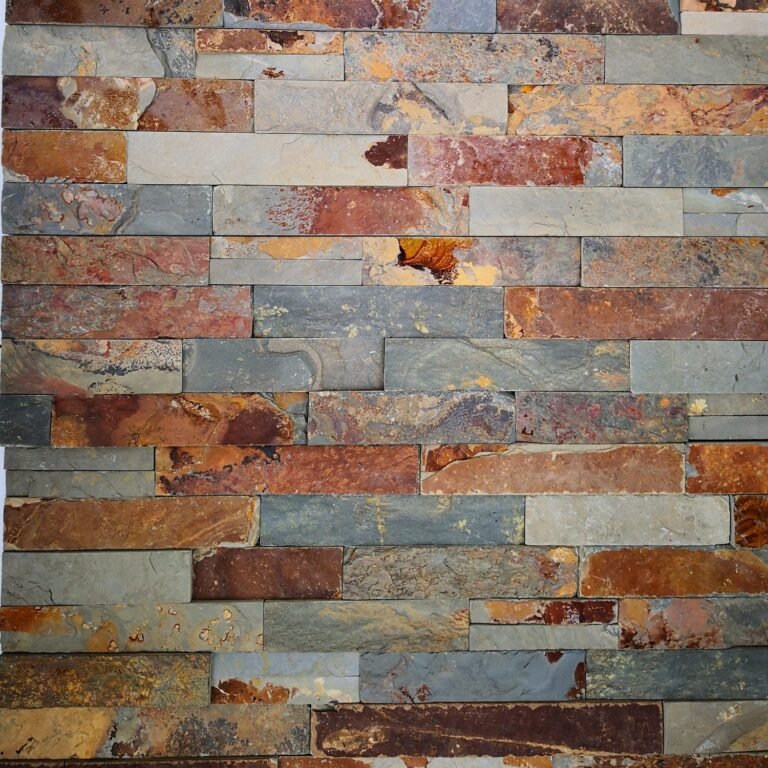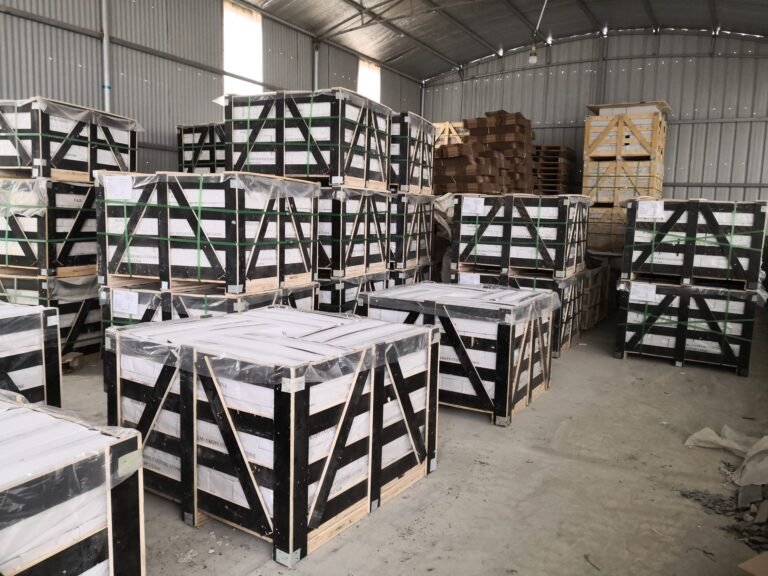
A stone buyer’s first freight decision has nothing to do with the stone. It is the moment the order becomes a route: port-to-port, where the contract ends at the destination terminal, or door-to-door, where it ends when the pallets reach your yard. Both phrases promise delivery. They transfer risk, cost and schedule control at completely different points, and the difference is worth more per container than the rate difference between most freight forwarders.
This guide compares the two contracts on the lanes stone actually travels, with transit windows from verified carrier data, the rate arithmetic behind a landed cost, and the clauses that decide who eats the delay when a vessel misses its berth.
- Port-to-port is one voyage between two terminals; door-to-door adds pickup, clearance and delivery, bought as one price and one responsibility chain.
- Transit windows are wide: 16-48 days from China to the USA port-to-port, 12-18 days to Australia and New Zealand, about 19 days Tianjin to Sydney, 3-5 days by air for samples.
- Rates move with lane and date: Drewry’s WCI assessed Shanghai-Los Angeles at US$7,352 and Shanghai-New York at US$9,726 per 40ft on 10 September 2026, with a 20ft at 60-70% of the 40ft rate.
- The hidden cost is time at the terminal: demurrage runs US$150-450 per day after a free period of 3-5 days, and peak congestion surcharges of US$250-500 apply at Los Angeles and Long Beach in Q3-Q4.
- Stone loads are weight stories: reinforced crating rated for 26.5-ton heavy-load sea freight, 4-6 high-tensile straps per crate and container air bags belong in the contract.
- What Port-to-Port and Door-to-Door Buy
- Two Contracts Side by Side
- Transit Windows on Real Stone Lanes
- Freight Rates and the Arithmetic Behind Them
- Demurrage, Detention and Free Days
- What Stone Loads Change in the Contract
- How to Choose for Your Order Size
- Questions Every Stone Buyer Should Ask
- Frequently Asked Questions
- Conclusion
What Port-to-Port and Door-to-Door Buy
Port-to-port is the narrowest contract that still moves a container: the carrier works the box from the origin terminal onto the vessel and drops it at the destination terminal. Everything else, inland trucking, export clearance and the destination side, is yours to organize, which is why the price looks low.
Door-to-door extends the same box to two addresses. One contractor arranges pickup from the factory or warehouse, the export leg, the ocean voyage, import clearance, and delivery to the agreed destination, quoted as a single price and answerable to a single counterparty. The trade is that you are paying for services you cannot see individually, and the quality of the quote depends entirely on the forwarder’s own network at both ends.
Neither label is a contract yet. A door-to-door offer can still exclude import duties, terminal handling or the last-mile lift, and a port-to-port offer can quietly include them. The comparison only works once both quotes cover the same scope, which starts with seeing how risk and cost shift under FOB, EXW, CIF and DDP.
Two Contracts Side by Side
Set the two scopes next to each other and the differences fall into four columns: where transport starts and stops, who carries delay risk, whose price items appear, and what you manage on site.
| Factor | Port-to-port | Door-to-door |
|---|---|---|
| Coverage | Terminal to terminal, one ocean voyage | Factory pickup to final delivery, both ends |
| Pricing | Ocean freight plus separately billed local legs | One all-in price, services bundled |
| Counterparties | Forwarder, trucker, customs broker, terminal, you | One primary contractor |
| Delay risk | Yours outside the voyage | Contractor’s across the whole chain |
| Typical buyer | Importer with local brokers and truckers | First-time importer, or one-off delivery to a job site |
The middle row decides the price gap. A port-to-port quote is one line of the landed cost; trucking and brokerage lines arrive later at their own markup. A door-to-door quote hides those lines inside one figure, which is why it can look costly against a port-to-port number yet land lower when the full chain adds up. Compare totals for identical coverage, or the comparison is meaningless.
The deeper version of this choice is commercial, not operational: who pays freight, insurance and duty, and where risk transfers, is the FOB versus CIF decision for stone shipments, which changes the factory contract as much as the freight one.
Transit Windows on Real Stone Lanes
Transit time is the number buyers hold on to, and the honest version is a range: the same port pair moves in different windows by service, terminal and season. Airlift USA’s recorded shipments put the China-USA corridor at 16 to 48 days port-to-port, with the spreads below.
| Route | Ocean transit | Notes |
|---|---|---|
| Shanghai / Shenzhen to Los Angeles | 16-30 days | Shortest US lane for stone containers |
| China to Houston | 28-38 days | Gulf coast, longer leg |
| China to New York | 32-45 days | East coast, often via Panama |
| China to Australia / NZ | 12-18 days | From Shanghai, Ningbo, Shenzhen or Guangzhou |
| Tianjin to Sydney | about 19 days | Direct sailing reference from Tianjin |
| Air freight (samples) | 3-5 days | Airport to airport |
Plan against the far end of the range: a date set at the near end has no buffer for weather, berth queues or a rolled sailing, and clearance plus any inland leg stack on top of the ocean window. The ranges are published in Airlift USA’s China-USA route documentation, which records Los Angeles at 16-30 days and New York at 32-45 days on port-to-port services.
For a factory on the northern China coast, the origin port is Tianjin, and the practical question is which corridor the vessel actually serves. China to Australia and New Zealand runs a tighter 12-18 day window than the US east coast. A stone order from Top Stone Panels leaves Xingang after a 20-working-day production cycle, so the production and sailing dates should be fixed in the same week.
Freight Rates and the Arithmetic Behind Them
Rates are a snapshot with a date, like transit. Drewry’s World Container Index, assessed on 10 September 2026, prices a 40-foot dry container from Shanghai to Los Angeles at US$7,352 and from Shanghai to New York at US$9,726, with Rotterdam at US$3,997 and Genoa at US$4,216, and a 20-foot container usually carrying 60 to 70 percent of the 40-foot rate on the same route.
These are index values, not quotes: trucking, documentation, booking and customs sit outside the yard-to-yard benchmark. The arithmetic worth running is the 40-foot versus two 20-foot gap: if a 20-foot runs at 60-70 percent of the 40-foot rate, two 20s on a full order exceed one 40, which is why the 40-foot box carries volume and the 20-foot box carries weight. Stone is a weight business, and the container that trips the weight limit first is the real constraint. The figures are documented in Suaid Global’s 2026 ocean freight pricing overview.
LCL is the third lane and it flips the arithmetic. Consolidated freight runs about US$40 to 180 per cubic metre depending on the lane, and the published break-even against a full container sits near 23 cubic metres: below that volume LCL wins on cost, above it a full container wins and LCL just adds 2-5 days of transit for consolidation and deconsolidation.
Demurrage, Detention and Free Days
The largest unbudgeted line in stone importing is not freight at all; it is the meter that runs when a container sits. Demurrage, the charge for the box occupying terminal space beyond the free period, runs US$150 to 450 per day after a free window of 3 to 5 days depending on port and carrier, and detention, for the container held away from the port, runs parallel.
Peak season adds a second layer. Congestion surcharges of US$250 to 500 per container apply at ports like Los Angeles and Long Beach in Q3-Q4, and the lesson for a stone buyer is to book the sailing, not the month: a late-September booking can land in early November and pay the December gridlock even though the order was ‘summer freight’.
Clearance is the variable neither contract can eliminate, only assign. Documents must be right before the box sails, and the import side should be locked with a broker who has moved stone before: weight and unit-mix details are the difference between a routine release and a hold. The customs side is covered in what customs clearance requires on a natural stone import, and once the pallets are out of the box, correct on-site storage of stone panels protects the load the freight schedule just delivered.
What Stone Loads Change in the Contract
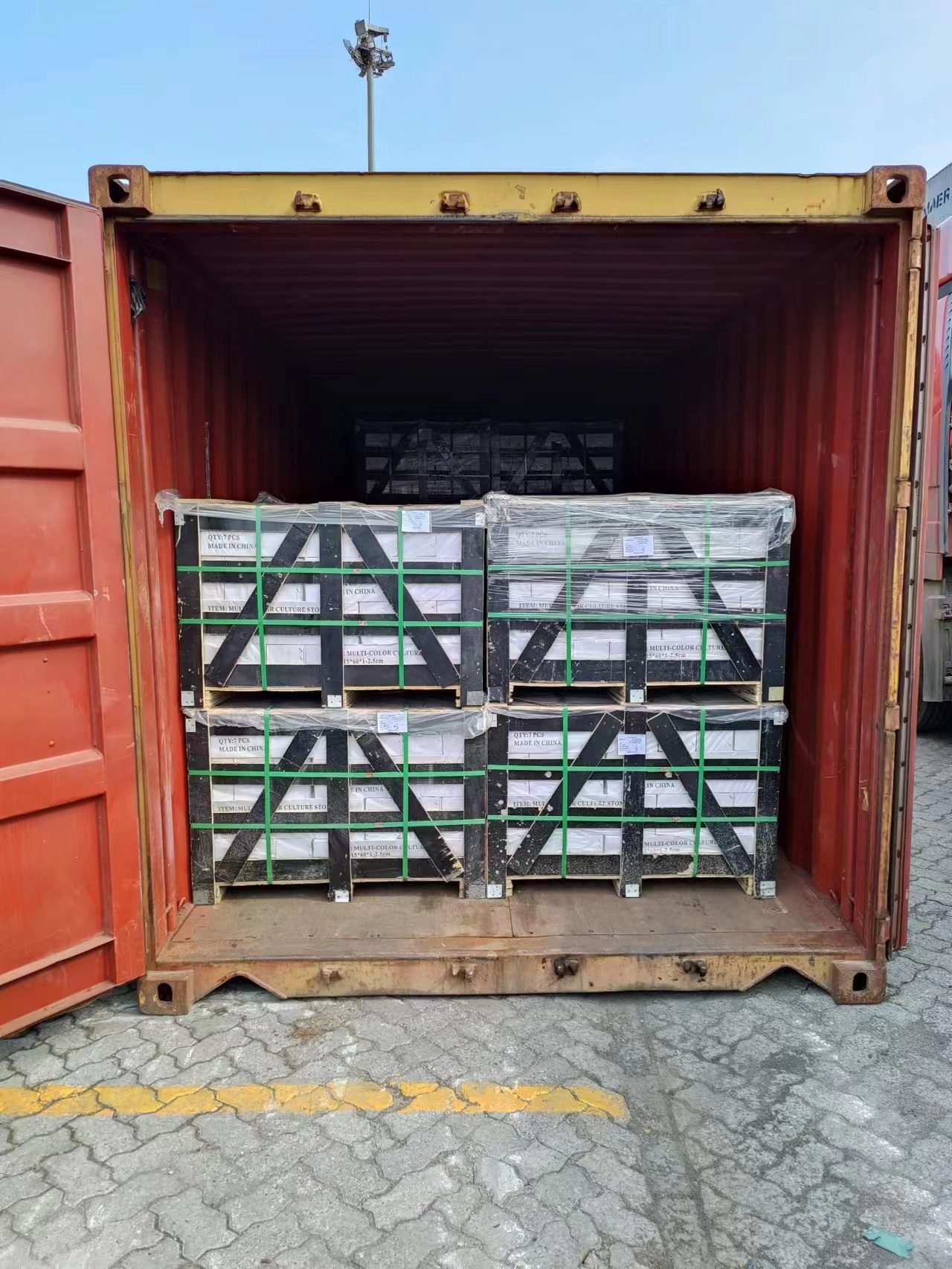
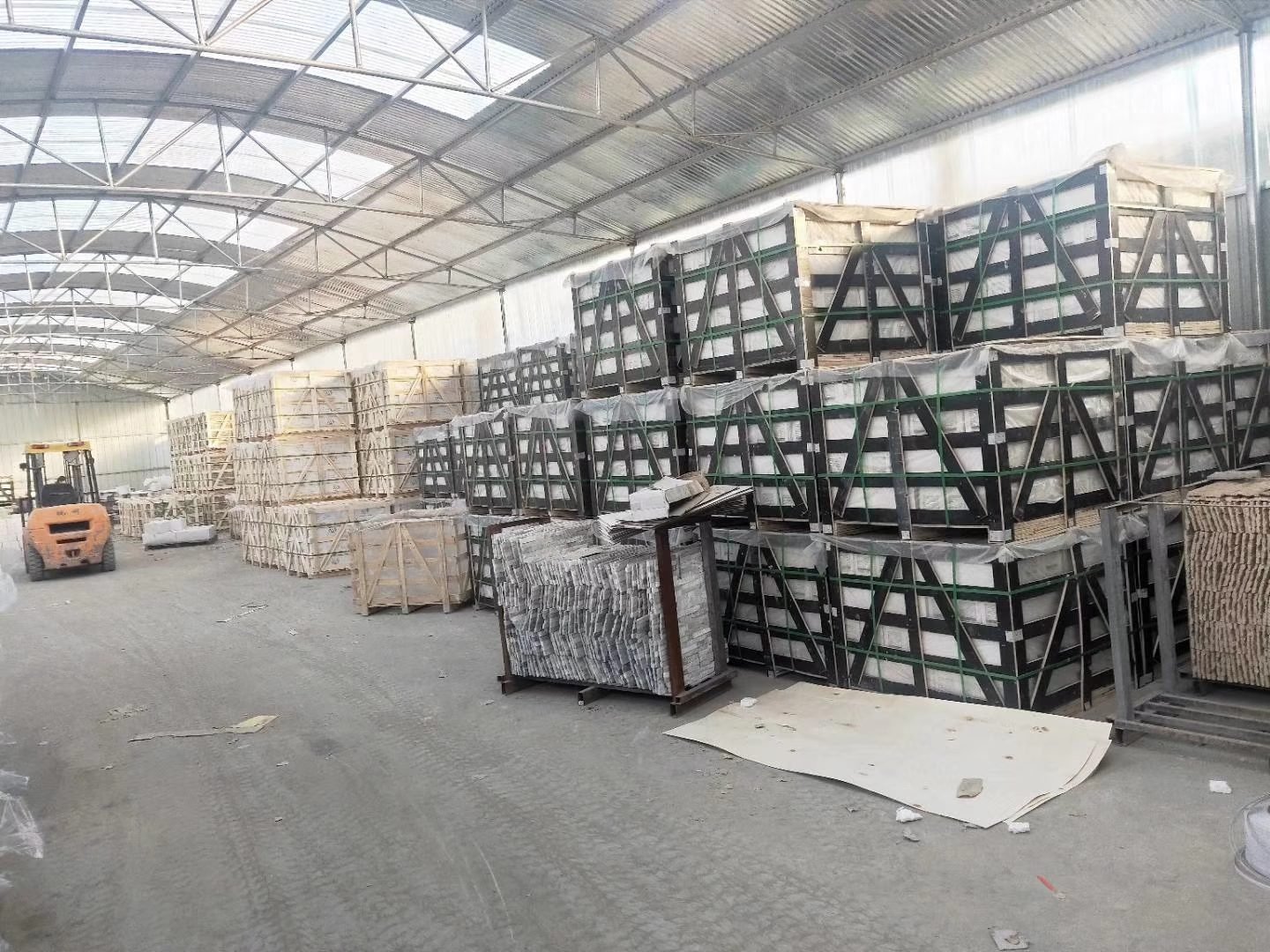
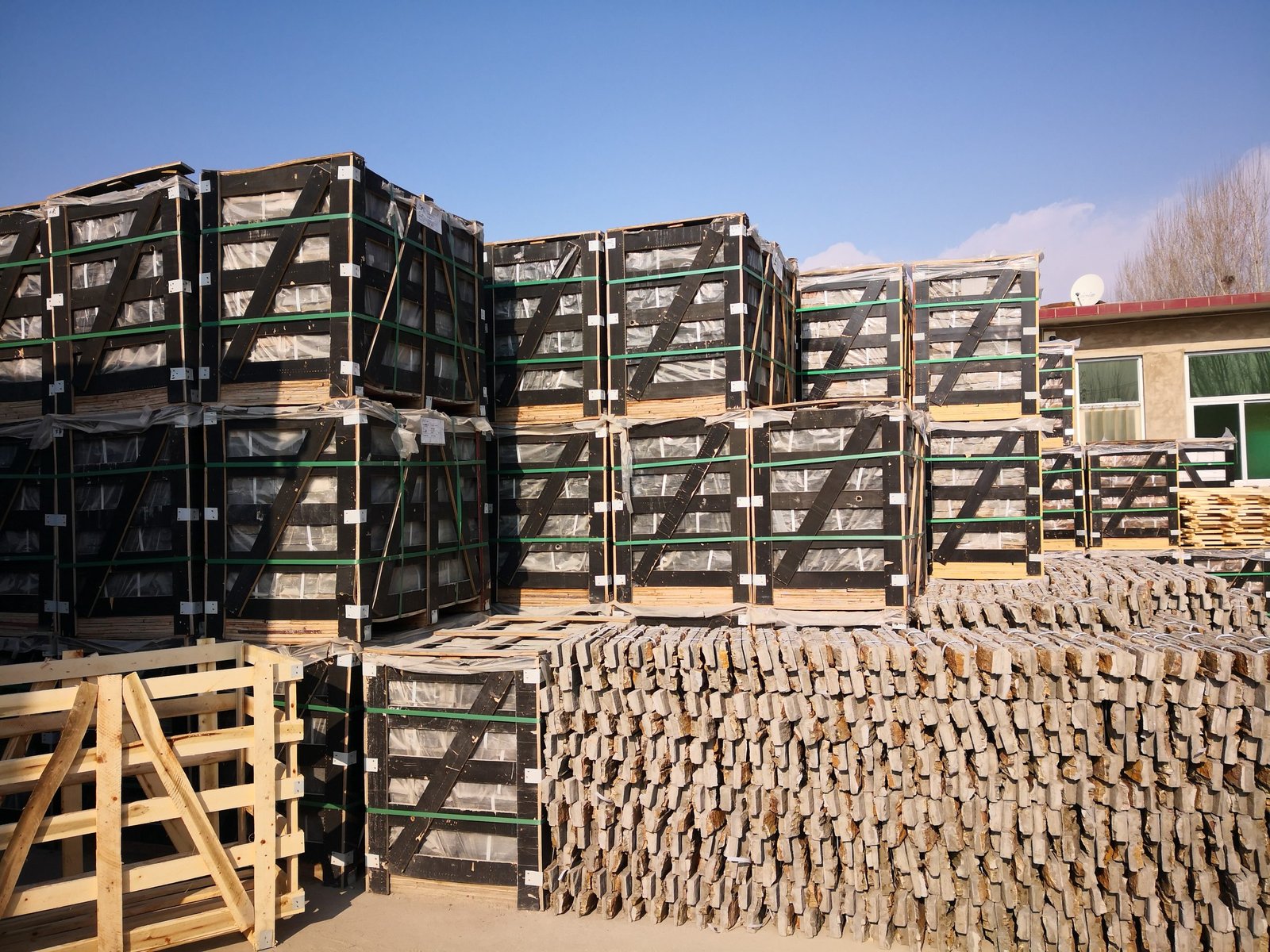
Generic freight logic treats a container as volume with a weight tolerance. Stone is the opposite: a loaded 20-foot container of natural cladding is a weight story. The standard 20GP dry box measures about 5,898 by 2,352 by 2,393 millimetres internally, roughly 33 cubic metres, and caps gross weight near 30,480 kilograms. Top Stone Panels’ reinforced strapped crating is rated for 26.5-ton heavy-load sea freight, about 87 percent of that 20GP gross-weight ceiling; after crate weight, stone and dunnage, a dense cement-backed panel hits the limit before the box is full of air.
Thickened fumigated wooden crates, 4-6 high-tensile strapping bands and container air bags sit between the stone and the 26,500 kilograms of momentum around it in a swell, because a shifted load costs more than the freight: it costs the container’s next leg, the receiver’s schedule and the claim paperwork. The sequence, from steel strapping to air-bag inflation, is the Zero-Breakage container loading protocol for stone panels.
The factory’s discipline is 3-Step QC plus a loading process that photographs every pallet before the doors close; the buyer receives that evidence with the 70 percent balance release, the same chain a claims adjuster will want later. For a mixed order, the full Top Stone Panels export range, from stacked stone to interlocking Z-panels, ships under one protocol, which keeps the weight plan stable across pallets.
How to Choose for Your Order Size
The contract choice follows the order size, and the rules are short enough to keep on a desk.
- Under about 23 cubic metres, book LCL: a pallet or two of samples is an LCL shipment, with 2-5 extra days of consolidation time.
- At one 20-foot equivalent, compare FCL port-to-port against a door-to-door all-in. Local broker and trucker margins decide which wins, so ask for both.
- Above one container, run the 20-foot versus 40-foot weight test. If the cargo fits a 40-foot box under 30,480 kilograms gross, the single larger box usually wins per square metre; if weight binds first, two 20s may still be right. The trade-off is calculated in the 20GP versus 40HQ container economics for stone.
- Match Incoterm to the same decision. FOB and CIF keep origin cost visible; EXW pushes everything onto you; DDP hands the destination chain to the factory’s forwarder. The Incoterm and the freight scope must agree, or the quote and the commercial invoice describe different jobs.
- Put the schedule in writing with a buffer. Twenty working days of production plus a 16-48 day ocean window is a range, and the install date should sit after the far end of it.
Questions Every Stone Buyer Should Ask
Three questions separate a freight quote from a freight trap, and each has a one-line answer you can hold a forwarder to.
What is included in the number? Get the scope in writing: pickup, export docs, terminal handling, ocean freight, destination charges, clearance, delivery and duties, each marked in or out, before comparing anything. A door-to-door quote that excludes duties is a door-to-port quote wearing a different hat.
Who pays if the vessel slips? Ask for the demurrage rate, the free days at the actual destination terminal, and the last cut-off for cancelling a sailing without penalty. On a port-to-port contract the answer is yours; on door-to-door it is the contractor’s, but the calendar is shared.
What evidence exists at the origin? For stone, ask to see the loading video and pallet layout photos, the same artifacts released against payment on a Top Stone Panels order, and if the forwarder has no plan to document weight distribution at origin, the claim risk has already been handed to you. Third-party checks at origin are available through pre-shipment inspection of stone panels at container loading.
Frequently Asked Questions
What is the difference between port-to-port and door-to-door shipping?
Port-to-port moves the container between two terminals only; the buyer arranges trucking, clearance and delivery around both ends. Door-to-door adds pickup, export handling, customs clearance and final delivery, quoted as one price and managed by one contractor.
How long does stone take to ship from China to the USA?
Typically 16-48 days port-to-port depending on the port pair, with Los Angeles at 16-30 days, Houston at 28-38 days and New York at 32-45 days. Clearance and any inland leg add time after arrival.
Which is cheaper, port-to-port or door-to-door?
Port-to-port has fewer line items, but door-to-door can be cheaper overall when local trucking, brokerage and delivery are added to the port-to-port side. Compare one total for identical coverage, including duties, or the labels mean nothing.
Is door-to-door the same as DDP?
No. Door-to-door describes the transport scope; DDP is an Incoterm that adds duty-paid delivery to the destination. A door-to-door quote may or may not include import duties, so the commercial terms must state it explicitly.
How should a first stone container be booked?
Ask for port-to-port and door-to-door quotes for the identical scope, check the 20-foot versus 40-foot weight arithmetic under the 30,480 kg gross ceiling, confirm demurrage free days at the real destination terminal, and tie the production lead time of 20 working days from Tianjin Xingang into the sailing date.
Conclusion
Port-to-port and door-to-door are not competing services; they are two positions on the same route, and the buyer who knows exactly where each one hands over cost and risk out-bids the buyer who compares prices. Transit is a range, 16-48 days to the US, 12-18 days to Australia and New Zealand, with the free days, demurrage meters and peak surcharges deciding the real total.
Key takeaways:
- Compare identical scope on both quotes, duties included or excluded on both sides.
- Plan against the far end of the transit range, not the near end; clearance and inland legs stack on top.
- Check demurrage free days at the exact destination terminal before signing the rate.
- Let weight, not volume, choose the container, running the 20-foot versus 40-foot arithmetic under the 30,480 kg ceiling.
- Demand the loading evidence: video and pallet photos, the same artifacts Top Stone Panels releases against the 70 percent balance.
Top Stone Panels ships 220-plus containers a year from its direct-from-quarry base through Tianjin Xingang, on FOB, EXW, CIF or DDP terms with a 30 percent T/T deposit and the balance released against loading evidence. Send the destination port and the order volume and get the shipping options and a 20GP load plan for your market.