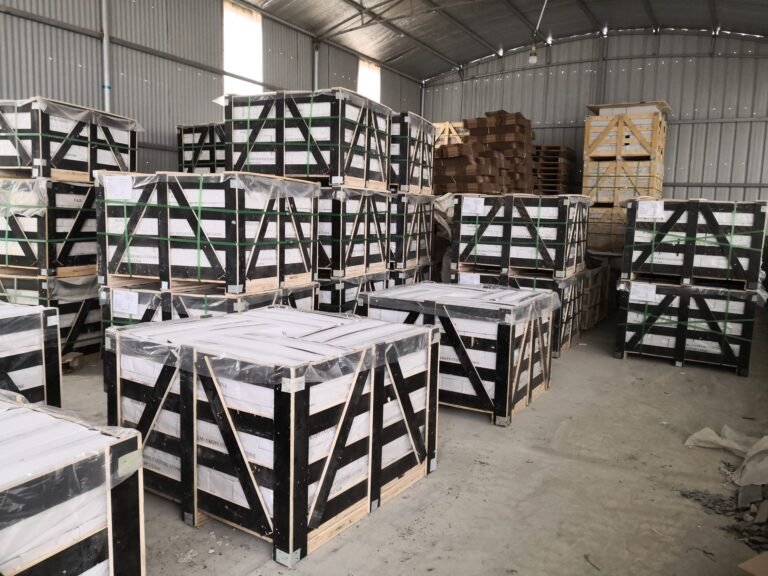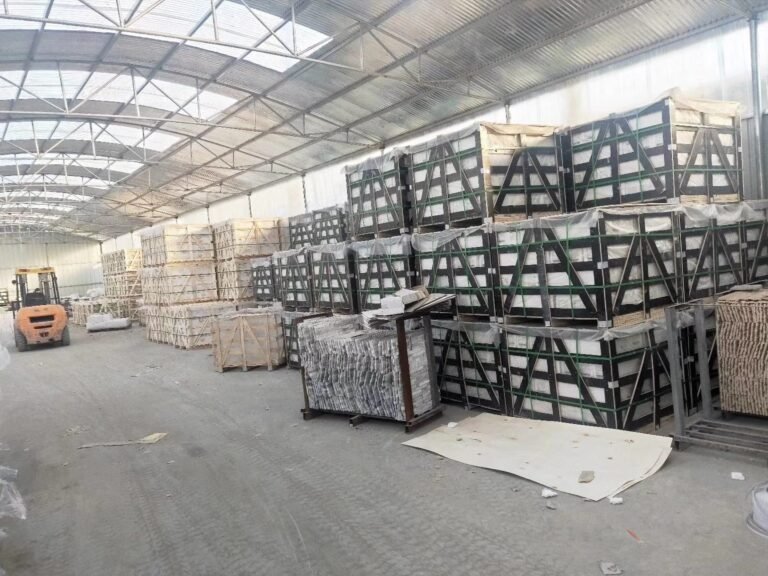
The container that arrives at your dock is the mirror image of the one the factory loaded. Every decision made during packing and securing shows up again during unloading, and the receiving crew is the last line of defence between a clean shipment and a disputed one. Handled well, devanning a container of natural stone cladding is routine. Handled carelessly, it produces injuries, breakage that nobody documents in time, and a claim that dies on the wording of a delivery receipt.
This is a buyer and warehouse-facing standard operating procedure for receiving stone containers, in the order the work actually happens: prepare the dock, open the doors safely, devan crate by crate, inspect against the pre-shipment photo package and loading video, sign the receipt without waiving your rights, record breakage, store, and reconcile the paperwork.
- A load of stone can shift in transit. Treat every container door as a potential fall hazard and open it from the side, standing clear, before anyone enters.
- Confirm the forklift’s rated capacity covers the heaviest crate before the truck is booked; OSHA 1910.178 does not allow that capacity to be exceeded.
- Inspect against the Loading & Packaging Inspection Video and the pre-shipment Photo Package, and never sign a clean receipt when there is damage.
- Prepare the Dock Before Arrival
- Open the Doors Safely, Expecting a Shifted Load
- Devan Crate by Crate, Not All at Once
- Inspect Against the Photo Package and Video
- Sign the Receipt Without Waiving Your Claim
- Record Breakage and Open the Claim
- Move Stone to Storage: Dry, Banded, FIFO
- Reconcile Packing List, Invoice and Bill of Lading
- FAQ
- Conclusion
Prepare the Dock Before Arrival
Receiving starts before the truck is at the gate. A full container of natural stone cladding is one of the heaviest unit loads a general warehouse handles, and Top Stone Panels’ Reinforced Strapped Crating is engineered for loads rated up to 26.5 tons of heavy-load sea freight. Confirm the dock leveller, apron and floor slab are rated for the point loads a laden forklift will impose; a crate concentrates a large weight onto a small footprint, harder on a floor than a spread pallet.
Then match the forklift to the heaviest crate. Ask the supplier for crate weights, or work from the packing list, and confirm the truck’s rated capacity covers the heaviest single crate at the load centre you will carry it at. OSHA’s powered industrial truck standard, 29 CFR 1910.178, requires that the rated capacity not be exceeded and that the nameplate and load markings stay legible. Read the data plate, not the model badge: capacity falls as the load centre moves forward.
Settle the lifting method before the container arrives, because slab and crate handling often needs a proper fork spread, a boom, or a crane for the heaviest items, and custom rigs carry no manufacturer approval. Book enough trained staff to devan, inspect and move the load without rushing, reserve a flat, covered staging area large enough to set down every crate, and have the packing list, the pre-shipment Photo Package and the Loading & Packaging Inspection Video open before the doors open.
Open the Doors Safely, Expecting a Shifted Load
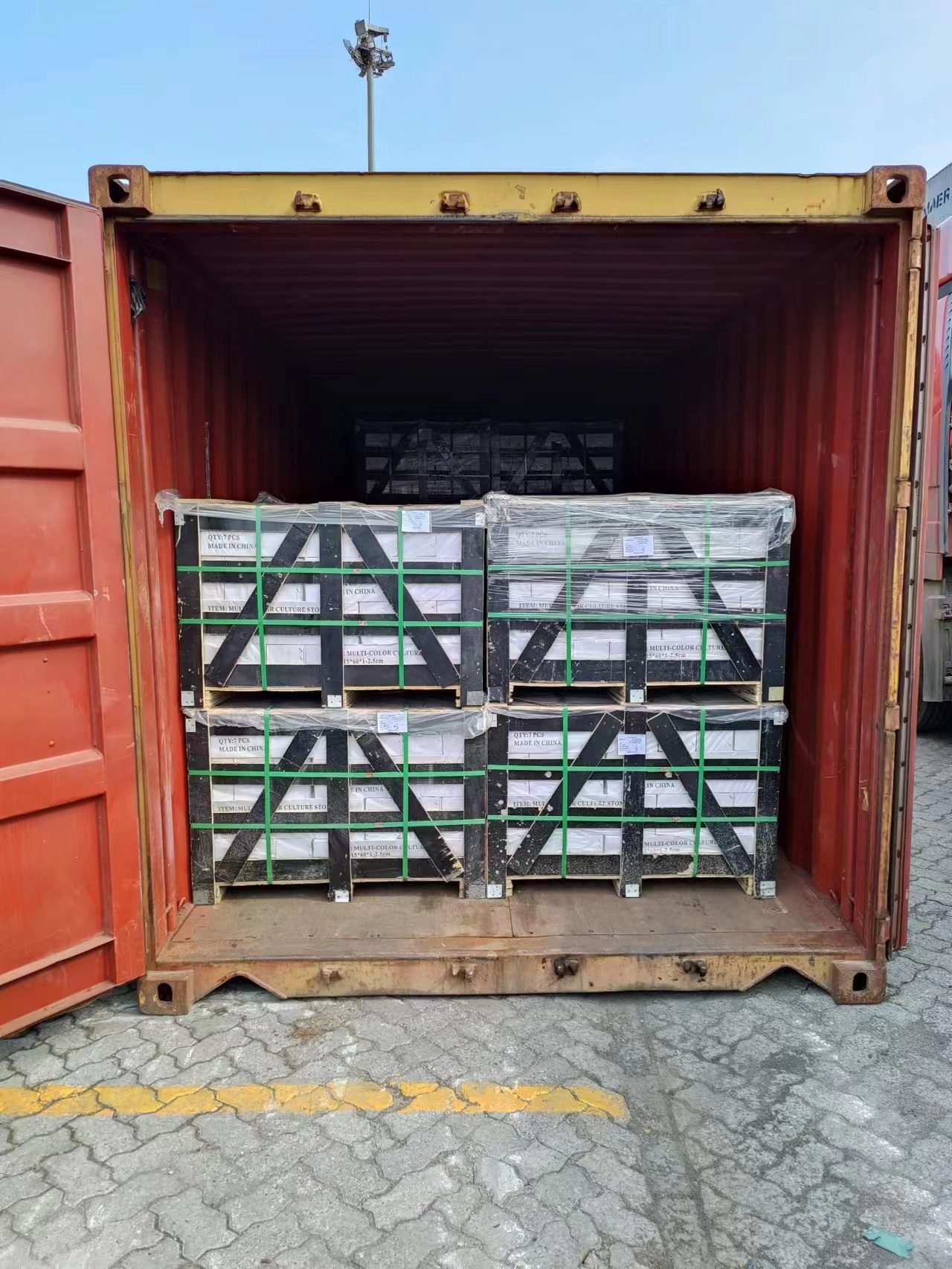
This is the most dangerous moment in receiving stone containers and the one most often treated casually. A load of stone can and does shift in transit: ocean rolling, hard braking and rail shunting all move mass, and that stored energy waits behind the doors. Regulators have documented fatal crush injuries when workers opened container doors holding shifted stone slabs, and a WorkSafe Victoria alert on a worker crushed by stone slabs inside a shipping container is exactly that failure mode.
Read the box before anyone touches it. Look for dents, bulging side panels, a door that will not close square, or fresh impact marks. Then stand behind the open door leaf, never in the opening, and crack one door a controlled amount: hold it, look in, and do not fling both doors wide. If something is leaning against the door, the first movement can release it. From outside, check whether crates are upright, the straps and air bags still working, and nothing fallen across the doorway.
If a crate is leaning or a stack has collapsed, nobody enters. Barricade the area and plan a controlled recovery, using machinery from outside where possible. Give the box air and light the interior well enough to see strapping, corners and the floor.
Devan Crate by Crate, Not All at Once
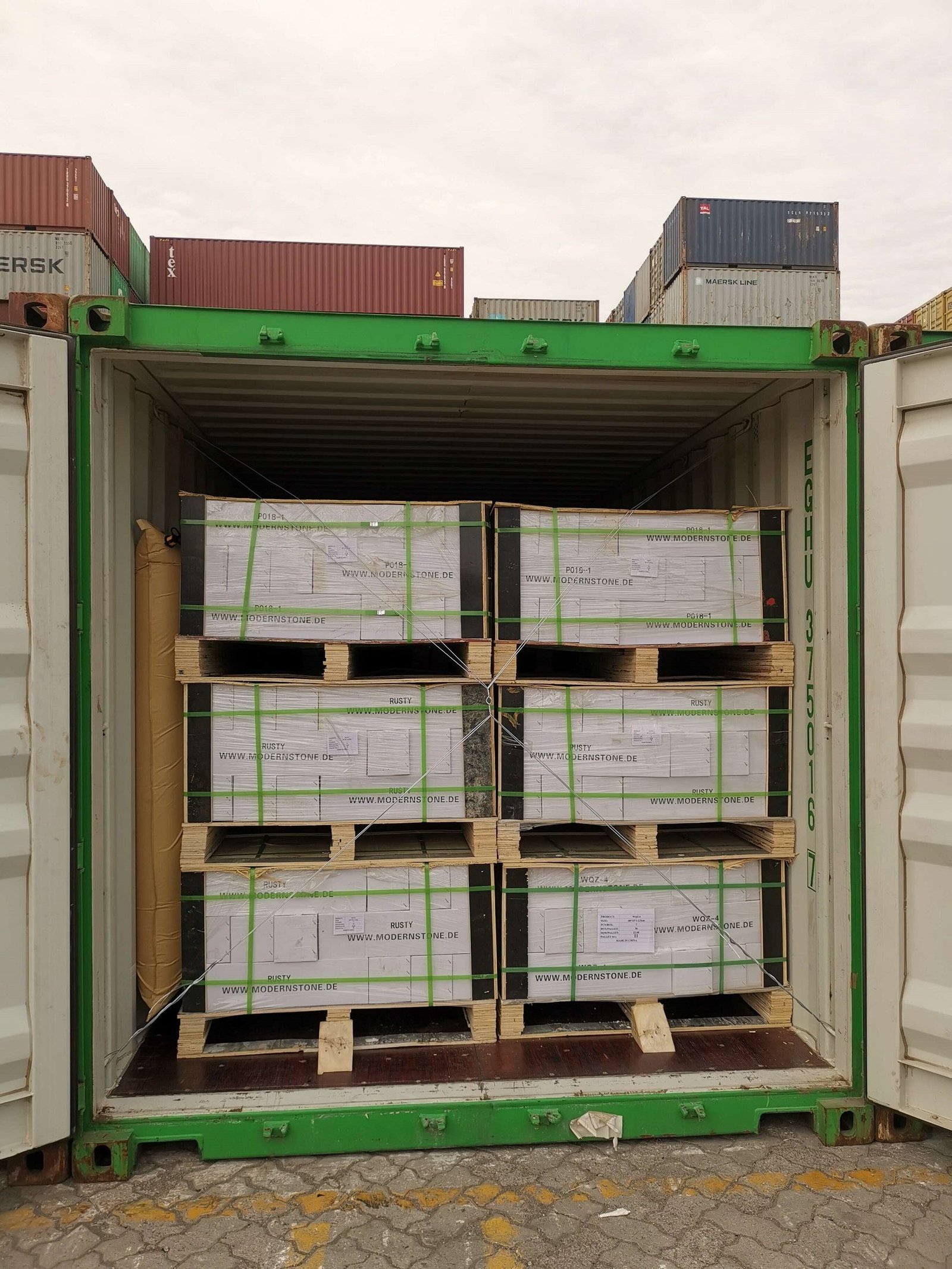
Once the load is confirmed stable, devanning becomes a disciplined sequence rather than a race. The packing you are undoing is deliberate: thickened fumigated wooden crates, 4-6 high-tensile strapping bands per crate, and container air bags filling the voids. Photograph the whole interior before cutting anything, air bags in position, straps tensioned, crates square, and compare against the Loading & Packaging Inspection Video and pre-shipment Photo Package: your baseline for how the shipment left versus how it arrived.
Deflate and remove the air bags in sequence so the load does not suddenly lose lateral support, and set them aside: a burst or displaced bag tells you where movement happened. Cut high-tensile bands so they do not whip, standing clear of the band’s line, because steel straps under tension store energy and can snap back. Then work the accessible face front to back, one crate at a time, and re-check stability after every extraction rather than pulling from the middle of a stack.
Lift crates clear with the forklift rather than dragging them: dragging hides the difference between transit damage and unloading damage. Set each crate on the prepared staging area, level and spaced enough to walk around, kept in the container’s original order so counts map back to the packing list. Keep the crates and their banding as you unpack, because damaged packaging is physical evidence that ties a break to a location in the container. The same discipline that produced a well-packed box at the factory, described in the Zero-Breakage container loading and packaging protocol, is what makes the receiving inspection meaningful: you are checking a known-good standard, not guessing.
Inspect Against the Photo Package and Video
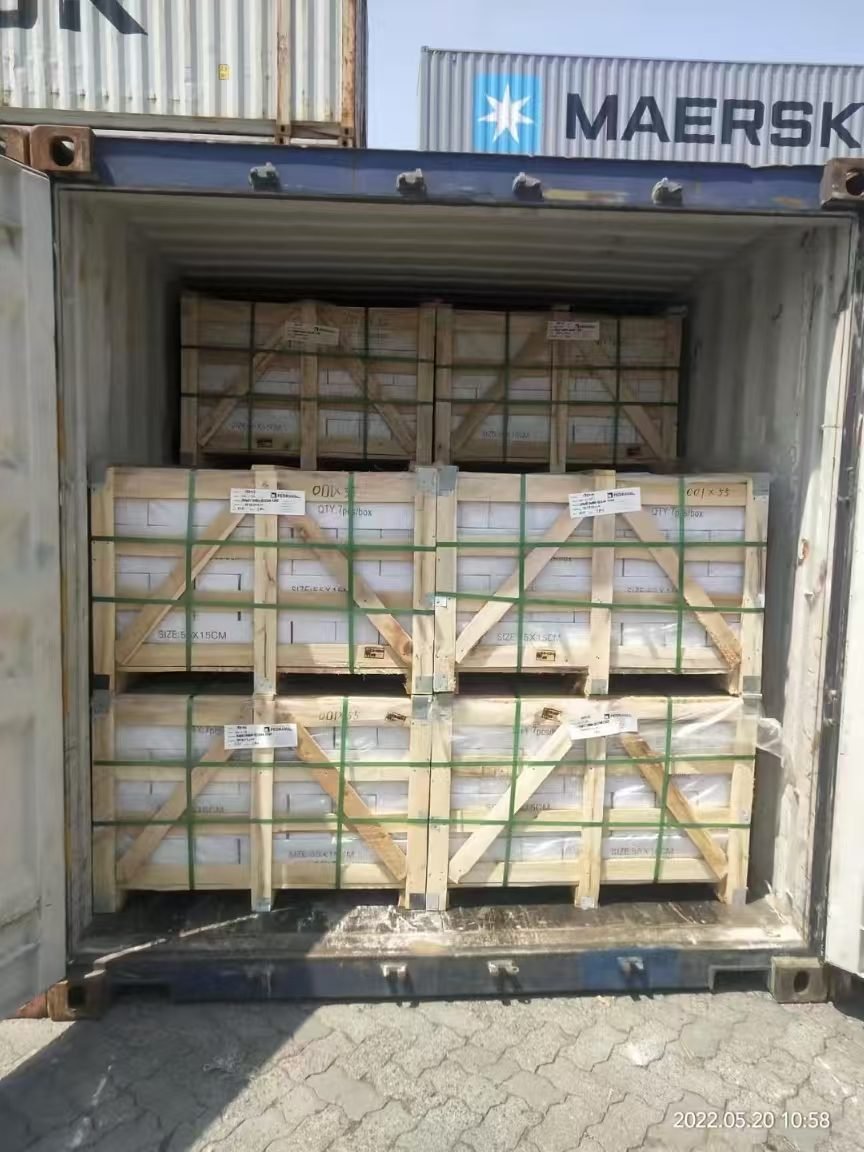
The heart of a stone import receiving inspection is comparison against a specific, dated record of what was loaded, not against an idea of what should have arrived. Top Stone Panels delivers a Loading & Packaging Inspection Video and a pre-shipment Photo Package with layout photographs, the reference set the balance payment was released against. Line them up with the dock and inspection becomes objective: count every crate and check marks and numbers against the packing list, confirm the 4-6 strapping bands are present and tensioned rather than cut or slipped, look for crushed corners and loose stone, and check for water staining, damp timber and condensation.
| Check | What you look for | Why it matters |
|---|---|---|
| Crate count and identity | Every crate present, marks and numbers matching the packing list | Establishes shortage or overage before it leaves the dock |
| Strapping integrity | 4-6 bands present, tensioned, not cut, slipped or broken | A failed band shows where a crate moved and hit its neighbours |
| Crushed or broken corners | Impact damage to crate corners, edges and faces; loose stone inside | Corner impacts travel into the panels and cause chipping |
| Moisture and staining | Water staining, damp timber, tide marks, condensation | Wet crates risk staining, efflorescence and packaging failure |
Photograph everything before it moves: the container interior as opened, each crate’s marks, every damaged corner, any wet patch. Wide shots establish context and close shots establish the defect; without both, a photograph proves little. This is the same evidentiary logic the factory applied when it produced the pre-shipment record, covered in the guide to pre-shipment inspection and container loading.
Where the stone itself is the concern, open one or two representative crates to confirm format, colour vein batch and finish, because a colour or vein mismatch is cheaper to catch on the dock than after the material is spread across a job site. For a mixed container of stacked stone, Z-panel cladding and loose veneer, the stacked stone ledger panel and pre-made corner range shows the formats to verify before you reconcile the order.
Sign the Receipt Without Waiving Your Claim
The delivery receipt records the condition of the goods at the moment custody passes, and the wording you write on it can decide whether a claim survives. A driver in a hurry will hold out a clean receipt; if you see damage, shortage, a shifted load or wet crates, write specifics before signing: crate count, damage type, and that the load shifted or packaging was wet.
Specificity is the whole game. “Subject to inspection” is weak; “three crates crushed at the corners, one band broken, load shifted against left door, all photographed” is strong and hard to argue with. Where breakage only shows once a crate is opened in the warehouse, record that the goods are received subject to inspection for concealed damage, which preserves your position while you finish unpacking. Keep your own copy, the photographs and the packing list in one file the moment the truck leaves, because a disputed claim often turns on what the receipt said.
Record Breakage and Open the Claim
If inspection finds damage, act while the evidence and the notice window are both open. Two parties usually need to hear about it: the carrier that moved the container and the supplier that packed and shipped it; which one carries the loss depends on the Incoterms and where risk passed. Do not discard damaged crates, broken stone or failed strapping, because the packaging is the physical proof of how the goods travelled.
Produce a written damage schedule, crate number, quantity and description, with matching photographs that tie each item to its location in the container. Notify the carrier and the supplier in writing and by email so there is a dated record, and send the schedule, photos and the delivery receipt exception to your supplier contact. Carrier tariffs, bills of lading and supply contracts each set their own claim windows: read yours and work to the shortest stated, not an assumed standard number of days. The full escalation path and the documentation a carrier or insurer expects are set out in the guide to filing a damaged stone shipment claim, which keeps a breakage event from becoming a written-off loss.
Move Stone to Storage: Dry, Banded, FIFO
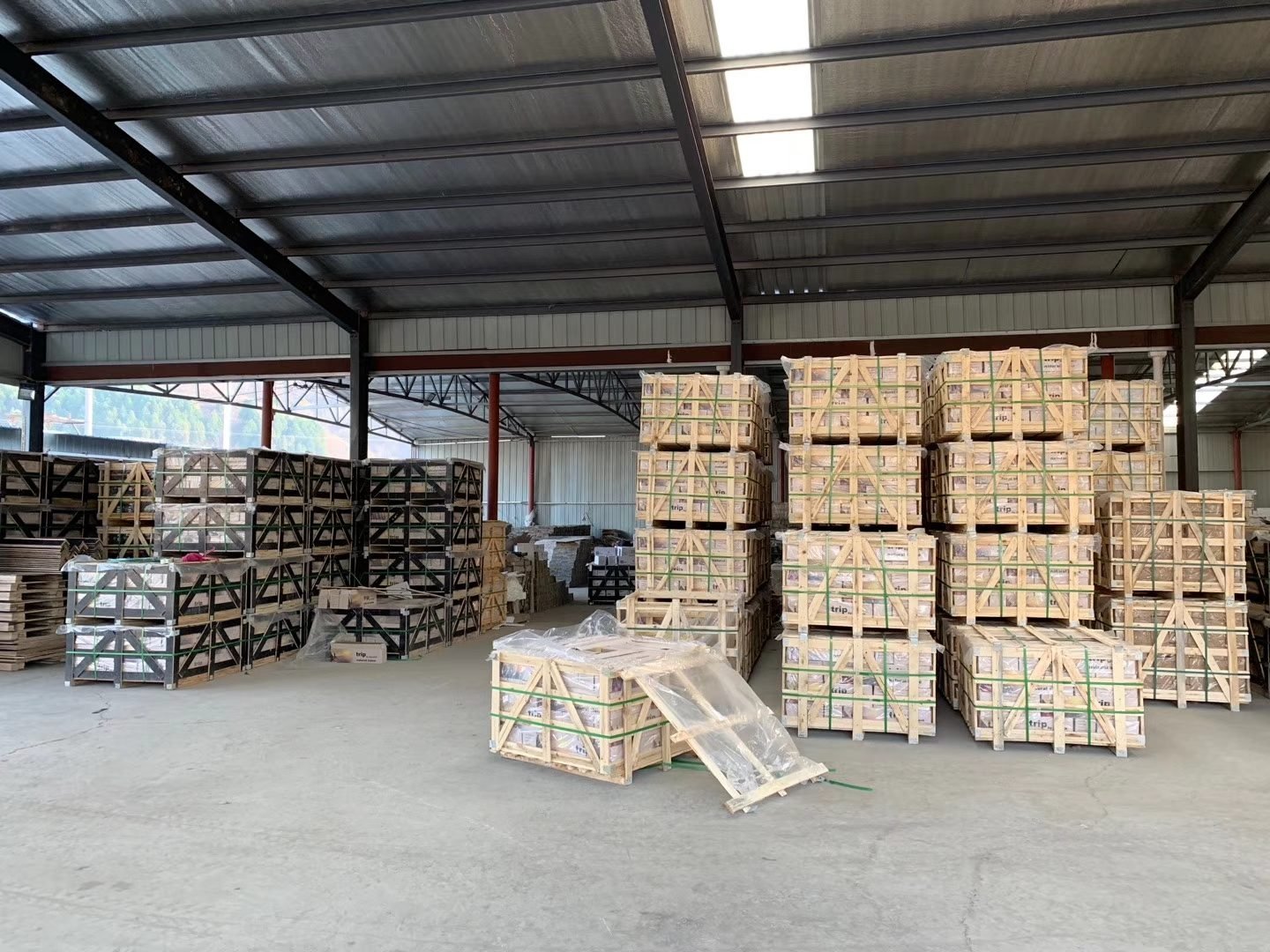
Once the shipment is inspected and any exceptions are recorded, storage discipline protects the value you just received. Natural stone is heavy, brittle at the edges and sensitive to water. Keep crates off the floor on bearers or racking, under cover, because damp timber softens and moisture reaching the stone risks staining and efflorescence. Stack crates level and square within the stacking strength the packaging was built for, and leave the 4-6 high-tensile straps on until the point of use so partial crates do not slump or spill.
Label every crate with its order, batch and arrival date and run first-in-first-out, keeping vein batches moving in order. Store crates upright as packed rather than leaning them, and keep loose veneer and split-face material from being stacked under heavy crates. Storage on the dock is temporary; storage on a job site is a different problem, covered in the guide to storing stone panels on site.
Reconcile Packing List, Invoice and Bill of Lading
The last step in receiving stone containers is documentary, and it is where shortages, mis-shipments and customs problems get caught or missed. Three documents must agree with each other and with the physical goods on the dock.
| Document | Reconcile against | Flag if it does not match |
|---|---|---|
| Packing list | Physical crate count, marks and quantities on the dock | Shortage, overage or a crate number that is not present |
| Commercial invoice | Packing list quantities, product descriptions and HS codes | Value or description mismatch that will hold customs |
| Bill of lading | Container and seal numbers, piece count, carrier delivery receipt | Broken or mismatched seal, count discrepancy |
Check the container and seal numbers on the bill of lading against the box that actually arrived, and confirm the seal was intact when opened; a mismatched or broken seal changes the liability picture. Then confirm the invoice descriptions and HS codes match the goods; for natural stone cladding these commonly fall under slate HS 6803.00.90 or quartzite HS 6802.93.11, and an incorrect code is a frequent cause of clearance delay.
Two more compliance items surface at reconciliation. First, the wooden crates and pallets must satisfy ISPM-15: debarked, pest-free, heat-treated (HT) or methyl-bromide fumigated (MB), and marked with the IPPC logo, country code, facility number and treatment code, as the USDA’s wood packaging material import requirements set out. Top Stone Panels’ thickened fumigated wooden crates are supplied ISPM-15 compliant, with the detail covered in the guide to ISPM-15 fumigation certificates for stone export. Second, confirm the shipping terms and the point risk passed, which the customs clearance guide for natural stone imports walks through alongside duty and documentation.
Frequently Asked Questions
Is it safe to open a container of stone that has been in transit?
Only after you treat the door as a potential fall hazard. A stone load can shift during ocean, road or rail legs, so stand to the side, open one door a controlled amount, and look for leaning or toppled crates before anyone enters. If the load has moved, barricade the area and plan a controlled recovery instead of climbing in.
What should I inspect a stone container against on arrival?
Inspect against the supplier’s Loading & Packaging Inspection Video and pre-shipment Photo Package. Count the crates against the packing list, check that the 4-6 strapping bands are intact, look for crushed corners and moisture staining, and photograph everything before the load moves.
Should I sign a clean delivery receipt if I see damage?
No. Write the damage, shortage or shifted-load condition onto the receipt in specific words before signing, and note that the goods are received subject to inspection for concealed damage. An unqualified clean signature can weaken a later claim against the carrier or supplier.
How long do I have to file a claim for damaged stone?
There is no single universal number. Carrier tariffs, bills of lading and supply contracts each set their own notification and claim-filing windows, so read your contract and the carrier’s terms and work to the shortest window stated there. Preserve the packaging and notify both carrier and supplier in writing as soon as damage is found.
Do the wooden crates need any special certification to import?
Yes. Wood packaging must comply with ISPM-15: debarked, pest-free, heat-treated or fumigated, and marked with the IPPC logo, country code, facility number and treatment code. Check for that mark on the crates as you devan, because non-compliant wood can be refused, re-exported or treated at your cost.
What forklift do I need to unload a container of stone?
One whose rated capacity covers the heaviest single crate at the load centre you will carry it, confirmed from the truck’s data plate rather than its model badge. OSHA’s powered industrial truck standard does not allow the rated capacity to be exceeded, and capacity falls as the load moves forward, so verify before the container arrives.
Conclusion
Receiving stone containers is a documented procedure, not a scramble when the truck backs in. Prepare the dock, open the doors expecting a shifted load, devan crate by crate, inspect against the photo package and video, sign a protecting receipt, notify within the contract window, store dry and banded FIFO, and reconcile the documents. Each step removes a way for a good shipment to go wrong or a bad one to go unproven.
Key takeaways:
- Treat the container door as a fall hazard and open it from the side, standing clear, before anyone enters.
- Confirm the forklift’s rated capacity from the data plate covers the heaviest crate; OSHA 1910.178 forbids exceeding it.
- Inspect against the Loading & Packaging Inspection Video and Photo Package, never sign a clean receipt when there is damage, and check ISPM-15 marks and HS codes during reconciliation.
Top Stone Panels ships every container under a Zero-Breakage Packaging Protocol of thickened fumigated wooden crates, 4-6 high-tensile strapping bands and container air bags rated for 26.5-ton heavy-load sea freight, and backs it with a Loading & Packaging Inspection Video and pre-shipment Photo Package. With annual capacity above 220 containers, a minimum order of one 20GP, and FOB, EXW, CIF or DDP terms from Xingang, receiving is as predictable as loading. Ask for the pre-shipment photo package and a vein batch match so your next container arrives with the record already in hand.