Natural stone fails a wet-area project in one of two ways, and only one of them is visible on the day. The visible failure is a finish that will not hold a foot when it is wet, so a bathroom, a pool coping run or a spa surround becomes something clients learn to cross carefully. The invisible failure is a stone chosen for its look that quietly drinks water, spalls in the first freeze-thaw winter, and etches or stains within a season of pool chemistry. Both trace back to the same decision: specifying natural stone for slip and durability as a measured property instead of trusting a photograph and a stone name.
This guide is for distributors, builders and specifiers who have to answer a liability question with a number. It covers how slip resistance is actually measured and which standard governs it, what the reference figures mean and where they stop, why surface texture does more work than mineral type, which natural stones suit wet interiors and pool decks, and exactly what to ask a supplier before a container is committed. It closes on the maintenance that keeps the tested grip intact for the life of the surface.
- Slip is specified against a measured coefficient of friction and a tested texture, not a stone name; two finishes of the same stone can behave completely differently when wet.
- In North America, level wet floors are specified against wet DCOF under ANSI A137.1 (managed by the Tile Council of North America), with 0.42 as the widely referenced minimum for spaces walked when wet.
- Static pendulum tests such as ASTM C1028 were de-emphasised because they overestimate safety by not reproducing the lubricating water film that actually causes slip.
- Texture decides traction: a cleft, split-face, flamed or brushed natural surface grips, while a honed or polished face sheens water into a slick film.
- Dense, low-absorption stone with a textured face covers pool decks and cold-climate wet areas; salt, chlorine and freeze-thaw are durability checks that sit alongside slip.
- Slip Is a Specification, Not a Guess
- How Slip Resistance Is Measured
- The Numbers That Matter
- Finish and Texture Do More Than the Mineral
- Which Natural Stones Work When Wet
- Pool Decks: The Highest-Risk Case
- Interior Wet Areas and Wet Rooms
- What to Ask a Supplier Before Ordering
- Specifying and Maintaining the Surface
- Questions Answered
Slip Is a Specification, Not a Guess
Every wet-area stone decision carries a liability the buyer inherits. A dry showroom sample feels grippy; the same surface, film-wet and soapy, under a bare foot at the edge of a pool, can behave like ice. The reason a photograph is not a specification is that slip is a property of the finished surface in a defined test condition, and it is measurable. Once you treat it as a number to be met rather than a look to be trusted, the whole sourcing conversation changes: you stop asking “is this stone slippery” and start asking “what is the tested coefficient of friction for this exact finish, measured wet.”
Two facts anchor the discussion. First, the stone type does not determine slip; the surface texture and finish do. A polished marble and a honed marble are the same mineral and different floors. Second, wet areas are not one category. A covered interior bathroom floor, an outdoor pool deck that gets rained on, and a spa surround that sees chlorine and body oils are three different risk profiles that call for different safety margins. Specifying well means naming the condition, then picking a finish and a tested value that clears it.
How Slip Resistance Is Measured
Slip is expressed as a coefficient of friction (COF): the ratio of the force that resists sliding to the force pressing the foot or shoe onto the surface. A higher coefficient means more grip. The complication is that the number depends heavily on how it was measured, which is why standards matter more than a single figure floating in a datasheet.
In North America the reference method for hard-surface flooring is the dynamic coefficient of friction (DCOF), measured under ANSI A137.1, a standard maintained by the Tile Council of North America. DCOF is run with the surface wet and the contaminant film present, and it captures the foot while it is already sliding, which is the moment of real interest: the peak force that starts a slip, not the force that holds a stationary shoe. Static methods that only measure the force needed to begin movement were found to overstate how safe a wet floor actually is.
The older static pendulum approach, ASTM C1028, measures a pendulum swinging across the surface and reports a static coefficient. It remained in use for years and still shows up in legacy specifications, but ASTM withdrew it from the standard list and the industry moved to DCOF precisely because the static, dry-then-shortly-wet method did not reproduce the lubricating water film that makes a real wet floor slick. If a supplier offers you only a C1028 number, that is a flag to ask whether a current DCOF was run on the same finish.
The Numbers That Matter
Three families of figures show up on real projects. Knowing what each one means, and which standard governs it, lets you read a test report instead of glancing at a headline number.
| Metric | Condition it measures | Where it is used |
|---|---|---|
| Wet DCOF (ANSI A137.1) | Grip while sliding, on a wet, contaminated level surface | North American floors walked when wet; 0.42 is the referenced minimum |
| Static COF (ASTM C1028) | Force to start sliding; overstates wet safety | Legacy specs; withdrawn as the primary reference for level floors |
| R-value (R9-R13) | Barefoot and shoe slip on ramps, wet areas | European floor classification for wet and barefoot use |
| Pendulum (PTV) | Sliding friction used for floor and paving risk screening | UK/Europe slip assessment; thresholds set by the specifier |
The single number most buyers anchor on is the DCOF of 0.42. It is worth being precise about what it is: a threshold introduced so that a level interior space expected to be walked on when wet should clear 0.42 under ANSI A137.1. It is a floor to beat, not a finish line, and it is explicitly a floor for level interior conditions. A pool deck is exterior, barefoot, frequently soaped or oiled, and often gently sloped for drainage, so a competent project treats 0.42 as the starting point and pushes the tested value higher for the actual finish. Presenting 0.42 as a guarantee stamped on a specific panel would be wrong; present it as the reference and require a measured value for the product you are ordering.
European practice reaches the same conclusion by a different route. UK health-and-safety guidance on slips treats wet and contaminated floors as a measurable risk and screens surfaces with the pendulum test, while barefoot and wet-area flooring in continental specifications is often graded with R-values running from roughly R9 for dry general areas to R12-R13 for shower rooms and pool edges. The practical translation for a buyer shipping into those markets is to ask the test lab which system the project expects and to confirm the chosen finish against it, rather than assuming a US DCOF figure transfers unchanged.
Finish and Texture Do More Than the Mineral
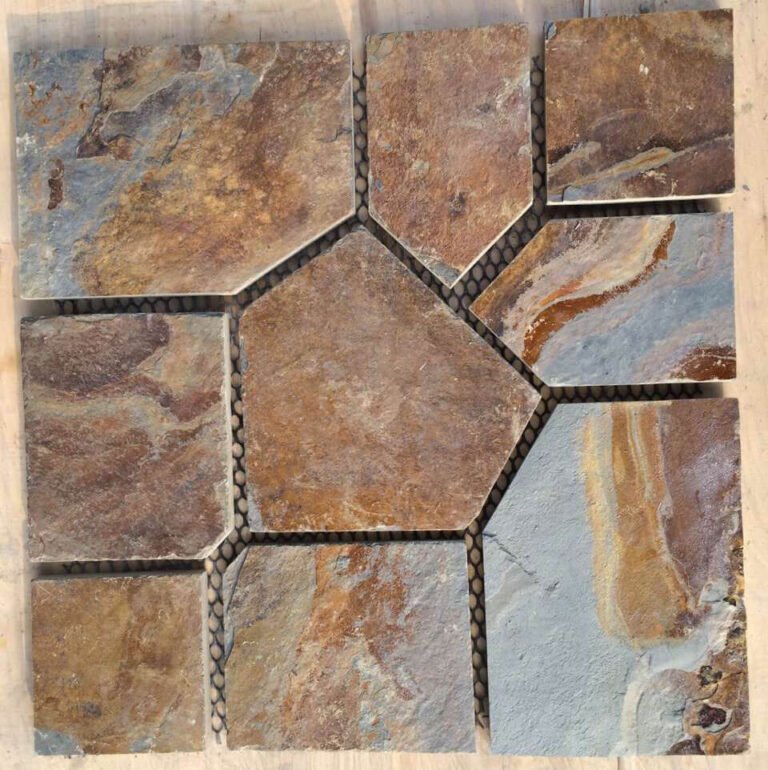
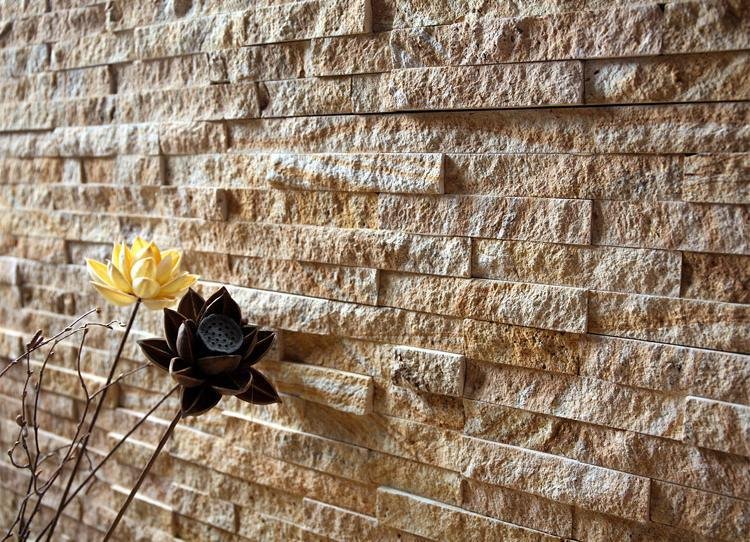
Here is the part a distributor can sell on: slip in wet conditions is mostly a story about the surface, not the stone. When a thin film of water sits between a smooth face and a shoe or a bare foot, it acts as a lubricant, and a flat, polished surface lets that film hold and shear, which is why a polished floor feels treacherous wet. A textured surface breaks the film. The raised and recessed relief of a natural cleft face, a split face, a flamed or a bush-hammered finish lets water escape into the hollows and gives the foot asperities to bite, so mechanical grip survives the wet.
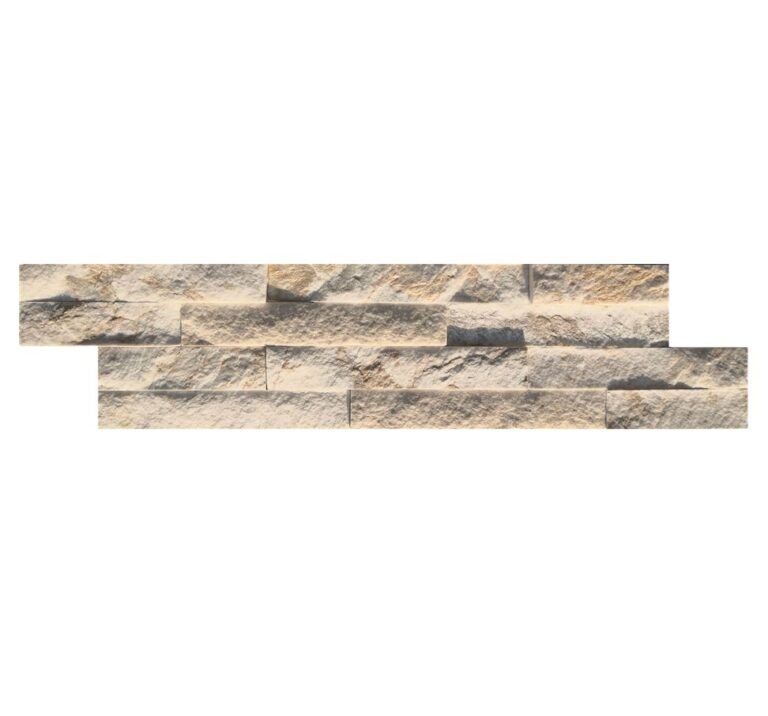
That is why the safe wet-area finishes cluster together: natural cleft and split-face slate, flamed or bush-hammered quartzite and granite, honed-with-a-tooth sandstone, and the random raised relief of mesh-backed crazy paving. The risky ones cluster too: polished marble, high-gloss honed surfaces, and any face that has been filled or waxed to a smooth sheen. The same block of stone can be made safer or more dangerous entirely by how it is finished, which is exactly why a test report has to name the finish, not just the stone.
Which Natural Stones Work When Wet
Once texture is settled, mineral choice becomes a durability question, because wet areas are also the places where the wrong stone quietly degrades. Density and low water absorption sit at the top of the list, since almost every downstream failure follows from how much water the stone takes in. Dense slate and quartzite resist absorption, so they resist staining and resist the freeze-thaw cycle that spalls a porous stone from the inside as trapped water turns to ice. That is the same logic a wet floor shares with a cold-climate exterior, and the material science is covered in the guide to water-absorption rates for stone panels.
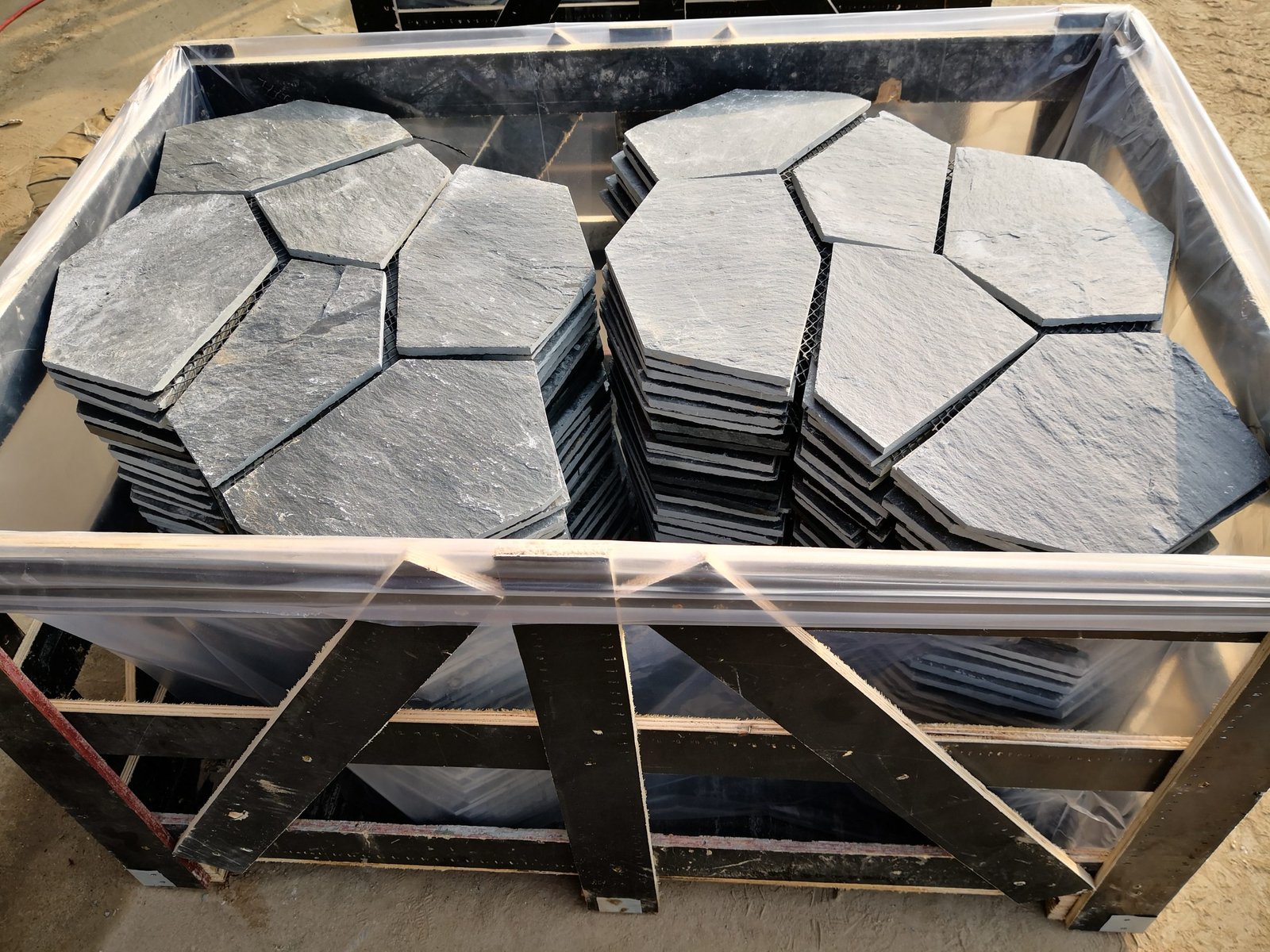
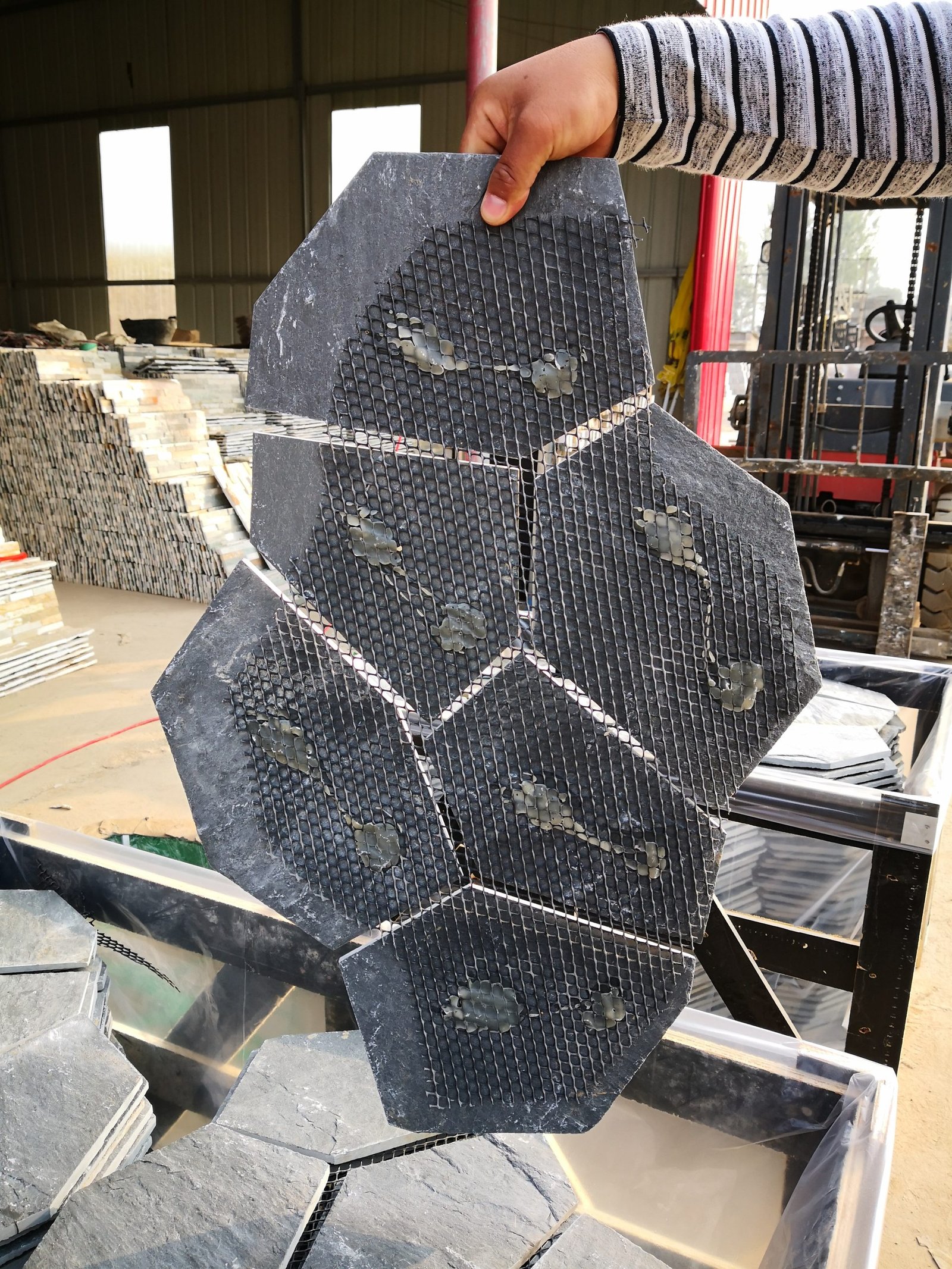
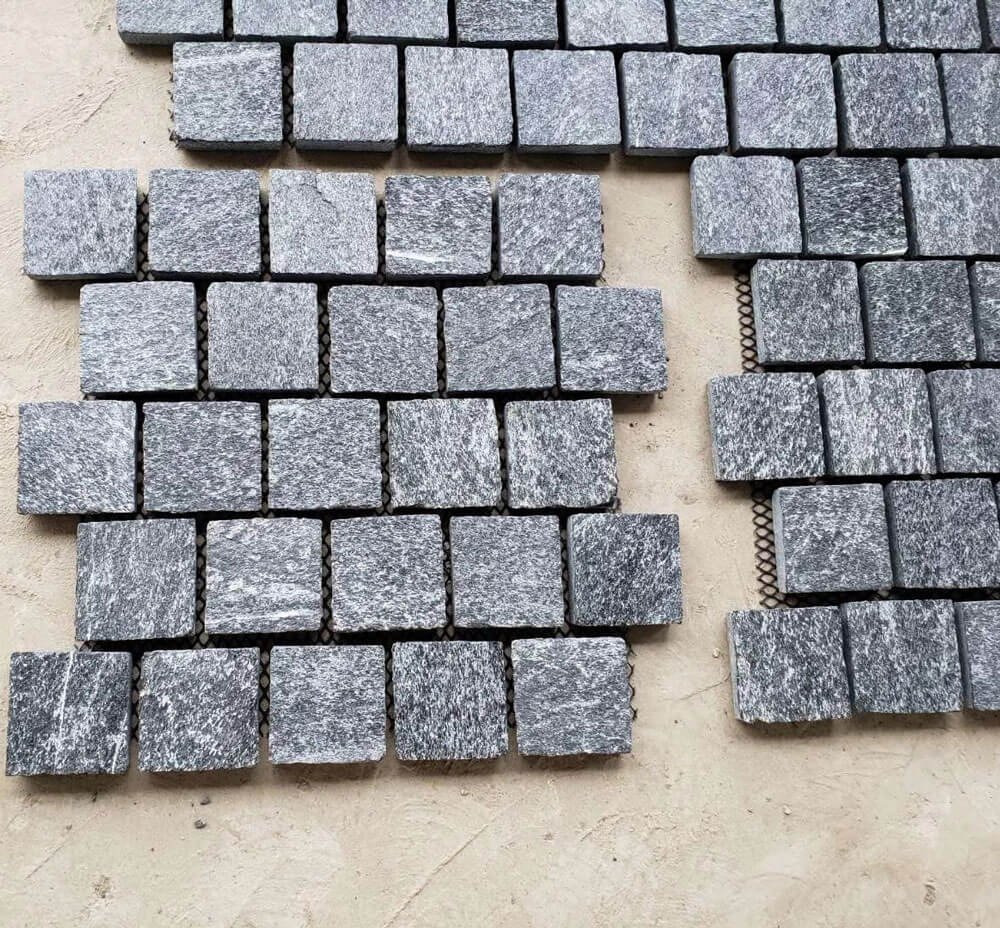
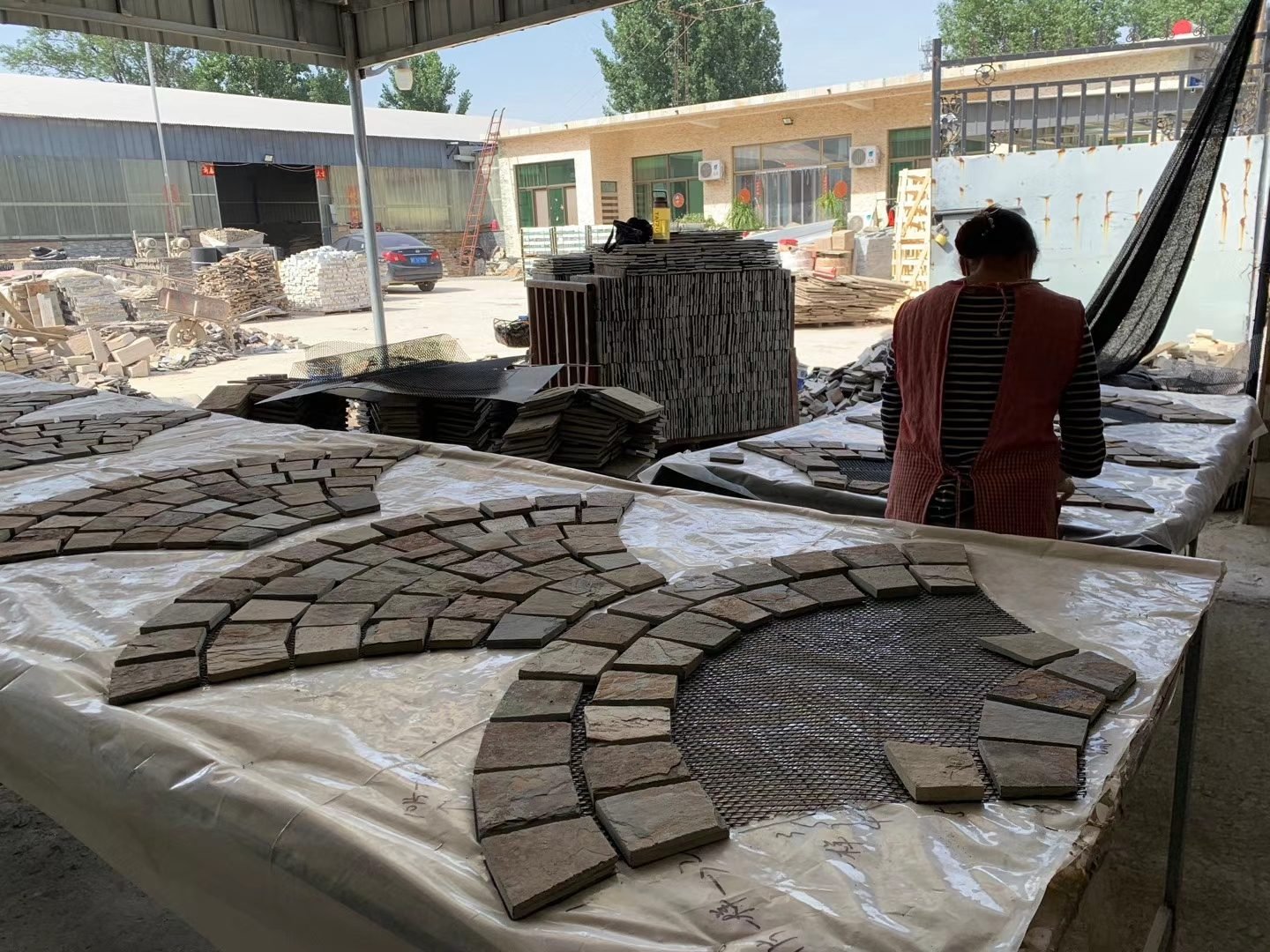
Top Stone Panels flagstone and crazy paving ship as mesh-backed, high-density slate and sandstone with a naturally cleft surface, which pairs the two things a wet area needs at once: mechanical grip from the texture, and the low-absorption, salt-spray and humidity resistance that suits coastal and Australian pool surrounds. The random, hand-laid relief of a crazy-paving field is genuinely grippy under wet feet, not merely decorative.
Soft or calcium-based stone is where a wet-area spec goes wrong. Marble etches against acidic cleaners and pool chemistry, many limestones absorb readily and stain, and a polished finish on any of them is the worst case for slip. Where a warmer, softer look is wanted it belongs outside the wet zone or above the splash line, sealed and maintained; for the surfaces that actually get walked wet, dense textured stone is the defensible answer.
Pool Decks: The Highest-Risk Case
A pool deck stacks every adverse condition at once, which is why it deserves its own margin. It is barefoot, so the footwear factor that helps a gym or a porch is gone. It is repeatedly wet from splash, backwash and rain. It carries contaminants no indoor floor sees: sunscreen, body oils, algae and chlorine or salt from electrolysis, all of which make a film slicker than water alone. It is usually sloped a few degrees for drainage, so there is a gravity component pulling toward the pool. And outdoors, it takes the widest temperature swing on the site.
The specification that survives that gauntlet is a textured, dense, free-draining surface with a measured wet coefficient well clear of the 0.42 interior baseline, laid with a positive fall away from the water so standing water cannot collect and turn into a film. Cleft slate, flamed quartzite and a mesh-backed random flagstone field all give the drainage-and-grip combination. The deck is also the place where a real movement joint between the deck and the coping is not optional; concrete pool-deck flatwork travels with the seasons and will shear a rigidly bedded edge, a failure mode detailed in the guide to pool coping and deck integration and in the wider flagstone pool-decking installation.
Layout is part of safety too, because joint lines and a random pattern change how water sheets off and where it ponds. Choosing a mesh-backed random field versus larger sawn units is a genuine layout decision; the slip-relevant point is that a pattern with continuous drainage falls beats a large-format slab that can hold a sheet of water.
Interior Wet Areas and Wet Rooms
Indoor wet areas are a lower-risk but higher-frequency case. A bathroom floor, a curbless wet room, a spa, a steam room or a hotel shower is walked barefoot and repeatedly soaked, and it sits at a stable temperature where freeze-thaw is not the concern but soap, shampoo residue and standing water are. Here the 0.42 wet-DCOF baseline for level spaces walked when wet is the correct reference, and the texture logic is identical: a honed slate or a fine-grain textured stone clears the bar comfortably, while a polished or tightly filled face does not.
The wall meeting that floor has its own drainage discipline. A wet room fails more often through water behind the finish than through surface slip, so the tanking and fall detail behind a clad wet area matters as much as the coefficient; that waterproofing layer is treated in the guide to stone veneer waterproofing for wet areas. And where a pool surround climbs a wall at the waterline, the cap and edge detail that keeps that transition both safe and sealed is covered under caps and coping as finishing components.
What to Ask a Supplier Before Ordering
Slip resistance is bought with a paperwork trail, so the distributor’s job is to ask for evidence the buyer can hand to a specifier or an insurer. The short list of questions separates a real supplier from a catalogue.
- Which standard and method is the number measured against: wet DCOF under ANSI A137.1, a pendulum result, or an R-value class, and for which market is the project being signed off?
- Does the test certificate name the exact finish being ordered, not just the stone species, and was it run wet with the relevant contaminant?
- For pool and coastal decks: what is the water-absorption rate, and is the stone rated for the freeze-thaw and salt exposure the site will see?
- For colour-matched surrounds: can coping, deck and any wall cladding ship from one batch vein so the palette stays consistent across the wet zone?
- Can a physical sample be tested or mock-up walked in the intended footwear before a full container is committed?
The vein-consistency point is a manufacturing reality rather than a marketing line: batch-matched selection from a single quarry vein holds colour transition within a tight band so a deck, its coping and any adjacent cladding read as one palette. Where a wet project also needs that visual continuity alongside slip and density, a manufacturer that locks the vein per order gives the specifier a defensible answer, and the same batch logic is why a wall-cladding surround can be kept coherent, as in the salt-spray resistance guide for coastal projects.
Specifying and Maintaining the Surface
Specifying does not stop at the coefficient. A wet-area floor only keeps the grip it was tested with if it is maintained, because the failure mode of textured stone is the opposite of the one people fear: not that it wears smooth, but that its hollows fill. Grout haze, a film of soap scum, algae in a shaded deck, or an over-applied sealer that glazes a cleft face can all reduce a grippy surface to a slick one while it looks perfectly clean. A sealer, in particular, should be chosen so it darkens and protects without bridging the texture with a glossy skin.
The routine that preserves slip is short: rinse pool decks to move oils and sunscreen before they build, clean wet rooms with a pH-neutral stone cleaner rather than an acidic or waxing product, and keep drainage falls clear so water does not sit. On a textured natural surface that care costs almost nothing and keeps the tested grip intact for the life of the floor.
For the buyer building a wet-area or pool line, the practical move is to carry dense, low-absorption, naturally textured stone as the default and quote the measured coefficient honestly. Mesh-backed flagstone and crazy paving in split slate and sandstone cover the deck, coping bed and coastal surround in one family, with the grip coming from the cleft surface rather than an added treatment. That product logic, sourced from one vein and specified to a tested wet figure, is what turns slip from a guess into a line item a specifier can sign.
Frequently Asked Questions
Is natural stone slippery when wet?
It depends on the finish, not the mineral. A honed or polished face can sheen a film of water and become slick, while a cleft, split-face, flamed or brushed texture gives mechanical grip and stays far safer underfoot when wet.
What slip number should a wet-area floor meet?
Level interior spaces walked when wet are commonly specified at a wet DCOF of 0.42 or higher under ANSI A137.1. Pool decks and barefoot wet areas are higher risk, so treat 0.42 as a minimum and require a tested value for the exact finish you are buying.
Which natural stone is best for a pool deck?
Dense, low-absorption stone with a textured face: cleft or split slate, flamed or bush-hammered quartzite, and mesh-backed flagstone give grip, drain well, and tolerate salt, chlorine and freeze-thaw better than soft or polished stone.
Does the stone type guarantee slip resistance?
No. Two finishes of the same stone can differ widely. Specify a measured coefficient of friction and a tested texture for the exact product, and confirm it against the finished surface rather than the species name.
Why was the ASTM C1028 pendulum test set aside for level floors?
It reports a static coefficient measured before sliding, which overstates wet safety because it does not reproduce the lubricating water film that causes real slips. ANSI A137.1 DCOF, measured wet and while sliding, is the current reference for level floors walked when wet.
Conclusion
Slip resistance for natural stone is a measurable property, and the moment a buyer stops asking whether a stone is slippery and starts asking for a wet DCOF on the exact finish, sourcing becomes defensible. The reference figure for level spaces walked wet is 0.42 under ANSI A137.1, static pendulum numbers like ASTM C1028 have been set aside because they flatter a wet floor, and European buyers grade the same risk with R-values and the pendulum. What actually keeps a foot is texture on a dense, low-absorption stone; the mineral then answers the durability side, from salt and chlorine to freeze-thaw.
- Specify a measured coefficient for the exact finish, run wet and contaminated, not a value for a different surface of the same stone.
- Treat 0.42 DCOF as a floor for level interior wet spaces; push higher for barefoot pool decks and slopes.
- Choose a textured, dense face: cleft, split, flamed or brushed, on low-absorption slate or quartzite.
- Design pool decks with positive drainage and a real movement joint; maintain textured stone so grip does not fill in.
- Order the surround from one vein so deck, coping and any wall cladding stay colour-consistent alongside the tested grip.
Specifying stone for a pool deck, wet room or coastal surround and need a tested, textured, low-absorption line you can put numbers against? Reach out to the Top Stone Panels team and we will match the finish and the evidence to the wet-area condition.