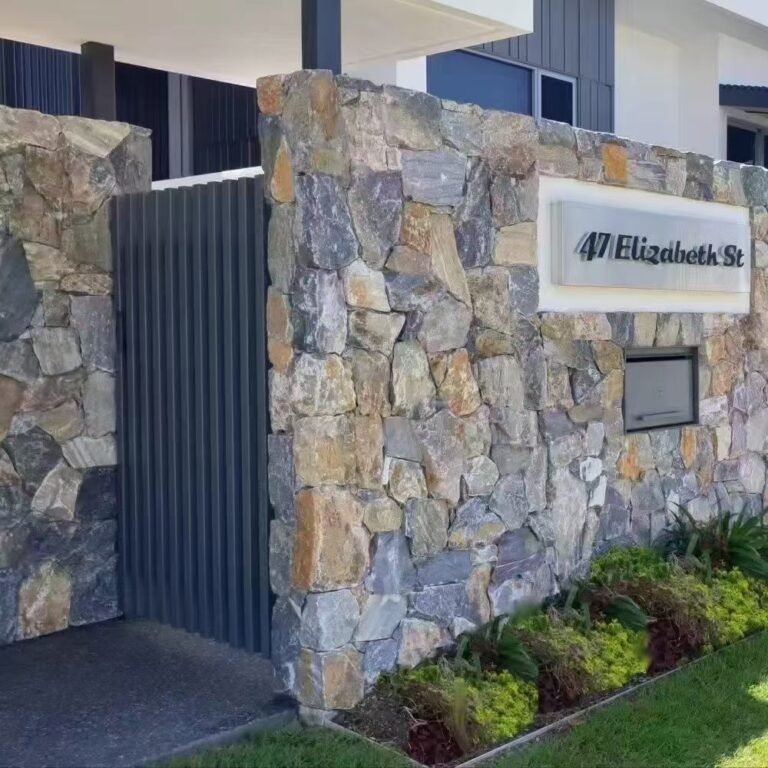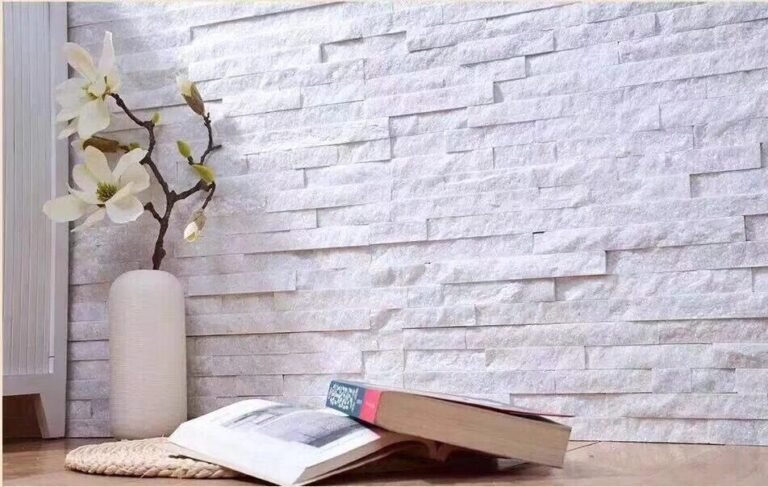
Flagstone is the pool deck material that walks the line between looks and grip. The natural cleft surface that makes slate and quartzite flagstone pleasing to look at also makes it one of the few hardscape materials that stays non-slip when wet — the exact quality a pool surround needs, where bare feet, wet swimwear, chlorine, and water spray all meet at the same spot. It has been used as pool surround and pathway stone long enough that the factory catalog at Top Stone Panels lists the flagstone line by its pool application: non-slip, salt-resistant, mesh-backed random sheets made for pool surrounds, driveways, and patio walkways.
This guide walks the whole job: which flagstone grades to choose, what the base needs to look like, how the stone goes down, how joints and edges get finished, and what maintenance looks like once the water is in. If you are a contractor or distributor quoting a pool project, the last section carries the coverage math you can use the same day.
- Natural cleft flagstone is slip-resistant because it is rough at the surface level — the same texture that handles wet feet and chlorine spray without extra coating.
- Slate and dense quartzite are the right families for pool decks: low water absorption, freeze-thaw strength, and salt-spray resistance for chlorinated or salt water.
- Base preparation matters more than the stone: compacted, sloped, well-drained base prevents shifting and standing water that creates algae.
- Wide natural gaps with polymer-modified jointing sand beat tight mortar joints around pools — moving water drains instead of pooling.
- Order with coverage math in hand: measure the deck area plus the coping strip, add 8-10% waste for cutting, and confirm format weight for freight and handling.
Why Flagstone Around a Pool
Pool decks fail in two ways: they get dangerously slick, or they get badly stained. Flagstone answers the first because of how natural stone is split. Slate and quartzite flagstone sheets are cleft, not polished — the surface opens along the natural cleavage plane, so it is covered in tiny peaks and plateaus. That micro-texture grabs even wet soles. The non-slip, salt-resistant wording in the Top Stone Panels flagstone catalog is not decoration; it describes the same physical property the stone is shipped with.
The staining question is handled by density. Water absorption is the number that decides whether a pool surround will darken, flake, or sprout growth. Dense slate and quartzite hold absorption at or below roughly 0.5%, which is why the factory’s documented performance envelope covers salt-spray and high-humidity environments along with the -30°C to +50°C temperature swing. A stone that does not drink water has little to freeze, little to hold chlorine residue in, and little for algae to feed on at the surface.
Compare that with the alternatives. Poured concrete needs texture added or becomes slick when wet; paver systems depend on surface coatings; travertine, while porous, is often used in warm climates but needs filling and sealing. Flagstone is the material that arrives slip-resistant and stays that way — no coating to refresh, just the cleft surface doing its job.
Stone Selection: Slate, Quartzite, and What to Avoid
Not every natural stone belongs next to a pool. The selection rule is simple: low absorption, high density, and a naturally textured surface. That narrows the catalog to two families.
Slate flagstone
Slate is the workhorse of pool surrounds. It splits into stable, low-porosity sheets, holds its color through chlorinated water and winter, and its cleft surface is genuinely non-slip. Colors run from grey and black through green and rusty red, so a deck can be one quiet tone or mixed for a natural field. At the Top Stone Panels quarry in Yixian, slate runs through the flagstone and crazy paving line at a production capacity of 30,000 m² per month.
Dense quartzite flagstone
Quartzite is the premium choice: harder, denser, sometimes with a slight sparkle. It resists scratching and is nearly impervious in dense grades, which makes it excellent for high-traffic poolside traffic and for decks that will see furniture dragged across them. It costs more, and it cuts harder, so budget for sharper blades and a slower install.
What to avoid
- Soft, high-absorption sandstone or limestone near a pool — they absorb chlorinated water, darken unevenly, and can spall in freeze-thaw climates.
- Glossy or honed finishes anywhere within splash range — polished stone is a slip hazard when wet, no matter how pretty.
- Thin veneer leftovers used as flooring — a wall panel is not rated for foot traffic. Deck stone must be a flooring-grade thickness; confirm this with the supplier.
| Option | Slip resistance when wet | Absorption | Pool deck verdict |
|---|---|---|---|
| Cleft slate flagstone | High — natural cleft texture | Low (≈0.5% or below in dense grades) | Best all-round choice |
| Dense quartzite flagstone | High — hard cleft surface | Very low | Premium, heavy-traffic choice |
| Travertine pavers | Medium — depends on fill and sealer | Porous | Warm-climate option, needs filling |
| Poured concrete | Low unless textured or coated | Medium | Slick risk; coating refresh cycle |
| Polished/honed stone | Low — slip hazard when wet | Varies | Avoid near water |
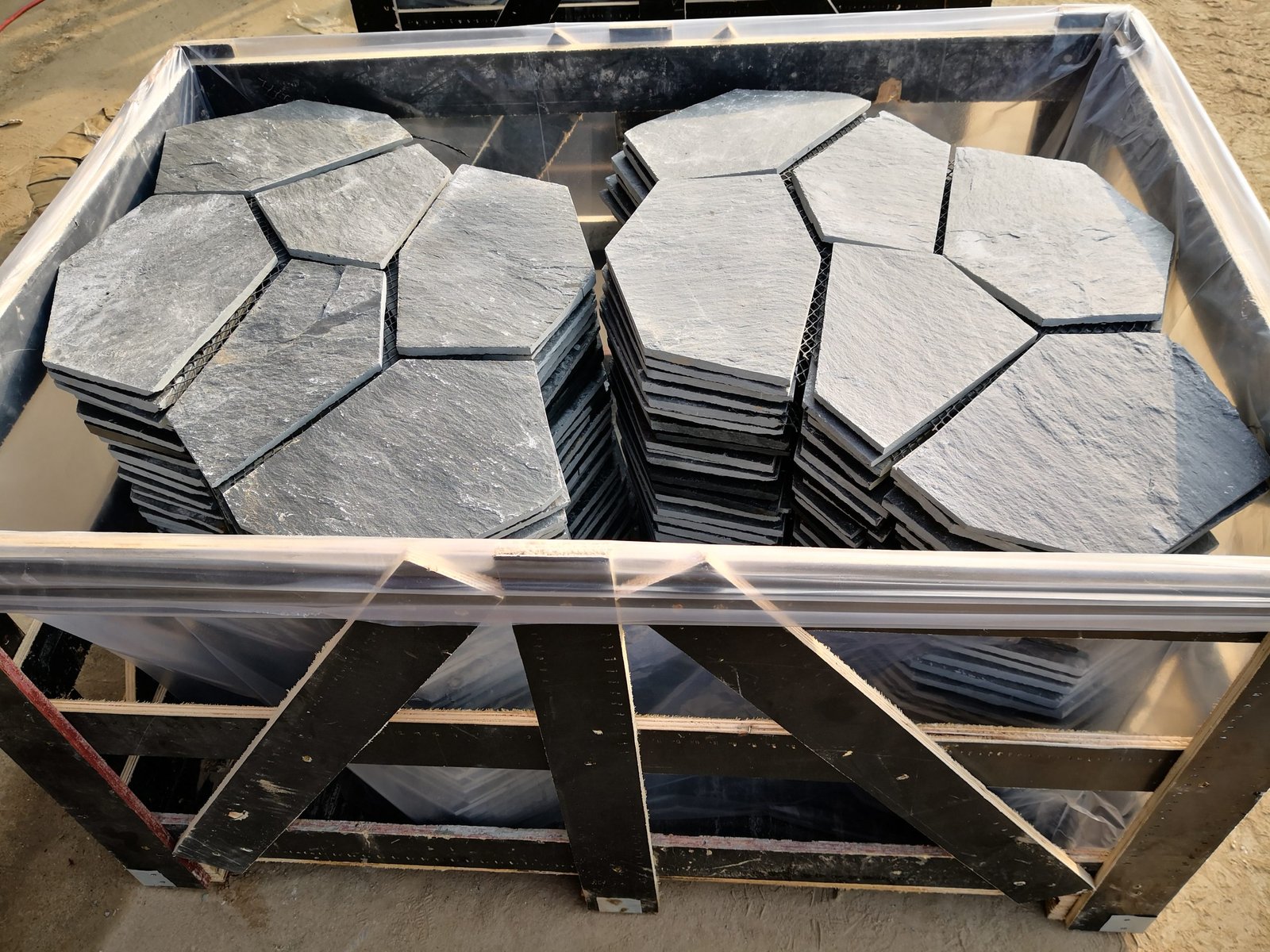
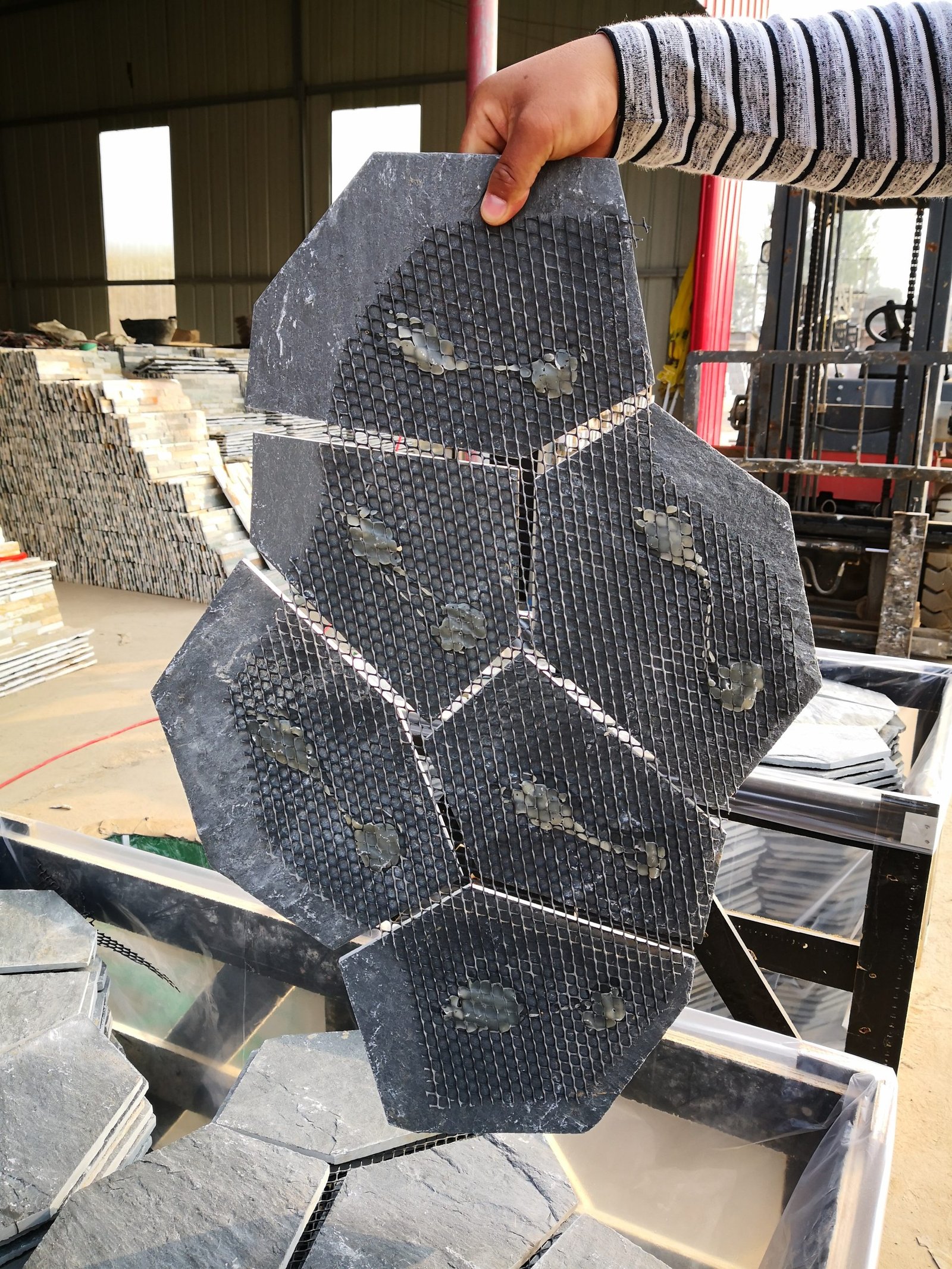
If you are sourcing container quantities, the flagstone and crazy paving product line at Top Stone Panels ships mesh-backed random-geometry sheets with batch-specific vein selection, starting at one 20GP container. Physical samples travel in 1-3 days — worth ordering before you commit a deck color to a container.
Base Preparation: Slope, Compaction, Drainage
Every slipped flagstone, every mushrooming gap, every pool of water that grows algae after a rain — most of those failures were decided at the base, months before the stone went down. The base has three jobs: carry the weight without settling, shed water fast, and hold the stone in place through thermal movement.
The slope
Flagstone decks should shed water away from the pool, roughly 1.5-2% slope (about 2 cm per meter, or 1/4 inch per foot in industry shorthand). If you are reading this with a straightedge on a new deck, that slope is what keeps the surface dry between swims — a dry flagstone deck is a non-slip deck.
Compaction
Excavate below the finished grade and pour a compacted granular base — commonly 10-15 cm of crushed stone or road base, compacted in lifts. The goal is a firm, stable platform that will not pump up after the first heavy rain. On expansive or frost-prone soils, plan for a thicker base and consider fabric separation to keep fines from migrating up.
Drainage around the pool
The deck is only one layer of the water story. Verify that the pool coping drains, that the base stone ties into a drainage path or French drain at the perimeter, and that splash-and-spill water has somewhere to go instead of ponding on the surface. Standing water is what turns a fine flagstone deck into a mossy one.
For the same reason, the base and jointing rules for flagstone pavers apply to a pool deck almost word for word — the compacted-bed approach shown there is the one used on pool surrounds.
Laying the Flagstone: Patterns and Fit
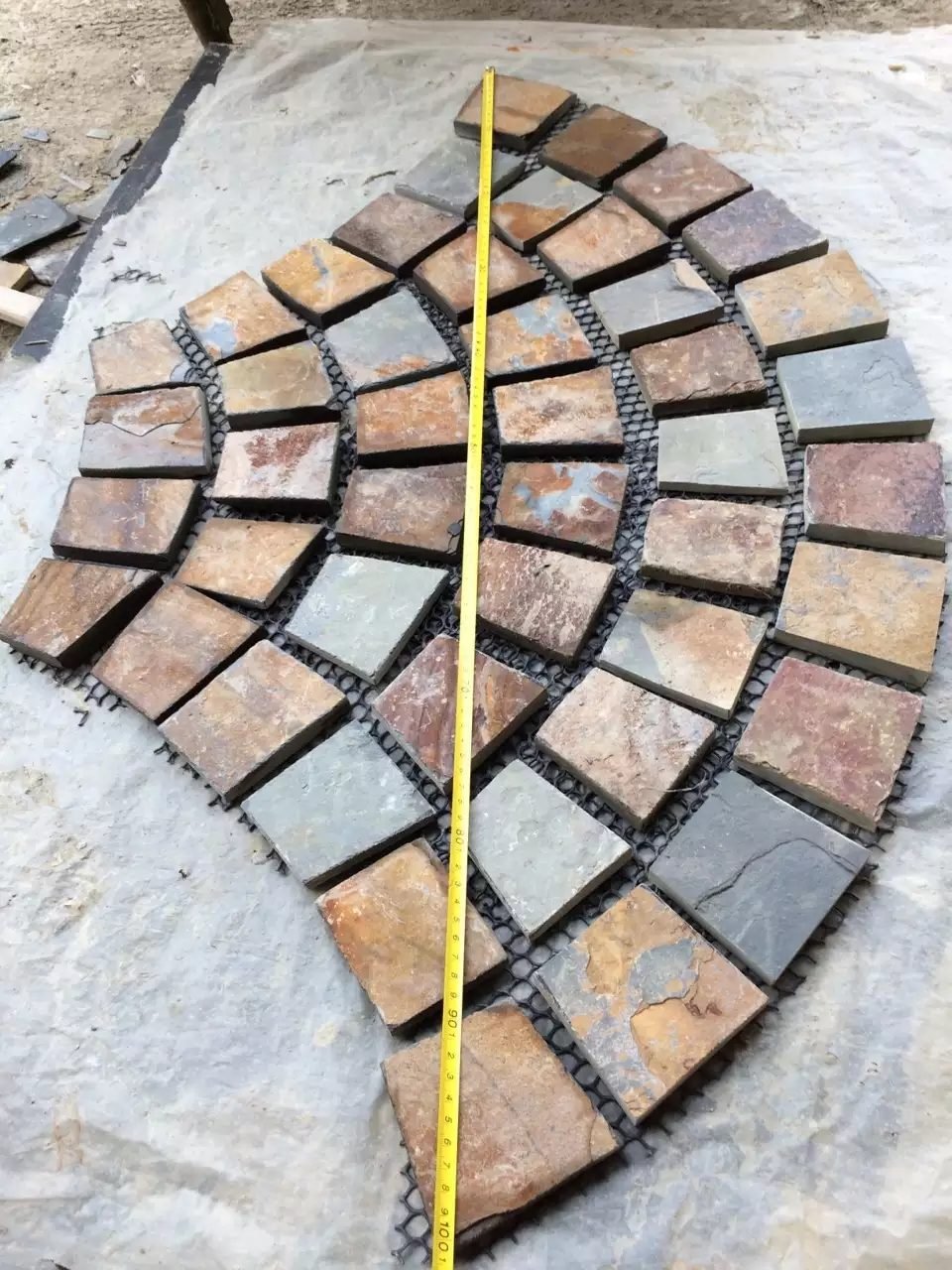
Pool decks look best when the stone reads as a single natural field, not a tile grid. Mesh-backed flagstone sheets make that easy: the random geometry is pre-distributed on fiberglass mesh, so a crew gets the random layout without hand-sorting stones, which also cuts installation labor noticeably. The trade-off is that sheet edges still need cutting at the perimeter and around pool fittings.
Dry lay first
Arrange the sheets before any bedding goes down. This is the moment to shuffle pieces for color and shape balance, mark cuts, and decide where the pattern flows. Moving dry stone is fast; moving wet mortar is not. The dry-fit method used for veneer panels transfers directly: layout, adjust, mark, then commit.
Bedding
With a compacted base, the stone can sit in a bed of coarse sand (3-5 cm), or in a thin mortar bed where the deck will see heavy traffic or vehicles. Sand bedding lets the deck flex slightly with ground movement; mortar bedding gives a rigid, permanent surface. Decide based on climate and whether the deck carries anything heavier than loungers.
Cutting around pool fittings
Skimmers, lights, return jets, and the coping edge all need clean cuts. Use a masonry blade on a wet saw or an angle grinder with water control; slate cuts cleanly, quartzite demands a harder blade. Cool the cut continuously — overheating a split face dulls the texture you brought in for grip.
Jointing and Edging: Sand vs Mortar
The gaps between flagstone sheets are functional, not decorative. Around a pool, they should drain. That makes polymer-modified jointing sand the default recommendation: it locks the joint from the top while still letting water pass. Mortar joints are handsome and permanent, but they hold water in the gaps, and in freeze-thaw climates water trapped in mortar joints is the classic source of heaving and cracking.
| Joint type | Water behavior | Freeze-thaw | Best for |
|---|---|---|---|
| Polymer-modified sand | Drains through | Flexible, tolerant | Most pool decks |
| Plain sand | Drains; can wash out | Needs topping up | Low-traffic areas, budget jobs |
| Mortar | Holds water | Risk of heave | Mild climates, formal look |
Finish the perimeter with a clean edge: a coping stone line, metal edge restraint, or a natural stone border that locks the field in place. Whatever you choose, the edge treatment is what keeps the outer sheets from creeping over years of feet and water.
Sealing and Maintenance Around Chlorine and Salt
The honest answer is that cleft flagstone does not need a sealer to be slip-resistant — that grip comes from texture, not chemistry. Sealing is about the surface’s second enemy: staining and biofilm. Chlorine splash, fertilizer, leaf tannin, and sunscreen residue all stain porous stone over time.
If you seal, use a penetrating, breathable sealer designed for natural stone and outdoor use. Penetrating sealers line the pores without coating the surface, so they reduce staining while leaving the cleft texture — and the grip — intact. Skip film-forming or glossy sealers within splash range; a glossy coating on wet stone is a slip hazard, and it traps moisture in the deck.
Maintenance is a short list:
- Sweep regularly — sand and grit abrade the surface underfoot and carry dirt into joints.
- Rinse chlorine-heavy splash with fresh water when practical.
- Reapply jointing sand where it washes or blows out.
- Treat algae with a stone-safe outdoor cleaner before it establishes in shady, damp joints.
- Re-seal every 2-3 years in harsh, chlorine-heavy or coastal conditions; every 4-5 years elsewhere.
The same sealing logic applies to any split-face stone around water — the sealing guide for natural stone veneer goes deeper into breathable vs barrier products if you have a vertical stone element at the pool too.
Coverage Math and Ordering
Pool deck quantity mistakes are cheap to prevent and expensive to fix, because the fix means reordering a second shipment. The math is four steps:
- Measure the deck area. For a straightforward rectangle, length × width. For a shaped deck, break it into rectangles and triangles and add them.
- Add the perimeter strip. Most pools need a coping band around the waterline. Walk the perimeter, multiply by the planned strip width, and add that to the deck area.
- Add waste for cuts. Random flagstone needs 8-10% extra for perimeter cuts, fittings, and breakage — more if the deck is heavily shaped.
- Convert to your ordering unit. Flagstone is quoted per m². Confirm whether the quote covers the mesh-backed sheets as-is or includes sorting and corner pieces.
Example: a 10 m × 5 m pool with a 1.5 m walkway on the long sides and 3 m at each end gives a deck of roughly 10 × 5 + 2 × (10 × 1.5) + 2 × (3 × 1.5) ≈ 50 + 30 + 9 = 89 m². With 10% waste, order about 98 m². Wholesale flagstone orders at Top Stone Panels start at one 20GP container with a 30,000 m²/month production capacity behind them — a container comfortably covers the normal residential job and most commercial pool projects.
Before placing a container order, verify two things with the supplier: format weight per m² for freight and handling, and the exact backing (mesh-backed vs loose). The flagstone buyer’s guide walks those procurement details, and for the wider patio and pathway context the flagstone types and sizes overview shows how pool decking stone compares with other grades.
FAQ
Is flagstone slip-resistant around a pool?
Natural cleft flagstone is one of the most slip-resistant hardscape surfaces available because the split face is microscopically rough and stays that way without coatings. The quality belongs to the stone itself — a cleft slate or dense quartzite deck grips wet feet by texture, not by a coating that can wear off.
What is the best flagstone for a pool deck?
Cleft slate and dense quartzite are the two best families: both hold water absorption at or below roughly 0.5% in dense grades, which gives the freeze-thaw strength and salt-spray resistance a pool surround needs, and both keep a naturally textured, non-slip surface.
Should flagstone pool decks have sand or mortar joints?
For most pools, polymer-modified jointing sand is the better choice: the joints drain water instead of trapping it, and in freeze-thaw climates sand joints flex instead of heaving. Mortar joints look formal but hold water and risk cracking in cold climates.
Can flagstone be used around a saltwater pool?
Yes. Dense slate and quartzite are salt-spray resistant and the stone’s low absorption keeps salt residue from soaking into the surface. Rinsing the deck with fresh water periodically and re-sealing every few years keeps the surround clean.
Do you have to seal flagstone around a pool?
Not for slip resistance — the cleft texture supplies that. Seal only if staining is the concern, with a penetrating breathable sealer that lines the pores without coating the surface. Avoid glossy film-forming sealers near water, which become slippery and trap moisture.
How much flagstone do I need for a pool deck?
Measure the deck area, add the perimeter coping strip, then add 8-10% for cuts and breakage. A 10 × 5 m pool with a 1.5 m walkway on the long sides needs roughly 89 m² of deck plus waste — about 98 m² ordered.
Conclusion
A flagstone pool deck rewards the basics: the right stone, a slope that drains, a base that will not settle, and joints that let water move. Get those right and the deck delivers the one thing a pool surround can never fake — a surface that grips wet feet with its own texture, rated for chlorine, salt spray, and freeze-thaw, with no coating calendar to babysit.
Key takeaways:
- Choose cleft slate or dense quartzite flagstone — low absorption, salt-resistant, non-slip by nature.
- Slope the deck 1.5-2% away from the pool and give the base a well-compacted, well-drained bed.
- Dry-lay sheets first, cut around fittings with water-cooled blades, and prefer polymer sand joints that drain.
- Seal only with breathable penetrating products, if at all; glossy sealers are a slip hazard near water.
- Order from a supplier that ships flagstone in mesh-backed random sheets by the container, with samples before the buy.
Quote the deck with the coverage math above, then verify the stone on a physical sample before you commit a container. Contact Top Stone Panels for flagstone samples shipped in 1-3 days, and check the flagstone product line for the pool-surround sheet format.