A pool rarely fails at its center. It fails at the edges, at the handful of places where three different trades and three different materials have to agree: the wall that holds the water, the cap you step over, and the deck you walk barefoot to the towel rack. Architect and builder treat each as its own line item, and the finished surround shows it: a coping that clashes with the deck, a wall clad in a stone that bears no relation to either, and a hairline crack where a movement joint should have been.
Integration is the discipline of designing those surfaces as one system instead of three purchases. This guide is for landscape architects, specifiers and the distributors who supply them. It covers how a single stone family and vein ties coping, deck and cladding together, which materials actually survive pool chemistry, how slip is specified, why movement joints are where these projects quietly fail, and how to detail the wall below the coping and the transitions around it. It closes on packaging the whole surround as one coordinated order.
- Integration means designing coping, deck and wall cladding as one continuous system, not three separate buys that happen to sit next to each other.
- Order all three from a single quarry vein; Batch-Specific Vein Selection holds 95 percent or greater color consistency so the surround reads as one palette.
- Choose dense, low-absorption, salt- and chlorine-tolerant natural stone; slate, quartzite and flagstone suit pool surrounds, porous or calcium-based stone does not.
- Specify slip against the wet DCOF reference minimum, and lean on the naturally high slip resistance of a textured flagstone or split face.
- The coping-to-deck movement joint, not the stone, is where these projects fail; the concrete deck moves a lot and the joint must absorb it.
What Integration Means at the Water’s Edge
Three surfaces meet at a pool. The coping is the cap that finishes the top edge of the pool structure: it seals the waterproofing membrane, gives you a barefoot edge to step over, and closes off the shell. The deck is the horizontal surround you walk on. The wall cladding is the vertical face, whether that is a raised spa wall, a sunken pool wall, a planter, or a water feature spilling into the basin. In a poorly specified project each of those is its own product from its own source, and the result is a surround that looks assembled rather than designed.
Integrated design treats them as one gesture. The coping visually and physically links the wall to the deck; the deck material should feel continuous with the coping; the wall cladding should relate to both. When those three agree on stone type, color family and joint rhythm, the pool reads as architecture. When they do not, the eye catches every mismatch, and the surround looks like a set of purchases regardless of how good each individual product is.
One Stone Family, One Palette
The single most effective integration move is sourcing coping, deck and cladding from one quarry vein. Natural stone varies vein to vein, and a project that buys a “grey” coping from one lot and a “grey” wall from another will not match, even when both are nominally the same stone. Consistency is not a marketing claim here, it is a sorting discipline: batch-matched selection holds color transition within a tight band across the whole order so that the surround reads as one palette rather than three.
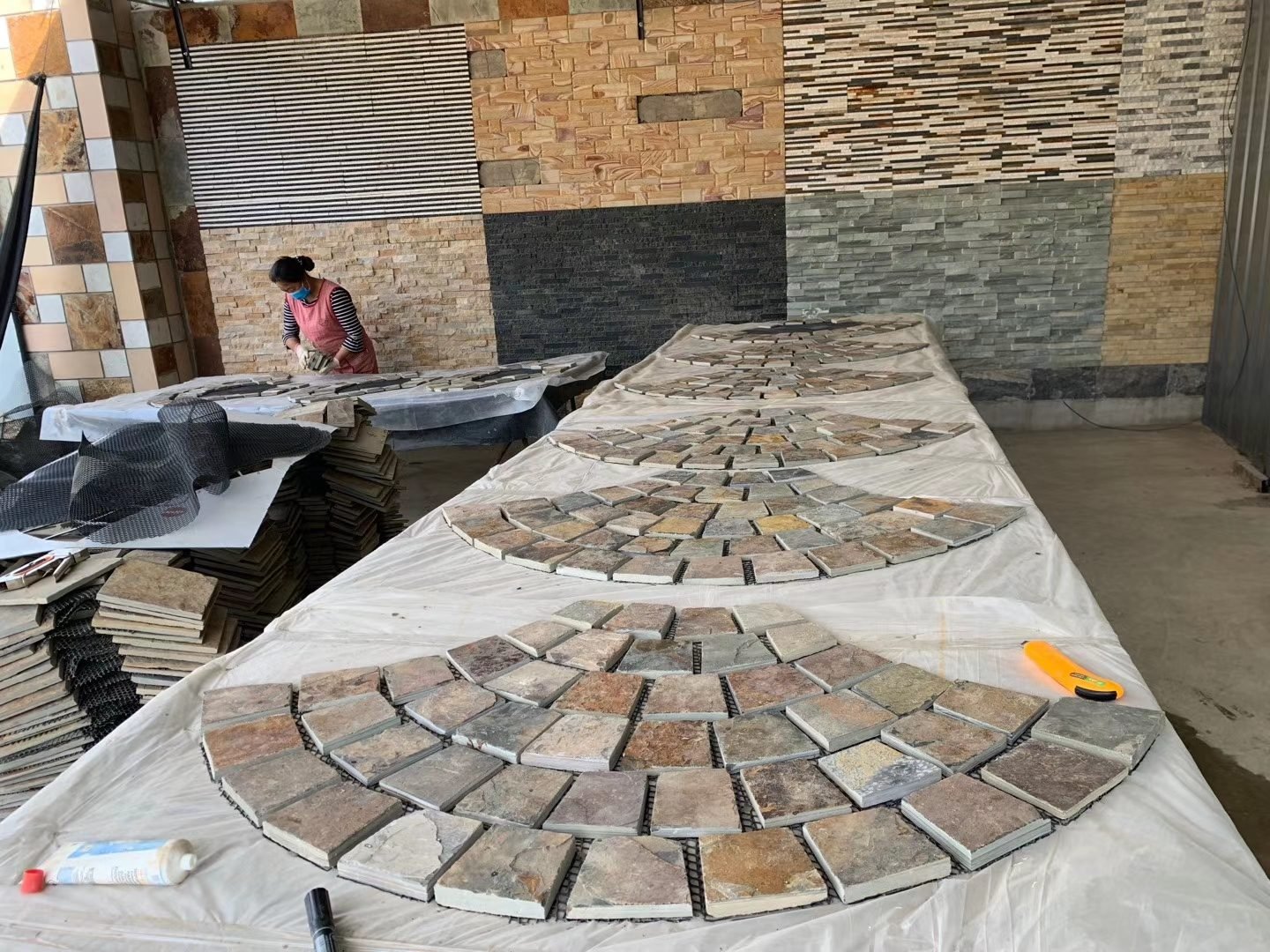
Ordering the three surfaces together, from one vein, is the practical way to lock that in. A distributor or specifier who places coping, flagstone and crazy paving for the deck, and cladding panels for the wall on a single production run gets batch-to-batch consistency that three separate purchases cannot. This is the difference between a resort surround that photographs as a designed whole and a residential job where the coping is a shade cooler than the wall.
Stone That Survives Pool Chemistry
Pool surrounds are among the hardest service conditions for stone. The surface cycles between wet and dry, sits under chlorine or salt-water electrolysis, catches splash and backwash, and, outdoors, takes full sun and, in cold climates, freeze-thaw. A material that is fine on a living-room wall can quietly fail here, so the shortlist of properties is narrow.
Density and low water absorption come first, because almost every other failure mode follows from how much water the stone takes up. Dense slate and quartzite resist absorption, so they resist staining, and, crucially, resist the freeze-thaw cycle that spalls a porous stone from the inside as trapped water turns to ice. Our flagstone and crazy paving is high-density slate and sandstone specified for exactly this, and it carries naturally high slip resistance alongside salt-spray and humidity tolerance suited to coastal and Australian pool surrounds. UV stability matters too: slate and quartzite are mineral color, so they do not fade or chalk under poolside sun the way a pigmented coating or a colored concrete paver will.
Calcium-based stone is the exception to avoid here. Marble, limestone and travertine will etch against acidic pool chemistry and are generally the wrong call for the wet zone and coping; where a softer, warmer look is wanted, it belongs above the splash line and sealed, not forming the edge you walk. For the wall itself, coastal and high-humidity exposure has its own material logic, covered in the guide to salt-spray resistance for coastal projects.
Slip Resistance: Number and Texture
Coping and deck are barefoot, wet, sometimes soapy surfaces, so slip is a real specification, not a reassurance. In North America, slip for hard-surface flooring is specified against the dynamic coefficient of friction (DCOF) under the ceramic-tile standard ANSI A137.1, maintained by the Tile Council of North America. The commonly referenced baseline is a wet DCOF of 0.42 or greater for level interior spaces walked on when wet; pool decks are exterior and higher-risk, so good projects treat 0.42 as a floor to beat, not a finish line, and evaluate the actual tested surface.
The number tells only half the story; texture does the other half. A natural cleft or split flagstone face, a brushed or flamed finish, or a mesh-backed random surface gives mechanical grip that a honed or polished face cannot, precisely because water sheens off a flat polished surface into a lubricating film. Dense natural flagstone with a cleft texture combines the two: it drains and it grips. The practical spec language is to require a tested wet DCOF for the exact finish being ordered, not to assume a stone type is automatically safe. This is also why the pool surround and the pool-floor or step tread surfaces are discussed together, since the treads and steps that take repeated barefoot wet traffic need the same or tighter attention than the deck.
Coping Profiles and How They Meet the Deck
Coping is not one thing. Its profile decides how the water’s edge looks, feels underfoot, and handles water. The main families:
| Profile | How it reads | Best used |
|---|---|---|
| Standard / flat with a modest overhang | Clean, traditional, deck sits slightly above water | Most residential and commercial basins |
| Bullnose / eased edge | Rounded, barefoot-friendly, sheds splash back | Family pools, high-traffic edges, spas |
| Drop-edge / vanishing | Water spills over the face to a catch basin | Resort, dramatic sightlines, elevated views |
| Flush / flush-mount | Deck and water line nearly level, minimal cap | Contemporary minimalist surrounds |
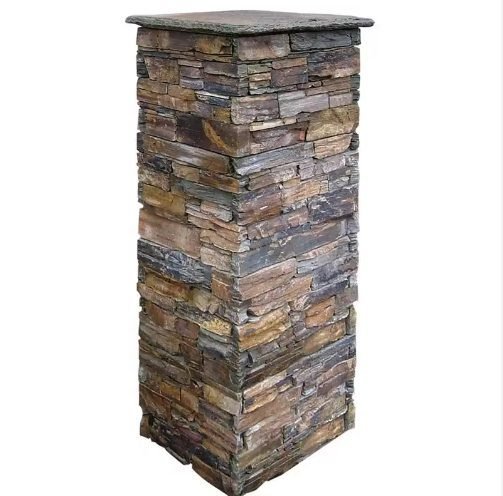
Whatever the profile, the coping has to meet both the wall below it and the deck beside it with intent. Cap and finishing pieces are the detail most buyers overlook, and they are exactly what turn a cut edge of cladding into a designed line; the treatment is covered in the piece on caps and coping as the finishing components. Where the surround includes piers or a raised spa, a modular pillar system with a sized cap closes the top of the column cleanly, and the same vein-matching logic that ties the palette applies to the column caps.
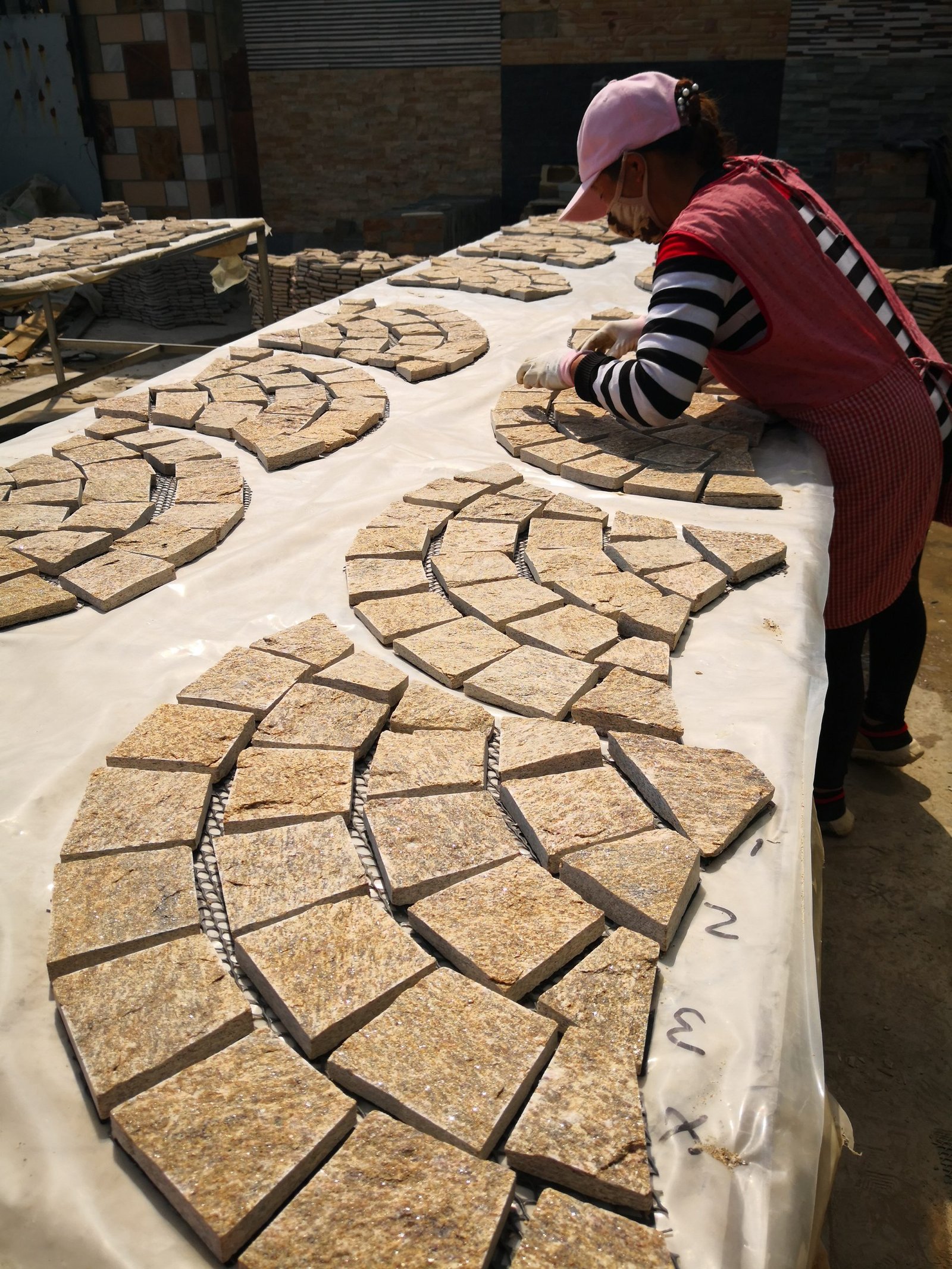
Movement Joints: Where the System Actually Fails
Read the failure reports on integrated pool surrounds and the culprit is almost never the stone. It is movement. A concrete pool deck is a large slab exposed to the widest temperature swing on the site, from a hot summer surface to a cold winter one. Industry engineering from pool structural practice, summarized by pool-engineering guidance on deck construction, is that a 100-foot run of that flatwork expands roughly three-quarters of an inch, about 19 millimeters, across a seasonal swing of around 100 degrees Fahrenheit, and the force of that travel is high enough to shear coping or a bond beam that is rigidly tied to it.
The answer is a flexible isolation, or mastic, joint between the deck and the coping that extends the full depth of the concrete, so no part of the moving deck can push against the pool edge. This single detail is what separates a surround that stays intact from one where coping pops, waterline tile cracks, and the bond beam spalls a year or two after handover. When the coping, deck and cladding are specified as one system, the movement joint is designed in from the start and finished with a sealant that tolerates pool chemicals and UV; it is not something a trade discovers on site.
Cladding the Wall Below the Coping
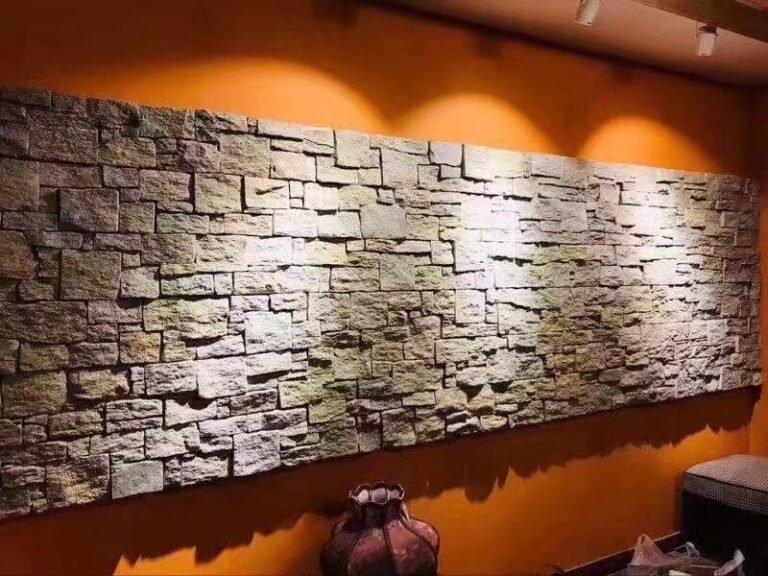
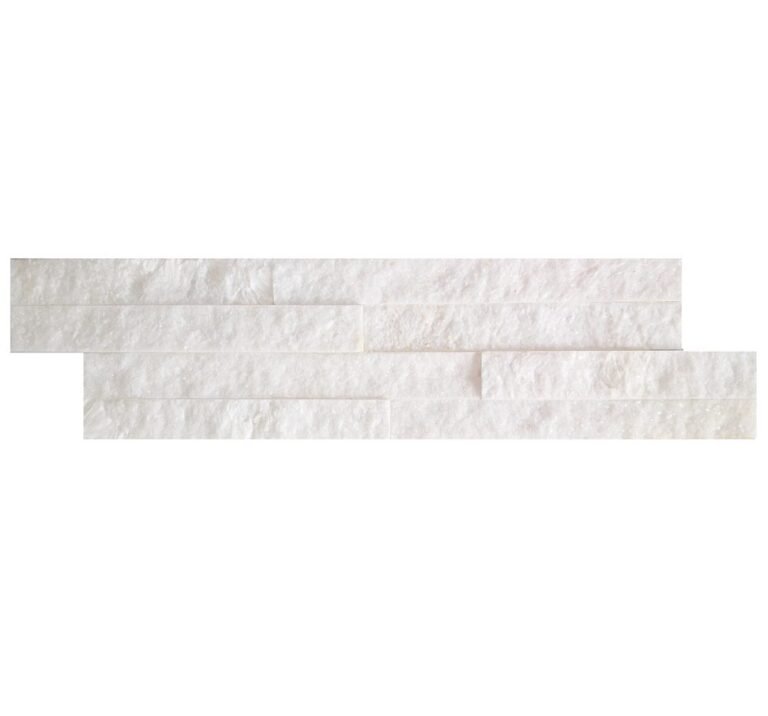
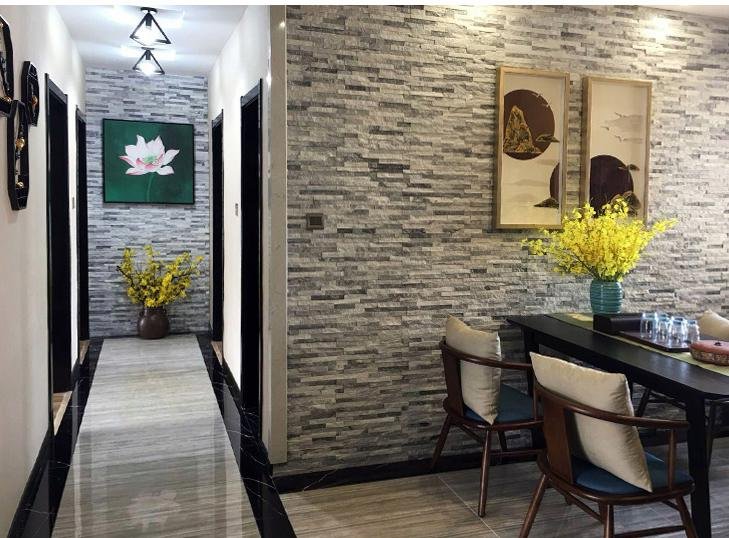
The coping is the top line; the wall is what the eye travels down. A raised spa, a sunken pool wall, a spillover feature or an outdoor-room planter all present a vertical face that should be resolved in the same stone logic as the coping and deck. This is where cladding earns its place in the surround: a bonded stacked-stone or split-face wall gives texture and continuity from the waterline up to the cap without the mass and load of full-thickness stone.
Natural slate and quartzite cladding carries the right properties for this wet, splashed vertical surface: UV-stable color and a rating through -30C to +50C thermal cycling, so a clad spa wall does not fade in sun or spall where winter freeze bites. Behind the face, however, the waterproofing and drainage plane still have to be correct, because cladding is a finish, not a tank, and water management behind a pool wall is its own discipline. For a feature that moves water across the stone, like a sheer-descent or spillover wall, the design has to account for constant wetting of the face, a case treated in the surround detailing for stacked-stone pool features.
Packaging the Surround as One Order
For the specifier and the distributor, integration is ultimately a procurement problem with a clean solution: put the coping, the deck and the cladding on one production run from one vein, in formats chosen for their role. Flagstone and crazy paving lay the deck and coping bed; stacked or split-face cladding panels face the wall; pillar caps close any piers. Ordering them together is what buys the color continuity the whole look depends on, and it lets a project be built out of a single, coordinated container.
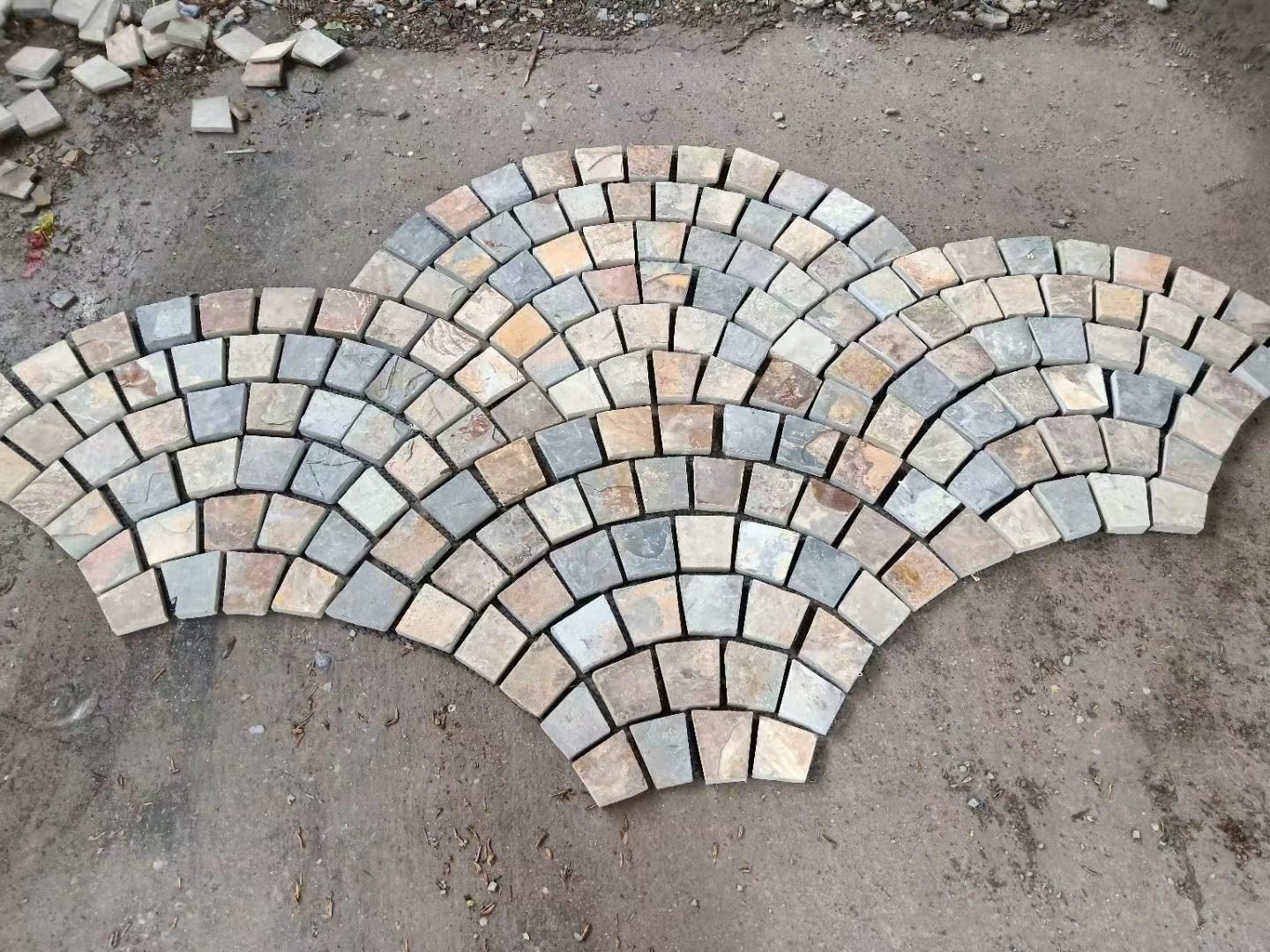
Design for the deck layout with the same care. A mesh-backed random surface installs fast and reads organic, while larger sawn flagstone units give a cleaner grid for a formal surround; picking between them is a genuine layout decision, explored in crazy paving versus flagstone steppers, and in the wider flagstone pool-decking installation detail on bases, drainage falls and jointing. The point for integration is that the deck pattern and the wall joint rhythm should be planned as one drawing, not left to two installers.
Frequently Asked Questions
What is pool coping?
Coping is the cap stone that finishes the exposed top edge of a pool shell. It seals the waterproofing, provides a barefoot-walkable edge, and ties the pool wall visually and physically to the surrounding deck.
Can coping, deck and wall cladding be the same stone?
Yes, and it is the cleanest integration. Ordering all three from one quarry vein keeps color and texture consistent, so the entire water’s edge reads as one designed system instead of three separate purchases.
Why does pool coping crack or lift?
Usually because a concrete deck expands and contracts against a rigidly fixed edge. A flexible, full-depth isolation joint between the deck and the coping absorbs that travel, so the stone is not sheared off by the moving slab.
Is natural stone good around saltwater pools?
Dense slate, quartzite and flagstone tolerate salt spray and pool chemistry far better than porous or calcium-based stone, which is why they are specified for coastal and saltwater pool surrounds.
How is slip resistance specified on a pool deck?
Against the wet dynamic-coefficient-of-friction (DCOF) baseline under ANSI A137.1, with a textured or cleft surface providing mechanical grip. Specify the tested value for the exact finish being ordered rather than assuming a stone type is automatically safe when wet.
Conclusion
An integrated pool surround is designed, not assembled at the site. It takes one stone family and one vein across the coping, the deck and the wall, chooses dense, salt- and UV-tolerant material that survives the actual service conditions, specifies slip against the wet DCOF baseline while leaning on natural texture, and, above all, builds a real movement joint between the deck and the coping so the system is not torn apart by concrete that moves more than anyone expects. Get those decisions right once, at the drawing and ordering stage, and the water’s edge stays coherent for years.
- Source coping, deck and cladding from one quarry vein for a single, consistent palette.
- Pick dense, low-absorption, salt- and UV-tolerant stone; keep calcium-based stone out of the wet zone.
- Specify wet DCOF for the exact finish, and use textured cleft surfaces for grip.
- Design a full-depth flexible isolation joint between deck and coping; it is where the system lives or fails.
- Package the whole surround as one coordinated order in role-appropriate formats.
Planning a pool surround and want coping, deck and wall cladding matched from a single vein? Reach out to the Top Stone Panels team and we will spec the full surround as one coordinated order.