Sell the wrong wall cladding and the complaint lands on your desk, not the manufacturer’s. Cultured stone looks like the safe choice: lighter boxes, familiar palettes, and a sticker price that wins the spreadsheet. Then the color fades on a south-facing facade, or a concrete unit spalls after a hard winter, and the phone rings.
Top Stone Panels quarries and cuts natural stone veneer in Hebei, China, and ships 220+ containers a year to dealers and contractors in North America and Europe. This comparison answers the question buyers keep asking us — cultured stone vs natural stone veneer — with the supply-chain numbers that actually decide a wholesale purchase, not the showroom brochure.
- Cultured stone is Portland cement, aggregate, and pigment formed in molds; natural stone veneer is quarried slate or quartzite split into thin panels.
- Natural slate and quartzite carry mineral color through the full thickness and tolerate -30°C to +50°C cycling; pigmented concrete surfaces are the first thing to fade and spall.
- Freight math flips at container scale: lighter cultured boxes save freight, but natural stone panels in 36x10cm thin formats maximize loaded area per container.
- Factory L-corner kits cut roughly 50% of corner labor and CNC cutting trims about 20% of on-site waste — both land on your installation margin.
- Ordering runs one 20GP container minimum, 20-25 working days production, with physical samples in 1-3 days.
Why This Choice Defines Your Product Line
Every dealer carries a version of this choice because both products sell. Cultured stone wins the residential DIY and budget-renovation segment. Natural veneer owns the jobs where the buyer is paying for permanence: commercial facades, premium homes, cold climates, coastal zones. Pick the wrong segment for your distribution and you hold inventory that your customers stopped asking for.
The two products diverge on four axes that a B2B buyer cares about: how the material behaves over twenty years, what it does to your freight bill, how much your installer charges to put it up, and what happens when a claim shows up. All four matter more than the per-square-foot price on the invoice.
If you already stock either product, the older article on this site — natural stone veneer vs cultured stone for projects — covers the residential choice in plain terms. This one goes deeper into the wholesale and container-level economics behind the decision.
What Cultured Stone Actually Is
Cultured stone, also sold as manufactured stone or faux stone, is not quarried. It is a concrete product: Portland cement, lightweight aggregates, and iron-oxide pigments cast against molds taken from real stone, then surface-colored to imitate a split face. The industry standard that governs these units, ASTM C1670, treats them as adhered masonry veneer, a category the Natural Stone Institute keeps distinct from quarried stone in its materials library.
Because it is cast, cultured stone repeats. A supplier can reproduce the same shadow, the same edge, the same color tone across every box. That consistency is a feature for production building — and a tell for anyone who knows stone. Real rock does not repeat, and the eye catches the mold when it does.
Manufactured units run light — roughly 8 to 10 lb per square foot installed, which is why one person can carry and cut them. The concrete skin carries the color, which is the first thing to know before trusting a 50-year color warranty. A pigment that sits on the surface has chemistry to fail; a mineral vein does not. We will come back to that under durability, because it is the difference that makes the phone ring for you.
What Natural Stone Veneer Actually Is
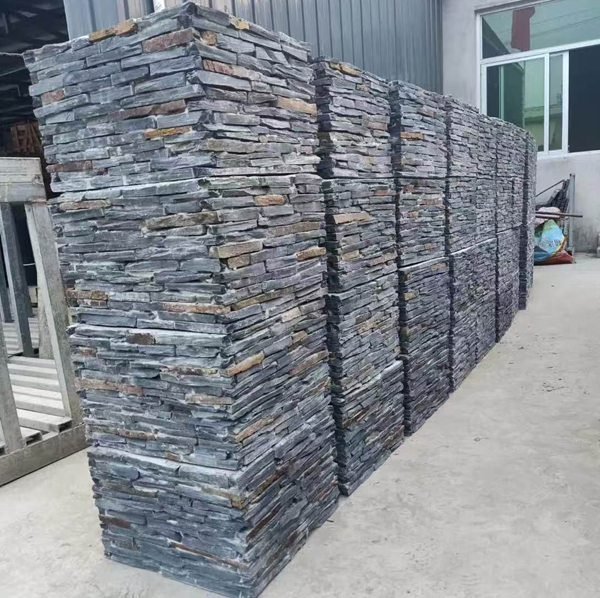
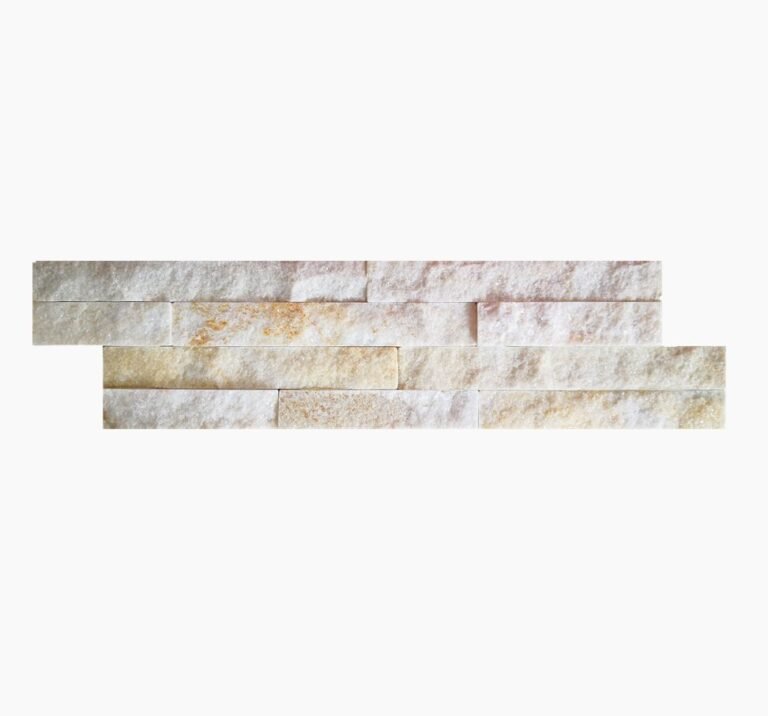
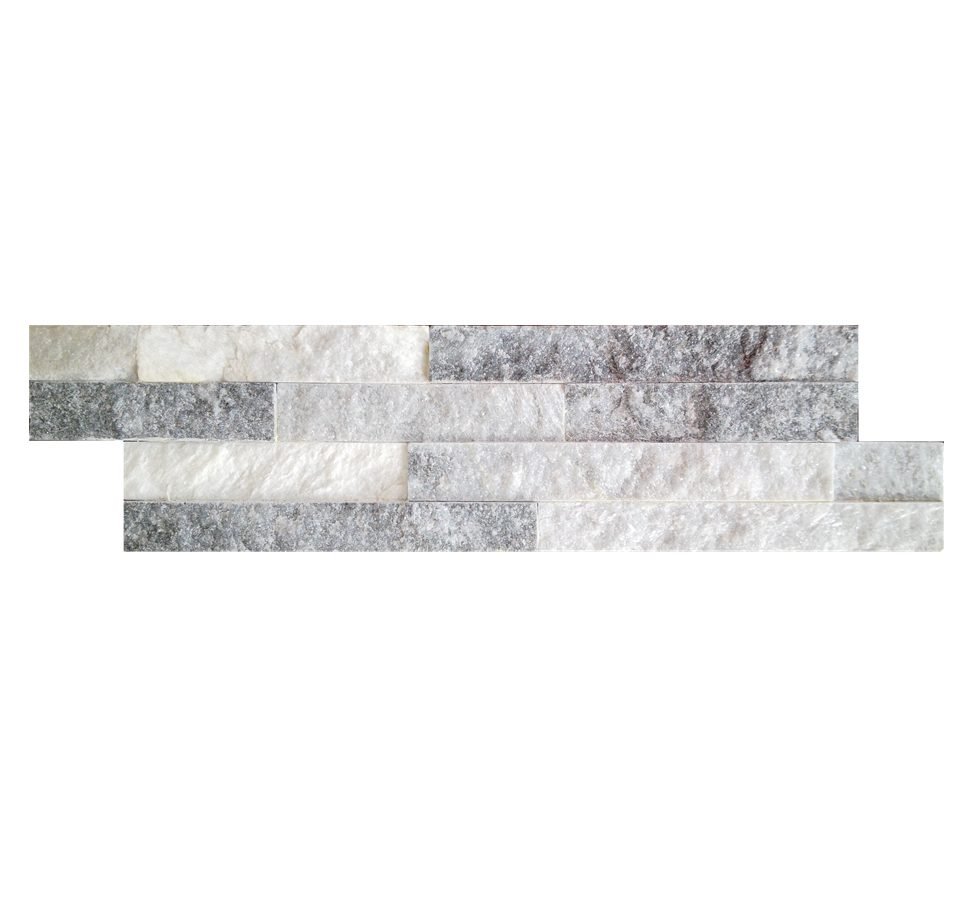
Natural stone veneer starts at the quarry face, not in a mold. The stone is split along natural cleavage planes into thin panels, then cut with infrared CNC diamond blades to fixed formats. At Top Stone Panels the working formats are stacked panels at 15x60cm and 15x55cm, ultra-thin ledgestone at 36x10cm, interlocking Z-panels at 20x55cm and 15.2x61cm, and loose linear strips for thin stone veneer work. Backing is marine-grade epoxy, cement, or mesh, depending on the format.
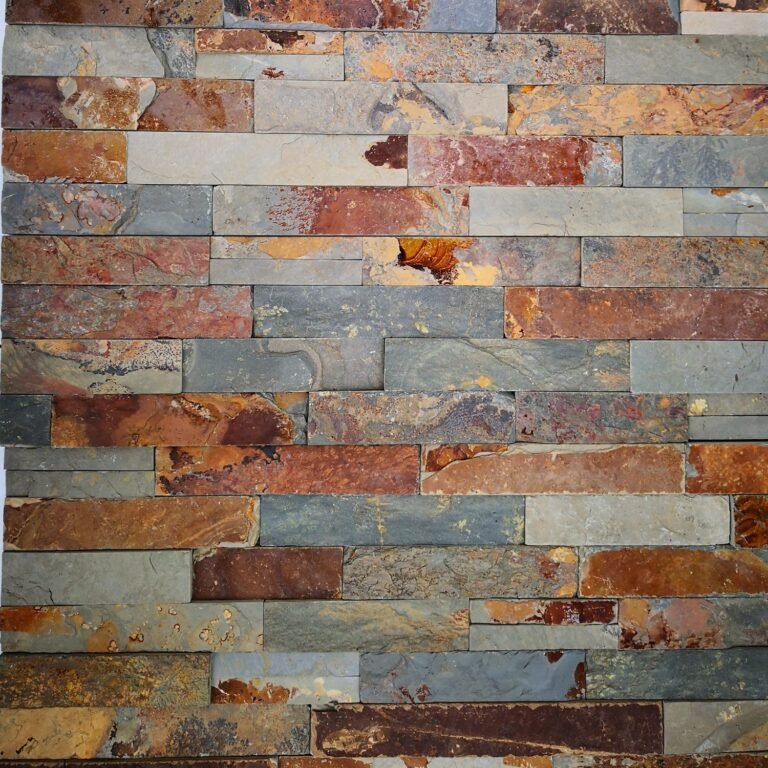
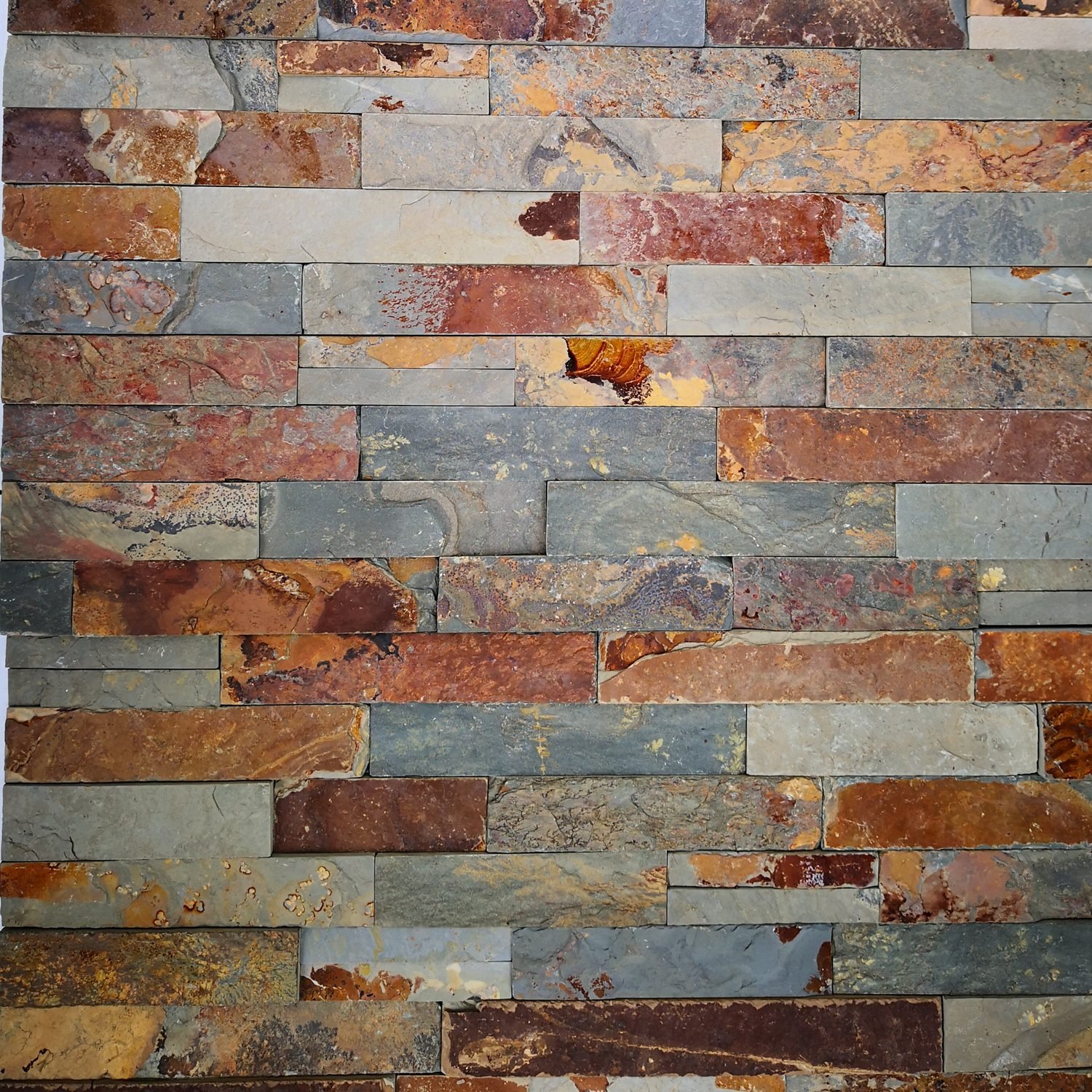
The material is 100% natural slate, quartzite, marble, or sandstone from our own quarries in Yixian, Hebei. Color is mineral composition, not pigment. A deeper cut into the same slab shows the same color as the face, which is why split-face stone does not fade — there is no coating present to lose.
Each production batch is color-sorted by vein selection, so a container reads as one coherent elevation rather than a patchwork. That consistency is the natural product’s answer to cultured stone’s mold: identical from box to box is not the goal; coherent from panel to panel is.
Side-by-Side Material Comparison
Lay the two products on a table and the differences read as spec sheet items. Weight, absorption, fire behavior, and color permanence are the columns that decide climate suitability and long-term claims.
| Property | Cultured Stone | Natural Stone Veneer |
|---|---|---|
| Composition | Portland cement, aggregate, pigment | Quarried slate, quartzite, sandstone |
| Installed weight | Roughly 8-10 lb/sq ft, one-person carry | Heavier; dense mineral, 1.5-3cm depth |
| Color | Surface pigment, repeatable | Mineral content, full depth, UV stable |
| Freeze-thaw | Depends on unit density; chipping reported in hard winters | Slate/quartzite tolerate -30°C to +50°C |
| Fire rating | Concrete-based, varies by assembly | 100% natural stone, A-class |
| Variation | Mold repeat, uniform | Natural variation, batch vein control |
| Typical formats | Molded ledger/nugget pieces | 15x60cm, 36x10cm, Z-panels, strips |
Two rows deserve emphasis. Freeze-thaw tolerance is water-storage math: dense quartzite and slate hold little moisture before a freeze, so there is little expansion pressure inside. Poured concrete units with higher absorption take in water, and repeated cycles find the weak face. The second row is color. If your market sells on looks, natural stone holds its look in sunshine that strips pigment from concrete.
Cost and Container Economics
B2B buyers should not compare case prices; they should compare what happens inside a 20GP container. On paper, cultured stone carries a lower per-unit cost. Then the freight and the lifetime math join the spreadsheet.
Cultured stone ships lighter, which trims container freight and lets a truck carry more footage. That is a real advantage for local distribution and pallet-heavy retail. Natural stone answers with density — specifically the 36x10cm ultra-thin ledgestone format, which packs more square footage of finished wall per container than any full-thickness product. High loading capacity is the reason this format dominates European container orders.
The rest of the ledger is standard factory terms. Minimum order at Top Stone Panels is one 20GP container, production runs 20-25 working days, and physical samples ship in 1-3 days. Payment is 30% T/T deposit and 70% before shipment, with a loading video and pre-delivery layout photos sent before the balance is due. FOB Xingang, EXW, CIF, or DDP terms are available — the same trade structure works whether the container holds ultra-thin ledgestone or a heavier panel line.
Shrink the comparison to a single figure and it looks like this: the wholesale markup on either product is similar, but natural stone’s claim rate in demanding climates runs lower, and a claim costs you freight, labor, and a customer.
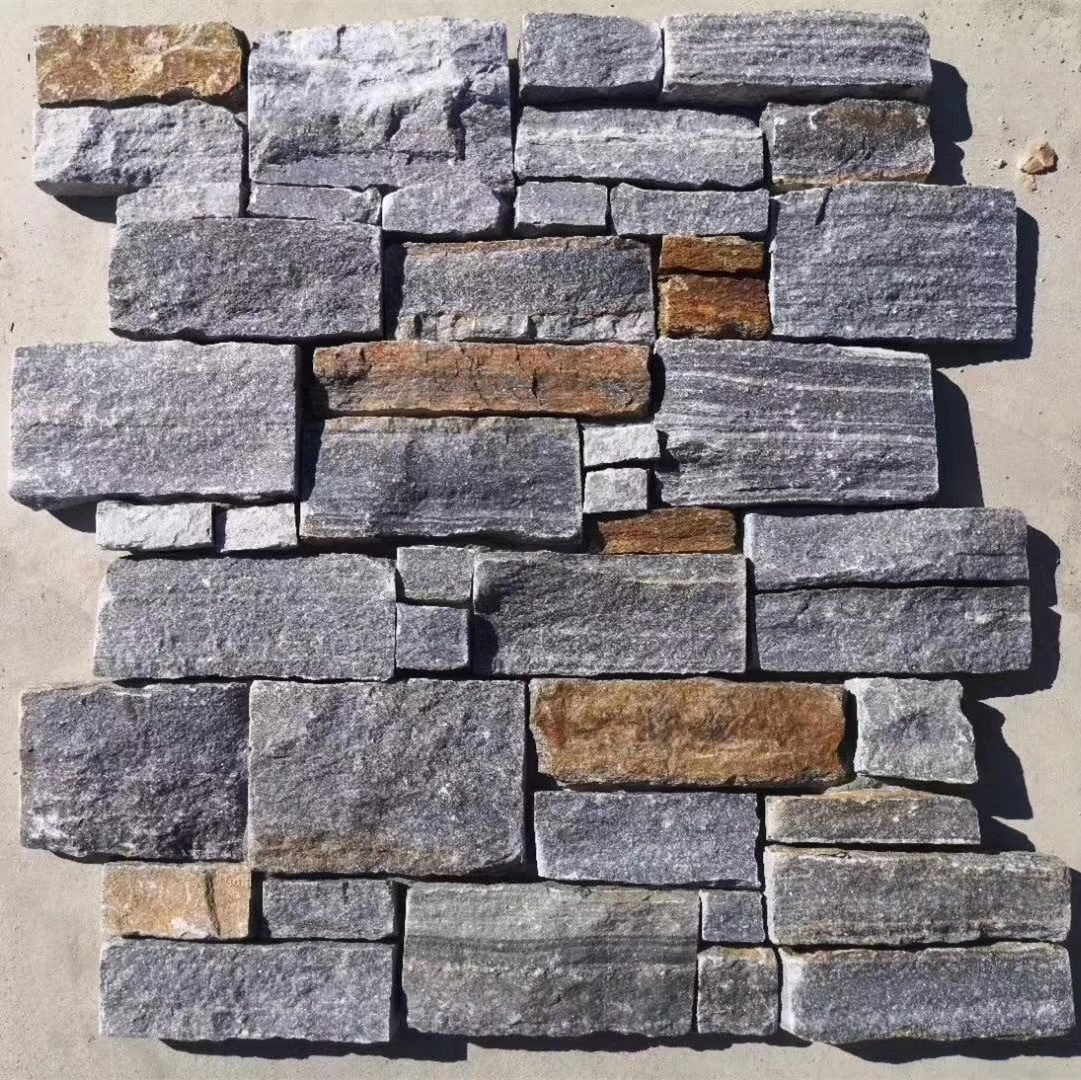
Compare formats side by side before you commit a container.
Request the format comparison sample set — stacked, ledgestone, and Z-panel in the same color family — and run your own fade and water tests. Samples ship in 1-3 days.
Durability, Color, and Warranty Risk
Here is where the two products separate from each other by a wide margin. Cultured stone’s exposed surface is a pigmented coating over concrete. South-facing sun, road salt, coastal spray, and freeze-thaw all attack that skin. Some manufactured units chip at the edges, bloom with efflorescence in damp basements, or lose tone in a few years. Carefully maintained installation mitigates it; chemistry does not change.
Natural slate and quartzite have no skin to lose. The face is the mineral, the color runs through the whole panel, and the UV stability claim is not a warranty line item but a property of the material. At Top Stone Panels we can state -30°C to +50°C cycling tolerance, an A-class fire rating, and salt-spray resistance in coastal zones because those are properties of the stones we cut, verified through the material’s density and our factory QC.
Fire matters in commercial specification because code officials want the rating on paper. 100% natural stone simplifies that conversation. A concrete unit can also be made fire-safe, but the assembly details, thickness, and anchorage end up in the submittal, and the specifier carries the explanation. Nobody asks follow-up questions about a rock.
Installation Differences That Move Labor Cost
Labor is where a cheap case price silently inflates. Cultured stone is light enough for one installer to carry and cut with standard masonry tools, which keeps small-scope labor low. Natural veneer counters with factory geometry. Pre-made L-corner kits eliminate on-site miter cutting at every outside corner — the highest-skill, slowest step in stone application — and roughly halve corner labor. Infrared CNC cutting holds panel sizes tight, which cuts on-site cutting waste by about 20%.
For a contractor bidding a 500-square-foot exterior, those two numbers sit directly on the bottom line. A crew that spends a day mitering corners on a cultured job finishes a natural panel job in the same day with factory corners and a spread trowel. On interior feature walls, the format advantage carries further: panels are quicker to set than individual stones, and the adhesive or mortar either of them needs is the same trade skill.
Backing matters in the bid too. Mesh-backed and cement-backed panels suit standard mortar or adhesive methods; marine-grade epoxy backing suits engineered substrates where holding power per fastener count. Our epoxy vs cement backing guide walks through which jobsite needs which.
Which Product Fits Whom
Do not carry both just because the market carries both. Match the product to the customer’s risk profile and climate.
| You Sell To | Better Bet | Why |
|---|---|---|
| Budget renovation, DIY retail | Cultured stone | Light, cheap, uniform; suits mild climates |
| Cold-climate exteriors | Natural slate/quartzite | -30°C to +50°C tolerance, low absorption |
| Coastal and pool zones | Natural stone | Salt-spray resistance without coating failure |
| Commercial facades, lobbies | Natural panels | A-class fire, full-thickness color, scale |
| Premium residential, architects | Natural stone | Real split face sells itself at close |
| Tight custom-color programs | Natural stone | Batch vein selection, custom mixes |
One caveat on cataloging both: if you do stock both, mark them clearly in your price list so the cheaper case price does not cannibalize the premium line. The real stone vs manufactured panels article gives you the talking points for the inevitable customer question.
Frequently Asked Questions
Which is cheaper: cultured stone or natural stone veneer?
Cultured stone usually has a lower case price and lighter freight. At container scale, dense thin natural panels balance freight against a lower lifetime claim rate and stronger resale value.
Does cultured stone fade like painted siding?
It can. The visible color is pigment in or on a concrete skin. Natural slate and quartzite keep mineral color through the full panel and hold it in direct sun.
Is natural stone veneer heavier than cultured stone?
Generally yes. Manufactured units run roughly 8-10 lb per square foot; natural stone at 1.5-3cm applied depth is denser. Use the format data sheet to size fasteners and crew.
Can you mix cultured stone with natural stone on one job?
Avoid it. Different thicknesses, absorption, and wear rates make joints and upkeep uneven. Pick one system per elevation and transition cleanly at corners.
Conclusion
The cultured stone vs natural stone veneer decision stops being a pricing question once you load a container and watch a winter. Manufactured units win on entry price and light boxes. Natural stone wins on color permanence, freeze-thaw tolerance, fire documentation, and the kind of photography that sells your next job.
- Match the product to the buyer’s climate and claim risk, not to your cheapest landed cost.
- Use thin 36x10cm ledgestone when you want container loading and natural material in one.
- Bank the factory corner kits and CNC tolerances — they are labor profit hiding in a spec.
- Order samples in 1-3 days, run production at 20-25 working days, and keep the one 20GP container minimum in your quote assumptions.
Set a cultured corner piece next to a split-face slate panel in strong sun and tell us which one you would rather photograph at a year. The stone that holds its face holds its market.