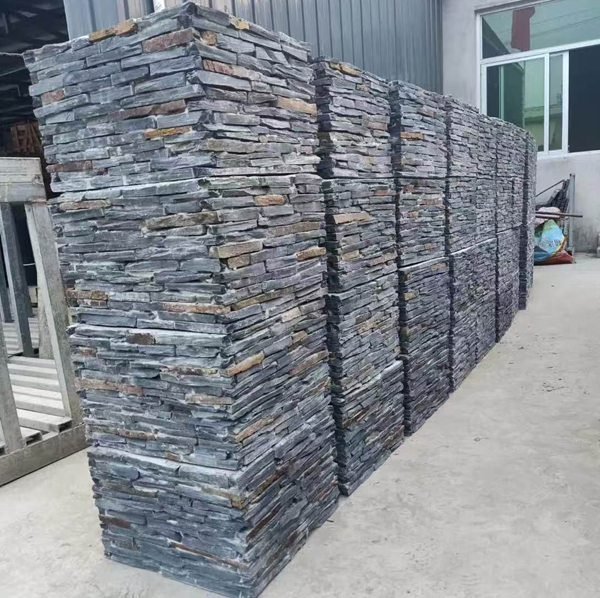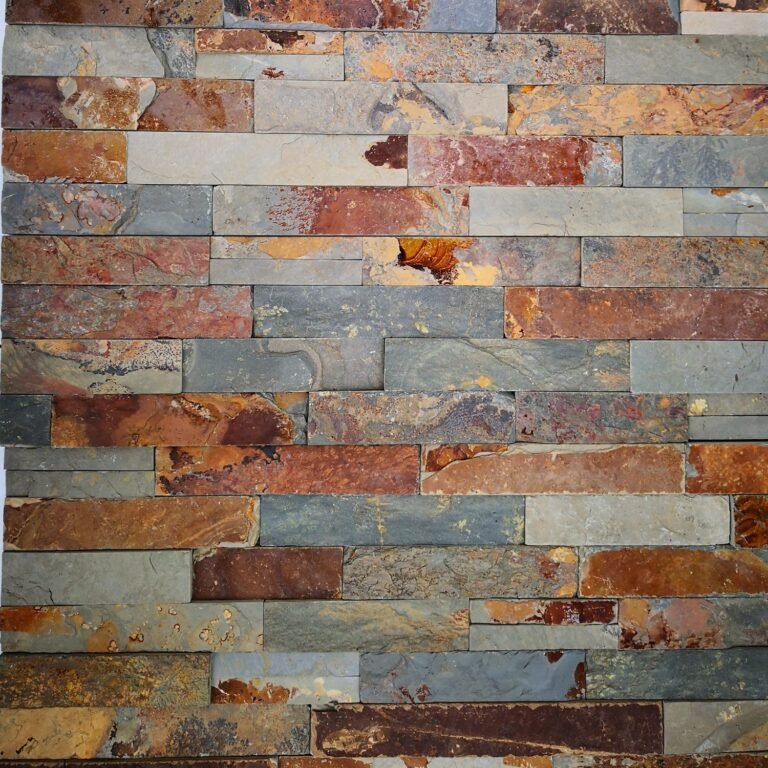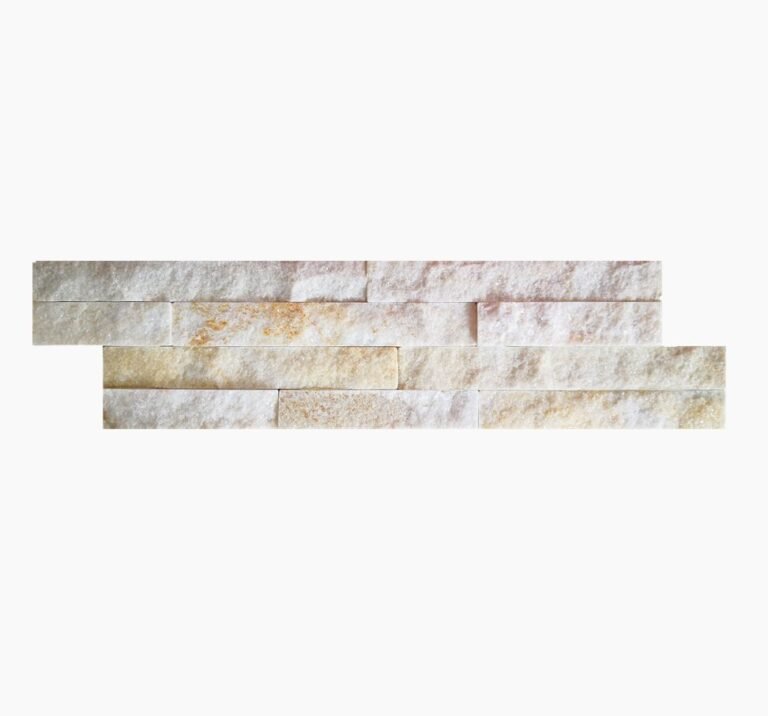
Flagstone is a generic term for flat-lying sedimentary or metamorphic rock that splits naturally into broad, thin slabs along bedding planes. Geologists trace the word to the Old Norse flaga, meaning “flat stone” — and the definition has held for centuries because the material itself has not changed. What has changed is how the building industry sources, cuts, and specifies it.
For B2B buyers — distributors, landscape architects, and paving contractors — the real question is not “what is flagstone” in the abstract. It is: which type, which format, which thickness, and from which supplier can I get consistent quality at container scale?
This guide answers those questions with production data, performance specifications, and sourcing criteria drawn from 18+ years of quarrying and export operations at Top Stone Panels, a natural stone factory based in Yixian County, Hebei Province, China. For installers who have already worked with stacked stone veneer panels, flagstone follows many of the same substrate preparation principles but demands different layout and jointing strategies.
1. What Flagstone Is — A Geological Definition
Flagstone is not a single rock species. It is a structural classification: any rock that cleaves into tabular slabs thin enough to lay as paving. Three lithologies dominate the commercial flagstone market:
- Slate — low-grade metamorphic rock formed from compressed shale. Fine-grained, foliated, and exceptionally planar.
- Quartzite — metamorphosed sandstone with a silica-rich matrix. Harder than slate, with a crystalline surface texture.
- Sandstone — sedimentary rock cemented by silica, calcite, or iron oxide. Warmer color palette, slightly more porous.
Each lithology produces flagstone with distinct performance characteristics — density, water absorption, flexural strength, freeze-thaw resistance, and color stability. The Natural Stone Institute publishes test standards (ASTM C97, C99, C170) that quantify these differences, and serious suppliers should be able to provide test reports on request.
2. Types of Flagstone: Slate vs. Quartzite vs. Sandstone
Choosing the right flagstone type is the first decision in any specification. The table below compares the three materials across the properties that matter most for paving and landscape applications.
| Property | Slate Flagstone | Quartzite Flagstone | Sandstone Flagstone |
|---|---|---|---|
| Origin | Metamorphic (compressed shale) | Metamorphic (recrystallized sandstone) | Sedimentary (cemented grains) |
| Density (kg/m³) | 2,700 – 2,800 | 2,650 – 2,750 | 2,200 – 2,600 |
| Water Absorption | < 0.5% | < 0.8% | 1.5 – 5% |
| Flexural Strength | High | Very high | Moderate |
| Freeze-Thaw Resistance | Excellent | Excellent | Good (when sealed) |
| Surface Texture | Smooth, cleft | Crystalline, slightly textured | Naturally rough, grainy |
| Common Colors | Black, grey, green, rusty | White, gold, silver-grey, pink | Tan, buff, brown, red |
| Best Applications | Pool decks, patios, walkways | Driveways, commercial plazas | Garden paths, rustic patios |
| Relative Cost | Mid-range | Premium | Budget-friendly |
Slate is the default choice for most flagstone export orders because of its low absorption and consistent planar cleavage. Quartzite commands a premium for high-traffic commercial projects. Sandstone serves the residential landscape segment where warmer tones and a rustic aesthetic are priorities.
3. Flagstone Formats: Pavers, Crazy Paving, and Irregular Slabs
Once you have selected the stone type, the next variable is format — the shape and edge treatment of each unit. Commercial flagstone falls into three categories:
Dimensional Pavers
Square or rectangular units cut to calibrated sizes (e.g., 300 × 300 mm, 400 × 600 mm). Edges are sawn clean. Dimensional pavers suit formal patios, pool coping, and any layout that demands uniform coursing.
Crazy Paving (Random Geometric)
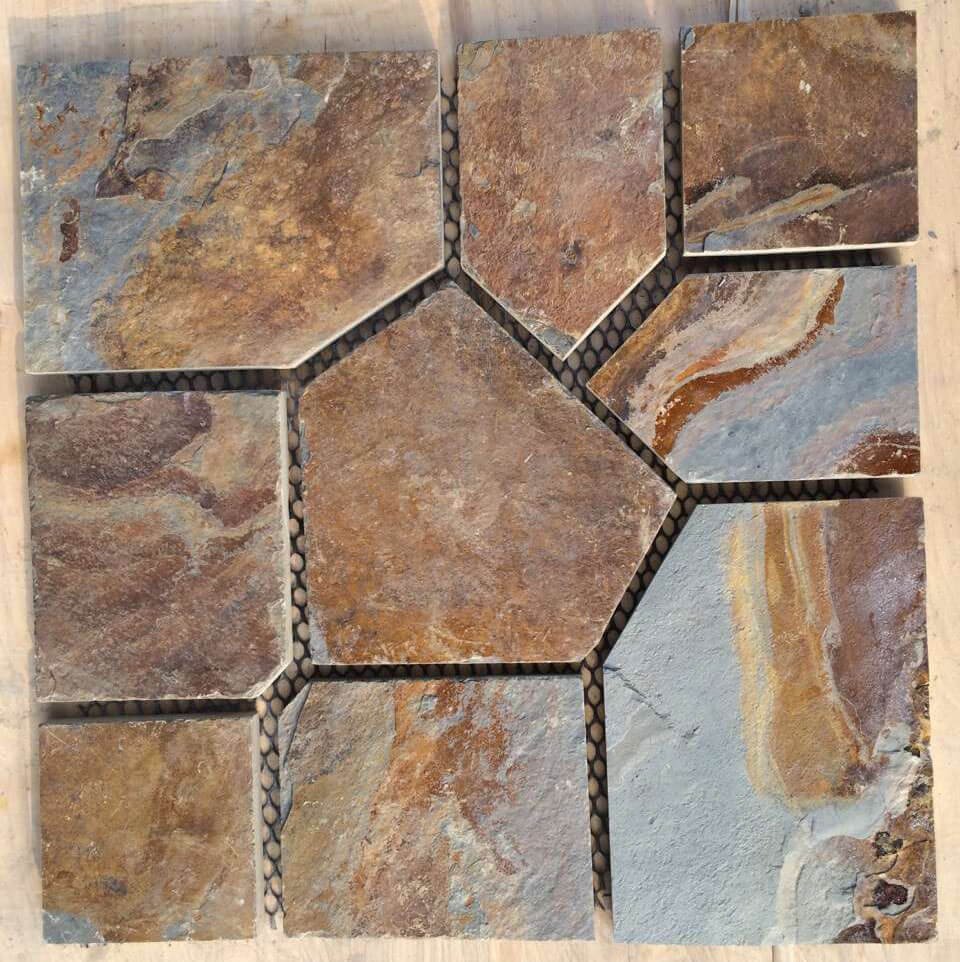
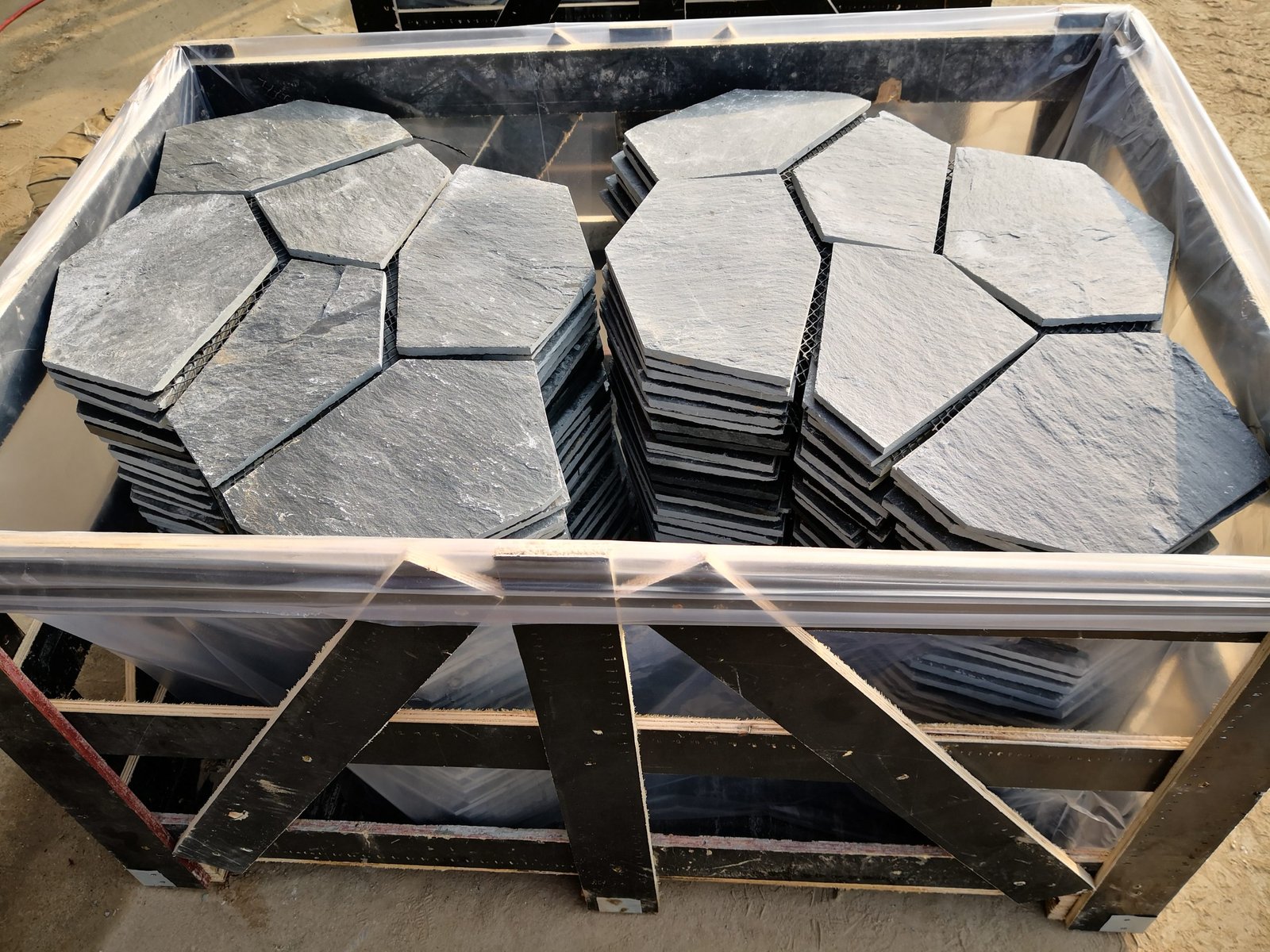
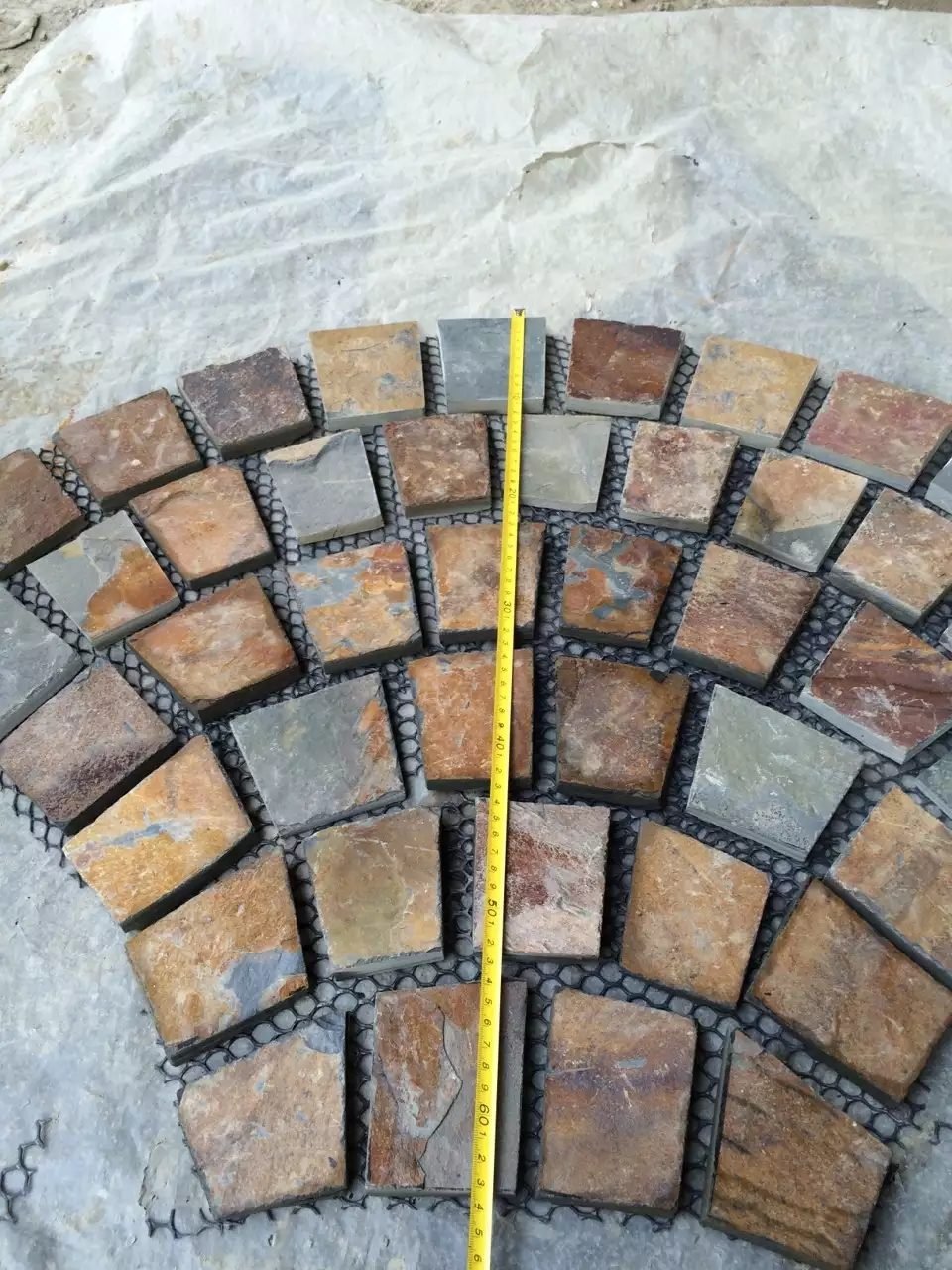
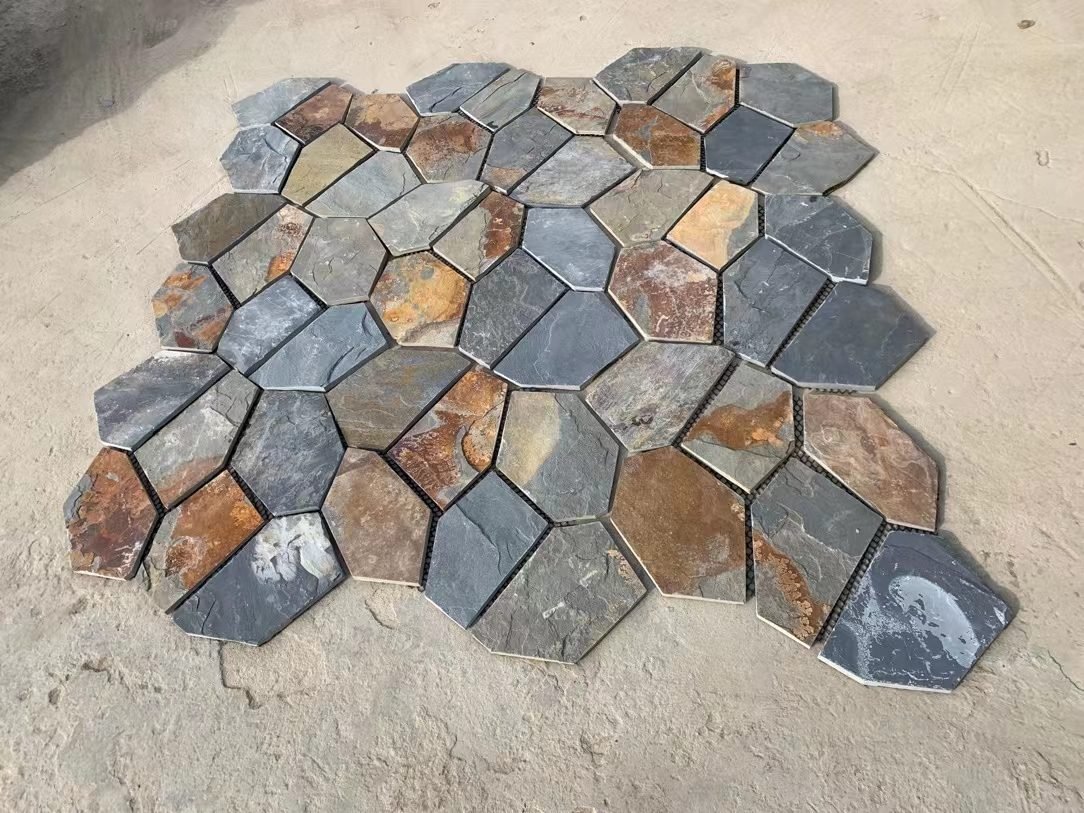
Irregular polygonal pieces — typically 5 to 9 sides — pre-arranged into interlocking mesh-backed sheets. Each sheet covers roughly 0.5–0.8 m². Crazy paving eliminates on-site cutting and reduces installation time by 40–50% compared to loose irregular stone. This is the highest-volume flagstone format in the export market and a core product line at Top Stone Panels, where monthly production capacity reaches 30,000 m².
Irregular / Flagging Slabs
Natural-edge pieces split from the quarry bed with minimal trimming. Sold by weight or pallet. Common in rustic or heritage restoration projects. Least efficient to install but highest in visual character.
4. Thickness, Sizing, and Mesh-Backed Options
Flagstone thickness directly affects structural load capacity, adhesive requirements, and shipping weight. Standard thickness ranges in the export market:
- 10–15 mm — interior flooring, wall veneer applications (requires full-bed adhesive).
- 15–20 mm — standard exterior paving over a concrete slab. The most ordered range for patios and walkways.
- 20–30 mm — heavy-duty paving for driveways, commercial plazas, and vehicular areas.
- 30–50 mm — stepping stones, stair treads, and coping stones.
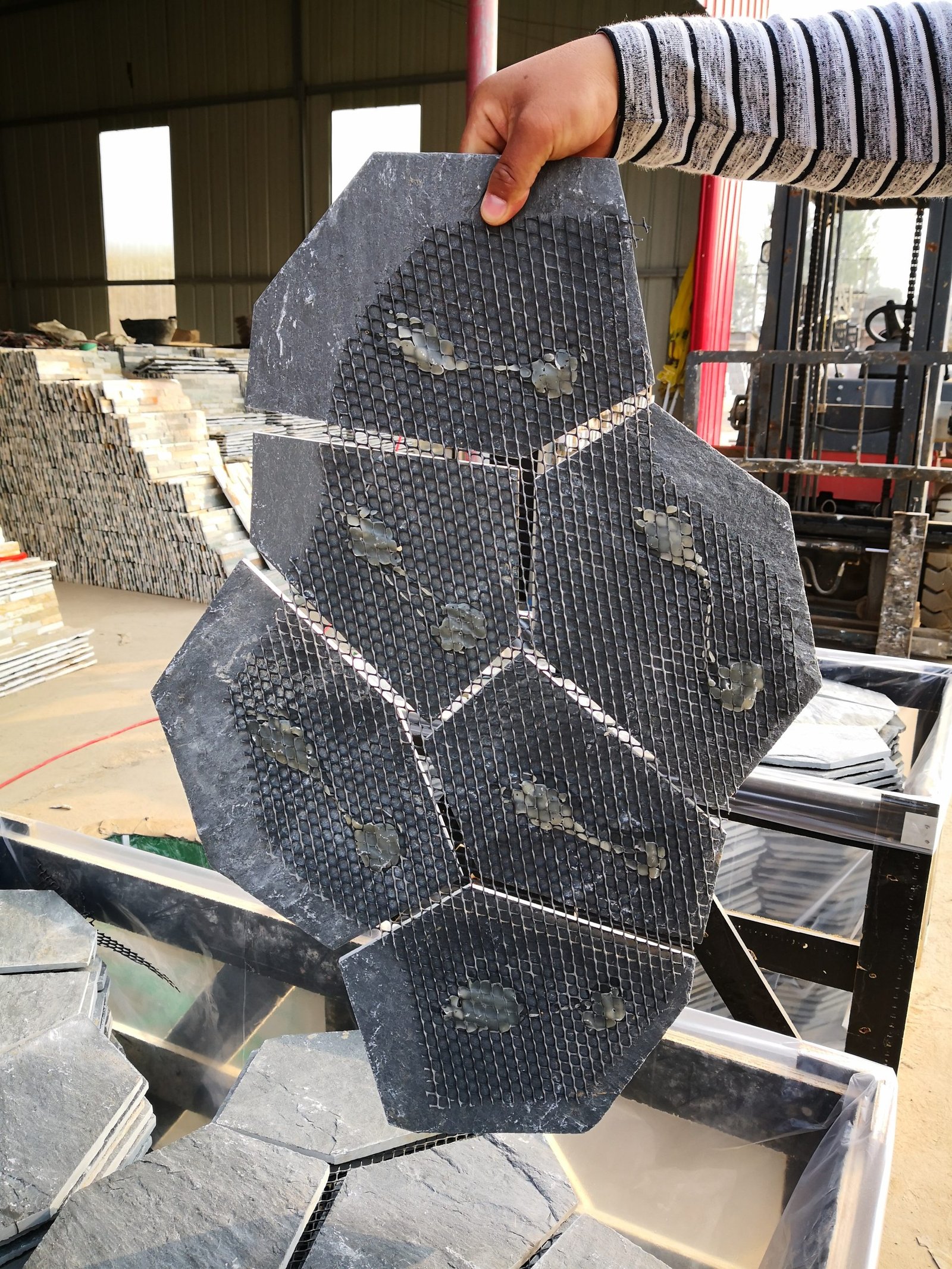
For crazy paving, mesh backing is now the industry-standard format. A fiberglass or nylon net is bonded to the underside of the pre-arranged stone pieces, holding the pattern intact during shipping and installation. The installer lays the entire sheet into thin-set mortar in a single placement — no individual piece sorting, no dry-fit rehearsal.
Top Stone Panels uses infrared CNC diamond blade cutting combined with batch-specific vein selection to maintain color and thickness consistency across each container order. Tolerance is held to ±1 mm on calibrated pavers.
5. Where Flagstone Is Used: Application Guide
Flagstone’s versatility explains its sustained demand across residential, commercial, and municipal construction. The primary applications include:
Patios and Terraces
The single largest end-use for flagstone. Natural cleft surfaces provide non-slip traction even when wet. Slate and quartzite flagstone patios are a default specification for mid-to-premium residential builds across North America and Europe.
Pool Decks and Surrounds
Flagstone tolerates constant moisture exposure, chlorine splash, and UV radiation without degradation. Salt-spray resistance (tested per ASTM C217) makes slate flagstone suitable for saltwater pool environments. The mesh-backed crazy paving format is particularly popular here because the random joint pattern hides minor substrate movement around pool shells.
Walkways and Garden Paths
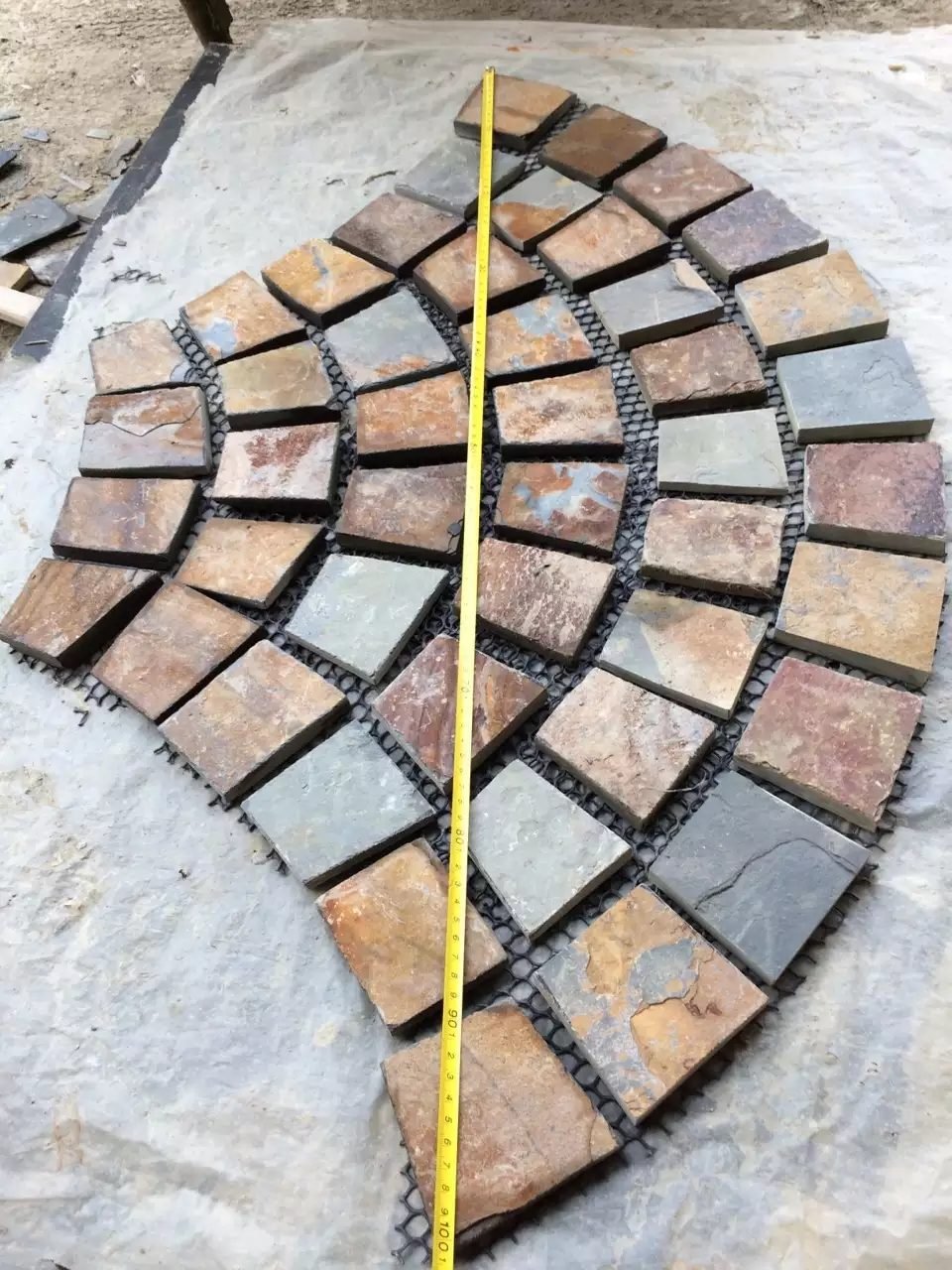
Flagstone pathways are a staple of landscape architecture. Irregular and crazy paving formats blend into naturalistic planting beds, while dimensional pavers suit formal garden axes.
Driveways
Thicker flagstone (20–30 mm) laid over a reinforced concrete base handles passenger vehicle loads. Quartzite is the preferred lithology for driveways due to its superior flexural strength and abrasion resistance.
Commercial and Municipal Projects
Hotel courtyards, restaurant terraces, civic plazas, and waterfront promenades all specify natural flagstone for its durability and design permanence. These projects typically order in full-container quantities (500–800 m² per 20GP), which aligns with the MOQ structure of most Chinese stone exporters. Many commercial projects pair flagstone paving with complementary products like stone columns for entrance pillars or thin ledgestone panels for adjacent feature walls, creating a unified material palette across the building envelope.
If you are also evaluating wall cladding options alongside paving, our guides on stacked stone panels and thin stone veneer cover complementary product categories.
6. Performance in Extreme Conditions
Distributors and specifiers need performance data, not marketing claims. Here are the benchmark specifications for natural flagstone sourced from the Yixian geological formation:
- Freeze-thaw cycling: Tested from -30°C to +50°C with no spalling, delamination, or surface loss after 50 cycles. This range covers virtually all inhabited climate zones.
- Fire rating: A-grade (non-combustible) per building code classifications. Natural stone does not ignite, melt, or release toxic fumes.
- UV stability: Zero color fade or surface degradation under continuous solar exposure. Unlike resin-bonded or dyed stone, natural flagstone contains no organic pigments.
- Salt-spray resistance: Passes ASTM C217 weathering test. Suitable for coastal installations and pool decks where de-icing salts or chlorine contact are routine.
- Non-slip surface: Natural cleft finish achieves slip resistance values that meet or exceed ADA and European EN 1341 standards for pedestrian surfaces.
These performance characteristics make natural flagstone a low-liability specification for contractors and a low-return-rate product for distributors.
7. How Flagstone Is Produced: From Quarry to Container
Understanding the production chain helps buyers evaluate supplier capability and anticipate lead times. Here is the workflow at Top Stone Panels’ Yixian facility:
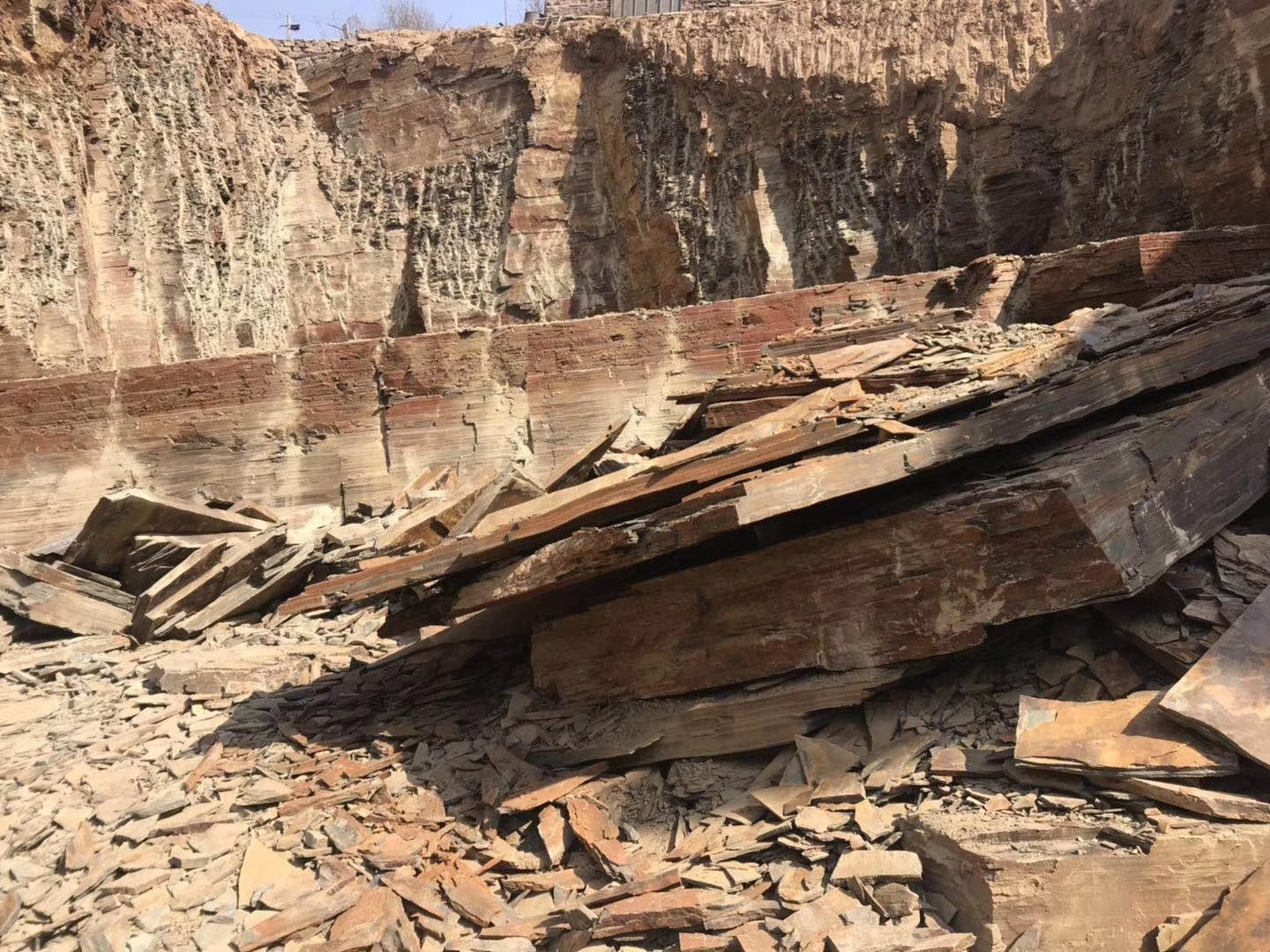
- Quarry extraction. Raw stone is removed from the bedrock formation using diamond wire saws and hydraulic splitters. The quarry face is selected based on vein color and bedding plane orientation to maximize yield of flat-lying slabs.
- Primary splitting. Large slabs are split along natural bedding planes into rough flagstone thicknesses using wedges and shims or pneumatic guillotines.
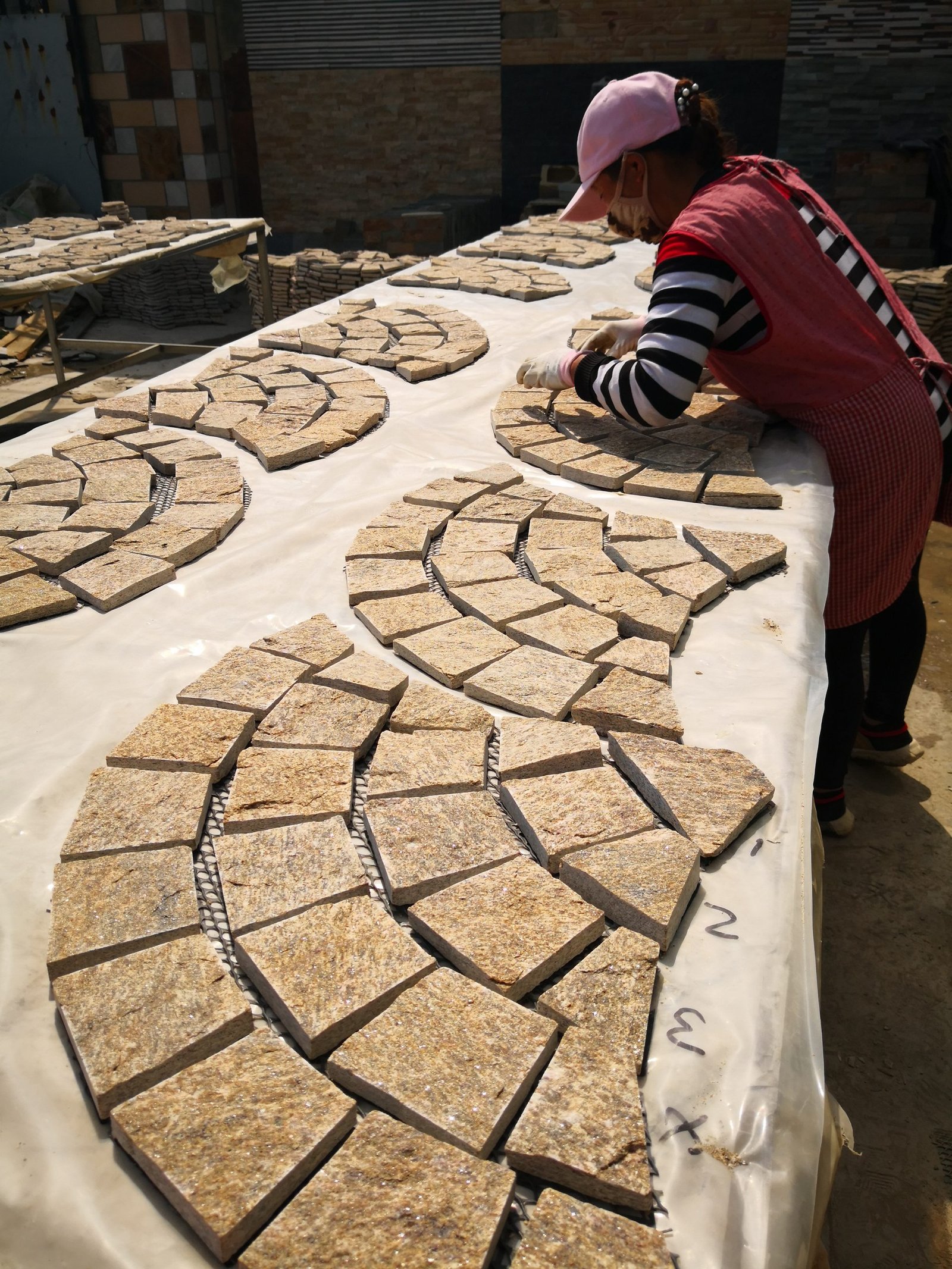
- CNC cutting and calibration. Infrared-guided CNC diamond blade saws trim pieces to final dimensions. For crazy paving, pieces are cut into random geometric shapes with 5–9 sides.
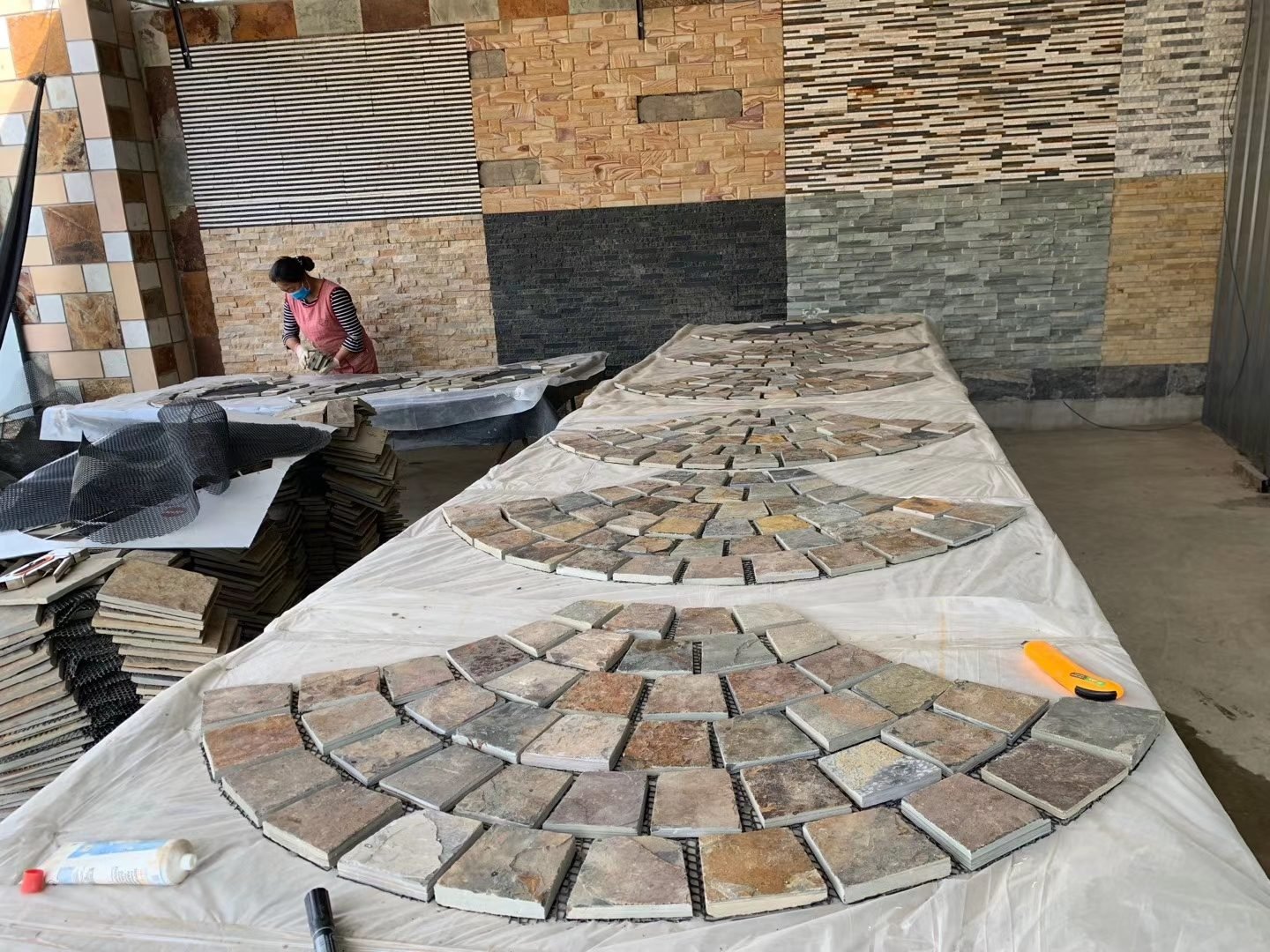
- Sorting and color matching. Every production batch is sorted by color tone, surface character, and thickness. Vein selection ensures that all pieces within a single container order come from the same quarry bed, minimizing color variation on site.
- Mesh backing. For crazy paving products, sorted pieces are arranged in their interlocking pattern and bonded to fiberglass mesh with structural adhesive.
- Quality control (3-step). Raw material inspection at intake → in-process dimensional and surface checks → pre-shipment final audit covering size tolerance, mesh adhesion, surface integrity, and packaging compliance.
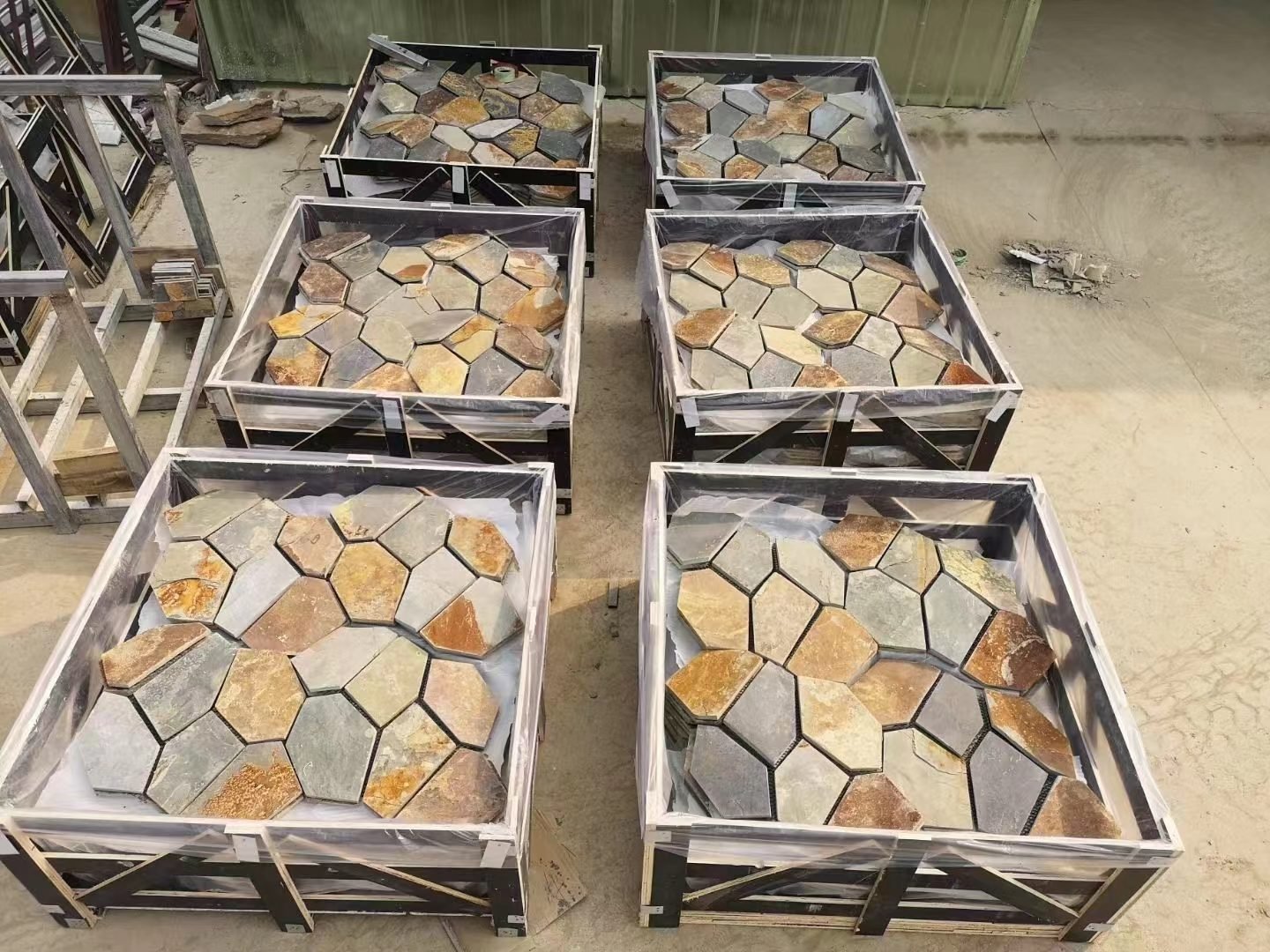
- Packing. Zero-Breakage Protocol: 3–5 layer cartons, fumigation-free pallets, 4–6 steel bands per pallet, and airbag dunnage inside the container to prevent transit damage.
This end-to-end control from quarry face to container door is what separates a reliable supply partner from a trading company that simply moves boxes. For a deeper look at how to evaluate Chinese stone cladding suppliers, see our guide on how to source stone cladding from China.
8. Specifying Flagstone for B2B Orders: What to Ask Your Supplier
When you issue an RFQ for flagstone, the following specifications should be explicitly stated or confirmed by your supplier:
| Specification Item | What to Confirm |
|---|---|
| Material type | Slate, quartzite, or sandstone — request petrographic identification if needed. |
| Color range | Specify accepted color codes or reference physical samples. Require batch-specific vein selection. |
| Format | Dimensional pavers, crazy paving sheets, or irregular slabs. |
| Thickness | Specify range (e.g., 15–20 mm) and tolerance (e.g., ±1 mm). |
| Surface finish | Natural cleft, honed, tumbled, or bush-hammered. |
| Backing | Mesh-backed (fiberglass or nylon) or loose-laid. |
| Test reports | Absorption (ASTM C97), flexural strength (ASTM C99), abrasion (ASTM C241). |
| Packaging | Carton layers, pallet type, steel band count, dunnage specification. |
| Lead time | Production + shipping. Standard: 20–25 working days production, plus ocean freight. |
A supplier that cannot answer these questions in writing, with dimensional tolerances and test data, is not a manufacturing partner — they are a middleman. For comparison, review how natural stone veneer differs from manufactured alternatives in our article on natural stone veneer vs. cultured stone.
9. Shipping, MOQ, and Landed Cost Considerations
Natural flagstone is a high-weight, low-value-per-kg commodity. Shipping economics matter as much as the FOB price. Here is the standard framework for container orders from China:
Minimum Order Quantity
The industry standard MOQ for natural flagstone is one 20-foot general-purpose container (1×20GP). A 20GP holds approximately 500–800 m² of flagstone depending on thickness and format. Crazy paving sheets on mesh stack more efficiently than loose irregular slabs, yielding higher coverage per container.
Trade Terms
Common Incoterms offered by Chinese stone exporters:
- FOB Xingang/Tianjin — the most common. Seller delivers to port; buyer arranges ocean freight and import clearance.
- EXW (Ex Works) — buyer picks up at the factory. Rare for export but occasionally used by trading companies consolidating multiple suppliers.
- CIF (Cost, Insurance, Freight) — seller arranges freight to the destination port. Buyer handles import clearance and on-ward transport.
- DDP (Delivered Duty Paid) — seller handles everything to the buyer’s warehouse. Increasingly requested by North American distributors who want a single landed price.
Payment Terms
Standard terms are 30% T/T deposit at order confirmation, with the 70% balance paid before shipment. Letters of credit (L/C at sight) are available for larger orders or first-time buyers who require bank-backed payment security.
Lead Time
Production lead time is typically 20–25 working days from deposit receipt. Ocean freight adds 25–35 days to North American East Coast ports, 18–22 days to West Coast, and 28–35 days to major European ports. Plan accordingly — a container ordered today will arrive on site in 7–9 weeks.
Landed Cost Framework
True landed cost = FOB price + ocean freight + insurance + import duty + port charges + inland trucking. Import duties on natural stone vary significantly by country (0–12% in most markets) and by HS code classification. Verify the correct HS code with your customs broker before placing an order.
10. Frequently Asked Questions
What is flagstone made of?
Flagstone is a flat-lying rock that splits into thin slabs suitable for paving. The three most common types are slate (metamorphic), quartzite (metamorphic), and sandstone (sedimentary). Each offers different density, absorption, color, and texture characteristics.
Is flagstone expensive compared to concrete pavers?
Flagstone costs more per square meter than manufactured concrete pavers at the material level. However, natural flagstone has a service life measured in decades rather than years, does not fade or spall under UV exposure, and carries a higher resale-value premium for residential properties. For distributors, natural flagstone commands higher margins per unit sold.
Can flagstone be used in cold climates?
Yes — provided the stone has low water absorption. Slate and quartzite flagstone with absorption rates below 0.5–0.8% perform reliably through freeze-thaw cycles from -30°C to +50°C. Sandstone requires higher caution and may benefit from sealing in freeze-thaw environments.
What is the difference between crazy paving and flagstone pavers?
Crazy paving consists of irregular polygonal pieces pre-arranged on mesh sheets for fast installation. Flagstone pavers are dimensionally cut rectangles or squares with sawn edges. Both are “flagstone” in material — the difference is in the cutting format and laying pattern. Crazy paving reduces installation labor; dimensional pavers offer a formal, uniform appearance.
How do I order flagstone from China at wholesale quantities?
The standard wholesale order is one 20-foot container (MOQ: 1×20GP), which holds 500–800 m² depending on thickness. Key steps: confirm material type, color, format, and thickness with your supplier; request test reports and samples; agree on trade terms (FOB, CIF, or DDP); pay a 30% deposit; and allow 20–25 working days for production plus ocean freight time. Top Stone Panels ships FOB Xingang/Tianjin and offers CIF and DDP options to North American and European destinations.