From Per-Square-Meter Quotes to Per-Square-Foot Landed Cost: A Stone Importer’s Conversion Guide
Short answer: a Chinese stone factory quotes FOB per square meter because its own costs (slabs, saw time, labor) run on metric area, while your contractor and your retail shelf think in square feet. The conversion is not just dividing by 10.764: you must price the coverage you actually get after cutting losses, sort out the difference between face area and flat-stone area, and rebuild the number as a landed cost per square foot before you ever compare two suppliers. The formula that survives a margin review is: (FOB per square meter plus freight and duties per square meter) divided by 10.764, then divided by your yield percentage. Treat every quote as provisional until the thickness, density, and unit of measure on the invoice match the unit you sell in.
Importers who lose money on stone usually do not lose it on the FOB price; they lose it in the space between a metric quote and an imperial sell. This guide walks the three conversions in order: area units, coverage units, and cost-basis units, and finishes with the arithmetic you can hand to an estimator without embarrassment.
The One Constant: 10.764 Square Feet per Square Meter
There is exactly one true number in this whole exercise: the square-meter-to-square-foot conversion itself, defined by the international yard and pound agreement and published with full precision in the NIST Guide to the SI, Appendix B. One square meter equals about 10.7639 square feet. Everything else that goes wrong is a unit that is not this simple: thickness quoted in millimeters, weight in tons, coverage in linear feet, and yield percentages that nobody wrote down. If you only fix one habit, make it this: every supplier document you file carries both units side by side, because a quote that says $28 does not mean anything until you know whether that is per meter, per foot, per box, or per panel.
Coverage Is Not Area: The Face-Height Problem
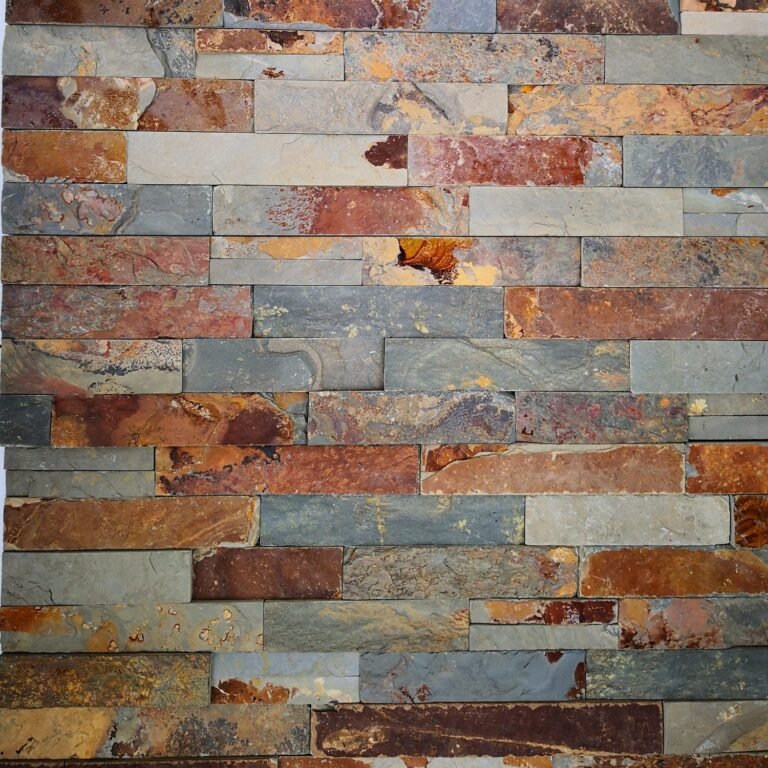
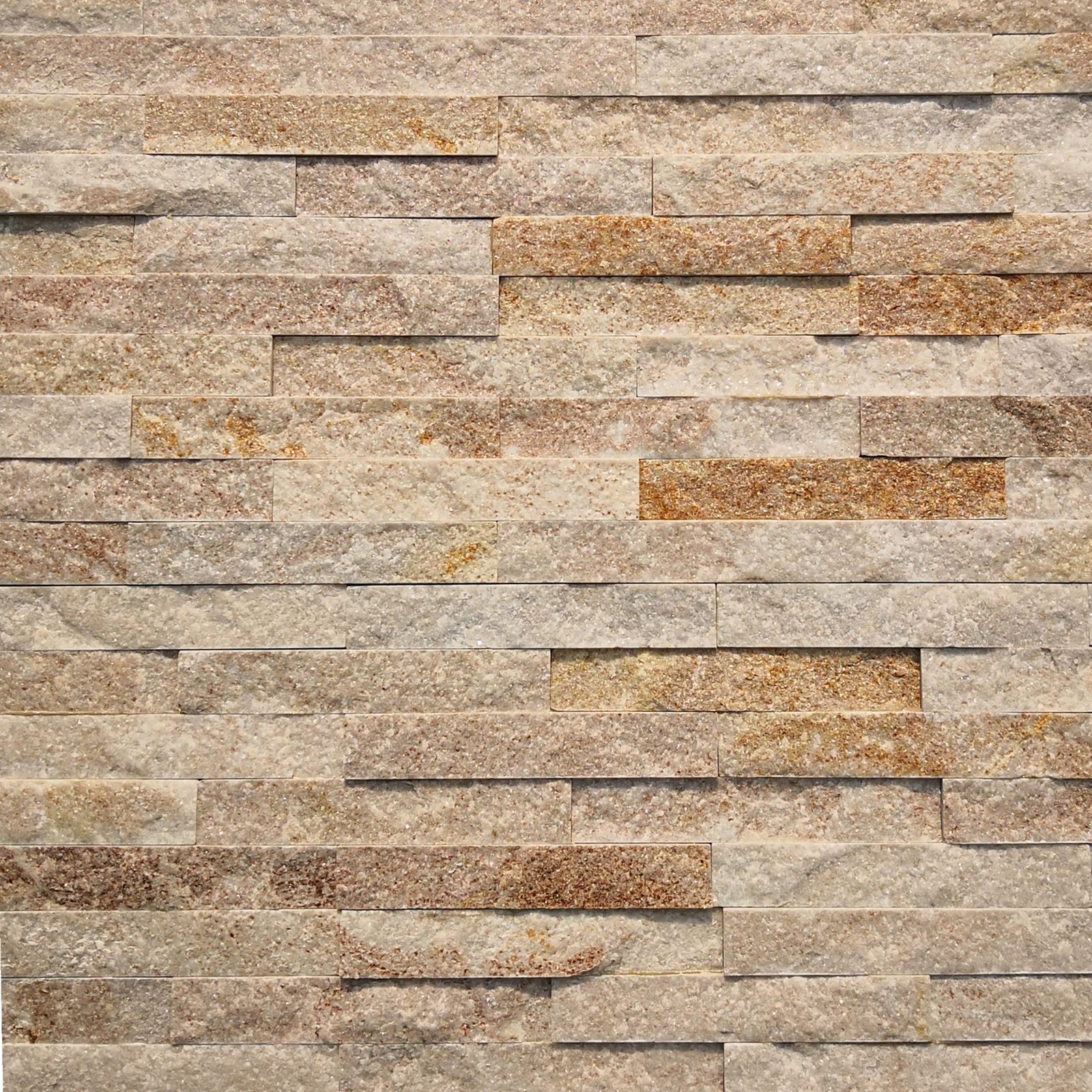
A stacked stone panel 600 mm wide and 150 mm high, with a rough face that projects 40 mm, contains more stone than its footprint on the wall. Suppliers who price stacked panels by face square meter are pricing the wall coverage; suppliers who price by the flat unfolded area of the stone are pricing more material than your wall will show, and that number is 20 to 40 percent higher. This is why two factories can quote the same product with a 25 percent price gap and both be honest. Before comparing any two quotes, ask each one plainly: per square meter of wall coverage, or per square meter of stone? The quantity formulas that decide how many square meters you even order are built in the buyer’s quantity calculation guide; this article is what you do with the answer when the price letter arrives in metric.
Yield: The Third Unit Nobody Quotes
Stone does not install at 100 percent. Cuts around windows, corners, and outlet boxes turn whole square meters into partial coverage, and a stacked-stone job with many openings can waste 15 percent of an order quietly, because nobody reconciles the leftover boxes. Importers who price correctly carry a yield assumption per product family: 10 percent on long straight runs, 15 to 20 percent on detail-heavy facades, more on crazy paving. Your landed per-square-foot cost should therefore be quote-based cost divided by yield, not quote-based cost times square-foot conversion alone. The weight side of the same problem, including how thick panels change what a container can actually carry in square meters, is calculated in the panel weight calculator guide and the 20GP versus 40HQ article; the dollar side starts from the seven FOB lines in the FOB pricing structure guide.
Building Landed Cost per Square Foot, Line by Line
Assemble it in metric first, then convert at the end; converting early and adding in feet is where arithmetic drift creeps in. Take the FOB per square meter. Add the ocean allocation per square meter, which is freight per container divided by the square meters that container actually delivered (packing efficiency varies, so use received area, not ordered area). Add duty and port charges per square meter; duty is assessed on customs value per the HTS classification of stone, and the US importer’s ruling database at rulings.cbp.gov is where you check how similar shipments were classified. Add inland delivery and your receiving and handling cost per square meter. Divide the total by 10.764. Divide by yield. The result is the number your contractors actually cost you, and it is the only number safe to multiply by your retail square-foot price. The same stack of cost lines is itemized per container in the landed cost breakdown article.
Three Conversions That Quietly Wreck Margins
The first is quote-basis drift: a “cheaper” supplier priced flat area while the incumbent priced wall coverage, and the comparison flips once both are normalized; always restate quotes on one basis before you rank them. The second is the linear-foot trap on corners: corner pieces are sold per linear foot of the 90-degree bend, a unit with no honest square-meter equivalent, and importers who convert them as if they were flat panels either overpay or short-order; separate corner dollars per linear foot from field dollars per square foot in your cost sheet. The third is thickness creep: a mill can shave a millimeter off average panel thickness, cut a container’s weight, lower its own stone cost, and keep your per-meter price flat, while your coverage-per-box actually improved or degraded depending on the face design; reconciliation of received versus ordered area at the dock, not trust, is what catches it.
A Worked Example with Placeholder Numbers
Walk one container with clearly illustrative inputs so the arithmetic, not the rates, is what you copy. Suppose a stacked panel quote arrives at a round FOB number per square meter of wall coverage; freight on the lane you booked adds a per-container figure; the container holds a known square-meter count after packing; duty and port charges come from your broker’s estimate; and handling is your own warehouse number. Sum the dollar lines per container, divide by the square meters delivered, and you have cost per square meter landed. Divide by 10.764 for cost per square foot delivered to your dock, then divide by 0.90 if your yield assumption is 10 percent, and the last line is the square-foot cost you can compare against a domestic wholesaler’s shelf price without hidden unit swaps. The point of writing the chain this way is that anyone who questions your margin can see which input moved: a freight spike on one lane shows up as a per-foot delta before yield, and a mill’s thickness change shows up as a changed square-meter count per container, not a mystery price jump.
Two discipline rules keep the example honest over time. First, freeze the formula: whichever line you normalize once (coverage-basis, per-meter, post-yield) becomes the column header in your cost sheet for every future quote, so a competitor’s quote that hides a different basis fails the intake step instead of winning the price war. Second, reconcile in both directions at the dock: count received boxes and measure received area, then at project close measure installed face area against the quantity you sold. If sold area exceeds received area minus a sensible yield, something in the quote basis or the packing list lied, and the correction belongs in the next RFQ, not in a margin absorption nobody will see.
What to Demand on the Quotation Sheet
A quote that converts cleanly carries five headers: the unit of measure for the price (wall square meter, flat square meter, per carton, or per linear foot for corners), the carton’s coverage content in both metric and imperial, nominal thickness and the tolerance, density or weight per square meter so container math is checkable, and the validity window with which Incoterm the price assumes. Those headers also pre-clear the arithmetic in the shipment claims guide, because a claim over short square meters is a paperwork exercise, and the paperwork starts at the quote. When a supplier resists adding the dual-unit column, the resistance is the answer: factories that run honest coverage math can always add a column; factories whose price depends on buyers not asking what meter means cannot.
FAQ
Why do Chinese stone factories quote per square meter?
Because their inputs are metric: slabs, sawing time, and labor are all priced in meters. It is a cost-basis convention, not an attempt to confuse buyers; the fix is normalization on your side before comparison.
Should I convert prices at 10.76 or 10.8?
Use 10.764 in your cost sheet and keep the full formula visible; rounding at intermediate steps is where small errors compound into per-job losses on thin-margin stone distribution.
How do I compare a flat-stone quote with a stacked-panel quote?
Only by landed cost per installed square foot. Flat stone and stacked panels have different yield, weight, and coverage behavior; any per-meter price comparison between categories is meaningless.
Do corners convert to square footage?
Practically, no. Keep corners as their own cost line per linear foot, then blend into the total project cost; a per-square-foot average that silently includes corners distorts both pricing and reorder math.
What yield percentage should I assume for a first project?
Start at 10 percent on simple facades and 15 percent where openings and corners are dense, then replace the assumption with your actual received-versus-installed reconciliation after the first two jobs; that measured number becomes your pricing floor.