Two containers reach the same destination port, both described as gray ledger panel, both quoted per square meter, and the two figures sit far enough apart that nobody on the buying side can say which is the better deal. That gap is not a discount argument. It is what each factory wrote into its quotation and, more often, what each one left out.
This page is about the document. The negotiation levers a buyer pulls against a number, the landed-cost build-up beyond the port, and the market forces that move stone prices are each treated in their own guides here: the seven factors behind an FOB quote, the landed cost breakdown, and the buyer-side counterpart is the purchase specification template, which is what a buyer sends before any of these numbers come back. What follows is narrower and more procedural: the statements a stone FOB pricing structure has to contain before comparison is honest, the phrasings that quietly move cost to your destination, and the one figure that turns a price into a container plan.
- An FOB price is a compression, not a unit rate, and the buyer’s first job is to make the supplier unpack it on paper.
- Seven disclosure lines decide whether a quote is complete: block and vein, thickness with tolerance, backing system, quality-control basis, export packing, named port with exclusions, and commercial terms.
- Vague wording is a cost transfer rather than a shorthand. An approximate thickness and an unspecified packing spec are the two phrases that most reliably reappear at destination as freight and as claims.
- Covered square meters per container is the number that makes two quotes comparable, and it is arithmetic once areal mass and payload are stated.
- The quotation doubles as the claim record: the sentence that fixes the price also fixes who pays when a crate arrives with faces released.
- Where FOB Ends and Your Cost Begins
- A Quote Is a Document, Not a Number
- The Seven Disclosure Lines to Demand
- Four Phrasings That Move Cost to Destination
- The One Number: Covered Square Meters
- Payment, Evidence and Lead Time
- The Paperwork Inside the Number
- What to Send So Answers Match
- Where This Guide Stops and the Others Begin
- Frequently Asked Questions
Where FOB Ends and Your Cost Begins
FOB is a delivery point defined in the Incoterms rules published by the International Chamber of Commerce. The seller produces the goods, packs them, hauls them inland, clears them for export and gets the loaded container on board at a named port of shipment. At that moment risk and cost pass. Ocean freight, marine insurance, duty, terminal handling at the far end and delivery to your yard are yours, and the reason a stone buyer should care is that the boundary is where most disputes start.
Two things go wrong in practice. The first is a quote that says FOB without naming the port, which leaves the inland leg undefined and lets a supplier quote from whichever terminal suits them that month. The second is a quote that names the port but not the charges: terminal handling, customs clearance, weighment and documentation are four separate lines, and a factory can honestly include three of them while meaning a different fourth than the supplier you compared it against. Get the port named and the exclusions written down, and the number becomes portable. Everything else in a stone FOB pricing structure hangs off that one clarification.
A Quote Is a Document, Not a Number
A per-square-meter rate is the visible part of a much longer sentence. Inside it sits what the block cost, how much of that block became saleable face, how long the line spent on it, what holds the face to a carrier, how it is crated for an ocean crossing and a stranger’s forklift, what it took to get the box on board, and what the factory decided to earn on top. When a supplier quotes one figure against one description, seven decisions are being summarized, and a buyer comparing two summaries is not comparing two products.
Decompression is not a suspicious exercise. It is the ordinary procurement step of making an offer legible, and a factory that works from its own quarry and packing hall can answer it from records it already keeps. The disclosure test is therefore useful in both directions: it tells you whether the number is safe, and it tells you whether the supplier is the kind that will be readable when something goes wrong at the destination. That second answer tends to matter more over four containers than the first.
The Seven Disclosure Lines to Demand
The list below is the disclosure structure itself. Each line is worth one sentence on the quotation, and each sentence is worth more than the discount it might cost you to ask for it. Where a supplier cannot say which side of the line sits inside the number, the correct reading is not that the quote is cheap but that it is unfinished.
| Disclosure line | Statement the quote must contain | What the silence transfers to you |
|---|---|---|
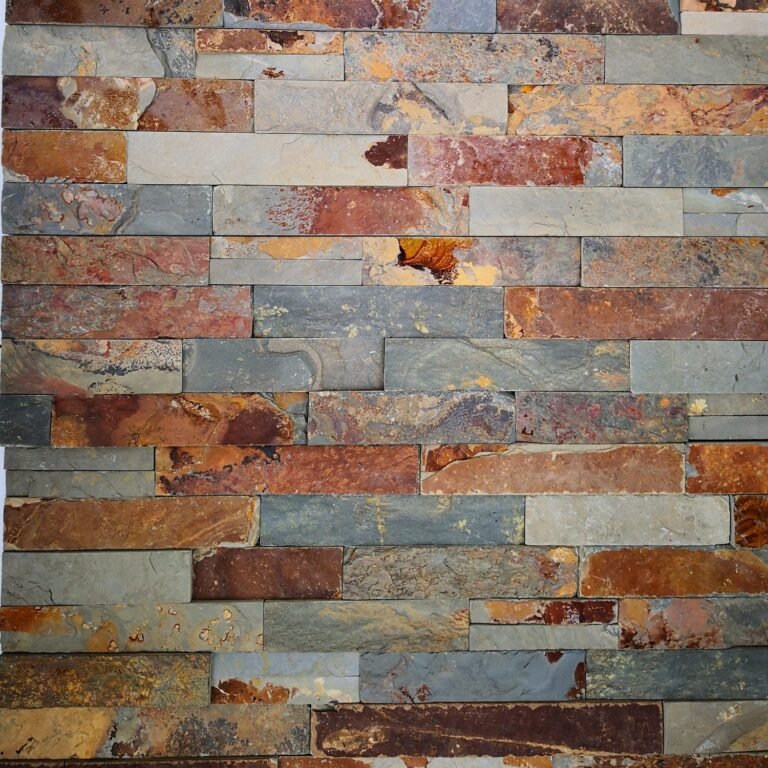
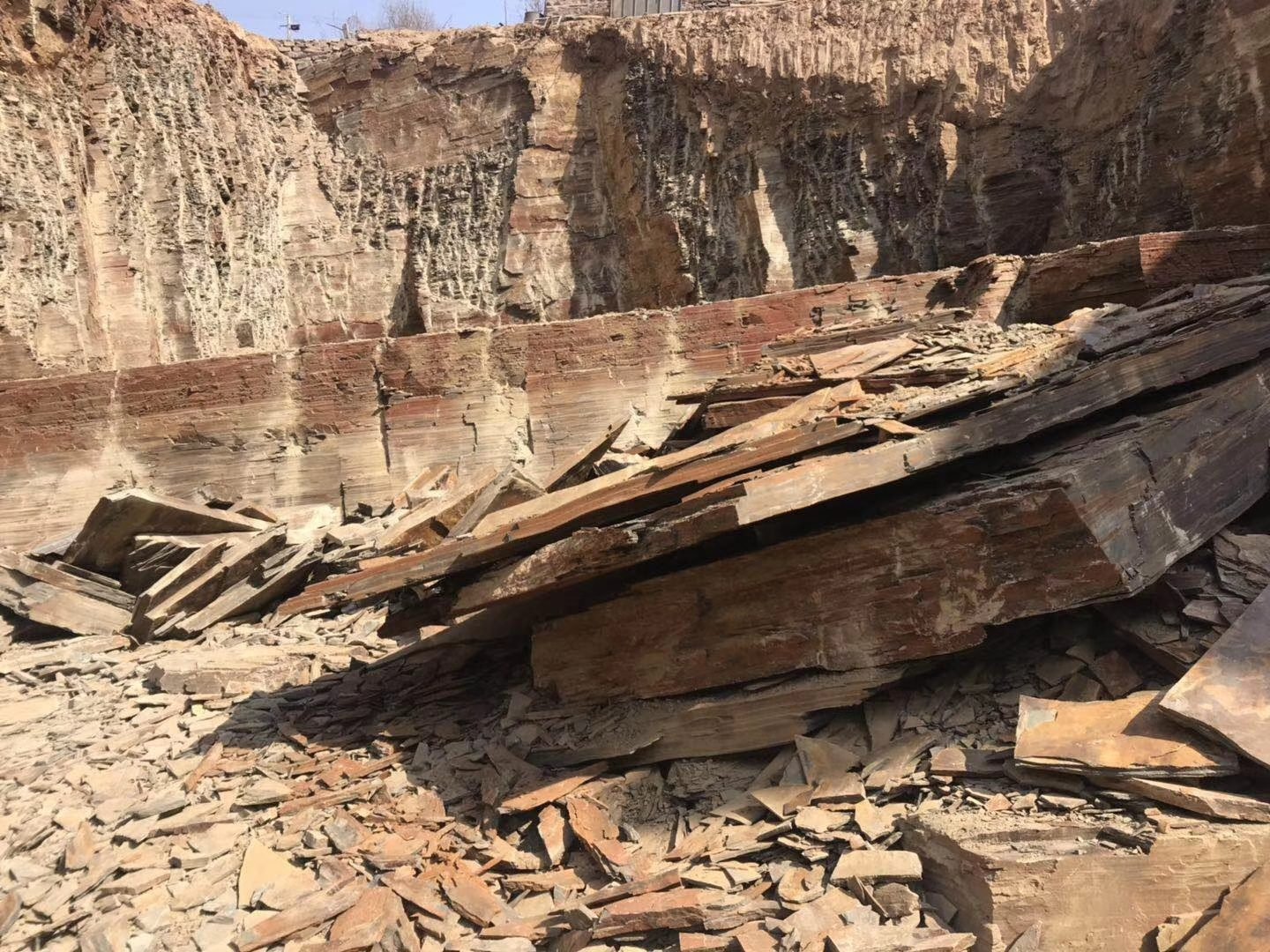
| Block and vein | Which seam or vein the run is locked to, and whether the named colorway can be re-supplied from it | A phase-two order that cannot be matched to the first wall |
| Thickness and tolerance | Nominal thickness in millimeters, the tolerance band around it, and how that band is verified | An areal mass you cannot plan freight against |
| Carrier or backing system | Which backing carries the face and what bond grade fixes it there | A delamination dispute with no specification to point back at |
| Quality-control basis | What is inspected, against which retained sample or stored artwork, and by whom | Acceptance decided by whoever photographs first |
| Export packing | Crate specification, number of strapping bands, pallet reinforcement, dunnage and airbags, fumigation | A damage claim with nothing in the file to measure it against |
| Inland and port charges | Port of loading named, and which terminal, customs, weighment and document fees are inside | A shipment-day invoice nobody budgeted |
| Commercial terms | Price basis, minimum order, lead time with its start trigger, and the payment split | A schedule promise that belongs to no one |
Read as a set, the seven lines describe a factory’s process rather than its price list, which is exactly why they are hard to fake and easy to verify later. A quarry-backed producer that locks loose stone runs to one seam and hand-sorts those faces against a retained sample, bonds with a marine-grade epoxy and crates the result in thickened fumigated timber is telling you all seven without effort. An office quoting stock it did not make may manage fewer of them and describe the rest as standard.
Four Phrasings That Move Cost to Destination
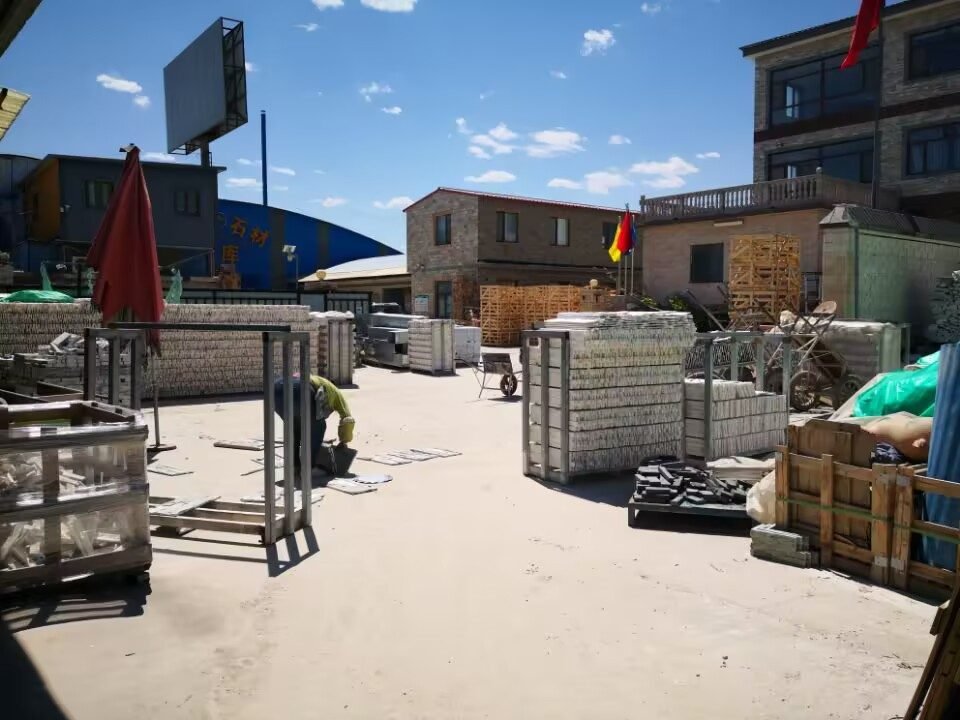
The first phrasing is a thickness written as a single number with an approximate in front of it. Tolerance is not a courtesy. It sets areal mass, and areal mass sets how many square meters a container can carry. Slate and quartzite sit at roughly 2,600 to 2,800 kg per cubic meter, and this site’s own stone panel weight calculator puts an 18 to 20 mm stacked panel at about 48 to 54 kg per square meter. Run that spread against a 26.5-tonne container plan and the same quotation covers somewhere near 552 square meters at the light end and 491 at the heavy end. A sixty-square-meter swing on one container, from a sentence that was never written.
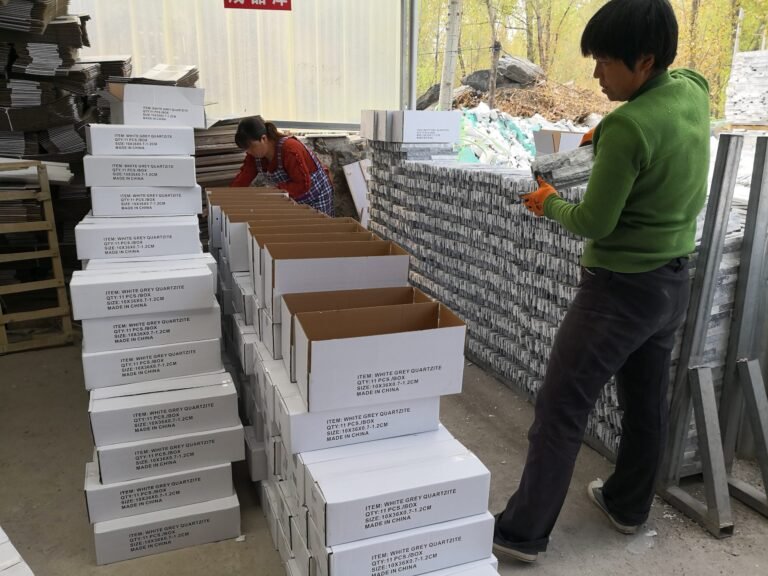
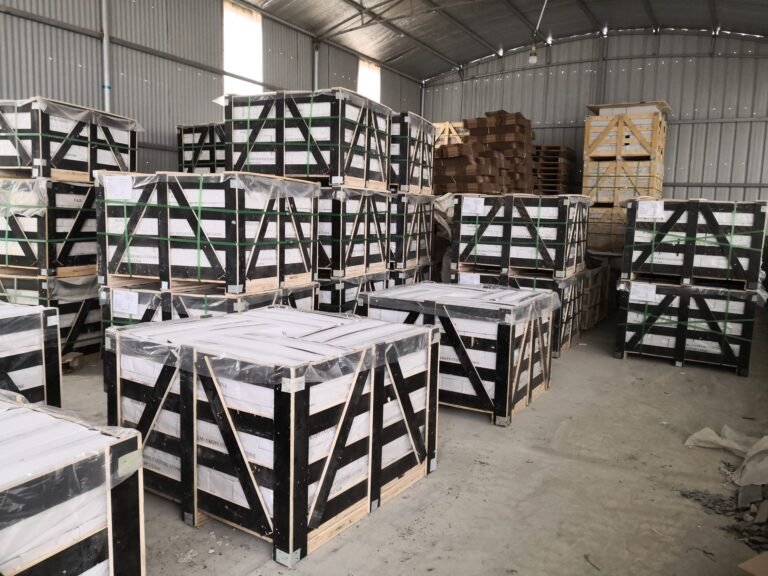
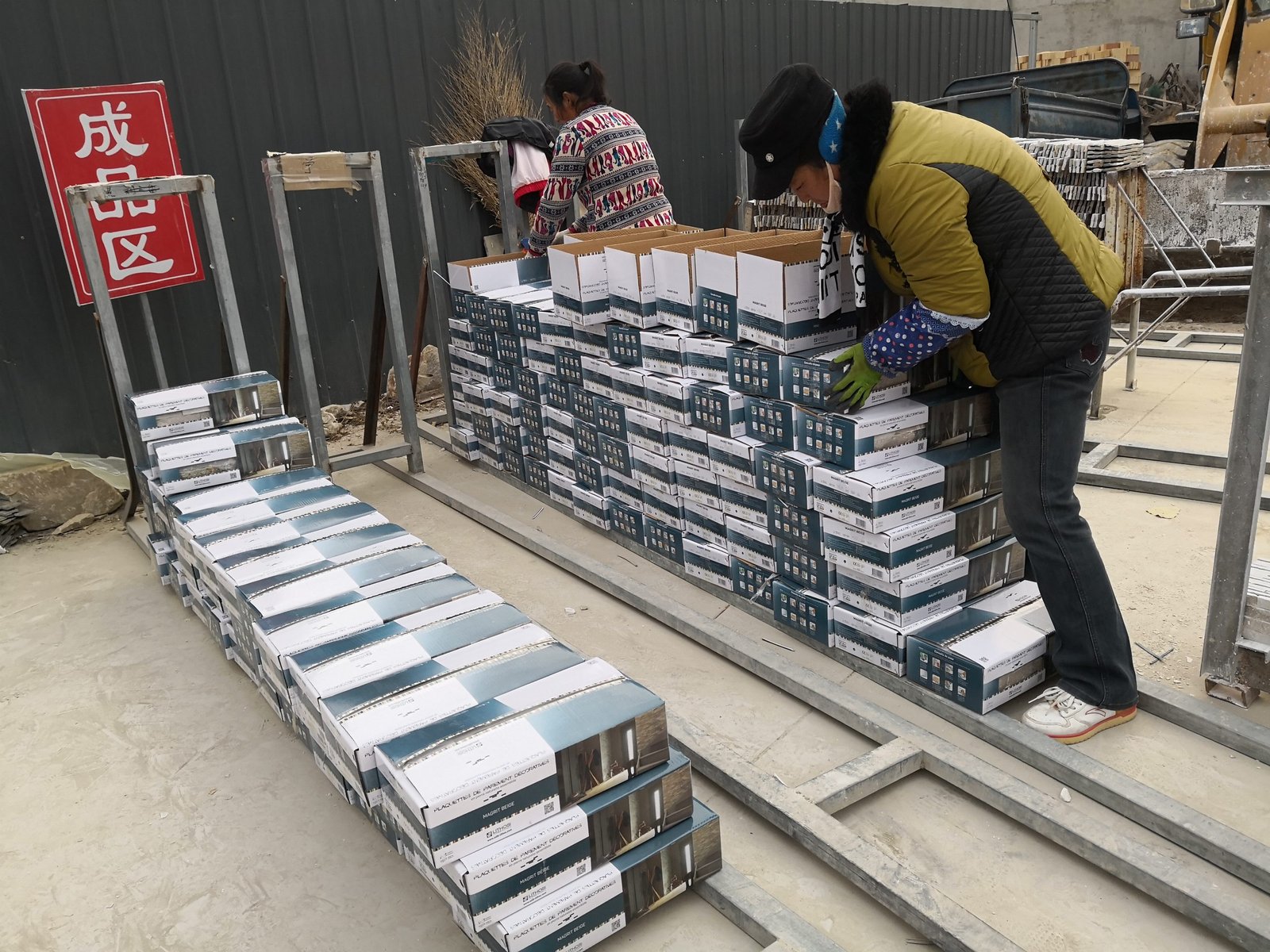
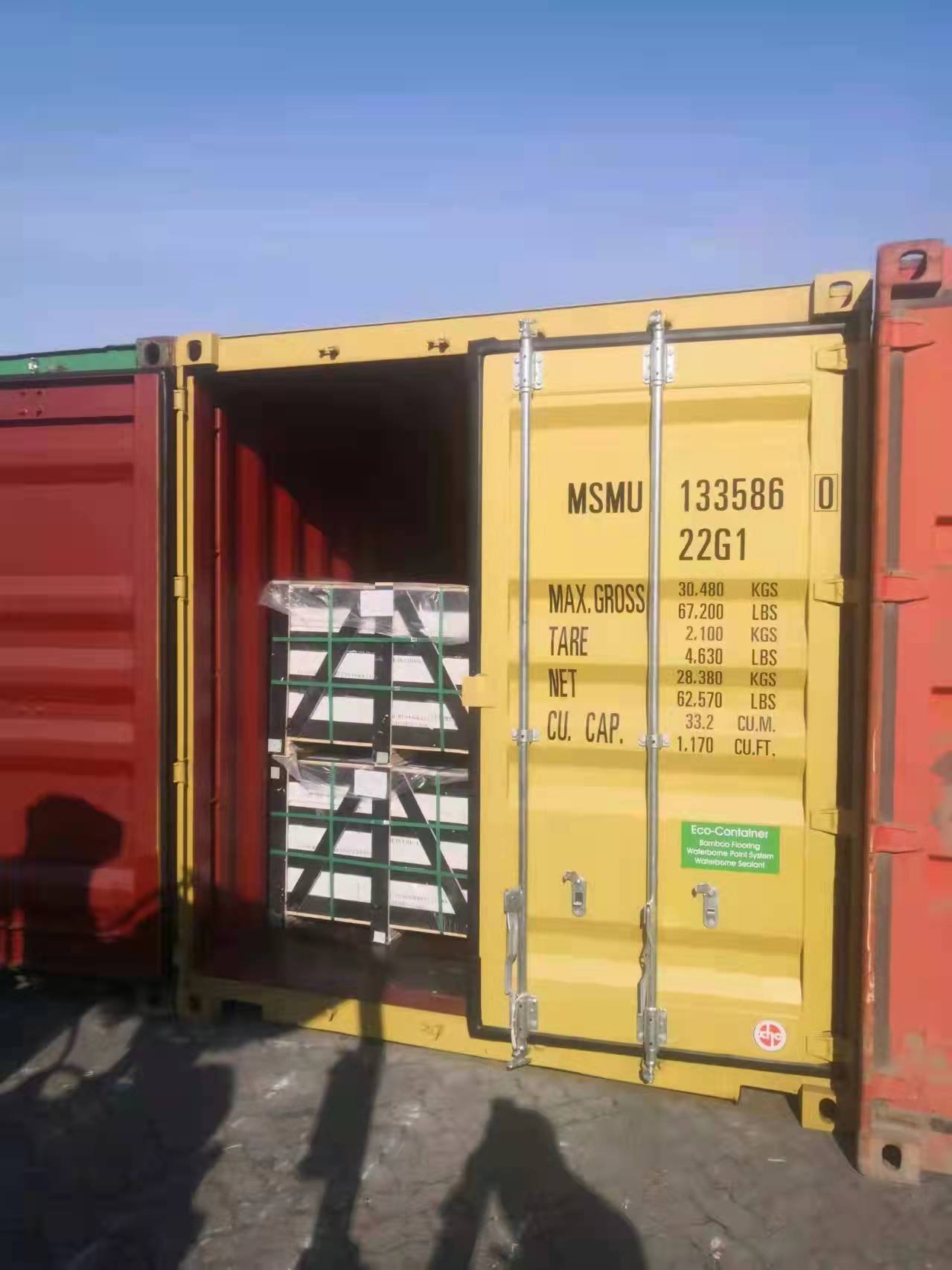
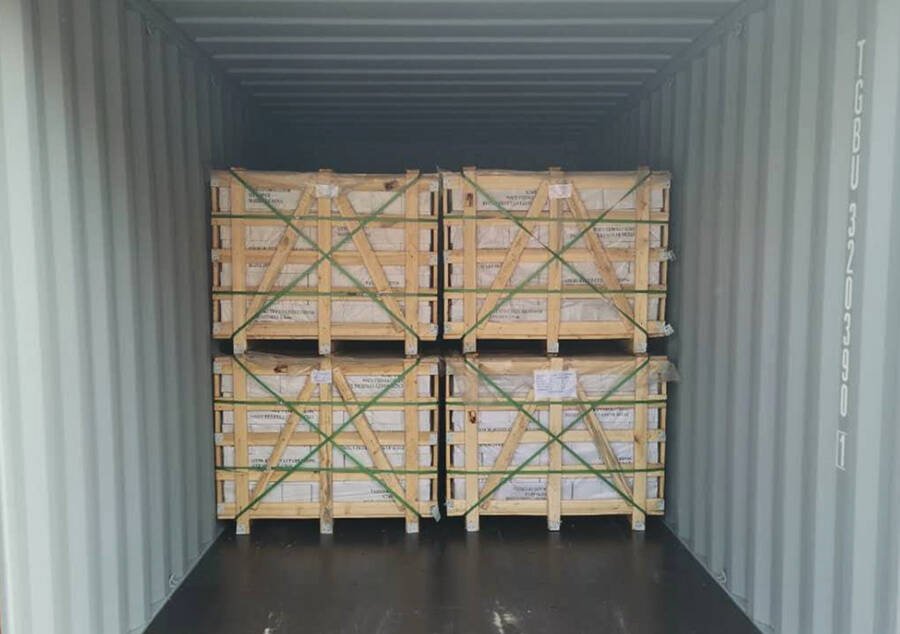
The second is standard export packing. For a heavy, fragile commodity crossing an ocean and then meeting a forklift at a handling yard it has never seen, “standard” can mean anything from a thin carton on a shared pallet to thickened fumigated crates with four to six high-tensile strapping bands, pallet reinforcement and airbags loaded as dunnage. Ask for the band count and the crate specification in writing, because that is the sentence a claim adjuster reads, and because timber crates have to be treated and documented before they are accepted at many destinations.
The third is a shipping term without a port, or a port without exclusions, described above. The fourth is the unit itself. A price per square meter invites the cheapest number to win, and the cheapest number is frequently the one shipping the fewest square meters per container or excluding a line that will be invoiced later. This is why the comparison should not start at the rate.
The One Number: Covered Square Meters
If a quotation can only be forced to state one thing, state covered square meters per container. It is the figure that connects the production decision to the freight consequence, and requiring it as a stated line on the quotation is what makes a specification change visible as a cost instead of as a preference. The arithmetic itself is already worked through in this site’s weight calculator; what is procedural here is that the supplier, not the buyer, writes the number down.
The arithmetic is short. A container closes on whichever limit binds first, weight or volume, and for most stone facades it is weight: a 20GP holds roughly 33 cubic meters while heavy stone loads are planned between roughly 24 and 26.5 tonnes at ports without weight restriction, so the tonnage runs out long before the cube does. Covered area is then that payload divided by the areal mass of the facing, and a few percent of the payload is left unspent for cartons, pallets and moisture. Using the areal masses already published in the weight calculator linked above gives three familiar formats and three very different answers.
| Facing as specified | Areal mass | Covered area at 26.5 t | Covered area at 24 t |
|---|---|---|---|
| Thin ledgestone 36x10cm, 12 to 15 mm | about 40 kg/m2 | about 660 m2 | about 600 m2 |
| Stacked ledger panel 15x60cm, 18 to 20 mm | about 50 kg/m2 | about 530 m2 | about 480 m2 |
| Cement-backed interlocking panel | about 70 kg/m2 | about 378 m2 | about 343 m2 |
Those are rounded outcomes of the same division, and while weight is what binds, the relationship between them is exact: covered area moves inversely with areal mass, so a 40 kg facing and a 70 kg facing differ by a factor of 1.75 in the wall one container delivers. Because ocean freight is assessed per revenue ton, the freight share of each installed square meter rises in the same proportion. That is the mechanism the thin ledgestone panels line was built around, which is why the 36x10cm format is sold as freight efficiency for importers rather than as a different look.
The inverse reading matters just as much. Thin is not free money. A lightweight bonded face needs a sound substrate and full mortar coverage, and a heavier cement-backed panel earns its weight on walls where the detail wants it. The lightest facing is the case worth checking rather than assuming, because it can reach the volume limit before the weight limit, at which point the cube becomes the binding number and the arithmetic above no longer holds. Choosing a format for freight alone, against a junction that needs substance, converts a shipping saving into scaffolding hours. Which box to book for a given format is a separate calculation, and getting it wrong there can swallow the difference whole.
Payment, Evidence and Lead Time
Commercial terms are a disclosure line because they decide what the buyer can actually enforce. The standard structure is a thirty percent telegraphic transfer deposit with the seventy percent balance cleared before shipment, against high-resolution video of the packing layout and the loaded container. That evidence is not a courtesy photo: it is the release condition, and a quotation that promises balance-before-shipment without naming what the buyer gets to look at first has quietly given the sequence away.
Lead time has to carry a start date or it is an opinion. Samples and short runs are made and sent in one to three working days. Stock production runs about twenty working days from Tianjin Xingang. A first order carrying private label cartons runs twenty-five to thirty because print plates and carton stock have to exist before the container does. What the structure then rewards is repetition: with artwork and specification already on file, a repeat order is not charged setup a second time, which is the reason the second container of a branded product is genuinely cheaper to produce than the first. Ask for those three lines, deposit split, evidence trigger and lead time with its start condition, on the face of the quotation rather than in a later email.
The Paperwork Inside the Number
Classification is a cost line that first-time importers discover at the wrong moment. Slate panels and quartzite panels do not share a commodity code; the two this factory works to are commonly 6803.00.90 and 6802.93.11, and the code declared on the export paperwork is the code your broker will have to work from. Duty follows from that classification, so the quotation should state what was declared, and the buyer should confirm the rate against the destination’s own schedule rather than the seller’s summary. European importers can verify duty and origin requirements for a given code on the EU Access2Markets database; United States buyers work from their own published tariff schedule and their broker’s ruling.
Around the code sits the document set that travels with the box: the bill of lading, the commercial invoice, the packing list and the fumigation certificate for the timber. Those are not separate from the FOB price. Producing them, and producing them consistently enough that a container clears instead of sits, is part of what the inland and port line is paying for, and the export documents guide itemizes which document each one is for. Buyer-side, this is also where an apparent bargain is usually unmasked: the quote that omits the paperwork is the quote that will hand the delay to you.
What to Send So Answers Match
Comparing quotes is easier if the request that generated them was already a specification. Put six things in front of every supplier: the format and nominal thickness with the tolerance you expect, the backing system you want or an explicit open question on it, the packing expectation stated as crate and strapping, the destination port, the annual volume you are planning rather than the single container you are testing, and the artwork or private label status of the cartons.
Then ask for the answers in the same order, with covered square meters per container and areal mass stated as numbers. Suppliers reply in the shape they were asked in. A vague request returns three vague rates that cannot be compared and a decision made on the lowest number, which is the most expensive way to buy a facade. The supplier service level agreement guide picks the same statements up one stage later, when they have to become enforceable commitments in an order rather than lines on a quotation.
Where This Guide Stops and the Others Begin
The two neighbours named at the top of this page keep their own ground: what a buyer can pull against a number, and what happens to the figure after the port. The disclosure checklist here is also deliberately narrower than the specification a buyer sends before ordering, which is a separate document with its own guide. What this page stops at is the quotation itself.
What this guide covers is narrower: the disclosure structure of a single quotation, the phrasings that shift cost across the ship’s rail, and the arithmetic that makes two offers mean the same thing. Read that way, a stone FOB pricing structure stops being a price and becomes a document with obligations in it, which is what it always was.
Frequently Asked Questions
What must an FOB stone quote state before two of them can be compared?
Seven lines: the vein or seam the run is locked to, nominal thickness with its tolerance band, the backing or carrier system and bond grade, the quality-control basis and retained sample, the export packing specification, the named port of loading with its included and excluded charges, and the commercial terms covering minimum order, lead time and payment split. Until all seven are on paper, two quotes are summaries of different products.
What is the single most useful number to ask a stone supplier for?
Covered square meters per container. Ask for it together with areal mass, because the first is the consequence and the second is its cause. That pair ties the specification to the freight in a way a per-square-meter rate never does, and it is a line worth requiring on the quotation rather than something the buyer has to derive afterwards.
Why is a per-square-meter rate not enough to compare two quotes?
Because stone ships against a payload, not a volume, and how many square meters fit inside that payload depends on areal mass. Two identical rates can carry a sixty-square-meter difference per container once tolerance is left unwritten, and the rate gives no sign of which quote absorbed that into a later invoice.
What does an unspecified packing line cost at destination?
Usually more than the saving that produced it. Crate specification, strapping count, pallet reinforcement and dunnage decide whether a damaged load has anything to be measured against, and a claim argued from silence is argued from the other party’s file rather than yours.
Does a thin facing always land cheaper than a heavy one?
On freight per covered square meter, yes, because the container carries more wall for the same tonnage. It lands cheaper overall only where the substrate, the mortar coverage and the junction details will properly carry a thin unit. Specified against a detail that wants substance, the freight saving returns as site labor.
Conclusion: The Structure Under the Rate
Treat an FOB figure as a document with seven obligations in it rather than as a rate to be beaten. Make the supplier state the vein, the thickness with its tolerance, the backing, the quality-control basis, the packing, the named port and the commercial terms, and ask for covered square meters per container before the conversation reaches price. Two quotes that survive that treatment can be compared honestly; two that do not are different walls wearing one description, and the difference will be invoiced at your destination.
- Name the port and its exclusions before you read the number.
- Treat an unwritten tolerance as a freight assumption you have agreed to.
- Ask for covered square meters per container and areal mass, both as figures.
- Expect packing and paperwork to be the cheapest lines and the most expensive absences.
- Put lead times and payment triggers on the quotation face, with their start conditions.
Send the format, the thickness and tolerance you expect, the packing requirement and the destination port to the Top Stone Panels team, and ask that the reply state its own structure, with covered square meters per container stated as a line rather than left to be inferred, so two offers can be compared line against line.