Buyers comparing crazy paving vs flagstone steppers usually start with price and end up redoing the math twice. The reason is simple: these two products do not compete for the same square meter. One covers a surface completely, the other marks a line across it. Choose the wrong one and you either over-build a path or leave gaps you did not plan for.
This guide sets the two formats side by side on piece geometry, base prep, labor, cost factors, and maintenance, then gives you a decision rule you can use the same day you take a quote.
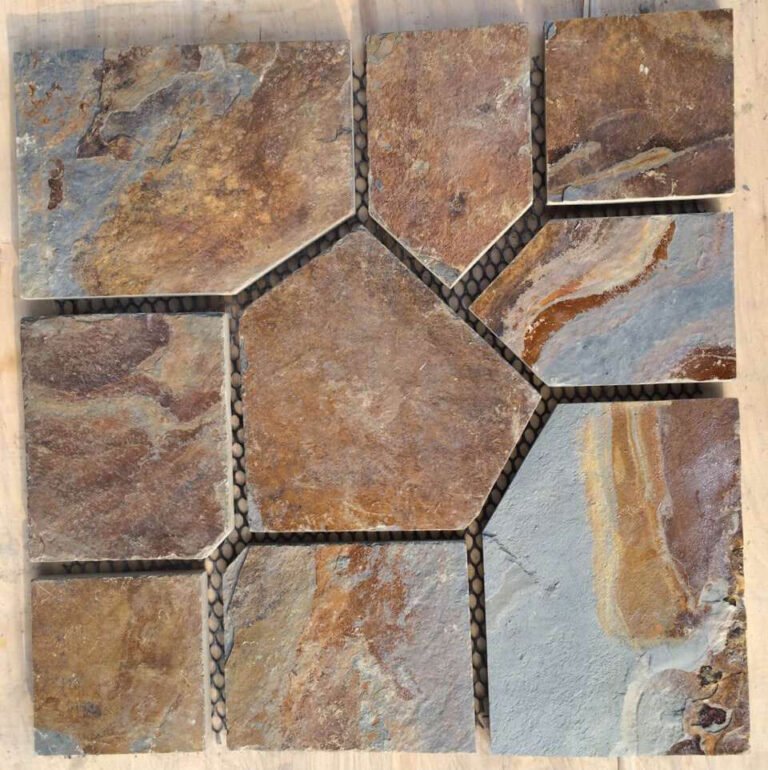
- Crazy paving sheets cover full surfaces in a factory-set random pattern; steppers are single stones set with visible gaps.
- Mesh-backed crazy paving cuts on-site layout labor because the pattern is pre-arranged at the factory.
- Steppers work best for walkways and entry paths; crazy paving suits patios, pool surrounds, and driveways.
- High-density slate faces give natural slip resistance when wet, which matters for any path near water.
- Order with a plan for waste: factory-cut mesh sheets run about 20% lower on-site waste than field cutting, and stepper runs need a waste allowance for cuts and breakage.
- What Separate Crazy Paving from Flagstone Steppers
- Crazy Paving vs Flagstone Steppers at a Glance
- Crazy Paving: Random Geometry on a Factory Sheet
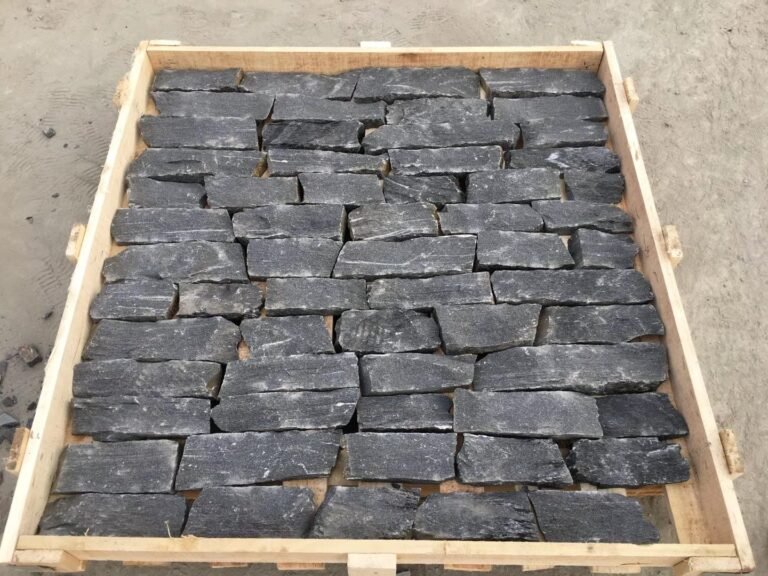
- Flagstone Steppers: Consistent Pieces, Clean Lines
- Installation and Base Prep Compared
- Cost, Thickness, and Maintenance Differences
- Which Path Stone Fits Which Project
- FAQ
- Conclusion
What Separate Crazy Paving from Flagstone Steppers
Flagstone is the broad category: flat pieces of stone, usually sandstone, slate, or limestone, split into layers and used for paving (flagstone definition). Crazy paving and steppers are two ways to lay that material, and they share almost nothing beyond the geology.
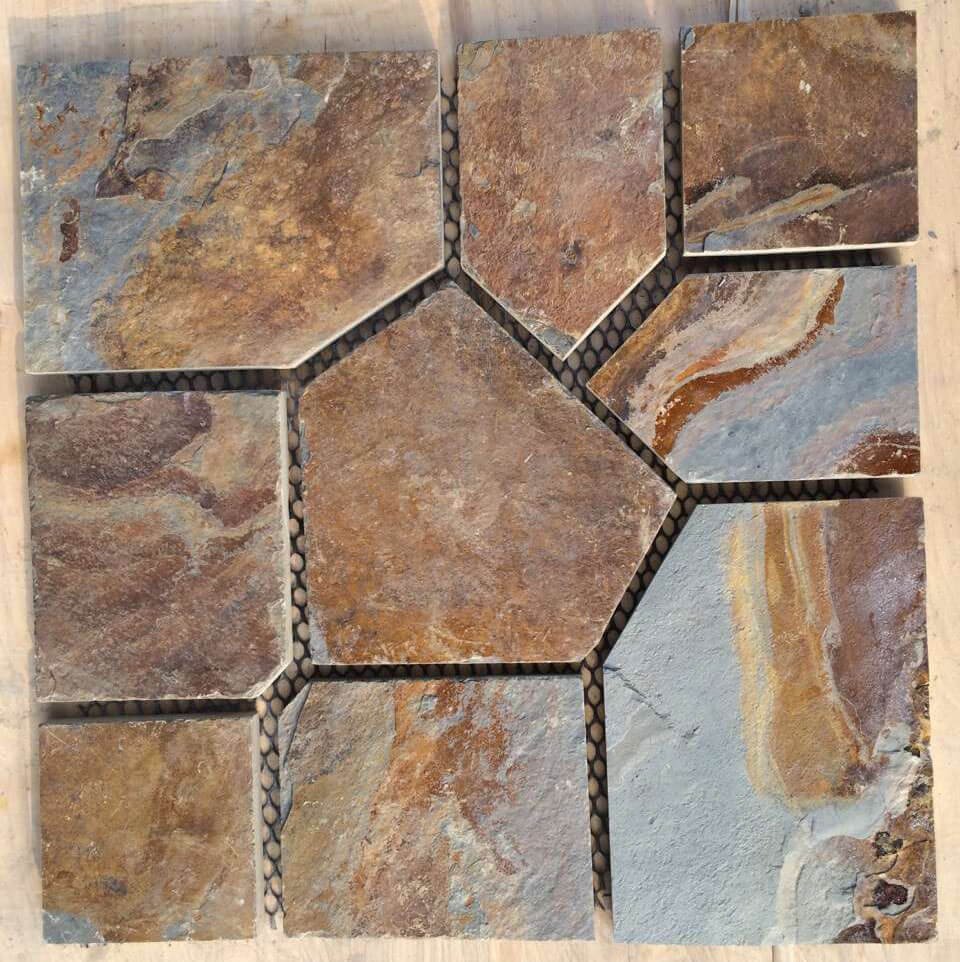
Crazy paving is a covering system. Irregular pieces are fitted edge to edge, puzzle style, over a whole surface. A factory mesh sheet version arrives with the pieces already arranged, so the installer lifts a sheet, sets it, and repeats. Steppers are a marking system. Individual stones are placed at intervals, often one comfortable stride apart, with grass, gravel, or mulch filling the space between.
That distinction drives everything else. A crazy paving patio needs a uniform base under every square meter because the entire surface takes foot traffic. A stepper path only needs a level, stable pad under each stone, which is why steppers read as lighter on the yard and cheaper in material. The visible difference is deliberate: coverage versus rhythm. It shows up in the walk, not just the photo.
Crazy Paving vs Flagstone Steppers at a Glance
Here is the field-level comparison before the deep dives. The rows that matter for a quote are geometry, coverage, base, and labor.
| Factor | Crazy paving | Flagstone steppers |
|---|---|---|
| Piece shape | Irregular, random polygons | Single flat flags, similar-sized |
| Surface coverage | Full coverage, joints grouted or sanded | Partial, visible gaps between stones |
| Supply format | Factory mesh-backed sheets | Loose pieces, counted per unit |
| Base needed | Uniform compacted base over full area | Level pad under each stone |
| Best use | Patios, pool decks, driveways | Walkways, entry paths, garden lines |
Read the table as a decision screen. If the project needs a walking surface you can put furniture on, crazy paving covers the area. If the goal is a line of steps across a lawn, steppers do it with less base work and a lighter visual footprint.
Crazy Paving: Random Geometry on a Factory Sheet
Crazy paving looks casual. The installation is anything but. Because every piece is a different shape, the joints have to be managed one by one, and a sloppy bed shows up as rocking stones within a season. The mesh-backed version exists for exactly this reason: the factory arranges the pieces into a fixed pattern, so the random look is achieved with repeatable sheet dimensions.
Top Stone Panels runs this line at 30,000 square meters per month from high-density slate and sandstone, which is the material point behind the look. High-density cleft faces stay rough when wet, and the same material tolerates salt spray without surface breakdown. That is why pool surrounds and coastal paths default to this format rather than polished units (mesh-backed flagstone and crazy paving supply).
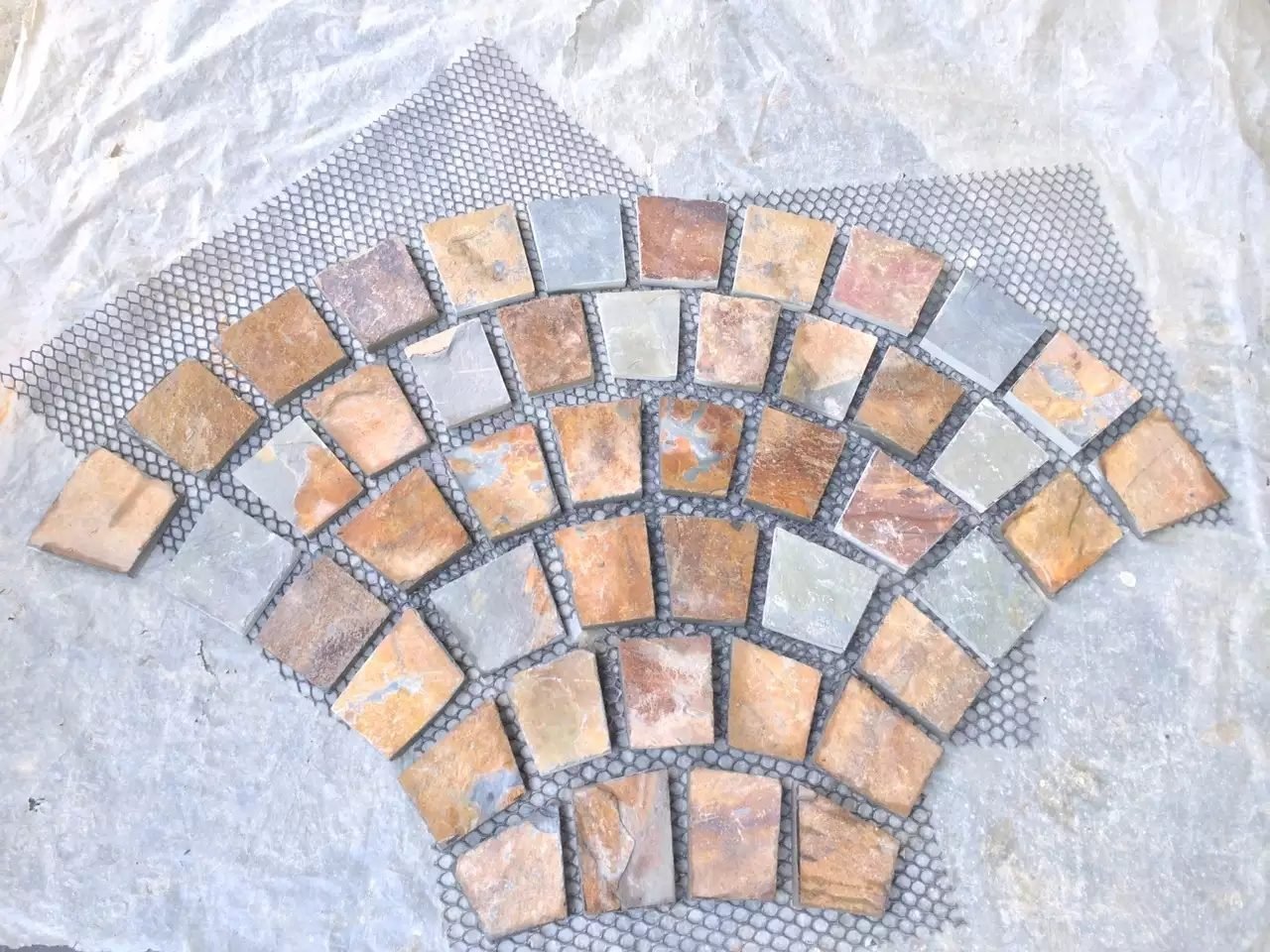
Where it wins: full-surface coverage and layout speed. A two-person crew lays mesh sheets, butters joints, and finishes a patio in a day because the pattern decision was made in the factory. Batch-specific vein selection keeps color harmony above 95% across the order, so the finished surface reads as one stone family rather than a patchwork of different quarries.
Where it loses: base discipline and joint work. Every square meter needs the same compacted base, because a soft spot under one sheet becomes a rocking, cracking zone later. Grouting or sanding joints across a full patio adds real labor, and the random geometry makes cutting a sheet to a border line slower than cutting a rectangle.
The verdict: choose crazy paving when you are covering an area that people will stand on, walk across, and put furniture on. The higher base cost is a trade for a surface, not a decorative line.
Flagstone Steppers: Consistent Pieces, Clean Lines
Steppers sell simplicity. Each flag sits as its own island on a small, level pad, and the gaps between stones let grass or mulch soften the path. Because the stones do not touch, there are no joint lines to grout and no pattern to hold. The visual rule is spacing, and the spacing rule is stride.
The practical question is piece quality, because each stone carries the whole load of a footfall alone. A split-face high-density slate stepper distributes that load better than a thin decorative piece, and a factory that controls thickness keeps the walking surface level instead of wobbling.
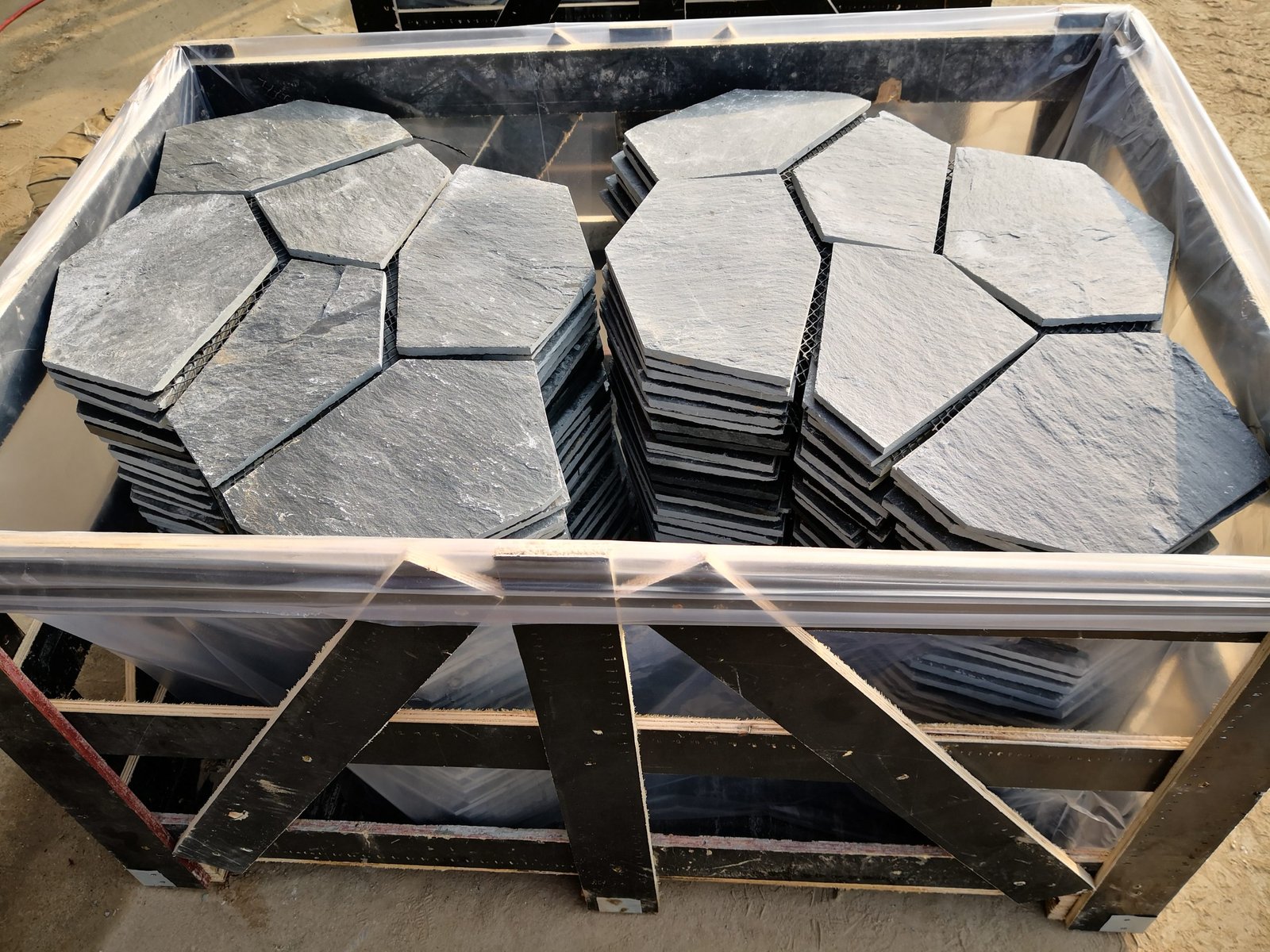
Where it wins: installation speed and material quantity. Topping up a base pad under each stone is far less excavation than a full patio bed. Coverage math works differently too: a path of steppers uses material only where the foot lands, so the same budget covers more linear meters than a full-surface patio.
Where it loses: stability and furniture give-up. Sand bedding can wash out under heavy rain, and individual stones can shift under repeated corner impact. A stepper path is a path, not a terrace. On sloping ground you are also working with a perimeter edge on every stone, which needs more leveling care than a continuous sheet.
The verdict: choose steppers when the job is movement, not gathering. Entry paths, garden lines, and kids’ shortcuts are stepper territory. If a table, grill, or sun lounger will sit on it, move up to crazy paving or flagstone pavers. For the wider family of path formats, the flagstone pavers types guide covers the full range.
Installation and Base Prep Compared
Base prep differences change the labor estimate more than the stone price does. A crazy paving patio carries full-area excavation and compaction; a stepper path carries per-stone pads. On a typical residential run, that difference can swing the crew hours as much as the stone quantity.
| Work step | Crazy paving | Flagstone steppers |
|---|---|---|
| Excavation | Full area, uniform depth | Per-stone pads only |
| Base layer | Compacted sub-base then bedding sand or mortar | Leveled sand or gravel pad per flag |
| Setting | Mesh sheets placed and tapped level | Each flag leveled individually |
| Joints | Grout, sand, or stone dust over full surface | No joints; gaps stay open |
| Cutting skill | Sheet borders need fitting cuts | Limited cuts for spacing and edges |
Do not let the pre-assembled sheet fool you into skipping base prep. A mesh sheet is only as stable as the bed under it. Compact the sub-base, level the bedding layer, and let the stone sit on the full sheet footprint. For path construction detail, the flagstone paver base and jointing guide walks the full sequence for both formats.
Cost, Thickness, and Maintenance Differences
Cost comes in two buckets: the stone itself and the base under it. Steppers look cheaper per piece because you order fewer square meters, but the per-meter base work only drops if the path is a true stepper line. The moment you want a solid walking strip, the comparison reverts to crazy paving versus full pavers, and coverage wins.
| Cost factor | Crazy paving | Flagstone steppers |
|---|---|---|
| Material volume | Full coverage per m2 | Lower, based on stone count and spacing |
| Base cost | Higher, full-area compaction | Lower, per-stone pads |
| Waste factor | Lower with factory-cut sheets | 8-10% for cuts and breakage |
| Maintenance | Joint refill, occasional reset | Leveling pads, setback over time |
On maintenance, both formats share one advantage of high-density slate and sandstone: they do not need chemical sealing to stay non-slip, and they tolerate freeze-thaw cycles from -30°C to +50°C. A damp, shaded path is where the formats split. Crazy paving joints can grow weeds between stones if sanded; steppers let grass grow between flags, which means mowing work but no weed line in the joint. Pick the maintenance you can live with, not the one that photographs better.
Delivery cost runs on the same axis as material cost. Both formats ship from the same factory line out of Xingang, and the way the stone is packed decides how much of it arrives whole. The zero-breakage protocol at Top Stone Panels uses reinforced cartons, fumigation-free pallets, steel strapping, and inflatable dunnage in the container, which matters more for brittle thin flags than for any other product in the yard. A cheaper quote that adds a 3-5% breakage allowance is usually not cheaper.
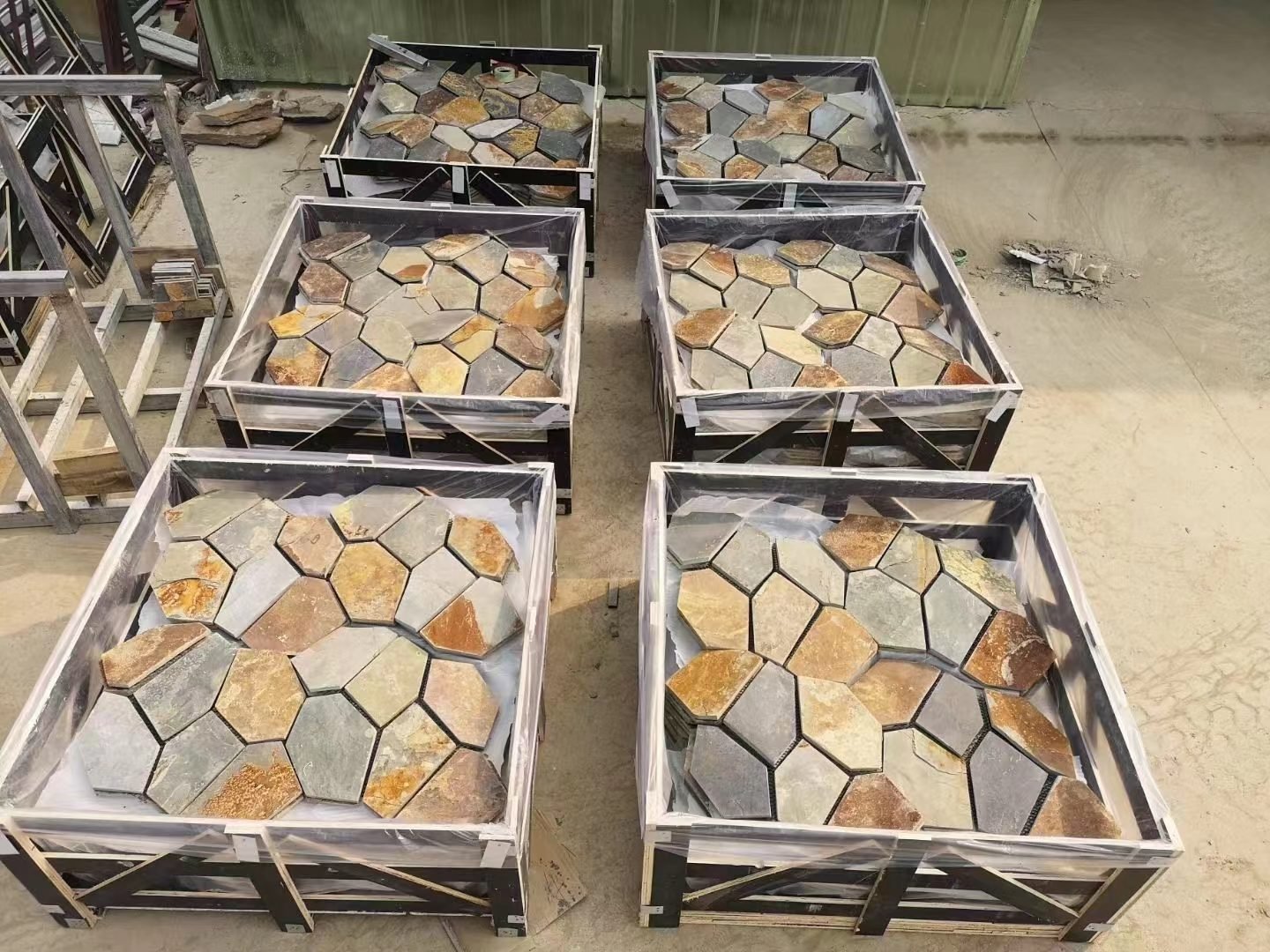
Ordering both formats starts the same way: confirm the stone thickness tolerance, ask for the batch color photos, and request a sample that matches the production vein. Samples ship in 1-3 days from the factory, and wholesale orders start at one 20GP container on 30% T/T deposit terms, with production running 20-25 working days after approval. The color control question, not the stone price, is where a flagstone order is won or lost.
Which Path Stone Fits Which Project
Match the format to the traffic and the furniture, then let labor cost settle the tie.
Choose crazy paving when: the surface takes standing use, pool decks and patios, coastal exposure, or you want full stone coverage with minimal visible base. The factory mesh sheet version is the lowest-labor path to a random-look stone surface, and direct-from-quarry pricing keeps the square-meter cost competitive at container scale.
Choose flagstone steppers when: the project is a walkway or entry path, the budget favors linear meters over area, or the garden look depends on gaps between stones. Order from a factory that controls thickness and packs with protection, because every stepper takes the whole footfall alone.
For pool-specific work, the flagstone pool decking guide covers wet-area installation rules, and the flagstone walkway layout guide shows spacing patterns before you commit to a quantity.
Top Stone Panels ships mesh-backed crazy paving sheets and split-face flagstone steppers from the quarry in Yi County, Hebei. One 20GP container starts a wholesale order, samples ship in 1-3 days, and standard production runs 20-25 working days.
Slip-resistant cleft faces | Salt-spray tolerant | 95%+ color harmony per batch
FAQ
What is the difference between crazy paving and flagstone steppers?
Crazy paving covers a full surface with irregular stones pre-arranged on mesh sheets in a random pattern. Steppers are individual flags set in a path with gaps between them, so the pattern is spacing, not interlocking.
Which is cheaper, crazy paving or flagstone steppers?
Steppers use less material and less base work, so a linear path costs less overall. Crazy paving covers every square meter and needs full-area base prep, but it gives you a usable sitting surface. Compare coverage, not a single stone price.
Is crazy paving good for a pool deck?
Yes. High-density slate and sandstone crazy paving is made for pool surrounds because cleft faces stay slip-resistant when wet and the material tolerates salt spray without surface breakdown.
How far apart should flagstone steppers be?
Set them one comfortable natural stride apart, then adjust for the smallest walker in the house. Divide the path length by the spacing, and add 8-10% to the stone count for cuts and breakage.
How much stone do I need for a flagstone path?
Count steppers by spacing: divide the path length by the gap you chose, then add a waste allowance. For crazy paving, measure the surface area and order the sheet coverage in square meters, rounded up to the next sheet width.
Conclusion
Crazy paving and flagstone steppers answer different project questions even though they share a quarry. Crazy paving builds a surface people stand on; steppers build a path people pass through. Once you name the use, the rest is base math: full-area compacted bed for sheets, per-stone pads for flags, and a waste allowance on everything that gets cut on site.
Key takeaways:
- Crazy paving mesh sheets give full coverage with a factory-set pattern and lower on-site layout labor.
- Flagstone steppers give a lighter path look with less base work and material, set one natural stride apart.
- High-density slate and sandstone keep both formats slip-resistant and salt-spray ready in wet zones.
- Confirm thickness tolerance and packaging before ordering; every stepper bears the full footfall alone.
Request a sample set of both formats from Top Stone Panels and walk on them before you commit a container. Samples ship in 1-3 days, and the flagstone and crazy paving product line carries mesh sheets, loose steppers, and color options in one batch-matched order.