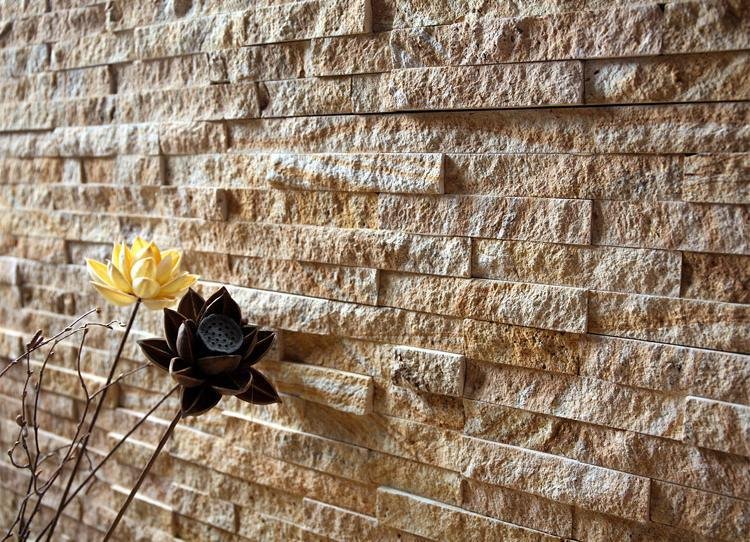
Stone banding is the design trick that keeps a tall stone facade from reading as one heavy pile of wall. A single horizontal line of contrasting stone, run cleanly across the elevation, shortens the visual height, marks the floor line, and gives the eye a place to rest. On stacked stone veneer the same trick turns an ordinary field of panels into a composed facade, and the cost is a few extra panels, not a new system.
This guide explains what a belt course does, how to pick the stone for the band, how to detail the water edge so the ledge does not fail, and how to order the right quantity for a linear run without guesswork. It is written for distributors quoting facade jobs, contractors planning installation, and designers specifying the elevation.
Top Stone Panels is the slate and quartzite exporter in Yixian County, Hebei, with quarry-owned sources and 18 years of container export history. Band courses are a recurring request on villa facades because architects like the discipline of a horizontal line, so we batch stone specifically so the band and the field match in color while contrasting in layout.
- A band course divides vertical mass; one clean horizontal line often does more for balance than a second tone of stone.
- Use the same material family and quarry batch for band and field, then contrast with layout or a lighter-vs-darker cut.
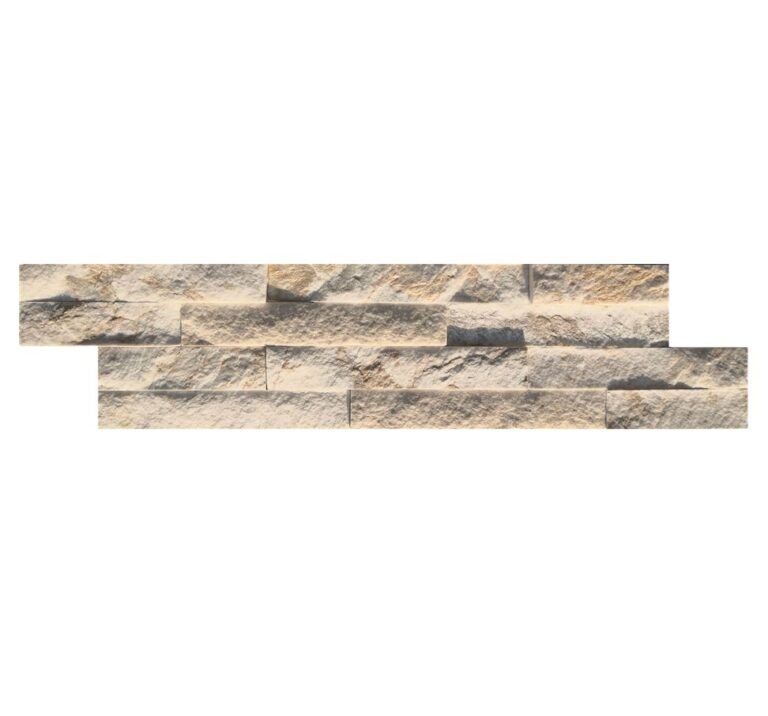
- Panel formats for banding are the standard 15x60cm / 15x55cm stacked stone and the 36x10cm ultra-thin ledgestone.
- Horizontal ledges shed water; flashing, a slight slope, or a drip detail belongs at the top and bottom of the band.
- Order quantity by linear run and courses, add corners and returns, and lock a color-mix layout before production.
- 1. What Stone Banding and Belt Courses Do
- 2. The Anatomy of a Stone Band Course
- 3. Choosing Stone for the Band Layer
- 4. Matching Color Across the Facade
- 5. Water Detailing on Horizontal Ledges
- 6. Corners and Returns in a Band Run
- 7. Calculating Stone Quantity for a Band
- 8. Ordering Samples and Planning Lead Times
- FAQ
- Conclusion
1. What Stone Banding and Belt Courses Do
A belt course is a horizontal band of masonry that runs across a wall, usually at a floor line, a sill line, or where the facade changes scale. Its first job is optical: it breaks the vertical mass of the elevation so a three-storey wall reads as three balanced storeys instead of one undifferentiated cliff. Its second job is practical: a well-detailed band marks the junction between different cladding zones and gives flashing a place to shed water.
Banding does not create a false structural statement. On a veneer wall the band is a surface treatment, the same half-inch to one-and-a-half-inch-facing layer as the stone around it, laid flat and continuous instead of in stacked vertical runs. That distinction matters on quotes: a band course is a layout decision and a material line item, not a different load path.
On stacked stone panel projects the band usually runs one to three courses high at a balcony line, a parapet base, or the lintel of a feature opening. The band carries no weight and does no waterproofing by itself; its discipline is what sells the elevation.
2. The Anatomy of a Stone Band Course
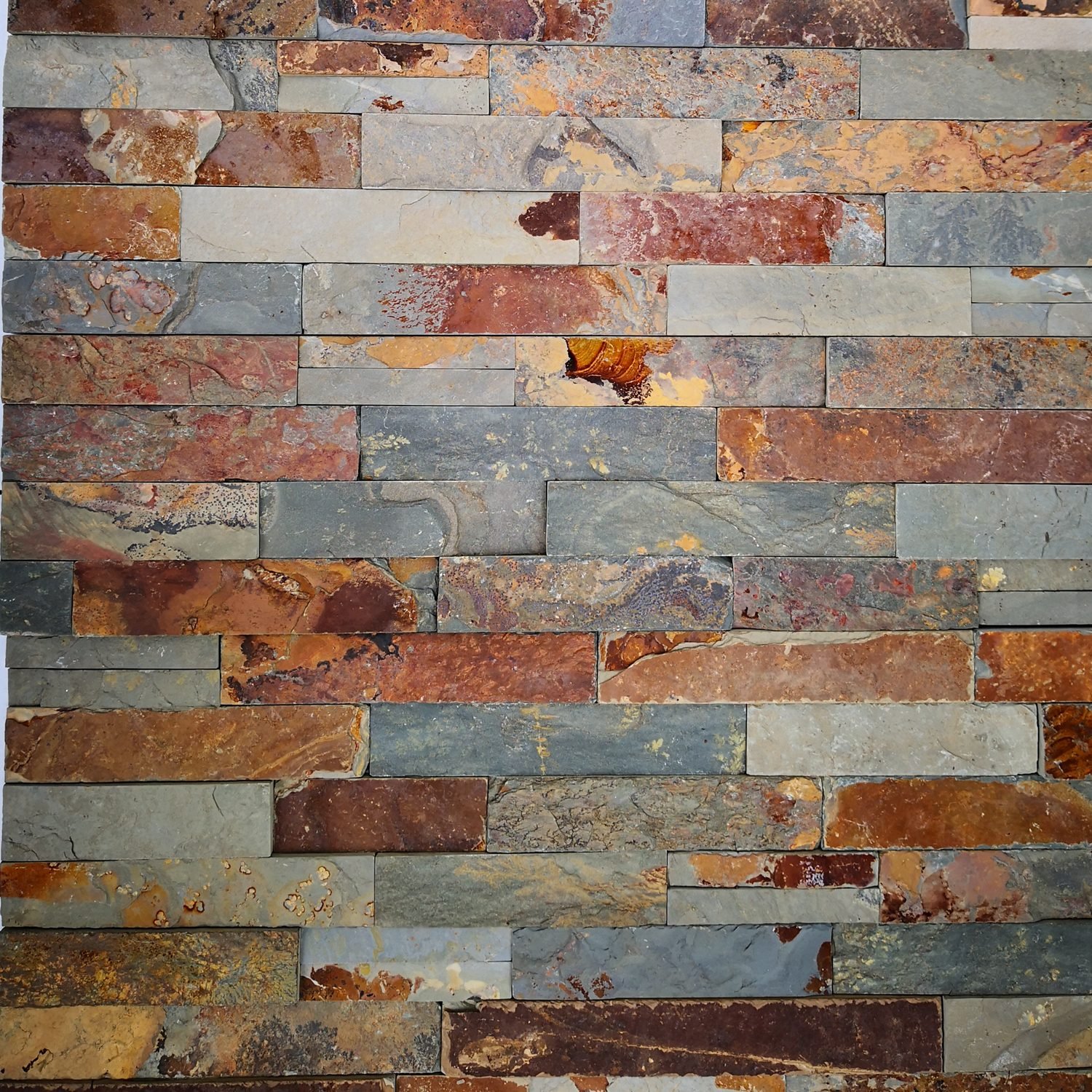
Thin natural stone veneer is facing material, so a band course made of veneer follows the geometry of the surrounding wall rather than projecting like a classical cornice. The elements that matter are the course height, the joint pattern, the transition lines, and the corners.
- Course height. One course of standard panels is typically 15cm (about six inches); ultra-thin ledgestone mini-panels run 10cm (about four inches). A band can be one course or a group of two or three, kept uniform so the line stays crisp.
- Joint pattern. The band reads best when its joints do not align with the field joints directly above and below. Offsetting the running bond by half a panel makes the band look designed, while aligned joints make it look accidental.
- Transition lines. The top and bottom edge of the band should land on a straight reference line, which means checking the substrate is flat before the course goes on. The infrared-cut tolerance of factory panels reduces the shims you would need on site.
- Thickness. Band panels should match the field panel thickness so the face stays flush. If the band projects, it creates a dirt shelf; if it recesses, it creates a shadow line you must design on purpose.
Keep the anatomy simple. Banding fails visually when it becomes busy: multiple tones, uneven courses, and broken lines. One horizontal run, one tone shift, one clean offset reads as intention. The vocabulary of band courses comes from classical masonry, and the Natural Stone Institute publishes plain-language guidance on selecting and detailing natural stone facades for buyers and specifiers.
3. Choosing Stone for the Band Layer
The material rule for banding is boring and correct: the band should come from the same stone family as the field, ideally the same quarry batch. Slate with slate, quartzite with quartzite. That way the color temperature and the texture grain match, and the contrast comes from tone or finish, not from a different rock pretending to belong.
| Band format | Typical course height | Best use |
|---|---|---|
| Stacked stone ledger panel | 15cm (15x60cm) | Main floor lines and parapets on large facades |
| Stacked stone ledger panel | 15cm (15x55cm) | Narrower returns and column faces |
| Ultra-thin ledgestone mini-panel | 10cm (36x10cm) | Delicate bands, sills, interior accent lines |
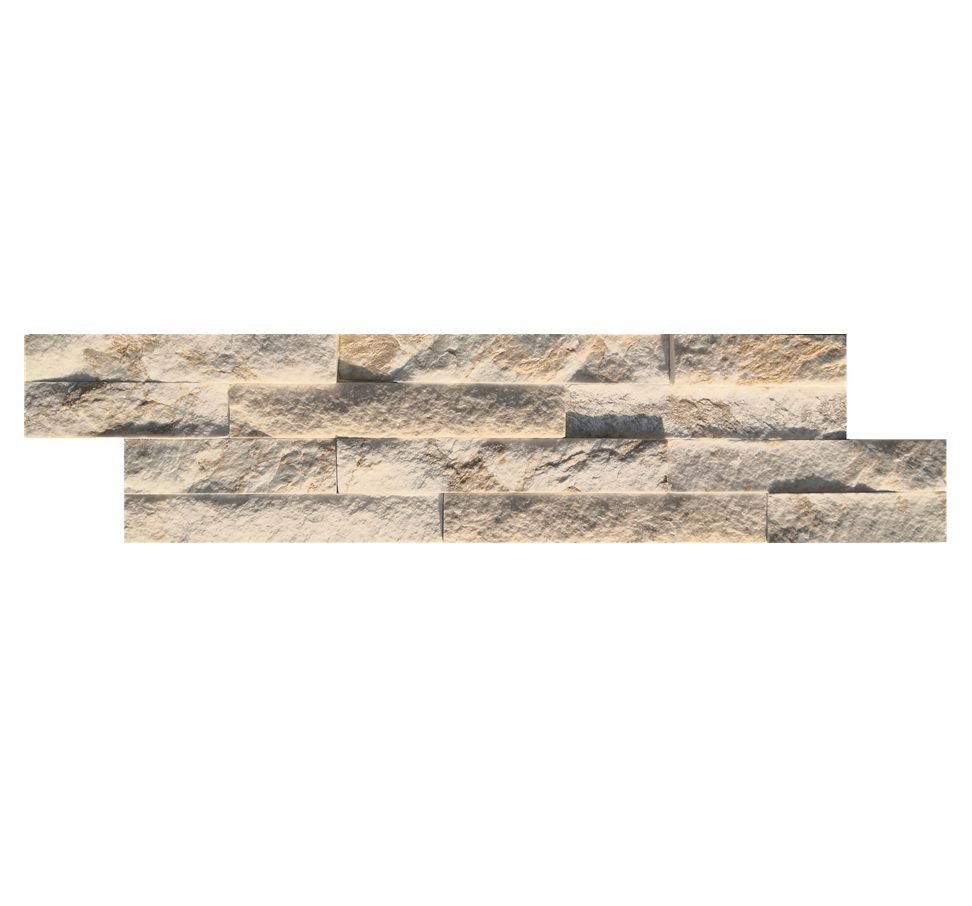
The 15x60cm and 15x55cm formats come with L-corner pieces in the stacked stone line, which is what keeps a band turning the corner cleanly. The 36x10cm ultra-thin ledgestone panels, at roughly a third of the field panel height, produce proportionally finer bands that suit European-style elevations and interior feature walls. Both are natural slate or quartzite, cut on infrared saws with thickness checked at three factory QC points.
4. Matching Color Across the Facade
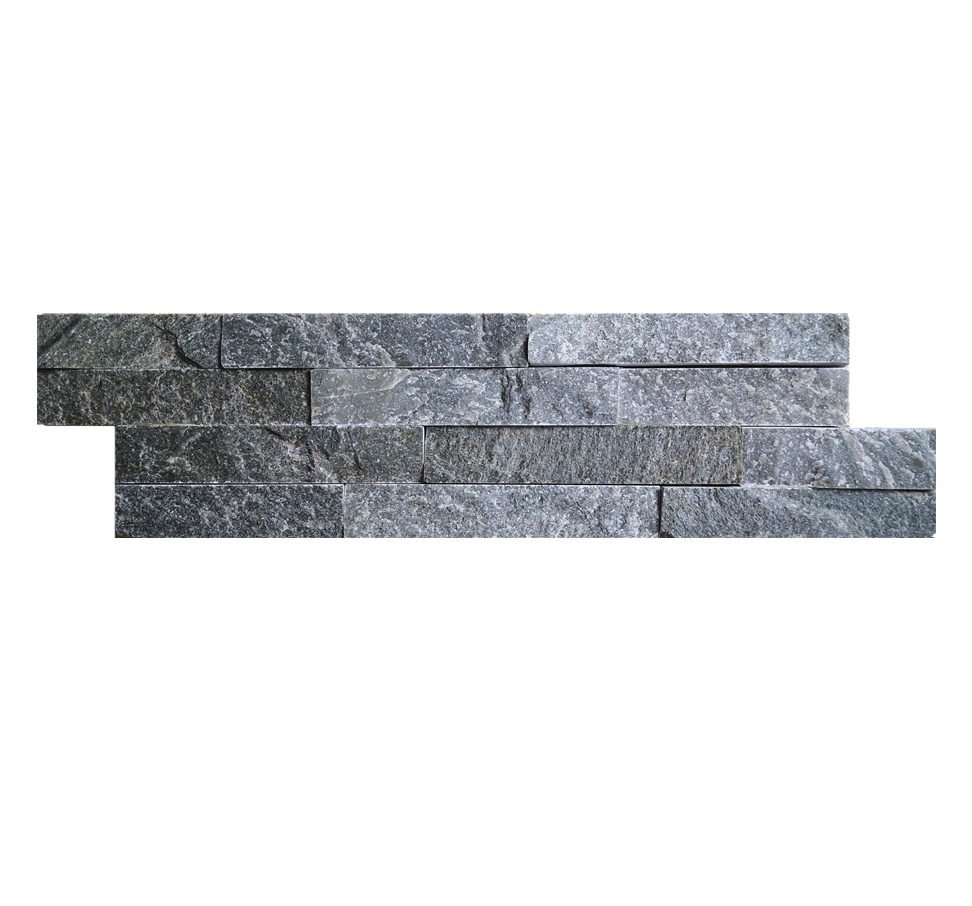
A band contrasts by layout, but it can also contrast by tone if the quarry batch allows it. Natural stone is a product of the vein, not a dye lot, so “black band, grey field” works only when both tones come from the same material family and the color range sits close enough that the pairing looks curated rather than random.
The safest approach is batch-specific vein selection: the field and the band are produced from the same quarry block groups, so the dominant color stays continuous while the layout difference creates the line. Top Stone Panels runs this as standard practice, tagging material by batch so a container of field panels and its band panels arrive with color continuity your installer can verify on day one.
If you do want a tonal jump, specify it deliberately and ask for a color-mix layout before production. A photo-realistic panel layout, panel by panel, lets the designer confirm the band reads as a line, not as a patch. This is the same discipline that keeps a mixed-color wall from looking like a repair.
Texture is the second lever. Field panels with heavier split texture and band panels with a flatter cut make the band visible in low light when color alone disappears. The ultra-thin ledgestone line is a natural fit here because its scale is different from the field panel, and the difference communicates “designed” without shouting.
5. Water Detailing on Horizontal Ledges
Every horizontal surface on an exterior wall is a water management problem. A band course creates a ledge, and ledges collect rain, snow, and wind-driven moisture that the vertical wall would have shed. The failure mode is not exotic: water sits at the band transition, freezes, and pushes the veneer or the mortar from behind.
- Flashing. A metal flashing above the band, lapped into the weather-resistant barrier, directs water out and over the ledge instead of behind it.
- Slope. The band face does not have to be completely plumb; a hair of positive slope outboard on exposed ledges helps water run off before it freezes.
- Drip. Any projecting band edge needs a drip or kerf so water does not travel back onto the wall below.
- Drainage behind veneer. Keep the cavity or drainage plane behind the stone clear; a band course is not a place to let mortar fall and block the weeps.
None of this is special to banding; it is the same detailing rule as caps and coping. What banding adds is the discipline of doing it at more than one height on the elevation. A builder who details the balcony line band correctly has a facade that survives freeze-thaw; a builder who skips the flashing has a warranty claim forming.
6. Corners and Returns in a Band Run
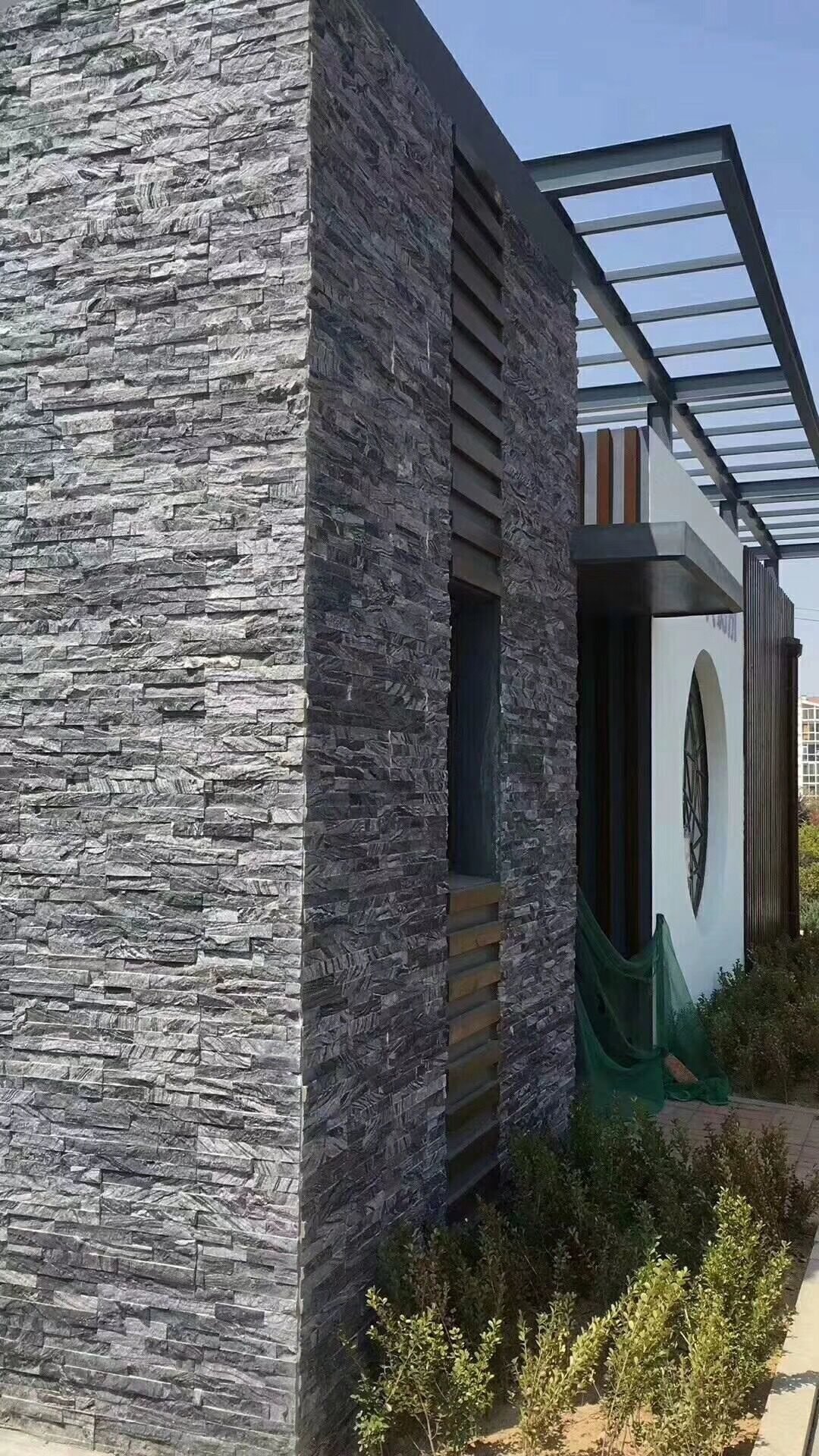
A band that dies at the corner looks like a mistake, so the run must continue around outside corners, inside returns, and across window reveals. This is where panel systems earn their keep. Prefabricated L-corners turn the band without a field-cut miter at the corner, which saves labor and keeps the joint tight enough that the line does not wander across the elevation. Contractors commonly cut 50% of the corner labor when L-corner pieces replace hand-cut corners, and the visible result is a corner that reads as one continuous fold of stone.
Plan the return width as a multiple of the panel width where possible. A 15x60cm panel wraps a standard corner return in one piece; a short return needs a cut panel, and factory cuts are cleaner than field cuts because the infrared saw holds the same tolerance on every edge. When the design calls for a column or a pilaster in the band zone, treat it as a separate pull-up: run the band up to the column, wrap the column face with its own pieces or a column kit, and continue the line on the far side.
If the band wraps a projecting belt course in front of a window, align the band top with the window sill line. The alignment ties the band to an architectural feature, which is what separates a facade detail from a stripe.
7. Calculating Stone Quantity for a Band
Quantity for a band starts with linear meters, not square meters. Measure the wall length the band must cover, count the courses, and add the returns. A worked example: a 40-meter facade with a two-course band of 15x60cm panels needs 40m x 2 courses of coverage. Each 60cm panel covers 0.6 linear meters per course, so one course needs 40 / 0.6 = 67 panels, and two courses need 134 panels plus corners, cuts, and a 5-8% waste allowance for edge cuts at openings and returns.
| Band run | Panel format | Linear meters per panel | Panels per 10m course |
|---|---|---|---|
| Single course, 10m | 15x60cm | 0.6m | 17 |
| Single course, 10m | 36x10cm | 0.36m | 28 |
| Two courses, 10m | 15x60cm | 0.6m per course | 34 |
The example ignores corners and returns, so treat it as the floor. Add an L-corner piece for every outside corner the band crosses and measure the return length separately. Waste allowance on a straight band run is small, but every window or opening in the run pushes it up; 5-8% is the working number for a clean elevation, more when the band weaves around reveals.
Quoting a facade with banding? Get the full material story in one pass: color-mix layout for band and field, L-corner counts for your returns, and thickness data that keeps the band flush with the field. Top Stone Panels supplies quarry-owned slate and quartzite in stacked stone, ultra-thin ledgestone, and engineered panel formats, one 20GP MOQ.
8. Ordering Samples and Planning Lead Times
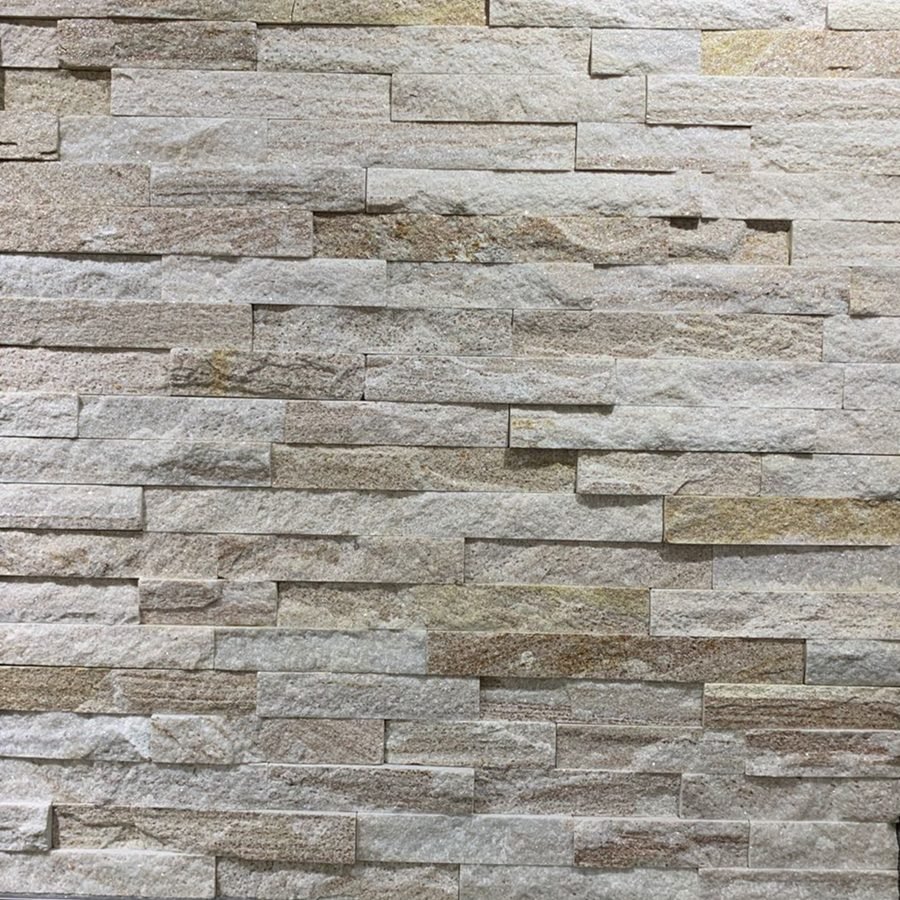
Band stone deserves a physical sample before production because color is a batch property, not a hex code. Top Stone Panels ships samples in 1-3 days, fast enough that a designer can approve the band tone while the rest of the facade tender stays on schedule. Order two tiles, side by side: one from the band range, one from the field range, and judge them in the light condition that matters on the real wall.
Production lead time for a standard band order is 20-25 working days on top of your container slot, with first orders closer to 25-30 days when printed outer cartons and private-label packaging are involved. MOQ is one 20GP container, and the same container can carry the field panels, the band panels, and the L-corners because they all come from the same product family. Export is from Tianjin Xingang under FOB, EXW, CIF, or DDP terms, with the standard three-layer zero-breakage packing protocol protecting the corner pieces that the whole corner detail depends on.
When you order, give the factory the band run length, the course count, the corner count, and your color tolerance. That is the difference between receiving a quantity of stone and receiving a facade system that installs the way the drawing intends.
FAQ
What is stone banding on a facade?
Stone banding is a horizontal row of contrasting stone, also called a belt course or string course, built into a veneer wall to divide tall facades and add a deliberate accent line.
What is the difference between a belt course and a string course?
Both names describe horizontal masonry bands; belt course emphasizes the band that ties or visually binds a wall, while string course is the classical term for a narrow horizontal line marking a floor or cornice level.
What stone is used for a band course with stacked stone?
Use the same material family as the field, slate or quartzite from the same quarry batch, in the standard 15x60cm or 15x55cm panels or the finer 36x10cm ultra-thin ledgestone.
Do belt courses need flashing?
A horizontal ledge on a facade collects water, so the band should sit flat or slope slightly, with flashing above the transition and a drip detail so the ledge sheds water instead of trapping it.
How do you calculate how much stone a band needs?
Measure the linear run in meters, count the courses, divide by the panel coverage per course, then add L-corner pieces for corners and a 5-8% waste allowance for openings and returns.
Can banding be added to an existing stone wall?
Yes, when the existing wall is sound and the new band matches the field material. The old surface needs cleaning and profiling, and the flashing detail at the band must tie into the existing weather barrier.
Conclusion
Banding is a layout decision that pays off twice: once in the look of the elevation, once in the discipline it forces on detailing. Choose the band material from the same quarry batch as the field, keep the course height and offsets deliberate, flash the ledges, count the corners, and order against a color-mix layout. Done that way, a belt course is the cheapest architectural upgrade a stacked stone facade can carry.
Key Takeaways
- One clean horizontal band shortens the visual mass of a tall facade more than a second stone tone does.
- Standard 15x60cm / 15x55cm panels and 36x10cm ultra-thin ledgestone give you two course scales for banding.
- Flashing, slope, and a drip detail turn a decorative ledge into a water-managed detail.
- Order by linear run plus courses, add L-corners for every turn, and lock the color-mix before production.
For specification support, start with a physical sample set from Top Stone Panels, matching band and field tones side by side. Samples ship in 1-3 days and production runs 20-25 working days, so the band on the drawing can be on the truck in this order cycle.