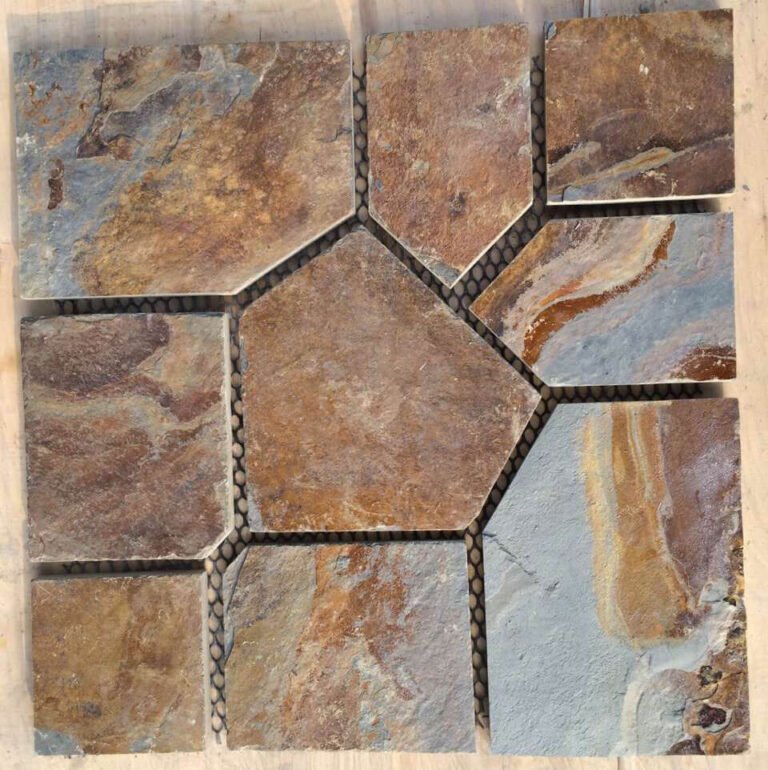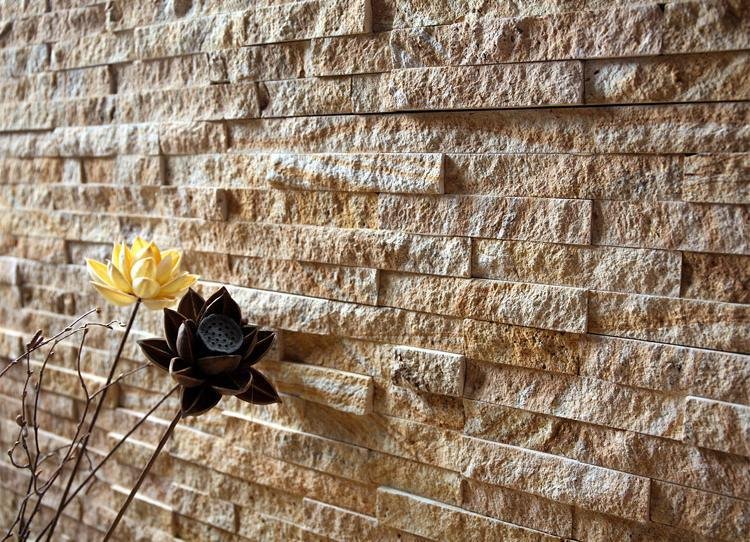
Run your hand across two slate walls and you feel two different materials, even though both came from the same block. The first is riven — a natural-cleft face split open along the stone’s own cleavage plane, ridged and shadowed under the palm. The second is sawn — blade-cut dead flat, cool and even, with the panel lines running in straight rows. Finish is not a color choice. It is the decision about how the stone is opened, and it changes almost everything a specifier cares about: how the seams read, how light moves across the face, how the wall is cleaned, and which buildings and climates it belongs to.
This page stays on the face. It does not re-explain what slate is — for the material, its geology, and its color families, the guide to slate stone panels already covers that ground. What follows compares riven and sawn on surface texture, joint and seam visibility, how light and shadow fall across each, slip and cleaning, and where honed and polished sit in between. It closes with a way to fit each finish to an architectural style and a climate, so a distributor or facade contractor can specify the face rather than guess at it.
- Riven is split along slate’s cleavage plane and reads rough and irregular; sawn is blade-cut to a flat, uniform plane.
- Relief on a riven face scatters light and masks panel joints; a sawn plane lets seams and grout read as straight lines.
- Sawn faces wipe clean in a single pass; riven relief holds dust and needs brushing or hosing, especially outdoors.
- Honed is a satin flat face and polished is a high-gloss face; both descend from the flat sawn cut.
- Match the finish to the wall: linear modern favors a flat face, rustic and high-traffic outdoor walls favor texture.
- Two Ways to Open the Same Block
- Surface Texture: Relief Versus a Flat Plane
- How Light and Shadow Read on Each Face
- Joint and Seam Visibility
- Slip, Foot Traffic, and Cleaning
- Honed and Polished: The In-Between Faces
- Spec Fit by Architectural Style
- Spec Fit by Climate and Exposure
- Which Face to Specify: A Decision Table
- Frequently Asked Questions
- Conclusion
Two Ways to Open the Same Block
The difference between riven and sawn starts at the moment the stone is opened. Slate is a metamorphic rock that splits cleanly along flat planes — its cleavage — and a riven, or natural-cleft, finish takes advantage of that. A worker drives the stone along the bedding, and the face that breaks open is the face you see on the wall: uneven, softly stepped, and impossible to reproduce exactly twice. This is why the finish is described as natural cleft, and why it is done almost exclusively on slate. The Natural Stone Institute defines riven this way — a rough texture produced by splitting along the stone’s own bedding rather than cutting across it.
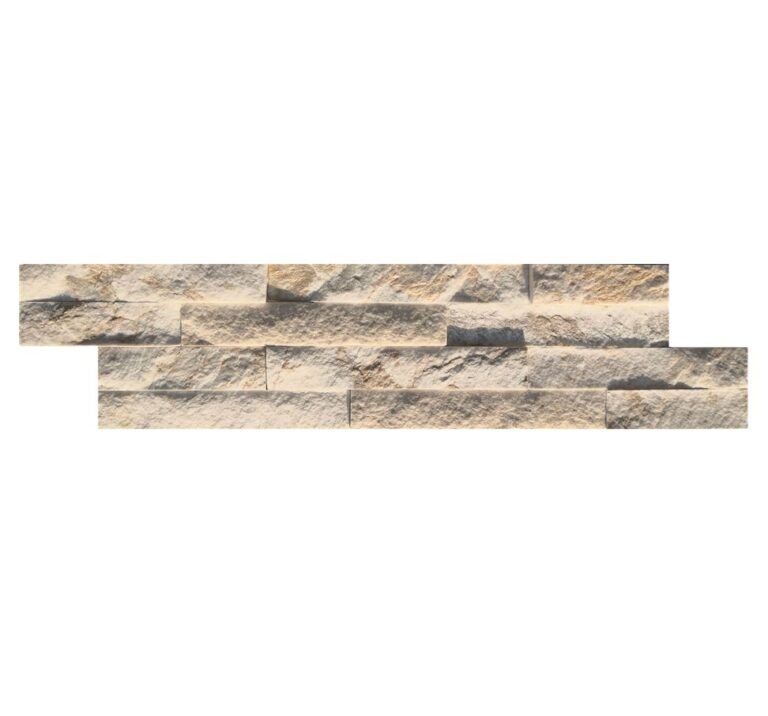
A sawn face is the opposite operation. Here a blade — in a factory like Top Stone Panels, a precision CNC-diamond or infrared cut — passes across the block and leaves a dead-flat plane, uniform from edge to edge. Nothing is being persuaded to split along a natural line; the surface is being imposed by the tool. Panels that start sawn can then be hand-laid or hand-split for split-face programs, and the loose random stone used in high-end thin veneer is naturally split, so its face is riven by origin. The two opening methods are the root of every other difference on this page.
Surface Texture: Relief Versus a Flat Plane
Texture is where the two finishes separate fastest, and it is the property a designer notices first. A riven face has relief: shallow ridges, thin overlapping steps, and a soft roughness that catches the fingertips. Because the stone broke along a natural plane rather than a mechanical one, no two inches of the wall sit at exactly the same depth. A sawn face removes all of that. It is planar, consistent, and smooth to the touch, and its flatness is the point — a sawn wall behaves like a single continuous surface instead of a field of small shadows.
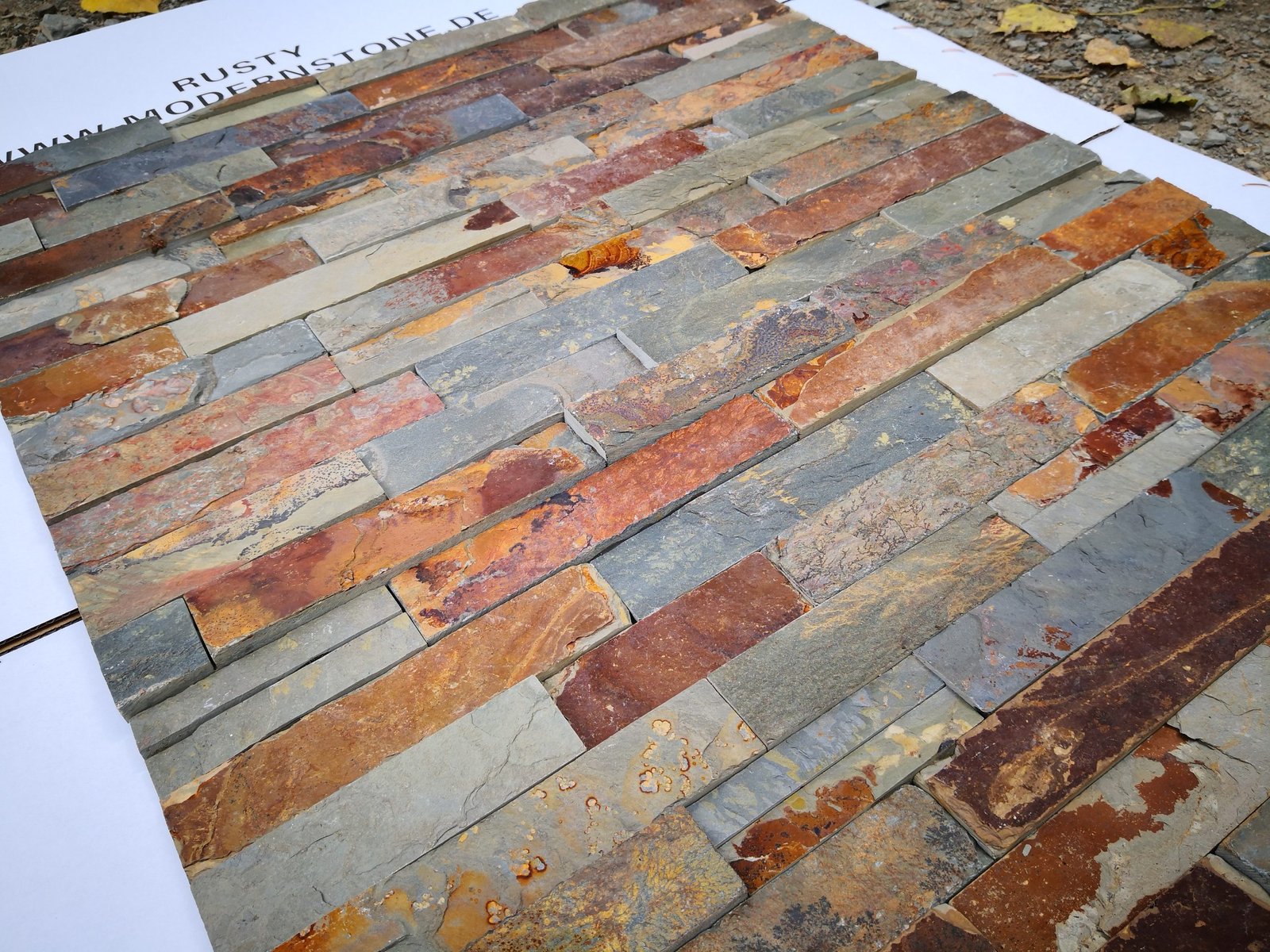
It helps to place the two finishes, and the two common in-between faces, on one scale so a specification reads cleanly. The table below sorts them by how the surface is produced and what it feels and looks like; none of it is a color judgment, only geometry.
| Finish | How the Face Is Made | Texture and Feel | How Light Reads |
|---|---|---|---|
| Riven (natural cleft) | Split along the stone’s cleavage plane | Rough, irregular, softly stepped relief | Broken into shifting micro-shadows |
| Sawn | Blade-cut flat across the block | Flat, uniform, smooth | Even, matte, consistent |
| Honed | Sawn plane abraded to a soft finish | Satin, low-gloss, smooth | Diffused, no mirror reflection |
| Polished | Flat face buffed to a high gloss | Glass-smooth, reflective | Specular, sharp highlights |
One caution: texture is not a durability claim. A riven face is no tougher than a sawn one cut from the same dense slate, and neither tells you how the panel is backed or bonded. Strength and fixing depend on the stone grade and the panel system behind the surface.
How Light and Shadow Read on Each Face
Because the two faces are shaped differently, they hold light differently, and that is what makes a wall feel alive or calm. A riven surface is a low landscape of ridges: morning sun rakes across it and each step throws a small shadow, while high afternoon light flattens those shadows and the wall reads brighter. The change across the day shows slate’s natural color variation as depth and tone rather than mismatch, which is why grazing and sidelit facades flatter a riven face.
A sawn face does the opposite. It reflects light evenly because there is nothing for the light to break on, so a sawn wall looks stable and uniform at any hour — a design asset in bright retail interiors or on a facade meant to read as one clean plane. Designers often weigh this against the tighter, paler look of quartzite panels, which hold a flat finish cleanly.
Joint and Seam Visibility
Here geometry produces a real, visible consequence. A sawn-face panel is a plane, so when panels meet, their edges line up into continuous straight lines: a joint reads as a joint, and any grout or shadow gap runs as an unbroken rule across the wall. On a large facade, small alignment drift compounds into a visible line, so sawn work rewards — and requires — tight setting-out. A riven face behaves differently because the relief itself breaks the line. The irregular edges and stepped depth interrupt the seam, so panel-to-panel joints visually disappear into the texture instead of drawing a rule across the surface.
This is the practical reason the naturally split loose stone sold as natural thin stone veneer is so forgiving on a wall. Because each piece is riven and randomly shaped, its edges are designed to overlap and stagger, and the eye reads a continuous stone surface rather than a grid. Bonded into stacked stone panels, the same relief carries over to a factory panel that goes up faster while keeping the unbroken look of hand-set stone. A sawn, linear format — the kind of thin profile described in what thin ledgestone is — is the other way round: crisp lines are the design, and the joints are meant to show as deliberate horizontal bands.
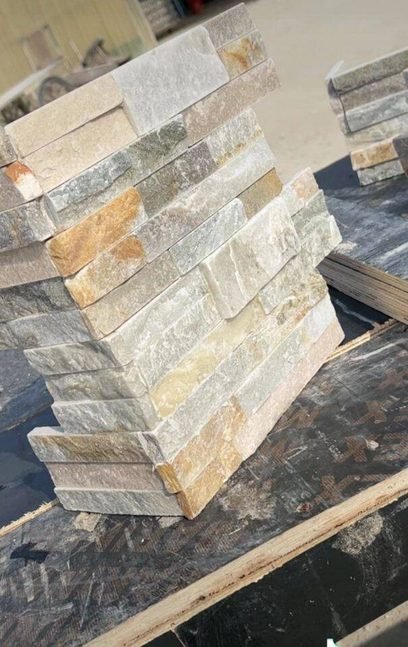
The corner in the photo above makes the trade-off concrete. A flat, sawn-look face shows the corner joint as a clean ruled line, which is exactly what a modern design wants; the pre-made L-corner removes the on-site miter that would otherwise put a visible seam at the turn. On a riven wall the corner reads far less obviously, because the texture swallows the transition. Neither is better — one advertises its geometry and the other hides it, and the wall’s style decides which you want.
Slip, Foot Traffic, and Cleaning
Finish also matters once the stone is under feet and under weather. On a walking surface, the rougher relief of a riven face gives more texture underfoot than a flat sawn or glossy polished one, which is why textured finishes show up on pathways, terraces, and pool surrounds. Treat that as directional, not as a rating: the finish changes how a surface feels, but slip safety on a specific floor is set by the product, its testing, and its real use, and should be confirmed against the actual project rather than assumed from the word “riven.”
Cleaning follows the same geometry from the other direction. A sawn, honed, or polished face is flat, so dust, spills, and grime sit on top and can be wiped or mopped in a single pass — the reason smoother faces are easier to keep looking clean indoors. A riven face is full of small ledges and recesses that hold dust, pollen, and, outdoors, windblown grit and water marks. It is not high-maintenance in the sense of special products; slate is washed with plain water and a stiff brush or a hose, and the relief simply means there is more surface area to reach. Polished faces add a separate chore — they show fingerprints, water spots, and etching far more readily than a matte riven or sawn surface. On the vertical faces this article is mostly about, a riven wall also hides everyday soiling better than a flat one, because the shadows break up what a smooth plane would show as a streak.
Honed and Polished: The In-Between Faces
Riven and sawn are the two poles, but a specification rarely stops there. Honed and polished are what happens when a flat, sawn-type surface is taken further. Honing abrades the sawn plane down to a soft satin finish — still flat, still smooth, but with the sharp light scatter of raw cut stone removed. It reads as understated and modern, and it is the finish most often chosen when a wall should look refined rather than rugged, without the mirror of a polish.
Polishing goes one step more and buffs the flat face to a high-gloss, reflective surface. On slate this is uncommon for exterior cladding — gloss is a maintenance and glare question outdoors — but it appears indoors and on specific feature pieces where the design wants depth and reflection. Placed on the same scale, the four finishes run from maximum texture and minimum reflection (riven) through matte flatness (sawn), to soft sheen (honed), to full gloss (polished). A buyer choosing between the ends of that scale is really choosing how much the wall should show its joints, hold its light, and ask to be cleaned.
Spec Fit by Architectural Style
Style fit is largely a question of whether a design wants the stone to look made or manufactured. Rustic, farmhouse, traditional masonry, and organic modern work lean on texture, so a riven face is the natural choice: its irregular relief and changing shadow read as hand-built stone, and it flatters fireplaces, garden walls, feature walls, and villa facades where warmth and depth are the goal. The installed wall below shows that riven character doing its job on an elevation — a surface that reads as solid, weathered stone rather than applied tile.
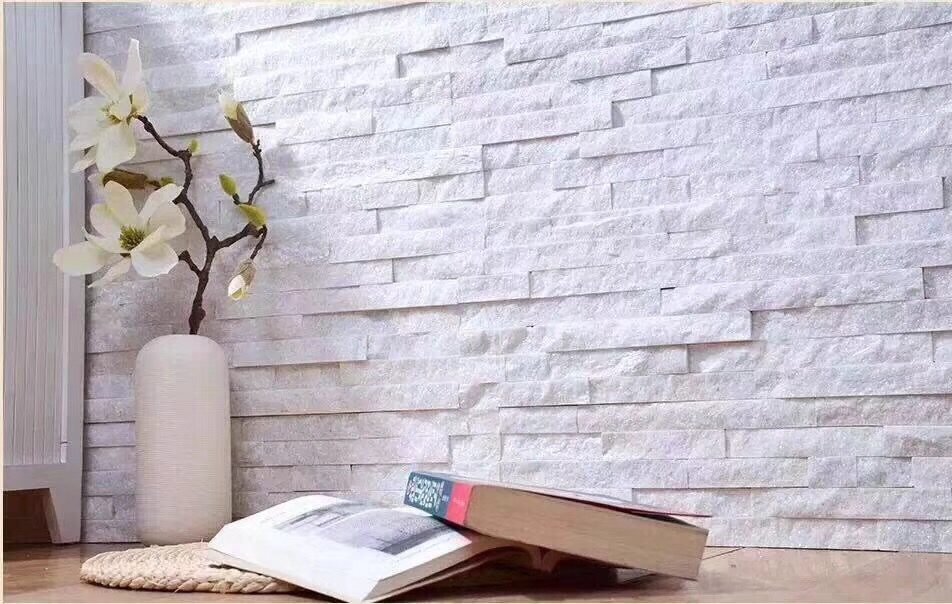
Contemporary, minimalist, and hard-linear architecture usually wants the opposite: a calm plane with intentional lines. There a sawn or honed face fits better, and a thin sawn ledgestone profile — the slim horizontal format covered in thin stone veneer explained — delivers the crisp banding a modern facade is designed around. The through-cut rule here is simple: if the drawing celebrates joints and right angles, show a flat face; if it celebrates natural stone, show relief.
Spec Fit by Climate and Exposure
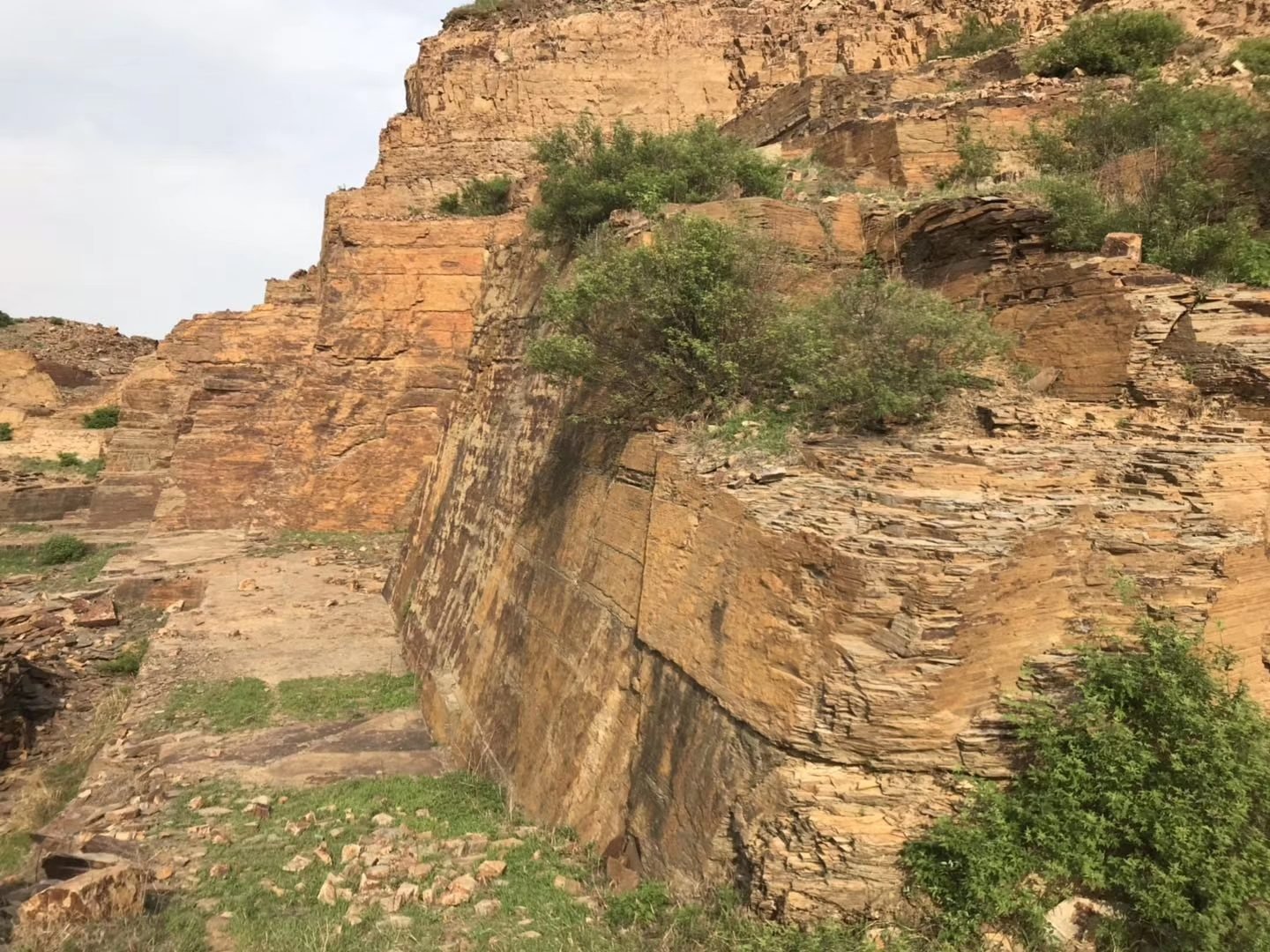
For exterior work, climate interacts with finish in three ways worth designing for: how water behaves on the face, how the color holds up, and how the panel survives shipping and thermal cycling. A riven face presents many small ledges that can shed and slow water differently than a flat sawn plane; both are fine outdoors when the stone itself is dense and the wall is detailed with proper flashing and drainage. What decides cold-climate survival is the material’s documented envelope, not the surface texture — a slate split at the source from the Yixian, Hebei quarry is supplied as dense stone rated for the -30°C to +50°C range that the panel line is built around.
Color is where finish and buying process meet. A riven face shows natural tonal variation as part of its appeal, but uncontrolled variation turns into a patchy wall. This is why batch-specific vein selection matters: how quarry vein selection controls color keeps 95%+ harmony across the loose split stone, so a textured wall reads as one material rather than mismatched lots. The same discipline runs through finished panels — marine-grade epoxy rated for 26.5-ton sea freight and the -30°C to +50°C cycle, so a split-face panel arrives and stays fixed with zero pop-off. Before shipping, thickness is checked against tolerance; the stone veneer thickness guide covers where 15mm-to-40mm product sits. The finish is a surface decision; the stone behind it carries the climate.
Which Face to Specify: A Decision Table
Read the table below from the project side: start with what the wall is and where it lives, and the finish follows from texture, joint behavior, light, and upkeep rather than from taste alone.
| Project Situation | Recommended Face | Why |
|---|---|---|
| Rustic or traditional exterior wall | Riven (natural cleft) | Relief reads as hand-built stone; masks joints and weather |
| Minimalist linear facade | Sawn or honed | Calm plane with deliberate, crisp horizontal lines |
| Interior feature wall, sidelit | Riven | Grazing light activates the shadow and texture |
| High-traffic or wet walking surface | Riven (textured) | More relief underfoot than a flat or polished face |
| Wall that must wipe clean easily | Sawn or honed | Flat face clears in one pass; no relief to hold dust |
| Refined, low-sheen interior | Honed | Satin plane without mirror reflection or fingerprints |
None of these overrides the drawing: pick the finish for joints, light, and cleaning, then confirm grade, backing, and thickness against the real climate and use.
Frequently Asked Questions
What is the difference between riven and sawn slate finish?
Riven, also called natural-cleft, is made by splitting slate along its cleavage plane, which leaves a rough, irregular textured face. Sawn is cut by a blade to a flat, uniform plane. The first gives relief and shadow; the second gives a smooth, continuous surface.
Which slate finish hides panel joints better?
Riven. Its projected relief scatters light and visually breaks up the seams between panels, while a flat sawn face lets joints and grout lines read as straight, visible lines across the wall.
Is riven or sawn slate easier to keep clean?
Sawn. A flat face can be wiped down in one pass, whereas the ridges and steps of a riven face trap dust and pollen and need brushing or hosing, especially outdoors.
Where do honed and polished finishes fit?
Between the two extremes. Honed is a satin, low-gloss plane, smoother than raw sawn with no mirror reflection, and polished is a high-gloss, reflective face. Both begin from a flat cut and differ by how far the surface is abraded.
Does the finish choice affect slip underfoot?
Directionally yes. A riven face is rougher underfoot than a flat sawn or polished face, which is why textured finishes are common on paths and pool surrounds. Confirm any walking surface against the actual project use rather than choosing on the finish name alone.
Conclusion
Riven and sawn are not two colors of slate; they are two answers to the same question — how should the stone be opened. Split along the cleavage, slate gives a textured face that hides its joints and moves with the light, suiting rustic elevations and walking surfaces. Cut flat, slate gives a calm plane that advertises its lines and wipes clean, suiting modern architecture. Choose the finish for how the wall will be seen, used, and maintained, and pick the stone grade separately, because the face never decides durability alone.
Key takeaways:
- Riven is split and textured, sawn is cut and flat; that single difference drives joints, light, and upkeep.
- Relief masks seams and hides weather; a flat plane shows crisp lines and cleans in a single pass.
- Honed is satin and polished is gloss, both descended from a flat sawn surface.
- Style and exposure pick the finish; stone density and backing pick the climate performance.
- Approve riven samples under grazing light, not straight-on, before you commit a facade.
If a project needs a specific face approved — riven relief, sawn flatness, or a honed middle — request physical samples and vein-matched references from Top Stone Panels so the finish can be judged on the real wall before a container is allocated.