Every year, thousands of containers of natural stone cladding leave Chinese ports for construction projects in North America, Europe, the Middle East, and Australia. The scale is massive — and the opportunity for importers is real. But so is the risk of choosing the wrong supplier.
If you are a building materials distributor, a landscape architecture firm, or a project contractor looking to source stone cladding from China, the gap between a profitable partnership and a costly mistake comes down to one thing: your sourcing process. A structured, step-by-step approach eliminates most of the problems that first-time importers face — inconsistent quality, hidden costs, late shipments, and communication breakdowns.
This guide walks you through the eight steps we have refined over 18 years of quarrying and exporting natural stone from Hebei Province. Each section is a practical checkpoint you can apply immediately, regardless of which stone cladding suppliers in China you eventually choose to work with.
Why China Remains the Top Source for Natural Stone Cladding
China processes more natural stone for export than any other country. The infrastructure is deep: dedicated stone industrial zones, established quarry networks, container-grade logistics corridors, and a workforce trained across generations in stone cutting and finishing.
Hebei Province sits at the center of this ecosystem for slate and culture stone products. Yixian County, in Baoding, is one of the country’s major slate production regions — the geology favors layered metamorphic rock ideal for split-face panels, ledgestone, and thin veneer products. Factories located here sit within 30 kilometers of active quarries, cutting raw material transport costs and giving production teams direct oversight of stone extraction.
The economics are straightforward. A vertically integrated factory that controls its own quarry, processes raw blocks into finished panels, and manages export packing under one roof delivers stone cladding at 40–60% lower cost than European or North American processors — even after shipping and duties. That margin is why B2B buyers across 50+ countries maintain active sourcing relationships with Chinese stone factories.
But the price advantage only holds when you work with a legitimate manufacturer. Trading companies, middlemen, and underqualified workshops dilute that value quickly. The steps below are designed to separate genuine stone cladding suppliers in China from the noise.
Step 1 — Define Your Product Requirements
Before contacting any supplier, write down exactly what you need. This sounds obvious, but most sourcing delays trace back to vague initial specifications. Suppliers quote faster and more accurately when the inquiry is precise.
Product Type and Application
Natural stone cladding covers a wide product range. Narrow down what you need:
- Stacked Stone Panels — Standard sizes 15×60 cm and 15×55 cm. Interlocking Z-profile or flat-back. The most popular format for feature walls, fireplace surrounds, and exterior facades.
- Thin Ledgestone — Ultra-thin format at 36×10 cm. Lightweight, easy to install. Suited for interior accent walls and commercial interiors.
- Z-Panels / Stone Cladding — Larger format at 20×55 cm or 15.2×61 cm. Pre-assembled panels with interlocking edges for fast installation on large surface areas.
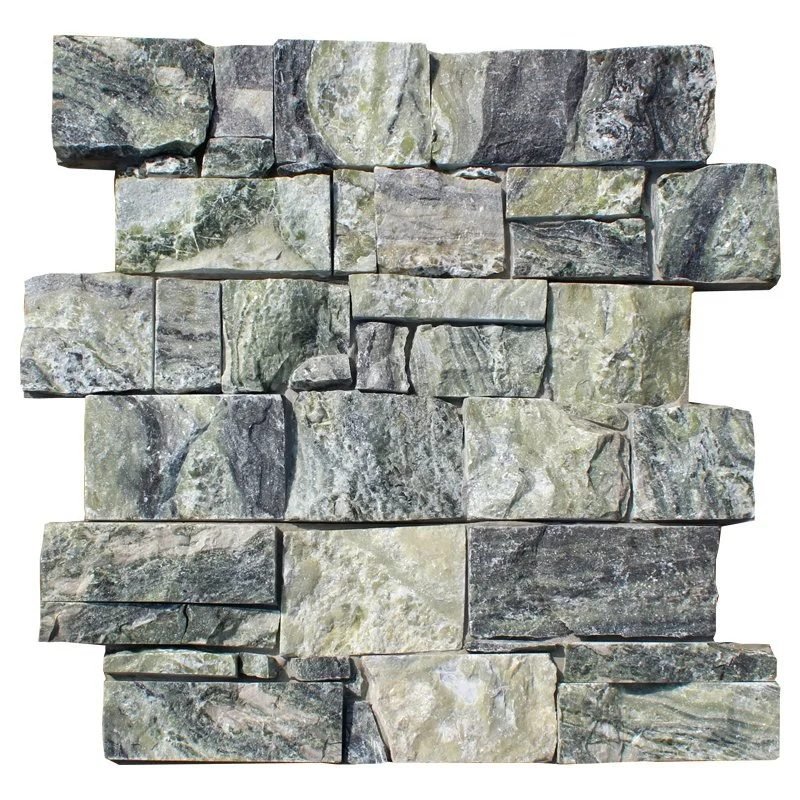
- Thin Stone Veneer — Random strip format. Flexible design layouts, organic patterns for residential and hospitality projects.
- Flagstone / Crazy Paving — Mesh-backed irregular shapes. Ideal for patios, walkways, and landscape applications.
- Stone Columns — Pre-assembled column wraps with matching pillar caps. Custom sizing available.
Material and Color
Specify the stone type: slate, quartzite, marble, or sandstone. Each has distinct performance characteristics. Slate is dense and weather-resistant. Quartzite offers extreme hardness and spark. Sandstone provides warm tones. Then specify color range — rust, black, grey, green, multicolor — and whether you need a consistent tone across the full order or a natural variation blend.
Volume
State your volume in square meters or by container count. Reputable stone cladding suppliers in China typically set the minimum order at one 20GP container per product line. Know how many containers you need per quarter, and whether you want to consolidate multiple product types into a single shipment.
Your Specification Checklist
- Product type and dimensions
- Stone material (slate, quartzite, marble, sandstone)
- Color range or specific color reference
- Backing type required (cement, epoxy, mesh)
- Total quantity in m² or container count
- Target delivery timeline
- Destination port or delivery address
Step 2 — Verify the Supplier’s Credentials
The single most important step in sourcing stone cladding from China is distinguishing a real factory from a trading company. Here is how.
Factory vs. Trading Company
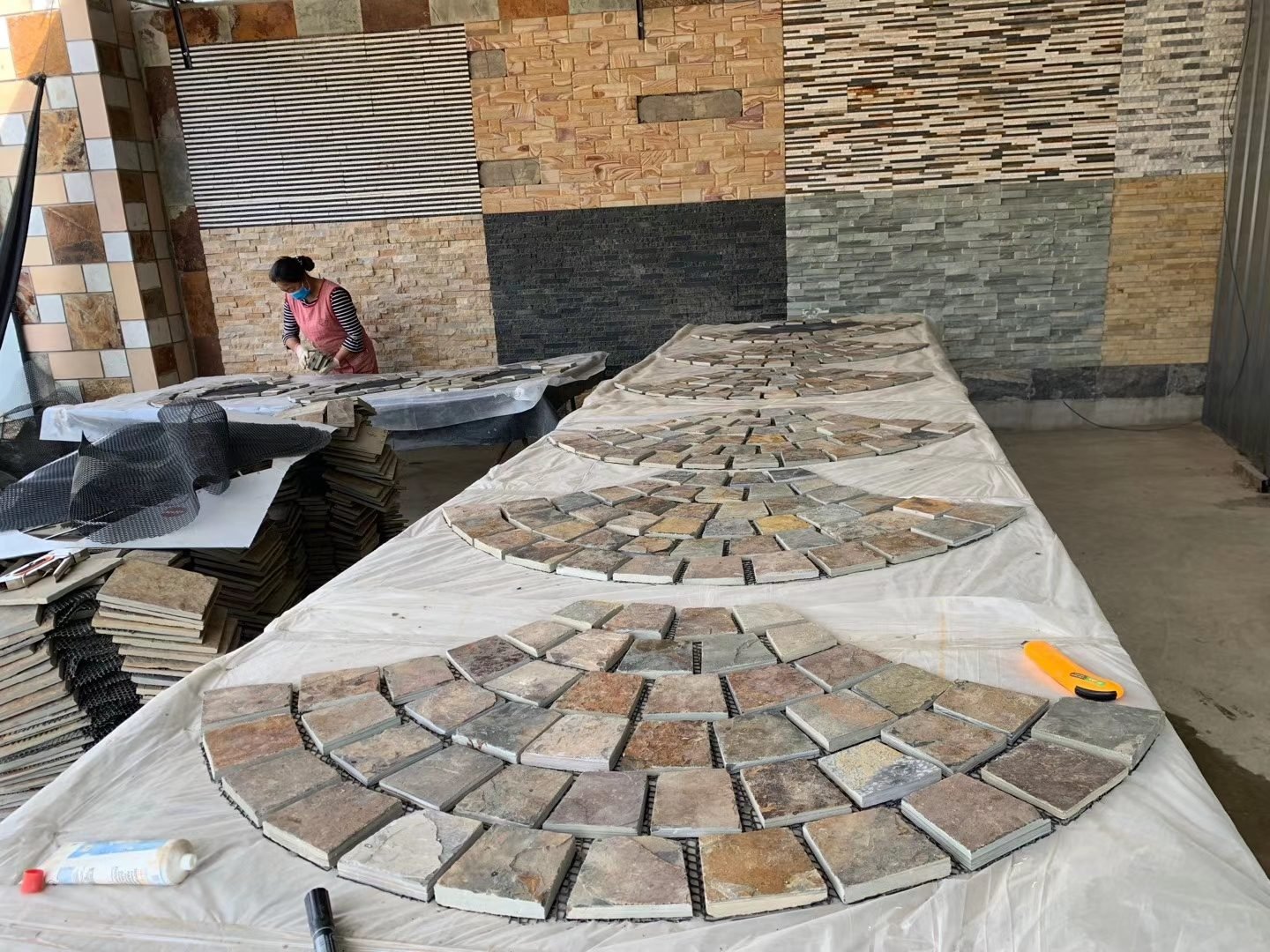
A trading company adds a margin layer, has limited control over production quality, and cannot guarantee lead times. A factory with its own quarry controls the entire chain — from vein selection to finished panel to container loading. Ask directly: “Do you own the quarry, or do you purchase raw stone from third parties?” Then verify.
Quarry Ownership Verification
Request quarry ownership certificates or lease agreements. Ask for a video tour of the extraction site with a recognizable landmark or signboard visible. Cross-reference the quarry location with known production regions. If a supplier claims to be in Hebei but the quarry is in Fujian, something does not add up.
Track Record Indicators
- Years in operation: Look for 10+ years minimum. Top Stone Panels has operated since 2005 — 18+ years of quarrying and export experience.
- Annual export volume: A serious factory ships 100+ containers per year. Our facility handles 220+ containers annually across 6 product lines.
- Production capacity: Ask about monthly output per product line. A well-equipped factory produces 30,000–80,000 m² per month depending on the product type.
- Certifications: Request fire rating certificates (A-grade), UV stability reports, salt spray resistance tests, and freeze-thaw cycle documentation (-30°C to +50°C).
Red Flags to Watch For
- The supplier cannot provide a factory address or refuses a site visit
- They offer every type of stone product imaginable — a sign they are sourcing from multiple workshops rather than manufacturing
- No verifiable export history or references
- Pricing that seems too low to be real — usually means recycled material or substandard epoxy bonding
Step 3 — Request and Evaluate Samples
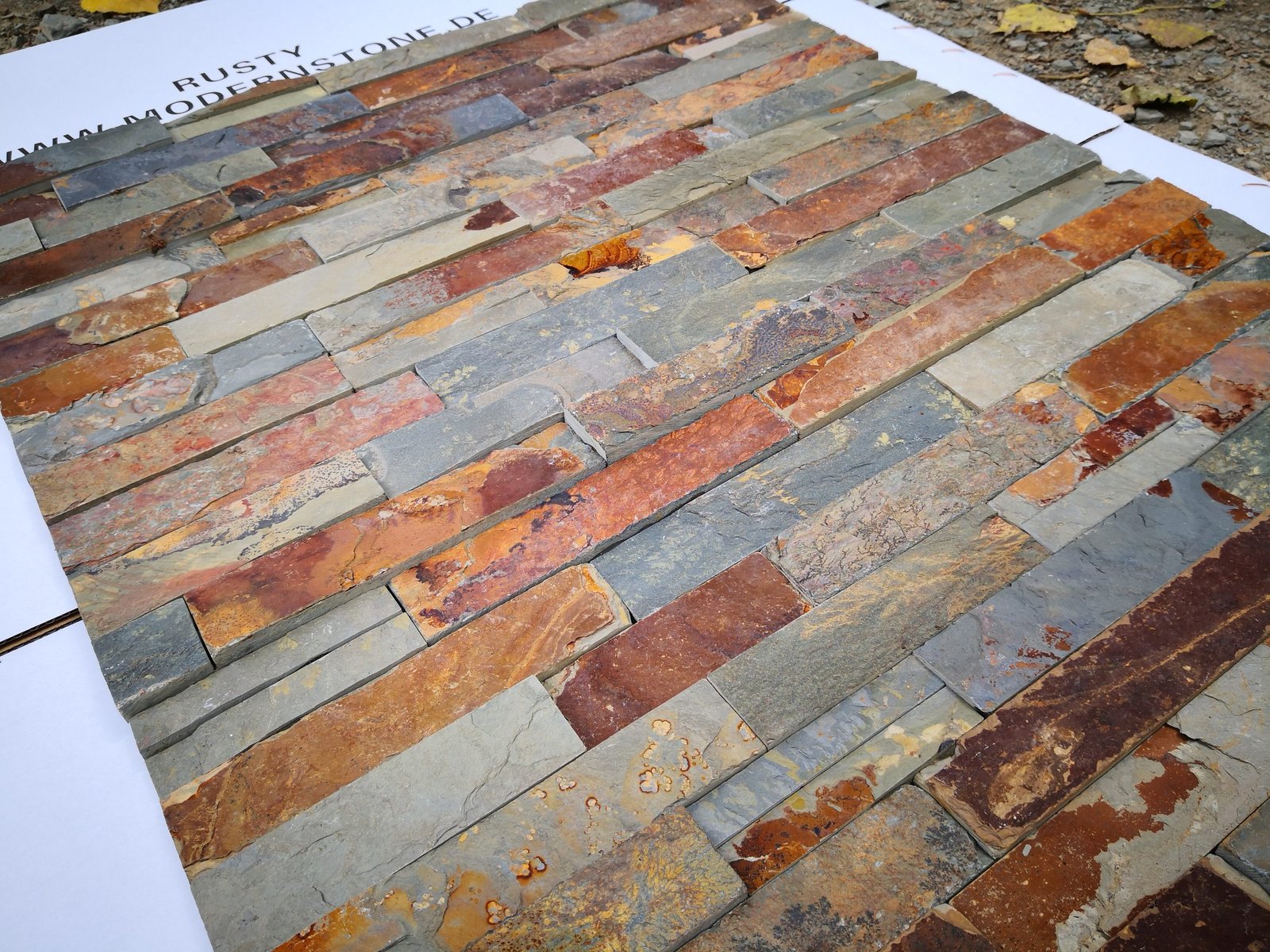
Never place a bulk order without evaluating physical samples first. A reputable supplier will dispatch samples within 1–3 working days. Use this window to run your own tests or send panels to an independent lab.
What to Test
| Test Parameter | What to Check | Acceptable Standard |
|---|---|---|
| Thickness Tolerance | Measure 10 points across the panel with calipers | ±1 mm variance maximum |
| Color Consistency | Compare sample against reference photo in natural light | Within agreed color range — batch-specific vein selection |
| Epoxy Bond Strength | Apply lateral pressure to individual stone strips | No delamination under firm hand pressure; marine-grade epoxy |
| Surface Finish | Inspect split-face texture uniformity | Consistent profile depth, no saw marks visible on face |
| Dimensional Accuracy | Measure length and width against spec | ±1 mm on length and width |
| Weight per Panel | Weigh on calibrated scale | Consistent across multiple samples — indicates density control |
Batch-Specific Color Matching
Natural stone varies between quarry veins. The best stone cladding suppliers in China perform batch-specific vein selection — they match the quarry layer to your approved sample rather than pulling from random stock. Ask your supplier how they control color consistency across a 5-container order. If the answer is vague, that is a problem.
At our facility, infrared CNC diamond blade cutting ensures dimensional precision across every panel in a production run. Combined with vein-matched raw material selection, this keeps color and size variation within specification across the full order.
Step 4 — Understand Pricing and Incoterms
Price quotes from Chinese stone factories are not apples-to-apples until you align on Incoterms. A low FOB price might look attractive until you calculate ocean freight, insurance, and destination charges separately. Here is what each term means in practice:
| Incoterm | Supplier Responsibility | Buyer Responsibility | Best For |
|---|---|---|---|
| FOB Xingang | Production, export packing, customs clearance, loading at origin port | Ocean freight, insurance, destination charges, import customs | Buyers with their own freight forwarder |
| EXW | Production and packing at factory | Everything from factory gate onward | Buyers who manage full logistics chain |
| CIF | Production, packing, ocean freight, and marine insurance to destination port | Unloading, import customs, inland transport | Buyers who want a single price to their port |
| DDP | Everything including import duties and delivery to your door | Receiving and unloading | Buyers who want zero logistics hassle |
What Affects Pricing
Stone cladding pricing from Chinese suppliers varies based on several concrete factors:
- Stone type: Quartzite costs more than slate due to harder raw material and slower cutting speed.
- Panel size and thickness: Thicker panels use more raw material. Larger formats require bigger cutting equipment.
- Backing method: Marine-grade epoxy bond costs more than cement backing but delivers lighter weight and stronger adhesion.
- Volume: Multi-container orders command volume discounts. A 5-container quarterly commitment gets better pricing than a single trial order.
- Custom packaging: Standard corrugated cartons are included. Custom color box packaging for retail-ready presentation adds cost and lead time.
Container Mix Strategy
Smart importers consolidate multiple product types into a single container to broaden their inventory without increasing the number of shipments. For example, a 20GP container can hold a mix of stacked stone panels, thin ledgestone, and Z-panels — as long as each product meets the minimum per-line quantity. This strategy works well for distributors building a showroom or e-commerce catalog.
Step 5 — Negotiate Payment Terms
Payment terms in China’s stone export industry follow a well-established pattern. Understanding the standard structure helps you negotiate confidently and avoid terms that expose you to unnecessary risk.
Standard Terms: 30/70 T/T
The industry standard is 30% T/T (telegraphic transfer) deposit upon order confirmation, with the remaining 70% due before shipment. The critical detail is what “before shipment” means. A trustworthy supplier will provide the following before requesting the balance payment:
- Container loading video — Real-time footage of your order being loaded into the container, showing packing condition and seal numbers.
- High-resolution layout photos — Close-up and wide-angle photos of the loaded container, product arrangement, and steel band securing.
- Pre-shipment inspection report — Documented QC results with measurements and pass/fail status.
This sequence protects both parties. You see proof that your goods are produced, inspected, and loaded before releasing the final payment. The supplier has deposit confirmation before starting production.
Red Flags in Payment
- A supplier demanding 100% payment upfront — no legitimate factory requires this for a first order.
- Requests for payment to a personal bank account rather than a company account.
- Pressure to pay the balance before providing any proof of production or loading.
- Refusal to provide loading video or photos — this should be standard, not a special request.
Letter of Credit (L/C)
For larger orders or buyers in markets where L/C is standard practice, most established stone cladding suppliers in China will accept irrevocable L/C at sight. This adds bank-level security for both sides but comes with higher transaction costs and longer processing time. Discuss this option early in negotiations if it is your preferred method.
Step 6 — Quality Control Before Shipment
Quality control is where the relationship between a good supplier and a great one becomes visible. A structured QC process catches problems at the factory floor — not at your warehouse 6 weeks later when opening a container of rejected panels.
The 3-Step Quality Control Process
Our production facility runs a three-stage QC protocol on every order:
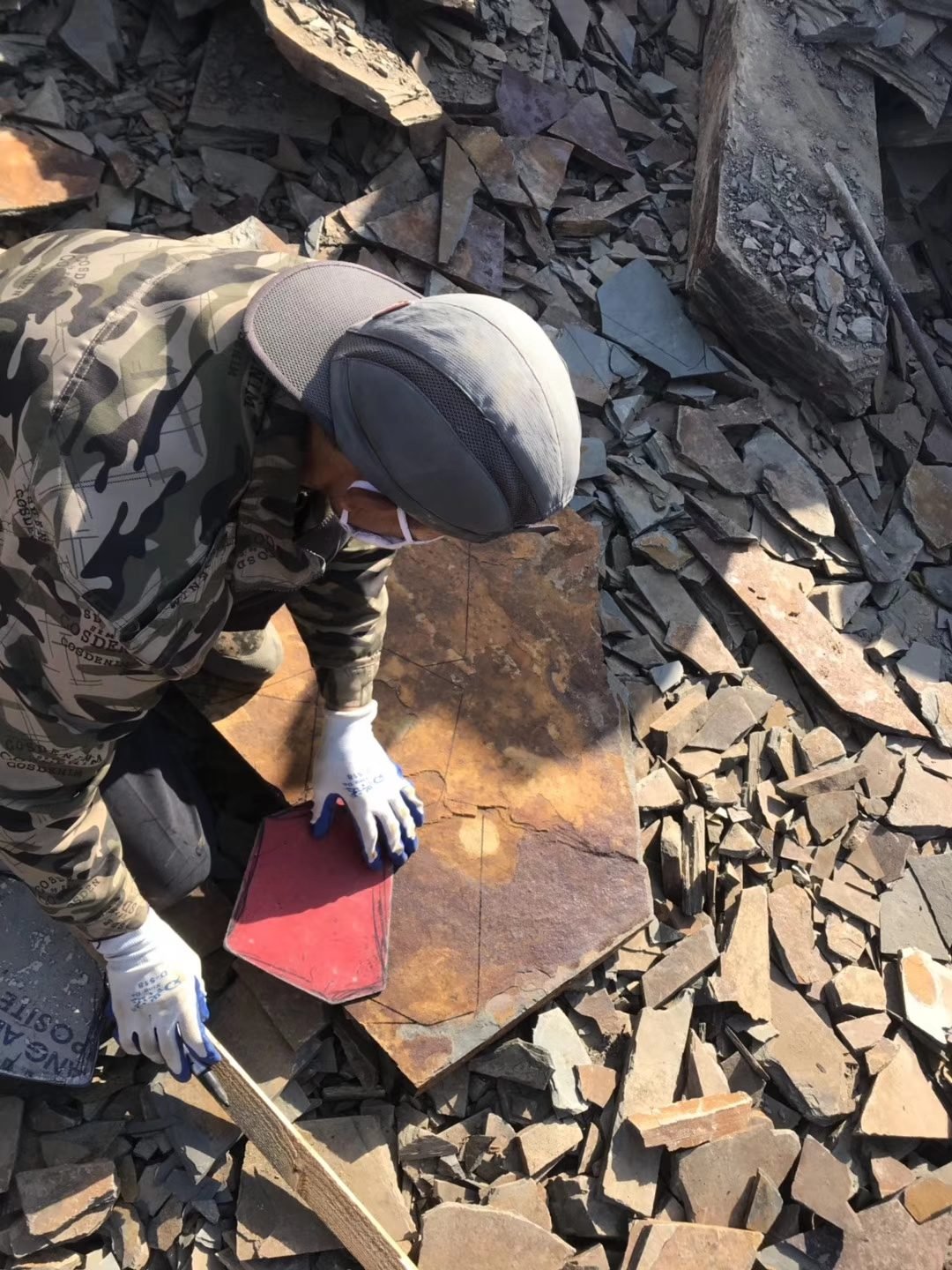
- Raw Material Selection (Stage 1): Before production begins, incoming stone blocks are inspected for structural integrity, color consistency, and mineral composition. Blocks with excessive fissures, inconsistent veining, or visible oxidation spots are rejected at this stage. This is where batch-specific vein selection happens — matching the quarry layer to the approved color reference.
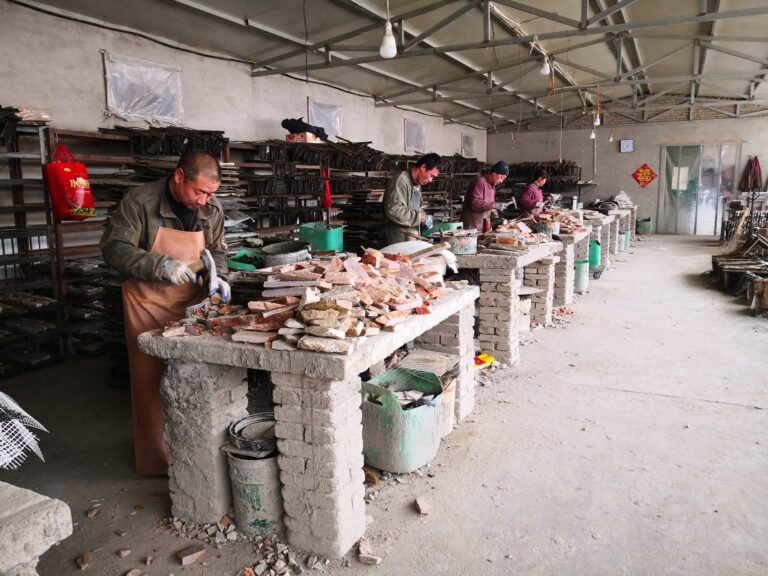
- In-Process Recheck (Stage 2): During cutting, bonding, and assembly, production supervisors inspect panels at defined intervals. Thickness tolerance is measured with calibrated instruments. Epoxy bond strength is spot-tested. Dimensional accuracy is verified against the spec sheet. Panels that fall outside tolerance are pulled from the line.
- Pre-Shipment Final Inspection (Stage 3): Before packing, a comprehensive inspection covers a statistically significant sample from each production batch. The inspection report documents thickness measurements, color assessment, bond strength results, and packaging condition. This report — along with container loading video and high-resolution layout photos — is shared with the buyer before balance payment is requested.
Pre-Shipment QC Verification Checklist
- Thickness tolerance within ±1 mm
- Color matches approved sample under natural light
- Epoxy bond passes lateral pressure test
- No visible saw marks, chips, or cracks on face surface
- Panel dimensions match specification
- Carton packing is intact with correct labeling
- Loading video and photos received and reviewed
- Inspection report reviewed and signed off
Step 7 — Shipping and Documentation
Stone is heavy, fragile, and subject to import regulations. Getting it from a factory in Hebei to a job site in Texas or Manchester requires attention to logistics detail that most consumer product importers never have to think about.
Lead Times
- Samples: 1–3 working days from dispatch.
- Bulk production: 20–25 working days after deposit confirmation.
- First order with custom packaging: 25–30 working days (color box printing and setup adds time).
- Ocean freight: 20–35 days depending on destination (North America East Coast ~30 days, Europe ~25 days, Australia ~20 days).
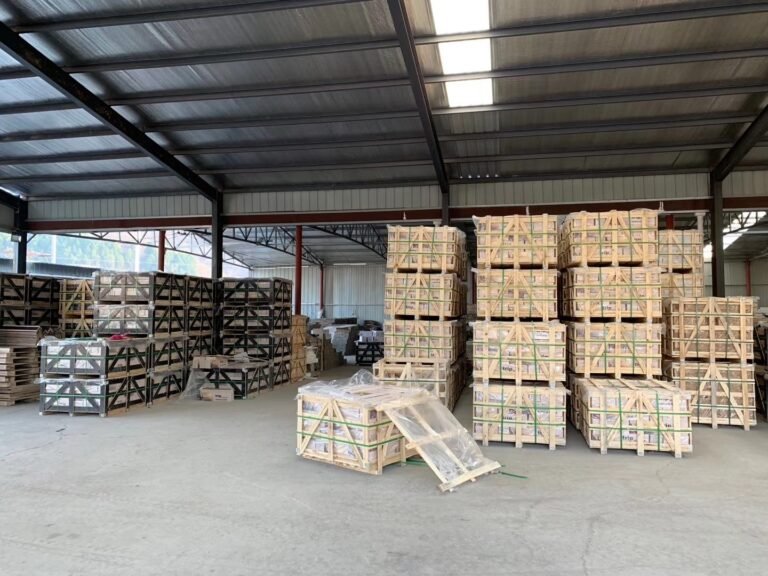
Export Packing — Zero-Breakage Protocol
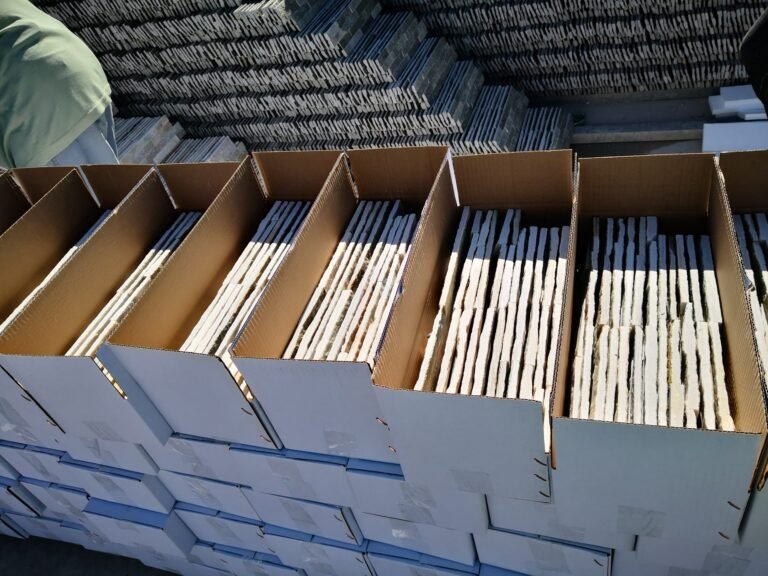
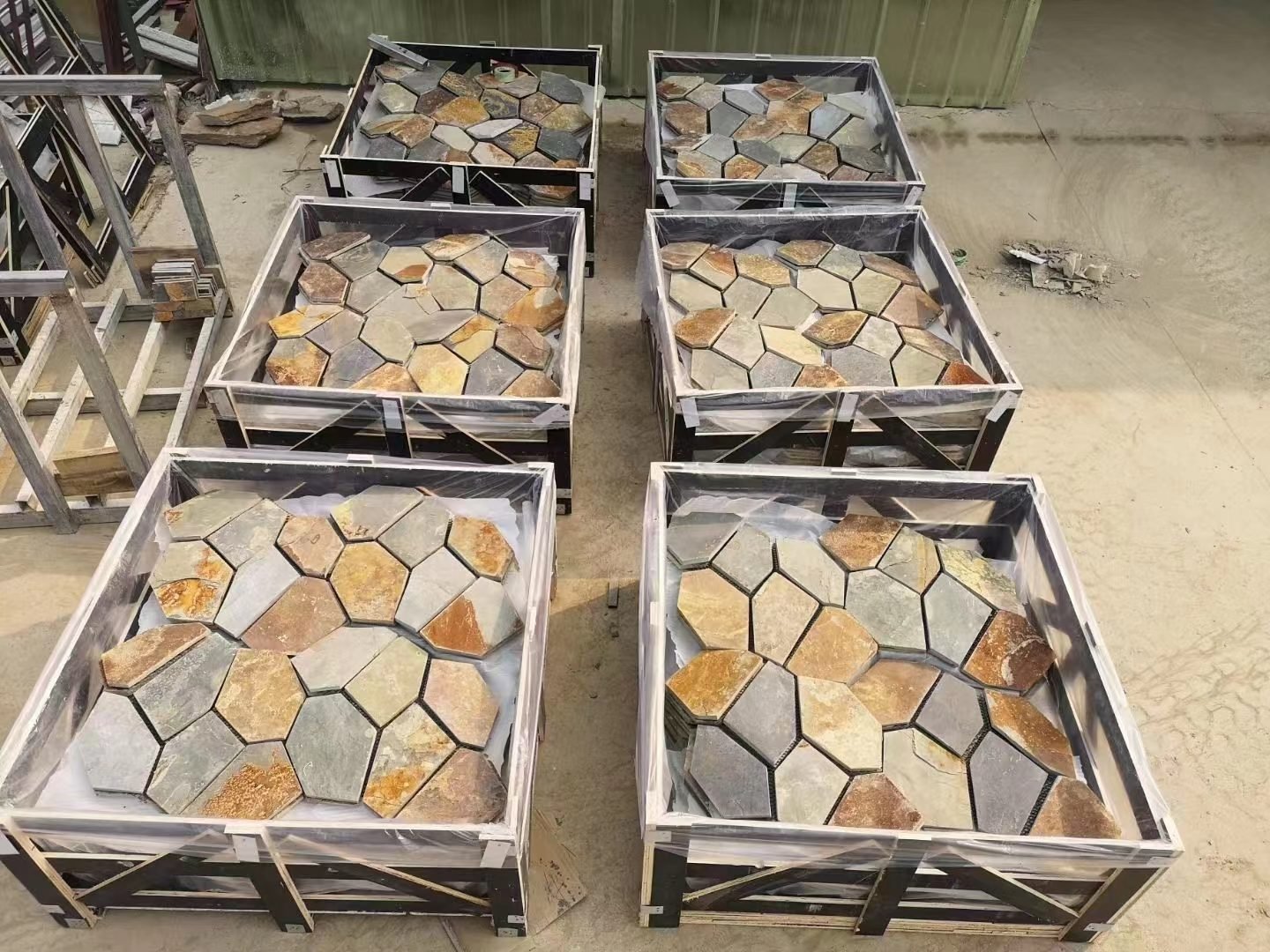
Natural stone cladding panels are fragile by nature. Proper export packing is non-negotiable. Our packing protocol includes:
- 3–5 layer corrugated cartons — Heavy-duty outer packaging rated for stone weight.
- Fumigation-free plywood pallets — No ISPM 15 heat treatment required for the pallets themselves, simplifying customs inspection.
- 4–6 high-tensile steel bands — Securing cartons to pallets to prevent shifting during transit.
- Industrial airbag fill inside container — Inflatable dunnage bags fill void spaces between pallets, eliminating lateral movement during ocean transport.
Required Documentation
Your supplier should provide the following documents for every shipment:
- Bill of Lading (B/L) — Issued by the shipping line. Confirms cargo has been loaded.
- Certificate of Origin (COO) — Proves the stone was quarried and processed in China. Required for customs clearance in most importing countries and for claiming preferential tariff rates under free trade agreements.
- ISPM 15 Fumigation Certificate — Confirms that any wood packaging material (pallets, dunnage) has been treated to international phytosanitary standards. Even if using fumigation-free plywood pallets, some customs authorities still request this document.
- Commercial Invoice — Itemized with product descriptions, quantities, unit prices, and total value.
- Packing List — Detailed breakdown of contents by carton, including gross/net weight and dimensions.
- Pre-Shipment Inspection Report — With video evidence of container loading.
Customs Clearance Considerations
Work with a licensed customs broker in your country who understands stone product classification codes (HS codes). Natural stone cladding typically falls under HS 6802 or 6803 depending on the degree of processing. Misclassification can result in incorrect duty rates or customs holds. Your supplier should provide the correct HS code on the commercial invoice.
The port of shipment matters for logistics planning. Our facility ships from Xingang/Tianjin — one of northern China’s largest container ports with regular sailings to all major global destinations. Proximity between the factory and port reduces inland transport costs and transit time.
Step 8 — Build a Long-Term Partnership
The biggest sourcing mistake B2B buyers make is treating every order as a one-off transaction. A stone cladding factory that knows your business, your quality standards, and your market delivers value that goes far beyond unit price.
OEM and Private Label Opportunities
If you are a distributor building your own brand, work with a factory that offers OEM/ODM services. This includes:
- Private label packaging — Your brand name, logo, and product information on cartons and inserts.
- Custom color mix — Blending specific stone tones to match your brand palette or market preferences. A factory with quarry access can select veins to produce consistent custom colors across orders.
- Custom sizing — Non-standard panel dimensions to meet project-specific or market-specific requirements.
Repeat Order Advantages
Once your first order is delivered and approved, subsequent orders become faster and smoother:
- Your specifications are on file — no re-negotiation of tolerances or color references.
- Custom packaging tooling (color box dies, label templates) is already set up.
- Volume pricing improves as annual commitment grows.
- Priority production scheduling — repeat customers get allocated capacity first.
- The factory learns your QC expectations and builds to them from the start.
Joint Planning
The best partnerships involve quarterly volume planning, shared forecasts, and coordinated logistics. When a factory knows you need three containers in Q2 and four in Q3, it can reserve quarry output and schedule production slots accordingly. This eliminates the “your order will ship in 45 days instead of 25” conversation that plagues spot-buy relationships.
Common Mistakes Importers Make When Sourcing Stone from China
After shipping 220+ containers per year for nearly two decades, patterns emerge. The same mistakes show up repeatedly with first-time importers. Here are the ones that cost the most money and time:
1. Skipping Sample Evaluation
Some buyers place bulk orders based on website photos or a trade show conversation. Photos lie. Lighting, angle, and post-processing can make a mediocre panel look premium. Always order physical samples, test them yourself, and keep one as the reference standard for your bulk order QC.
2. Choosing Price Over Process
The cheapest quote is rarely the best deal. A supplier undercutting the market by 15–20% is cutting corners somewhere — recycled stone, weak epoxy, no QC process, or cement backing passed off as marine-grade bond. The cost of a container of rejected panels (freight, duties, disposal, project delay) far exceeds the savings on unit price.
3. Ignoring Packaging Specifications
Stone breaks in transit when packing is inadequate. Ask for the supplier’s packing protocol in writing. If the answer is “standard export carton” without specifics, push for details: how many layers, what pallet material, how many steel bands, whether dunnage bags are used inside the container. See our design guide for stone cladding applications for context on why panel integrity at delivery matters for the final installation.
4. Not Verifying Export Documentation Before Payment
Some buyers discover after payment that their Certificate of Origin is missing, the fumigation certificate is expired, or the HS code on the commercial invoice is wrong. These issues cause customs delays that can add weeks to delivery time. Review all documents in draft form before releasing balance payment.
5. Failing to Plan for Lead Time
Production takes 20–30 working days. Ocean freight takes 20–35 days. Customs clearance can take 3–7 days. Total lead time from deposit to delivery is typically 8–12 weeks. Buyers who start sourcing 3 weeks before they need material on site set themselves up for project delays and emergency air freight costs.
6. Treating Communication as an Afterthought
Time zone differences, language barriers, and cultural communication styles can create friction. Establish a single point of contact at the factory, agree on response time expectations (24 hours is reasonable), and use written communication (email or messaging) for all specification confirmations. Verbal agreements that are not documented in writing create disputes.
Frequently Asked Questions
- What is the minimum order quantity (MOQ) when sourcing stone cladding from China?
- Most established stone cladding suppliers in China require a minimum of one 20-foot container (20GP) per product line. This typically translates to 300–500 m² depending on the panel type and thickness. Top Stone Panels maintains this standard MOQ while offering flexibility to mix products within a single container for first-time trial orders.
- How long does it take to receive stone cladding samples from China?
- Sample dispatch typically takes 1–3 working days from a reputable supplier. Top Stone Panels ships samples from their Hebei production facility within this window, allowing importers to perform lab testing on thickness tolerance, epoxy bond strength, and color consistency before committing to a bulk order.
- What Incoterms do Chinese stone cladding suppliers usually offer?
- The most common Incoterms offered are FOB (Free on Board) from Xingang/Tianjin port, EXW (Ex Works), CIF (Cost, Insurance, and Freight) to your destination port, and DDP (Delivered Duty Paid) for door-to-door delivery. FOB Xingang is the standard for most B2B stone cladding transactions, giving buyers control over freight costs.
- What certifications should I expect from stone cladding suppliers in China?
- Reputable suppliers should provide A-grade fire rating certificates, UV stability test reports, salt spray resistance documentation, and freeze-thaw cycle testing results covering -30°C to +50°C. Additionally, export documentation should include a Certificate of Origin (COO), ISPM 15 fumigation certificate, and pre-shipment inspection reports.
- How do I verify that a stone cladding supplier in China owns their quarry?
- Request quarry ownership certificates or lease agreements, ask for geotagged photos or video tours of the extraction site, and verify the quarry location against known stone-producing regions. Suppliers based in established production zones like Yixian, Baoding in Hebei Province — a major slate and culture stone region — are more likely to have direct quarry access. A factory with 18+ years of operation and 220+ containers per year in export volume is a strong indicator of genuine quarry-to-container capability.
- What is the standard lead time for bulk stone cladding orders from China?
- Standard bulk production takes 20–25 working days after deposit confirmation. First orders requiring custom color box packaging or private label setup may extend to 25–30 working days. Sample orders ship within 1–3 days. Always factor in 2–4 weeks of ocean freight depending on destination, plus customs clearance time at your port of entry.
Ready to Source Stone Cladding from a Verified China Factory?
Top Stone Panels is a quarry-owner manufacturer based in Yixian, Hebei — the heart of China’s slate production region. With 18+ years of export experience, 220+ containers shipped annually, and a 3-step quality control process backed by pre-shipment video inspection, we make sourcing natural stone cladding straightforward and low-risk.
Request a quote or order samples today. Our team responds within 24 hours with pricing, lead time, and container loading plans tailored to your requirements.
Related reading: What Are Stacked Stone Panels? | How to Install Stacked Stone Veneer Panels
Before you sign, understand the whole arrival side too; the stone import clearance guide maps documents, duties, and release.