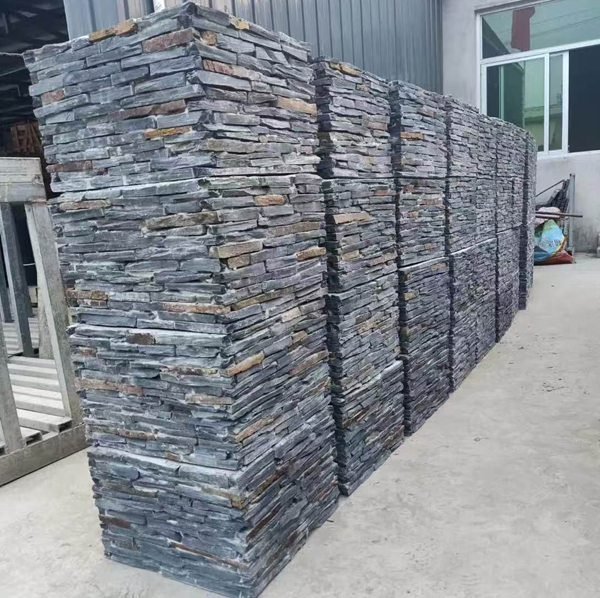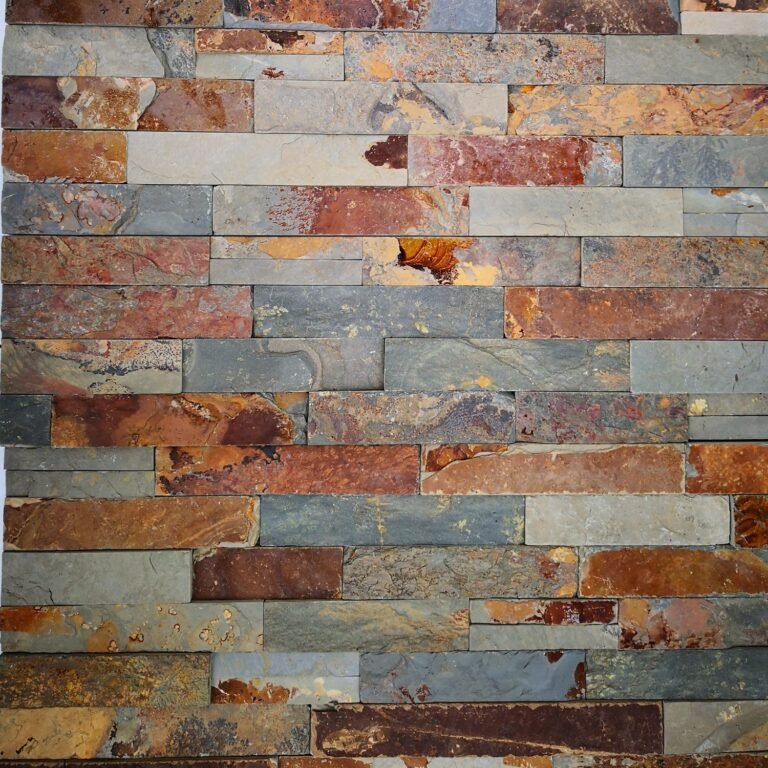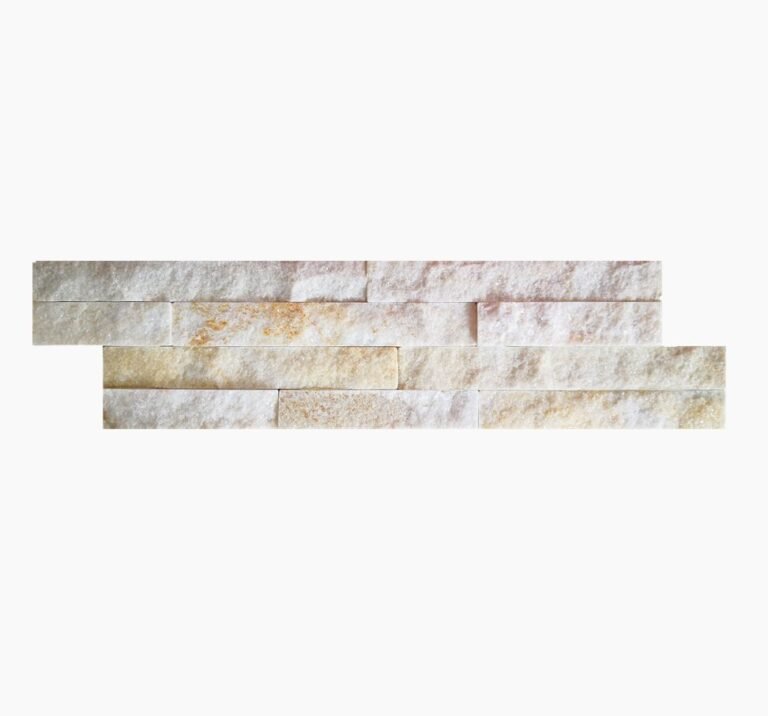
Here is the short version, stated plainly: cladding is the umbrella term for any stone layer fixed to a wall, and veneer is a thin, non-structural stone skin within that umbrella. Every veneer is cladding; not all cladding is veneer. Once that hierarchy is clear, the actual buying decision stops being about vocabulary and becomes about format, backing, weight, and labor — the four variables this article compares with real product data from our production lines.
Key Takeaways
- Cladding = any wall-fixed stone layer; veneer = the thin, non-structural subset. The words overlap, so specify by format and millimeters.
- Stacked panels (15×60 cm, 15×55 cm) place 0.09 m² per piece; interlocking Z-panels (20×55 cm, 15.2×61 cm) hide seams on large facades.
- Thin ledgestone (36×10 cm) and loose-strip veneer sit at the light end and install on standard wall assemblies without added structural support.
- Dense slate and quartzite tolerate –30 °C to +50 °C and stay UV stable — the same stone serves interior and exterior duty.
- Pre-made L-corners cut corner labor roughly 50% versus on-site mitering; infrared CNC cutting trims on-site waste by about 20%.
- MOQ at Top Stone Panels is one 20GP container for every product line, with samples shipped in 1–3 days.
- Quick Answer: Cladding Is the System, Veneer Is the Skin
- Why the Industry Uses the Terms Interchangeably
- Head-to-Head Comparison Table
- What Stone Wall Cladding Means on a Spec Sheet
- What Stone Veneer Means in Practice
- Performance: Where They Actually Differ
- Installation and Labor Economics
- Cost Reality for B2B Buyers
- Which Fits Which Project
- How Top Stone Panels Produces Both
- FAQ
Quick Answer: Cladding Is the System, Veneer Is the Skin
Stone wall cladding describes the whole category: stone fixed to a wall surface to clad it, whether that stone is a 20 mm panel or a full-thickness masonry course. Stone veneer describes a role — a thin decorative skin that carries no structural load and relies entirely on the wall behind it. Veneer is a type of cladding. The reverse is not true.
The practical consequence matters more than the dictionary point. When a specification says “stone cladding,” it has told you nothing about thickness, weight, fixing method, or price. When it says “thin stone veneer,” it has narrowed the field to lightweight formats but still not named one. The specification only becomes actionable once it states a format — stacked panel, Z-panel, ledgestone, loose strip — with dimensions and backing type.
Everything below assumes this hierarchy and compares the products buyers actually order under both labels.
Why the Industry Uses the Terms Interchangeably
Three habits keep the confusion alive, and importers meet all three on the same deal.
First, regional convention. In much of Europe and in export catalogs, “cladding” is the default word for any decorative stone wall layer, so a European distributor asking for “natural stone cladding” expects exactly the thin panels an American buyer calls “stone veneer.” Same product, different default noun.
Second, marketing drift. Panel manufacturers label their thinnest products “cladding panels” because it sounds structural and substantial, while masonry suppliers call cut stone “veneer” because it sounds modern and lightweight. The label chases the sale, not the spec.
Third, genuine overlap. A cement-backed interlocking Z-panel is simultaneously a cladding system (it shields and finishes the wall) and a veneer (it is thin and non-structural). The categories are not mutually exclusive boxes; they are nested circles. Fighting over which word applies is a conversation with no winner.
The disciplined move for any B2B buyer: ignore the noun, specify the numbers. Format, face size, total thickness, backing material, corner solution. If a quote answers those five points, the label printed on top of it is irrelevant. For a deeper taxonomy of formats, our guide to the six types of stone veneer panels every distributor should stock maps each one.
Head-to-Head Comparison Table
The table is the spine of this article. It compares the two terms as they actually appear on purchase orders — cladding represented by cement-backed interlocking panel systems, veneer represented by thin panelized and loose-strip formats:
| Attribute | Stone Wall Cladding (panel systems) | Stone Veneer (thin formats) |
|---|---|---|
| Definition | Any stone layer fixed to a wall; umbrella term | Thin, non-structural decorative stone skin |
| Typical formats | Interlocking Z-panels 20×55 cm, 15.2×61 cm | Stacked panels 15×60 cm / 15×55 cm, ledgestone 36×10 cm, loose strips |
| Backing | Cement or mesh backing with male-female seams | Mesh-backed strips, epoxy-bonded pieces, or bare loose stone |
| Structural role | None — decorative skin on prepared substrate | None — relies fully on the wall behind |
| Best surface scale | Large uninterrupted facades; seams hidden by Z-joint | Accent walls, fireplaces, columns; full facades in panel form |
| Corner solution | One-piece and two-piece interlocking L-corners | Pre-made L-corners; staggered joint design |
| Weather duty (dense slate/quartzite) | –30 °C to +50 °C, UV stable, salt-spray resistant | –30 °C to +50 °C, UV stable, salt-spray resistant |
| MOQ (Top Stone Panels) | 1 × 20GP container | 1 × 20GP container |
Notice where the columns agree: weather duty, structural role, MOQ. Dense natural stone performs the same regardless of the label. The real differences live in format scale, seam handling, and corner detailing — which is where the next two sections go deeper.
What Stone Wall Cladding Means on a Spec Sheet
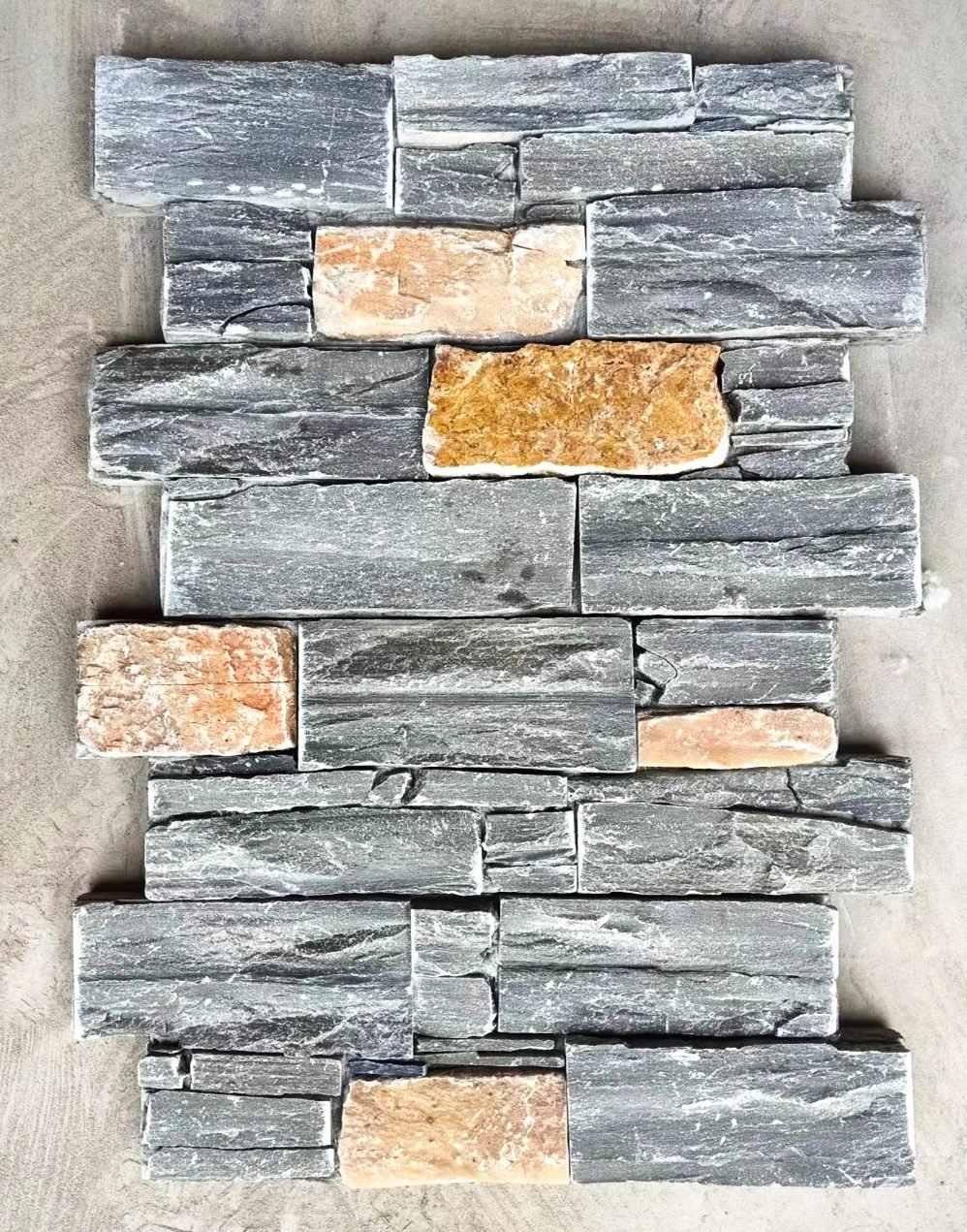
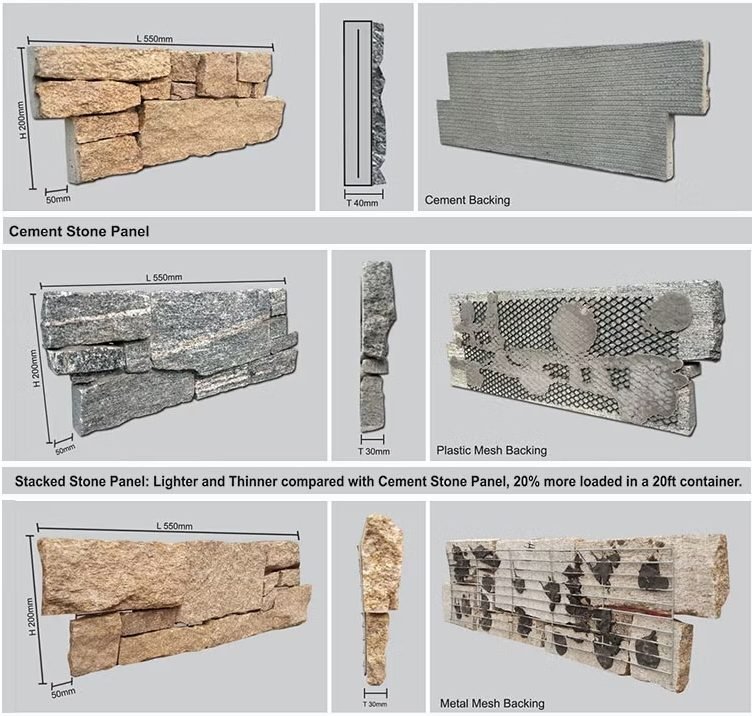
When an architect’s spec sheet or a distributor’s request for quotation says “stone cladding,” in our order book it usually resolves into the interlocking Z-panel family. These are natural stone faces bonded to cement or mesh backing, cut in 20×55 cm and 15.2×61 cm formats, with male-female edges that interlock between panels.
The Z-joint is the engineering point. On a large facade, a flat butt joint between panels reads as a seam the moment light rakes across it. The interlocking profile staggers and conceals the junction, so the finished wall reads as continuous stonework. Thermal expansion resistance matters at this scale too — a facade stores heat, cycles nightly, and a rigid flat joint telegraphs every movement.
Cladding specs also assume system completeness: matching one-piece and two-piece corners for 90-degree turns, defined coverage rates, and a substrate plan. That is the tell that separates a genuine cladding package from a pile of panels. If the quote has no corner pieces and no substrate note, it is material, not a system.
One caution for importers: some quotes labeled “cladding” are full-thickness stone masonry units — a different weight class with different structural demands. Confirm total thickness in millimeters before comparing prices across quotes. Our exterior wall specification guide walks through the full checklist.
What Stone Veneer Means in Practice
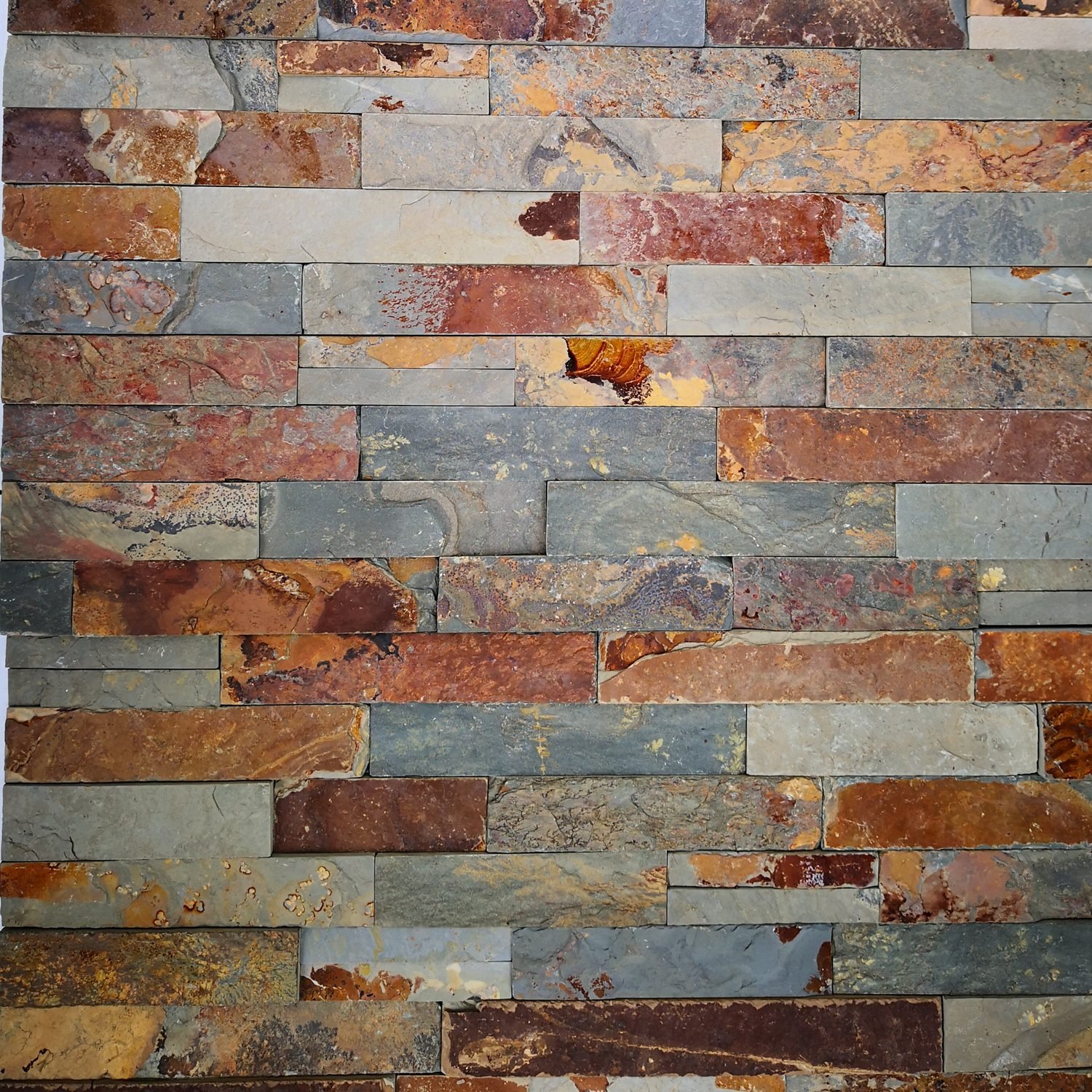
“Stone veneer” in a distributor’s catalog resolves into three families, all thin, all non-structural, all lighter than full masonry:
- Stacked ledger panels — 15×60 cm and 15×55 cm pieces with pre-assembled stone strips on the face, installed panel by panel. One panel places 0.09 m² at once, which is why this format dominates residential exterior and fireplace work. Full range in the stacked stone product line.
- Thin ledgestone — 36×10 cm ultra-thin mini ledges, the finest linear texture in the category. European architectural projects specify it for modern interiors and tight-radius accents; see the thin ledgestone line for formats and colors.
- Loose-strip veneer — individual natural-split strips, color-sorted from the same quarry vein, laid piece by piece for random, ashlar, or linear patterns. The format for villa facades and feature walls where no repeating module is wanted; details in our thin stone veneer explainer.
All three install over prepared substrates — concrete, cement board, or metal lath with scratch coat — using polymer-modified thin-set mortar. All three take pre-made L-corners that eliminate on-site 45-degree mitering. And all three weigh a fraction of full-thickness stone, which means standard wall assemblies carry them without added structural support.
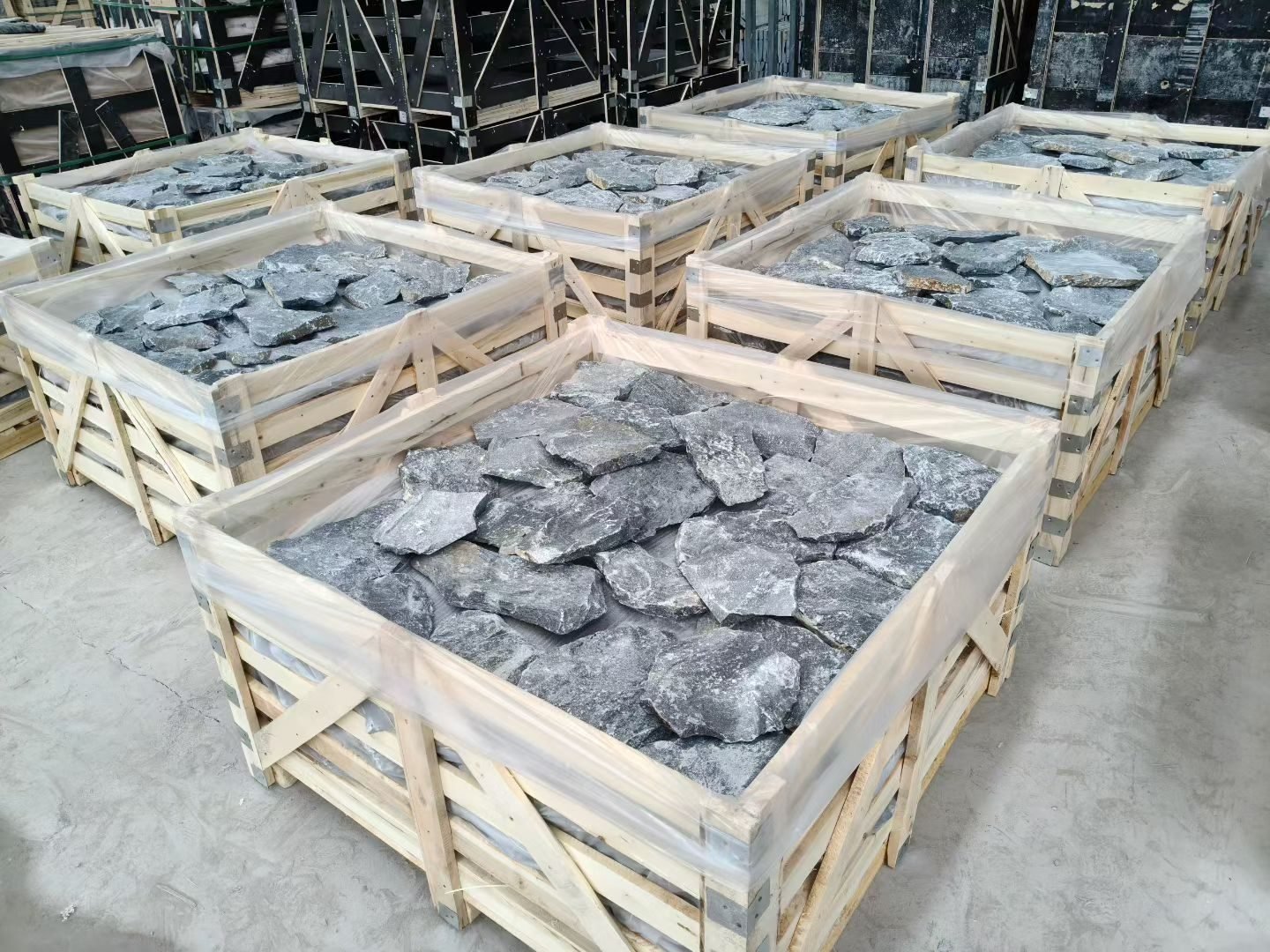
The weight point deserves emphasis because it decides which projects are even possible. Retrofitting stone onto an existing framed wall, a garden wall, or a fireplace surround is a veneer job by definition — full-thickness stone would demand a footing and a structural review that most renovation budgets cannot absorb.
Performance: Where They Actually Differ
Here is the counterintuitive part of this comparison: for natural stone, the performance envelope barely moves between the two sides of the table. Both labels, when the material is dense slate or quartzite, deliver the same core numbers:
| Property | Value | Practical Meaning |
|---|---|---|
| Temperature tolerance | –30 °C to +50 °C | Covers continental winters and hot facades alike |
| Fire performance | Class A (non-combustible) | Passes code review for fireplace surrounds and cladding |
| UV stability | No fading | Color holds on south-facing elevations |
| Coastal duty | Salt-spray and high-humidity resistant | Beachfront and poolside exposure acceptable |
Where performance genuinely diverges is in two places. The first is weight and substrate demand — a cladding spec that resolves to full-thickness masonry loads the structure in a way thin veneer never does. The second is joint behavior at scale: large facades reward interlocking systems because flat joints on a wide wall accumulate visible misalignment course by course.
Neither difference is about quality. They are engineering fit questions. Our comparison of thin veneer versus full-thickness stone goes deeper on weight, cost, and performance for buyers weighing the heavy end of the cladding range.
Specify by Format, Not by Label
Send us the format, face size, thickness, and backing you need — or just the project photos — and we will quote against real production lines, not vocabulary. Samples ship within 1–3 days so your team can weigh, wet, and bond the actual stone before committing a container.
Quarry-direct slate · quartzite · sandstone | MOQ 1×20GP | COO + ISPM 15 documents
Installation and Labor Economics
Installers price stone by the hour, and the hour count is where panelized products earn their margin. Three factory-side details decide the on-site labor bill:
Placement rate. A mason laying individual stones handles one piece per motion and makes a joint decision on every piece. A crew installing 15×60 cm stacked panels places 0.09 m² per motion with the coursing already built into the panel. Across a 50 m² facade, that difference is measured in crew-days saved, not in single-digit percentages.
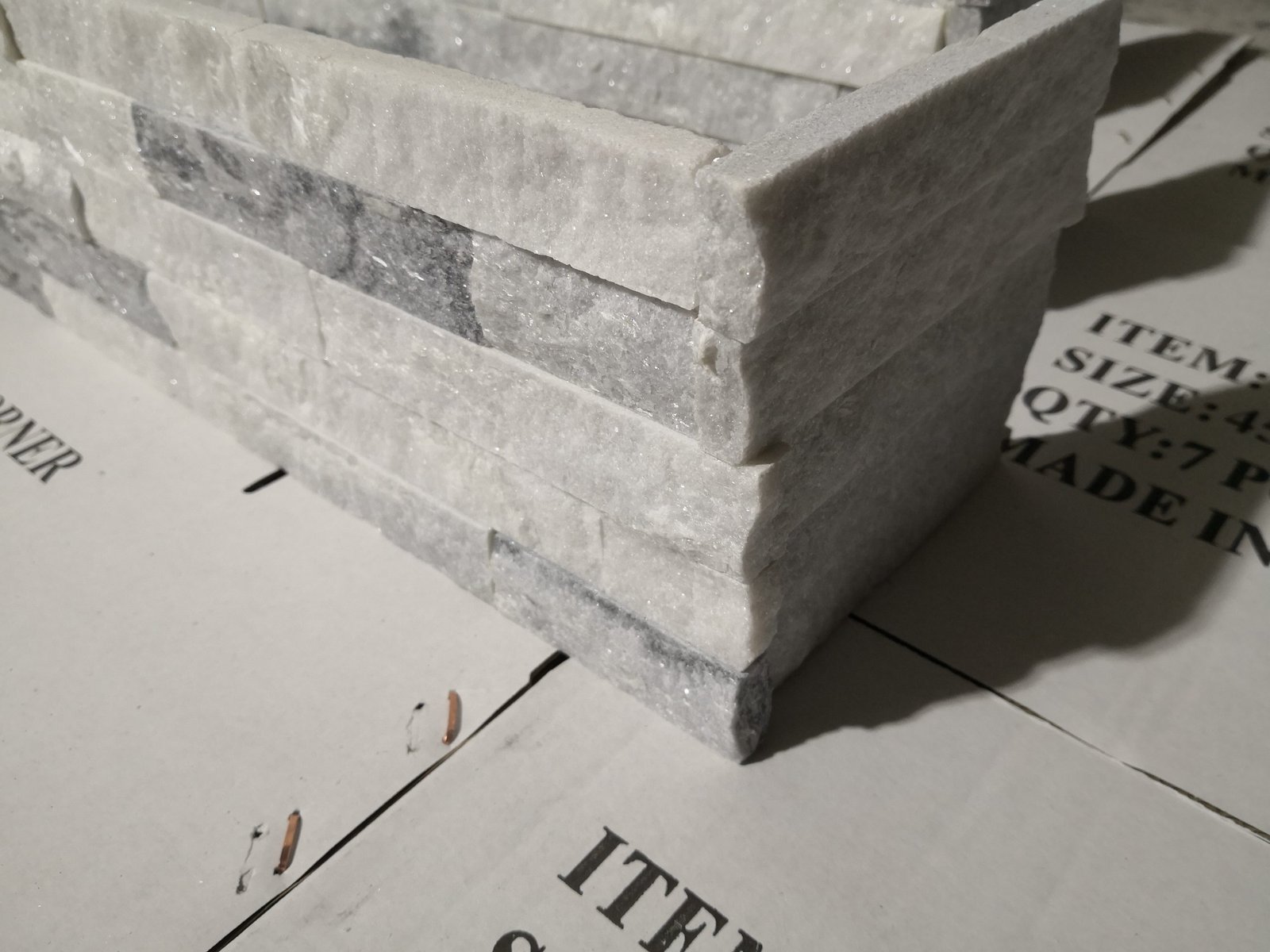
Corner detailing. Every external corner in piece-by-piece work requires 45-degree miter cuts, matched faces, and slow hands. Pre-made L-corners arrive finished from the factory with a staggered joint design; installers place them like any other piece. The measured effect across our accounts: corner labor drops roughly 50% when L-corners replace on-site mitering.
Cutting waste. Infrared CNC diamond-blade cutting holds panel dimensions tight enough that installers cut less on site. Across projects, that precision reduces on-site waste by approximately 20% compared with rougher-cut material — which is material the importer stops paying for twice, once in the container and once in the skip.
The installation side has its own rules regardless of format: substrate prep, mortar choice, and grouting decisions all follow the same playbook, covered step by step in our stacked stone veneer installation guide.
Cost Reality for B2B Buyers
Buyers asking “which is cheaper” usually need the question reframed, because the label does not set the price — four variables do:
- Stone species and color. Quartzite, slate, and sandstone price differently within the same format, and rare vein colors sit above commodity tones.
- Format and backing. Cement-backed interlocking panels carry more factory work than bare loose strips; ledgestone mesh sheets price per square meter differently than stacked panels.
- Corner and trim completeness. A quote with L-corners looks higher line-by-line and lands lower once labor is counted.
- Container economics. Freight spreads over whatever fills the box. Denser formats and higher loading per 20GP reduce landed cost per square meter.
One rule survives every quote comparison: add installation labor before declaring a winner. A cheaper panel with slow placement and mitered corners routinely loses to a pricier panelized system once the crew’s hours are priced. Our breakdown of FOB price, shipping, and landed cost shows the full math, and the seven factors behind every FOB quote explain which of them you can move.
Which Fits Which Project
The decision table below is the one we use internally when a project brief lands without a format named:
| Project | Default Pick | Why |
|---|---|---|
| Large commercial facade | Interlocking Z-panels | Hidden seams, cement backing, scale-friendly formats |
| Residential facade accent | Stacked panels 15×60 cm | Fast placement, full color range, L-corners available |
| Fireplace surround | Thin ledgestone 36×10 cm | Fine texture, light weight, Class A fire performance |
| Columns and pillar wraps | Stacked panels or column kits | Wraps fit existing posts; custom cross-sections available |
| Villa feature wall, random look | Loose-strip veneer | Vein-sorted color, no repeating module, natural split faces |
Our verdict, stated plainly: for distributors serving contractors, panelized thin formats are the core stock line — they install fast, ship dense, and generate the fewest callbacks. Interlocking cladding systems win when the elevation is large and seam-free. Loose strip veneer stays the specialist’s choice for bespoke villa work. Buying all three from one quarry source keeps color families consistent across a project — compare the full range in the pattern guide and the siding panels product guide.
How Top Stone Panels Produces Both
Top Stone Panels operates quarry-direct in Yi County, Baoding — Hebei’s slate and culture-stone heartland — with 18+ years of extraction and export behind the current production lines. Six product families cover both sides of this comparison: stacked panels at 80,000 m²/month capacity, thin ledgestone at 60,000 m²/month, interlocking Z-panels at 50,000 m²/month, loose thin veneer at 40,000 m²/month, flagstone at 30,000 m²/month, and column kits at 10,000 sets/month.
Every line runs the same discipline: infrared CNC diamond-blade cutting, batch-specific vein selection so one container holds one color story, marine-grade epoxy bonding where pieces are assembled, and a three-step QC sequence — raw material selection, in-process re-inspection, final pre-shipment inspection. More than 220 containers ship per year through Xingang port.
For buyers starting a new line, the entry conditions are deliberately simple: one 20GP container minimum per product family, physical samples within 1–3 days, and COO plus ISPM 15 fumigation documentation on request. The sourcing checklist covers the rest of the import workflow, and the MOQ and container mix guide explains how to combine formats in a single shipment.
Conclusion
Stone wall cladding is the category; stone veneer is its thin, non-structural member. The industry swaps the words freely, so the buyer who specifies format, dimensions, backing, and corners buys with certainty while everyone else buys with fingers crossed.
- Panelized thin formats — stacked 15×60 cm / 15×55 cm, ledgestone 36×10 cm — place up to 0.09 m² per piece and install on standard wall assemblies.
- Interlocking Z-panels (20×55 cm, 15.2×61 cm) own the large-facade job because the Z-joint hides seams.
- Dense slate and quartzite deliver the same envelope under either label: –30 °C to +50 °C, UV stable, Class A fire performance.
- Labor decides total cost: L-corners cut corner work ~50%, CNC precision trims waste ~20%, and placement rate beats unit price every time.
Send your project spec or photos to Top Stone Panels and get a format-level quote with samples on your desk within days — the fastest way to end the vocabulary debate for good.
Frequently Asked Questions
Is stone cladding the same thing as stone veneer?
In daily trade use the terms overlap heavily, but strictly they differ: cladding is the umbrella term for any stone layer fixed to a wall, while veneer describes a thin, non-structural stone skin. Every veneer is cladding, but not all cladding is thin veneer. On purchase orders, the format name and dimensions matter more than either word.
Which is thicker, stone cladding or stone veneer?
Thin veneer products sit at the slim end: ultra-thin ledgestone runs just 0.7-1.2 cm, and stacked panels typically 10-25 mm. The word cladding also covers heavier systems such as cement-backed interlocking Z-panels and, in general construction, full-thickness stone masonry that can run several times thicker. Always confirm the millimeter figure on the spec sheet.
Can thin stone veneer panels cover a full exterior facade?
Yes, provided the substrate is prepared correctly and the stone is rated for exterior exposure. Dense slate and quartzite panels tolerate -30 C to +50 C swings and are UV stable. For large uninterrupted surfaces, interlocking Z-panels hide seams better than flat panels, while stacked panels work well on accent zones and smaller elevations.
Which costs less per square meter, cladding or veneer?
Unit price depends on format, stone type, and backing rather than on the label. The bigger savings sit in labor: panelized thin systems place up to 0.09 m2 per piece, and pre-made L-corners remove on-site mitering, which cuts corner labor roughly in half compared with piece-by-piece masonry. Labor usually decides the total cost, not the material line.
Do cladding and veneer need the same substrate preparation?
The preparation logic is the same: a sound, flat, load-rated base such as concrete, cement board, or metal lath with scratch coat. Heavy full-thickness systems may need additional structural allowance, while thin panelized veneer installs on standard wall assemblies without extra support. Match the substrate to the weight of the specific format you order.
What is the MOQ for importing stone cladding or veneer from China?
At Top Stone Panels the MOQ for every product line is one 20-foot container (1x 20GP). Samples ship within 1-3 days, and mixed formats from the same quarry vein can be combined in one container subject to production scheduling.