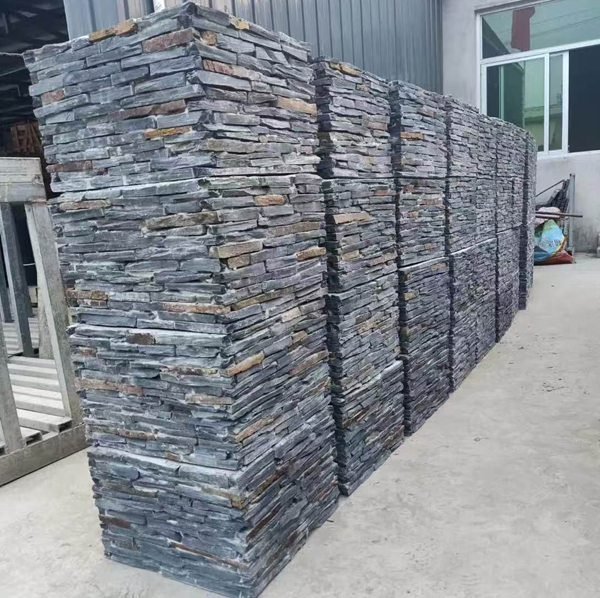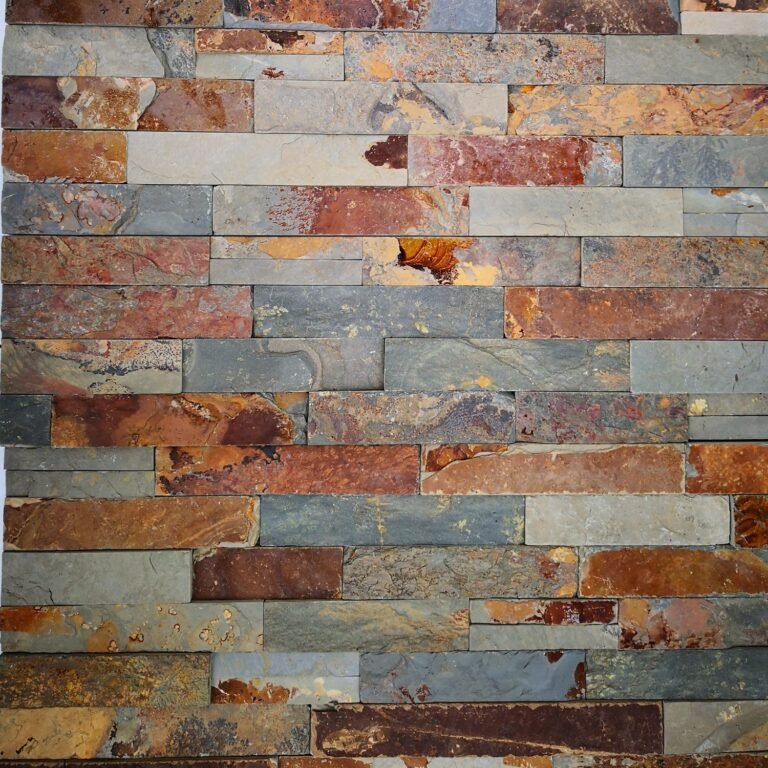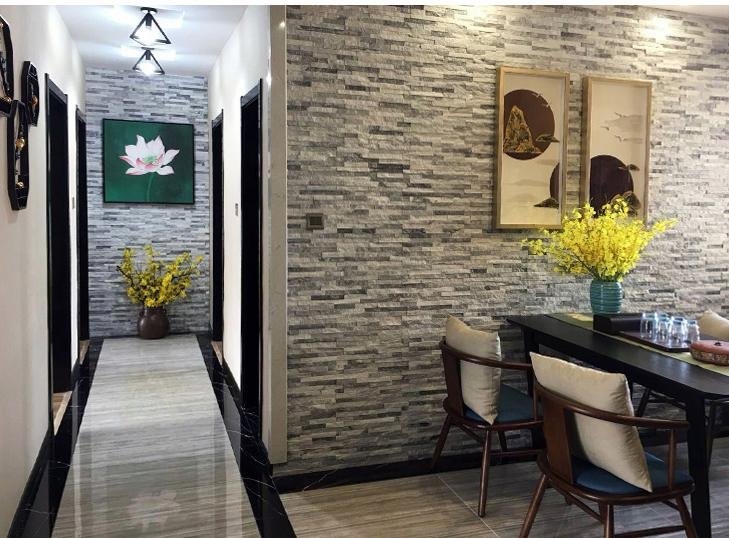
Limestone has been the public face of architecture longer than any engineered product you can name — it carried the pyramid blocks of Giza, the facades of Renaissance cathedrals, and half of the classical buildings still standing in Europe and North America. In modern construction it works the same way it always did, just thinner: sawn into veneer panels instead of hauled in as solid blocks. For a distributor or contractor looking to stock a warm-toned natural stone line, limestone veneer is one of the first questions buyers ask, and one of the easiest specifications to get wrong.
The reason it gets wrong is density. Limestone is not one stone. Under the ASTM C568 specification it is three classes of stone with meaningfully different absorption and strength, and the class — not the color — decides whether the material survives an exterior wall in Cleveland or belongs in a lobby in Scottsdale. This guide lays out the characteristics, color range, panel formats, and honest trade-offs that a B2B buyer needs before writing a limestone veneer specification.
- Limestone veneer is thin-sawn natural stone (roughly 1.5-4 cm plus backing) — it delivers the masonry look at a fraction of full-bed weight.
- ASTM C568 divides limestone into low-, medium-, and high-density classes; absorption and frost resistance follow the class, not the color.
- The standard palette runs cream, ivory, beige, tan, golden, and soft grey, in split-face, honed, or brushed finishes.
- In freeze-thaw climates, a warm-toned quartzite gives the same amber-and-cream palette with materially better absorption numbers.
- Order to a stone spec, not a photo: verify density class, absorption, thickness tolerance, and vein consistency on samples before committing a container.
What Are Limestone Veneer Panels?
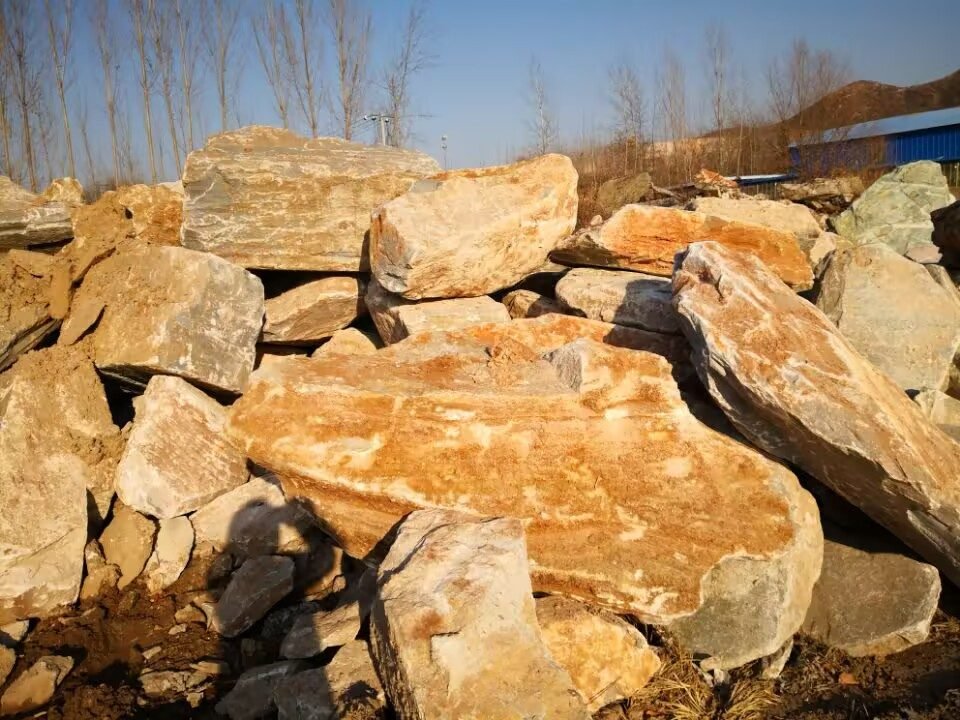
A limestone veneer panel starts as a quarry block of sedimentary rock — chiefly calcium carbonate laid down in ancient seabeds — and is sawn into slices that carry the natural face without the weight or cost of solid masonry. The slice is typically 1.5 to 4 cm thick, and it is mounted on one of three backing systems: a fiberglass or polyester mesh, a cementitious backer, or an epoxy-bonded composite. The backing is not packaging; it is the structural layer that keeps thin natural faces stable, carries the weight to the wall, and lets the panel behave like tile for installers. This is the same construction logic used across the thin stone veneer thickness range from 15mm up to 40mm.
For a building owner the number that matters is simple: a wall can look like solid limestone with a panel system that a crew sets by hand, in courses, without engineered steel supports. For a buyer the number that matters is subtler — because the same sheet-based production path is used for low-grade limestone that has no business on an exterior wall.
Characteristics That Decide Where Limestone Can Be Used
All limestone is sedimentary and mostly calcite. After that, the divergence is wide. The industry writes the difference into ASTM C568, the standard specification for limestone dimension stone, which sorts the material into three density classes nominally by absorption and compressive strength:
| ASTM C568 class | Water absorption (max, by weight) | Minimum compressive strength | Typical use |
| I — Low density | Up to ~12% | About 12 MPa (1,800 psi) | Interior, dry, protected environments |
| II — Medium density | Up to ~7.5% | About 28 MPa (4,000 psi) | Mild-climate exteriors, heated interiors |
| III — High density | Up to ~3% | About 55 MPa (8,000 psi) | Exterior facades, freeze-thaw-prone sites |
Read the table as a gate, not a label. The mechanism is porosity: water that soaks into a porous stone expands when it freezes, and expansion is how exterior cladding eventually spalls. That is why the absorption ceiling — roughly 12%, 7.5%, and 3% for the three classes — is the single most honest number on a limestone cut sheet. The same logic appears across the natural stone family; the testing story is surveyed in our ASTM standards guide for stone cladding.
Two more properties matter in the field. First, workability: limestone is sedimentary, so it cuts, carves, and splits predictably, which keeps fabrication costs down and makes thin slicing reliable. Second, behavior over decades: in clean, dry conditions limestone develops a slow, even patina that architectural clients usually love; in polluted or acidic-rain environments it erodes faster than silicate stones. Neither property is a defect — both are a warning about placing the wrong density class in the wrong envelope.
Colors and Finishes
The market’s mental image of “limestone veneer” is the warm band of the palette: cream, ivory, beige, tan, and honey-gold, with soft grey and occasional fossil-marked pieces. It is a palette that reads as old-money architecture, which is exactly why it dominates hospitality lobbies, office feature walls, and upper-end residential design.
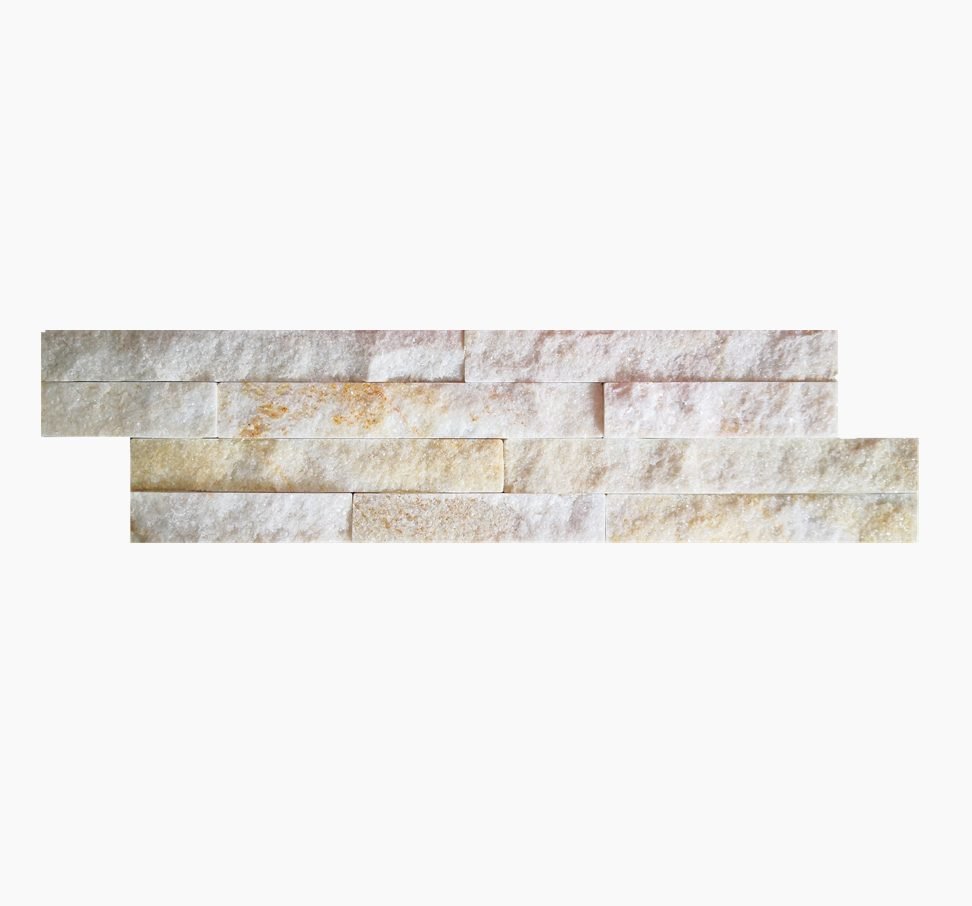
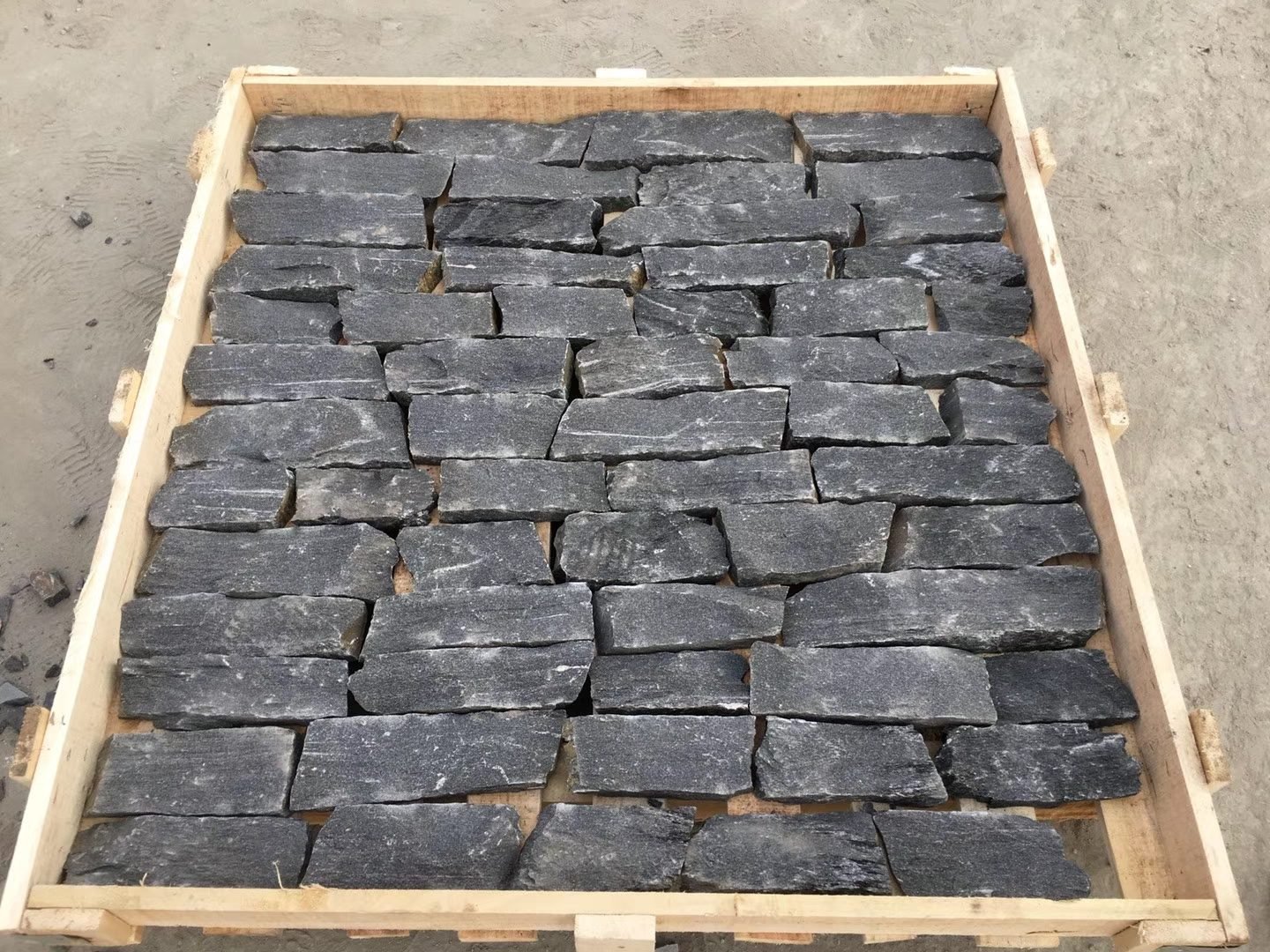
Cream-toned natural stone panels in the 36x10cm ledgestone format — the warm limestone palette, rendered in quartzite for durability.
Finish choices change the way the color reads. A split-face finish leaves the quarry-split texture visible and softens the tone into near-monochrome warmth — the default for stacked and ledgestone panels. A honed finish polishes the surface flat and deepens the color, suiting modern cabinetry-adjacent detailing. A brushed finish splits the difference with matte texture and gentle relief. Because natural stone color is a geological statement rather than a paint-chip, every order should be laid out against the actual production lot; controlled batch-specific vein selection is what keeps a beige order beige from panel 1 to panel 2,000.
Panel Formats: What Buyers Actually Order
Limestone veneer buys in the same structural formats as other natural stone panels, so a distributor can carry the line without teaching installers a new system:
- Stacked stone panels — ledger-format panels around 15cm tall (for example 15x60cm or 15x55cm) that build a staggered, course-by-course field. The classic exterior and feature-wall format, available with L-corner pieces for clean 90-degree turns.
- Thin ledgestone panels — smaller units such as 10x36cm laid in linear courses; the lightest visual footprint, common for fine-scale cladding and panel-style fireplace surrounds.
- Random veneer strips — mixed-length split strips sorted by quarry lot, for organic, dry-stack-looking fields.
- Panel systems on cement or structural backing — larger modular boards for facades and commercial work where speed and flatness rule.
Panel thickness follows the general veneer logic documented in the veneer thickness guide: thinner panels cut weight and container cost; thicker panels add durability and projection. For buyers who want the ledgestone format in warm tones, the ultra-thin ledgestone product line shows how the format behaves on real facade work.
The Honest Trade-Off: Limestone vs Slate and Quartzite
Here is the spec conversation most limestone articles skip. Limestone is a calcium-carbonate sedimentary stone with absorption that can reach double digits; slate and quartzite are metamorphic and silicate stones with absorption typically well below 1%. Freeze-thaw resistance follows the curve. So on an exterior wall in any climate that sees real freeze cycles, the honest industry answer is: high-density limestone or, even more often, a different stone in the same warm palette.
| Property | Limestone (typical) | Slate / quartzite (typical) |
| Stone family | Sedimentary, calcium carbonate | Metamorphic, silicate minerals |
| Water absorption | ~3-12% by ASTM C568 class | Typically under 1% |
| Freeze-thaw profile | Grade-dependent; high density only for exterior frost zones | Strong — proven in -30°C to +50°C ranges |
| Warm palette | Native (cream, beige, gold) | Available in warm-toned varieties |
| Cost direction | Efficient to cut and fabricate in many sources | Premium natural material |
The practical buyer move is not to abandon the palette, it is to specify the same visual family in a denser stone. Warm-toned quartzite — cream, beige, bronze, honey, and rusty strata — reproduces the limestone look while carrying material properties sized for cold-climate exteriors; the warm-tone sandstone veneer guide and the quartzite vs slate performance comparison walk the same decision for coastal and exterior projects, and the real thin stone veneer sourcing guide explains how to verify the material actually inside the box.
If the project genuinely requires limestone — a heritage restoration, an interior specification, a warm-climate facade — the discipline is classification: demand the ASTM C568 class on the cut sheet, check absorption against the site climate, and seal where the spec calls for it. Limestone is not a wrong answer; it is a conditional answer.
Best Applications for Limestone Veneer
Placed in its proper envelope, limestone veneer is one of the most elegant natural materials in the trade. The reliable applications cluster in four zones:
- Interior feature walls and lobbies. Hotels, offices, and retail spaces use warm limestone veneer as the anchor wall behind reception and lounge seating. Absorption is a non-issue indoors; the patina behavior becomes an asset. The interior wall treatment ideas in the interior stone wall designs guide apply directly.
- Fireplace surrounds and kitchen finishes. The warm band matches hearths, backsplash zones, and island bases; the kitchen stone backsplash ideas show how cream and beige panels sit next to cabinetry and stone countertops.
- Column and pillar wrapping. Limestone-look panels wrapping columns give an entrance a public-building presence at a fraction of solid-stone cost; preassembled stone column kits remove most of the field geometry work.
- Mild- and warm-climate exterior facades. Protected facades, Mediterranean-style elevations, and coastal zones with moderate conditions are the legitimate exterior home of medium- and high-density limestone, provided the correct water management details are in place. For climates that run real freeze cycles, the same design language in warm-toned quartzite is the safer build — the exterior application guide for thin stone veneer on exterior walls carries the technical rhythm either way.
Sourcing and QC Notes for B2B Buyers
Because limestone veneer is sold on a photo but evaluated on a cut sheet, the sourcing checklist matters more than most products in the yard. The same disciplines apply whether you are ordering the limestone itself or the warm-quartzite alternative that imitates it:
- Verify the stone, not just the picture. Ask for density class, absorption, and thickness tolerance data tied to the production lot you are actually buying. Precipitation of a sample every time you upsize from panel to container is standard practice.
- Check the backing. Mesh, cement, or epoxy — each changes installation, weight, and edge behavior. Make the backing part of the specification, not an afterthought.
- Insist on vein and color continuity. Controlled quarry-to-batch selection keeps color stable across the whole order; the batch color consistency explainer shows why this separates professional suppliers from resellers.
- Plan the container math. Thin veneer packs densely, which is why 36x10cm ledgestone and thin strip formats maximize volume per container — a real line-item advantage in freight economics. MOQ from quarries and factories typically starts at a full 20GP container.
- Document the risk transfer. Origin certificates, ISPM 15 fumigation certification, pre-shipment inspection reports, and loading photos should all be on the table before payment terms are completed.
At Top Stone Panels the factory floor runs the three-step QC discipline — raw material selection, in-process re-inspection, and final pre-shipment inspection — and the stone family covers slate, quartzite, marble, and sandstone, including the warm-toned quartzite range shown on this page. Sample shipments go out in 1-3 days, standard container production runs roughly 20-25 working days, and the packing protocol is built for zero-breakage ocean transit. For a distributor adding a warm-toned natural stone line, the request that costs nothing is the sample tray.
Frequently Asked Questions
Does limestone veneer need sealing? Indoors on dense material, often not; on medium- or low-density limestone, or anywhere staining is likely, a breathable masonry sealer is cheap insurance. Verify the sealer is rated for limestone so acidity is not locked against the surface.
Can limestone veneer be used in showers and wet areas? Only the high-density material and only with proper waterproofing behind the assembly. Porous limestone in a wet zone is a recipe for shadowing and efflorescence; many specifiers choose slate or quartzite there instead.
Is limestone veneer cheaper than granite or quartzite veneer? Fabrication efficiency makes sedimentary stone economical in many source regions, but landed cost depends on density class, source quarry, port distance, and container mix. Price the finished specification, not the material name.
How many square meters can I get from one container? Thin formats pack efficiently — ledgestone and strip formats maximize coverage per container — but the exact yield comes from the supplier’s packing list for the format and thickness you order.
Conclusion
Limestone veneer panels earn their place in the natural stone order because they deliver one of the most wanted palettes in architecture — the warm cream-and-gold band of the classical facade — at a weight and cost the modern build can afford. The professional discipline is classification: specify the ASTM C568 density class, check absorption against the climate, confirm the backing system, and close color continuity with batch-selected production. Inside that spec, limestone veneer is a proven, beautiful, and salable product line.
And when the client wants the palette but the climate says no, the answer is not a fight with chemistry — it is the same warm tones in a denser stone. Top Stone Panels builds both conversations from the same quarry-to-container foundation: natural slate and quartzite panels in stacked, ledgestone, strip, and interlocking formats, warm-toned color ranges, batch-specific vein selection, and factory QC on every order.
Top Stone Panels supplies natural stone veneer panels — stacked, ultra-thin ledgestone, strips, and interlocking z-panels — in warm cream, beige, bronze, and rusty tones with high-density material profiles for exterior work. See the thin stone veneer line or compare the ledgestone formats, and request a physical sample in 1-3 days before you commit the order.