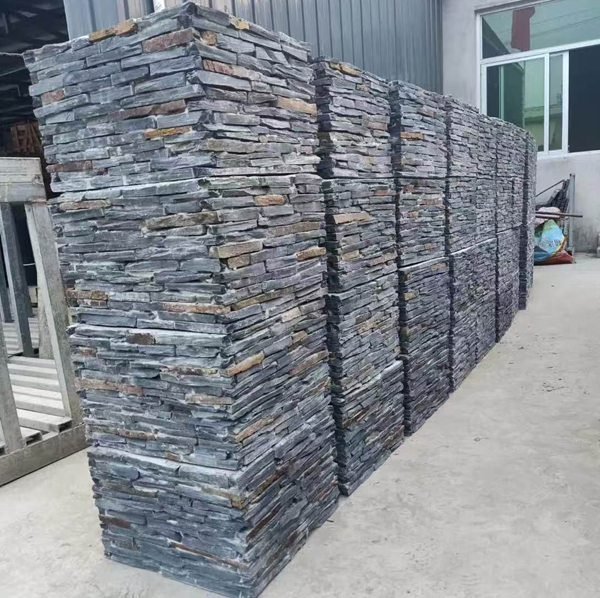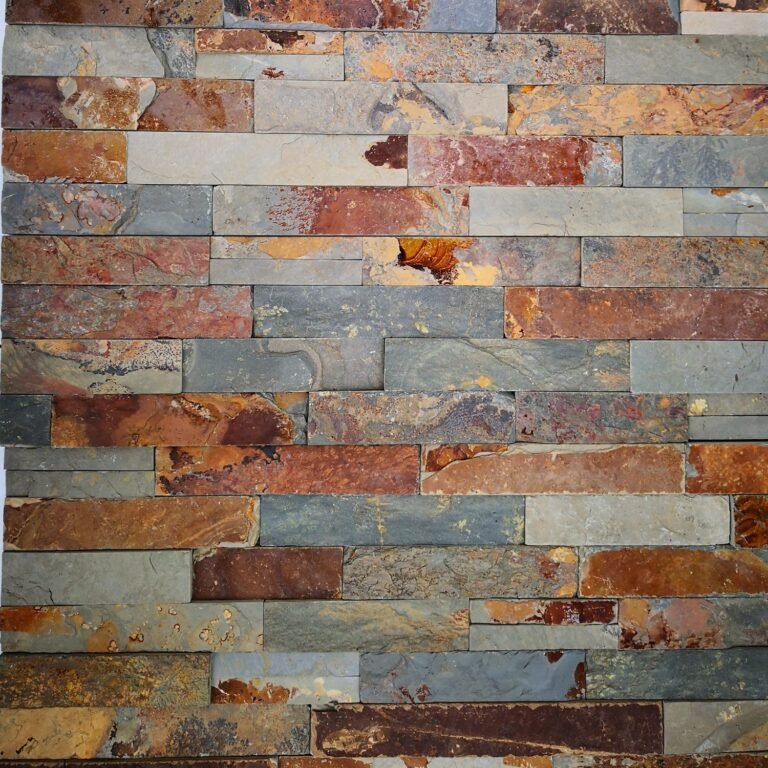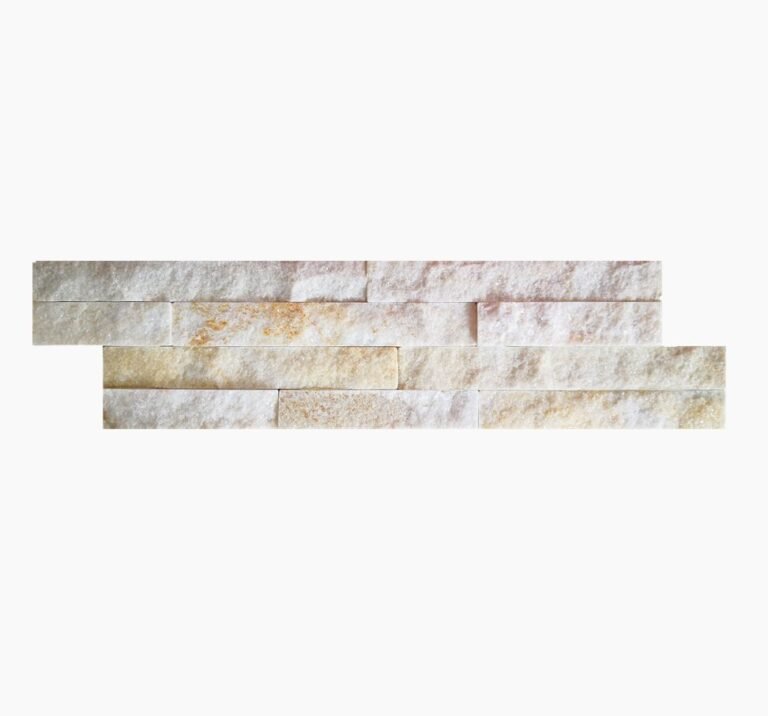
The best “random” crazy paving flagstone is not random at all. That is the part most buyers get wrong. They picture a laborer kneeling in a pile of loose slate, fitting shards by eye until the ground fills in. On a factory mesh-backed sheet, the irregularity is planned. A craftsman positions every stone on a template, locks the joint spacing, checks the rhythm, then bonds it to fiberglass mesh and rolls it for export. The result looks organic and installs fast, and those two things used to be opposites.
So when a distributor or landscape contractor specifies crazy paving, the real choice is not “messy versus tidy.” It is how wide and how varied you want the joints to read — rustic random with wide uneven gaps, or patterned controlled with tighter graded spacing. Both arrive as mesh-backed sheets from the same vein-locked batch. This comparison breaks down where each layout wins, what it does to install speed and cost, and which one to put under a patio, a path, a pool deck, or a driveway. Standard references for the performance numbers below come from ASTM International, and the paving-format guidance reflects Concrete Masonry & Hardscapes Association practice plus eighteen years of quarry-direct export work.
Key Takeaways
- “Random” crazy paving on a mesh sheet is controlled irregularity — joint spacing and pattern rhythm are set at the factory, not left to chance on site.
- The decision axis is joint width: rustic random reads wide and uneven; patterned controlled reads tight and graded. Same stone, same mesh, same batch.
- Mesh-backed sheets cut install labor sharply — one landscape contractor reported a 60% faster pool surround install versus placing individual pieces.
- Random rustic suits patios and pool decks; patterned controlled suits narrow paths, borders, and vehicular driveways where a predictable surface matters.
- Both layouts carry the same performance envelope: R11 inherent slip resistance, ASTM C666 freeze-thaw from -30°C to +50°C, and ASTM E84 Class A fire rating.
What Crazy Paving Flagstone Actually Is
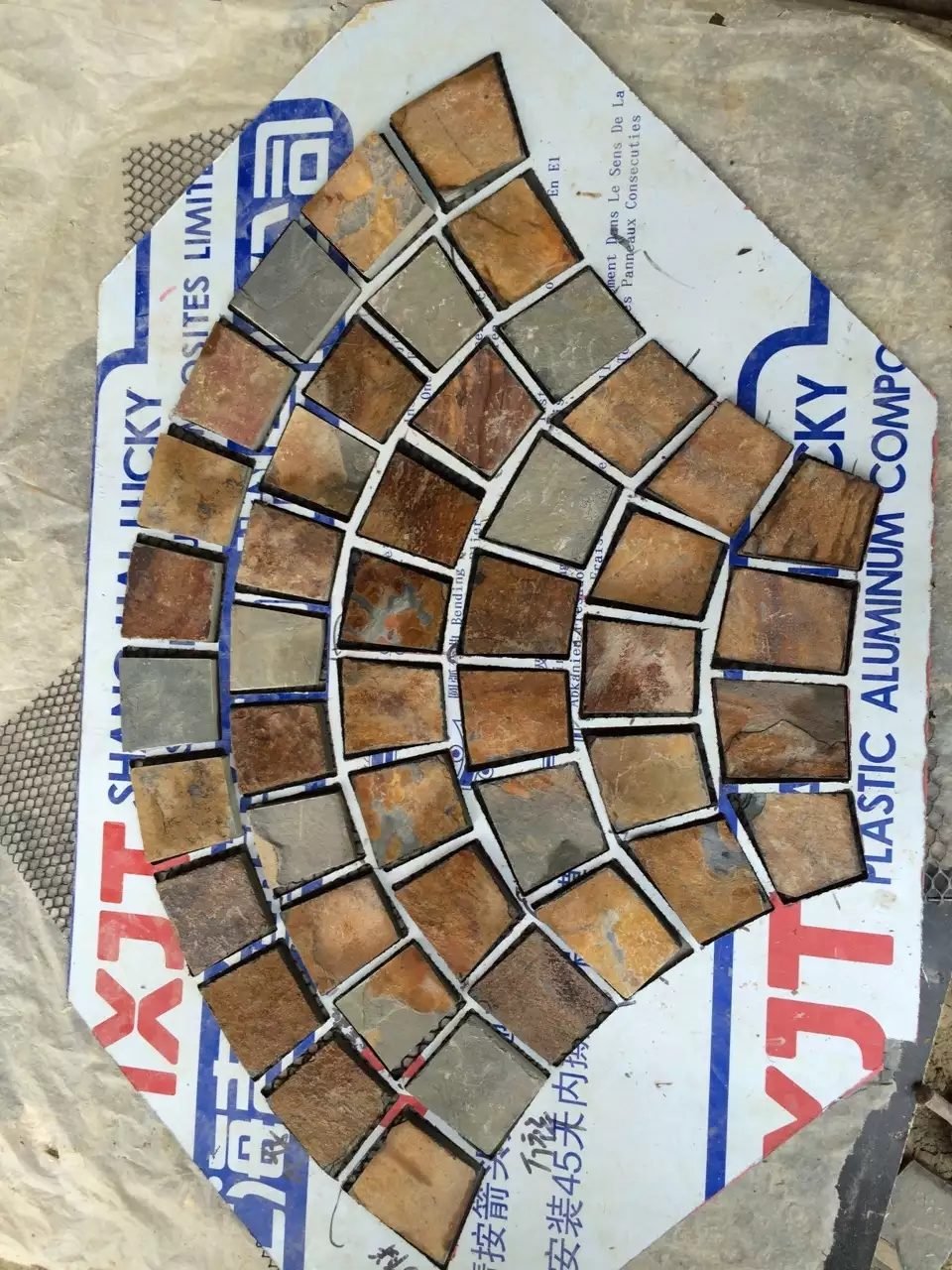
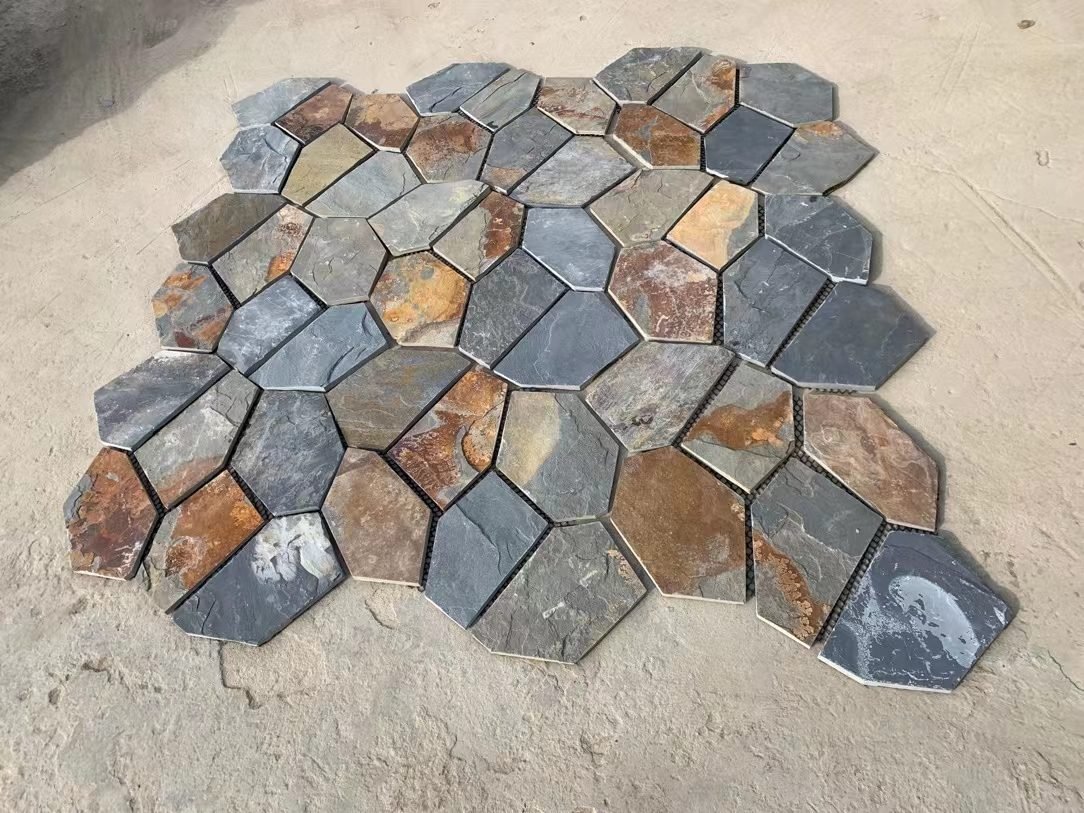
Crazy paving is broken-edge natural stone laid in an interlocking, irregular pattern instead of uniform rows or square grid. The name comes from the fractured look — no two pieces repeat, no grout line runs straight for long. It reads as a natural stone floor rather than a manufactured tile field, which is exactly why it stays popular on patios, pool surrounds, and garden paths where a quarried feel is the whole point.
The material matters as much as the pattern. Top Stone Panels cuts crazy paving from high-density natural slate and sandstone, selected from the factory’s own quarry veins in Yixian, Baoding — the same slate and sandstone region behind most of China’s exported paving stone. Each piece carries a hand-split riven face. That riven texture is a structural property, not a coating: it delivers an inherent R11 slip rating that keeps grip when the surface is soaked, barefoot, or splashed with pool water. No applied anti-slip treatment to wear off under traffic or chlorine.
Two ways crazy paving reaches the ground
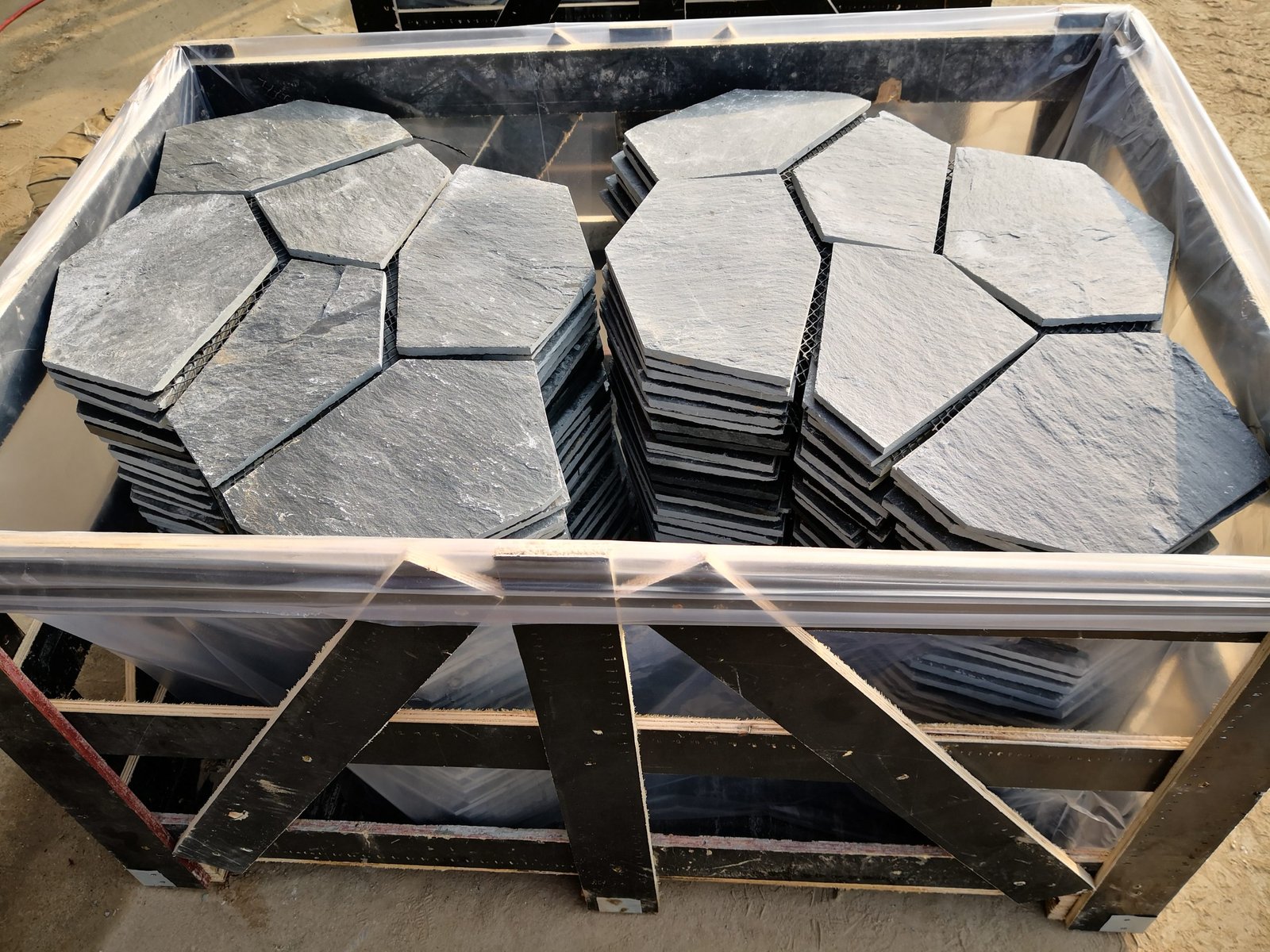
- Loose crazy paving — individual irregular pieces shipped in crates and fitted one by one on site. Maximum artisan character, maximum labor. Every stone is a decision the setter makes on their knees.
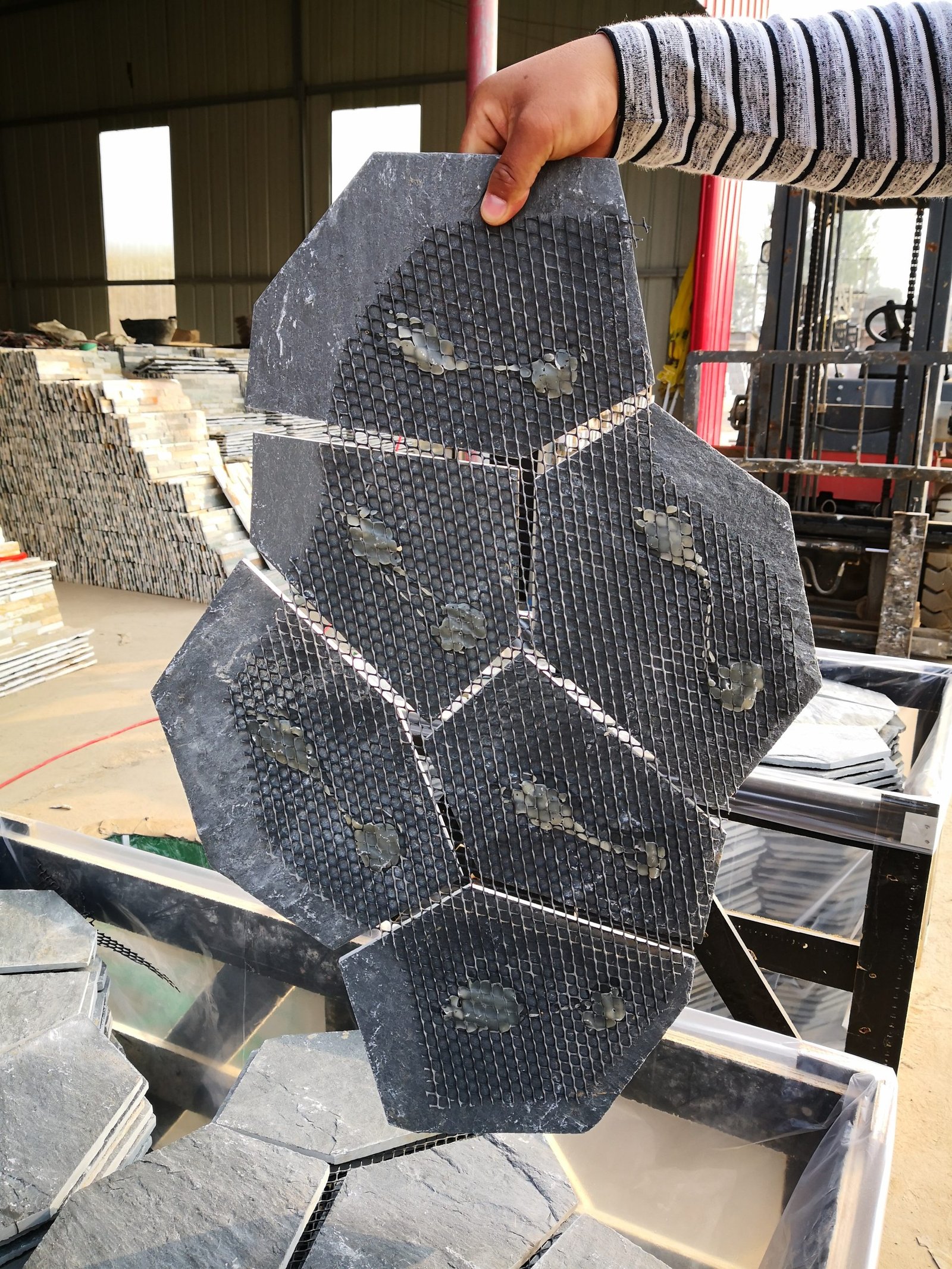
- Mesh-backed crazy paving sheets — pieces pre-arranged and bonded to a full-coverage fiberglass mesh, rolled for shipping, then unrolled flat into a fresh mortar bed. The pattern is decided once, at the factory, and repeated across every sheet.
This article focuses on the mesh-backed format, because that is what a wholesale buyer actually orders by the container and what most production landscapes now specify. If you want the broader product picture first — stone types, sizes, and where flagstone fits in landscape design — our flagstone buyer’s guide covers the full range before you narrow the layout decision.
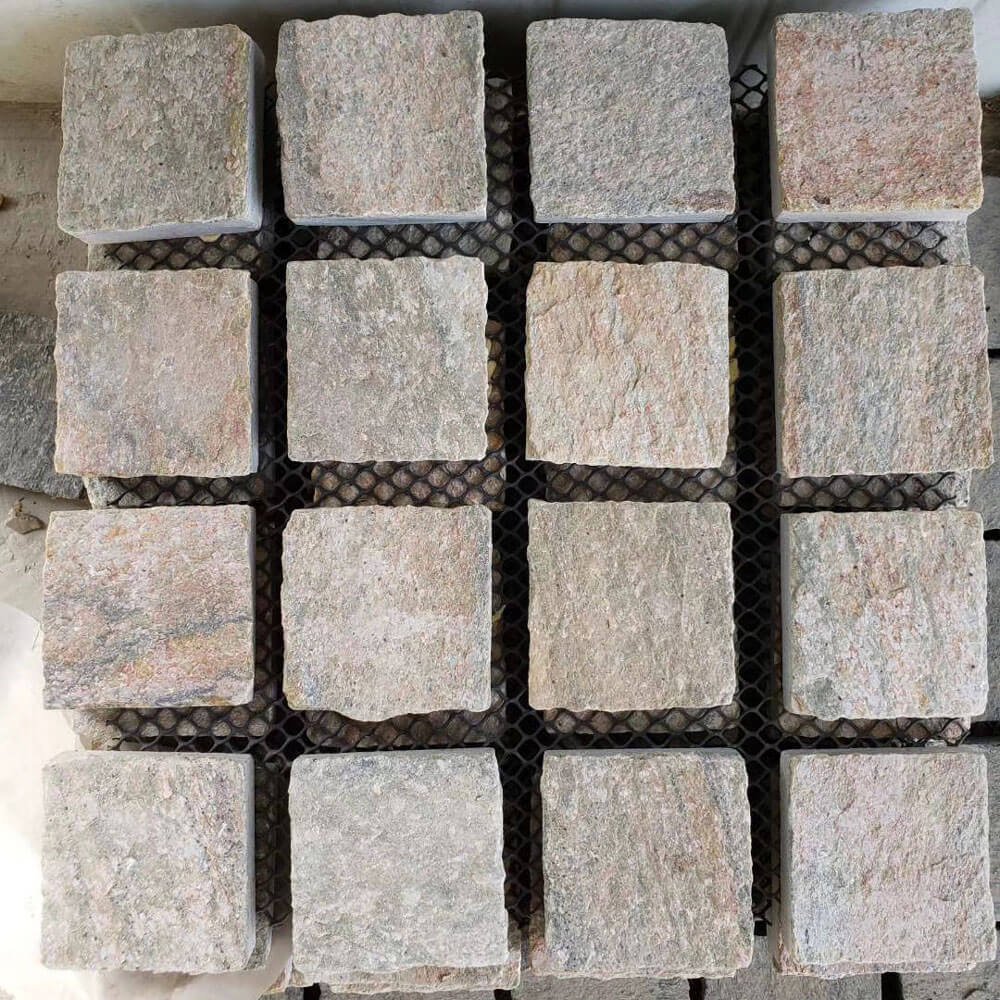
Random Versus Patterned: The Real Difference
Here is the distinction that clears up most of the confusion. On a mesh-backed sheet, “random” and “patterned” are not two different products. They are two settings on the same factory process. The craftsmen who lay out each sheet control two variables: how wide the joints run and how much the stone sizes vary across the sheet. Turn both up and you get rustic random. Turn both down and you get patterned controlled.
Joint width is the dial
Wide, uneven joints with varied stone sizes produce the loose, natural “crazy” read — deep shadows between pieces, a surface that looks hand-quarried. Tighter, more even spacing with graded stone sizes produces a calmer, more contemporary surface where the stone reads as a field rather than a scatter. Top Stone Panels confirms the joint pattern per project at quotation stage, working from your design drawings, so the width is a specification you set, not a surprise you get.
Neither one is chaos
This is where the counter-intuitive part lands. A rustic random sheet is still engineered. Pattern edges are designed so adjacent sheets blend without a visible repeat line — the randomness continues across the seam instead of restarting it. The order is cut from a single quarry vein layer and hand-sorted to hold at least 95% color-transition harmony across the batch. So the “random” patio does not turn into a patchwork of mismatched shades. It stays one coherent floor with organic movement inside it.
Layout Comparison at a Glance
The table scores both layouts on the factors that decide real jobs. Read it against your project, not against a mood board.
| Factor | Random Rustic Layout | Patterned Controlled Layout |
|---|---|---|
| Joint width | Wide, uneven, varied stone sizes | Tighter, more even, graded sizes |
| Visual read | Natural, hand-quarried, deep shadow lines | Calmer, contemporary, stone-as-field |
| Best applications | Patios, pool surrounds, alfresco rooms | Paths, borders, driveways, courtyards |
| Hides wear and marks | Excellent — irregularity absorbs furniture drag and stains | Good, but even joints show tracking sooner |
| Install speed (mesh sheet) | Fast — bed whole sheets, point wide joints | Fast — bed whole sheets, tighter pointing |
| Pointing labor | More mortar fill in wide joints | Less fill, but joints must stay crisp |
| Design style match | Rustic, cottage, coastal, Mediterranean | Modern, minimalist, formal, commercial |
| Load class fit | Pedestrian grades dominate | Pairs well with thickened vehicular build |
The verdict up front: for most residential outdoor rooms, random rustic is the safer, more forgiving specification. It hides the small abuse a patio floor takes and delivers the natural look clients picture when they say “flagstone.” Patterned controlled earns its place where the surface has to read tidy under wheels or line up with a formal architecture. The rest of this guide explains why, zone by zone.
Specify the Joint Pattern at Quotation Stage
Every Top Stone Panels crazy paving order is arranged stone-by-stone on mesh from a single vein-locked batch, in the joint width you specify — wide rustic or tighter contemporary. Physical samples ship in 1-3 working days; MOQ is one 20GP container, and mixed layouts can share it.
Factory-arranged patterns | Vein-locked color | R11 non-slip riven face
Random Rustic Layout in Detail
Random rustic is what people mean when they say “crazy paving” without qualification. Wide joints, varied stone sizes, a surface with visible depth and shadow. It is the look of a European farmhouse terrace or an Australian coastal pool deck, and it has earned that association because it does two practical things well.
It forgives everything a patio floor meets
A patio is not a showroom. Chairs drag, planters leave rings, grill grease spots, and leaves stain the joints. On a wide-jointed rustic surface, none of that registers as damage — the irregularity already has shadows and color variation, so a mark disappears into the pattern. On a tight, even surface, the same mark sits in a clean line and reads as a defect. For any area with furniture, food, or heavy footfall, rustic random is the low-maintenance choice even though it looks less “finished.”
It stays cool and grippy underfoot
The riven split face that defines crazy paving delivers that R11 slip rating as a property of the stone. Around a pool, where the surface is permanently wet and people walk barefoot, that grip is the whole specification. Dense slate and sandstone also hold up to the thermal and chemical abuse of a pool deck — the range survives ASTM C666 freeze-thaw cycling from -30°C to +50°C without spalling or de-bonding from the mesh, and tolerates salt spray and pool chlorine. That dual resistance is why Australian coastal pool surrounds are one of this product’s strongest applications.
Where rustic random is the wrong call
Be honest about the trade-off. Wide joints hold more pointing mortar, so the setting crew spends more time filling and cleaning. In a narrow path or a formal courtyard, that wide irregular read can look busy rather than rustic — the pattern competes with tight architecture instead of softening it. And under wheels, big uneven joints can telegraph a slightly rougher ride than a graded surface. None of that disqualifies rustic random; it just relocates it. Patios and pool decks yes; tight formal lines and high-traffic driveways, consider patterned.
Patterned Controlled Layout in Detail
Patterned controlled layout tightens the joints and grades the stone sizes so the surface reads as a coherent field. It is still crazy paving — the edges are still broken, the pieces still interlock — but the rhythm is quieter. This is the specification for contemporary architecture, commercial courtyards, and any project where the paving should support the design rather than dominate it.
Cleaner lines under wheels and formal architecture
A driveway or a straight garden path wants a predictable surface. Tighter, more even spacing gives wheels a steadier plane and gives a formal elevation a tidy base line. Top Stone Panels produces driveway crazy paving in a thickened, high-density build with reinforced mesh to carry vehicular point loads, and the patterned layout pairs naturally with that structural grade — the visual calm matches the engineered strength. At quotation stage the factory confirms the load class (driveway versus footpath) and recommends the matching thickness and base construction.
It still gets the mesh-sheet speed advantage
Some buyers assume a tighter pattern means slower, more fussy installation. On loose stone, yes. On mesh-backed sheets, no — the pattern is already fixed at the factory, so the crew beds whole sheets and points tighter joints, which actually uses less mortar fill than the wide rustic version. One landscape contractor reported the mesh-backed sheets cut a pool surround install time by 60% because crews bed whole sheets instead of placing individual pieces. That speed holds whether the specified pattern is rustic or controlled.
How Mesh Backing Changes the Decision
The layout question used to be a labor question. Loose crazy paving meant a skilled setter spending days fitting shards, and the “random versus neat” choice was really “how much can we afford to pay in site hours.” Mesh backing collapses that trade-off, and it changes how a wholesale buyer should think about the specification.
The pattern is a factory setting, not a site gamble
Because craftsmen arrange every sheet stone-by-stone on the mesh template and design the edges to blend across seams, the pattern you approve on a sample is the pattern that lands on the pallet — repeated across every sheet. There is no crew-to-crew drift, no bad day showing up as an ugly corner of the patio. Infrared-guided CNC diamond saws cut each piece to consistent thickness tolerance before it is laid out, and a three-step QC (raw-material selection, in-process re-inspection, final pre-shipment inspection) verifies mesh bond density stone-by-stone before rolling. Layout is done by craftsmen with 10+ years of hand-assembly experience.
One batch keeps color coherent across both layouts
This is the part that makes mixing layouts practical. Each order is cut from one quarry vein layer and hand-sorted for at least 95% color-transition harmony, so a rustic patio field and a patterned border drawn from the same batch will not fight each other on shade. If you reorder six weeks later from a different vein, the color can shift — which is why the whole project, both layouts and any spare, should ship in one order. Our batch color consistency guide explains how vein selection controls that match.
The commercial upshot for a distributor: you can offer a client both looks from one supply chain, one container, and one color batch. Mixed container ordering lets several formats and layouts share a single 20GP shipment, which is how you quote a multi-zone landscape — rustic pool deck, patterned walkway, thickened driveway apron — without fragmenting the order. The MOQ and container mix guide walks through the ordering math.
Which Layout Fits Your Project
Strip the aesthetics back to function and the choice gets simple. Match the layout to what the surface has to survive and how the architecture wants it to read.
Patios and alfresco rooms — go random rustic
Furniture, food, and bare feet. Wide joints hide the abuse, the riven face stays grippy and cool, and the organic read anchors an outdoor dining or lounge zone. This is the fastest-growing outdoor-living application and rustic random is its default.
Pool surrounds — go random rustic, specify salt and chlorine duty
Permanently wet, barefoot, chemical-exposed. R11 inherent slip resistance is non-negotiable here, and dense slate resists pool chemistry. The irregular surface hides water spotting better than a tight pattern does.
Paths and stepping routes — go patterned controlled
A narrow line wants a tidy, predictable surface. Tighter spacing reads cleaner in a confined run and gives a steadier plane underfoot. For lawn stepping stones, graded irregular flags work as loose stone or mesh-backed sheets for faster installation.
Driveways and vehicular aprons — go patterned controlled, thickened build
Wheels need a stable plane and the base needs a vehicular load class. Specify the thickened high-density build with reinforced mesh, and pair it with the patterned layout for a calm, engineered surface. Confirm the load class at quotation so the factory recommends the matching thickness and base construction.
Whatever the zone, the installation fundamentals — base preparation, bedding, and jointing — decide whether the pattern survives the first winter. Our flagstone base and jointing guide covers the ground build, and the patio layout patterns article shows how these two grades sit inside a wider set of design options.
FAQ
What is crazy paving flagstone?
Crazy paving flagstone is broken-edge natural stone laid in an irregular, interlocking pattern instead of uniform rows. Top Stone Panels cuts it from high-density slate and sandstone and bonds each piece to a full-coverage fiberglass mesh, so installers bed whole pre-arranged sheets rather than placing hundreds of loose pieces.
Is random crazy paving actually random?
No. Factory-arranged crazy paving is controlled irregularity. Craftsmen position every stone on the mesh template and set joint spacing and pattern rhythm before bonding, so the layout looks organic but repeats cleanly across sheet seams. True loose-random paving is the on-site craft version that costs far more labor.
What is the difference between random and patterned flagstone layout?
The difference is joint width and rhythm. Random rustic layout uses wide, uneven joints and varied stone sizes for a natural quarried look. Patterned layout uses tighter, more even spacing and graded stone sizes for a cleaner contemporary surface. Both ship as mesh-backed sheets from the same vein-locked batch.
Which flagstone layout is better for a patio versus a path?
Patios and pool surrounds suit random rustic layout, where the irregular surface hides furniture marks and stays cool and grippy underfoot. Narrow paths and driveways favor patterned layout, because even spacing gives a stable, predictable surface under wheels and foot traffic and reads tidier in a confined line.
Can I mix random and patterned flagstone in one project?
Yes, and mixed container ordering makes it economical. A common specification pairs a random rustic patio field with a patterned border or walkway, both cut from the same vein-locked batch so color stays consistent. Confirm the load class and joint pattern for each zone at quotation stage.
Conclusion
Random and patterned crazy paving flagstone are two settings on one factory process, not two competing products. The dial is joint width and rhythm; the stone, the mesh backing, the vein-locked color, and the performance envelope stay the same. Once you see it that way, the choice stops being about taste and starts being about what the surface has to survive.
- Random rustic for patios and pool decks — wide joints hide furniture marks and stains, the riven face stays grippy and cool, and the organic read anchors outdoor living zones.
- Patterned controlled for paths, borders, and driveways — tighter graded spacing gives a tidy, predictable surface under wheels and formal architecture.
- Mesh backing removes the old labor trade-off — the pattern is fixed at the factory, sheets bed whole, and one contractor reported a 60% faster pool surround install.
- Order both layouts in one vein-locked batch — at least 95% color-transition harmony holds only when the whole project ships together, and mixed layouts can share one 20GP container.
Before you commit a layout, hold the stone. Request samples from Top Stone Panels and check the joint width, the riven grip, and the shade against your design drawings — physical samples arrive in 1-3 working days.