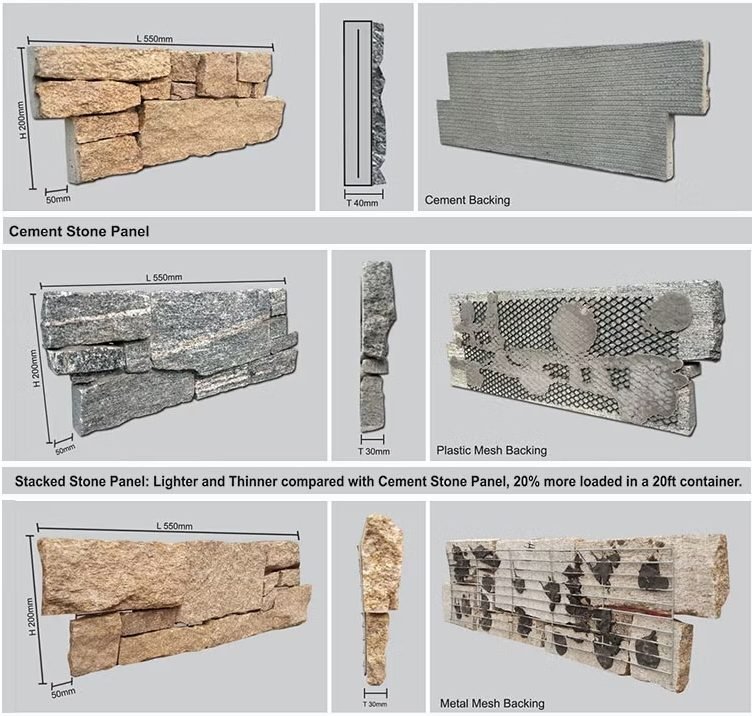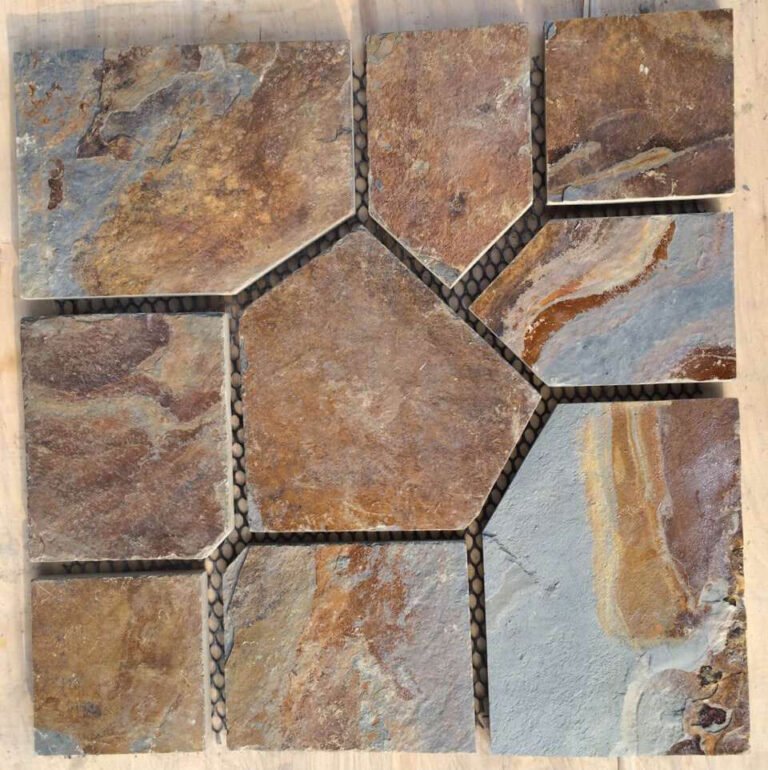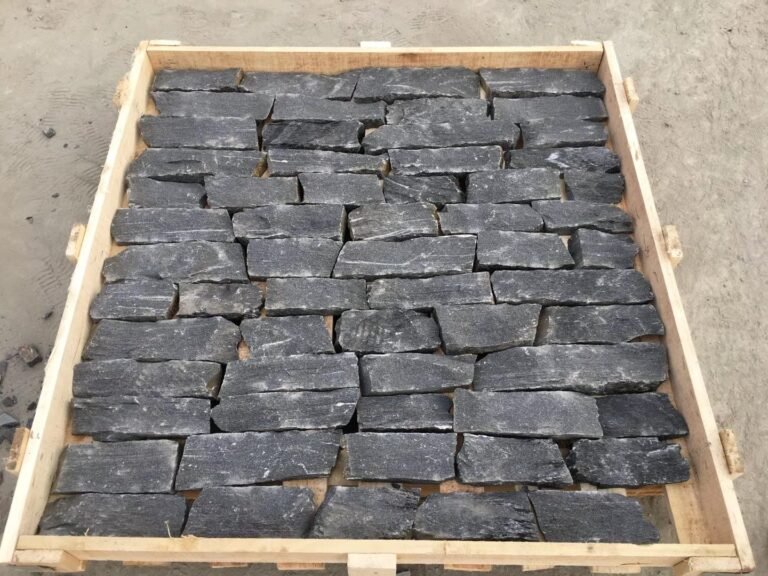
Sandstone and limestone look similar in a sample tray: both are warm, sedimentary, natural-looking stones. On a facade they behave differently, and the difference is not the name — it is density and water absorption. A dense grade of either stone can carry a building skin for decades; a porous grade of either stone can frost-damage or salt-spall in a hard climate.
This comparison walks through the geology in plain terms, a head-to-head performance table, and the climate rules that decide which stone belongs on a coastal villa versus a desert courtyard. It closes with the test-report numbers a specifier should demand before committing a facade budget.
- Rock name matters less than density: low-absorption grades of both sandstone and limestone survive freeze-thaw, porous grades of both fail.
- Sandstone reads warm (tan, gold, red, brown) with a gritty texture; limestone reads pale (cream, beige, light grey) with a smoother face.
- Coastal and cold climates favor dense stone with low water absorption; salt crystallization and freeze-thaw are the two failure mechanisms to design against.
- Pale “limestone look” facades are often delivered with cream quartzite or warm sandstone panels instead, for higher density at wholesale cost.
- Verify with the test report — water absorption (ASTM C97 / EN 1925), freeze-thaw (ASTM C666 / EN 12371), flexural strength — not with sales photography.

- What’s the Real Difference Between Sandstone and Limestone Cladding?
- Sandstone vs Limestone Cladding: Head-to-Head Comparison
- Sandstone Cladding: Performance and Best Climates
- Limestone Cladding: Performance and Best Climates
- Coastal vs Dry Climate: How to Choose
- What the Test Report Should Show
- Which Should You Specify?
- FAQ
- Conclusion
What’s the Real Difference Between Sandstone and Limestone Cladding?
Both stones are sedimentary: layers of material that were deposited, buried, and consolidated. That is where the resemblance ends. Sandstone is grains of quartz and other minerals cemented together — the same mineral family as granite, but compressed in layers rather than crystallized deep underground. Limestone is calcium carbonate, often the compacted shells and skeletons of marine organisms. The sandstone and limestone rock profiles document the geology in more detail; what matters on the facade is how those structures behave with water.
The geology shows up on the wall. A sandstone face feels gritty and granulated, because you are looking at individual sand grains. Its color family runs warm: tan, honey gold, rust red, warm brown. A limestone face feels smoother, almost powdery or chalky on some grades, and its color family runs pale: cream, beige, warm white, and soft grey. Both stones can be split or sawn into cladding panels, and both have centuries of facade history — sandstone in European cities and desert architecture, limestone across classic European facades from Paris to the Cotswolds.
For a facade buyer, the useful distinction is not aesthetic only. Porosity — the network of tiny open spaces inside the stone — decides how the stone handles water. Water is the enemy of an exterior skin: it freezes and expands, and it carries salt that crystallizes and expands. A denser stone with low porosity resists both mechanisms; a porous stone feeds both. Because sandstone and limestone each range from dense to open-textured across different quarry beds, the two cladding specification guide principle applies: specify performance first, then color.
One practical note for buyers: a factory’s product range often reflects this reality. Top Stone Panels, for example, produces natural slate, quartzite, and sandstone panel programs from its own quarries — the stones that carry the density envelope its panels are rated for (-30°C to +50°C, A-class fire, UV-stable, salt-spray-resistant). Limestone is more often discussed as a reference and a look than as a stocked line. That look is still achievable: cream quartzite panels deliver the pale, uniform tones buyers associate with limestone, at the density of a metamorphic stone.
Sandstone vs Limestone Cladding: Head-to-Head Comparison
| Property | Sandstone Cladding | Limestone Cladding |
|---|---|---|
| Rock type | Sedimentary — cemented quartz sand | Sedimentary — consolidated calcium carbonate |
| Typical colors | Tan, honey, gold, rust red, brown | Cream, beige, warm white, light grey |
| Surface texture | Gritty, granular, openly textured | Smoother, more uniform, can take polish |
| Density range | ~2.1–2.6 g/cm³ depending on cementation | ~2.2–2.7 g/cm³; dense grades above 2.55 |
| Water absorption | Varies widely; porous grades exceed 6%, dense grades under 1% | Varies by bed; dense oolitic grades often under 3% |
| Freeze-thaw risk | High for porous grades; select dense, low-absorption beds | High for porous/light grades; dense grades perform |
| Coastal salt-spray | Resists well only at low absorption; salt crystallizes in pores | Same rule: dense and low-absorption wins |
| Chemical reaction | Inert to mild acid; tolerates standard cleaners | Acid-sensitive; acid rain slowly etches, cleaners must be stone-safe |
| Best climate fit | Dry, arid, desert and Mediterranean tones; warm-climate elevations | Historic European facades; mild and temperate climates with dense grades |
| Panel formats | Thin veneer strips, ledgestone, stacked stone panels | Slabs and panels; pale tones often replicated in cream quartzite |
The table is intentionally directional: every property has a range because every quarry bed is different. That is the core buying rule — a “sandstone” or “limestone” label alone is not a specification. The number that matters is water absorption, and it belongs on the test report.
Sandstone Cladding: Performance and Best Climates
Sandstone’s strengths are warmth, texture, and natural aging. Warm-toned sandstone panels — honey, gold, rust — turn a plain elevation into a material statement, and the gritty split face catches light in a way that painted or molded surfaces cannot. In desert and Mediterranean architecture especially, sandstone is a native material: it matches the terrain and develops a soft, uniform patina over years of sun exposure.
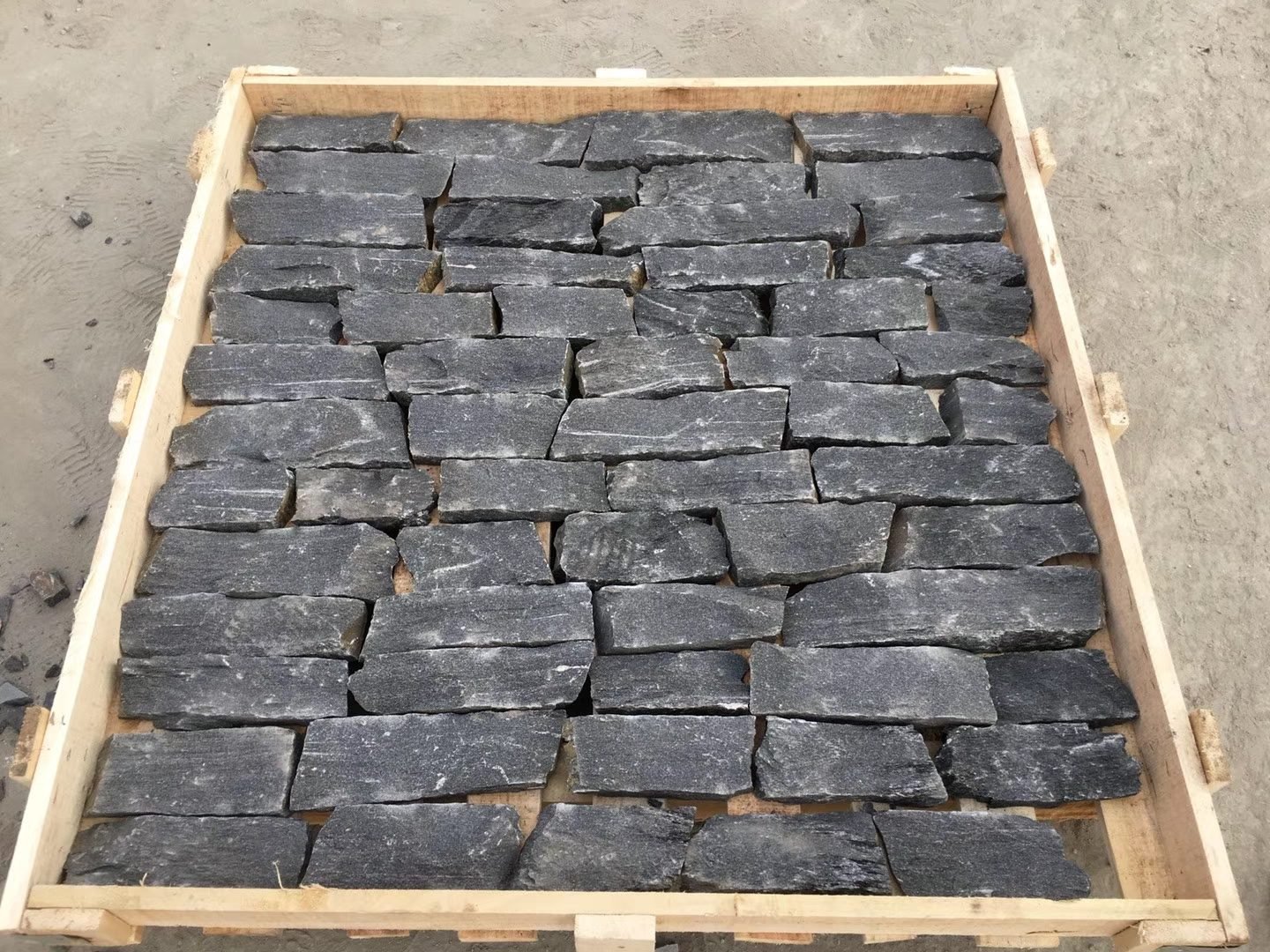
The limit of sandstone is porosity. Some sandstone beds are loosely cemented: water moves through them easily, and in a freezing climate that water expands into cracks. The same porosity that makes a desert sandstone easy to cut and warm in tone makes a poor choice for a Minnesota or Toronto elevation unless the absorption number is low. The freeze-thaw resistance of natural stone is exactly this issue: frost damage is a function of absorbed water, not of the stone’s name.
Coastal buyers face the second mechanism: salt spray. Wind-driven salt loads the surface, and when salt crystallizes inside open pores it pushes the stone apart from within — a process called salt weathering. This is why the salt-spray resistance of a cladding stone matters for seaside villas and marine buildings. The short version: warm-toned sandstone is a beautiful dry-climate stone and a risky wet-climate stone unless the test report shows low absorption.
Where sandstone fails: freeze-thaw zones with porous grades, salt-exposed coastal facades with high absorption, any project spec’d by name instead of test data.
Limestone Cladding: Performance and Best Climates
Limestone’s strengths are pale color, uniformity, and the classical vocabulary of European architecture. Cream and beige limestone facades read as calm, bright, and expensive — the stone of Parisian apartments and English country houses. Dense limestones can also be sawn and honed into smooth, crisp panels that accept fine detailing around windows and cornices.
The two disciplines of limestone are moisture and chemistry. Porous, lightweight limestone beds absorb water and frost-damage like their sandstone counterparts — the failure is the same, and the test report is the same proof. The chemical rule is unique to carbonate stone: acid. Normal rain is slightly acidic, and in polluted or industrial areas acid rain slowly etches the surface of limestone. The result is not structural failure but a gradual loss of crispness — and it rules out acid-based cleaning products entirely.
The chemistry also matters at the factory level. Because pale, low-absorption carbonate stone is prized, a “limestone look” is frequently delivered in a different rock. Cream quartzite from the same quarry program supplies that pale, uniform tone with metamorphic density — a common substitution that keeps the aesthetic and improves the physical envelope. Buyers who want to compare should look at warm-toned sandstone veneer and limestone veneer panel references side by side, then judge by test data.
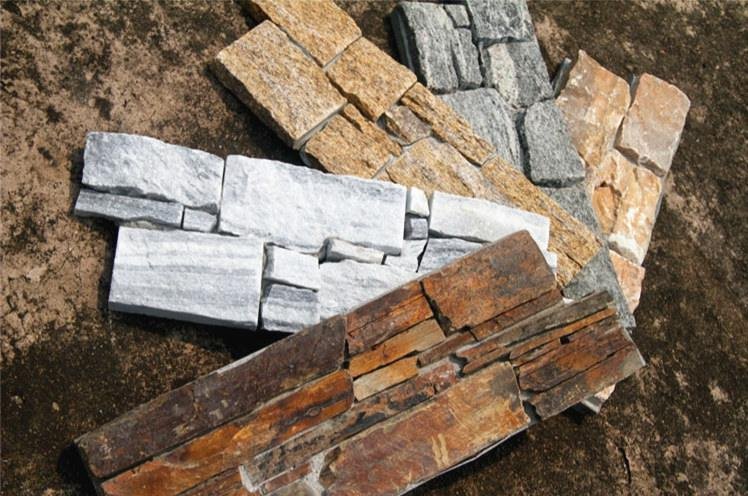
Where limestone is at risk: freeze-thaw zones with porous grades, heavily polluted urban air, aggressive acid cleaning regimes.
Coastal vs Dry Climate: How to Choose
One decision framework removes most of the risk: ask which failure mechanism matters on this site, then pick density accordingly.
Dry climates (desert, high-desert, arid Mediterranean). Freeze is rare and salt load is low. Here the aesthetic matters most, and warm sandstone shows its best side. Porous grades are still worth avoiding near roofs that shed water and at grade, where irrigation or splash can wet the wall, but the material will age well. This is the honest home of sandstone cladding.
Cold climates. Freeze-thaw cycling is the boss. Require a water absorption value on the test report, choose the low end of the range, and pair the stone with flashing and drainage details that keep water off the assembly. The water absorption rate of the stone is the single metric most correlated with cold-climate survival.

Coastal climates. Salt-crystallization and wet-dry cycling both stress the face. Dense, low-absorption stone resists both. If a project on a sea cliff wants warm tones, a dense warm quartzite or a tight sandstone from a low-absorption bed is the defensible spec — not a porous romantic-grade stone. The factory’s salt-spray and -30°C to +50°C ratings are documented for its slate and quartzite panel programs precisely because coastal projects keep needing this proof.
What the Test Report Should Show
Never buy sedimentary stone by photograph. The report is the product. Four numbers cover the decision:
- Water absorption (ASTM C97 / EN 1925): report the percentage by weight. For exterior use in freeze-thaw zones, the industry works safely in the low single digits; single-digit-plus values on porous sandstone or limestone are a red flag.
- Freeze-thaw resistance (ASTM C666 / EN 12371): a documented cycle count with observable change (usually weight loss or degradation) tells you whether the stone survives a hard winter.
- Flexural / bending strength (ASTM C880 / EN 12372): panel cladding spans and anchors depend on it; the ASTM standards page explains which tests apply to cladding stone.
- Density / porosity: reported alongside absorption, it explains why two stones with the same name perform differently.
Reputable wholesale suppliers hold this data per quarry block and share it before order. Top Stone Panels follows the same discipline: its 3-step QC process and batch-specific vein selection mean the test report belongs to the block you actually receive, and pre-shipment inspection verifies the container against the approved sample.
Which Should You Specify?
| Project situation | Recommended call | Why |
|---|---|---|
| Desert or arid villa, warm tones | Sandstone panels | Native material match, warm light, ages well in dry air |
| Cold climate, souring budget | Low-absorption dense stone, any family | Freeze-thaw survival is about absorption, not the name |
| Coastal facade, pale look | Cream quartzite or dense sandstone | Pale limestone look with dense, salt-resistant physicals |
| Interior feature wall, any climate | Thin veneer strips in either color family | No freeze or salt load; aesthetic freedom |
For wholesale buyers, the practical program is usually one: pick the color direction, then let the factory match it with a dense stone from its own quarry. Warm facade? Sandstone or warm quartzite panels. Pale, uniform, coastal? Cream quartzite thin veneer. The quartzite vs slate comparison covers the two dense workhorse stones this factory ships in volume, and cladding cost breakdowns translate the choice into landed numbers.
FAQ
Which is better for exterior walls, sandstone or limestone cladding?
Neither wins by name. Dense, low-absorption grades of both stones perform well outdoors, and porous grades of both are risky in freezing or coastal climates. Choose by color direction and test-report numbers, not by family loyalty.
How can you tell sandstone from limestone?
Drip dilute acid on a chip: limestone effervesces (fizzes), sandstone does not. Visually, limestone is usually smoother with cream, beige, or light grey tones; sandstone is gritty with tan, gold, red, or brown tones.
Is sandstone cladding durable in wet or cold climates?
Only dense, low-absorption grades are. Water absorbed into porous sandstone expands when it freezes and can crack or spall the face. Buyers in cold, wet regions must verify the absorption value on the test report before ordering.
Does limestone last outside on a facade?
Yes, dense limestones carry centuries of European facade history. The cautions are acid rain, which slowly etches polished surfaces, and porous grades, which frost-damage like any porous stone in freeze-thaw zones.
Which stone handles coastal salt air better?
The denser, lower-absorption stone — whatever the family. Salt crystallizes inside open pores and pushes the stone apart, so coastal humid, salt-laden projects favor dense stone and documented salt-spray performance.
Can I buy warm or pale natural stone cladding wholesale?
Yes. Warm-toned sandstone and pale cream quartzite panels ship wholesale with a one-20GP container MOQ, 1-3 day sample turnaround, and 20-25 working days production. Request samples to approve tone and test data before allocation.
Conclusion
Sandstone and limestone both belong on facades — the question is which quarry bed you are buying. Warm sandstone reads beautifully in dry climates; pale limestone reads classically in temperate ones; both fail in cold or coastal sites when the porosity is wrong and the report is skipped.
- Decide by climate first: dry favors warm sandstone, cold and coastal demand low-absorption density from any family.
- Verify the four test numbers — absorption, freeze-thaw, flexural strength, density — before you authorize a facade order.
- For the classic pale look, compare cream quartzite and warm sandstone panels from a factory that holds its own quarry and its own test data.
- Order samples before production; tone approval under project light beats negotiation after the container loads.
If a facade is on your desk, ask for samples and test reports side by side — Top Stone Panels ships physical samples in 1-3 days from quarry-direct stock.