Villa facades are where natural stone earns the right answer, not just the pretty one. The material sets the building’s first impression, its silhouette against the terrain, and — done right — its resale and rental premium. The mistake most developers and architects make is starting from a single sample photo instead of a facade direction: a coherent idea for how light, color, and massing will work together across the whole elevation.
This guide lays out five directions that are winning villa projects in 2026, from warm Mediterranean sandstone tones to black accent detailing. Each reads differently in daylight and dusk, each pairs with stucco, wood, or glass differently, and each is achievable with natural stone panels at wholesale cost.
- Warm sandstone tones suit Mediterranean, desert, and ranch villas; the material reads native and ages well in dry climates.
- Grey slate or quartzite is the minimalist workhorse — deep, calm, and consistent across large elevations.
- Cream and white quartzite deliver pale, bright facades without the maintenance of painted render.
- Black stone accents frame entries, corners, and terraces; used sparingly, they sharpen the whole elevation.
- Custom mixed-vein panels give a signature palette no off-the-shelf product can match — ideal for branded residential developments.
- Factory panels, L-corners, and CNC-straight edges keep labor and waste low; MOQ is one 20GP container, samples in 1-3 days.

- Why Stone Cladding Works on Modern Villas
- 1. Warm Sandstone Tones for Mediterranean and Desert Villas
- 2. Grey Slate and Quartzite for Contemporary Minimalism
- 3. Cream and White Quartzite for Pale, Bright Facades
- 4. Black Stone Accents for High-Contrast Drama
- 5. Custom Mixed Veins for a Signature Palette
- Choosing Between the Five Directions
- How to Buy Stone Cladding for a Villa Project
- FAQ
- Conclusion
Why Stone Cladding Works on Modern Villas
Stone cladding earns its place on villas through three properties on the face, not just style. First, it ages honestly: natural stone patinas instead of peeling, and UV-stable pigments mean the facade color today is the color in ten years. Second, it delivers the texture of mass masonry at a fraction of the weight and schedule — thin veneer panels mount on standard wall assemblies with adhesive or mortar, the core idea of building cladding. Third, it reads as value: real stone is one of the few finishes buyers and guests can verify with a touch.
The trade-off is design discipline. Stone is a strong material and a strong statement; the villas that win are the ones that decide where stone governs and where render, timber, metal, or glass carries the rest. The five directions below are that decision, made five different ways, all using natural stone panels from one quarry-direct source.
No direction is climate-proof on its own — in freeze-thaw or coastal zones, verify the panel’s density and water absorption against the coastal and salt-spray and freeze-thaw performance before ordering.
1. Warm Sandstone Tones for Mediterranean and Desert Villas
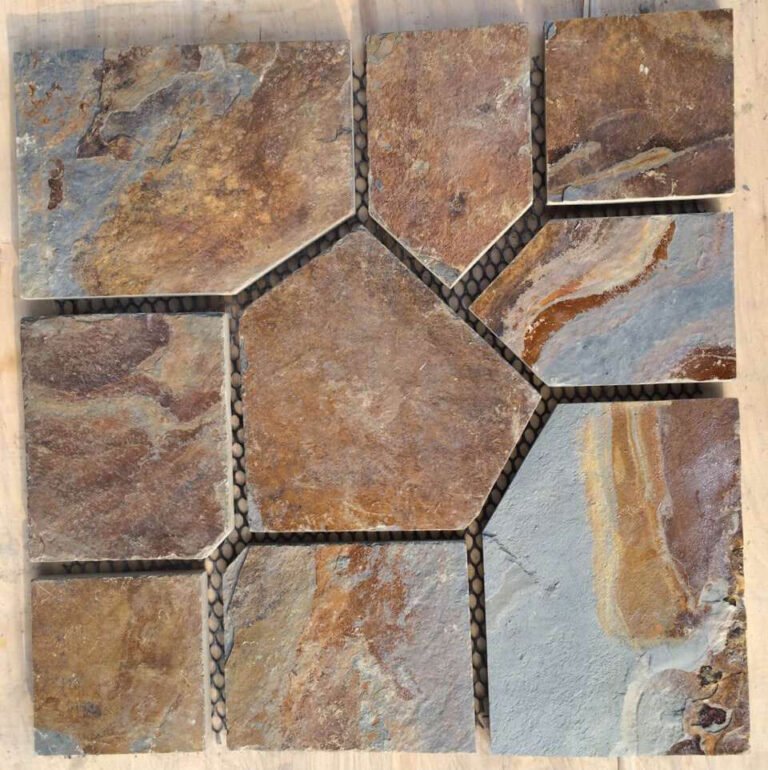
Warm-toned stone — honey, gold, rust, warm beige — is the native language of Mediterranean hillsides and desert architecture. It matched the country before architecture existed, and it still does: a warm stone villa sits into the terrain instead of standing against it. Split-face panels amplify the effect by catching low sun across the texture.
Spec it as full-clad on the street elevation with render or timber below upper windows, or as a feature band around the entry and terraces. In hot-dry climates this direction is also the most forgiving: warm stone absorbs the sun’s heat into the facade mass, evening out internal temperatures, and dry air means porous grades age gently. The warm-toned sandstone veneer palette covers the range, and contemporary facade design precedents show how the banding is proportioned.
Best for: Mediterranean, desert-modern, ranch, and Tuscan-style villas. Watch out: in cold or salt-exposed coastal zones, choose the dense low-absorption grades or switch to warm quartzite.
2. Grey Slate and Quartzite for Contemporary Minimalism
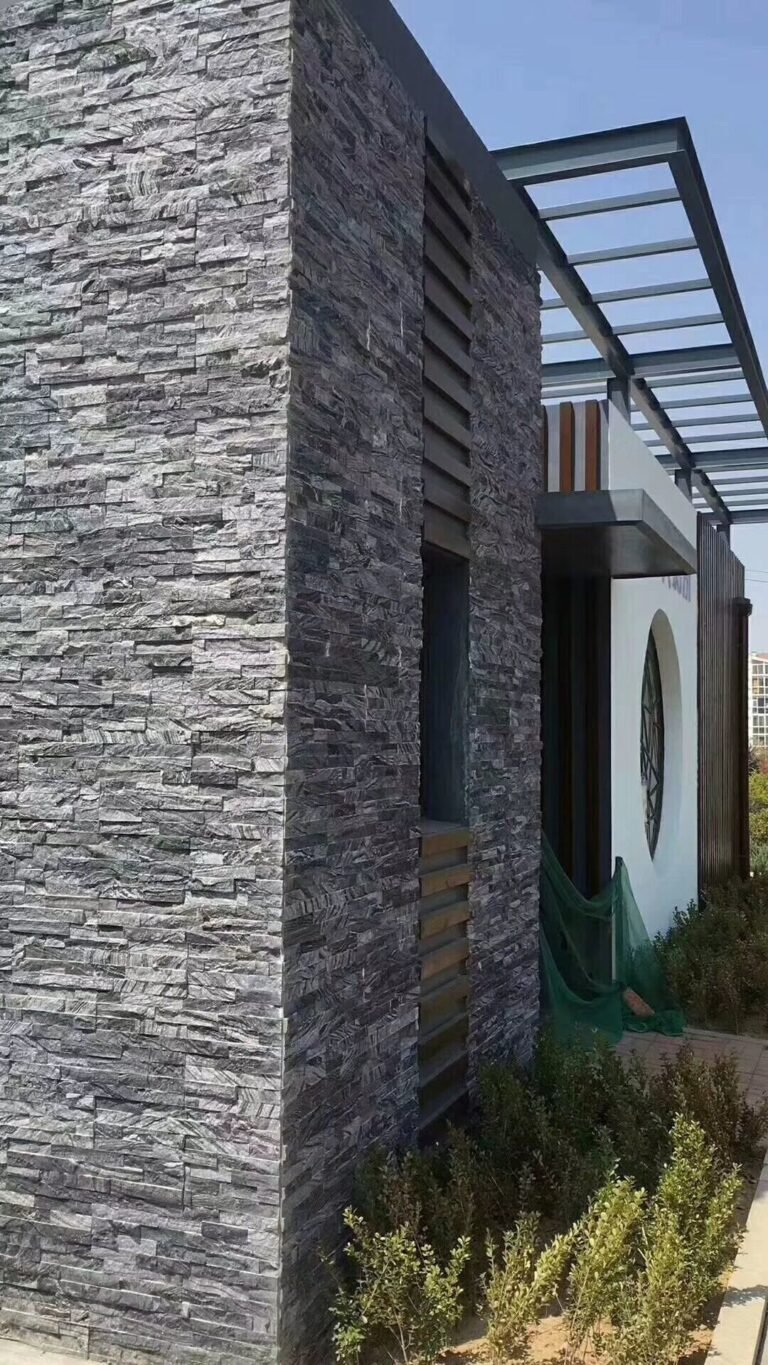
Grey is the workhorse of modern residential architecture: deep, calm, and consistent. Ledger-format grey panels — vertical or horizontal strips — turn a villa elevation into a disciplined composition where light does the decorating. This direction tends to use larger coverage with tighter joints, giving the facade a continuous mineral skin rather than a pattern.
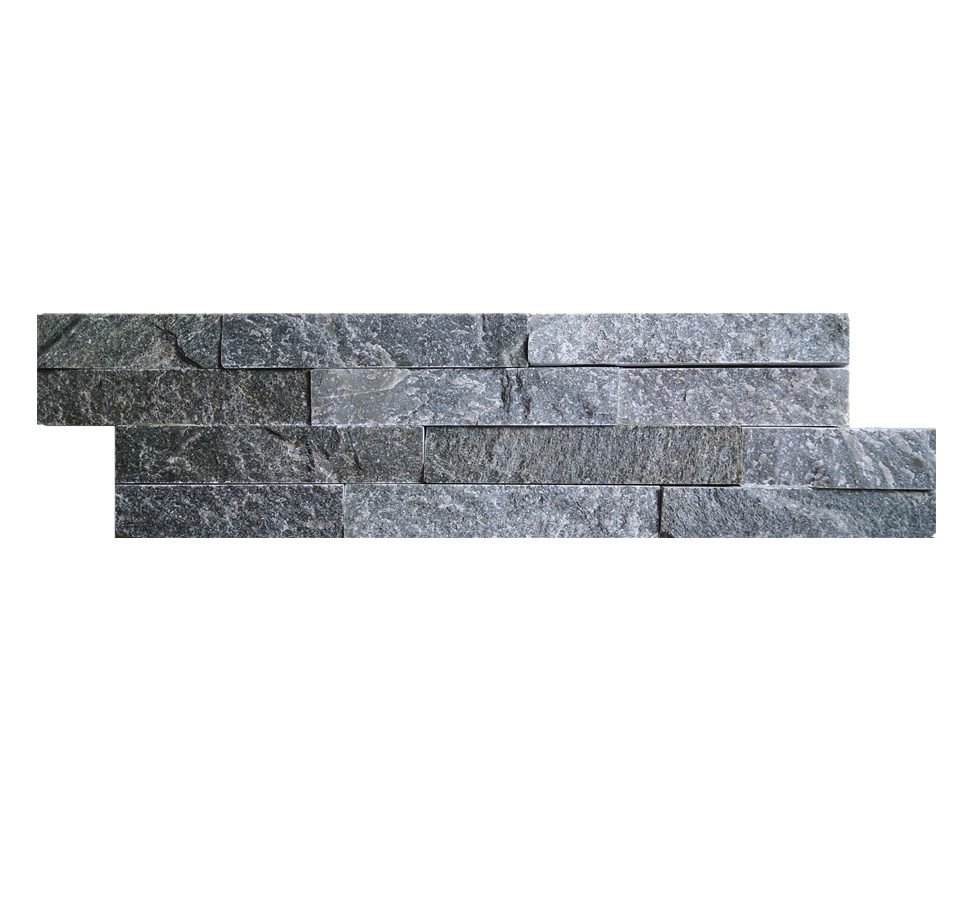
Grey slate and quartzite also carry the best engineering story for hard climates: dense slate and quartzite handle -30°C to +50°C swings, hold A-class fire behavior, and shrug off salt spray and UV. For mountain villas, coastal houses, and any elevation where the spec needs proof rather than poetry, grey is the defensible direction. The grey veneer color guide walks through the tonal range from light ice-grey to charcoal, and the quartzite vs slate comparison decides which rock fits the budget and the light.
Best for: minimalist, Scandinavian, alpine-modern, and coastal villas. Watch out: pure grey massing needs one warm or wooden element — an entry door, window frames, or a timber soffit — or the facade can read cold.
3. Cream and White Quartzite for Pale, Bright Facades
Pale facades read lighter, cleaner, and larger — which is why cream and white stone is a favorite for villas on small plots and in dense suburbs. Cream quartzite delivers the pale stone look with the density of a metamorphic rock, so the facade gets the brightness of render without the paint schedule, and the tone stays stable year after year.
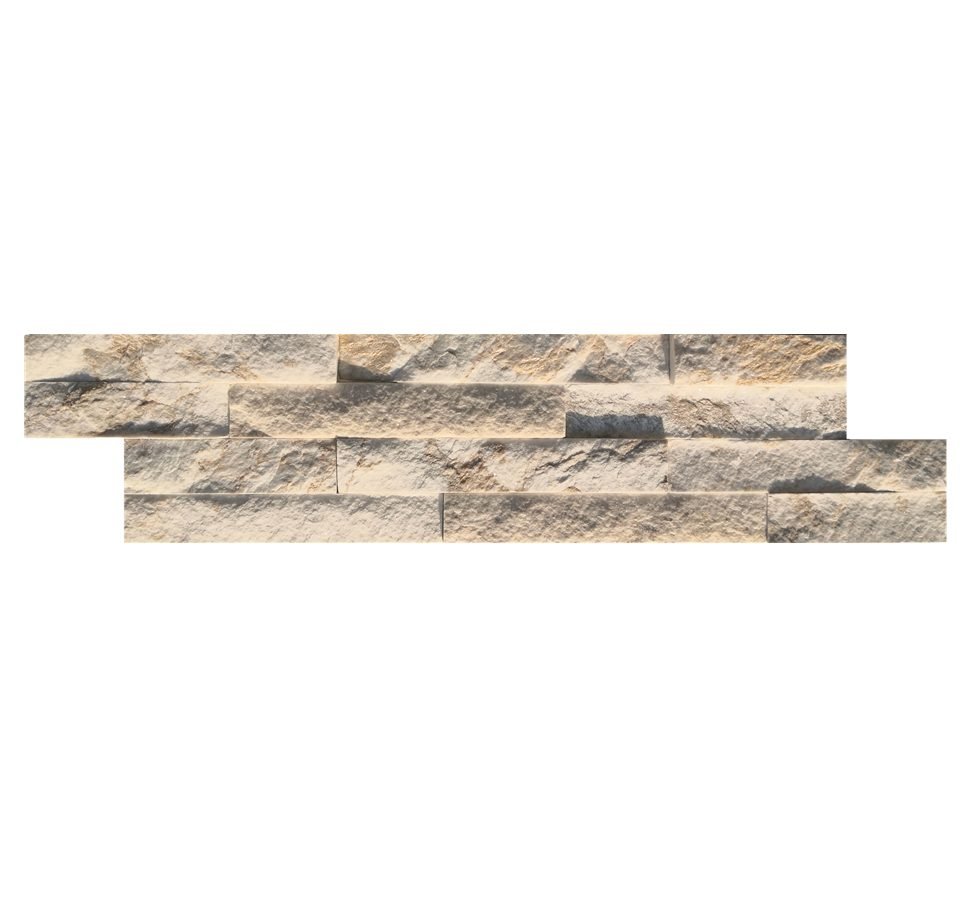
The direction works as full-clad for small two-story villas, and as a strong band over a darker base course on larger elevations. Pair pale stone with dark window frames and deep eaves for the classic modern-Mediterranean look, or with timber for a softer, resort-lobby feel. Because pale stone shows water droplets and airborne dirt more readily in wet climates, this direction performs best where drainage details and overhangs are drawn carefully. For budget planning, cladding cost breakdowns show where pale thin-veneer programs sit against heavier options.
Best for: coastal-modern, Mediterranean-revival, and compact suburban villas. Watch out: pale panels need disciplined flashing and overhangs in rainy climates; light tones also show grout joints, so specify joint color with the stone.
4. Black Stone Accents for High-Contrast Drama
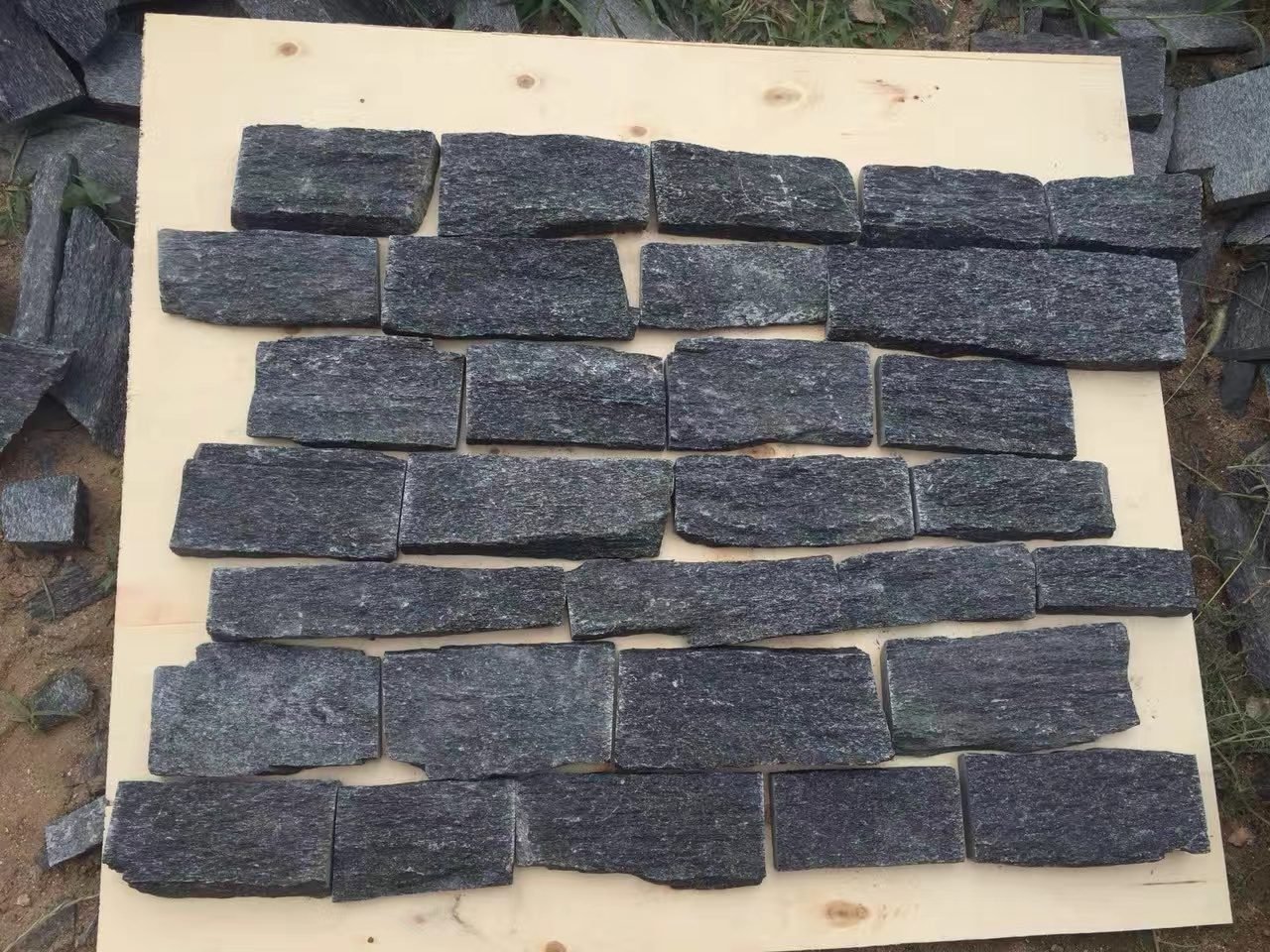
Black stone used well is an accent material — the eyebrow line over a white facade, the entry portal, the chimney mass, the terrace parapet. Architects who push black across a full elevation get drama with maintenance obligations; architects who use it as the high-contrast foil keep the drama and the budget. Black thin ledgestone strips frame and sharpen whatever sits beside them.
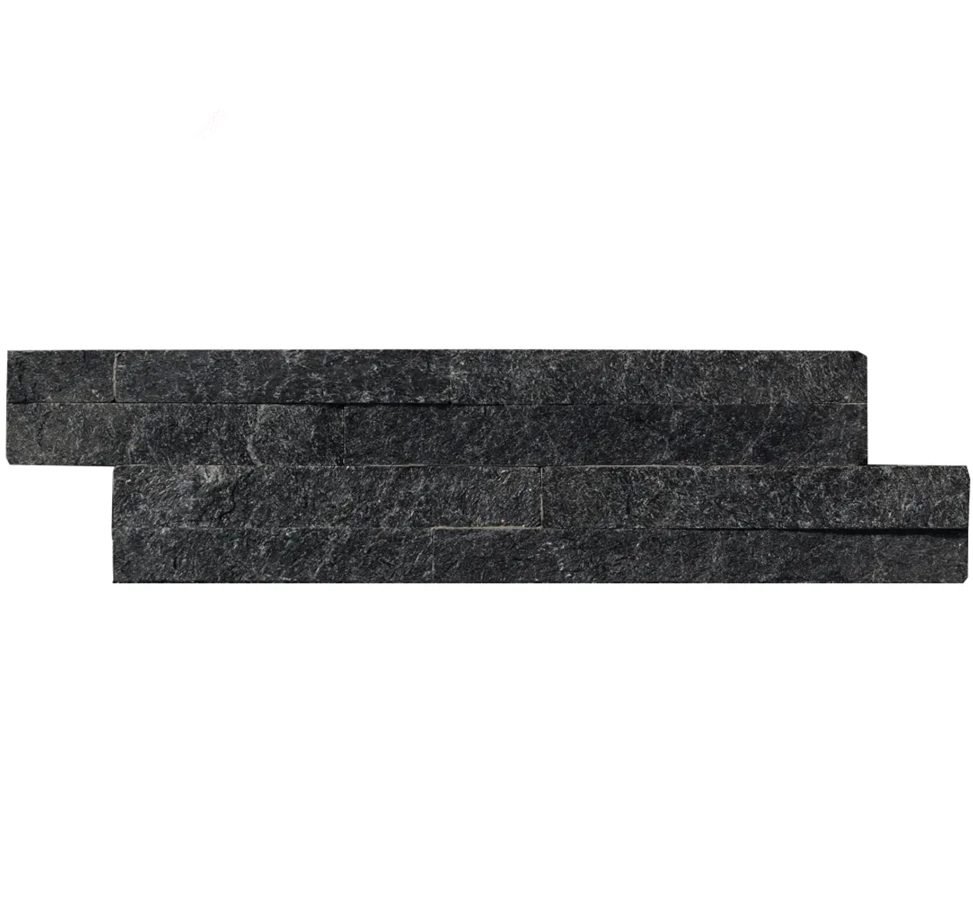
The material logic is strong: black quartzite is dense, UV-stable (dark pigments never need refreshing), and hides weathering — a coastal front door, for instance, keeps its finish far longer in black than in white. Pair it with the grey direction above for a tonal, contemporary elevation, or with warm stone for a high-art Mediterranean contrast. The black exterior facade guide has the full design vocabulary, and column wraps in black stone at the entry complete the composition — stone column kits come pre-assembled for exactly this.
Best for: contemporary, coastal-modern, and boutique hotel-style villas. Watch out: full black elevations overheat and read as a void at dusk — use it as the accent, not the default.
5. Custom Mixed Veins for a Signature Palette
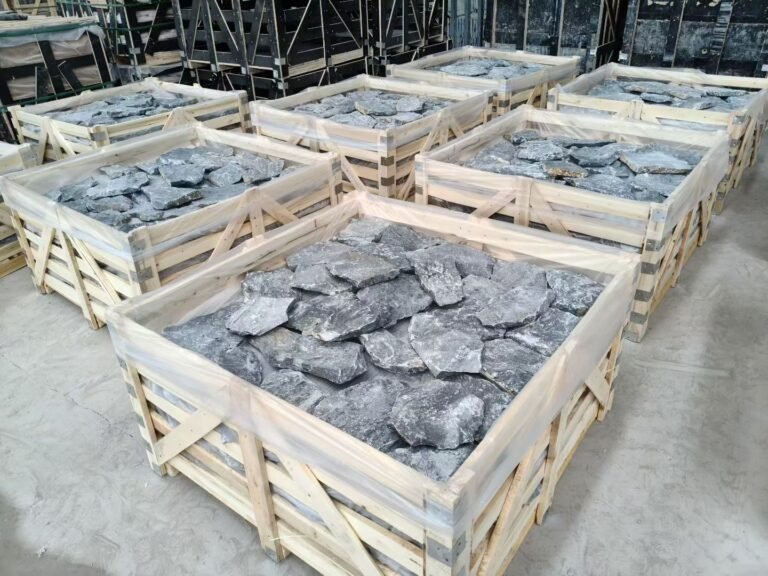
The fifth direction is the one competitors cannot copy: a custom color mix. Instead of selecting an off-the-shelf board, the developer or architect assigns quarry blocks to the project, and the factory blends tones — greys with rust, creams with bronze, multicolor fieldstones — into a palette exclusive to the development. For branded villa communities and resorts, this is where natural stone becomes a brand asset.
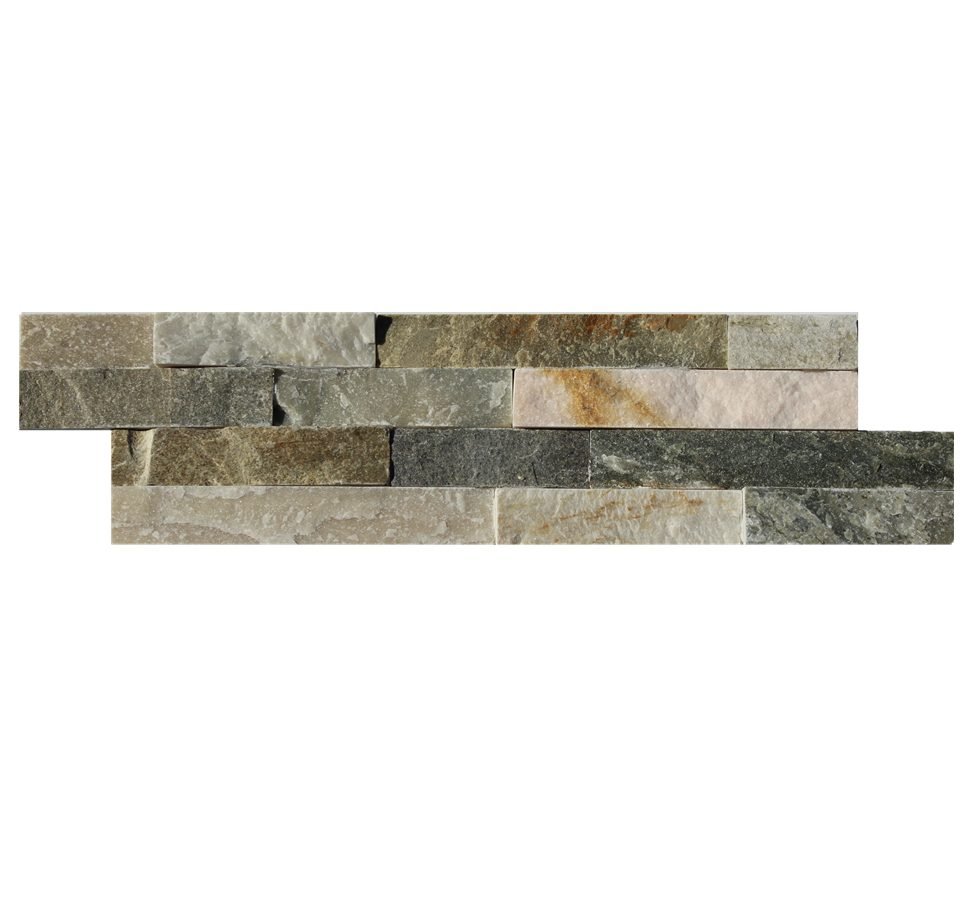
Custom mixing works because the factory holds the raw material: batch-specific vein selection keeps color transition consistency above 95% across the container, so the first and last panel match the approved sample. The custom color mix process explains how tone ranges are locked before production, and physical sample boards ship in 1-3 days for the developer to approve under site light. This direction also pairs naturally with the other four: a warm base, grey accents, and a custom blend at the entry is a full palette story from one supplier.
Best for: signature villas, branded residences, resorts, and developer communities. Watch out: approve the mixed-vein sample board before quarry allocation — the whole project’s color discipline hinges on that approval.
Choosing Between the Five Directions
| Direction | Tone | Best architecture | Climate caution | Suggested line |
|---|---|---|---|---|
| 1. Warm sandstone | Honey, gold, rust | Mediterranean, desert, ranch | Cold and coastal: verify low absorption | Thin veneer, split face |
| 2. Grey slate/quartzite | Ice grey to charcoal | Minimalist, alpine, coastal | Handles cold and salt with dense grades | Ledgestone, stacked stone |
| 3. Cream/white quartzite | Cream, white, oyster | Coastal-modern, Mediterranean-revival | Dirt and joint visibility in rain | Thin ledgestone panels |
| 4. Black accents | Deep black, sparkle black | Contemporary, boutique-hotel | Full black elevations overheat; use as accent | Black ledgestone, columns |
| 5. Custom mixed veins | Blended, exclusive | Signature villas, resorts, communities | Approve sample board before allocation | Custom color mix, any line |
Most winning villa schemes are not a single direction but a layered one: one stone governs the mass, a second accents the entry, and a third ties the hardscape — terrace, steps, pool surround — to the elevation. That is why the container-mix approach matters: ordering facade panels, flagstone, and column wraps from one quarry keeps the geology, the tones, and the QC consistent across the whole project.
How to Buy Stone Cladding for a Villa Project
Buying for a villa facade is a container-scale decision even when the visible wall is one house — because the same material, color discipline, and packaging protocol apply across a development program. The practical order:
- Measure coverage: net wall area plus 5–10% for cuts and waste, plus corner pieces. Include columns, returns, and parapets in the take-off; the quantity calculator does the math correctly.
- Choose the line: thin ledgestone for linear bands, stacked stone for ledger texture, interlocking Z-panels for fast large-area cladding, thin veneer for split-face character, flagstone for terraces and walkways that tie the facade to the garden.
- Approve a sample board under the same light the wall will live in — 1-3 day turnaround before quarry allocation.
- Contract the QC: 3-step factory inspection, thickness tolerance, and batch color consistency verified before loading; pre-shipment inspection and the zero-breakage packaging protocol cover the container.
- Plan the timeline: standard production 20–25 working days, custom boxes for the first order 25–30 days, then container freight from Xingang on FOB, EXW, CIF, or DDP terms.
For villa-scale buyers the MOQ is friendly: one 20GP container of panels and corners, mixed across the project’s palette. Stacked with multi-type container programs, a single shipment can carry the facade stone, the terrace flagstone, and the column wraps together.
FAQ
What is the best stone cladding for a villa facade?
Match the direction to the architecture and climate: warm sandstone tones for Mediterranean and desert styles, grey slate or quartzite for minimalist elevations, cream or white quartzite for pale bright facades, black accents for contrast, and custom mixed veins for a signature palette.
How much stone cladding does a villa facade need?
Measure the net wall area and add 5-10% for cuts and waste, plus corner pieces and returns. A full-clad single floor typically runs a couple of hundred square meters; feature bands use far less.
Is stone cladding expensive for villas?
Panel cladding cuts the biggest cost — labor — compared with individually placed stone. Thin veneer panels, interlocking panels, and pre-made corners reduce installation time, and container pricing from a quarry-direct factory starts at a one-20GP MOQ.
Can I get a custom stone color for my villa project?
Yes. Factory custom color mix programs assign quarry blocks to the order and hold one vein across the run, so the palette can be exclusive to the project. Approve the sample board before production begins.
Is natural stone cladding suitable for coastal villas?
Yes, when you select dense, low-absorption stone and verify salt-spray and freeze-thaw performance. Dense slate and quartzite panels carry documented salt-spray resistance, which is why they are specified on seaside elevations.
Conclusion
A villa facade is a decision about light, climate, and identity before it is a decision about stone. The five directions here cover the mainstream bets — warm, grey, pale, dark, and custom — and any of them can carry a full elevation when the pairing with render, timber, or glass is disciplined and the climate data is respected.
- Start with a direction, not a sample: decide how the facade reads at dusk and in rain before picking panels.
- Verify density and absorption for the site climate; dense slate and quartzite cover the hard cases.
- Buy the program as a system: panels, L-corners, caps, columns, and terrace flagstone from one container keeps color and schedule honest.
- Lock the palette with a physical sample board before production, and hold the supplier to batch color consistency above 95%.
Top Stone Panels supplies villa facade programs from quarry-direct stock — thin ledgestone, stacked stone, Z-panels, thin veneer, flagstone, and column kits, with custom color mix support. Request samples for your next villa elevation — 1-3 day turnaround, MOQ from one 20GP container.