Quartzite is the stone that keeps surprising specifiers. It arrives looking like a pale, quiet panel, then it holds up through a decade of freeze and thaw, shrugs off coastal salt, and in the right thin grade lets light push through its own body. Sandstone surrendered to heat and pressure underground, fused itself back together as quartzite, and became one of the hardest materials routinely cut into cladding panels.
This guide is the procurement side of that story — what quartzite actually is, which numbers matter when you buy it, what the color range looks like in a real factory catalog, and which applications justify the premium. The factory context is Top Stone Panels, a quarry-direct producer in the Yixian region of Hebei shipping 220+ containers a year, where quartzite runs through four of the six panel lines.

- Quartzite is recrystallized sandstone — a metamorphic rock at roughly 7 on the Mohs scale, among the hardest natural stones used for cladding.
- Dense quartzite panels hold water absorption at or below roughly 0.5%, the number behind freeze-thaw, salt-spray, and -30°C to +50°C performance.
- Select thin grades transmit light, enabling backlit walls — but translucence must be confirmed on physical samples before design commitment.
- Factory inventory spans nine quartzite tones from sparkle white to rustic copper, in formats from 36x10cm ledgestone to 15x60cm stacked panels.
- Wholesale buying starts at one 20GP container with 1-3 day samples and 20-25 working day production — the numbers that schedule real projects.
What Quartzite Is
Geology gives quartzite its reputation. Sandstone begins as sand grains of quartz, cemented and buried. Under deep burial, heat, and pressure, the grains recrystallize — the cement disappears into the grains themselves, and the rock fuses into a continuous quartz fabric. The result, as the Britannica entry on quartzite puts it, is a hard metamorphic rock that fractures through its grains rather than around them. That interlocking structure is why a split-face quartzite panel holds its edge where other stones chip.
That origin story matters for buyers because it explains the two things quartzite is known for: hardness and toughness. Hardness is the 7 on the Mohs scale that lets it scratch most things and resist most things back. Toughness is the fused, grain-interlocked body that survives mechanical loads and thermal cycling without the micro-cracking softer stones develop. The two together are why quartzite shows up in compressive and flexural strength discussions the way it does
It is also why fakes are worth a second glance at the samples stage. So-called quartzite on the market is sometimes a hard quartz or granite-adjacent material labeled up-market, or a softer stone polished to fake the look. Real quartzite breaks with a conchoidal, sparkly fracture and scratches glass. Once you have a physical sample in hand, both tests take a minute.
Hardness and Density: The Numbers
Procurement runs on four numbers for quartzite, and every one of them traces to the material’s fused structure. Hardness sits around 7 on the Mohs scale — above glass, below topaz, and comfortably ahead of most building stones. Water absorption in dense grades holds at or below roughly 0.5%, which is the threshold that matters for exterior retention. Density pushes the weight of split-face veneer formats to roughly 40-55 kg per square meter depending on format, a figure that affects framing and freight. Freeze-thaw and temperature behavior extend from the low absorption: a dense rock that will not drink water has little water to freeze and burst.
The factory’s documented performance envelope for these natural panels reads like a spec sheet for hostile climates: -30°C to +50°C temperature resistance, freeze-thaw resistance, A-class fire behavior, UV stability, and salt-spray resistance. None of those are marketing adjectives; they are the physical consequences of a dense, fused quartz body. Cold-climate and coastal envelopes in particular are where quartzite earns its price — see the extreme-temperature performance discussion for the mechanism.
Read the test report, not the brochure, when these numbers carry a specification. Water absorption and flexural strength appear on standard natural-stone test documents, and a responsible supplier shares them with the lot. The 3-step QC at the factory — raw material selection, in-process recheck, pre-shipment final — exists specifically so the density claims match the container that arrives.
Translucence: The Backlit Possibility
Quartzite sits apart from slate and sandstone in one dramatic way: light can move through it. Because the rock is fused quartz, and quartz transmits light, thin slices of select grades glow when lit from behind. That is the mechanic behind backlit feature walls in lobbies and bars — a stone panel that stops being opaque and becomes a warm, sunlit surface.
Three limitations define the possibility, and buyers should know them before any design promise. Translucence varies by block: not every quartzite grade transmits light equally, and some pale grades diffuse it while darker grades block it. Thickness decides the effect — ultra-thin formats transmit, thick panels do not, which is why the effect belongs to shallow veneer programs rather than full-depth cladding. And any backing, adhesive, or substrate behind the panel changes what you see, so a backlit wall needs a systems design, not just a stone selection.
For wholesalers, backlit quartzite is a premium line-item sale with a longer design cycle. The practical route is testing physical samples under real light — put a sample on a light box at an inch of thickness and see what the stone actually does before a project commits to the effect. The factory’s 1-3 day sample turnaround exists for exactly this kind of verification.
Color Range Across the Quartzite Family
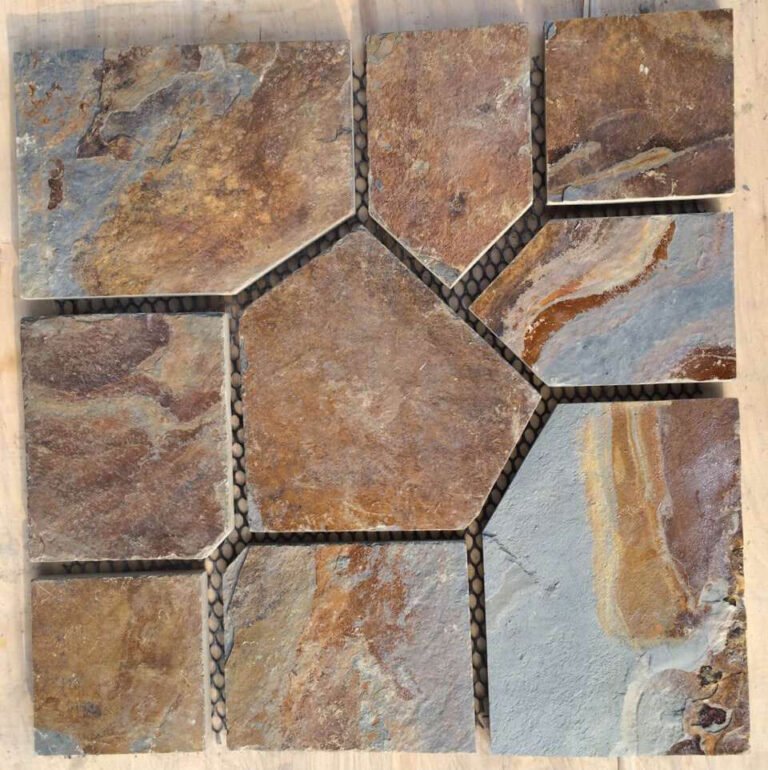
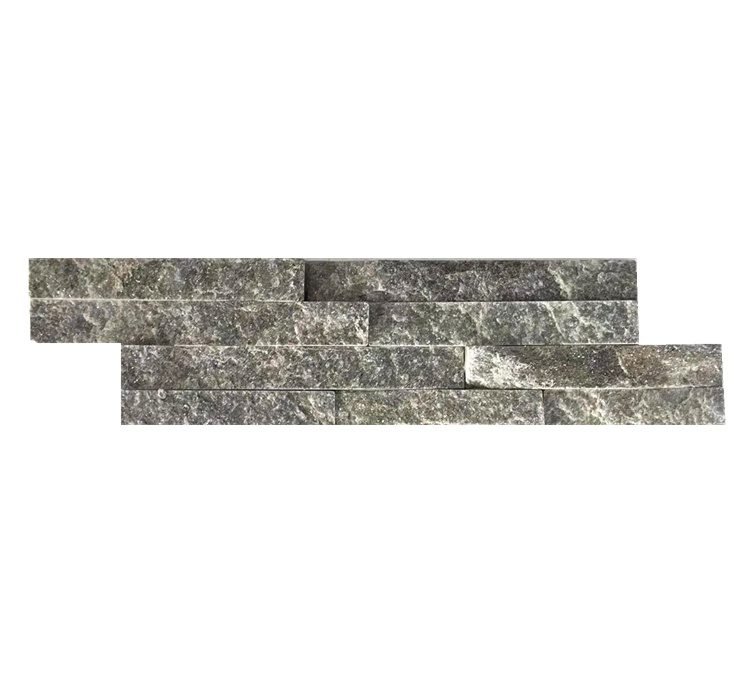
Quartzite carries an unusually wide palette because the original sandstone trapped different mineral impurities before metamorphism. Iron oxides produce the warm tones, chlorite and micas produce the greens, and clean quartz sands produce the whites. The factory catalog maps onto that geology directly.
| Tone group | Catalog colors | Typical read |
|---|---|---|
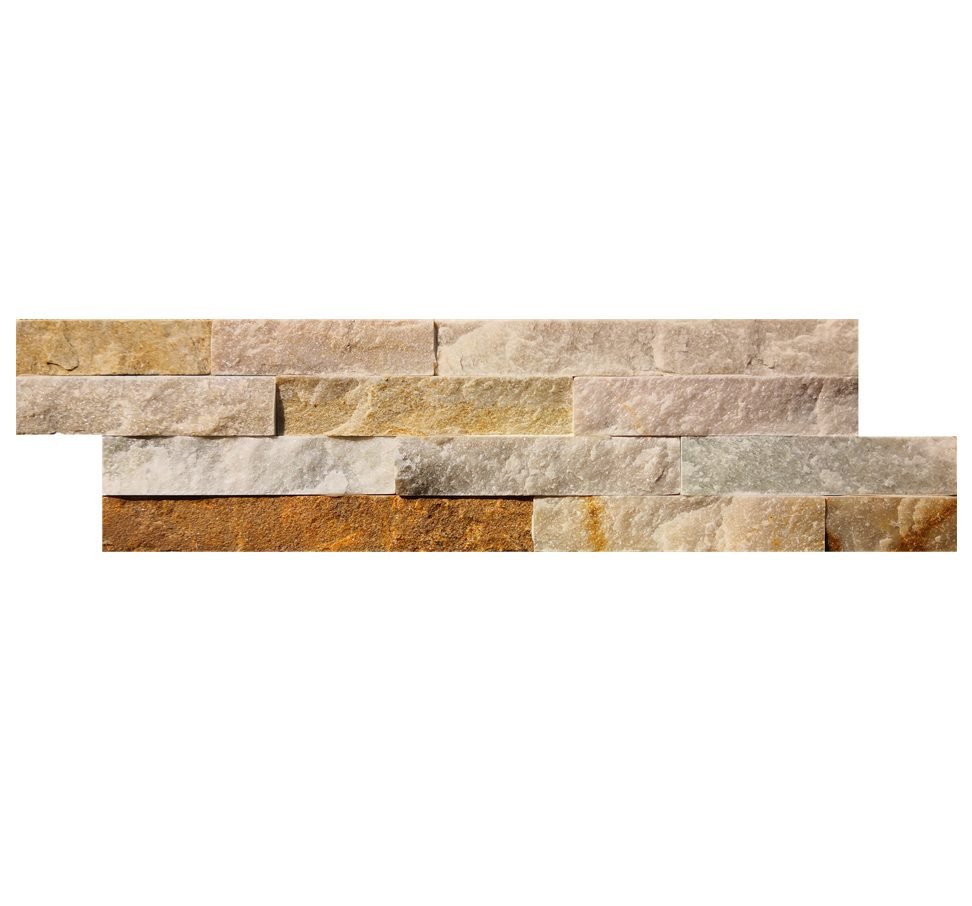
| Pale bright | Sparkle white, cream, oyster, royal white | Bright, minimal, light-gathering |
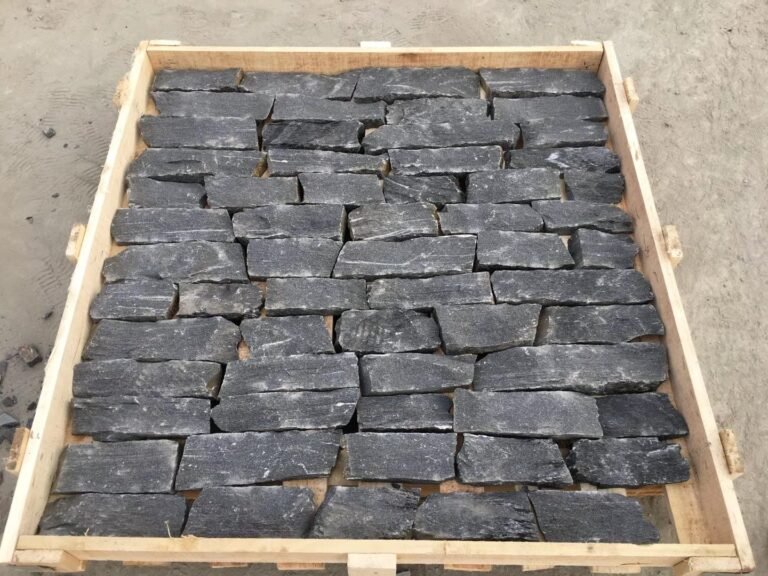
| Cool mid | Sparkle ice grey, rotia grey, green | Urban, calm, architectural |
| Warm | Bronze sparkle, rustic copper | Warm, firelight-friendly, earthy |
Color consistency is where natural stone separates from printed tile, and it is managed at the quarry. The factory practices batch-specific vein selection — pulling panels from the same vein sequence so a container holds one continuous color family rather than a grab bag — the discipline covered in the batch color consistency playbook. For a distributor, that discipline is what makes quartzite reorderable; for an architect, it is what makes the wall read as designed.
Quartzite vs Slate vs Sandstone
Choosing a stone family is a decision, not a default. Quartzite, slate, and sandstone all appear in the same catalog, and each is correct on a different wall. The tables below are the procurement shorthand.
| Property | Quartzite | Slate | Sandstone |
|---|---|---|---|
| Hardness (Mohs) | ~7 | ~3.5-4 | ~6-7 |
| Water absorption | Very low (≤~0.5%) | Low | Moderate to high |
| Split face texture | Sparkly, crystalline | Layered, laminar | Grainy, warm |
| Freeze-thaw suitability | Strong | Strong | Grade-dependent |
| Coastal / salt spray | Strong | Strong | Weaker |
The full treatment of the first head-to-head lives in the quartzite vs slate comparison, and the warm end of the family is handled in the sandstone and limestone cladding comparison. The short version: pick quartzite for the hard-life exterior and the premium interior moments; pick slate for flat, layered texture at a more familiar price; pick sandstone for warm-toned projects away from freeze-thaw and salt stress.
Typical Uses for Quartzite Panels
Quartzite earns its place in five applications that punish softer stones. Facades top the list: low absorption, freeze-thaw strength, and UV stability make exterior walls the default high-value use, from villa facades to commercial cladding. Fireplaces follow — the fused body handles heat zones, and warm grades like rustic copper do their best work in firelight.
Wet areas are the third and sleepiest use. Shower walls, backslashes, and spa surfaces ask a stone for stain resistance and easy cleaning, and quartzite’s density delivers both. Commercial floors and high-traffic interiors are the fourth: the 7-Mohs surface resists the scratching that softens sandstone in a year. Coastal projects — homes and resort buildings within salt air — close the list, using the salt-spray resistance that ships standard on this material family.
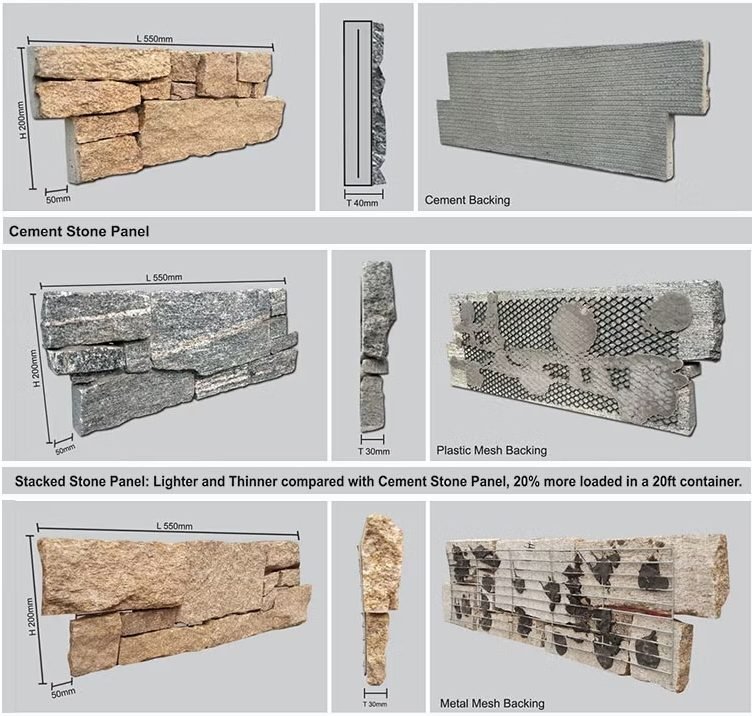
Each use changes the format you order. A facade wants standard stacked panels or interlocking Z-panels for install speed; a fireplace and interior wall want the ultra-thin 36x10cm ledgestone strips; a feature moment wants a thin, possibly backlit grade. The full format range is documented in the stone veneer thickness guide. One stone family, five product lines, and each one optimized for a different wall.
Sourcing Quartzite Panels from a Factory
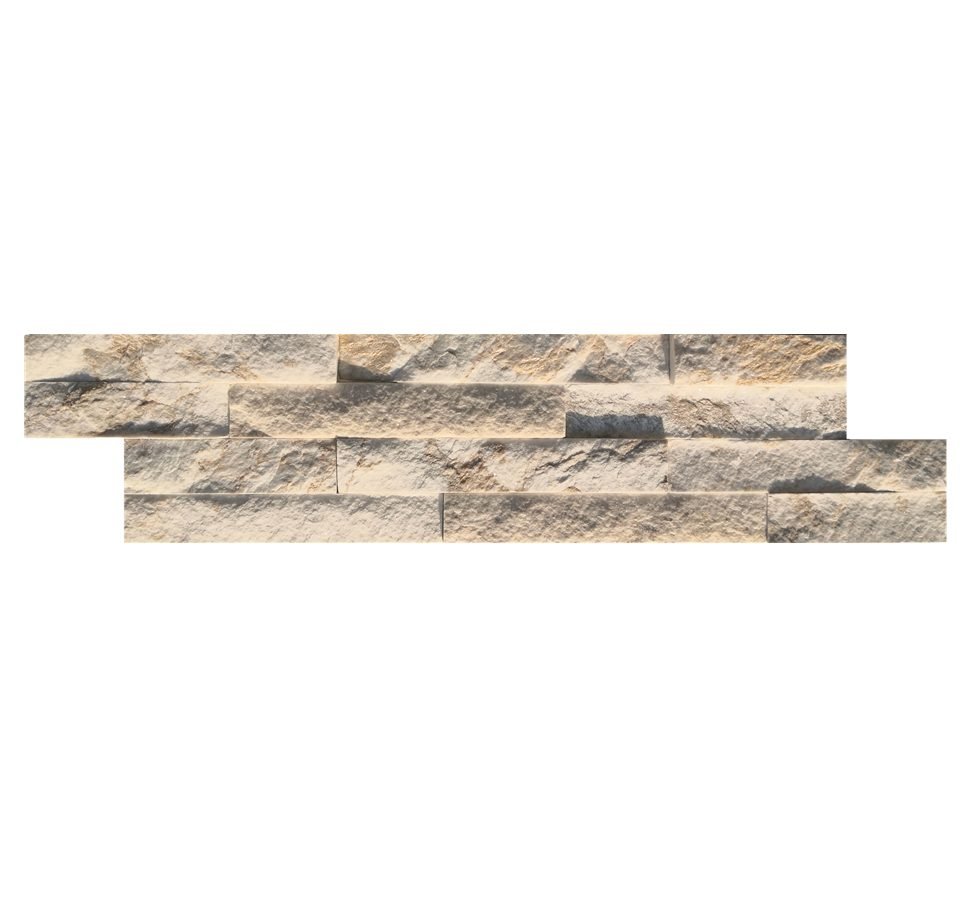
Buying quartzite wholesale starts and ends with samples. Tone, texture, and translucence are all block-dependent, and no catalog photo settles them. Request physical samples — the factory ships them in 1-3 days — test absorption and translucence on the actual thickness you will install, and approve the lot against those references before production.
The order economics follow the standard wholesale path. Quartzite runs through four panel lines — stacked stone, thin ledgestone, thin veneer, and interlocking Z-panels — with an MOQ of one 20GP container. Standard production takes 20-25 working days, and a first order with custom printed cartons runs 25-30 days because the artwork takes its own pass. Shipments leave Xingang under the zero-breakage packaging protocol, and payment runs 30% T/T deposit with 70% before shipment.
Color consistency is the wildcard, and it is controlled upstream. Ask the supplier how they sort vein and block, and confirm they can match a repeat order to your approved sample — the discipline detailed in the batch vein selection and sample evaluation checklist. A factory that documents its QC on paper, and shares test reports without hesitation, is telling you how your second container will look.
Order quartzite samples before you commit the wall.
Top Stone Panels cuts quartzite panels across four lines and nine tones, ships physical samples in 1-3 days, and controls color by batch-specific vein selection. Wholesale MOQ is one 20GP container with 20-25 working day production from the quarry floor in Hebei.
Nine quartzite tones 1-3 day samples Batch vein control
FAQ
Is quartzite harder than granite?
In the common range, yes. Quartzite measures around 7 on the Mohs scale and is one of the hardest natural stones, which is why split-face quartzite panels hold edges and survive freeze-thaw and coastal exposure.
Can quartzite stone panels be used outdoors?
Yes. Dense quartzite holds water absorption at or below roughly 0.5 percent, which supports freeze-thaw resistance, salt-spray resistance, UV stability, and the -30°C to +50°C envelope needed for cold and coastal facades.
What colors does quartzite come in?
Quartzite spans white, cream, and oyster at the pale end, grey and green in the middle, and bronze, copper, and multicolor at the warm end, depending on mineral impurities in the original sandstone.
Can quartzite panels be backlit?
Some thin, select grades transmit light, which is what allows backlit feature walls. Translucence varies by block and thickness, so it must be tested on physical samples before a backlit design is committed.
Is quartzite expensive compared with other stone panels?
Quartzite sits above workhorse slate in most markets, but the range is wide: common grey and white grades are closer to premium slate than most buyers expect, and a quoted FOB price per container from a quarry-direct factory sets the real number.
Conclusion
Quartzite is the material answer to the hardest questions a facade, a fireplace, or a wet area can ask. Its fused quartz body delivers the hardness, low absorption, freeze-thaw strength, and translucence that set it apart in a catalog, and the color range gives designers a full palette to spend it in.
Key takeaways:
- Spec quartzite where hardness and low absorption matter: facades, fireplaces, wet areas, commercial traffic, and coastal walls.
- Verify density and absorption on the test report, and translucence on a physical sample — never from a photo.
- Order by container economics: one 20GP minimum, 1-3 day samples, 20-25 working day production from the quarry.
- Pick the format to the wall — stacked, ledgestone, thin veneer, or Z-panel — and let vein-controlled color match the approved sample.
Start with a sample box before you quote the wall. Contact Top Stone Panels and test the quartzite on your bench, your light box, and your project’s real conditions.