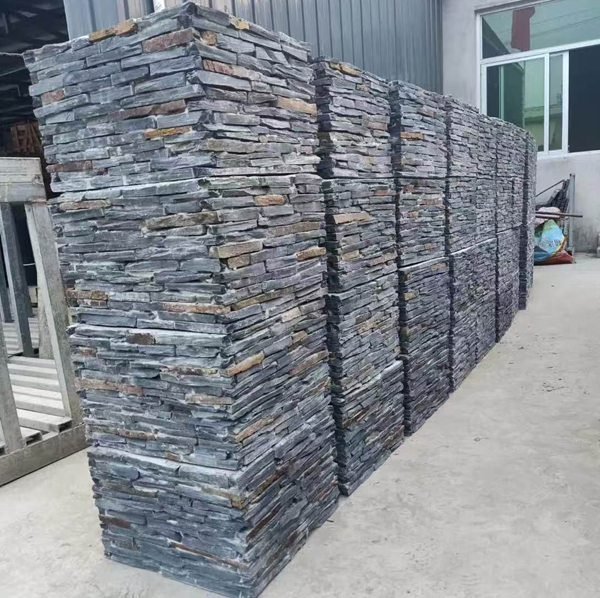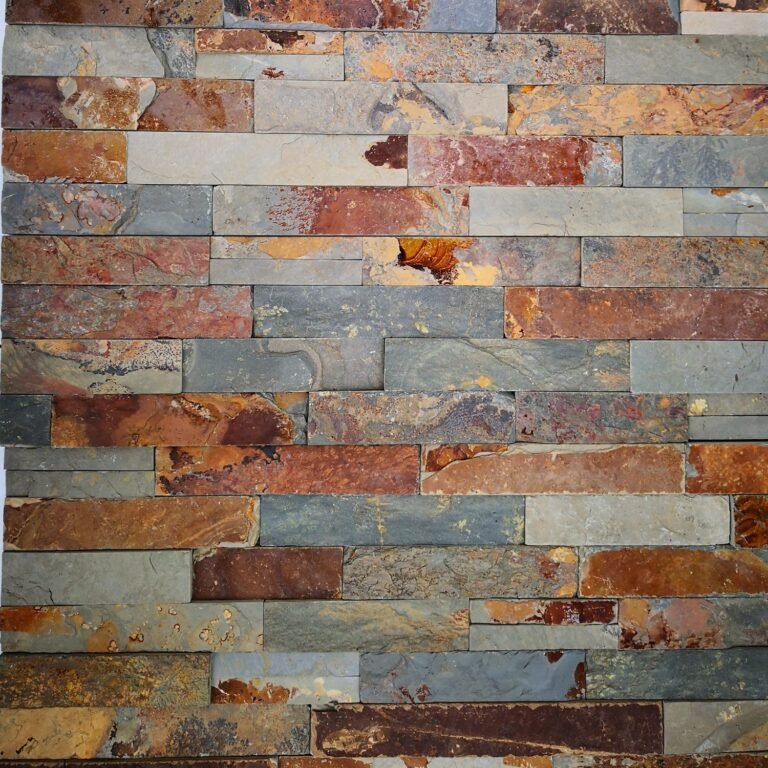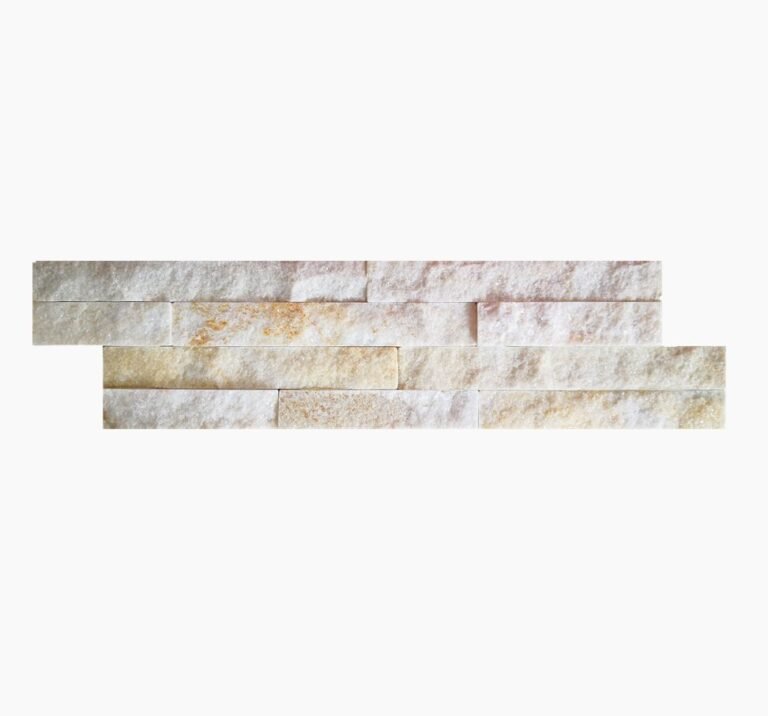
Every quarry-based factory in northern China ships both quartzite and slate panels, and most spec sheets treat them as interchangeable. They are not. Quartzite and slate stone panels differ in crystal structure, surface behavior, and the projects they flatter, even when they leave the same production line in the same 15×60 cm format. For a distributor deciding what to stock, or a specifier deciding what to put on a facade, that difference is the whole decision.
This comparison is clean in a way most stone-vs-stone articles cannot be: at Top Stone Panels, both stones run through the same formats, the same infrared CNC cutting, and the same container terms. That isolates the one variable that actually matters — the rock itself. Both materials tolerate -30°C to +50°C swings and carry Class A fire performance, so the choice below comes down to durability margins, appearance, and which wall the panels will live on.
Key Takeaways
- Quartzite and slate panels both tolerate -30°C to +50°C temperature swings and hard freeze-thaw exposure.
- Dense quartzite holds a slight edge in abrasion and edge retention; slate delivers the same weather service with a softer cleft texture.
- Both stones are Class A fire-rated, UV stable, and salt-spray resistant — coastal and fireplace use are open to either.
- Formats are identical across both stones: stacked 15×60 / 15×55 cm, thin ledgestone 36×10 cm, interlocking Z-panels 20×55 / 15.2×61 cm.
- Infrared CNC cutting cuts on-site waste by ~20%; pre-made L-corners remove ~50% of corner labor regardless of stone type.
- MOQ is one 20GP container per line, samples ship in 1-3 days, and mixed quartzite-slate containers are possible within one vein’s production run.
- Quick Verdict: Quartzite vs Slate at a Glance
- What Quartzite Panels Bring to a Facade
- What Slate Panels Bring to a Facade
- Performance Head to Head
- Aesthetics and Color Range
- Cutting, Corners, and Installation Labor
- Shared Formats Across Both Stones
- Which Stone Fits Which Project
- What to Verify Before Ordering
- FAQ
Quick Verdict: Quartzite vs Slate at a Glance
If you need the answer in one table, here it is. Quartzite wins the durability margins; slate wins the muted, mineral texture that residential designers keep asking for. Neither loses on weather resistance.
| Criterion | Quartzite Panels | Slate Panels | Edge |
|---|---|---|---|
| Freeze-thaw tolerance | -30°C to +50°C, dense body | -30°C to +50°C, proven | Quartzite, slight |
| Abrasion / edge retention | Very hard, quartz-rich | Durable, softer cleft face | Quartzite |
| Fire performance | Class A, non-combustible | Class A, non-combustible | Tie |
| UV stability | Stable, no fading | Stable, no fading | Tie |
| Salt-air / coastal | Resistant | Resistant | Tie |
| Surface character | Crystalline sparkle, split face | Matte cleft, layered relief | Project-dependent |
| On-site handling | Pre-cut, CNC trimmed | Pre-cut, CNC trimmed | Tie |
Our standing recommendation: quartzite for commercial facades, entry monuments, and any wall that takes physical contact; slate for residential elevations, garden walls, and interiors where texture carries the design. The sections below explain where each verdict comes from.
What Quartzite Panels Bring to a Facade
Quartzite starts life as sandstone and comes out of metamorphism with its sand grains recrystallized into an interlocking quartz matrix — the geological definition is worth knowing because it explains the behavior on a wall. That geology is the entire sales pitch. The interlocking structure leaves few open pores, which is why dense quartzite shrugs off water ingress and the freeze-thaw damage it causes — the failure mode that kills porous cladding in cold climates. On a wall, quartzite reads as crystalline and slightly sparkly, because the recrystallized quartz faces catch light at angles a matte rock never will.
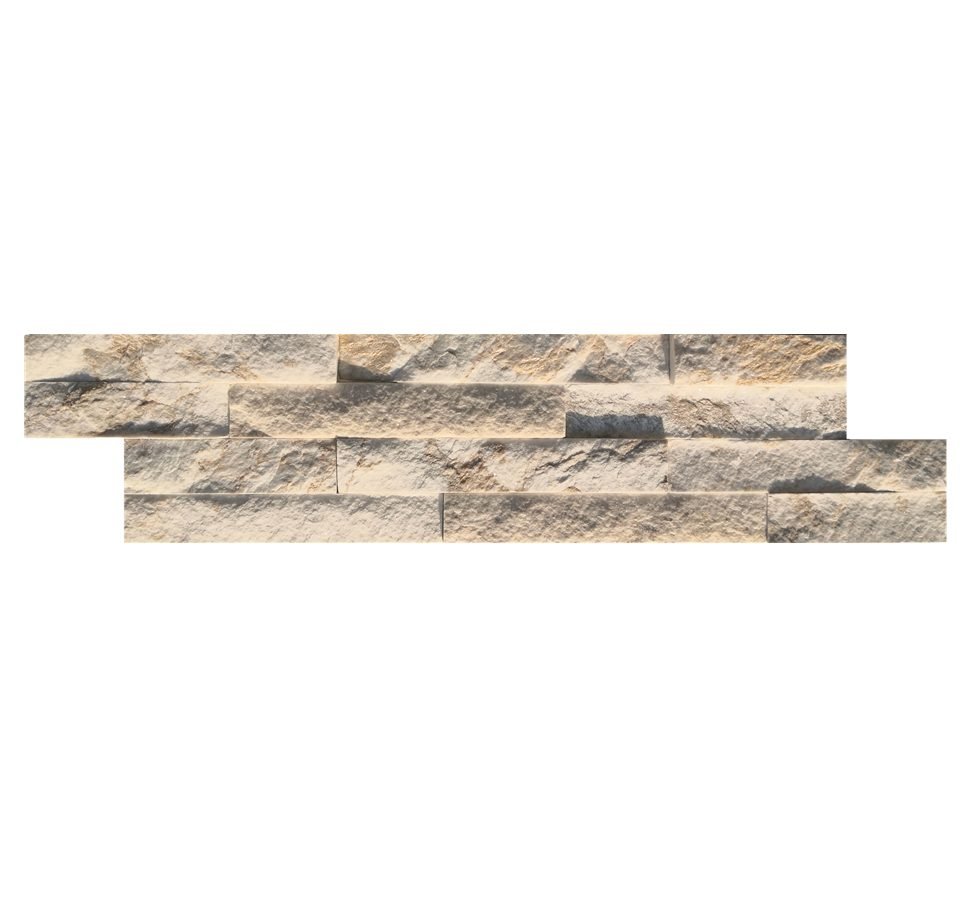
The quartzite catalog runs from near-whites (Royal White, Sparkle White, Sparkle Ice Grey) through warm metallics (Rustic Copper, Bronze Sparkle) to deep blacks (Sparkle Black). Metallics with mica content pick up façade lighting dramatically after dark — a property outdoor designers exploit on gate posts and entry columns. If your market wants stone that performs like armor and reads like mineral jewelry, quartzite is the line to stock.
For the grey end of the palette, our grey stone veneer guide compares the ice-grey quartzite and grey slate families in detail.
What Slate Panels Bring to a Facade
Slate is the other end of the metamorphic spectrum: fine-grained rock that splits along parallel cleavage planes into thin, flat sheets. That natural cleft is slate’s signature surface — slightly undulating, matte, and shadowed, with none of quartzite’s crystal flash. Where quartzite reflects light, slate absorbs it and gives back depth. Designers reach for slate when the building already has enough shine and needs grounding.
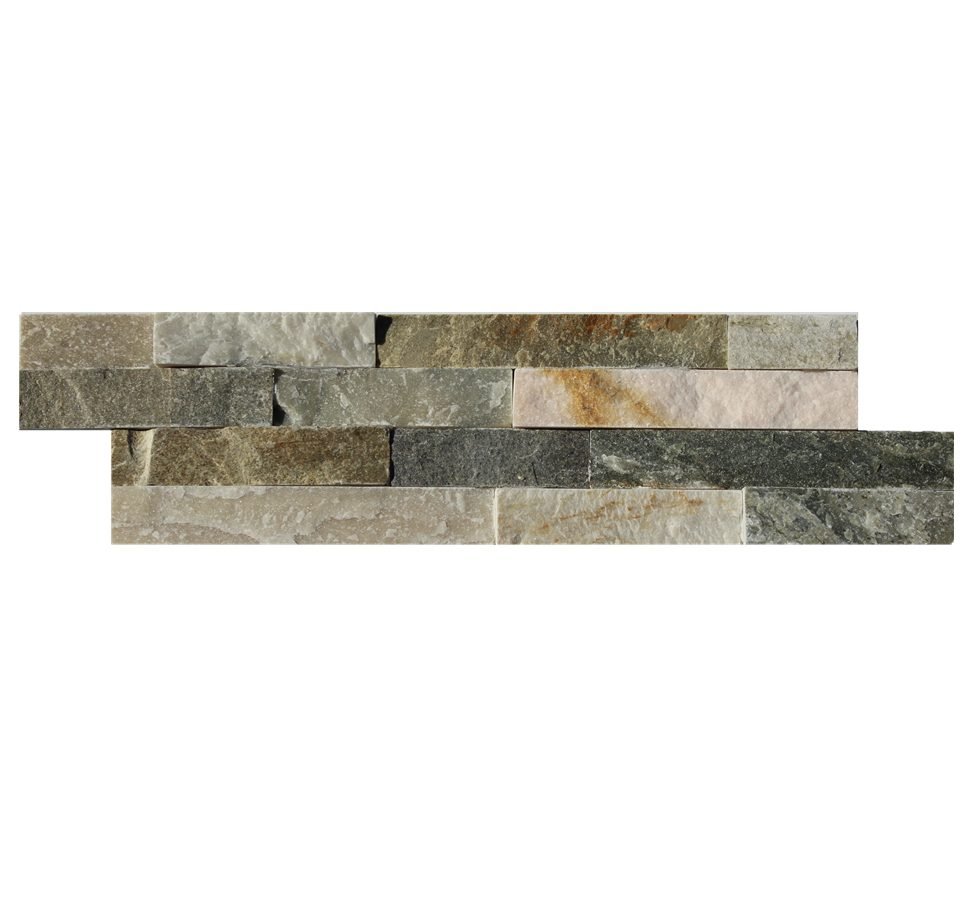
Slate’s palette sits in greys, charcoals, and multi-tonal earth blends. That restraint is a commercial advantage: grey facades pair with brick, timber, and render without fighting them. The trade-off is mechanical. Slate’s foliation means the surface is a natural split rather than a fractured crystal field, so edges are marginally more delicate under impact. For walls people walk past rather than lean equipment against, that trade-off costs nothing.
Performance Head to Head
Temperature Swings and Freeze-Thaw
Both stones are quarried and produced for climates from Canadian winters to Gulf summers. Dense quartzite and slate panels from our lines tolerate temperature swings from -30°C to +50°C, which covers the full envelope of North American and European exterior exposure. The mechanism that kills lesser cladding is water entering pores, freezing, expanding, and spalling the face — dense microstructure is the defense, and both rocks have it. Quartzite’s interlocking quartz gives it the smaller pore structure of the two; that is the entire basis of its slight durability edge, and why we point heavy freeze-thaw regions toward it.
Fire Performance
Both are 100% natural stone, which means non-combustible with Class A fire performance. For builders working under code restrictions around combustible cladding, this removes a whole approval headache — neither rock needs fire-retardant treatment, and neither contributes smoke or melt. Behind fire features and on boundary walls, either stone satisfies the requirement without documentation gymnastics. Our breakdown of slate and quartzite fire ratings under building codes covers the specifier detail.
UV Stability and Salt Air
Color in both stones comes from mineral composition, not pigment, so there is nothing for sunlight to degrade. Slate and quartzite cladding is UV stable and resists salt spray and sustained humidity — the reason both get specified for coastal Australian and Middle Eastern projects where painted or manufactured surfaces chalk within a few seasons. On corrosion-style exposure, treat the two rocks as equals and choose on appearance instead.
Moisture Behavior: The Honest Qualification
Quartzite’s denser body absorbs less water than typical slate, which matters most in driving-rain exposure on west-facing walls. We publish this as a relative behavior, not a number, because the figure that counts is the water absorption value on the specific batch’s test report — and that is exactly what you should request. The ASTM tests that matter for stone cladding lists which documents to pull, and our freeze-thaw deep dive explains why density decides cold-climate survival.
Aesthetics and Color Range
The appearance split is the real buying decision for most projects. Quartzite gives you sparkle and metallic warmth; slate gives you matte mineral calm. Neither look is more durable — they are design directions.
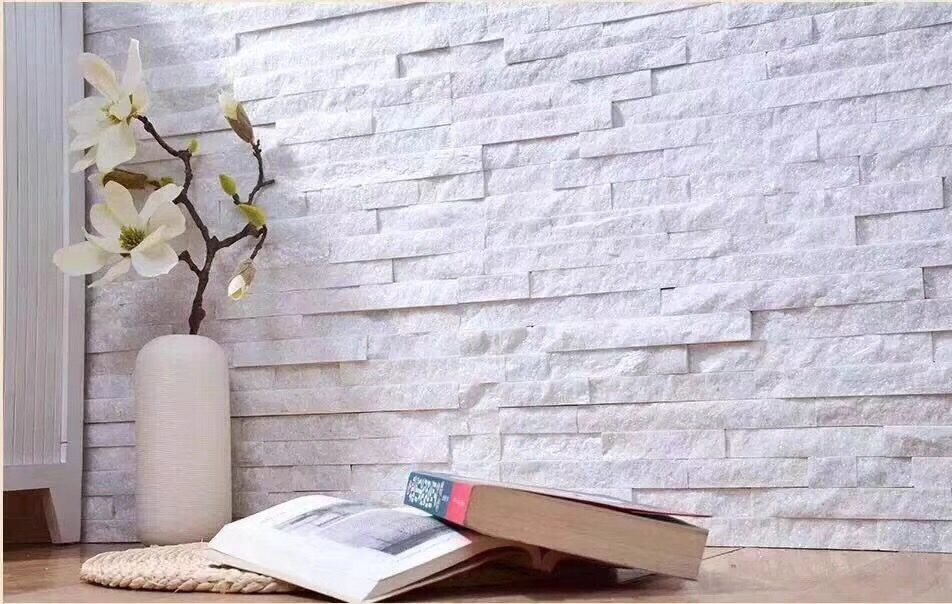
- Quartzite family: whites and ice greys with crystal flash, coppers and bronzes with mica sparkle, deep sparkle blacks for dramatic entries. Best on walls that receive direct sun or evening lighting, which the crystalline face uses.
- Slate family: greys, charcoals, and multicolor earth blends with a cleft, layered surface. Best on walls that need to recede or blend with brick, timber, and render.
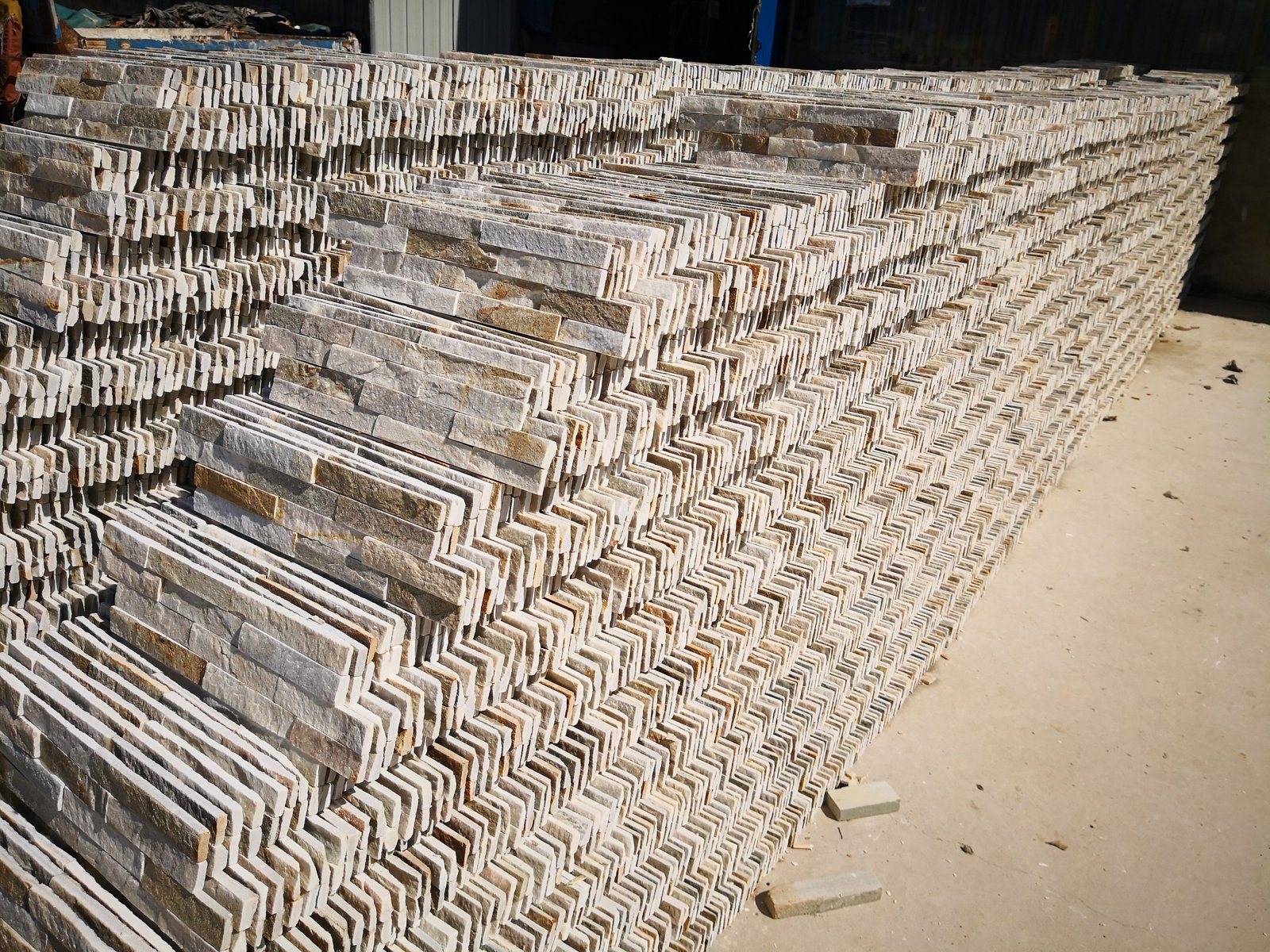
One operational point buyers miss: natural stone varies vein by vein, so color consistency is a production discipline, not a rock property. Both stones here are sorted by batch-specific vein selection, meaning one order comes from one controlled vein run. How quarry vein selection keeps batch color consistent explains the control process before you order repeat volumes.
See Both Stones in Production Formats
Quartzite and slate run through identical formats — stacked panels, thin ledgestone, and interlocking Z-panels — so you can compare stone-to-stone with no format noise. Samples ship within 1-3 days.
Own-quarry sourcing | Infrared CNC precision | Zero-breakage container packing
Cutting, Corners, and Installation Labor
Here is the counterintuitive part of this comparison: installers handle quartzite and slate panels almost identically. Panels arrive pre-cut by infrared CNC diamond blades into exact formats, so on-site work is trimming and placement, not stone cutting. The harder rock never becomes a labor problem because the hard work already happened at the factory — and that CNC precision reduces on-site material waste by approximately 20% for both stones.
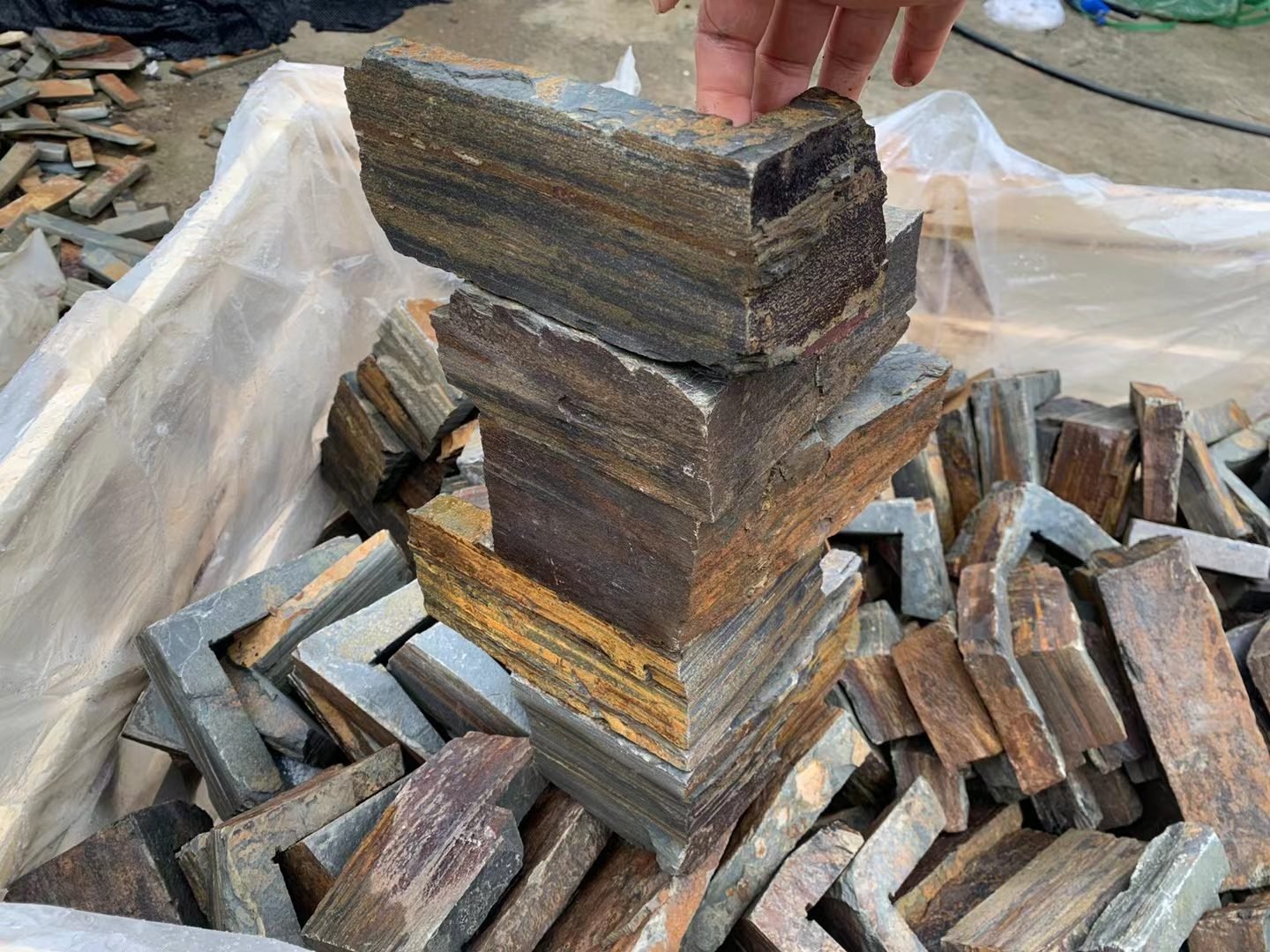
Corners are where cladding labor usually bleeds, and both stones share the fix: pre-made L-corner pieces that arrive finished, removing on-site 45-degree mitering. Pre-fab corners save roughly 50% of corner labor versus cutting them by hand, and the finish is cleaner than most field mitering ever is. Corners in slate’s cleft texture and corners in quartzite’s sparkle both close tight; pick the stone, and the corner system comes with it. Our guide to cutting and fitting stacked stone corner pieces walks through the field steps.
Shared Formats Across Both Stones
Because both materials flow through the same product lines, format choice is independent of stone choice. Match the format to the wall, then pick quartzite or slate for the look:
| Format | Size | Best Use |
|---|---|---|
| Stacked stone panels | 15×60 / 15×55 cm (0.09 m² per 15×60 panel) | Facades, fireplaces, feature walls |
| Thin ledgestone | 36×10 cm, 0.7-1.2 cm thick | Tight zones, interiors, column wraps |
| Interlocking Z-panels | 20×55 / 15.2×61 cm, cement or mesh backing | Large seamless exterior runs |
| Thin stone veneer (loose strips) | Random lengths, vein-sorted | Custom organic patterns, retrofit walls |
Backing options — marine-grade epoxy bond, cement backing, and mesh backing — apply across both stones and are chosen for the substrate, not the rock. The stone veneer thickness guide maps each format to its weight and wall type, and epoxy bond vs cement backing covers the construction choice.
Which Stone Fits Which Project
The decision rules we use when customers ask, stated plainly:
- Commercial facades and high-traffic entries — quartzite. The abrasion edge matters where carts, luggage, and weather hit the same wall for decades.
- Residential elevations and garden walls — slate. Matte cleft texture flatters house-scale architecture and pairs with brick and timber.
- Coastal and salt-air projects — either. Both resist salt spray; decide on appearance and let the salt-spray case for natural stone settle the engineering side.
- Fire features and chimney surrounds — either. Class A performance comes with the rock, not the variety.
- Distributors stocking a market — both, in one container. Quartzite moves on sparkle and durability claims; slate moves on texture and grey-palette demand. Mixed 20GP loads from one vein run keep your landing cost single.
What to Verify Before Ordering
Rock choice is half the purchase; factory discipline is the other half. Before committing volume, verify these points with any supplier — ours included:
- QC structure: a 3-step factory process — raw material selection, in-process re-inspection, and final pre-shipment inspection — controlling thickness tolerance. Ask which step catches what.
- Vein control: batch-specific vein selection documented per order, so repeat purchases match the first container.
- Sample turnaround: physical samples within 1-3 days for your own visual or lab approval. A supplier who cannot ship samples fast is signaling production reality.
- Documents: Certificate of Origin and ISPM 15 fumigation certificate for the wood packaging, plus pre-shipment inspection photos or video.
- Terms: MOQ of one 20GP container per product line, 30% deposit with 70% before shipment, production in 20-25 working days, shipping FOB Xingang, CIF, or DDP.
The 10-point sample evaluation checklist turns that list into a field procedure, and the factory audit checklist for importers goes one level deeper on supplier verification.
FAQ
Which is more durable outdoors, quartzite or slate stone panels?
Both survive exterior exposure when properly installed, and both tolerate temperature swings from -30°C to +50°C. Dense quartzite holds a slight edge in abrasion and edge retention under hard freeze-thaw cycles, while slate delivers the same weather service with a softer visual texture. For high-traffic commercial facades, specify quartzite; for feature walls and residential elevations, either performs.
Can quartzite and slate panels be mixed in one container?
Yes. At Top Stone Panels the MOQ is one 20-foot container per product line, and mixed formats from the same quarry vein can share a container subject to production scheduling. Distributors commonly combine stacked panels in quartzite with ledgestone in slate to cover both facade and accent zones in a single shipment.
Do slate stone panels fade in direct sunlight?
No. Natural slate and quartzite are UV stable; their color comes from mineral composition, not surface pigment. Panels keep their quarry color without sealing against sun damage. Batch-specific vein selection keeps shade consistent within a single order.
Is quartzite harder to cut than slate on site?
Quartzite is the harder rock, but installers rarely notice the difference because panels arrive pre-cut by infrared CNC diamond blades to exact 15×60 cm or 36×10 cm formats. On-site work is trimming, not cutting, and factory precision reduces on-site material waste by approximately 20% for both stones.
Which stone is better for coastal or salt-air projects?
Both. Natural stone resists salt spray and sustained humidity, which is why slate and quartzite cladding is specified for coastal Australian and Middle Eastern projects. Choose by appearance and slip texture rather than corrosion risk, which is essentially zero for either stone.
What is the MOQ and sample lead time for quartzite and slate panels?
The MOQ is one 20GP container per product line. Physical samples ship within 1-3 days for your own lab or visual approval, and standard production runs 20-25 working days, shipping FOB Xingang, CIF, or DDP.
Conclusion
Quartzite and slate panels share every credential that matters for exterior service — freeze-thaw tolerance from -30°C to +50°C, Class A fire performance, UV stability, and salt-air resistance — and they ship in identical formats from the same production lines. The choice is a placement decision, not a risk decision: quartzite where abrasion and impact are real, slate where matte texture and grey palettes carry the design.
- Quartzite wins the durability margins on dense, interlocking quartz structure; slate wins muted mineral texture.
- Both stones run stacked 15×60/15×55 cm, ledgestone 36×10 cm, and Z-panels — format is chosen independently of rock.
- CNC pre-cutting and L-corners standardize labor: ~20% less on-site waste, ~50% less corner work, for either stone.
- Ordering discipline — 3-step QC, vein selection, 1-3 day samples, MOQ of one 20GP — protects the purchase regardless of stone.
Request quartzite and slate samples side by side and put them on your own wall before committing volume — contact the Top Stone Panels team to start a sample shipment.