A six-digit code decides how much your container of stone cladding costs at the border. It is not paperwork poetry — customs uses it to pick the duty rate, the measurement unit, and the list of documents they will ask for. Get it right and your shipment clears on schedule. Get it wrong and you are reconciling a hold notice, a reclassification letter, or a duty bill you did not budget for.
This guide walks you through the HS codes that actually apply to natural stone cladding — slate, quartzite, sandstone, granite, and marble panels — and what the 2026 tariff environment means for importers buying from China.
Key takeaways
- Worked slate cladding and veneer classify under 6803; most other worked stone panels — quartzite, sandstone, granite, marble — classify under 6802.
- Quartzite and sandstone splitting to a flat panel usually land in 6802.29 (“other stone”), distinct from granite (6802.21/6802.23/6802.93) and marble (6802.91).
- Your country extends the six-digit base to 8 or 10 digits, so the duty rate is country-specific even when the base code is universal.
- US Section 301 tariffs still stack on Chinese stone: Lists 1-3 at 25% and List 4A at 7.5%, plus a new 12.5% forced-labor tariff effective 2026-07-24. Section 232 does not currently cover natural stone.
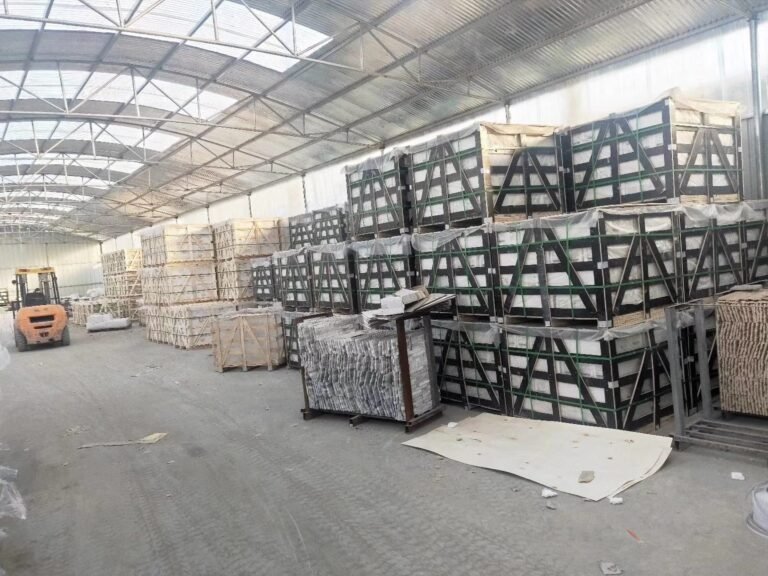
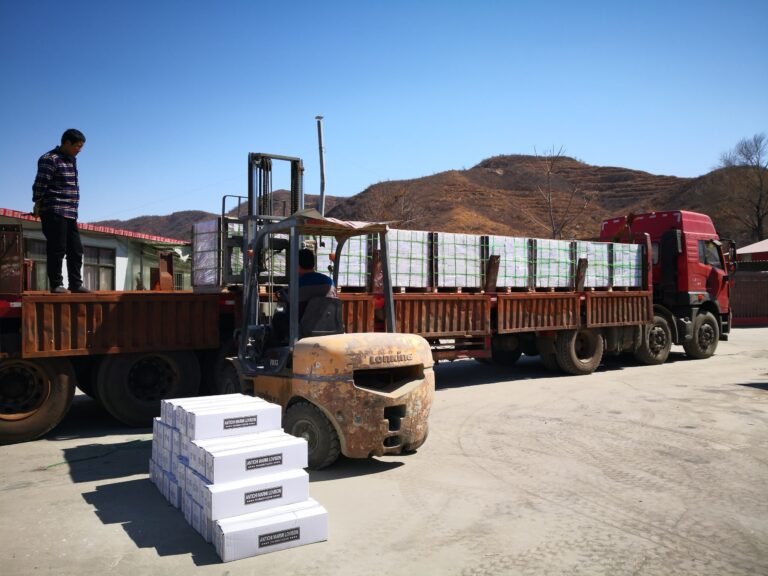
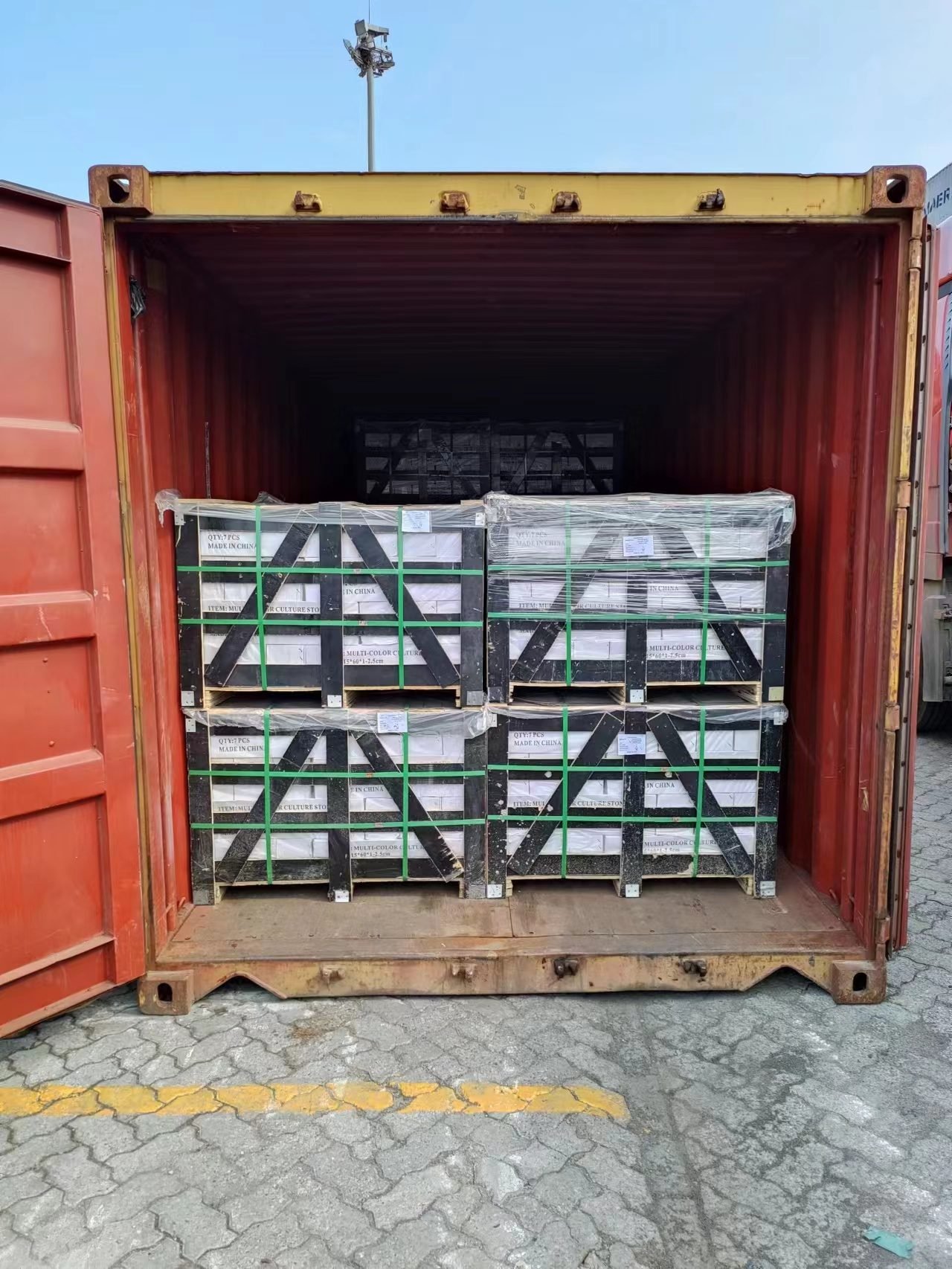
- Top Stone Panels includes the correct HS code, COO, ISPM 15, and packing data on every export set — MOQ 1x20GP, production 20-25 working days, shipped from Xingang.
Why the Right HS Code Decides Your Duty Bill
The Harmonized System is a numbered map of every tradeable thing. Customs agents are not geologists — they do not recognize stone by how it looks. They recognize it by the six-digit code on your invoice, and that code pulls the matching duty rate out of a table. The same-looking wall of grey panels can be a slate product (6803), a quartzite product (6802.29), or a granite product (6802.93), and each carries a different rate in most countries.
Two consequences follow. First, the exporter and importer should agree on the code before production, not at the dock. Second, the code decides more than duty — it decides which documents customs accepts. Slate under 6803 and quartzite under 6802.29 both belong to one Chapter 68 family, but the distinction matters in every harmonized tariff database you will touch.
Reality check: a reclassification letter from customs can arrive months after clearance. If customs re-rates your shipment from 6802.29 to a higher-duty line, the retroactive bill plus penalties can wipe out the margin on the whole container.
Chapter 68: Where Stone Cladding Lives
Stone sits in Chapter 68 of the HS, a chapter titled “Articles of stone, plaster, cement, asbestos, mica or similar materials.” Within it, three headings cover nearly every cladding product a stone buyer touches. The table below is the map you will use every time you quote an order.
| Heading | Covers | Typical cladding products |
|---|---|---|
| 6801 | Setts, curbstones and flagstones of natural stone (except slate) | Pavers, steppers, curb units; not wall panels |
| 6802 | Worked monumental or building stone, other than slate; mosaic cubes; granules, chippings and powder | Quartzite, sandstone, granite and marble wall panels, veneer, ledger strips |
| 6803 | Worked slate and articles of slate or of agglomerated slate | Slate cladding panels, slate veneer, split-face slate, blackboard-quality wall slate |
Read the wording twice: 6802 excludes slate, 6803 exists only for slate. That single split is the reason an exporter who sends slate under 6802 will see it bounced back by customs in most markets — the heading’s legal text simply does not include the product.
Slate Panels Sit in 6803
Slate cladding, natural split-face slate veneer, and sawn-edge slate ledger panels classify under heading 6803. The heading text — “worked slate and articles of slate or of agglomerated slate” — was written for exactly this product: natural slate cut to panel dimensions, bonded to a backing or sold as loose veneer strips, ready for a wall.
On the Chinese side of the transaction, the national tariff schedule shows worked slate (6803.0000) at a 20 percent MFN rate — a useful sanity check that the code behaves like an item of worked stone, not a raw mineral. The bigger point for the buyer is consistency: if the packing list says 6803, every other document should say 6803.
Warning: a slate product declared as “marble mosaic” or “other stone” to chase a different rate is a classification red flag. Customs auditors compare the invoice code with the actual mineral content, and the discrepancy is measurable in penalties.
Quartzite and Sandstone Panels Land in 6802.29
Quartzite and sandstone cladding panels are worked building stone other than slate, so they sit in heading 6802. Within 6802, the exact subheading follows the material and the degree of work. For a split-face quartzite veneer panel or a sawn sandstone ledger, the landing spot is almost always 6802.29 — the “other stone” subheading that catches everything outside granite and the calcareous group.
The subheading structure matters when you are comparing supplier quotes across products:
| Subheading | Material | Typical product |
|---|---|---|
| 6802.10 | Tiles, cubes and similar small articles, any stone | Mosaic sheets, small-format tiling |
| 6802.21 | Granite, simply cut or sawn with a flat surface | Flat granite slabs for facades |
| 6802.23 | Granite, otherwise worked | Flamed, bush-hammered granite panels |
| 6802.29 | Other stone (non-granite, non-calcareous) | Quartzite and sandstone cladding panels, ledger strips |
| 6802.91 | Marble, travertine, alabaster | Marble wall panels and slabs |
| 6802.93 | Granite, other | Polished granite cladding panels |
| 6802.99 | Other stone (remaining) | Basalt, other non-slate panels |
A practical rule of thumb: if you are quoting a quartzite stone veneer panel that started as a slab, cut to width, split or sawn on the face, and backed on mesh or epoxy — the exporter should declare 6802.29, not 6802.21. The granite subheadings are for granite. Putting quartzite in the granite line is the kind of shortcut that gets discovered at the border.
From Six Digits to Ten: Your Country’s Tariff Line
The six-digit HS base is universal, but the duty rate is not. The EU extends to an eight-digit Combined Nomenclature (CN) code; the United States extends to a ten-digit HTS number; Australia, the UK and Canada run their own extensions. That means the same 6802.29 product can carry a different rate in Brussels, Washington, Sydney and London.
When your supplier sends a PI with an HS code, treat it as the base for your own lookup. Open your national tariff database — USITC HTS, EU TARIC, the UK Trade Tariff, or your broker’s schedule — type in the six digits, and read off the ten-digit rate for your country. If the code your exporter quoted does not exist in your database, that is the first sign the classification needs a second opinion.
Top Stone Panels prints the base HS code and full commodity description on every commercial invoice for slate panels and quartzite panels, so the buyer’s broker can do the country-specific extension without guessing. That is the division of labor that keeps containers moving.
The 2026 US Tariff Reality: 301, 232, and the New 12.5%
For US buyers, the duty conversation starts with the MFN rate, then adds the China-specific layers. As of the July 2026 update, the effective picture for Chinese stone is: Section 301 tariffs on Lists 1-3 at 25 percent, List 4A at 7.5 percent, and a new Section 301 forced-labor tariff of 12.5 percent on all Chinese goods effective 2026-07-24. The earlier IEEPA fentanyl and reciprocal tariffs were voided by the US Supreme Court and are no longer in effect. Natural stone in HS 6802/6803 is not on the current Section 232 list, which covers steel, aluminum, copper, lumber and automobiles.
| Layer | Status for Chinese stone (2026-07) |
|---|---|
| Section 301, Lists 1-3 | 25% |
| Section 301, List 4A | 7.5% |
| Section 301 forced-labor tariff | 12.5%, effective 2026-07-24, stacks with above |
| IEEPA fentanyl / reciprocal | Voided, no longer in effect |
| Section 232 | Does not cover natural stone (current scope: steel, aluminum, copper, lumber, autos) |
What this means in practice: the effective rate on a typical Chinese stone shipment into the US remains close to 30 percent before your own state or port charges. Rates change with administrative actions, so re-check the layer table on every order — a CFO who prices a container on last year’s rate is pricing a risk, not a cost.
What Chinese Exporters Must Declare
China runs its own export declaration on the same six-digit base. When a factory in Hebei ships a 20GP of slate veneer to the US, the export declaration, the commercial invoice, and the packing list all carry the code and unit value that Chinese customs reconciles against the goods. Exporters who declare one code for their customs and a different one for the buyer are creating a paper trail that does not survive a single audit.
Ask your supplier three questions before you place the order:
- What six-digit HS code do you use on export declarations for this product?
- Can you put the code and commodity description on the PI, invoice and packing list consistently?
- What documents does the code trigger — Certificate of Origin, ISPM 15, test reports?
A factory that hesitates on any of the three is a factory you should keep questioning. Our supplier verification guide covers the rest of the audit.
Documents Your HS Code Triggers
The code determines the document set nearly as much as the duty rate. For worked stone cladding (6802 and 6803) moving China to the US, EU, Australia or the UK, the standard set includes:
| Document | Why it matters |
|---|---|
| Commercial invoice with HS code | Primary classification document for customs |
| Certificate of Origin (COO) | Confirms origin for preferential or punitive rate determination |
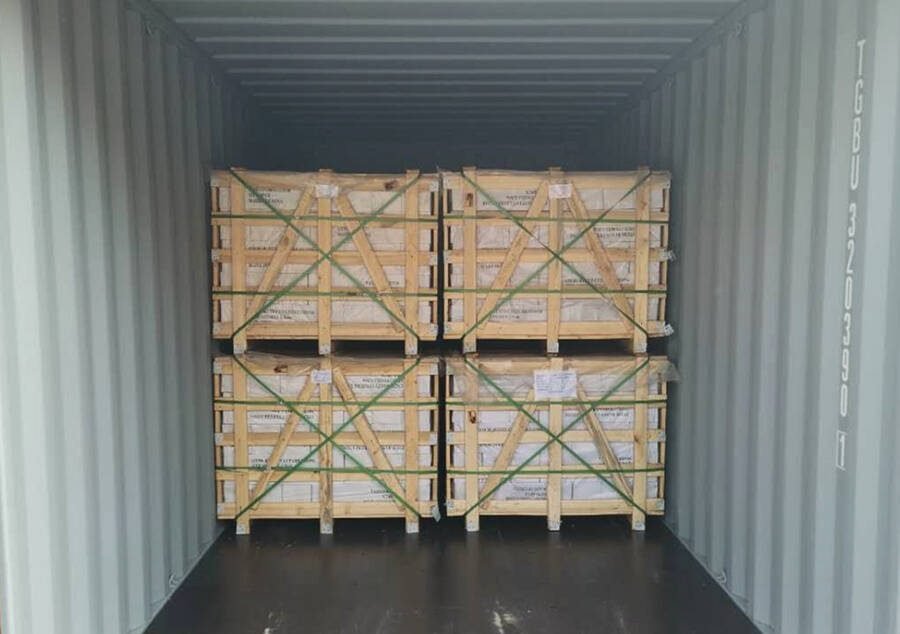
| ISPM 15 fumigation certificate | Required for wooden pallets and crates; missing it stalls the container |
| Test report / inspection documents | Supports the declared material group when customs examines contents |
| Packing list with weights and pcs | Reconciles the shipment against the invoice during examination |
The stone export documents guide breaks down each file, and our customs clearance guide covers the arrival side.
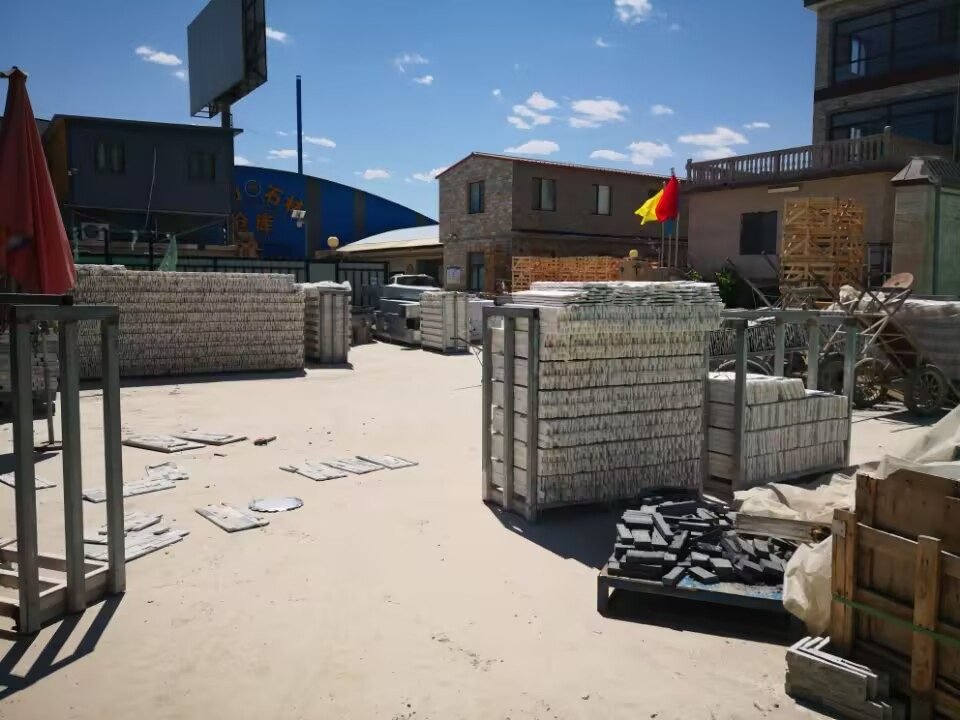
Five Classification Mistakes That Delay Containers
After moving 220+ containers of stone a year out of Xingang, we can tell you which errors keep showing up on buyer side paperwork:
- Slate declared as 6802. Slate belongs in 6803 by heading text. A buyer’s broker who files 6802.29 for slate forces a reclassification hold.
- Quartzite declared as granite. The granite subheadings are legally for granite; quartzite panels are “other stone” in 6802.29. The mineral split is visible in any lab test.
- Mismatched codes across documents. Invoice says 6803, packing list says 6802.29 — customs reconciliation treats a mismatch as an error in both.
- No ISPM 15 on wooden pallets. The container can be refused at arrival even when the stone itself is fine. Wood packaging without the mark is a stop condition.
- Unit value that does not match the code. An invoice declaring $1.20/m2 for split-face quartzite fails the customs valuation screen and triggers an examination.
Each of these is fixable before shipment. Each is expensive after. The container mix guide and the 20GP vs 40HQ calculator help you lock the commercial side, and the classification checklist below closes the customs side.

How to Lock Down the Code Before You Pay
Treat the HS code like any other spec on the order form: agreed in writing, printed on documents, and checked before the balance payment. A simple five-step check catches almost every problem:
- Ask the exporter for the six-digit code they will declare on the export customs form.
- Confirm the material group: slate = 6803; quartzite/sandstone = 6802.29; granite = 6802.2x/6802.93; marble = 6802.91/6802.92.
- Look up your own country’s 8- or 10-digit line in your tariff database and note the rate.
- Request samples and test reports that prove the mineral group (see the sample evaluation checklist).
- Put “HS code + commodity description” as a line item in the order confirmation, and approve the PI only when it appears.
With sample orders shipping in 1-3 days and production running 20-25 working days, there is time to get classification right before the container is sealed.
Build your next container on clean paperwork
Top Stone Panels prints the correct six-digit HS code, full commodity description, COO and ISPM 15 on every export set for slate, quartzite and sandstone veneer. MOQ 1x20GP, 1-3 day samples, 20-25 working day production, zero-breakage packing from Xingang.
Quarry direct | HS code on every invoice | COO + ISPM 15 included | 1x20GP MOQ

Frequently Asked Questions
What is the HS code for stone cladding?
Most worked stone cladding panels classify in HS Chapter 68: slate veneer and panels under 6803, and other worked stone — quartzite, sandstone, granite, marble — under 6802. The six-digit base code is then extended to your country’s tariff line.
Is slate cladding 6802 or 6803?
6803. Worked slate and articles of slate classify under 6803, which is how customs separates slate panels from the other-building-stone group in 6802.
What is the HS code for quartzite panels?
Quartzite cladding panels normally classify as 6802.29, the “other stone” subheading of worked monumental or building stone, unless the product is a tile, cube, or similar small article under 6802.10.
Does Section 232 cover natural stone?
Not currently. US Section 232 tariffs apply to steel, aluminum, copper, lumber and automobiles; natural stone in HS 6802/6803 is not on the list as of the July 2026 update.
What documents do I need to import stone from China?
A commercial invoice with the HS code, Certificate of Origin, ISPM 15 fumigation certificate for wooden packing, a packing list, and often a test report. Your broker will tell you which set your country requires for the declared code.
Conclusion
HS classification is the part of a stone import that never shows up in a factory tour and decides the whole difference at the border. Slate means 6803, quartzite and sandstone mean 6802.29, granite and marble have their own lines, and your country’s extension of the six-digit base sets the rate you actually pay. Paperwork that agrees across invoice, packing list and export declaration is paperwork customs does not stop to puzzle over.
Key takeaways:
- Fix the six-digit code before production, and make every document carry the same code and commodity description.
- Know your material group: slate = 6803; quartzite/sandstone = 6802.29; granite = 6802.21/6802.23/6802.93; marble = 6802.91/6802.92.
- Re-check the 2026 tariff layers before every order — US rates on Chinese stone stack 301 layers and the new 12.5% forced-labor tariff on top of the MFN rate.
- Request COO, ISPM 15 and test reports as part of the quote, not as a surprise after the balance payment.
- Look up your own country’s tariff line from the exporter’s base code; a code that does not exist in your database is the first red flag.
Order a sample box and a code-checked quotation before you commit the container. Contact Top Stone Panels and include your destination country in the message — the quote will arrive with the HS codes and document set lined up.