A single bad container of natural stone cladding costs you USD 18,000 in product, USD 4,500 in ocean freight, two months of warehouse space, and a customer relationship you spent a year building. That’s the math every building material importer runs after receiving a shipment with cracked panels, mismatched veining, or backing that delaminates on arrival.
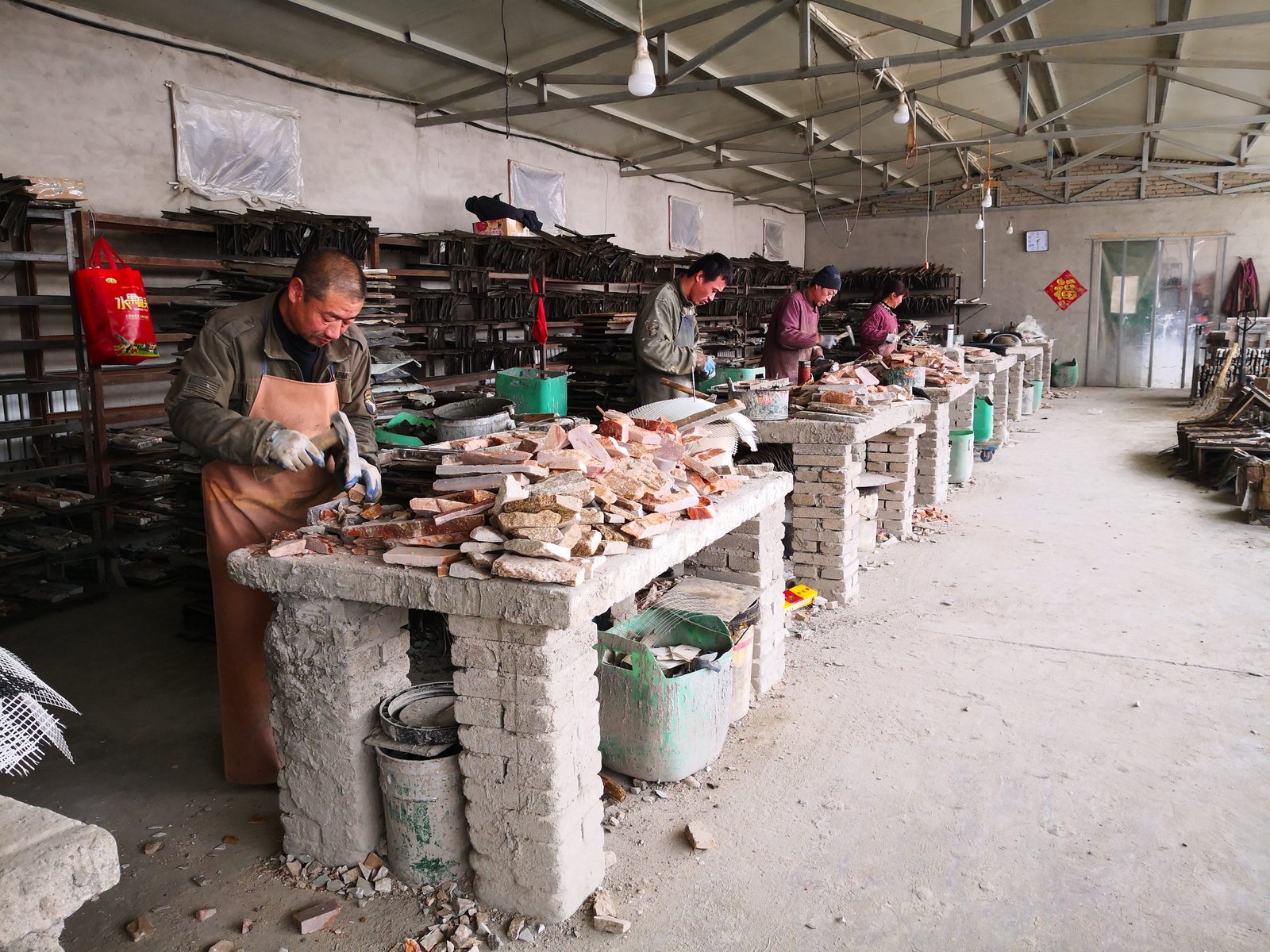
Stone cladding supplier verification isn’t optional anymore. The number of trading companies posing as manufacturers has exploded across Chinese stone-export hubs, and the gap between a polished Alibaba storefront and an actual quarry-to-container operation can be enormous. I’ve seen suppliers claim to own quarries they’ve never visited. I’ve watched “factory tours” that were really just walks through a rented warehouse where pre-cut panels from three different sources got repacked under one brand.
This guide gives you a structured, field-tested audit framework. It covers every checkpoint from the documents you request before booking a flight, to what you inspect on the quarry floor, to the packaging details that determine whether your stone panels arrive intact — or in pieces. Whether you’re evaluating your first Chinese stone supplier or vetting a replacement for one that underperformed, this checklist will save you from expensive mistakes.
If you want to understand the broader sourcing ecosystem first, our guide on how to source stone cladding from China covers trade terms, lead times, and negotiation fundamentals. This article focuses strictly on verification.
Why Stone Cladding Supplier Verification Matters More Than You Think
Natural stone is not a commodity product like ceramic tile. Every slab carries geological fingerprints — mineral composition, vein direction, porosity, flexural strength — that vary from quarry to quarry, sometimes from layer to layer within the same deposit. A supplier who doesn’t control their raw material source cannot guarantee consistency across your order, let alone across repeat orders over multiple years.
Here’s what’s at stake when you skip proper verification:
Material inconsistency. Your first sample batch looks perfect. The production order arrives with different color tones, different grain density, or stone from a geologically distinct quarry that the supplier sourced cheaply to fill your order. This happens more than you’d think when the “manufacturer” is actually a broker juggling five quarries.
Structural failures. Freeze-thaw resistance depends on water absorption rates. Stone from certain quarry layers absorbs more water, cracks after two winters in Minnesota or Bavaria, and suddenly you’re fielding warranty claims. A real manufacturer tests every quarry layer. A broker doesn’t know which layer your stone came from.
Backing system failures. Cement backing, mesh backing, and marine-grade epoxy bonding each serve different applications. A supplier who can’t explain why they chose a particular backing system for your stacked stone panels probably doesn’t manufacture them — they’re buying finished panels and relabeling.
Shipping damage. Stone panels are heavy and brittle. Export packaging is engineering, not guesswork. Suppliers without a documented packaging protocol ship broken product routinely. A verified manufacturer with proper crating systems keeps breakage below 1%.
The cost of verification — one flight to China, two days on the ground, maybe USD 400 for a third-party inspector — is trivial against these risks. The question isn’t whether you can afford to audit. It’s whether you can afford not to.
Pre-Visit Document Checklist: What to Request Before You Fly
Before you spend money on airfare, request these documents. A legitimate manufacturer will provide them within 48 hours. A trading company will stall, make excuses, or send generic templates that don’t match their claimed operations.
The Essential Document Package
- Business license (营业执照). Verify the registered address matches the factory location they claim. Look for “production” or “manufacturing” (生产/加工) in the business scope — not just “trading” (贸易).
- Quarry ownership or long-term leasing agreement. This is the single most important document. A manufacturer who owns their quarry controls their supply chain. If they lease, check the lease duration — anything under three years suggests instability.
- Export license and customs registration. Confirms they can legally export without going through an intermediary trading company.
- Certificate of Origin (COO) samples. Request a copy from a past shipment. Cross-check the issuing chamber of commerce. Top Stone Panels provides COO documentation as standard for every export order.
- ISPM 15 fumigation certificates. Required for all wooden packaging entering North America, Europe, and Australia. If the supplier can’t produce one from a recent shipment, their packaging will get rejected at your port of entry.
- Product test reports. Look for water absorption (ASTM C97 or EN 13755), flexural strength (ASTM C99 or EN 12372), and freeze-thaw cycling results (EN 12371 or ASTM C666). These should come from an accredited laboratory, not be self-issued.
- References from buyers in your region. Ask for three contacts who’ve received at least two container shipments. One-off buyers don’t prove repeat-order reliability.
Review this package before committing to a visit. If more than two items are missing or vague, you may not need to fly — you may need a different supplier. Read our natural stone cladding cost breakdown to understand what a fair price range looks like from a legitimate manufacturer.
The Factory Tour: What to Inspect On-Site
You’ve reviewed the documents. They check out. Now you fly to Hebei Province (or whichever stone-producing region your supplier operates in) and see the operation with your own eyes. A proper factory tour takes one full day. Budget six to eight hours. Bring steel-toe boots, a notebook, and your phone camera.
Checkpoint 1: Quarry Inspection
Start at the source. A genuine manufacturer will drive you to their quarry — for Top Stone Panels, that’s in Yixian, Hebei, one of China’s major slate and cultural stone producing areas. The quarry visit tells you three things:
Scale and depth of reserves. Can this quarry supply your volume needs for the next five years? A quarry with 15 meters of proven depth and active face development has decades of material. A quarry that’s nearly played out will force your supplier to source elsewhere, breaking color and texture consistency.
Extraction methods. Wire saw extraction produces cleaner blocks with less micro-fracturing than blasting. Cleaner blocks mean higher yield, more consistent panels, and fewer waste-related cost surprises.
Vein selection discipline. Watch whether workers sort raw blocks by vein direction and color before cutting. Batch-specific vein selection is what separates consistent production runs from a container full of mismatched panels. At Top Stone Panels, this selection happens at the quarry face before blocks even reach the factory.
Checkpoint 2: Production Line Walkthrough
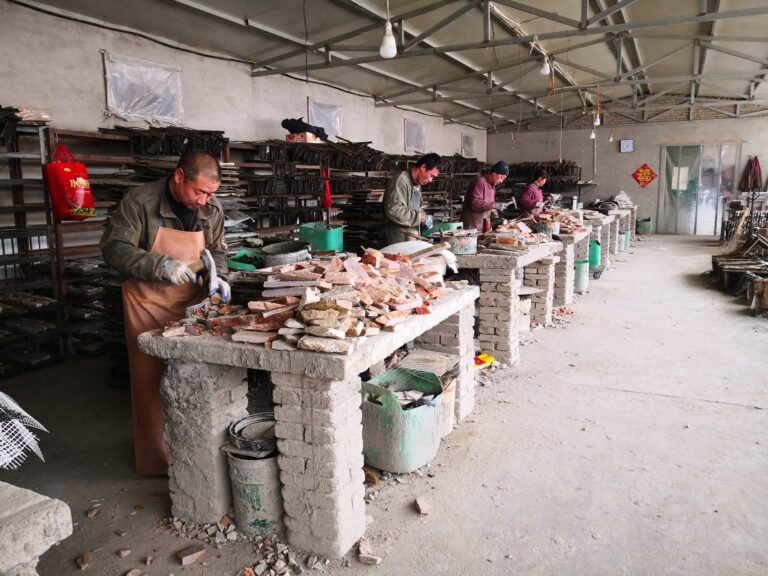
The production floor reveals whether a supplier has invested in precision equipment or is running manual operations that produce inconsistent tolerances. Look for:
Cutting technology. Infrared CNC diamond blade cutting produces panels with tight dimensional tolerances (±1mm). Manual bridge saws produce ±3mm variation. That difference matters when your installer is trying to maintain consistent joint lines across a 40-square-meter feature wall.
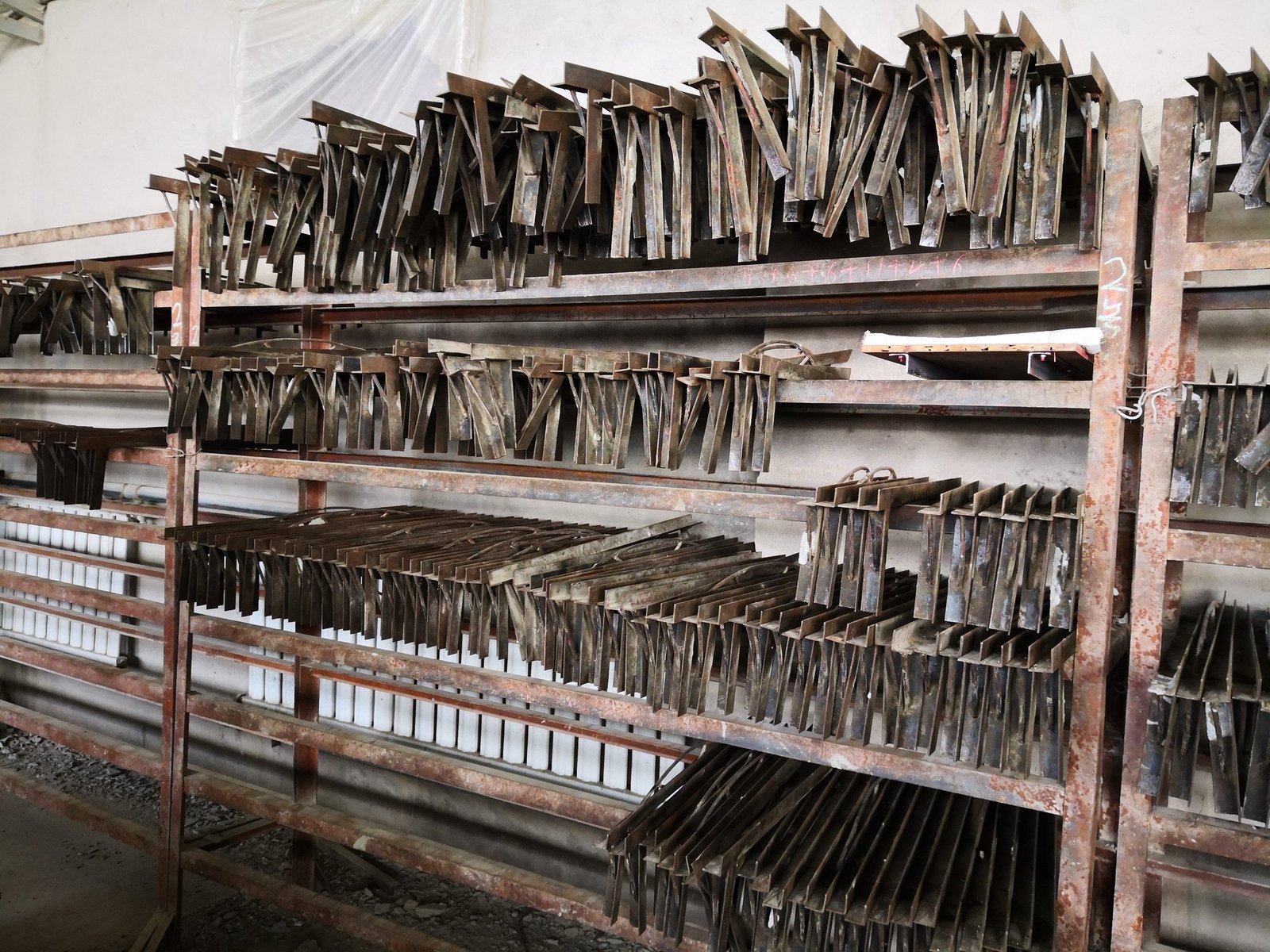
Backing application process. Whether it’s cement backing, mesh backing, or marine-grade epoxy bond, the application should happen in a controlled environment with documented curing times. Watch for proper surface preparation — stone faces must be cleaned and dried before backing is applied, or delamination is inevitable.
Production capacity claims vs. reality. Count the number of active cutting stations, backing lines, and curing racks. A factory claiming 80,000 m²/month capacity on stacked stone panels needs substantial infrastructure. If the floor space looks like it could handle 20,000 m² at best, question the claim.
Checkpoint 3: QC Station
A real manufacturer has a dedicated quality control area, not just a worker occasionally glancing at panels on the line. Top Stone Panels runs a 3-step QC process: raw material selection at intake, in-process re-inspection after cutting and backing, and pre-shipment final inspection with documented reports. Ask to see the QC log from a recent order. If they can’t produce one, their “QC” is marketing, not process.
Checkpoint 4: Warehouse and Finished Goods
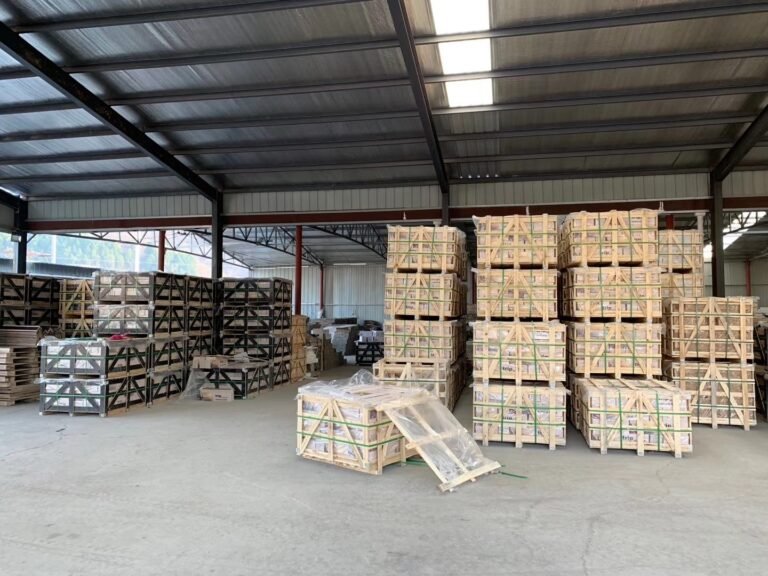
Finished inventory tells you about the supplier’s financial health and order management. Organized, labeled inventory with clear batch separation suggests good systems. Stacked, unmarked pallets with dust accumulation suggest product that’s been sitting unsold — which raises questions about demand, quality, or both.
Sample Evaluation: Testing Before You Commit to a Container
Samples are your cheapest insurance policy. Request at least three samples per product type — and specify that they must come from current production stock, not a curated “sample room” collection that’s never matched in real orders.
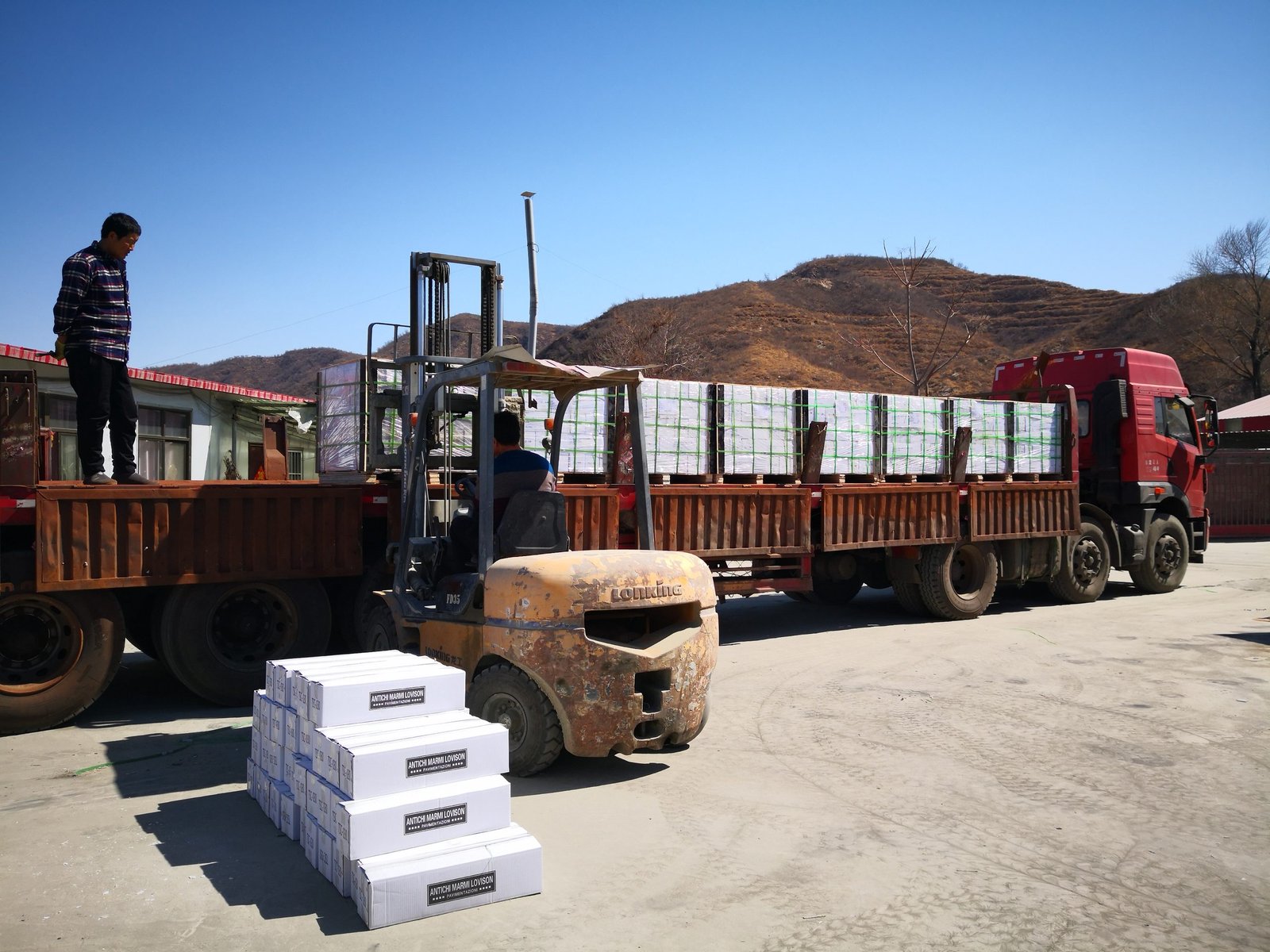
Top Stone Panels produces samples within 1-3 days from active production lines. If a supplier needs two weeks to produce samples, they’re likely sourcing from somewhere else.
What to Test on Each Sample
| Test | What You’re Looking For | Acceptable Range |
|---|---|---|
| Water absorption (weight before/after 24h soak) | Determines freeze-thaw resistance for cold climates | <0.5% for slate, <1% for sandstone |
| Dimensional accuracy | Measure length, width, and thickness at 5 points | ±1mm from stated dimensions |
| Backing adhesion | Attempt to peel backing from stone edge | Should not separate under hand force |
| Color consistency (3 samples compared) | Vein direction, tone range, mineral spots | Should fall within agreed tolerance photos |
| Edge quality | Check for chipping, micro-fractures, saw marks | Clean edges, no visible saw blade chatter |
| Weight per panel | Confirms material density matches specification | Within 10% of stated weight |
For exterior applications in freeze-thaw climates, understanding the relationship between stone type and climate performance is critical. Our article on exterior stacked stone veneer panels covers the technical differences between natural and manufactured stone for outdoor use.
If any sample fails two or more of these checks, don’t proceed to a trial order. Find a different supplier. If the samples pass, move to the next stage: verifying the paperwork that travels with your shipment.
Certification and Document Verification for International Trade
Paperwork separates professional exporters from fly-by-night operations. Every international stone cladding shipment requires a specific set of documents, and each one must be verifiable against an issuing authority.
Certificate of Origin (COO)
The COO proves where your stone was quarried and processed. It’s issued by the local Chamber of Commerce (in China, typically CCPIT). Verify the COO number directly with the issuing body. A forged COO can result in customs penalties and incorrect duty rates at your port of entry.
ISPM 15 Fumigation Certificates
Every wooden pallet, crate, or dunnage piece entering ISPM 15-compliant countries (which includes the US, Canada, EU, Australia, and most developed economies) must bear the IPPC stamp proving heat treatment or methyl bromide fumigation. Without it, your container gets held at the port, you pay demurrage charges (USD 150-400 per day), and the entire shipment may need re-fumigation at your expense.
Top Stone Panels uses fumigated wooden and plywood pallets as standard for every export shipment. The ISPM 15 certificate accompanies the shipping documents — it’s not an afterthought or an optional extra.
Pre-Shipment Inspection Reports
A professional supplier provides a pre-shipment inspection report before the container is sealed. This report includes panel-by-panel photos, dimensional measurements, packaging condition, and container stuffing sequence. Some suppliers — Top Stone Panels included — provide video documentation of the loading process.
If a supplier tells you “we’ll send photos after loading,” that’s not an inspection report. That’s a snapshot. Demand documented, sequential inspection before the container doors close.
Product-Specific Test Reports
For projects requiring compliance with local building codes (which is virtually every commercial project in North America and Europe), you need test reports that reference the correct standards:
- ASTM C97 — water absorption for dimension stone (North America)
- EN 13755 — water absorption under European norms
- ASTM C99 — flexural strength (modulus of rupture)
- EN 12372 — flexural strength under European norms
- ASTM C666 / EN 12371 — freeze-thaw resistance
These reports should come from independent, ISO 17025-accredited laboratories. Self-issued test certificates from the factory itself carry no weight with building inspectors or project engineers.
Understanding the product types you’re specifying matters here. Our guide to six types of stone veneer panels breaks down the technical differences that affect which test reports you need.
Packaging and Loading Inspection: Where Orders Live or Die
I’ve watched a 20-foot container of stone panels arrive in Hamburg with 23% breakage. The stone was fine. The packaging was a joke — single-layer cardboard, no corner protection, pallets that shifted during the 35-day sea voyage. That’s the cost of skipping a packaging audit.
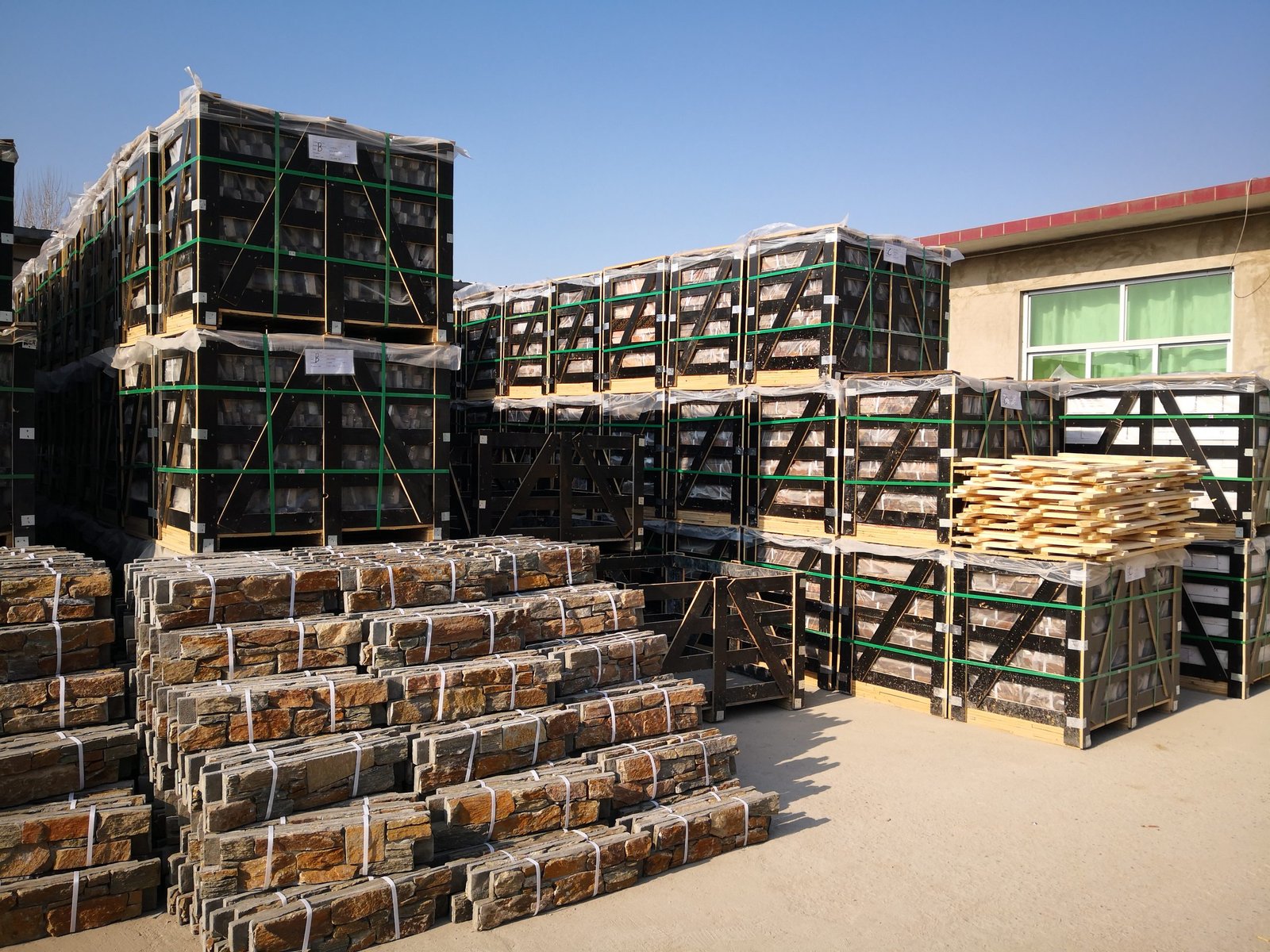
Stone cladding export packaging must survive four to six weeks of ocean freight, multiple crane lifts, truck vibrations, and warehouse stacking. Here’s what a verified packaging protocol looks like:
The Zero-Breakage Packaging Standard
| Layer | Component | Purpose |
|---|---|---|
| 1 — Panel wrap | PE foam sheet or corrugated interleave | Prevents face-to-face scratching during transit vibration |
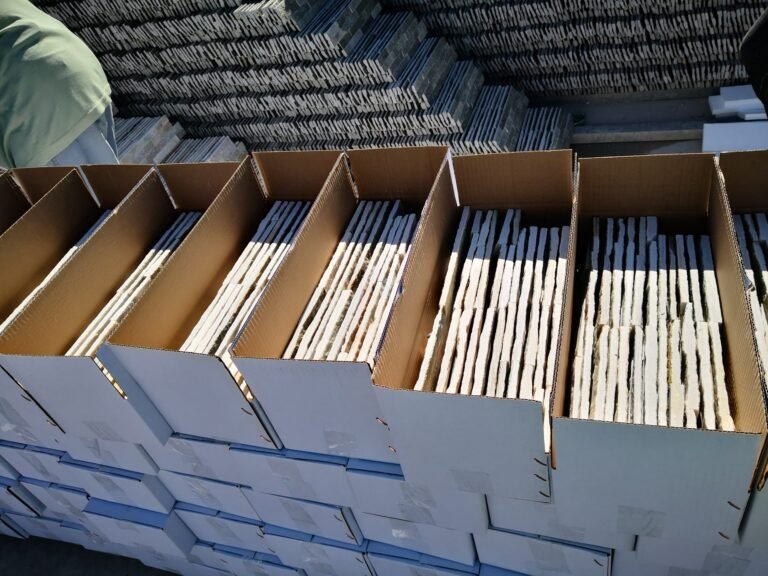
| 2 — Primary carton | 3-5 layer reinforced corrugated carton | Structural protection and stacking strength |
| 3 — Pallet base | Fumigated wooden or plywood pallet (ISPM 15) | Load distribution and forklift handling |
| 4 — Restraint | 4-6 steel bands per pallet | Prevents carton shift during container movement |
| 5 — Void fill | Industrial airbag fill between pallets | Eliminates lateral movement inside container |
| 6 — Corner protection | Reinforced cardboard or foam corner guards | Absorbs impact at the most vulnerable panel edges |
Top Stone Panels calls this their Zero-Breakage Protocol, and they’ve refined it over 18+ years of container exports — 220+ containers annually, shipped through Xingang/Tianjin port. That’s the kind of operational maturity you want from a stone cladding partner.
Container Loading Inspection
If you can’t be present for container loading, require real-time video documentation. Check for:
- Pallet placement: heavy pallets on the floor, lighter product on top
- No gaps between pallets (airbag fill where gaps exist)
- Container floor condition: dry, clean, no protruding nails
- Container door seal integrity
- Seal number recorded and photographed before departure
For products like thin ledgestone panels and Z-panels, which have thinner profiles and higher fragility risk, the packaging standard should be even more rigorous. Ask your supplier specifically how they handle thin-format products differently from thicker thin stone veneer or flagstone shipments.
Communication Red Flags That Signal a Problem Supplier
Before you set foot in a factory, the supplier’s communication patterns tell you volumes. After 18 years in stone export, certain behaviors have become reliable predictors of trouble.
Red Flag #1: Refusal of Factory Visits
“We’ll arrange everything for you — no need to visit.” If a manufacturer is proud of their operation, they want you to see it. A refusal or repeated deflection almost always means the factory doesn’t exist as described. Top Stone Panels actively welcomes factory audits and can arrange transportation from Beijing or Shijiazhuang to their Hebei facility.
Red Flag #2: Pricing Below Market Floor
Natural stone has a cost floor driven by quarrying, labor, energy, and logistics. If someone quotes you 30% below the market range for the same specification, they’re cutting corners — on material quality, on backing systems, on packaging, or on all three. Our cost breakdown guide shows you where the real costs sit in the supply chain.
Red Flag #3: Vague Technical Responses
Ask: “What’s the water absorption rate of your Yixian slate?” If the answer is “very low” or “meets international standards” without a specific number, you’re talking to someone who doesn’t know their own product. A real manufacturer quotes test results from memory — or pulls the report within minutes.
Red Flag #4: Pressure for Full Upfront Payment
Standard terms in the Chinese stone export industry are 30% T/T deposit with 70% before shipment (or against B/L copy). Anyone demanding 100% upfront has either cash flow problems or no intention of delivering. Top Stone Panels operates on the standard 30/70 structure, which protects both parties.
Red Flag #5: Slow or Evasive Communication
Professional exporters respond within 24 hours on working days. If your pre-sales communication takes 3-5 days per exchange, imagine trying to resolve a production issue or shipping delay after you’ve paid the deposit. Communication speed before the order predicts communication speed after.
For a deeper comparison of natural stone against alternatives, our article on natural stone veneer vs cultured stone helps you answer the technical questions your own customers will ask.
Factory Audit Checklist: Scorecard for Supplier Comparison
Use this scorecard to rate each potential supplier. Score 1 (poor) to 5 (excellent) for each category. A total below 30 out of 50 means: keep looking.
| Category | What to Evaluate | Score (1-5) | Notes |
|---|---|---|---|
| Quarry control | Ownership proof, reserve depth, extraction method | ||
| Production equipment | CNC cutting, backing systems, curing process | ||
| QC process | Documented multi-step inspection, test reports | ||
| Packaging protocol | Multi-layer system, ISPM 15, airbag fill | ||
| Documentation readiness | COO, fumigation, pre-shipment reports | ||
| Communication | Response time, technical accuracy, language capability | ||
| Trade terms flexibility | FOB/EXW/CIF/DDP, payment structure, MOQ | ||
| References | Repeat buyers in your region, verifiable contacts | ||
| Sample quality | Matches specs, production stock, fast turnaround | ||
| Financial stability | Inventory levels, facility investment, years in operation |
Any supplier scoring 40+ across these ten categories has earned serious consideration. Top Stone Panels — with 18+ years of operation, owned quarries in Yixian, 220+ annual container shipments, and documented QC at every stage — is built to score well on exactly this kind of rigorous evaluation.
Building a Long-Term Supplier Relationship After Verification
The audit isn’t the finish line. It’s the starting point. The real value of thorough stone cladding supplier verification shows up in year two and year three, when your supplier knows your standards, your packaging preferences, and your project timeline expectations without you repeating them.
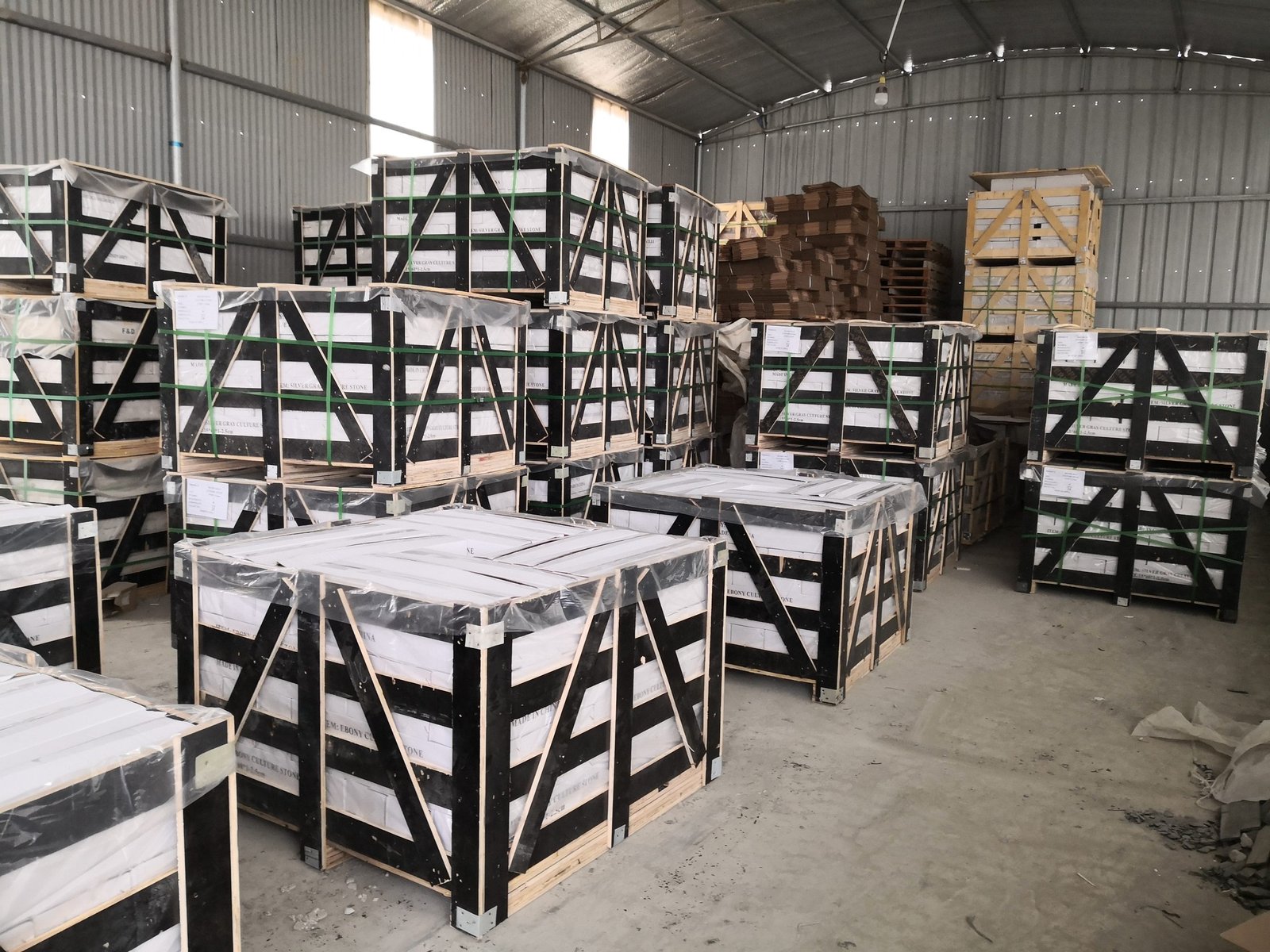
Here’s how the best importer-supplier relationships develop after a successful audit:
Joint product development. Once trust is established, a real manufacturing partner will work with you on custom sizes, color selections, or application-specific adaptations. Top Stone Panels produces panels in multiple standard formats — 15x60cm, 15x55cm, 20x55cm for Z-panels, 36x10cm for thin ledgestone — but also develops custom dimensions for repeat buyers with volume commitments.
Production scheduling alignment. A verified supplier with production capacity of 80,000 m²/month (stacked stone) or 60,000 m²/month (thin ledgestone) can reserve capacity for your planned orders. Share your annual forecast. Get production slots confirmed in advance. This eliminates the “your order will take 45 days” surprise during peak season.
Continuous improvement feedback loops. After each shipment, share installer feedback. If edge chipping increased on the last order, a quality manufacturer will investigate the cutting blade, the handling process, or the packaging — and fix it before the next container. This only works with suppliers who control their production process end to end.
Market intelligence sharing. Quarry conditions change. New stone varieties become available. Shipping rates fluctuate. A long-term manufacturing partner shares this intelligence proactively, helping you time orders for better pricing and availability. This is the relationship model Top Stone Panels has built with distributors across North America and Europe over nearly two decades.
If you’re specifying stone for architectural columns, our stone columns and pillars guide covers sizing, styles, and installation requirements that affect your supplier specification.
How Top Stone Panels Welcomes Factory Audits
Most stone cladding suppliers tolerate audits. Top Stone Panels designed its operation around them.
Here’s what a factory visit to Top Stone Panels looks like:
Arrival and overview (30 min). Facility walkthrough with production capacity context. You’ll see the scale: 220+ containers shipped annually from a facility that processes over 80,000 m² of stacked stone and 60,000 m² of thin ledgestone per month.
Quarry visit (1-2 hours). Transportation to the Yixian quarry where raw slate and quartzite blocks are extracted. You’ll see wire saw operations, block selection by vein direction, and the initial sorting that determines downstream consistency.
Production line (2-3 hours). Watch infrared CNC diamond blade cutting in action. Observe the cement backing and mesh backing application process. See how marine-grade epoxy bond is applied for products requiring extra adhesion strength.
QC walkthrough (1 hour). Review the 3-step QC process — raw material selection, in-process re-inspection, pre-shipment final inspection. Ask to see documentation from a recent order. Ask to see what happens when a panel fails inspection.
Packaging and loading (1 hour). See the Zero-Breakage Protocol in practice: 3-5 layer reinforced cartons, fumigated pallets, steel banding, airbag fill. If timing aligns with a container loading, you’ll watch the full process.
Commercial review (1 hour). Discuss trade terms (FOB Xingang, EXW, CIF, or DDP), payment structure (30% deposit / 70% before shipment), MOQ (1x20GP container), and lead times (samples in 1-3 days, production in 20-25 working days, 25-30 for first orders with custom packaging).
The entire product range is available for review: stacked stone, thin ledgestone, thin stone veneer, Z-panels, flagstone, and stone columns. All produced from 100% natural slate, quartzite, marble, or sandstone — no synthetic material, no reconstituted stone, no compromises.
For a technical overview of stacked stone panel construction and applications, start with our article explaining what stacked stone panels are and how they’re manufactured.
Frequently Asked Questions
How much does a factory audit of a stone cladding supplier cost?
If you conduct the audit yourself during a business trip to China, the cost is limited to travel and accommodation. Hiring a third-party inspection company like SGS, Bureau Veritas, or Intertek typically costs USD 300-500 per man-day for a factory visit in Hebei Province. For first orders above USD 15,000, this investment pays for itself many times over.
What documents should I request before visiting a stone cladding factory?
Request a business license, quarry ownership or leasing agreements, Certificate of Origin (COO) samples, ISO quality management certificates if available, ISPM 15 fumigation certificates for wooden packaging, product test reports (water absorption, flexural strength, freeze-thaw), and references from past export clients in your region.
Can I verify a stone cladding supplier without visiting China?
Partial verification is possible through video factory tours, third-party inspection reports, sample evaluation, and document review. However, for orders exceeding USD 20,000 or first-time suppliers, an in-person visit remains the gold standard. A reputable supplier will welcome a factory visit and may even offer to arrange local transportation.
What are the biggest red flags when vetting a stone cladding supplier?
Major red flags include: refusing a factory visit, inability to provide quarry ownership proof, no pre-shipment inspection process, vague packaging descriptions, pressure for full upfront payment, unwillingness to send samples, and communication delays exceeding 48 hours. Trading companies posing as factories often exhibit several of these signs.
How long should a stone cladding factory audit take?
A thorough factory audit requires one full day (6-8 hours). This covers quarry inspection (1-2 hours), production line walkthrough (2-3 hours), QC station review (1 hour), warehouse and packaging inspection (1 hour), and a closing meeting to review documents and discuss terms. Rush audits lasting less than half a day often miss critical details.
Your Next Step: Request a Factory Visit or Sample Shipment
Ready to Verify Top Stone Panels Firsthand?
If you’ve read this far, you take supplier verification seriously — and so do we. Whether you want to schedule a factory visit to our Hebei facility, request production samples of any stone cladding product in our range, or get a detailed quotation with full documentation package, we’re ready.
What you’ll receive:
- Production samples within 1-3 days
- Full documentation package (business license, quarry certificates, COO samples, ISPM 15 certificates, test reports)
- Video factory tour if you can’t visit in person
- References from distributors in your region
Contact Top Stone Panels:
Email: info@topstonepanels.com
Web: topstonepanels.com
Products: Stacked Stone | Thin Ledgestone | Thin Stone Veneer | Z-Panels | Flagstone | Columns
MOQ: 1x20GP container. Lead time: 20-25 working days. Port: Xingang/Tianjin. Trade terms: FOB / EXW / CIF / DDP.