Booking stone container freight is the step where order numbers turn into a delivery date, and it is the step buyers get wrong most often. The mistake is not picking a bad forwarder. It is sequencing: people book freight after production finishes, then watch the container wait two weeks for a slot and the installation crews sit idle. A container booking for stone works like a flight seat, not a warehouse shelf, and the whole problem is timing the reservation against the supplier’s production calendar.
Top Stone Panels is the quarry-owning slate and quartzite factory in Yixian County, Hebei, that ships from Tianjin Xingang and moves more than 220 containers a year. On standard orders, production takes 20-25 working days; first orders with custom cartons run 25-30. Those numbers decide when you book the vessel, and this guide walks the schedule backward from arrival to the booking email so the container loads the day the stone is ready.
- Book freight against the production finish date, not after it; production runs 20-25 working days on a standard stone order.
- A 20GP container carries about 26.5 tons, roughly 500-530 m² of thin stone panels, and one 20GP is the standard MOQ at Top Stone Panels.
- Transit anchors from Tianjin Xingang: 15-20 days to Los Angeles, 25-30 to New York, 30-35 to Rotterdam, 32-36 to Hamburg; transshipment adds 5-10 days.
- Incoterms decide who books the vessel: FOB and EXW put booking on the buyer, CIF and DDP keep it with the factory.
- Keep the COO, ISPM 15 fumigation certificate, commercial invoice, packing list, and bill of lading ready, or the container waits at the destination port.
- Slip a booking at peak season and a two-week delay becomes three; reserve space early and confirm the sailing in writing.
- 1. When to Book Stone Container Freight
- 2. Container Options and What Fits in a 20GP
- 3. Incoterms Decide Who Books What
- 4. Transit Times by Route
- 5. Documents That Keep the Container Moving
- 6. Payment and Production Confirmation
- 7. Packing That Protects the Schedule
- 8. LCL vs FCL and Mixed Containers
- 9. Scheduling Around Peak Seasons
- FAQ
- Conclusion
1. When to Book Stone Container Freight
Work backward from the date the stone needs to be on site. Add the sailing, transit, customs, and trucking legs, then subtract production, and the number left in the middle is your booking window. Standard production at Top Stone Panels takes 20-25 working days, so a four-week order booked today finishes around the fourth week, and the freight slot should be reserved for the week after that finish date, not the week of.
The practical sequence is: confirm the sample, sign the order, ask the factory for the production schedule, then hand that finish date to your forwarder and ask for a vessel that sails after it. Most forwarders need only the approximate goods-ready date to hold space. Wait until the goods are ready and you are booking into whatever is left, which at peak season can mean a rolling one- or two-week slip.
The warning that belongs in every sourcing call: a production delay is normal and absorbs the buffer; a freight delay on top of it lands in your customer’s schedule. Keep about five working days of buffer between the promised production finish and the closest vessel you will accept. If the factory says the 25th but the vessel sails the 22nd, book for the next sailing and let the container sit full rather than chase an early slot you cannot load.
2. Container Options and What Fits in a 20GP
Stone panels are a payload business, not a volume business. A standard 20GP container carries roughly 26.5 tons, which for thin natural stone paneling at about 50 kg/m² works out to roughly 500-530 m² of cladding per box. That number drives the whole ordering model at Top Stone Panels: the listed MOQ for every product line is one 20GP container, and mixed lines can ride in the same box when you plan the load with the factory.
Choose the box against the project area, not against a vague sense of getting more. A 40HQ doubles the volume window but the gross weight limit stays the real constraint for stone, so on thin panels you often fill the floor plan first and still have headroom. For heavier backs and thicker ledgestone, the 20GP is the honest workhorse because it loads close to the weight ceiling without wasting paid volume.
| Container | Typical payload | Stone panel area at 50 kg/m² | Best use |
|---|---|---|---|
| 20GP | ~26.5 t | ~500-530 m² | Standard first order; MOQ at Top Stone Panels |
| 40HQ | ~26.5-27 t | ~800-900 m² (volume-bound on thin panels) | Large projects needing one delivery wave |
| LCL consolidated | Shared space | Trial or small additions | Samples and urgent top-ups; higher per-m³ freight |
Distributors planning a season should treat the container decision as an area decision with a weight check underneath. If the façade calls for 1,100 m² of thin ledgestone, one 20GP and one 40HQ beats three 20GPs on freight cost per square meter, but the timetable changes because each box is a separate booking. The gap between the two boxes matters here far more than on any other cargo.
3. Incoterms Decide Who Books What
Booking responsibility follows the incoterm. Under FOB Xingang, the factory loads the container on board and you book the ocean leg. EXW puts everything on your forwarder from the factory gate. CIF brings insurance and freight under the supplier’s arrangement while risk still passes at the port. DDP hands the entire delivery, customs, and delivery to the port of destination over to the factory.
| Incoterm | Who books the vessel | Who carries ocean risk | Buyer gets control over |
|---|---|---|---|
| FOB | Buyer | Buyer | Vessel choice, sailing date, forwarder |
| EXW | Buyer | Buyer from factory gate | Full logistics chain |
| CIF | Supplier | Supplier until port of discharge | Less; accept quoted freight |
| DDP | Supplier | Supplier to delivery | Little; one landed price |
For a first container, control and predictability are the real trade. Buyers who have used FOB on other imports can move that muscle memory directly, because booking stone differs mainly in the weight math. Buyers who want one landed number and no customs work at their own port pay a premium for DDP, and need to know that DDP to the United States requires an Importer of Record on the U.S. side regardless.
Whatever the term, get the booking responsibility written into the order confirmation. The most expensive silence in a stone deal is the one where nobody says which side holds the vessel slot, and the factory thought the buyer’s forwarder was waiting for an email that never came.
4. Transit Times by Route
Sailing times from Tianjin Xingang behave predictably on the main lanes, and those numbers are the ones to put in your schedule. The verified anchors used across the site are 15-20 days to Los Angeles, 25-30 days to New York, 30-35 days to Rotterdam, and 32-36 days to Hamburg. Add 5-10 days whenever the discharge port is reached through a transshipment hub rather than a direct call.
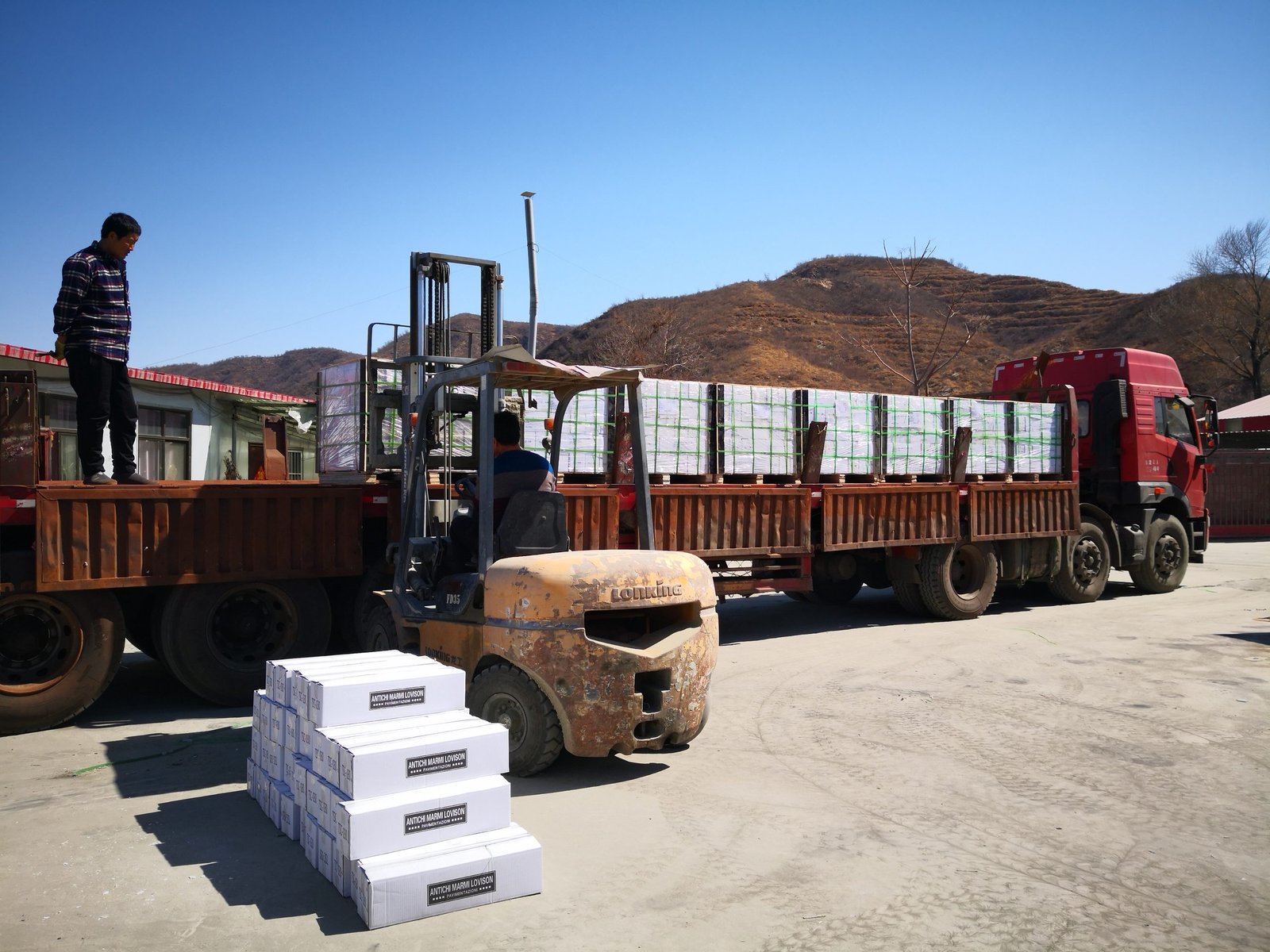
These are sailing windows, not door-to-door promises. After discharge, the container faces customs clearance, possible inspections, and trucking to the project. The discipline is to carry the transit base case and the inspection worst case next to each other. A 20-day base to Los Angeles with a three-day customs clearance means a rough 25 working days from sailing to the yard, and the buffer is what separates a plan from a hope.
Stone adds one quirk other cargo does not have: weight restrictions on some destination trucks and chassis. A 26.5 t box is legal in most North American ports but arrives at legal limits, and rural delivery legs with weight limits need a smaller truck or a break-bulk arrangement. Ask the port-side partner about chassis weight capacity before you schedule the final leg.
The full transit-time breakdown and seasonal factors lives in our separate shipping article, and the same anchors there should match your forwarder’s quote. If the numbers drift far above them, the routing is probably transshipment-heavy and the freight quote should be lower per cubic meter to compensate.
5. Documents That Keep the Container Moving
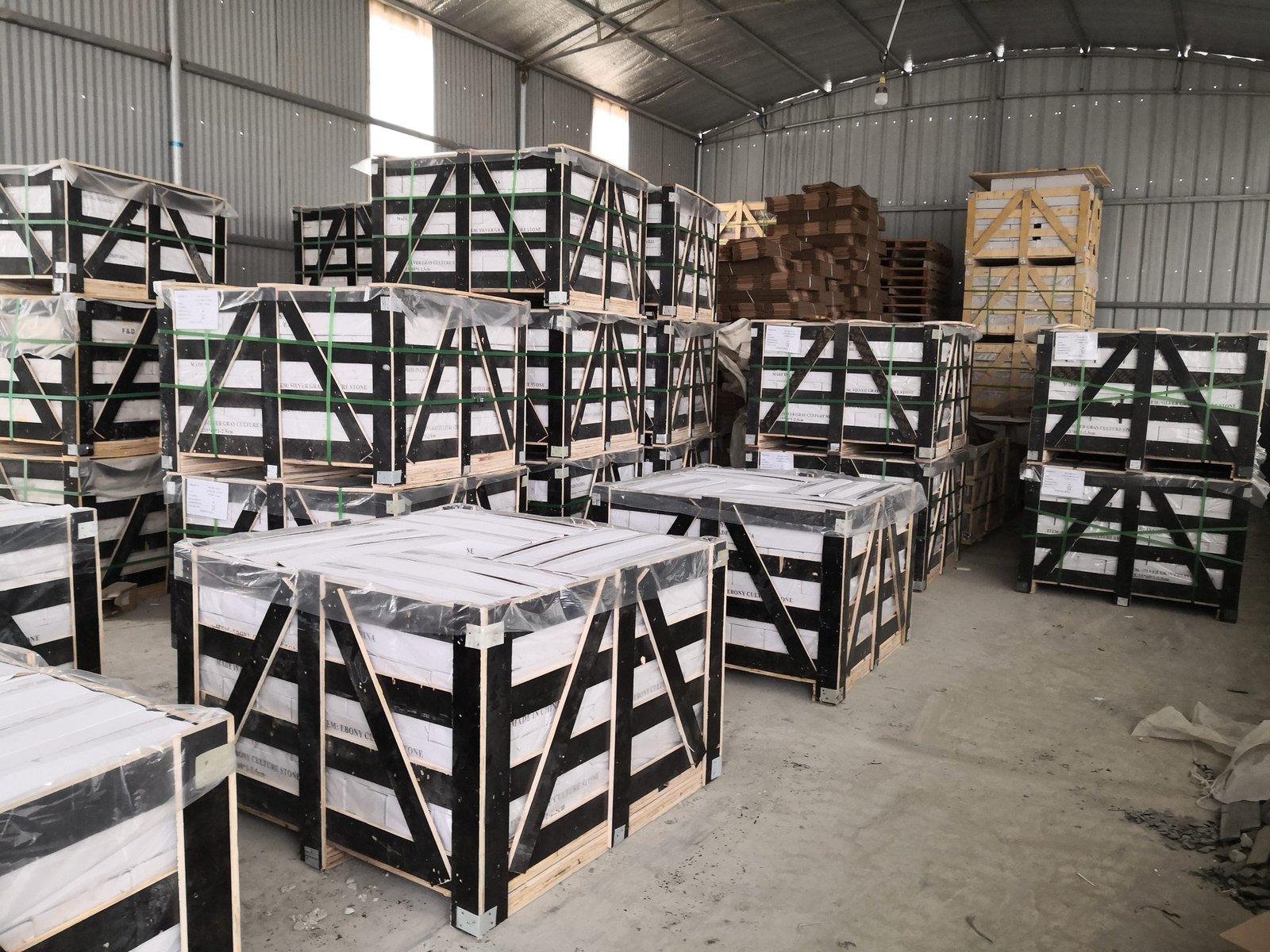
The container does not clear with cement; it clears with paperwork. Assemble the commercial invoice, packing list, bill of lading, certificate of origin, and the ISPM 15 fumigation certificate for wood packaging before the vessel sails, not when the customs broker asks. ISPM 15 matters specifically for stone because the cargo moves on pallets and crates, and an unmarked or expired stamp is the classic reason a container sits for weeks at the destination port.
Top Stone Panels ships with the document set built into the process: COO when the destination grants a tariff preference, ISPM 15 fumigation certificates for the wood packaging, and a pre-shipment inspection report with loading video so the 70 percent balance payment is confirmed against what actually went in the box. Ask for these by name at the quote stage and they become quarantined against delay instead of emergency requests.
Buyers importing to the United States should confirm customs broker coverage of the new house manifest rules that now require a detailed cargo description filed before loading. Stone panels described vaguely as “artificial stone” or “wall panels” cause holds that accurate HS descriptions avoid. The export document guide walks each paper and who signs it, and the same checklist keeps both seller and buyer honest.
6. Payment and Production Confirmation
Payment terms at Top Stone Panels run 30 percent T/T deposit and 70 percent before shipment, released against the loading video and production layout photos. That sequence protects the freight schedule, because the balance clears only when the goods are actually ready to load, which means the booking never rests on a promise. Buyers who have negotiated different terms can still mirror the logic: tie the final payment to a document set that can be checked, not to a date that can slip.
For a first order, the sample step settles the split face, thickness, and color in 1-3 days of express shipping before any container is committed. That is cheap insurance for the freight calendar: a wrong shade discovered after production runs costs two to three weeks while the batch is recolored, and the vessel slot is gone by then. The sample ordering workflow keeps that step small and fast.
7. Packing That Protects the Schedule
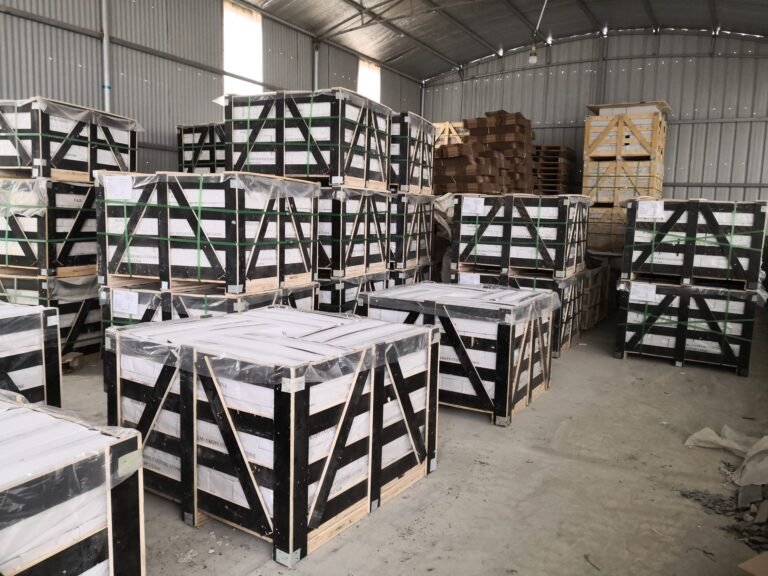
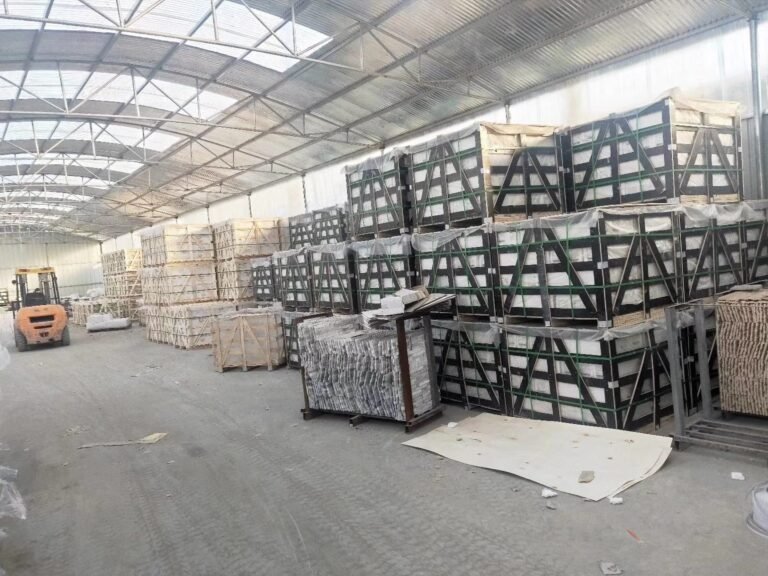
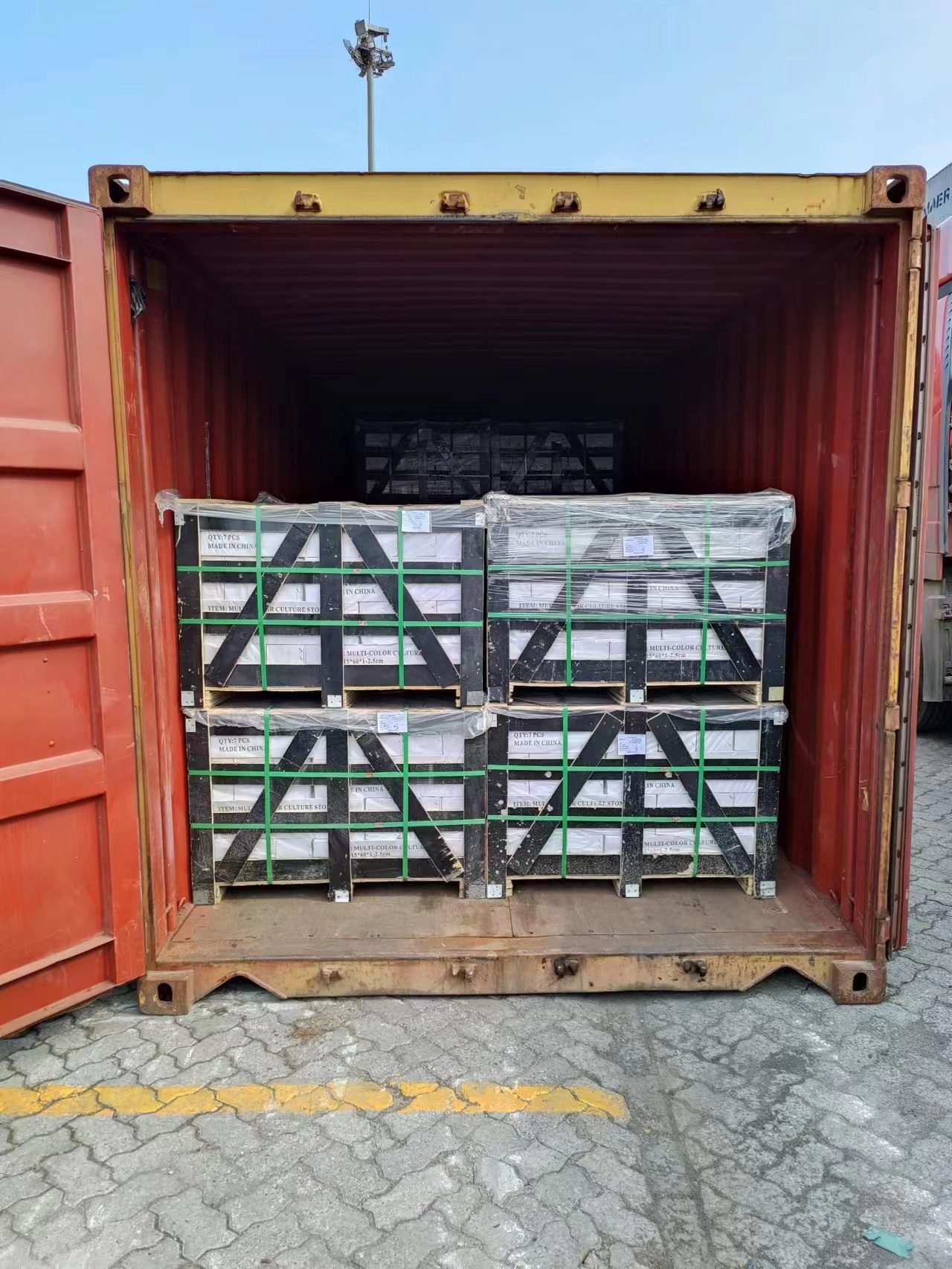
A damaged container is a scheduling disaster dressed as a cargo claim. The Zero-Breakage Packaging Protocol at Top Stone Panels is built for stone specifically: multi-layer sturdy cartons, fumigation-free plywood pallets, 4-6 high-tensile steel straps, and inflatable industrial air bags inside the container to stop load shift. The image below shows the standard container layout with reinforced crates, steel strapping, and airbag reinforcement that keeps natural stone stable through 30-plus days at sea.
Consider what happens when packing fails: the container arrives, the crew opens the doors, and the first crates show cracked corners. Now the goods are damaged, the claim process runs, the customer’s schedule absorbs the whole setback, and nobody is installing stone. The damaged shipment claims process matters because the paperwork window is short and the evidence trail decides the outcome.
Confirm the packing protocol in writing before the order, and ask which dunnage system the factory uses. A supplier who quotes air bags as an option, not as standard, is telling you how the load will arrive. At 220+ containers a year, the protocol is routine here, and the loading video hands you the proof before the ship sails.
8. LCL vs FCL and Mixed Containers
Full containers keep the cost and the calendar predictable; less-than-container loads cut the minimum but raise the per-cubic-meter freight and the risk of delays from consolidation partners. For stone, LCL should stay a trial tool, not a supply strategy. The cargo is heavy, the consolidation moves it twice, and a hold on anyone’s pallet in the shared container holds the whole box.
Mixed containers are where full-container buying gets flexible. One 20GP can carry stacked stone panels for a fireplace program, thin ledgestone for a feature wall, and a corner piece package for the same project because the lines at Top Stone Panels ride together when the volume plan allows. The stacked stone, flagstone, and z-panel product pages list the area per box so the mix adds up to one clean booking instead of several small ones.
If the order needs more than one container, ship them on the same vessel when possible. Two boxes on one sailing reduce the risk of a catastrophic single-box delay to a shared, manageable event, and the freight rate per container is usually better in pairs. Tell the factory up front that the load is multipart; they plan cartons and palletization around the full booking.
9. Scheduling Around Peak Seasons
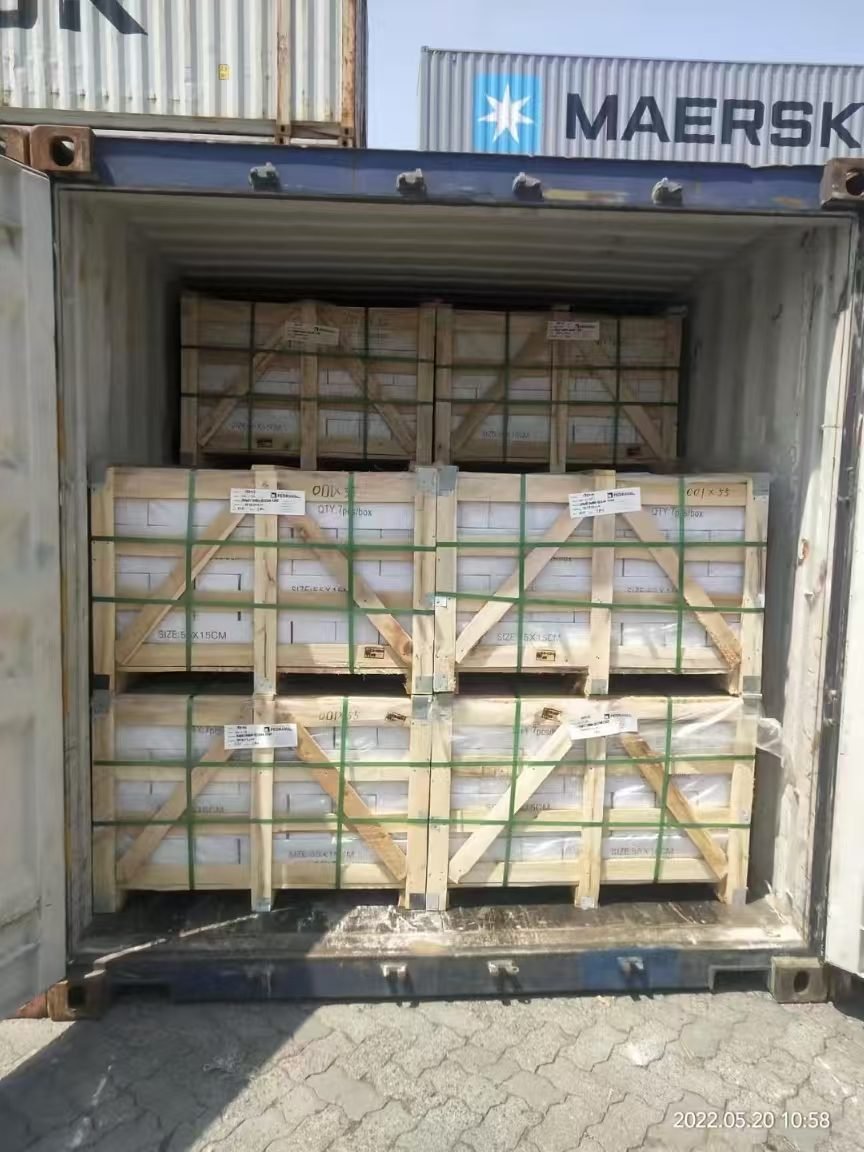
Freight prices and availability move together: when capacity tightens, the booking window stretches and the rate rises. Chinese New Year is the largest stone-industry break because quarries and factories stop for roughly two to three weeks, and orders placed around it land on both sides of the gap. Late-year retail peak, port congestion events, and blank sailings on the transpacific lane all do the same thing in miniature: fewer slots, later loadings, higher quotes.
The scheduling rule is to add a season factor to the base calendar, not to assume the base calendar is pessimistic enough. During peak periods, hold the freight slot two to three weeks earlier than the ideal, and put the sailing confirmation in writing before production finishes. A verbal “we’ll find space” from a forwarder at peak season has cost more than one buyer a completed project date.
Importing rules also shift the plan by destination. The U.S. import process and the EU import process each have their own document and duty sequence, and both should be settled before the vessel sails, not flagged during customs. When the tariff applies, the broker’s written confirmation of the rate matters more than any quote in the sourcing email.
FAQ
How long does it take to ship a container of stone from China?
From Tianjin Xingang, plan 15-20 days to Los Angeles, 25-30 to New York, 30-35 to Rotterdam, and 32-36 to Hamburg, with 5-10 extra days when the route transships.
When should I book container freight for a stone order?
Reserve the vessel slot to line up with the production finish date, which is 20-25 working days for a standard order, so the container can load as soon as the goods are ready.
What is the best incoterm for importing stone containers?
FOB and EXW put freight and vessel choice on the buyer, CIF adds insurance and freight, and DDP delivers one landed price. The right term matches who should carry the ocean risk.
How much stone fits in a 20GP container?
About 26.5 tons, or roughly 500 to 530 square meters of thin stone panels at 50 kg per square meter, and one 20GP is the standard MOQ at Top Stone Panels.
What documents do I need to import stone containers?
Commercial invoice, packing list, bill of lading, certificate of origin, and an ISPM 15 fumigation certificate for the wood packaging; Top Stone Panels provides these with the shipment.
Conclusion
Booking stone container freight works when the calendar is built backward: production finish date, vessel slot, transit, customs, delivery, then the site date. The container is a scheduled asset, and the buyers who protect the schedule protect the whole project, because a two-week freight slip absorbs the cushion that installation crews cannot see coming.
Top Stone Panels ships natural slate and quartzite panels from Tianjin Xingang at 220+ containers a year, one 20GP MOQ, samples in 1-3 days, production in 20-25 working days, and documents that keep customs moving. Send the project area and target landing date to the factory, and the quote comes back with a calendar that lines up.
Key Takeaways
- Book freight against the production finish date and keep five working days of buffer.
- Size the container against the weight ceiling: about 26.5 tons or 500-530 m² per 20GP.
- Write the booking responsibility into the order confirmation and confirm the sailing in writing.
- Line up COO, ISPM 15, invoice, packing list, and BL before the vessel sails, not during customs.