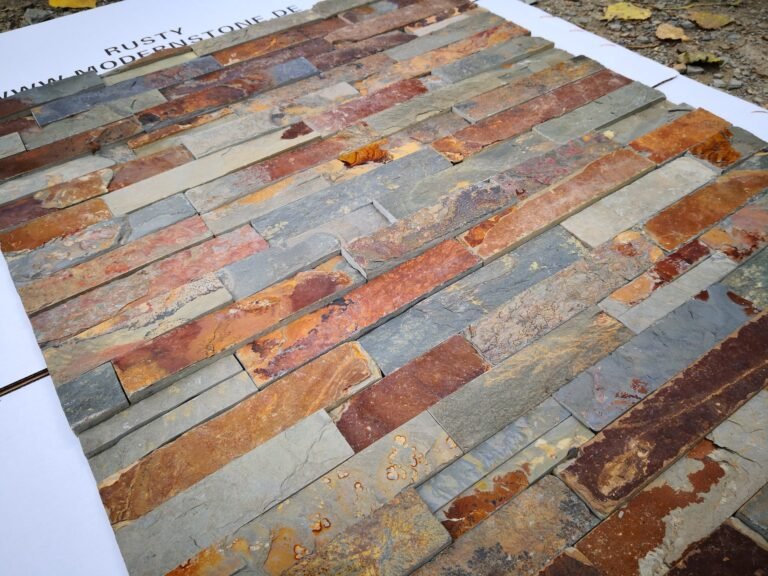
Anti-freeze testing for stone panels usually gets blamed for the wrong failures. A panel spalls on a northern facade after three winters, and the stone manufacturer takes the hit. The root cause is often not a brittle rock — it is absorbed water turning to ice inside an open pore system, or a high-porosity backing layer freezing faster than the face stone. Understand the test, and you stop guessing about the material and start verifying it.
This guide covers what freeze-thaw testing actually measures and the standards a credible supplier should quote — ASTM C666/C666M, ASTM C97/C97M, EN 12371. It ends with the specific reports to collect before a cold-climate project locks in a panel specification. The threshold that matters most in practice is simple: 100 freeze-thaw cycles, the working benchmark many North American specs set for exterior veneer in freezing zones.
- Freeze-thaw damage comes from absorbed water expanding as ice — the lower the water absorption, the lower the risk.
- Dense natural materials like slate and quartzite structurally resist repeated freezing; high-porosity stones do not.
- Request ASTM C666/C666M and ASTM C97/C97M reports in North America, or EN 12371 in Europe, before you spec.
- 100 freeze-thaw cycles is the benchmark many cold-climate specifications treat as the pass line.
- Top Stone Panels’ natural panels tolerate -30°C to +50°C and ship physical samples in 1-3 days for independent lab testing.
What Anti-Freeze Testing Measures
Freeze-thaw failure follows a fixed sequence. Water seeps into connected pores in the stone or its backing, temperature drops below freezing, the water expands roughly 9% as it becomes ice, and the internal pressure widens the pore until micro-cracks connect. Repeat the cycle across a winter and the surface starts spalling — thin flakes pop off, corners chip, and the wall reads as damaged from the sidewalk.
The laboratory test simply accelerates that sequence so you do not wait three winters to learn the material’s verdict. Test panels are saturated with water, cycled between deep-freeze and thaw temperatures, and examined after a set number of cycles for cracks, weight loss, and loss in mechanical strength. The pass line is not “beautiful after 10 cycles.” It is “structurally sound after the number of cycles your climate demands.”
Two properties dominate the outcome. Water absorption controls how much ice can form inside the material, and density controls how much internal stress the mineral skeleton can absorb before a crack propagates. Stones that score well on both — slate, quartzite — shrug off seasons that destroy porous alternatives.
The Standards That Matter
No single global label covers “stone that survives winter.” Instead, specifiers work with three families of tests, and each one answers a different question about the panel.
| Standard | What it measures | Where it applies |
| ASTM C666/C666M | Resistance to rapid freezing and thawing — cycled to a target number of cycles | North American veneer and bonded panel projects |
| ASTM C97/C97M | Water absorption and bulk specific gravity of dimension stone | The screening metric that predicts freeze-thaw behavior |
| EN 12371 | Determination of frost resistance of natural stone | European projects and export documentation |
North American specifiers lean on C666 because it exercises the whole assembly — for veneer panels bonded to a mesh or cement backing, that matters. The stone face and its backing must survive the cycle count together, because a panel that passes on stone alone can still fail where the assembled backing drinks water and freezes. European documentation routes through EN 12371, which tests the natural stone’s frost resistance directly. A supplier who ships to both markets should be able to produce data in either language of test.
An important nuance: dedicated freeze-thaw procedures for natural stone are still maturing, and ASTM’s working committees have an active work item on rapid freezing and thawing effects on natural stone mechanical properties. Treat that as a healthy sign — the industry is tightening the test, not loosening it.
Why Density and Water Absorption Decide Survival
The Pore System Is the Real Enemy
Ice needs water, and water needs a path into the stone. Slate formed under deep metamorphic pressure has a nearly closed structure — its pore system is tiny and disconnected. Quartzite is the same story: recrystallized quartz grains fused into a dense mass that water struggles to penetrate. That is why both outperform limestone, porous sandstone, and many manufactured alternatives in the freeze-thaw debate without a single coating or sealer. The Natural Stone Institute maintains the reference data specifiers use to compare dimension stone performance across exactly these properties.
Backing Layers Shift the Outcome
The panel format changes the math too. A natural stone split-face panel bonded to a cement backing adds a second material to the freeze-thaw question. Cement can wick water into the lamination plane, and ice there damages the bond line faster than it damages the stone face. Marine-grade epoxy bonds perform differently — the epoxy layer is essentially waterproof, so the freeze-thaw load stays on the dense natural face where it belongs. Stone that tolerates -30°C to +50°C still needs a bond system that does not become the weak point.
That distinction separates Top Stone Panels quality conversations from commodity price discussions. A buyer comparing two quartzite panels at the same price should ask which backing the panels carry before trusting the stone test report alone.
100 Freeze-Thaw Cycles in a Lab
The 100-cycle benchmark starts with a simple premise: if a saturated panel survives 100 accelerated freeze-thaw cycles without crack propagation or measurable weight loss, it has demonstrated the durability profile of a stone that has spent decades outdoors. Many cold-climate specifications in North America treat that cycle count as their acceptance threshold, and it is the number installers and submittal reviewers expect to see on the test line.
Inside the lab, the procedure is deliberately unglamorous. Panels are saturated, locked into a freeze-thaw chamber, and cycled between deep-freeze and thaw temperatures around the clock. The chamber pushes the panel through the water-to-ice-to-water transition hundreds of times, far faster than natural weather. Inspection crews check at intervals for surface spalling, edge chipping, and cracks running along the bedding plane — the failure signature of a stone that will shed its face after a few winters.
Weight measurement is the quiet early warning system. A panel that gains weight across cycles is drinking water, usually at the backing. A panel that loses weight is shedding material. Stable weight across all 100 cycles is the outcome a specifier wants to file in the submittal.
Selecting Panels for Cold Climates
Insist on the Dense Quartet
For exterior cold-climate veneer, the material decision largely makes itself. Slate and quartzite lead the field on the two properties a freeze-thaw chamber rewards: low absorption and high density. Both carry the native A-class fire performance and UV-stable mineral color that follow 100% natural stone, so the choice does not trade winter durability for anything else.
Match the Format to the Wall
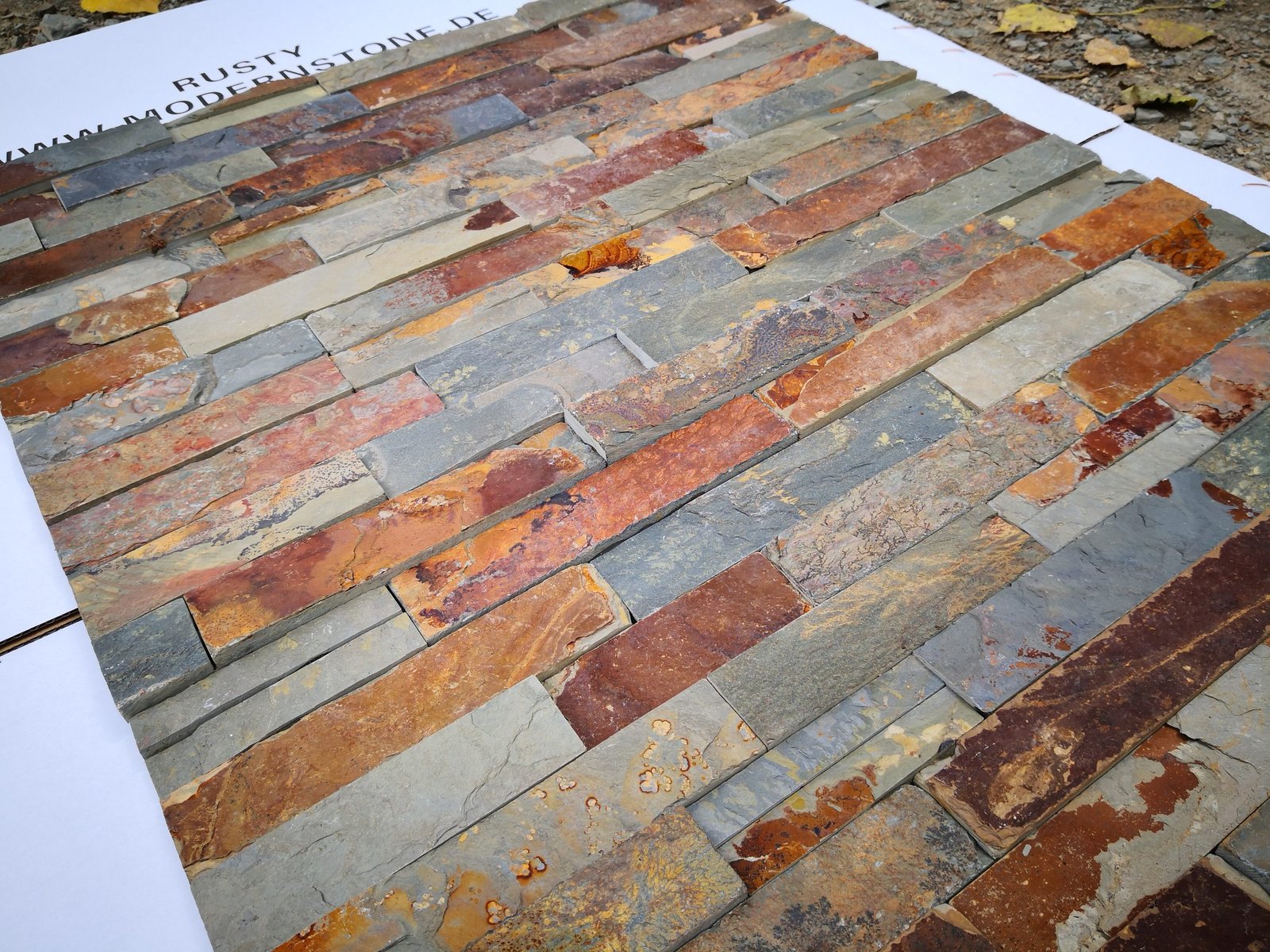
The panel format should follow the exposure. Stacked stone panels at 15x60cm or 15x55cm give exterior walls the depth of split-face texture with factory-blueprinted joints. Interlocking Z-panels at 20x55cm or 15.2x61cm suit tall elevations where panels rise faster than an installer can lay loose stone. Ultra-thin ledgestone at 36x10cm lights up accent bands and gables where linear texture reads best. Each format appears on exterior walls across freeze-thaw climates — the common denominator is the dense slate or quartzite face and a bond system that does not drink.
Let the Sealer Debate Stay Where It Belongs
Sealers get oversold in cold climates. A vapor-permeable sealer can reduce water ingress on porous stone, but dense slate and quartzite barely need one, and the wrong sealer traps moisture behind a film. The correct sequence is: verify low absorption first, then decide whether sealing adds value — not the reverse. Our cold-climate exterior veneer guide walks through the full specification sequence for freezing zones.
Questions to Ask Any Supplier
A test report is only useful if you know which question it answers. Run this checklist past any stone supplier, and let the answers separate a real quarry operation from a reseller quoting from a brochure.
- Which standard did the report follow? ASTM C666/C666M, ASTM C97/C97M, or EN 12371 — a report without a stated standard is a decoration.
- How many cycles did the panel complete? Look for 100 cycles or more; some suppliers quote 25-cycle screening tests as if they meant the same thing.
- Was the panel tested with its backing attached? Cement-backed and epoxy-bonded panels freeze differently; the assembly test is the honest one.
- Is the water absorption number sworn to a standard? ASTM C97/C97M gives you a number you can compare across suppliers; a vague “very low” is not data.
- Can you ship physical samples for my own lab? A factory confident in its freeze-thaw data sends samples in days, not weeks.
- Does the document trail cover the shipment, not just the marketing claim? The test report should match the quarry and batch you actually order.
These six questions cost nothing and they end most pointless negotiations. A supplier who cannot produce the standard, the cycle count, the assembly condition, and a physical sample is asking you to buy the freeze-thaw result on faith.
How We Test and Document at Top Stone Panels
Our starting position is material, not marketing: slate and quartzite quarried from our own mountain sources in Yixian, Hebei, are structurally dense, and that density is the native reason our panels tolerate -30°C to +50°C temperature swings. The production side protects that advantage. Nature gave us the freeze-thaw head start; the factory keeps it.
Three checkpoints do the keeping. Raw material selection at the quarry benches rejects fractured or weathered stone before cutting. In-production checks during cutting and assembly catch thickness drift while correction is cheap. Final pre-shipment inspection verifies the finished panels before they move to export packing — the same discipline detailed in our three-step quality-control walkthrough.
Because we cannot run an ASTM-accredited freeze-thaw chamber beside every production line, we do the next honest thing: we back the claim with evidence you can verify independently. Physical samples leave the factory in 1-3 days, so your lab can run the 100-cycle or ASTM C97/C97M test on the exact stone we will sea-freight. Pre-shipment inspection reports and video accompany every container, and the pre-shipment checklist documents exactly what we check at loading. The zero-breakage packing protocol — 3-5 layer reinforced cartons, fumigation-free pallets, steel strapping, and air-bag container bracing — makes sure the tested stone arrives intact enough to perform.
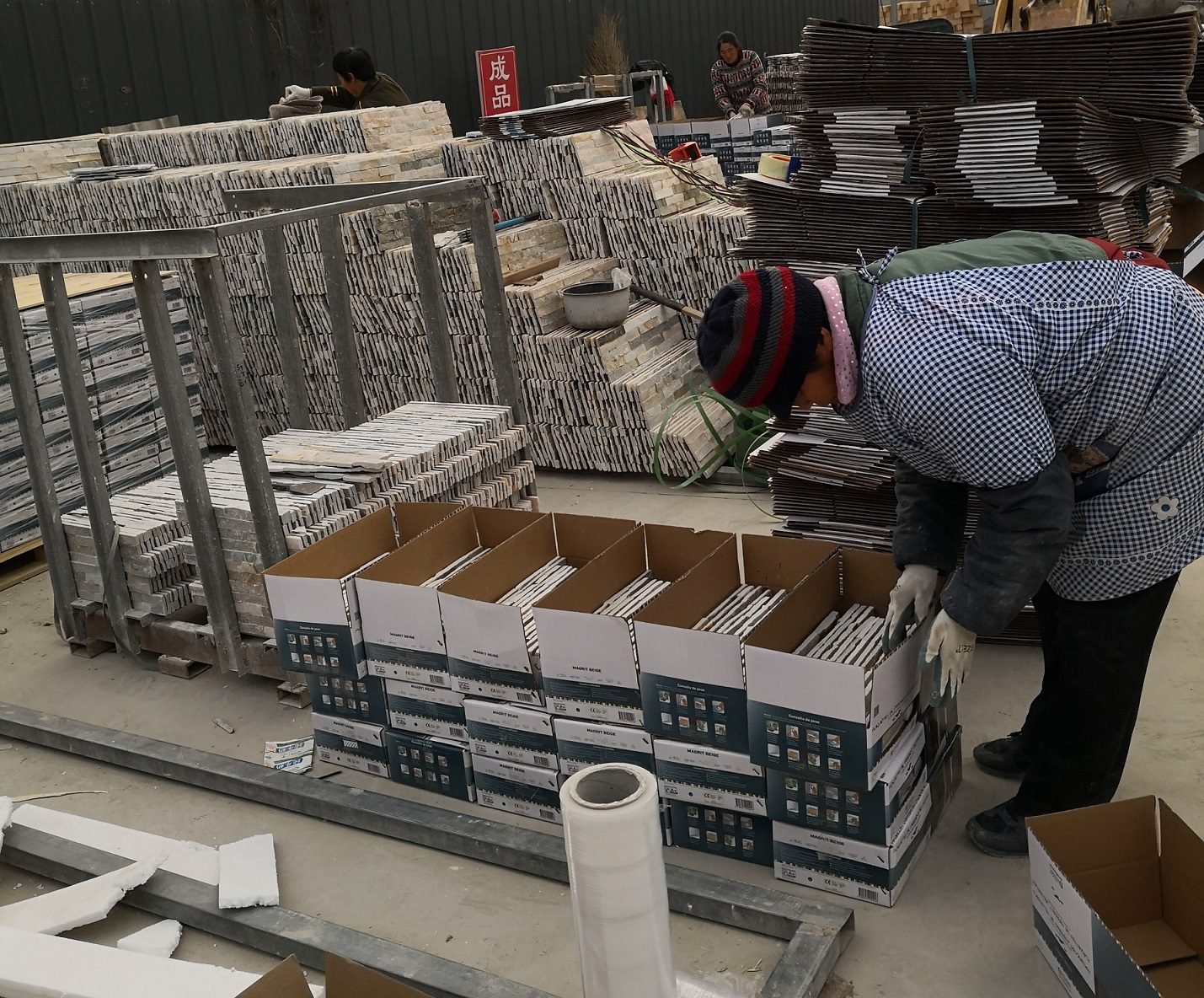
Request 1-3 day physical samples of dense slate or quartzite panels, run your own freeze-thaw or absorption check, and compare documented capacity of 80,000m² stacked / 60,000m² ledgestone / 50,000m² Z-panel per month.
The deeper freeze-thaw science — why density beats coatings, and how to read absorption data against your climate zone — lives in our freeze-thaw resistance guide. The sample evaluation checklist also turns the 1-3 day sample window into a fast decision. Both pages assume you plan to verify, not to hope.
How to Read a Freeze-Thaw Test Report
A test report settles nothing if nobody reads past the summary line. The four numbers that matter are the standard cited, the cycle count reached, the weight change across cycling, and the condition note at the end of the run. A report that lists a standard and a cycle count but no weight or condition data is a certificate for marketing, not for engineering.
Weight behaves like a lie detector. Panels that gain weight across cycles are absorbing water — usually through the backing or a porous edge. Panels that lose weight are shedding material. A healthy dense slate or quartzite panel holds its weight through all 100 cycles, and the condition note will confirm what your eyes should see on the sample: no spalling, no crack propagation along the bedding plane, no face delamination.
Strength retention is the number that survives an engineer’s review. Freeze-thaw tests often measure compressive or flexural strength before and after cycling; the pass story is a panel that still hits the pre-cycled strength values within the allowed reduction. If the supplier’s report only shows before-test strength and skips the after-test column, ask why the second measurement is missing.
The deeper reading system — which metrics to check per test type, and where the common omissions hide — is laid out in our stone panel test report walkthrough. Bring that checklist to your next submittal review and the report starts working for you instead of against you.
Frequently Asked Questions
What is anti-freeze testing for stone panels?
It is a lab procedure that repeatedly freezes and thaws water-saturated stone to see if it cracks, spalls, or loses strength. Dense rocks like slate and quartzite absorb little water, so they pass with fewer internal ice stresses than porous stones.
Which standards cover freeze-thaw testing for stone?
North American projects commonly use ASTM C666/C666M for rapid freeze-thaw resistance and ASTM C97/C97M for water absorption. European projects use EN 12371 to determine the frost resistance of natural stone.
Why are 100 freeze-thaw cycles the benchmark?
One hundred cycles is the working threshold many cold-climate specifications set. A saturated panel that survives 100 accelerated cycles without crack growth or weight loss demonstrates the durability profile of decades outdoors.
Do cement-backed panels test the same as loose stone?
No. Cement backing can wick water to the lamination plane, so the bonding layer becomes the weak point. Marine-grade epoxy bonds stay effectively waterproof and keep the freeze-thaw load on the dense natural face.
Can I test panels before placing a container order?
Yes. Top Stone Panels ships physical samples in 1-3 days so your lab can run absorption or freeze-thaw verification on the exact stone before committing to the full order.
Conclusion
Anti-freeze testing turns a winter-time gamble into a documented decision. The material that wins the chamber — dense slate and quartzite with low water absorption — is the same material that wins the third winter on a real north-facing wall, provided the bond system and backing play their part.
- Require a stated standard: ASTM C666/C666M, ASTM C97/C97M, or EN 12371 — never a report with no standard.
- Push for 100 freeze-thaw cycles on the assembly, not 25 on a bare stone coupon.
- Check water absorption before you discuss sealers; dense slate and quartzite rarely need them.
- Use the 1-3 day sample window to run your own lab verification before a container order.
Send samples to your lab, compare absorption numbers across suppliers, and let the chamber settle what the brochure cannot. That is the fast route to a facade that still looks right in the spring thaw.