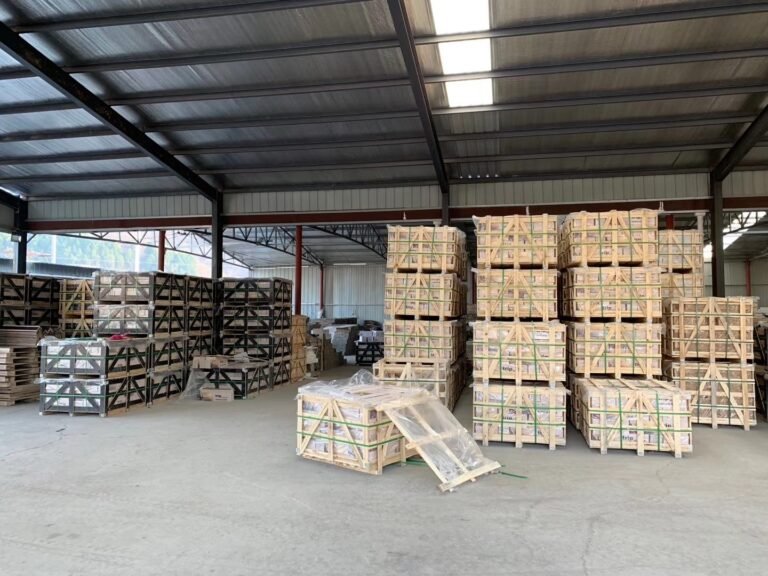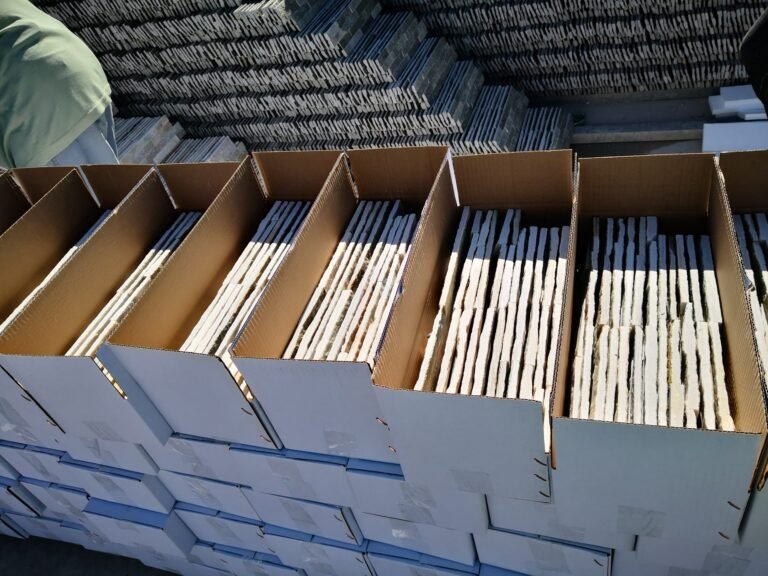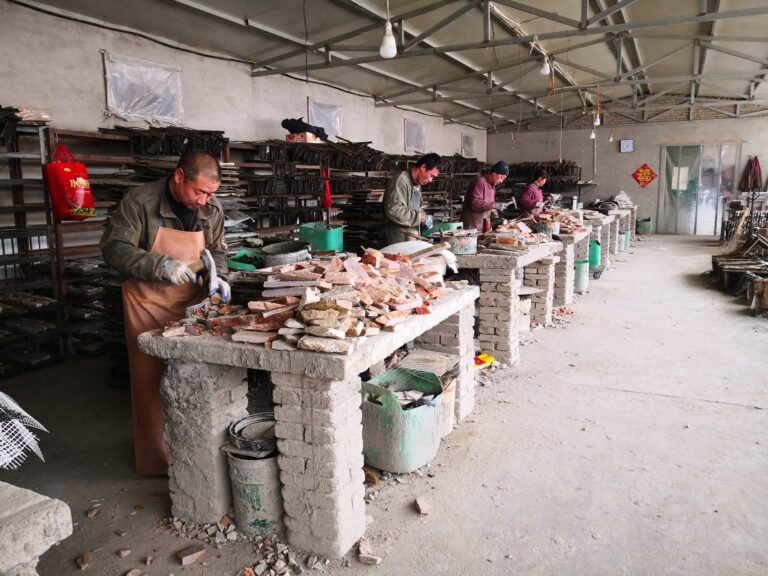
More than 220 containers leave this quarry town every year, and the buyers who keep coming back are not always the biggest or the first. They are the ones who learned the difference between sending an inquiry and running a relationship. The second form of buyer gets the better color selection, the honest schedule, and the factory’s attention when capacity gets tight in October.
This guide is written from the factory side of the table. Top Stone Panels has exported natural stone from Yixian, Hebei since 2005, and the habits below are the ones that separate importers who fade after one container from distributors who build a decade-long supply line.
- Factories evaluate buyers by query quality — a precise spec beats a slick presentation every time.
- 30% T/T deposit plus 70% against loading video is the trust curve that works on both sides.
- Physical samples in 1-3 days let you verify stone before the first container, not after.
- Chinese New Year (mid-February 2026) closes factories for 2-4 weeks; plan production before late January.
- Repeatable orders, off-peak placement, and on-time payment earn the pricing that brochures never show.
Why Relationships Move Faster Than Quotes
A quote is a snapshot; a relationship is a production schedule. When a factory quotes two comparable buyers the same price, the one with the relationship hears the caveats first — the vein running slightly darker this month, the pallet count that just changed, the filler order riding a container at reduced freight. Those details are where import margins actually live.
The economics are simple on our side too. A repeat buyer reduces every cost of sale: no cold pitching, no re-explaining the product, no payment anxiety. Factories price that reality into the schedule, not always into the invoice. A buyer who proves dependable across two containers has a different negotiation position than a stranger asking for a discount on his first.
Capacity is the invisible multiplier. With stacked stone at 80,000m² per month, ledgestone at 60,000m², and Z-panels at 50,000m², we can absorb spikes — but only for buyers the production planner recognizes. The relationship is what makes your order findable in the schedule.
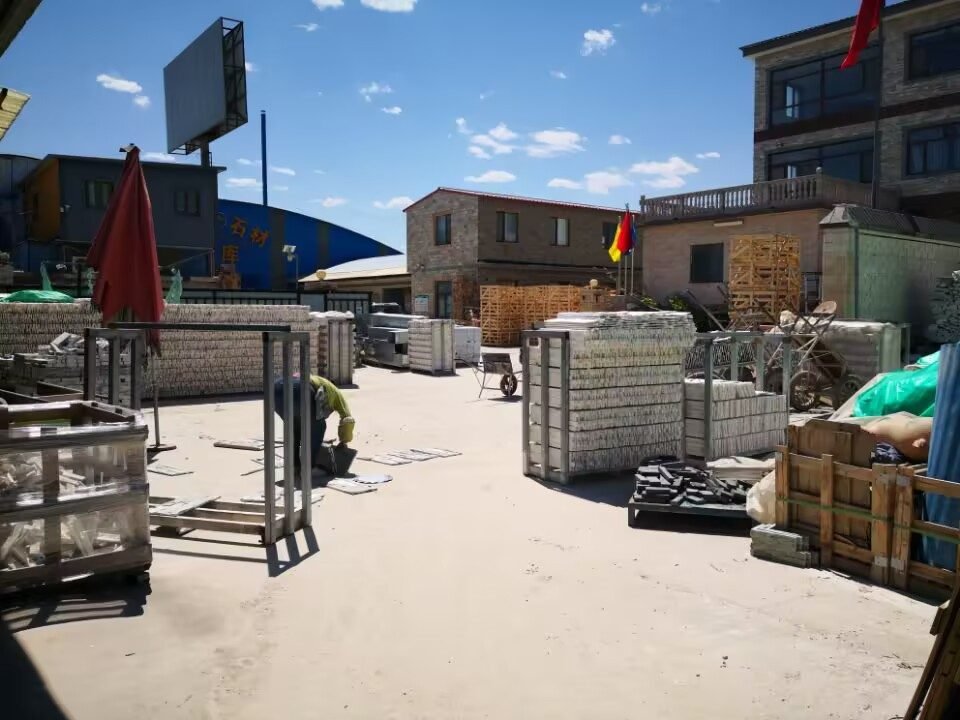
Start Before the First Order
Write the Inquiry Like an Engineer
Factories read queries the way banks read credit applications. A new buyer who names the stone type, the format, the square meterage, the edge treatment, and the port gets answered in hours. A buyer who writes “need stone, send catalog” gets a catalog and a loss of interest. First impressions land in the first message.
Use the 1-3 Day Sample Window
The fastest trust builder is a physical sample, and the honest factories make it cheap. Our samples leave the factory in 1-3 days so your team can check color, thickness, split-face texture, and backing against the order you actually plan. The sample evaluation checklist covers the ten checks that matter — face consistency, edge tolerance, absorption feel, and backing bond among them.
Give Color Mix a Real Brief
Natural stone varies by batch; that is the product, not a defect. Buyers who understand batch-specific vein selection order like professionals: they request panels from a single production batch for a project wall, and they specify the acceptable variation range in writing. Buyers who demand “exact color match to a photo, always” are asking for a manufactured product with natural material — and the relationship stalls at that contradiction.
Payment Terms Build the Trust Curve
The sourcing decision a new buyer makes first is almost always payment. Chinese stone exports in this sector commonly run on a 30% T/T deposit plus a 70% balance before shipment, and the honest factories attach proof to that final payment: container loading video, pallet-by-pallet photos, and the large-format layout the buyer confirms. You pay the balance against evidence, not against promises.
Why not 100% before production? Because a factory that demands full prepayment on a first order is either cash-starved or preparing a paper company. Why not 100% after delivery? Because a buyer who delays the balance past loading is a red flag on the other side. The 30/70 structure distributes the risk — the factory carries the cost of cutting stone that the deposit only partially covers, and you carry the risk of a package that is not finished until you have watched it be loaded.
Trade terms follow the same logic. FOB Xingang (Tianjin port) is the baseline most North American distributors start with — you control the freight and the timing. EXW works for buyers with established forwarders, CIF and DDP shift responsibility to the factory for freight and, in DDP’s case, customs. Pick the term that matches your logistics maturity; the relationship deepens fastest when neither side is managing the other’s job.
Communicate Like a Factory Partner
Put Everything in Writing
The factory handshake happens on WeChat; the contract happens in writing. Every agreed deviation — a corner profile, a carton label, a veneer size adjustment — belongs in the order confirmation, not in chat history. Written records are what make the pre-shipment inspection meaningful; the inspector checks against the document, not against someone’s memory.
Ask Questions That Show You Read
Smart buyers ask about the factory’s own numbers: monthly capacity, current lead time, which format the line is running this week, how many containers shipped last month. Those questions tell us the buyer reads the lead-time math, respects the schedule, and wants to plan. Vague buyers ask questions whose answers they already guessed and waste everyone’s evening.
Schedule Around Timezones, Not Through Them
North America and China live roughly 12-16 hours apart. Use that asymmetry: send your detailed questions in the evening so they read at the factory’s morning, and approve proofs during your morning so the factory’s afternoon picks them up. A single disciplined rhythm compresses a 20-25 working day production cycle more than any rush fee.
Plan Around Chinese New Year
Chinese New Year is the fixed point around which the whole supply chain turns. In 2026 the holiday falls in mid-February, and most factories — including ours — close for 2-4 weeks while workers travel home. Freight volumes also spike before the shutdown, so container space tightens and rates climb in the same window — a rhythm global logistics planners map every year, as any Chinese New Year logistics timeline shows.
The planning rule is arithmetic. Production runs about 20-25 working days for a standard order and 25-30 for a first order with custom cartons. Add the CNY closure on top, and an order placed in early February comfortably becomes a mid-March delivery problem. Place Q1 production before late January and the factory fits it into the pre-holiday schedule; wait until after the break and you join the longest queue of the year.
Strength in this relationship is seasonal intelligence. Buyers who ask about the holiday in October — “what does your CNY schedule do to my March delivery?” — get treated as professionals. Buyers who discover it in February get treated as expensive lessons.
The Factory Visit That Counts
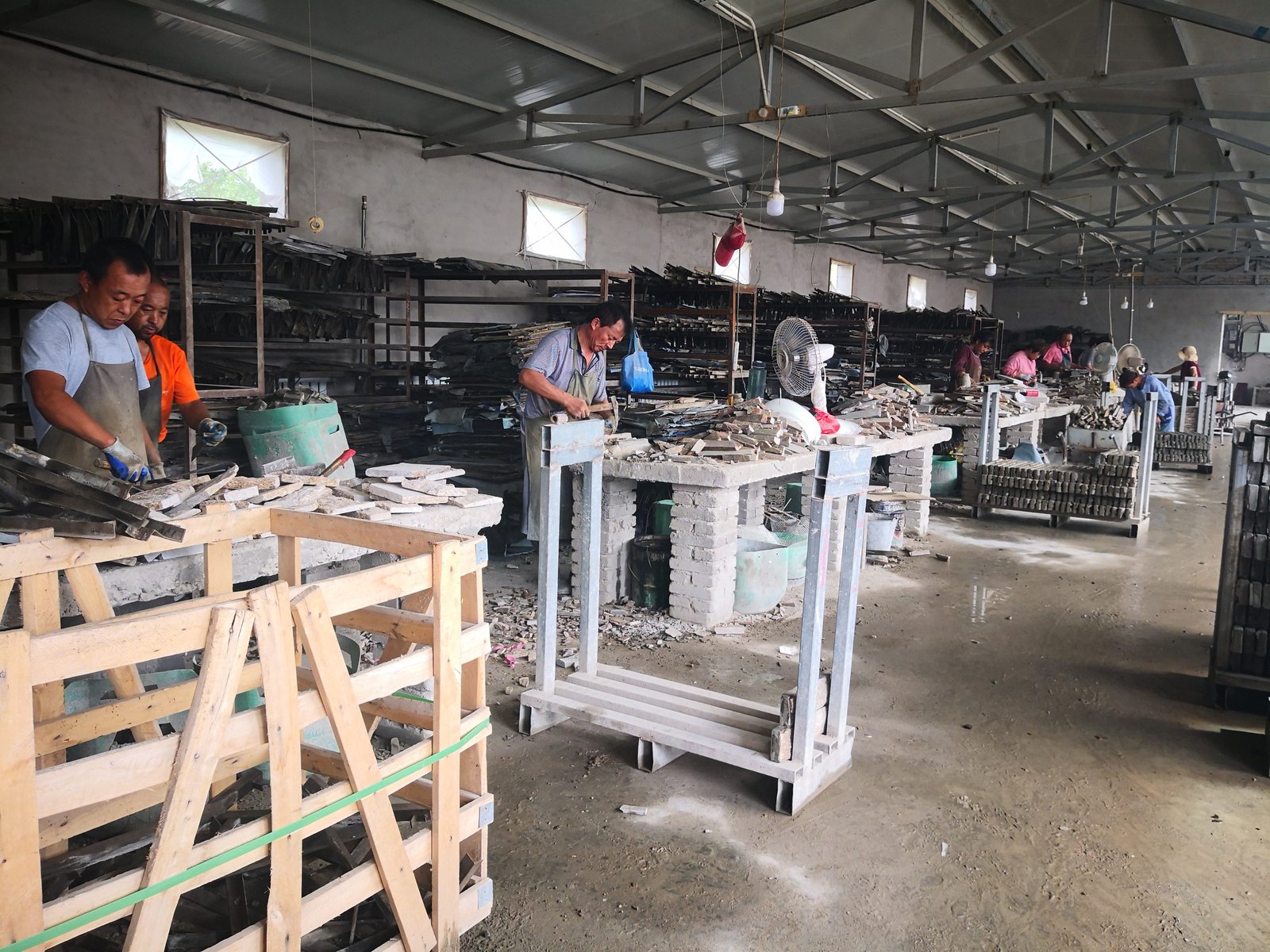
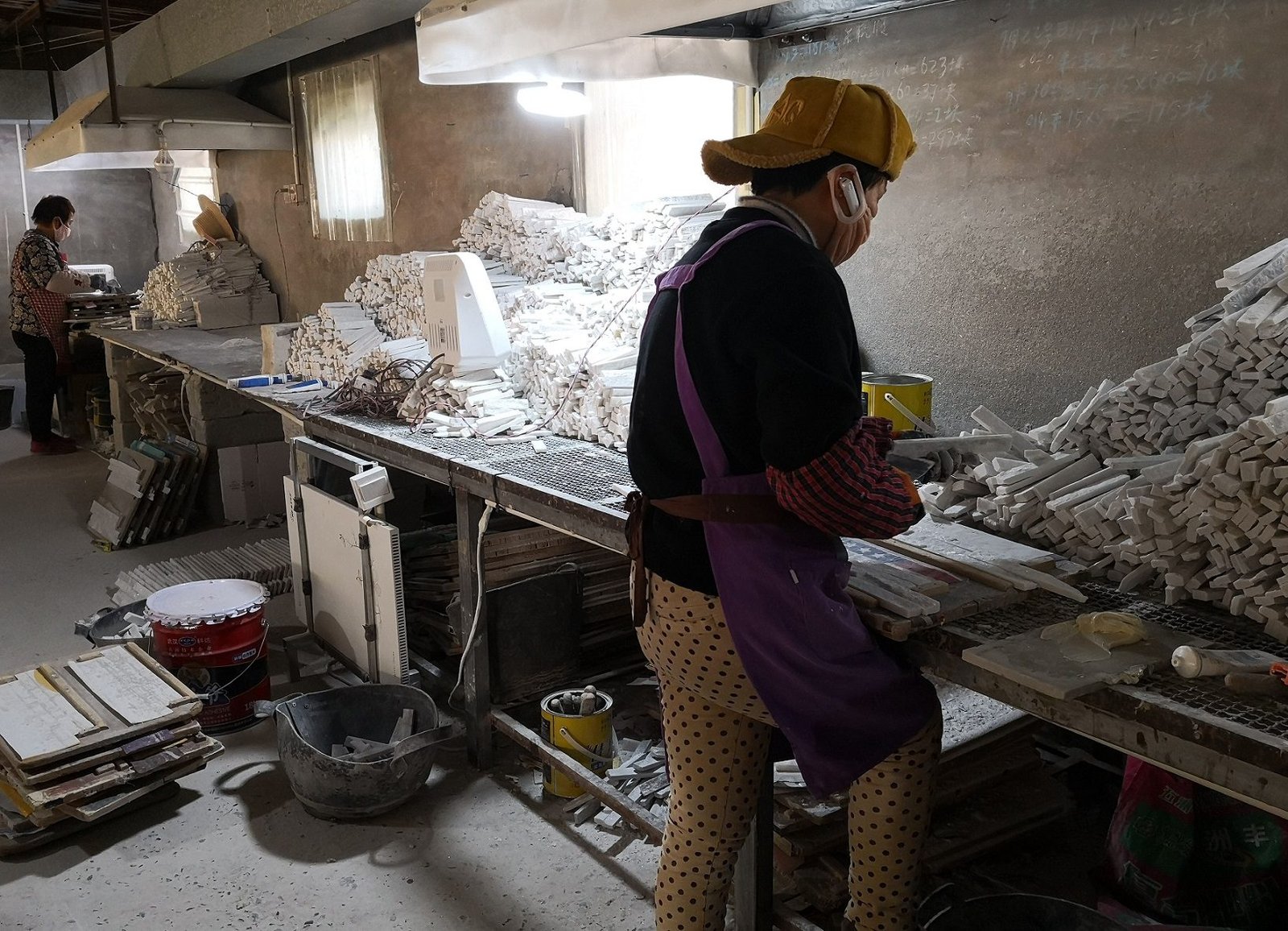
Not every import relationship needs a flight to China, but the buyers who visit once never see the factory the same way. A worthwhile visit checks three rooms: the quarry or raw-stone yard, the cutting and assembly line, and the packing dock. Skip the conference room, take the workshop.
At the production line, watch how the three-step quality process actually runs — raw material selection at the bench, in-production rechecking during cut and assembly, final pre-shipment inspection before packing. The three-step QC walkthrough explains what each check is supposed to catch, and seeing it live tells you whether the factory treats the process as a checklist or a religion.
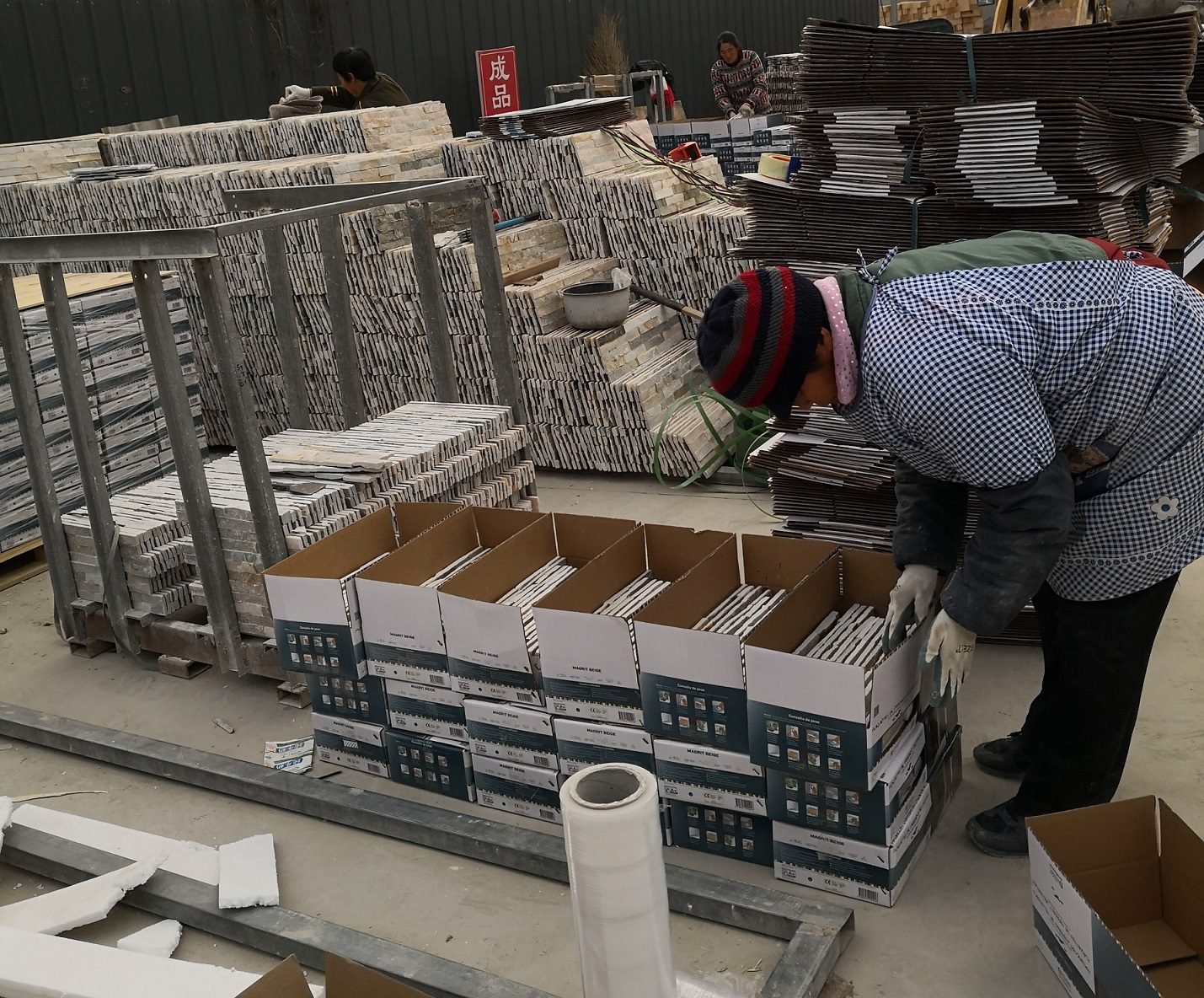
Ask about capacity in the room where the machines are. A factory that quotes 80,000m² per month of stacked stone should have the benches, the stock, and the line to show for it. The same logic applies to packing: the zero-breakage packing protocol — reinforced cartons, fumigation-free pallets, steel strapping, air-bag bracing — is either visible at the dock or it is a brochure promise. For buyers who cannot visit, the structured alternative is the factory audit checklist built for remote verification.
Verify From a Distance
No time for an in-person visit? A live video walkthrough settles most of the same questions. Ask the factory to walk the quarry stock, the cutting line, and the packing dock in one pass, so a first-time importer can weigh an 80,000m² per month capacity claim against the actual benches. Combine that with pre-shipment inspection video at loading, and your evidence chain for the first container is nearly as complete as a visit — at a fraction of the flight budget.
Audit the Paper Trail, Not Just the Charm
Relationships run on trust; shipments run on paper. The documents that keep a stone container moving through customs are no mystery: Certificate of Origin for tariff preference, ISPM 15 fumigation certificate for the wooden pallets and crates, and the packing list that matches the cargo. A factory that produces these without being asked is a factory that ships often.
Our documentation set includes all three, plus the pre-shipment inspection report and video that accompany every container. The customs clearance guide walks through how the documents connect end to end — and it is the guide we hand buyers who want to understand the process rather than just receive the products.
Test reports deserve the same scrutiny on first orders. Ask for the tests relevant to your climate and use — freeze-thaw data for cold zones, absorption numbers, fire performance for commercial walls — and run your own checks on the physical samples. A factory that sends samples in 1-3 days and documents every shipment is building a relationship on evidence, which is the only kind that survives a later disagreement.
Grow the Relationship With Data
Make the Second Order Boring
The second container is where relationships graduate. The first order carries discovery; the second should carry repetition — the same specification, the same packing, the same documents, delivered a little faster because nothing needs explaining. Factories quote repeat specs with fewer caveats and lower risk premiums.
Use Container Mixes Like a Pro
Distributors grow margins by mixing formats in a single 20GP container: stacked stone panels for one job, ledgestone for another, a column kit for a third. Mixed containers spread freight across the whole shipment and turn one container into a mini catalog of the categories your own customers scan weekly. The capacity story — 80,000m² stacked, 60,000 ledgestone, 50,000 Z-panel, 40,000 thin veneer, 30,000 flagstone per month — exists precisely so a distributor can order across lines without tripping minimums.
Feed the Factory Your Forecast
The strongest buyers share a quarterly forecast, even as a range. A factory that knows you will need 10 containers across the year schedules raw stone, reserves quarry blocks, and quotes accordingly. Forecasts are not contracts; they are the information that lets a factory behave like a partner instead of a seller.
Consolidate Before You Split
New buyers often split their first order across three factories to “test the field.” The math argues against it: three vendors each quote their lowest volume, none sees enough repeat volume to invest in your color sorting, and you triple your vetting paperwork. A better first-year move is one factory, two product lines, and a committed second order — then benchmark the alternative once you have baseline numbers to compare. Consolidation is what makes capacity discounts real.
Red Flags That Kill Partnerships
Two parties build a working relationship, and either side can burn it. These warning signs deserve attention on the invoice, the schedule, or the stone itself:
- A price 40-50% under the market — usually means thinner stone, weaker backing, skipped QC, or a padded freight invoice later.
- No physical samples before a container order — a factory that will not send samples in 1-3 days is not confident in its own product.
- No loading video or pre-shipment photos on request — the 70% balance should buy evidence, not trust.
- Documents requested at the last minute — missing COO or ISPM 15 paperwork changes a container into a warehouse fee.
- Schedules promised without a machine to back them — capacity claims must survive the workshop visit or the audit checklist.
None of these are personal. A factory that fails a red flag test this quarter can fix it next quarter — that is what a relationship is for. But a buyer who ignores the flags and pays anyway trains the factory to keep cutting corners with him.
Frequently Asked Questions
How do I start a relationship with a Chinese stone factory?
Open with a precise product inquiry — stone type, format, size, quantity, destination port — then request physical samples. Factories grade new buyers by query quality long before the first container.
What payment terms are normal for stone imports?
The common structure is 30% T/T deposit and 70% balance before shipment, released after you confirm loading video and photos. Full prepayment and large deposits both signal inexperience.
When should I avoid ordering from Chinese stone factories?
During the Chinese New Year shutdown — mid-February in 2026. Most factories close 2-4 weeks, so production and freight must be booked before late January to protect delivery dates.
How do I verify a factory without flying to China?
Request pre-shipment inspection photos and video, audit the documents — COO, ISPM 15, test reports — and run your own checks on physical samples shipped in 1-3 days.
Can I mix different stone formats in one container?
Yes. Common orders mix stacked stone, ledgestone, Z-panels, and column kits in a single 20GP container. Mixed loading spreads freight and turns each container into a distributor catalog.
Conclusion
Working relationships with Chinese stone factories are not built on banquets. They are built on the three documents you send before the first container and the three habits you repeat after it — precise specs, on-time payment evidence, and a schedule that respects the production calendar.
- Start with a precise inquiry and 1-3 day physical samples — the relationship begins before the order.
- Keep the 30/70 payment curve and pay against loading video and photos.
- Book Q1 production before late January; Chinese New Year closes factories for 2-4 weeks.
- Repeat a clean second order, share a quarterly forecast, and let the factory behave like a partner.
Send the specification, order the samples, and plan the calendar. The factory that answers your first precise inquiry is the one that will protect your third container’s schedule — and that is what a relationship is actually for.