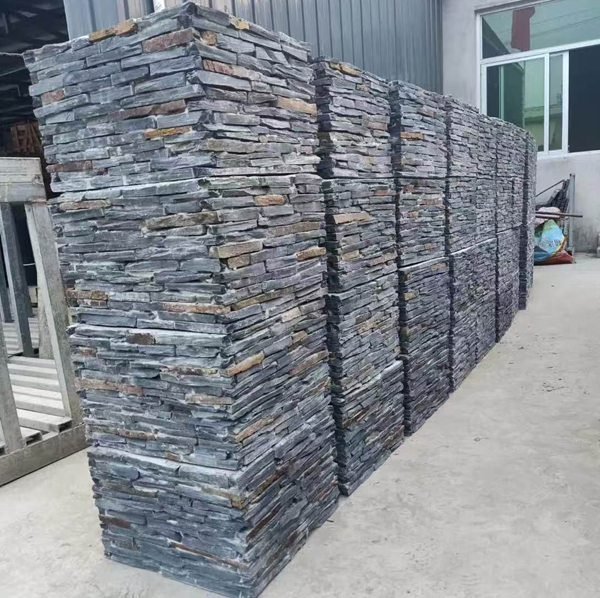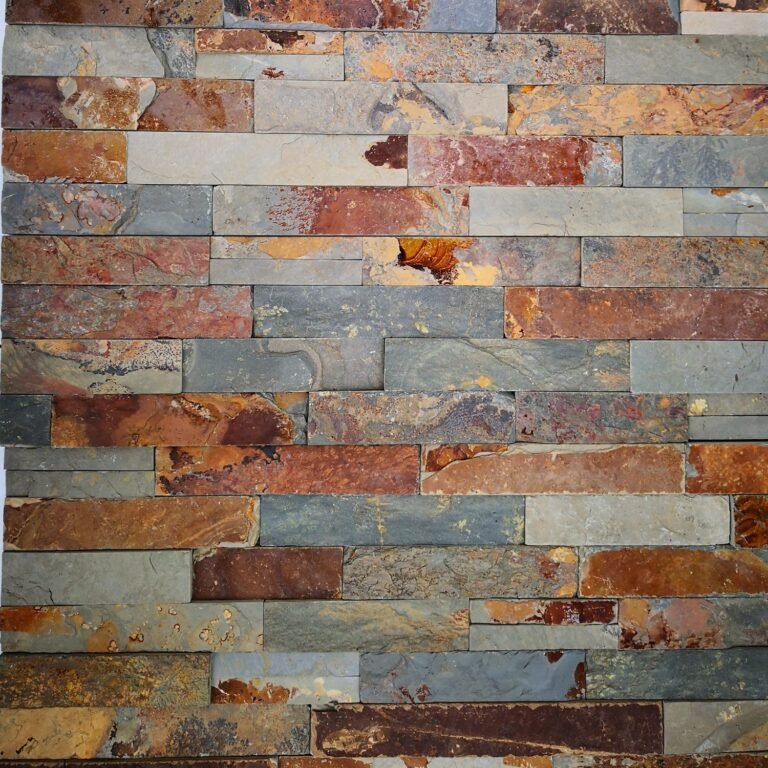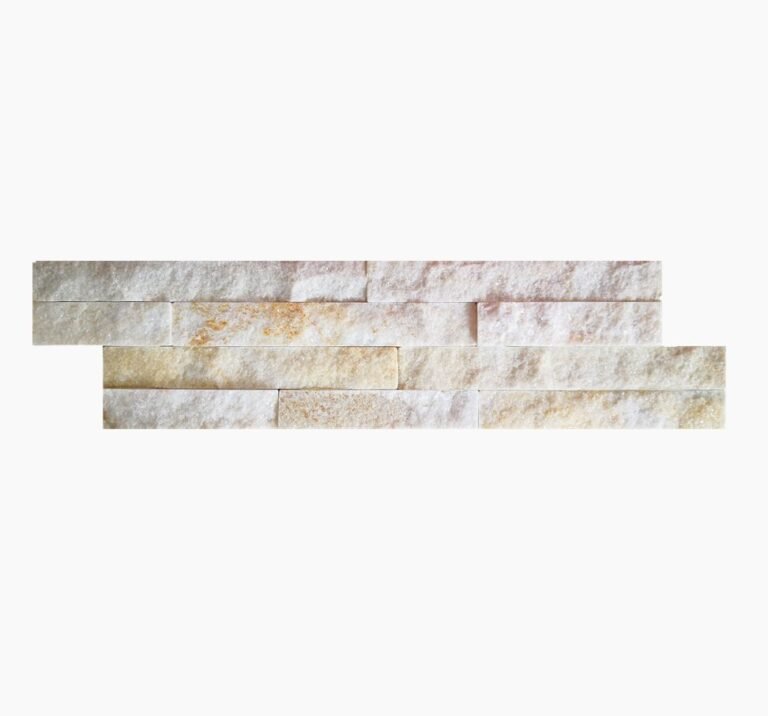
Grey stone veneer is the default choice in modern architecture for one simple reason: it reads as premium without shouting. Architects and facade contractors across North America and Europe keep returning to the same mineral palette — ice grey quartzite, grey slate, warm grey ledgestone. It pairs with wood, glass, brick, and stucco, and it still looks intentional ten years later. For a B2B buyer sourcing cladding by the container, grey is also the safest inventory bet a distributor can stock.
Top Stone Panels has quarried and cut natural stone in Hebei, China since 2005. We ship 220+ containers a year from slate and quartzite that split into exactly these grey families. This guide covers the grey materials we cut, the panel formats buyers actually specify, and the performance data that backs an exterior spec.
- Grey stone veneer is 100% natural: slate and quartzite split-face panels from 36x10cm mini ledgestone up to 15x60cm stacked panels.
- High-density quartzite and slate carry an A-class fire rating and survive -30°C to +50°C freeze-thaw cycling without spalling.
- Grey tones come from mineral content, not coatings, so UV exposure does not fade the color.
- Batch-specific vein selection and a 3-step factory QC protocol keep grey tone consistent across a 1x20GP container.
- Samples ship in 1-3 days; standard production runs 20-25 working days from order confirmation.
- L-corner pieces pre-cut by infrared CNC save roughly 50% of installation labor on corners.
Why Grey Stone Veneer Dominates Modern Facades
Grey is not a trend; it is the background color of contemporary architecture. Most premium facade projects since the mid-2010s use a neutral mineral skin: grey brick, grey panel, or natural grey stone. The mineral skin ends the oldest fight in facade design — how to look expensive at a distance while staying quiet up close. A grey stone wall does both. It has texture a flat painted wall lacks, and restraint a colored stone wall rarely has.
The practical case is just as strong for an architect. Grey cladding never has to be matched back to an existing color story. Order a warm grey ledgestone next to cedar, a cool ice-grey quartzite next to black window frames, or a multicolor grey slate next to white stucco, and the material cooperates. That flexibility is why distributors report grey as the fastest-moving SKU in a stone panel inventory, and why buyers who stock one neutral family usually choose grey first.
Grey also flatters what builders care about most: resale. Neutral mineral exteriors photograph well, age without the dated look of strong beige or rust tones, and let new owners restyle the landscaping without fighting the facade. For a builder renovating a house to sell, a grey stone accent wall is one of the few cladding choices with a measurable payoff at listing time.
Because grey is the top-specifier color, it is also the category with the widest material choice. Not every grey is the same stone. The next section separates the two workhorse materials behind grey stone veneer.
Grey Materials: Slate vs Quartzite
Two natural stones carry most grey veneer projects: slate and quartzite. Both split cleanly into thin panels, both come from the same Hebei quarry region, and both handle exterior conditions. They differ in density, surface life, and how their grey reads in person.
Slate is the classic grey. It splits along natural cleavage planes to give a slightly soft, layered face that reads as “stone wall” rather than “tile.” The same quarry block produces tones from pale blue-grey to near-charcoal. That range is why slate panels look natural rather than machine-made.
Quartzite is the engineering answer. It is denser and harder than slate, which gives it a tighter surface and higher resistance to abrasion and freeze-thaw stress. Our ice-grey and oyster quartzite ledgestones carry a subtle sparkle from quartz crystals that catch low-angle light — a finish that photographs well on curved walls and entry features.
| Property | Grey Slate | Grey Quartzite |
|---|---|---|
| Look | Layered, natural, blue-grey to charcoal | Tighter face with quartz sparkle |
| Density | High; classic building slate | Higher; very dense, low absorption |
| Freeze-thaw tolerance | Passes exterior cold-climate duty | Passes; denser pore structure |
| Common format | Stacked 15x60cm / 15x55cm panels | Mini ledgestone 36x10cm |
| Best for | Rustic-modern, textured feature walls | Clean, uniform modern facades |
Both materials meet the physical performance that exterior cladding demands. The density of slate and quartzite gives them the freeze-thaw resistance and temperature tolerance this site documents for cold-climate and coastal projects. For a full technical comparison of these two stones, our quartzite vs slate performance comparison covers the test-level differences.
Grey Color Families We Produce
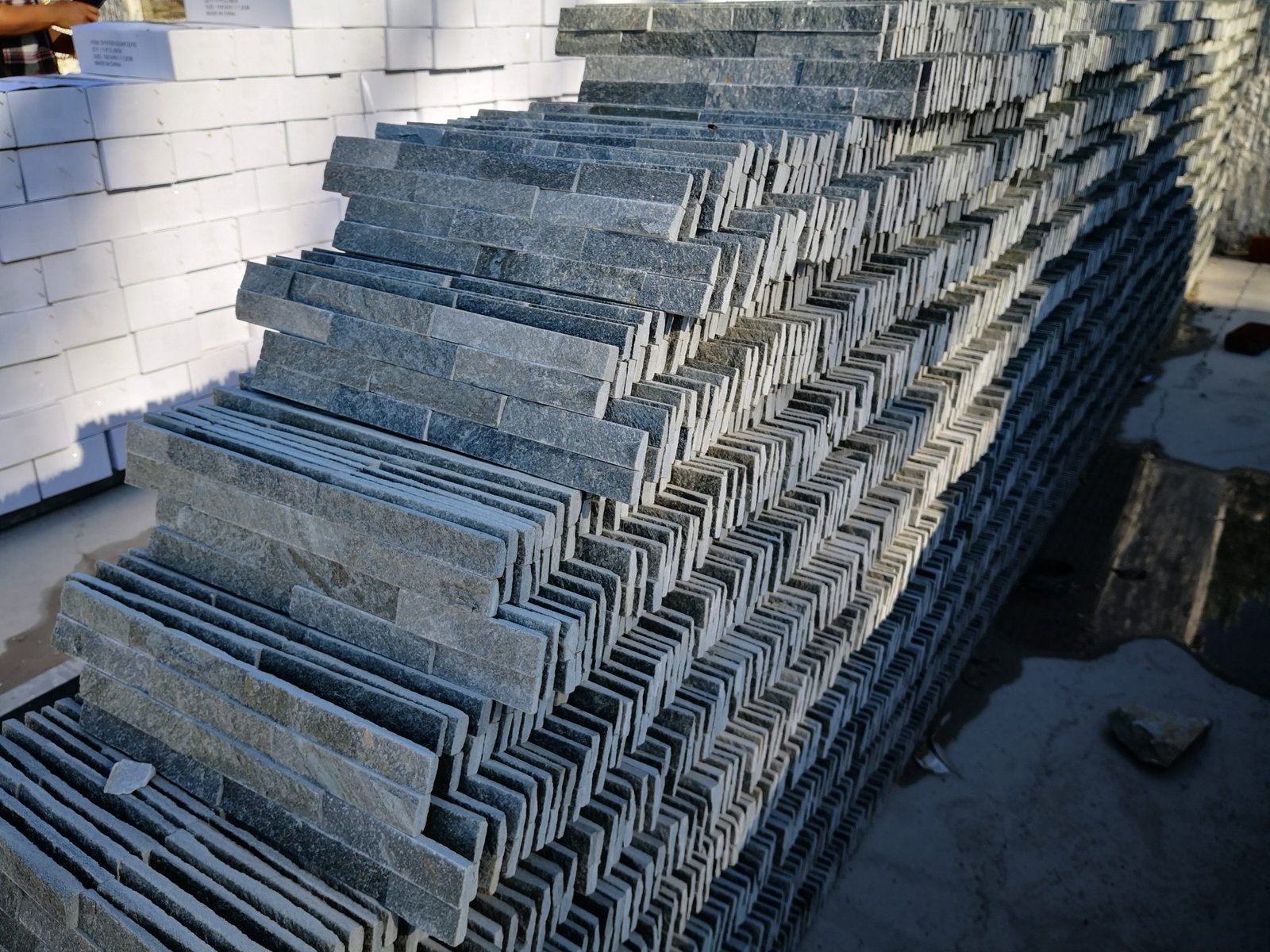
A grey order is really an order for a specific grey family, and the difference is visible on a full wall. The four families below cover the range most projects ask for.
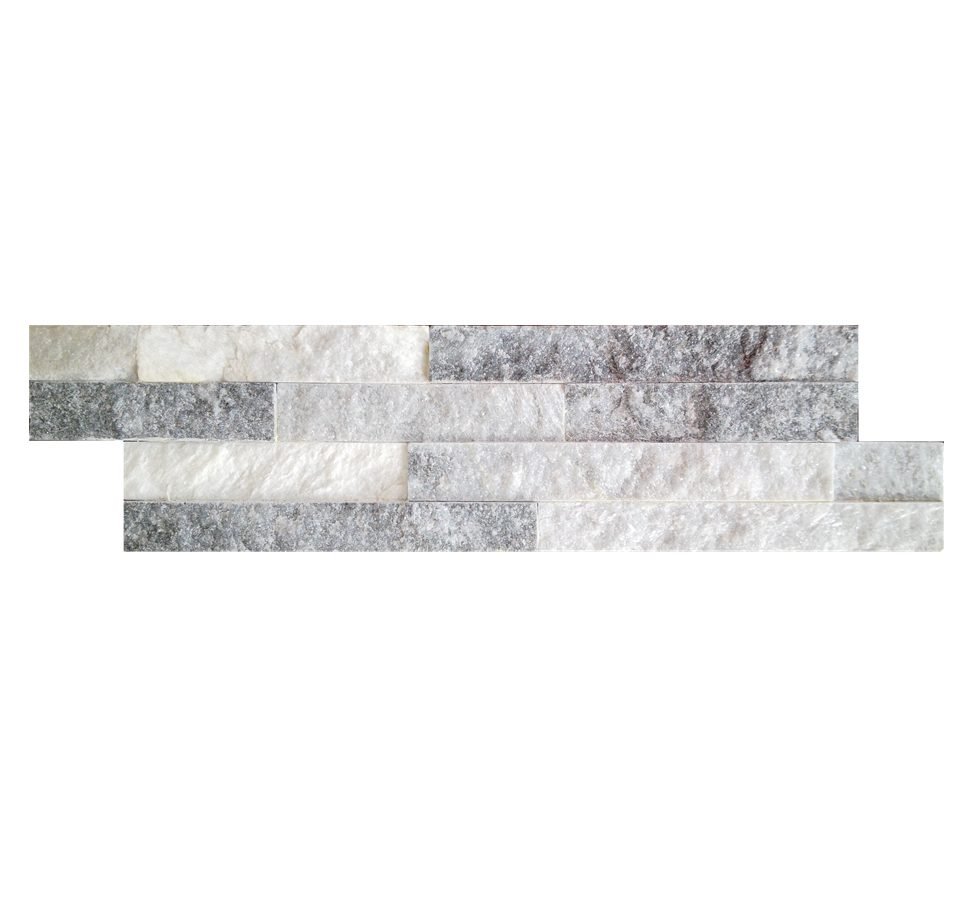
Sparkle Ice Grey quartzite. A cool, light grey with visible quartz flecks. This is the closest natural stone gets to a neutral “silver” wall, and it pairs with black window frames and dark roofs on modern spec houses.
Rotia Grey ledgestone. A mid-grey stacked-stone look with subtle multi-tone movement. In the 36x10cm mini-ledgestone format it reads as a contemporary linear wall rather than a rustic cliff face.
Oyster quartzite. A pale warm grey that sits between white and grey. Architects use it when they want the durability of quartzite without the coldness of cool grey, and it is a strong fit for Mediterranean and coastal facades.
Multicolor grey slate. A blend that includes blue-grey, warm grey, and near-black pieces from the same quarry vein. This is the gray family for rustic and country projects where variation is the point.
Tone consistency across a container comes from batch control, not luck. Our factory selects pieces from the same quarry vein for each order and re-checks color during production. The grey you approve on a sample panel is the grey that lands on the dock. Distributors who order grey now also ask about custom mixes — combining grey with black or warm-tone panels to blend a bespoke ratio for their market. That process is covered in our custom color mix guide.
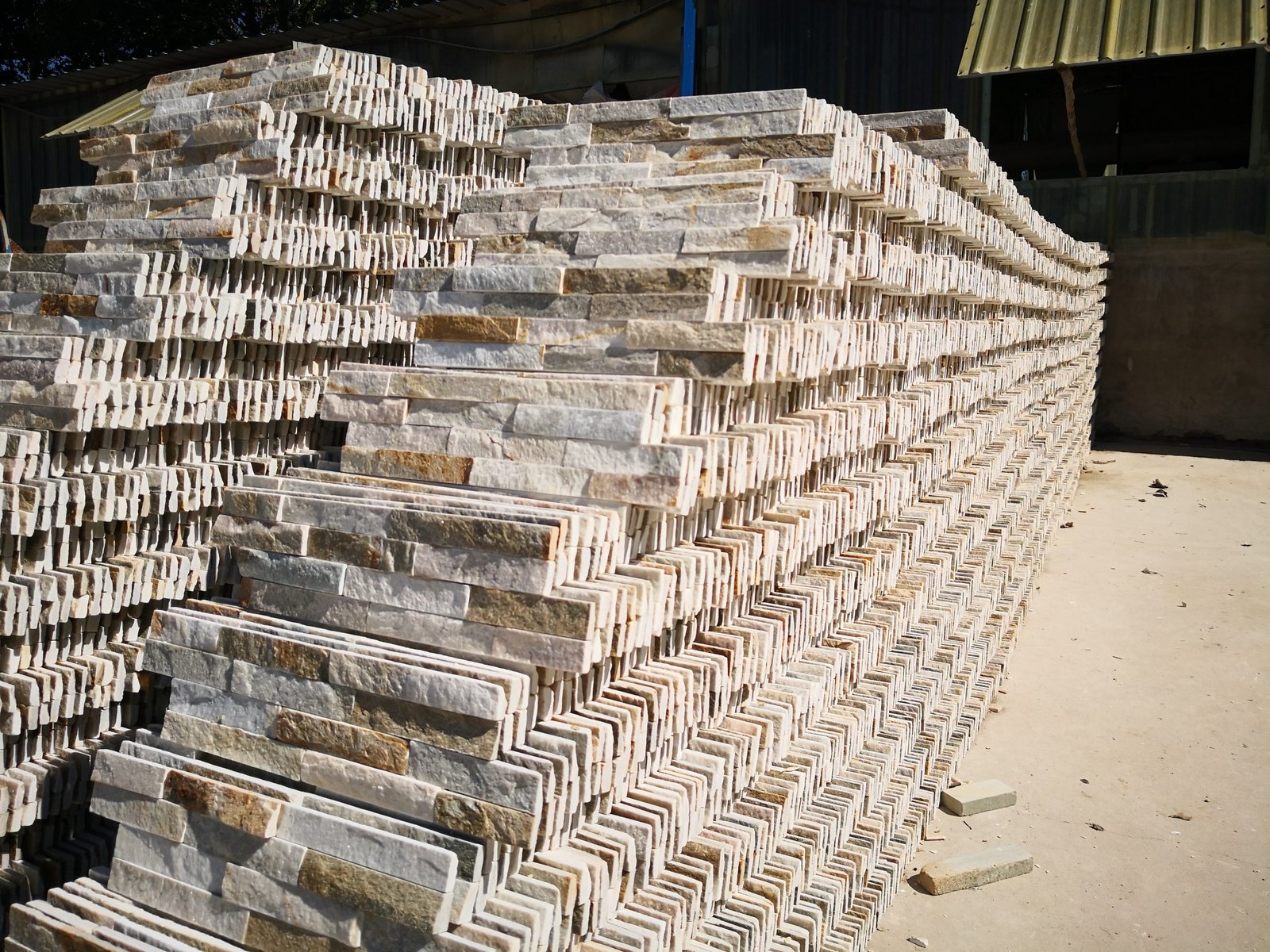
For the same color question in a broader palette, our stacked stone wall panel color guide covers every color family this factory cuts.
Panel Formats and Sizes
The same grey stone can look entirely different in a 36x10cm ledgestone panel versus a 15x60cm stacked panel. Format selection is a design decision as much as a product decision, and most grey projects choose one of four formats.
| Format | Panel size | Look | Typical use |
|---|---|---|---|
| Mini ledgestone | 36x10cm ultra-thin | Linear, clean, contemporary | Modern facades, entry walls |
| Stacked stone panel | 15x60cm / 15x55cm with L-corners | Rustic-modern texture | Feature walls, fireplaces, exteriors |
| Loose-split veneer | Random split-face pieces | Irregular, natural dry-stack | Rustic walls, garden features |
| Z-panel | 20x55cm / 15.2x61cm interlocking | Fast mechanical fit | Large facades, commercial speed |
Thickness matters for both weight and budget. Ultra-thin mini ledgestone panels cut to about 1.5cm applied depth keep dead load low enough for most framed walls. The thin stone veneer line covers projects that need the lightest possible skin.
Standard stacked panels carry more stone depth for texture. Our stone veneer thickness guide walks through the trade-off wall by wall.
Corner treatment is where installation cost lives. Instead of making masons cut and miter every corner on site, grey stacked stone panels and ledgestone ship with factory-cut L-corner pieces, and inside corners use one-piece L-shape corners. Pre-made corners are the difference between a two-day install and a one-day install, and the labor-saving effect is roughly 50% on corner work.
Where Grey Veneer Works Best
Grey stone veneer earns its place in five recurring applications, most of them exterior.
Full facade cladding. The strongest move for modern spec buildings is a grey ledgestone or stacked stone skin across the main facade plane. It gives a building a material identity without the maintenance of painted finishes.
Entry features and columns. Grey panels wrapped around entrance walls and pillar columns frame the front door and set the tone for the whole house. The dramatic version of this idea is the stone entrance design combinations guide from our design series.
Fireplace and feature walls. Interior grey stacked stone around a fireplace reads as calm rather than cold, and the same panels used outside keep the interior-exterior material story continuous.
Outdoor kitchens and garden walls. Grey veneer on outdoor kitchens, planters, and boundary walls ties hardscape to the house. The natural mineral surface handles weather, cooking heat, and cleaning better than painted render.
Coastal and pool projects. The salt-spray and humidity resistance of dense slate and quartzite makes grey a dependable choice near oceans and pools, where painted surfaces fail first.
In our shipped orders, the combination job works best: a grey facade with one contrasting element — a black entry, a cedar soffit, or a white mortar band. Grey carries the composition. The contrast piece gets the attention.
Performance Data for Exterior Walls
Grey stone veneer is specified for exteriors on the strength of four measured properties, not on looks.
Freeze-thaw and temperature range. High-density natural quartzite and slate withstand repeated freeze-thaw cycling across a -30°C to +50°C range. A dense mineral surface means water cannot penetrate, freeze, expand, and pop the face off — the failure mode that kills porous cladding in cold climates. Test methods such as ASTM C1026 freeze-thaw cycling and EN 13755 water absorption are the ones to ask a supplier for. The Natural Stone Institute publishes guidance on reading those test reports.
UV stability. Grey in quartzite and slate is mineral color, not a coating. Ultraviolet light degrades paint and stain; it does not change the color of rock. A grey stone wall installed in 2025 and a grey stone wall installed in 1995 are the same grey.
Fire behavior. With 100% natural stone and a cement, mesh, or marine-grade epoxy backing, grey veneer carries a natural A-class fire rating. That simplifies code compliance on commercial facades where combustible cladding triggers restrictions.
Salt-spray and humidity. Dense quartzite and slate resist salt damage in coastal states and high-humidity regions. This is the property that makes grey panels a reliable choice from Florida to Australia, where salt air eats painted and cementitious finishes over time.
Consistency is a manufacturing property, not a material property. Every order passes a 3-step factory QC protocol — raw material selection, in-process recheck, pre-shipment final check — so thickness tolerance and tone stay controlled. Panels are cut by infrared CNC diamond-blade machines, which hold tighter edges and reduce on-site cutting waste by roughly 20% compared with hand-cut random stone.
How to Specify Grey Stone Veneer
A clean specification letter prevents the most common grey-order failures: tone drift, wrong format, and missing corners. Use this checklist when you prepare an order.
- Material and family. State slate, quartzite, or a mix, and name the family (for example, sparkle ice grey vs rotia grey). “Grey” alone leaves tone open to interpretation.
- Format and dimensions. Specify panel size (36x10cm mini ledgestone, 15x60cm or 15x55cm stacked), thickness, and percentage of panels you need as L-corner or inside-corner pieces.
- Finish. Confirm split-face natural texture, no honed or polished surfaces, and accept the natural edge variation that makes stone look like stone.
- Tone range. Request a physical sample and authorize the order against it. Samples from Top Stone Panels ship in 1-3 days for lab and wall testing.
- Quantity and MOQ. Minimum order is one 20GP container. Coverage per container varies with panel density, thickness, and format, so confirm the exact m² figure with the factory before you budget.
- Production timeline. Standard production runs 20-25 working days; first orders with custom carton printing run 25-30 days. Plan your container booking around those dates.
- Payment and terms. Terms are 30% T/T deposit and 70% before loading, with the balance settled after you review loading video and high-resolution layout photos. Shipping works FOB Xingang, EXW, CIF, or DDP.
- Documentation. Ask for the certificate of origin, ISPM 15 fumigation certificate, and pre-shipment inspection report video, all of which we provide with each shipment.
Need grey stone veneer in your next container?
Choose from sparkle ice grey quartzite, rotia grey ledgestone, and grey slate stacked panels. Samples in 1-3 days, production in 20-25 working days, MOQ one 20GP container.
Natural split-face | A-class fire rating | -30°C to +50°C | L-corner kits
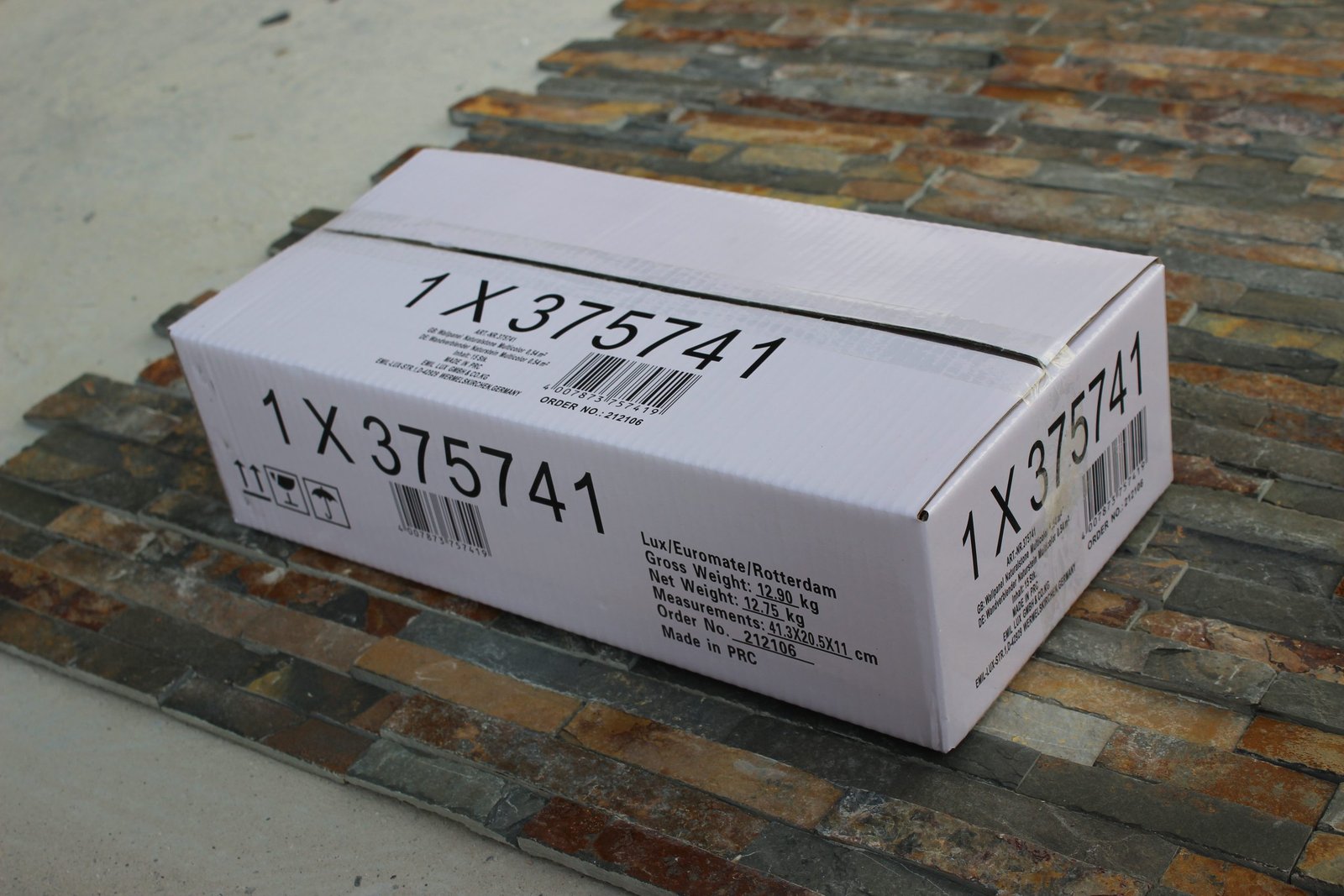
Packaging is the last specification line and the one buyers forget. Grey panels arrive in the zero-breakage protocol: 3-5 layer reinforced cartons, fumigation-free plywood pallets, 4-6 steel straps, and industrial air bags inside the container. Breakage claims eat margin fast, so insist on the same standard in your order.
Frequently Asked Questions
Is grey stone veneer a natural material?
Yes. Grey stone veneer is split from natural slate or quartzite and sawn into thin panels. The grey tone you see is mineral color inside the stone, not a coating applied to a manufactured base.
Does grey stone veneer fade in the sun?
No. Quartzite and slate get their grey from mineral content, so UV exposure does not lighten or yellow the face. This is the main durability advantage of natural stone over painted or manufactured alternatives.
What is the difference between grey slate and grey quartzite veneer?
Grey slate splits into layered, blue-grey to charcoal faces and reads as a rustic-modern texture. Grey quartzite is denser, harder, and carries a subtle sparkle, so it is the cleaner, more uniform choice for modern facades.
Can grey stone veneer go on exterior walls in cold climates?
Yes. High-density slate and quartzite withstand freeze-thaw cycling across -30°C to +50°C, and pre-cut L-corner panels make exterior installation faster. Ask your supplier for ASTM C1026 freeze-thaw test data on the exact lot.
How much does grey stone veneer cost?
FOB pricing depends on material, format, thickness, and quantity. Mini ledgestone panels generally price below heavier stacked panels in the same material. Request physical samples and a current FOB quote for your port to budget accurately.
Can I mix grey with other stone colors in one order?
Yes. Custom color mix orders blend grey with black, warm-tone, or multicolor panels in a ratio you specify, with batch-specific vein selection keeping the blend consistent across the container.
Conclusion
Grey stone veneer earns its place in a distributor’s catalog and an architect’s spec sheet for the same reason: it is the neutral color family that still has material substance. Choose the stone first — slate for texture, quartzite for a clean sparkle — then lock the format, the tone range, and the corner kit before you order.
- Grey veneer comes in 36x10cm mini ledgestone and 15x60cm / 15x55cm stacked formats in slate, quartzite, and custom mixes.
- High-density natural stone carries an A-class fire rating, UV-stable mineral color, and -30°C to +50°C freeze-thaw tolerance.
- MOQ is one 20GP container; production runs 20-25 working days and samples ship in 1-3 days.
- Batch-specific vein selection and a 3-step QC protocol keep grey consistent from sample to container.
Start with physical samples before you commit a container to one grey. Once you see sparkle ice grey quartzite next to rotia grey ledgestone in daylight, the spec writes itself. Our team can send both to your lab within 1-3 days.