You have spent years building a customer list, and every supplier invoice shows someone else’s name on the box. That is the quiet pain behind private label stone panels: the product leaves China with your logo on the carton instead of a factory’s, and the margin that used to belong to a branded manufacturer starts landing in your ledger. Distributors who import natural stone cladding under their own brand stop renting shelf credibility and start owning it.
The switch is not free. Private label means you control the branding, you own the packaging design, and you carry the quality promise. This guide covers what a private label stone program actually involves — branding options, packaging, the OEM process, MOQ and lead times, marketing support worth asking for, and the risks that sink distributors who skip the planning. The factory reference throughout is Top Stone Panels, a direct-from-quarry producer in Yixian, Hebei that has shipped 220+ containers a year for 18+ years and operates a private label program for distributors across Europe and North America.
Key Takeaways
- Private label turns a distributor from a reseller into a brand owner, with margins and customer loyalty built into the product itself.
- Branding runs through logo cartons, printed labels, pallet marks, inserts, and branded documentation — each adds one production step.
- MOQ is one 20GP container; production runs 20-25 working days, and a first order with custom cartons runs about 25-30 days.
- Samples ship in 1-3 days, and payment is typically 30% deposit with 70% before shipment after loading video confirmation.
- Three-step QC, pre-shipment sampling video, and documented color control protect your brand once it goes on the carton.
- Exclusivity, color consistency, and package-delivered condition need to be written into the agreement, not assumed.
Why Distributors Build Private Label Stone Programs
Buying branded cladding and reselling it caps your upside. The manufacturer owns the name customers remember, so your staff sell the product, your warehouse stores it, and your installer relationships feed value back to someone else’s trademark. Private label flips that structure. The name on the wall of a completed project is yours, which means the next inquiry about that facade comes to you, not to the factory.
Margins tell the same story. A distributor who imports unbranded panels competes on price against every other importer of the same material. A distributor who owns the local brand for a specific color mix or panel format competes on identity; the same stone carries a name that contractors learn to ask for. That identity compound effect is why established distributors treat private label as a strategic project, not a packaging tweak.
When it makes sense and when it does not
Private label pays off when you sell recurring volumes, when your market recognizes you as a supplier rather than a warehouse, and when you can forecast a container at least a month ahead. It is a poor fit for one-off landed deals. If every order is a spot purchase at the lowest FOB price, branded cartons only raise your cost per box. Our guide to starting a stone cladding distribution business helps you judge which stage you are in.
What Private Label Stone Panels Actually Means
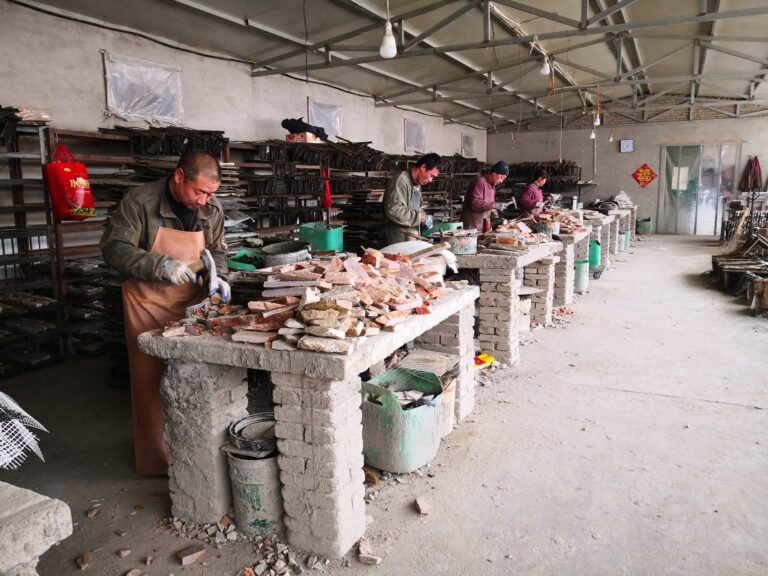
Private label stone, in the export trade, means a factory produces natural stone cladding to your commercial specification and ships it under your brand. Your logo goes on the carton, the labels, and the marketing. The factory handles the quarry, cutting, assembly, packing, and export documentation. You handle the selling and the brand promise. The arrangement overlaps with OEM, and in practice the two labels describe the same relationship — the buyer specifies, the factory executes, the buyer’s name leads.
White label is often used as a synonym, with a shade of difference: a pure white label program usually implies the factory already runs a standard product and simply strips its own logo off. Private label implies more, and it should include at least some of your own specification — a specific color blend, panel size, corner profile program, or packaging design. The more specification you bring, the harder the product is for a competitor to copy and the stronger your claim to the market.
Top Stone Panels supports the full range: standard stacked stone panels, thin stone veneer, interlocking z-panels, and ultra-thin ledgestone can all carry your program. The practical starting point is a single hero line you can forecast, not a full catalog on day one.
Branding Options: Logo, Cartons, and Pallet Marks
Brand visibility on a stone container has five layers, and each one is a separate decision with its own production step. Most distributors start at the middle and add layers as volume grows.
| Branding layer | What it looks like | Adds to program |
|---|---|---|
| Carton printing | Your logo and color scheme printed on outer cartons | First visible brand impression at delivery |
| Product labels | Stickers on each panel or bundle with brand and spec | Traceability on site and in your inventory |
| Pallet marks | Stenciled or printed marks on plywood pallets | Warehouse and freight visibility |
| Inserts | Installation card or warranty card inside cartons | Direct link from product to your installer channel |
| Documentation | Branded COO, inspection reports, and spec sheets | Official channel your procurement team can trust |
Strike the balance between brand and cost. Every printed layer adds a design-approval cycle and a small per-unit cost, so the winning programs start with carton printing plus product labels, then add inserts once contractor feedback shows the channel is working. Your supplier should send a packaging mockup before the first production run; if they send a photo of a generic carton with your logo pasted on, push for a real layout file.
Custom Packaging That Survives the Container
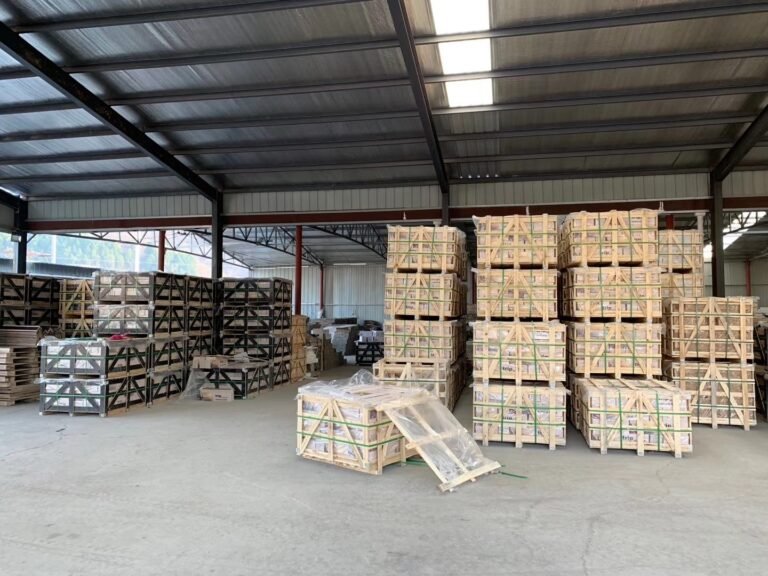
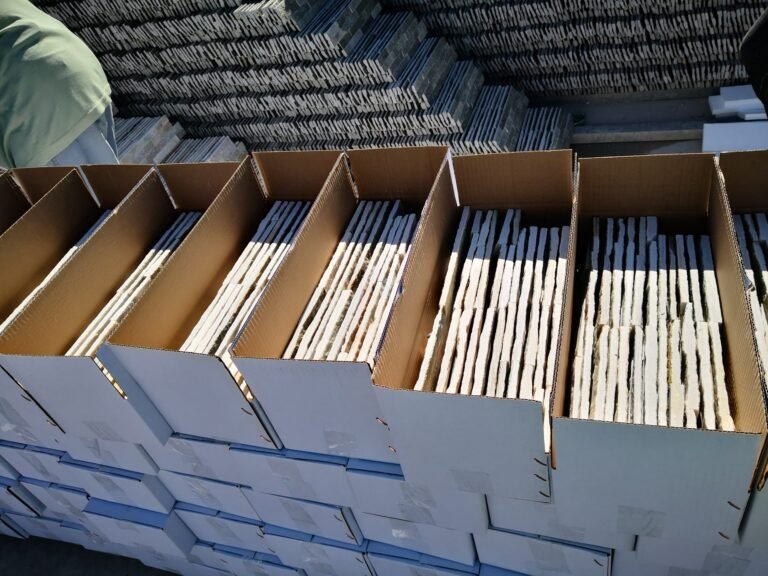
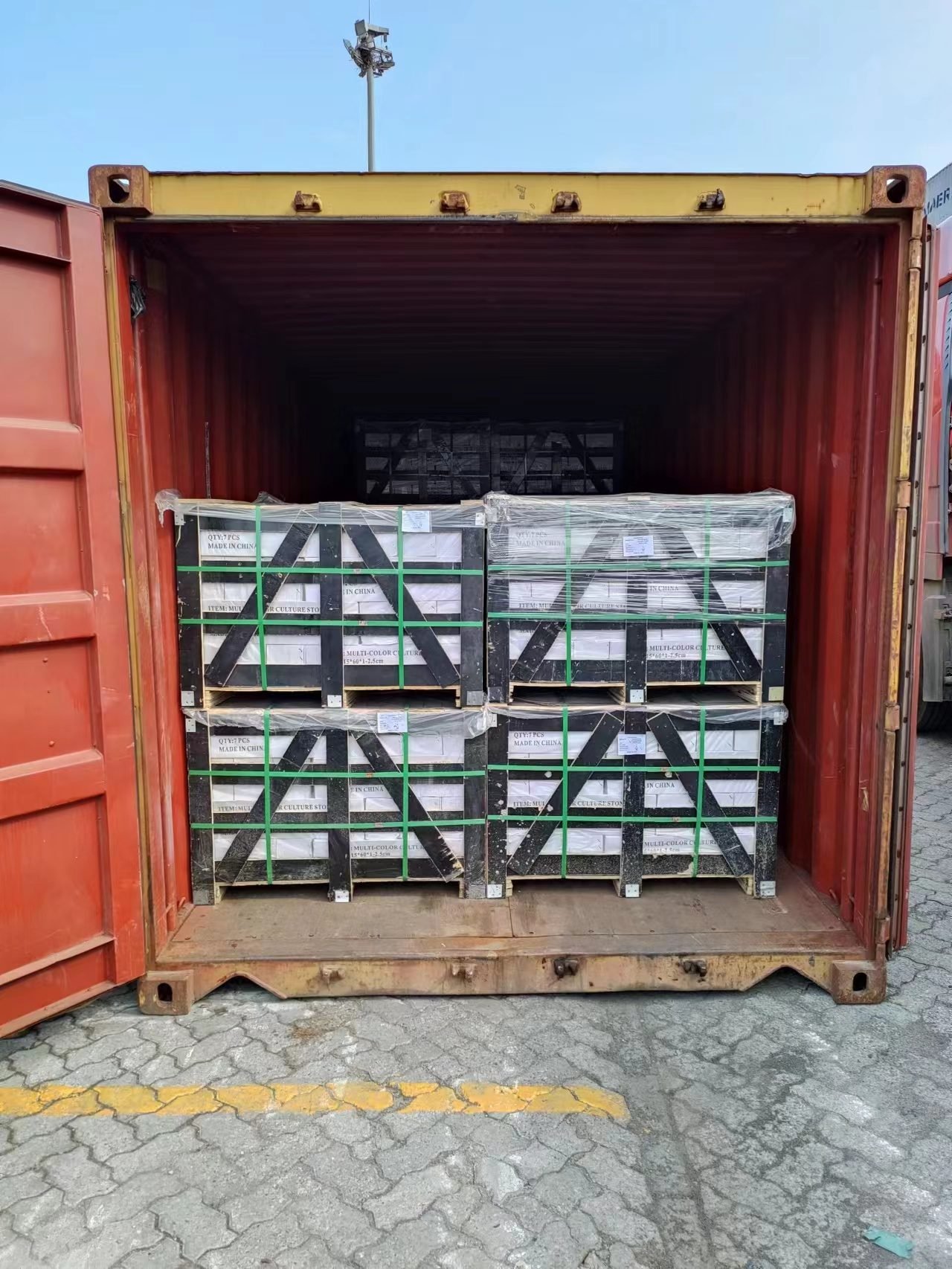
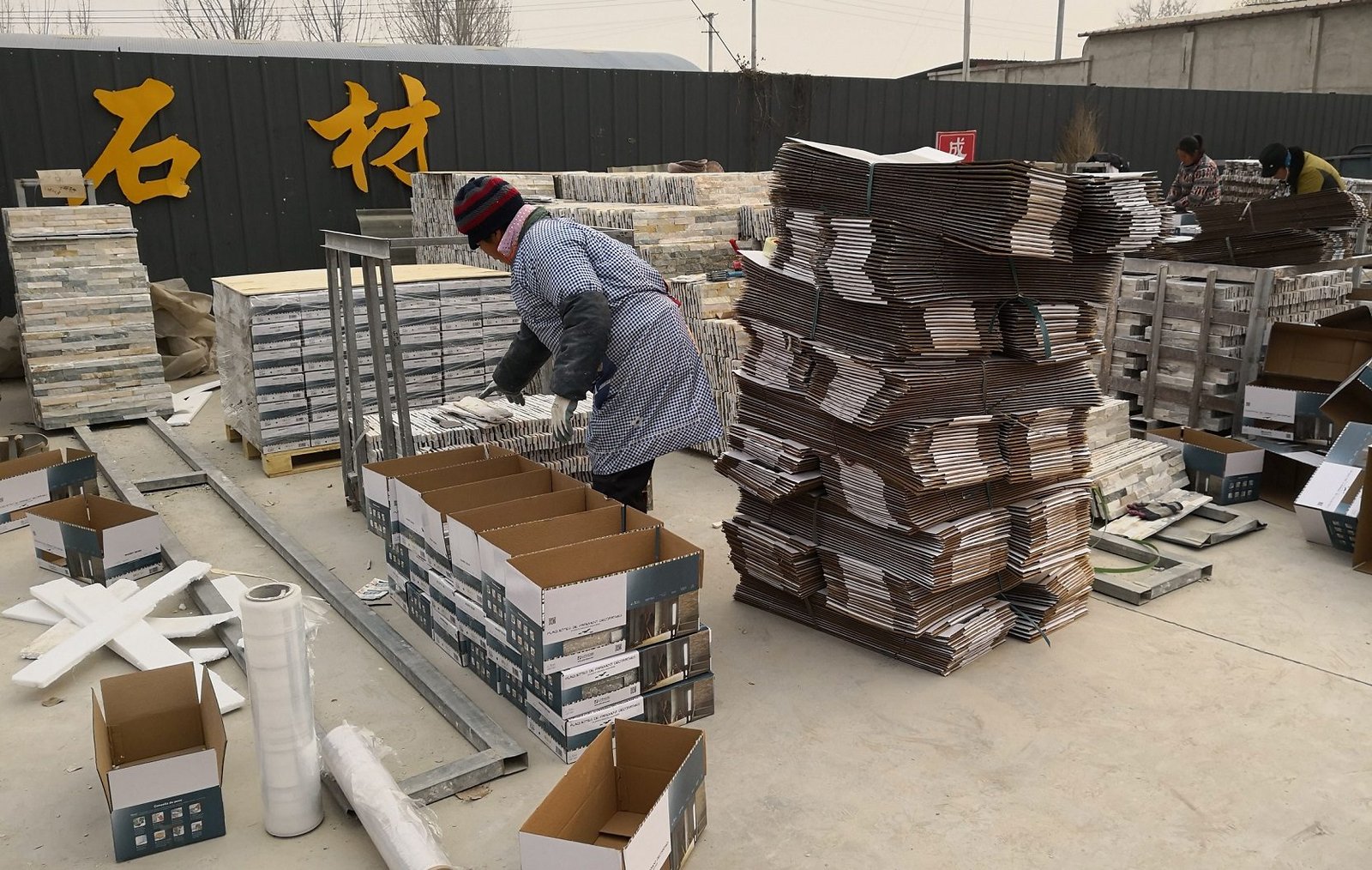
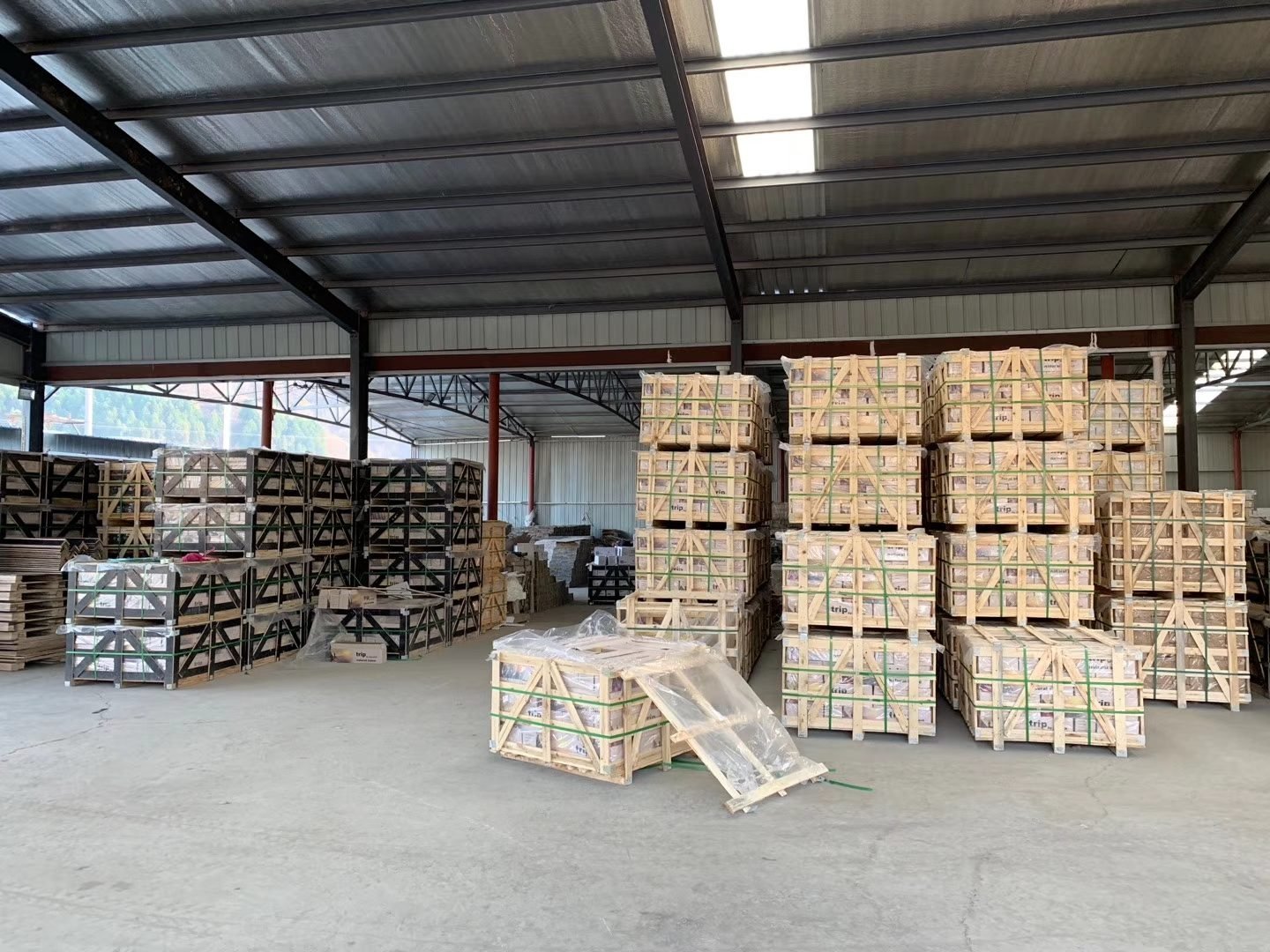
A beautiful branded carton that arrives crushed is a brand disaster, not a brand asset. Stone is heavy and stacked stone panels move inside the box during transit, so private label packaging must do two jobs: carry your logo and protect the product. The packaging protocol at Top Stone Panels is built for export — 3-5 layer reinforced corrugated cartons, fumigation-free plywood pallets, 4-6 high-tensile steel straps, and industrial airbags filling the container gaps. The branded layer sits on top of that protection, never instead of it.
Custom carton printing also changes your logistics math. A first order with custom cartons runs about 25-30 working days versus 20-25 for an unbranded run, because packaging design becomes a real production step. Ordering the packaging program once and reusing the artwork across future containers keeps that extra time on the first order only. If your existing supplier quotes full lead time for printed cartons on every order, that is a signal they have not standardized their private label workflow.
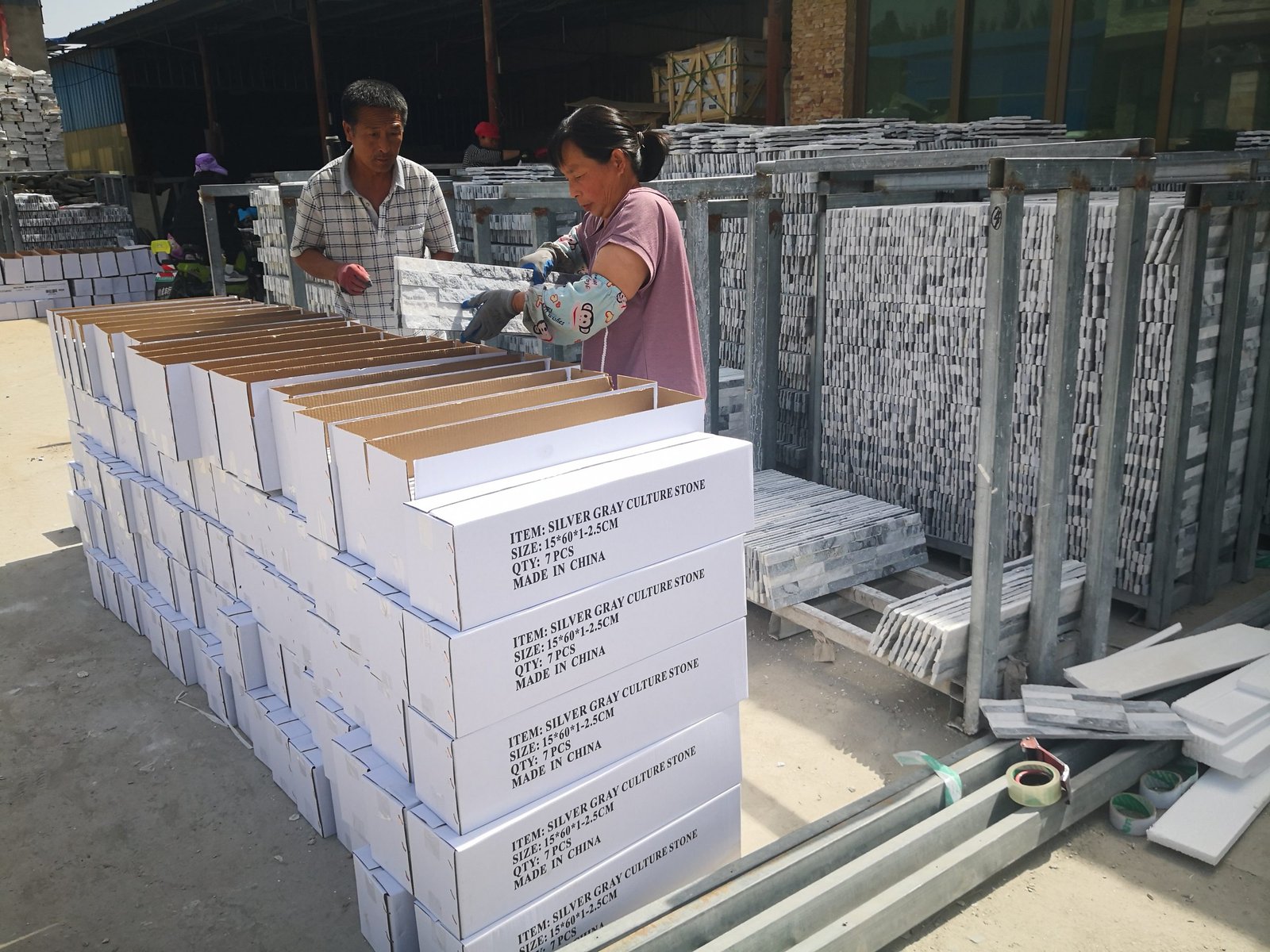
The branded layer sits on top of the export packing, but the protection does the heavy lifting. A container loaded with reinforced cartons, steel-strapped pallets, and airbags arrives with the packaging story intact — which is the version of your brand you want the forklift driver to see.
OEM Process Step by Step: From Sample to Container
The private label path runs through eight checkpoints, and skipping one usually costs more later than the step itself would have cost. Here is the sequence a mature program follows.
- Specify the product. Choose the stone family, panel format, color blend, and square meters per container. For stacked stone, standard faces are 15x60cm and 15x55cm; z-panels run 20x55cm and 15.2x61cm.
- Approve physical samples. Sensible suppliers ship samples in 1-3 days. Check the split pattern, color blend, and thickness against your catalog claims before approving.
- Design the packaging. Approve carton artwork, label layout, and pallet marks. Ask for a printed mockup or high-resolution layout proof.
- Sign the agreement. Lock the color tolerance, packaging spec, QC steps, incoterm, payment, and any exclusivity in writing.
- Confirm the color batch. A 95%-or-better color harmony target and batch-specific vein selection keep the container looking like the approved sample.
- Production and in-process re-check. Manufacturing runs 20-25 working days, with the factory’s three-step QC over raw material, in-process, and final inspection.
- Pre-shipment verification. Receive the loading video and color layout photos. With 30% deposit and 70% balance before shipment, this confirmation is your final leverage point.
- Loading and documents. Panels leave from Tianjin Xingang under FOB, EXW, CIF, or DDP, with branded COO and ISPM 15 documentation as agreed.
The OEM handoff is smoother when your custom color mix sits on top of a factory’s existing color-sorting discipline. Read how batch control works in our batch color consistency guide before you approve the sample.
MOQ, Lead Time, and Pricing Reality
Numbers decide whether a private label program is a business or a hobby. The baseline at Top Stone Panels: one 20GP container per product line as the MOQ, 20-25 working days standard production, 25-30 working days on a first order with custom cartons, and physical samples in 1-3 days. Payment splits 30% T/T deposit and 70% before shipment after the loading video. From there, five levers change the quote.
| Lever | Effect on cost | Trader advice |
|---|---|---|
| Product line | Made-to-order formats cost more per m² | Anchor volume on standard faces first |
| Color specification | Tight blends require more sorting labor | Set an achievable harmony target per batch |
| Packaging depth | Printed cartons and inserts add per-box cost | Compare per-m² cost, not per-box cost |
| Incoterm | FOB/EXW lower, CIF/DDP bundle freight and risk | Use the same term across quotes |
| Volume per order | Repeat containers unlock scheduling stability | Commit to a rolling schedule for better price |
Compare FOB Xingang quotes per square meter, and use the same incoterm across every supplier you evaluate. Wildly different quotes often hide different terms, not different prices. Our FOB vs CIF breakdown explains where shipping risk sits under each term.
Marketing Support: Samples, Photos, and Documentation
Your private label brand lives in the materials you show contractors, and most of those assets have to come from the factory. The strongest suppliers treat marketing support as part of the program: physical samples in 1-3 days, a licensed photo library of the factory line, product documentation that carries your brand, and inspection videos you can share with a skeptical contractor who asks how the panels are made.
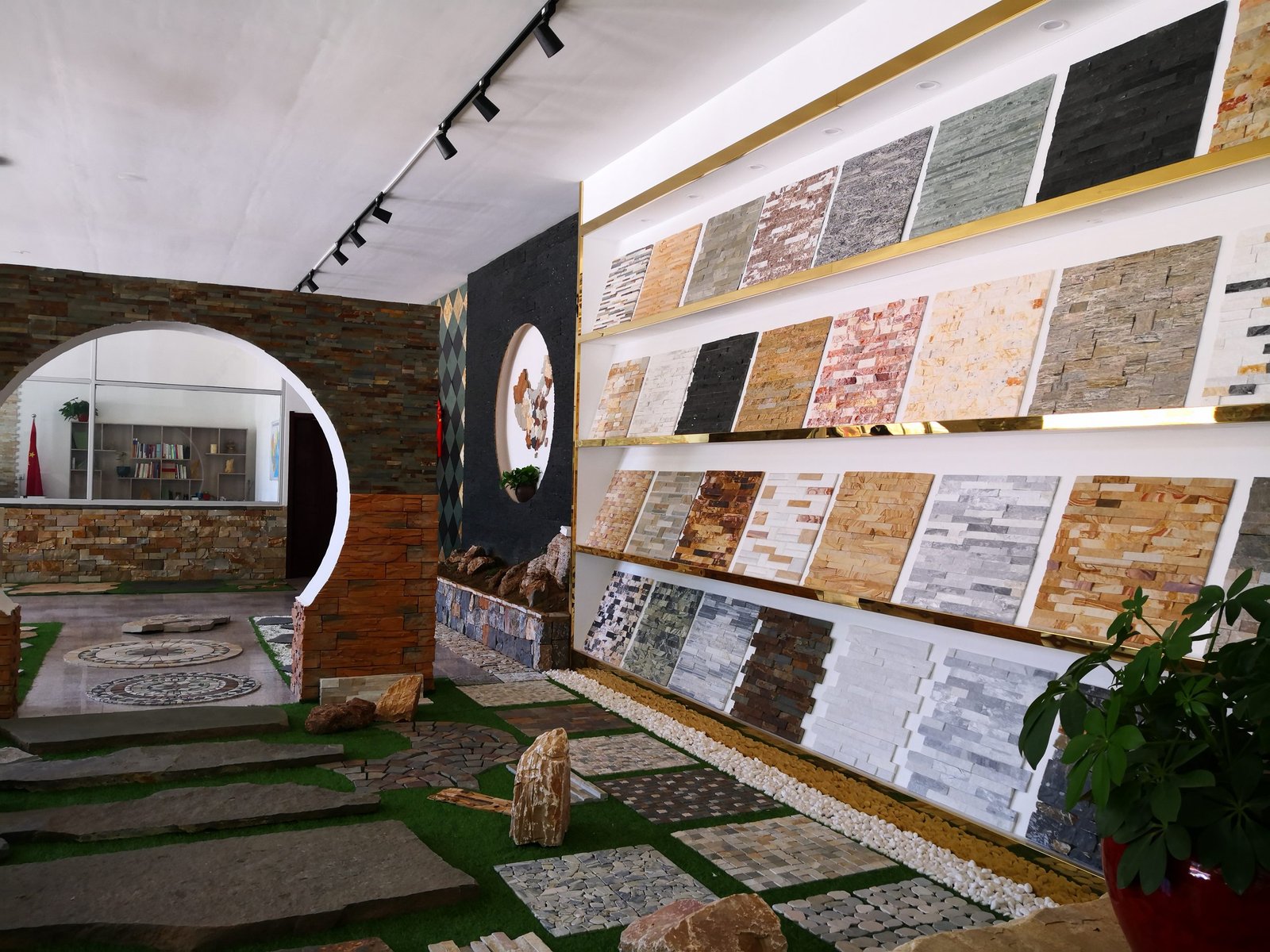
A factory showroom earns a special mention. When a Top Stone Panels buyer brings a contractor or a developer to the Yixian showroom, the buyer walks a display of stone cladding display walls and full sample boards before talking numbers. For a distributor, that visit is the fastest way to convert a hesitant contractor into a loyal specification. Ask whether your supplier hosts buyer visits and will present your program alongside their factory tour.
Documentation matters as much as imagery. Test reports, certificates of origin, ISPM 15 fumigation certificates, and inspection records give your procurement and your end customers confidence. Our checklist on evaluating stone panel samples shows which documents belong in the file before you commit.
Quality Control That Protects Your Brand
Here is the part distributors forget: the moment your logo goes on the carton, a factory defect becomes your defect. The contractor who installs the panel, the developer who pays the invoice, and the homeowner who looks at the wall all hold your brand responsible. That makes factory QC a private label necessity, not a nice-to-have.
The Top Stone Panels quality stack is built for this. A three-step process covers raw material selection, in-process re-check, and pre-shipment inspection; infrared CNC cutting holds dimensions tight; and batch-specific vein selection targets 95%-or-better color harmony within the container. Buyers receive the inspection video and color layout photos before the balance is due, which is the moment to catch a problem — while the money is still on the table.
Treat the factory’s larger capacity story as support for consistency. A program running large-volume orders through a disciplined QC line behaves differently than a small workshop taking a one-off order; the discipline shows up in repeatable color and thickness, which is exactly what protects a brand over successive containers.
Risks to Manage in a Private Label Program
Private label concentrates three risks on your side of the desk, and each one has a written answer. Name the risk, then write the rule.
- Color drift between containers. Nobody wants the second container to arrive visibly lighter than the first. Bind the agreement to the approved sample and to the 95%-or-better color harmony target, and require the loading photos before you pay the balance.
- Brand leakage. A factory selling your brand to another distributor in your market kills the whole point. Get territorial or channel exclusivity in writing before the first container, and check that your supplier actually honors resale restrictions.
- Arrived-damaged claims. With your name on the box, a crushed carton is a complaint about you, not about the shipper. Photograph the loading, use the documented packing protocol, and define the damage-claim process in the agreement.
- Forecast range. Programs die when one container sits in the warehouse for a year. Plan the first order against confirmed demand, and scale up only after sell-through validates the color and format.
If all four risks sound manageable, they are — on paper. The contract is where they get real. Review your supplier agreement against the stone cladding purchase specification template before signing, and keep the same discipline for every reorder.
Checklist Before You Sign an OEM Agreement
Ten questions, one signature. Run the API of your own deal through this list before you commit to the program.
| # | Question | Acceptable answer |
|---|---|---|
| 1 | Can we approve physical samples before production? | Samples shipped in 1-3 days |
| 2 | Does packaging carry our brand and layout proof? | Mockup or high-res layout approved |
| 3 | Is the MOQ a full container per product line? | One 20GP container, confirmed |
| 4 | What is the lead time with printed cartons? | 25-30 working days, first order |
| 5 | How is color consistency controlled? | Batch-specific vein selection, 95% harmony target |
| 6 | Which QC steps happen inside the factory? | Three-step process, documented |
| 7 | Do we see loading video and color photos? | Before balance payment |
| 8 | Is territorial exclusivity available? | Written channel/territory terms |
| 9 | Which incoterm is quoted? | FOB Xingang / EXW / CIF / DDP defined |
| 10 | What marketing assets are licensed to us? | Photos, docs, videos available for brand use |
A supplier who answers all ten without stretching is worth the program. One who dodges the exclusivity or color-control questions is telling you how the future conversations will go.
Frequently Asked Questions
What is private label stone?
Private label stone is natural stone cladding produced by a factory and sold under a distributor’s own brand. The cartons, labels, and marketing carry the distributor’s name while the factory handles quarrying, cutting, assembly, and export.
What is the MOQ for private label stone panels?
At Top Stone Panels, the MOQ is one 20GP container per product line. Standard production runs 20-25 working days, and a first order with custom carton printing runs about 25-30 working days because the packaging design adds a production step.
Can I use my own brand name on stone panels from China?
Yes. Factories that support OEM and private label programs print your logo on cartons, labels, and pallet marks. Top Stone Panels also supports custom color mixing, custom sizes, and product documentation under your brand.
How long does custom packaging for stone take?
Custom carton design is agreed before production starts and pushed through as part of the first-order schedule. Plan for roughly 5 extra days on top of the standard 20-25 working day lead time on your initial order.
Do stone suppliers offer marketing support for private label products?
Serious suppliers do. Expect physical samples in 1-3 days, factory photos, test documentation, and inspection videos you can reuse in your catalogs. Ask which assets the supplier licenses for your brand material.
Conclusion
Private label stone panels turn the supplier relationship around. Instead of renting someone else’s brand, you build your own: your cartons on the dock, your name on the spec sheet, your brand on the installed wall. The mechanics are straightforward — one hero product line, approved samples, branded packaging, a written agreement, and QC you can verify before payment — but the discipline determines whether the program builds equity or burns trust.
- Start with one product line you can forecast, at one 20GP container MOQ, with approved physical samples first.
- Put your brand on cartons and labels, protect it with the packing protocol, and control color with a 95% harmony target.
- Demand samples in 1-3 days, loading video before balance payment, and written exclusivity if your market requires it.
- Use inspection records and licensed factory assets to make every contractor conversation easier.
Next step, talk to the factory about your first container. Ask Top Stone Panels for the private label program file — contact the team with your target product line and market, and the program manager will send samples and packaging options within 1-3 days.