Your first container of stone cladding from China arrives with its own vocabulary. The supplier quotes “ledger panels” and “mesh backing,” your freight forwarder writes “FOB Xingang,” the proforma invoice says “T/T 30/70,” and the packing list cites HS codes. None of these terms are formalities — each one shifts cost, risk, or quality expectations on your order, and the cost of misreading them is paid weeks later at a jobsite or a customs gate.
This glossary explains the terms that actually matter when you buy natural stone cladding by the container: materials and craft, backing and bonding, dimensions and tolerances, commercial and logistics terms, and quality acceptance. Every entry carries the number or threshold you need for a procurement decision, drawn from the production data of a direct-from-quarry manufacturer with 18+ years of export experience and an annual capacity of 220+ containers.
- “Natural stone cladding” covers several product families — stacked stone, ledgestone, thin veneer, flagstone and interlocking Z-panels — with different backs, profiles and HS codes. Name the family on your PO.
- Backing and bonding carry the engineering numbers: the marine-grade epoxy bond is rated for 26.5-ton sea freight and -30°C to +50°C thermal cycling with 100% zero pop-off.
- Commercial terms run on standard figures: MOQ from one 20GP container, container-mix orders supported, payment 30% T/T deposit plus 70% balance before shipment.
- Lead time has three bands: 1-3 working days for samples, 20 working days for stock production, 25-30 working days for a first order with custom printed cartons.
- Shipment quality is documented, not promised: 3-Step QC protocol, loading video and pallet layout photos, and Zero-Breakage crating with 4-6 strapping bands and container air bags.
Materials and Craft Terms
Material is where most procurement mistakes start, because one sector uses the same umbrella terms for very different products. “Natural stone” covers pre-assembled ledger panels, thin veneer delivered as loose stone, mesh-backed flagstone for pool surrounds, and engineered interlocking panels. The name you write on the PO determines the product you receive, the weight you pay freight on, and the HS code your customs broker declares. One reference helps readers ground definitions independently: the MSI Natural Stone Industry Glossary covers stone terminology from quarry to finish.
Natural stone cladding. Quarry-cut stone installed as an exterior or interior wall finish, delivered either as pre-aligned panels or as individual pieces. For a B2B buyer the term matters mostly for what it is not: this is not a manufactured imitation, and it ships under the tariff classification of its actual geology rather than a generic “veneer” heading.
Thin stone veneer. Naturally split, random loose quartzite or slate — 100% natural material, no cast resin and no coating. The commercial detail buyers should verify is color control: batch-specific vein selection from the quarry keeps a stated ≥95% color harmony across a shipment. When you quote a project that must look even over a large elevation, ask the factory to write that harmony figure into the order confirmation, because it converts an aesthetic dispute into a measurable acceptance criterion. The natural thin stone veneer buyer guide walks through splitting, sorting and specification in more depth.
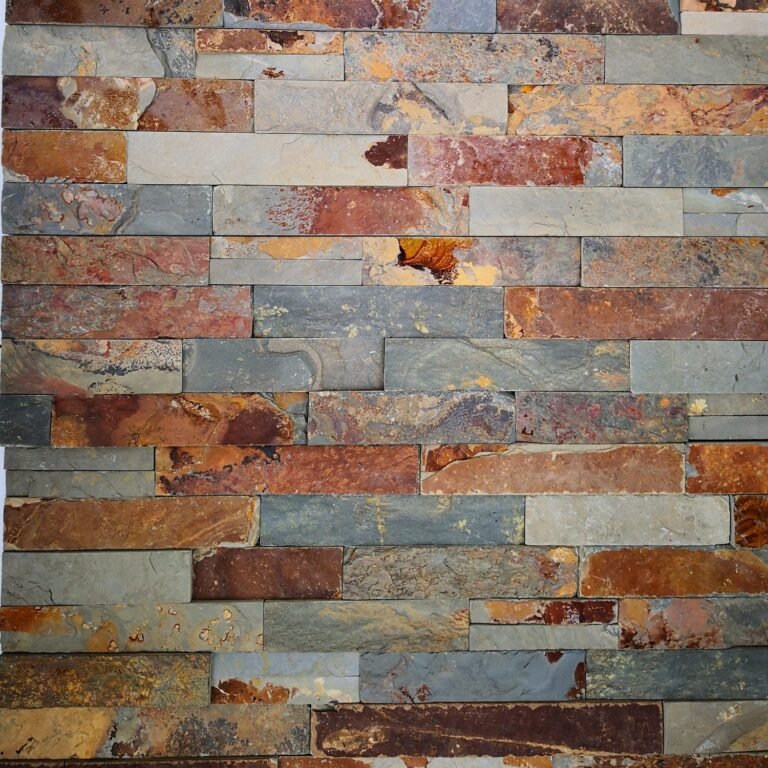
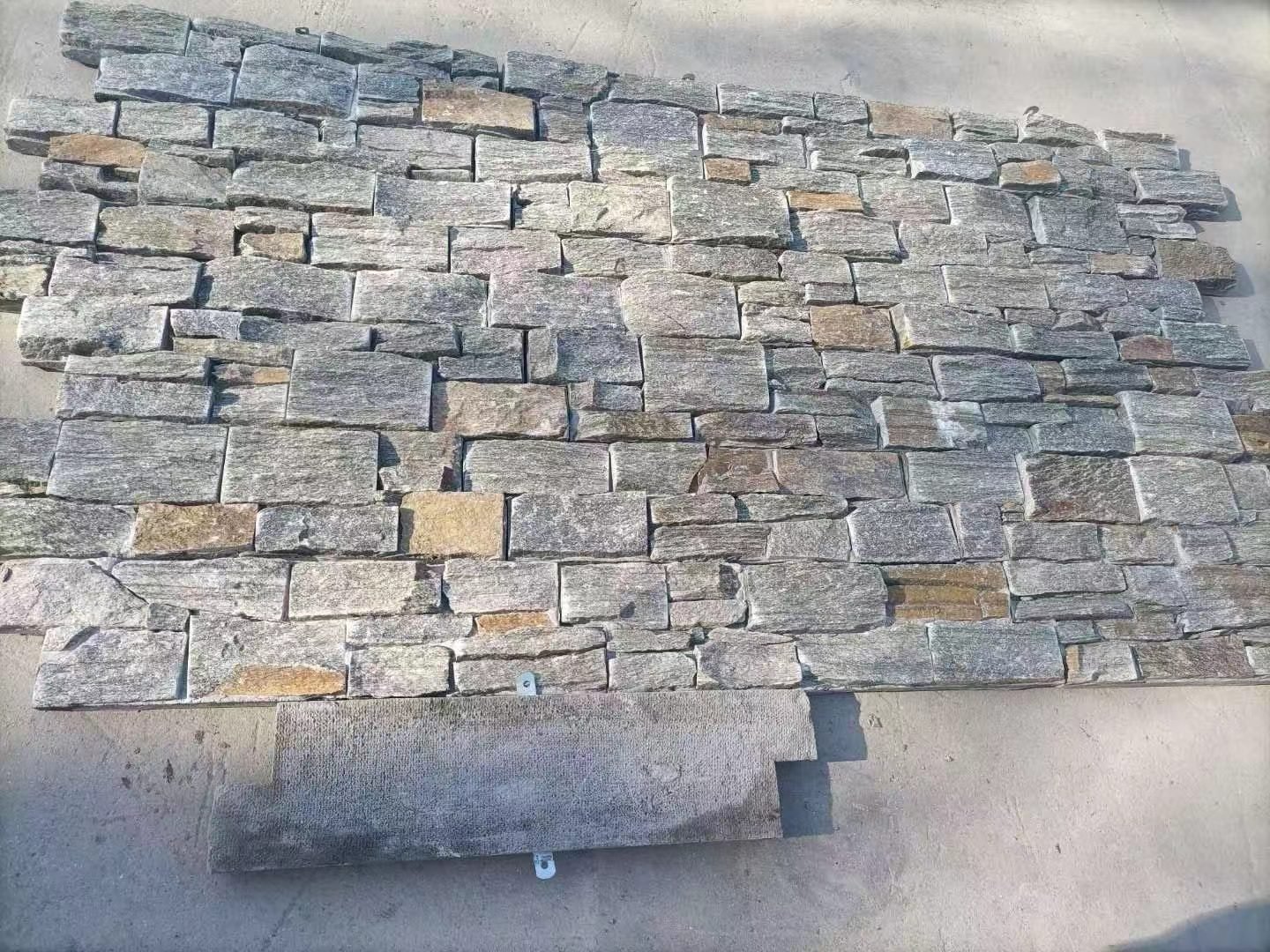
Ledger panel. The pre-assembled stacked stone unit — standard formats 15x60cm (6″x24″) and 15x55cm, supplied with glued or mesh backing. Each panel captures a staggered, dry-stacked look without laying stone piece by piece, which is why stacked stone panels dominate distributor stock programs. Read what stacked stone panels are before you compare prices per panel, because panel count and face coverage are quoted differently from supplier to supplier.
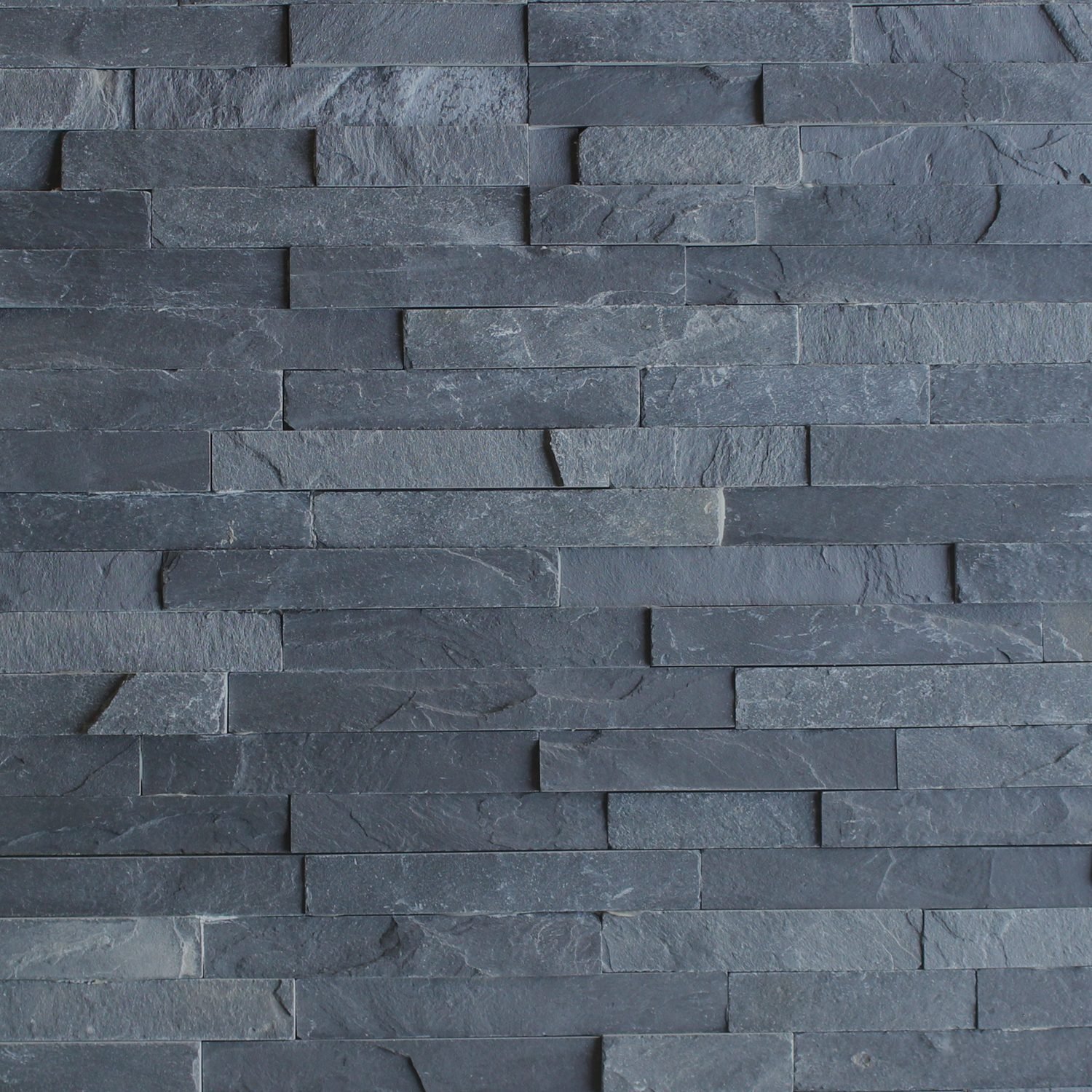
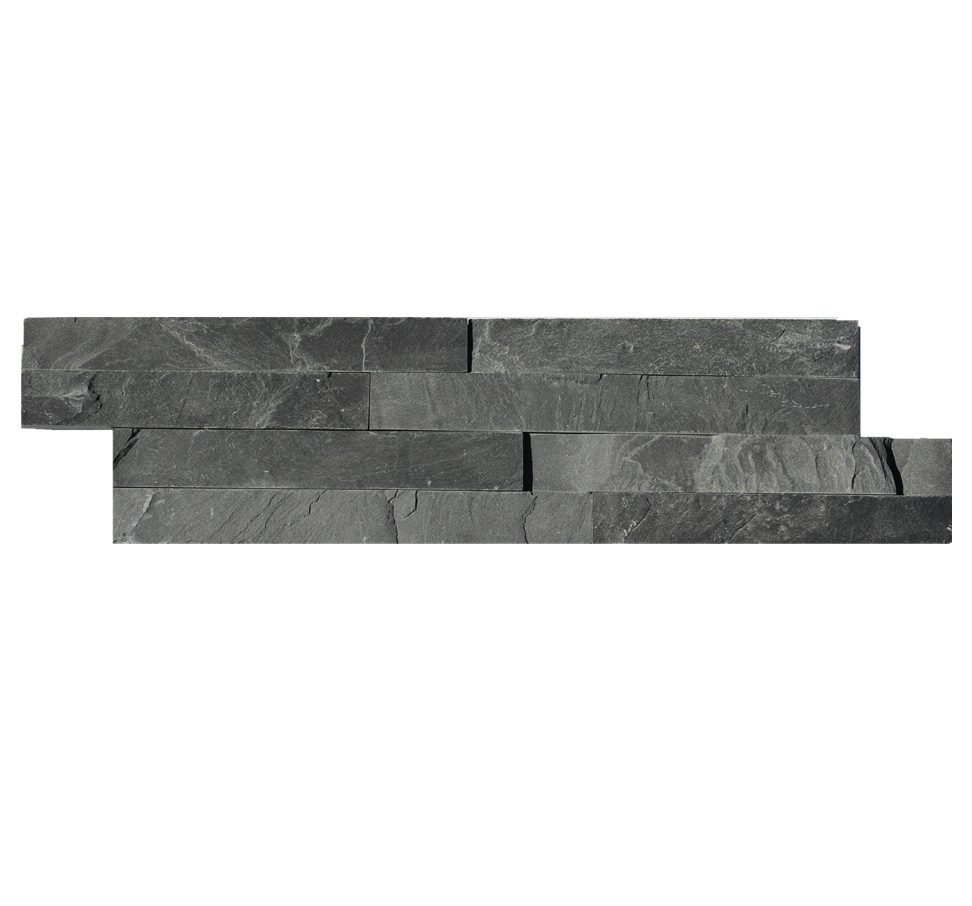
Ledgestone. A long, thin ledge profile — in this catalog a 36x10cm mini ledgestone — engineered to maximize the square-meterage loaded inside a 20GP container while keeping a modern, European-linear aesthetic. If your margin math runs per square meter of cargo space rather than per panel, ledgestone changes the arithmetic considerably. The ledgestone panel profile guide explains when this format beats a deeper profile.
Quartzite and slate. The two lithologies behind this product line. Quartzite (HS 6802.93.11) is hard and dense with low absorption behavior; slate (HS 6803.00.90) splits naturally into thin layers and brings a wide natural color range. They are different materials with different customs codes — if you mix them in one container, make sure the invoice and packing list separate the lines, or your clearing agent will slow the shipment down.
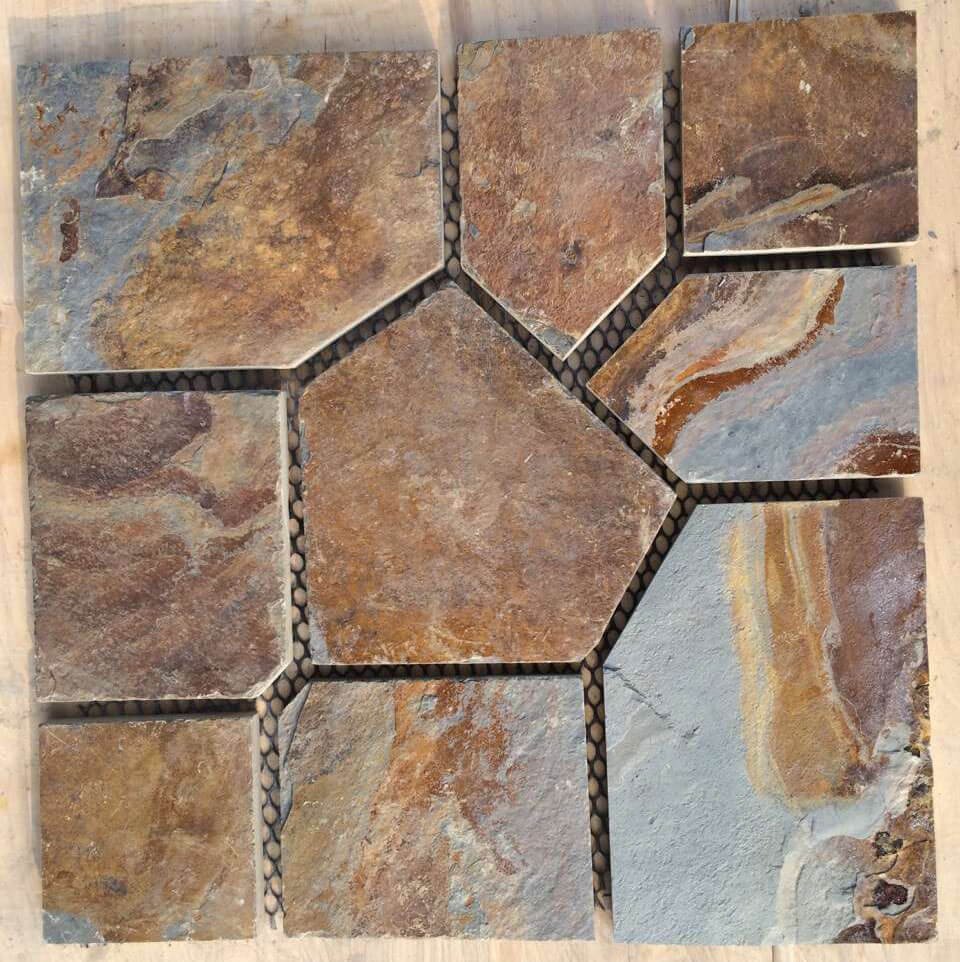
Flagstone and crazy paving. Mesh-backed random flagstone, stepping stones and pavers in high-density slate and sandstone. The properties that matter for coastal and pool projects — naturally high slip resistance and salt-spray and humidity resistance — make these products the standard answer for Australian pool surrounds and marine-adjacent landscaping. A mesh back turns individual stones into installable sheets, which is exactly what a landscaping contractor quotes against.
For a buyer, the materials group is where the wall’s future acceptance criteria are set. Color variation is still the most common field complaint on natural stone projects, and it is far cheaper to resolve at the quarry stage — via batch-specific selection — than after a facade is installed and photographed. When you evaluate a new supplier, start from these terms before you start from price.
Backing and Bonding Terms
Backing and bonding decide two things: the installation system your client’s crew will use, and the engineering strength behind each panel. Specifications fail at the most expensive possible moment — after panels are on the wall — when the buyer does not know which bond rated for what. So before you approve a sample, read the backing terms below and match them to your substrate plan and your load expectations.
Mesh backing. Stone pieces glued to a fiberglass mesh so crews install whole wall sections instead of individual stones. This is standard for stacked stone ledger panels and flagstone sheets; the mesh holds the texture pattern together and accepts a conventional mortar bed on site.
Cement backing. A rigid cement bed cast behind the stone, offered on interlocking panel lines. It adds stiffness and a built-in thickness dimension compared with a flexible mesh, which matters for exterior walls where the panel must bridge substrate irregularities.
Marine-grade epoxy bond. The bonding system used where stacked stone pieces are joined into panels. The stated performance is the number every specifier asks for: rated for heavy-load sea freight at 26.5 tons and for thermal cycling from -30°C to +50°C with 100% zero pop-off. Translated into project terms, a panel that survives that envelope will not shed stones after a cold-climate winter or a hot facade summer. For cold-region contractors, a bonding rating is a design review requirement, not a nice-to-have.
Z-panel interlock. A male-female mechanical joint — Z-shape, S-shape or Puzzle — machined into panels at 20x55cm and 15.2x61cm with cement or mesh backing. The system is self-aligning, hides vertical joints, and is documented as dimensionally stable to -30°C. For buyers the payoffs are on the jobsite: no eyeballing alignment row by row and a joint tolerance that the design absorbs rather than the installer corrects. A full walkthrough of the system mechanics is in how interlocking Z-panels work.
Pre-made L-corner pieces. Corner units assembled at the factory instead of in the field: asymmetric bestsellers of 6″x12″+6″x6″ and 6″x16″+6″x8″, plus a symmetric 90° 6″x12″+6″x12″. They replace on-site 45° miter cutting, and the stated savings are concrete enough to put in a bid: about 20% less material waste and more than 50% lower on-site labor for corners. When you compare a quote that includes field mitering against one with factory corners, the labor line often flips the decision.
Mortar, thinset and adhesive. The three ways wall stone attaches to a substrate — full-bed mortar for heavier systems, thinset for most thin veneer, and engineered adhesives where a thin profile or interior application demands it. Buyers do not choose these; installers and engineers do, and your role is to confirm the panel’s backing was designed for the same bonding method the installation spec calls for.
The engineering distinction behind all of these terms is load transfer. A facade is a structure, not a decoration: whether the load path runs through a flexible mesh, a rigid cement bed, a mechanical interlock, or a factory epoxy bond changes what the assembly can carry and how it behaves under temperature swings. When your client’s structural engineer asks “what is the binding rated for?”, the answer — here, 26.5 tons of heavy-load freight rating and a -30°C to +50°C thermal cycle with 100% zero pop-off — should match a documented factory claim, not a sales pitch.
Dimensions and Tolerance Terms
Dimensions decide how much wall your container covers and how straight the finished elevation looks. Two quotes at the same price per square meter can hide completely different yield per container, which is why dimension terms belong in the negotiation notes, not only on the technical sheet.
Face dimensions. The quoted length-by-height of a panel: standard ledger formats of 15x60cm (6″x24″) and 15x55cm; interlocking panels at 20x55cm and 15.2x61cm. On a container order, the face size sets the number of panels per square meter — request the panel count and coverage, not just the total area, so you can check the yield arithmetic in your own costing.
Ultra-thin profiles. The mini ledgestone at 36x10cm is engineered specifically to maximize the square-meterage carried per 20GP container. Freight is charged on weight and space, and a thinner profile changes both. Note that we are not quoting a coverage figure here — m² per container depends on the mix of profiles you load, and any supplier who promises an exact coverage number should be asked to show the loading plan behind it.
Column sections. Pre-assembled pillar kits and pillar caps with modular sections such as 40x40cm or 50x50cm, joined with snap-together assembly. For a distributor, modular columns are a stock-keeping win: a small number of section SKUs covers an entire porch-and-pillar program, and the field crew does not cut or glue on site.
Thickness tolerance. The acceptance limit on how thick a panel actually is versus its nominal dimension. In practice this governs how evenly the installed surface steps, and it is usually verified in production rather than at the jobsite. Thickness expectations also control weight per square meter for freight planning, so state the range you will accept in the order before production starts.
Self-aligning joints. A design property of the interlocking system where the male-female profile seats each row automatically, hiding vertical joints and reducing installer adjustments. In procurement terms, ask whether the panel line you are buying self-aligns — it directly appears in your labor estimate.
Why tolerances matter in purchasing: dimensional variance is where cheap stone panels generate hidden costs. Slight face-size drift means more grout joints to fill and more cutting at corners; slight thickness drift means elevation stepping that an architect photographs and rejects. A responsible factory controls both in production and documents them in the pre-shipment photo package, which leads us to the acceptance terms later in this article.
Commercial and Logistics Terms
This is where the money moves. Importers rarely fail because the stone is wrong; they fail because payment, quantity, timing and shipping terms were ambiguous on the proforma. The terms below remove that ambiguity, and each one has a standard number in this product line.
MOQ (minimum order quantity). Orders start from one 20GP container. The practical consequence is good news for distributors: container-mix orders are supported across product lines, so a single 20GP can carry stacked stone, ledgestone, thin veneer and flagstone in one shipment instead of four. That flexibility is exactly what a first import order needs before you know which line sells fastest in your market. Two follow-on reading routes cover the mechanics: how container-mix orders work for the practical load plan, and the full product range available for a mixed container for the lineup itself.
T/T 30/70 payment. The standard settlement: a 30% T/T deposit confirms the order, and the 70% balance is paid before shipment, released against two pieces of evidence — the loading video and the layout photos of the pallets. For a first-time buyer this structure matters more than the percentage: the balance is not a leap of faith, it is triggered by photographic proof of exactly what is on your container.
Incoterms. The official trade rules that define where cost and risk transfer between seller and buyer. This product line is offered on FOB, EXW, CIF and DDP terms via Tianjin Xingang, which spans the full risk spectrum — EXW transfers risk at the factory, FOB at the port, CIF adds ocean freight and insurance to the destination port, and DDP carries the delivery obligation all the way to your door. The official ICC Incoterms rules page is the authoritative reference when your forwarder and the factory disagree on wording.
Lead time. Production timing separates into three bands: samples and prototypes in 1-3 working days so you can approve the look before committing; stock and fast mass production in 20 working days, shipped from Tianjin Xingang; and a first order with custom printed cartons in 25-30 working days. When you schedule against a trade show or a construction start, work from the band that matches your order type — planning a custom-carton order on a stock-production timeline is a one-week mistake.
HS codes. The classification numbers customs uses for your goods: slate under 6803.00.90 and quartzite under 6802.93.11. They must match the actual stone in each carton — in a mixed container, invoice lines and packing-list lines should carry their own codes. For the full paperwork set that rides with the shipment, see which export documents your supplier should provide.
Fumigated wooden crates. Part of the export packaging standard: crating wood is fumigated for international compliance, which matters because untreated wood is a customs rejection risk in many destinations. Your forwarder will ask about it exactly once; your packing list should show it.
| Commercial Term | What You Should Expect | Standard Figures (this line) |
|---|---|---|
| MOQ | One container minimum, mixes permitted | From one 20GP; container-mix orders supported |
| Sample lead time | Prototype before production decision | 1-3 working days |
| Stock / mass production | Fast batch production | 20 working days; ships Tianjin Xingang |
| First order, custom cartons | Custom printed packaging for first order | 25-30 working days |
| Payment | T/T with shipment evidence | 30% deposit + 70% before shipment vs. loading video and layout photos |
| Incoterms | Risk and cost transfer options | FOB / EXW / CIF / DDP via Xingang |
| HS codes | Customs classification of goods | Slate 6803.00.90; quartzite 6802.93.11 |
| Packaging | Zero-Breakage Protocol | Fumigated crates, 4-6 strapping bands, container air bags |
Two numbers belong in every order conversation before anything else: the payment split (30/70) and the lead-time band that matches your order type. Confirm both on the proforma before you remit the deposit, and confirm the Incoterms in writing with your forwarder — the same cargo quoted EXW and DDP can represent a very different cash-flow picture to your project accountant.
Quality and Acceptance Terms
Acceptance terms decide who carries the cost when something is wrong. Natural stone is a natural material, so a reasonable tolerance is expected; the professional question is what the shipment documents prove before your 70% balance is released. The terms below are the factory side of that proof.
3-Step QC protocol. The documented quality-control sequence this factory runs from production planning through crating. In procurement language, a QC protocol is only useful if it is stated openly and verified — ask for the step names, ask where each checkpoint sits in the production flow, then compare with the process described in how the 3-Step QC protocol works.
Thermal cycling rating. The stated performance envelope for bonded stacked stone and interlocking panels: stable through -30°C to +50°C with 100% zero pop-off, with Z-panels documented as stable to -30°C. Cold-climate buyers and hot-climate buyers use the same reference — if a panel survives this cycle, seasonal temperature swings are covered. This is the number to hand to a specifier who raises freeze-thaw concerns on an exterior facade.
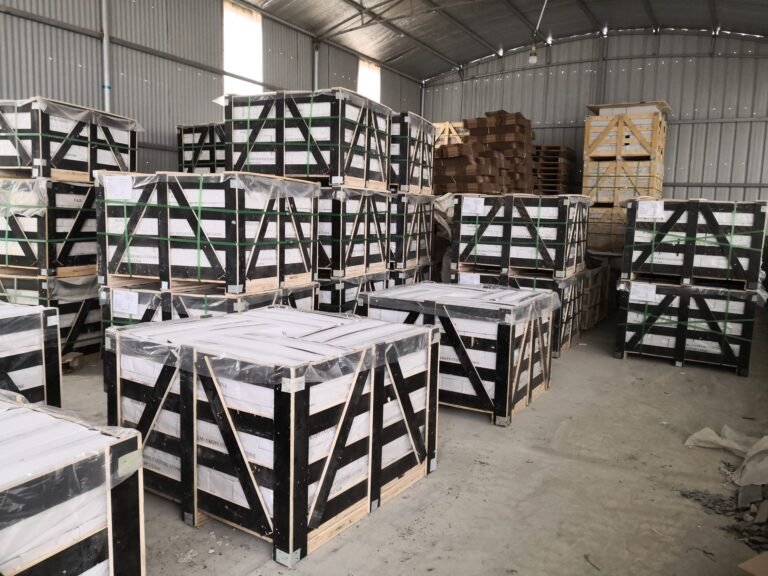
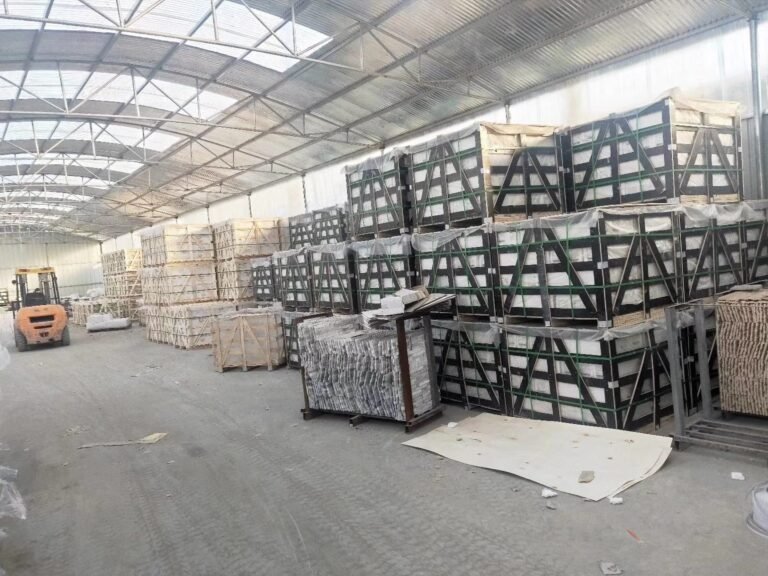
Zero-Breakage Packaging Protocol. The export crating standard: thickened fumigated wooden crates, 4-6 high-tensile strapping bands, and container air bags to lock the load in place, with reinforced strapped crating used for 26.5-ton heavy loads. Transit damage is the most common insurance claim in stone imports, and the crating standard is what prevents most of it. Ask for the protocol name in your order terms so a damage claim starts from a documented promise — the difference between “your stone broke” and “the crating failed its stated standard.”
Loading and Packaging Inspection Video. A video record of the container being loaded and packed, provided as a standard deliverable. It is the visual proof behind your payment release and, later, a primary exhibit if a dispute ever arises about what left the factory.
Pallet layout photos / balance approval. The pre-shipment photo package showing how each pallet is organized, used as the release condition for the 70% balance. Review it the way freight claims auditors do: count the pallets, check the strapping, verify the cartons match your PO lines before authorizing payment.
Installation and Dieline Guide. The technical documentation that ships with the order — layout guidance and cutting templates — so the installer’s method statement matches the panel system you sold. A guide that matches the actual product reduces installation errors that later become warranty disputes.
Test reports. Laboratory documentation of stone properties, the documents behind every performance claim. For installation practice, one standard is worth bookmarking: ASTM C1780-20, the standard practice for installation methods for cement-based adhered masonry veneer, which your client’s contractor may cite in the method statement.
Set the acceptance language before you pay the deposit, not after the container clears customs. A supplier who documents QC steps, thermal ratings, crating standards and photographic shipping evidence is writing acceptance criteria you can actually enforce; a supplier who only promises “good quality” leaves the disagreement for the jobsite.
Frequently Asked Questions
What is the MOQ for stone cladding panels?
Orders start from one 20GP container, and container-mix orders are supported across product lines — for example stacked stone, ledgestone, thin veneer and flagstone can travel in the same shipment.
How does the T/T 30/70 payment term work?
You pay a 30% T/T deposit to confirm the order, and the 70% balance before shipment is released once the factory provides the loading video and the layout photos of the pallets.
How long does production take before shipping?
Samples take 1-3 working days, stock and fast mass production take 20 working days from Tianjin Xingang, and a first order with custom printed cartons takes 25-30 working days.
Which HS codes apply to natural stone cladding?
Slate panels classify under 6803.00.90 and quartzite panels under 6802.93.11; use the code that matches the actual stone in each box of a mixed container.
How is the container packed to prevent breakage?
Shipments use the Zero-Breakage Packaging Protocol — thickened fumigated wooden crates, 4-6 high-tensile strapping bands and container air bags — with reinforced strapped crating for 26.5-ton loads.
Is natural stone cladding suitable for cold climates?
Yes — interlocking Z-panels are documented as stable to -30°C, and the bonded stacked stone is rated through -30°C to +50°C thermal cycling with 100% zero pop-off.
Conclusion
A stone cladding glossary is only useful if it reaches a decision. The terms here fall into three groups: product terms that set what arrives and how it performs, commercial terms that set the money and risk picture, and acceptance terms that decide who pays when something is off. A buyer who carries the standard numbers — one 20GP MOQ with container-mix support, 30/70 T/T against loading video and layout photos, sample delivery in 1-3 working days, and HS codes 6803.00.90 for slate or 6802.93.11 for quartzite — enters every supplier conversation with an enforceable baseline instead of a trust exercise.
On the engineering side, remember the ratings that answer specifier objections before they are raised: bonded stacked stone rated through -30°C to +50°C thermal cycling with 100% zero pop-off, Z-panels stable to -30°C, and 26.5-ton freight-rated packing in fumigated crates with 4-6 strapping bands and air bags. Those numbers, written into your order confirmation, turn marketing language into contract language.
Key takeaways:
- Name the product family on your PO — stacked stone, ledgestone, thin veneer, flagstone or Z-panels — because each ships under different formats and HS codes.
- Quote the bonding and temperature ratings (-30°C to +50°C, 100% zero pop-off) when specifiers challenge cold-climate performance.
- Confirm the three commercial numbers early: 30/70 payment split, the lead-time band for your order type, and the Incoterm that matches your risk appetite.
- Structure acceptance around documents — QC protocol, loading video, pallet layout photos — so your 70% balance release is evidence-driven.
Ready to turn these terms into an order? Send topline stone panel details to Top Stone Panels for a container-mix quote with a 30/70 payment plan and a documented packing protocol.