You can spend two days at the Canton Fair and come home with a bag of business cards and nothing you can order from. The fair is enormous, the stone exhibitors are spread across halls, and most first-time buyers walk past the factories that could actually serve them because they never ask three questions that take forty seconds.
This guide is the version of that trip I would hand to a distributor or contractor flying out for the first time: which phase to book, how registration and visas actually work, how to screen an exhibitor in ten minutes, what terms to settle on the floor, and how to turn a fair visit into a factory audit in Hebei — the slate and culture-stone district where Top Stone Panels operates.
- The 140th Canton Fair: Phase 1 runs October 15-19, 2026 — the phase that carries building and decoration materials.
- Overseas buyer registration is free; register online early and keep your passport and business card for the badge counter.
- Stone cladding and slab exhibitors work out of Phase 1; niche factory districts like Yixian, Hebei are best reached by flying in after the fair for a direct visit.
- Screening rule: a booth’s sample wall proves nothing until the factory answers batch, MOQ, lead time, and test-report questions.
- Top Stone Panels: own-quarry natural slate and quartzite, MOQ one 20-foot container, samples in 1-3 days, 20-25 working days production, FOB Xingang.
Table of Contents
- What the Canton Fair Is and Why Stone Buyers Go
- The 140th Session: Dates and Which Phase You Need
- Registration, Visa, and Getting Your Badge
- Packing a Field Kit That Earns Its Weight
- Screening an Exhibitor in Ten Minutes
- The Questions That Separate Factories from Traders
- Terms to Settle on the Floor
- After the Fair: Factory Visits and Samples
- Seven Mistakes That Turn a Good Trip Sour
- Frequently Asked Questions
- Conclusion
What the Canton Fair Is and Why Stone Buyers Go
The Canton Fair — officially the China Import and Export Fair — is the largest trade fair on earth, held twice a year in Guangzhou for about three weeks each session. Tens of thousands of Chinese exporters exhibit across dozens of halls, and for a stone importer the attraction is density: in one week you can compare more slate, quartzite, and cladding programs than a month of online sourcing.
Stone buyers attend for three concrete reasons. First, comparison speed — a dozen stacked stone programs within walking distance means color, finish, and backing can be judged side by side instead of from photos. Second, access — exhibitors bring their working-level export teams, not just a receptionist, so MOQ, lead time, and test questions get real answers. Third, follow-through — factories that attend the fair are export-experienced, with the documentation discipline that first-time buyers underestimate until customs asks for it.
The venue is the China Import and Export Fair Complex in Pazhou, Guangzhou, on Metro Line 8. The official Canton Fair site publishes the session calendar, buyer registration, and traveler guidance; the section you want for stone is Phase 1.
The 140th Session: Dates and Which Phase You Need
The next session is the 140th Canton Fair, opening October 15, 2026. The fair runs in three phases, and natural stone cladding, veneer, and building decoration materials exhibit in Phase 1. Book your travel against Phase 1 dates, not the session-wide calendar.
| Phase | Dates (140th session) | Main exhibit focus |
| Phase 1 | October 15-19, 2026 | Electronics, machinery, hardware, tools, building and decoration materials |
| Phase 2 | October 23-27, 2026 | Consumer goods, gifts, homeware, decor |
| Phase 3 | October 31 – November 4, 2026 | Textiles, garments, office products, food, health products |
Two planning rules follow from this. If stone is your only goal, plan for October 15-19 and add a few days afterward for factory visits. If you also source decor or furniture lines, note that they sit in later phases, and exhibitors rarely keep the same program across all three — each phase tears down and rebuilds the halls.
The same structure repeats in spring; the next full session after the 140th opens April 2027. Buyers who cannot travel in October should calendar the spring session instead of trying to bolt stone onto a different phase’s itinerary.
Registration, Visa, and Getting Your Badge
Overseas buyers register free of charge. The process is online before the session or at on-site counters with your passport and proof of business, typically a business card or a company letterhead. Registering online early saves you the queue and lets you access the buyer services desk.
Visas are the real lead time risk. Most overseas visitors need a China entry visa, and the application needs an invitation letter, hotel confirmation, and flight details. The fair and exhibiting companies issue invitation letters for buyer visa applications, but consul processing takes weeks — start the process the moment your travel window locks. The fair’s official buyer page also lists the transit and visa-exemption programs that apply in some countries, so check your own passport’s position before paying for a whole visa you might not need.
One insider habit worth copying: carry two forms of identity paperwork at all times. The badge gets you into halls, but the passport gets you through hotel check-in, train ticketing, and the bank counter.
Packing a Field Kit That Earns Its Weight
The exhibitors are ready; the weak point of most new buyers is their own kit. The traders at the fair talk to hundreds of visitors and remember the ones with a folder, a list, and a marker.
- Business cards, a thick stack, and a place to store the ones you collect, labeled by hall and country.
- A printed cut sheet or inquiry form: product type, sizes, quantity, target price, port, and container count. Filling it at the booth — not inventing it on the spot — changes the quality of every quote.
- A permanent marker and a roll of tape for labeling sample bags. Stone samples look identical in a hotel room by Thursday.
- A tape measure and a small scale if you compare thickness and weight seriously; cladding panels sold by the square meter vary in actual face thickness more than the brochure admits.
- A bag with bubble wrap or cloth for samples — half the stone you want to carry home will chip in a rolling suitcase without it.
- Payment tools: international cards and cash for small deposits, plus WeChat or Alipay if you already have them set up.
The field kit is not about looking professional. It is about leaving the fair with comparable quotes, labeled samples, and a shortlist — the only three outputs that make the flight worth it.
Screening an Exhibitor in Ten Minutes
A beautiful sample wall proves nothing about the factory behind it. Booth displays are staged by the same sellers who stage website photos. The screening routine below takes about ten minutes per booth and will cut your shortlist from forty names to four.
| Check | What a real factory answers |
| Are you the manufacturer or a trading desk? | Name the production site and offer a visit; traders name other factories vaguely |
| Where is the quarry and do you own it? | Named quarry, stable vein, batch-specific color selection story |
| What is the MOQ and lead time at container scale? | Container-quantity pricing, production days, and a sample timeline |
| Can you show the test report and packing standard? | Named standards, dated certificates, and a breakage-reduction packing protocol |
| Which port and what export terms? | Port named (Tianjin Xingang area for most north-China slate), FOB/CIF/DDP all offered |
The follow-up test is even simpler: ask for a physical sample and a factory photo with a unique marker — a newspaper from the day, a notebook, anything. Suppliers who send a generic stock photo on day one rarely improve from there.
Top Stone Panels answers the screening pass without hesitation: own quarry, Yixian Hebei production, container-level MOQ with 20-25 working day production, physical samples in 1-3 days, and pre-shipment inspection video so the load you approve is the load that sails from Tianjin Xingang.
The Questions That Separate Factories from Traders
Stone is not a commodity you can buy from a reseller blind. The margin between a factory and a trader can be the entire quality difference in a container, so the questions below are designed to find the factory’s own control systems.
Ask how batch color consistency is managed. A factory should describe vein selection at the quarry, not a Photoshop promise. Ask which test data attaches to the shipment — absorption, flexural strength, and freeze-thaw records matter for exterior cladding, and the full reading guide is in our stone panel test report guide. The absorption number alone deserves its own walkthrough, which the water absorption rate guide for stone panels covers from ASTM method to supplier questions. Ask about backing construction: cement-backed versus marine-grade epoxy bonded panels behave differently against moisture and are not interchangeable in a specification.
Then move to purchase terms: minimum order, delivery window, inspection, and payment. A credible factory quotes against its own production calendar. Ask for the sample policy — not just “we can send samples,” but how many pieces, in how many days, at what cost. The evaluation checklist in our sample evaluation guide turns those samples into a scored comparison instead of a shelf of rocks.
If a supplier cannot name its production site, cannot date its certificates, or quotes a payment structure that skips inspection, walk. The guide to building relationships with Chinese stone factories covers the longer-term version of this process in depth.
Terms to Settle on the Floor
Negotiation at the fair works best when it happens backward: lock the terms that protect you first, then compare price. A low FOB number with vague inspection terms is worth less than a slightly higher price with a documented QC gate and a defined packing standard.
| Term | Why it matters at the fair |
| FOB port | North-China slate and quartzite typically ships from Tianjin Xingang; confirm the port before comparing quotes |
| Payment split | 30% deposit plus 70% balance before shipment is the standard rhythm; insist on confirmation before the balance clears |
| MOQ | One 20-foot container is the working minimum; multi-product mixed loads change the price structure |
| Lead time | Standard production runs 20-25 working days; samples run 1-3 days; first orders with custom packaging run longer |
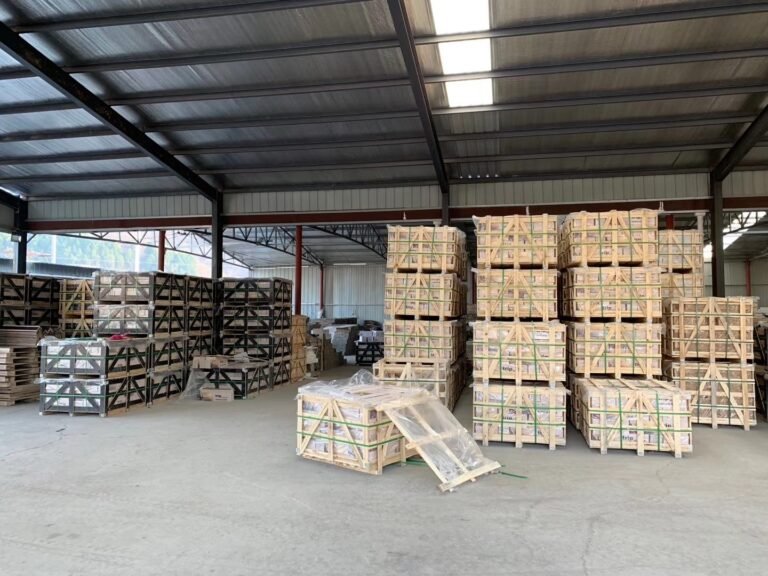
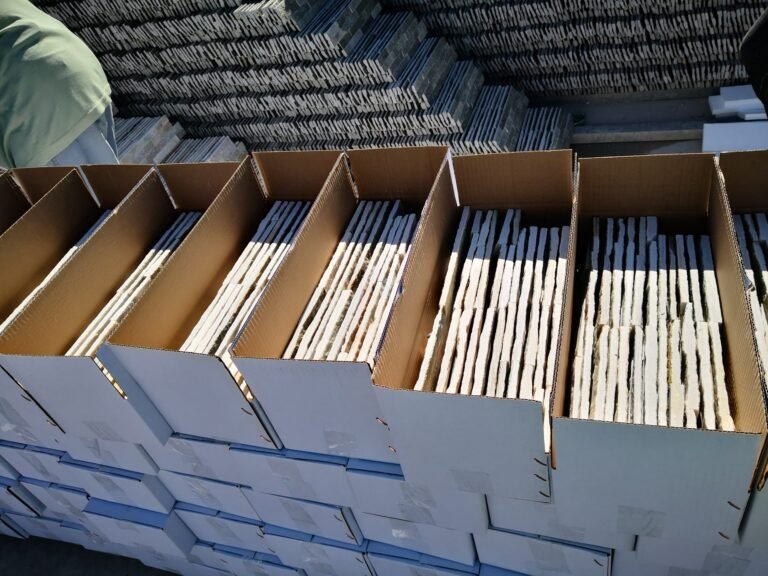
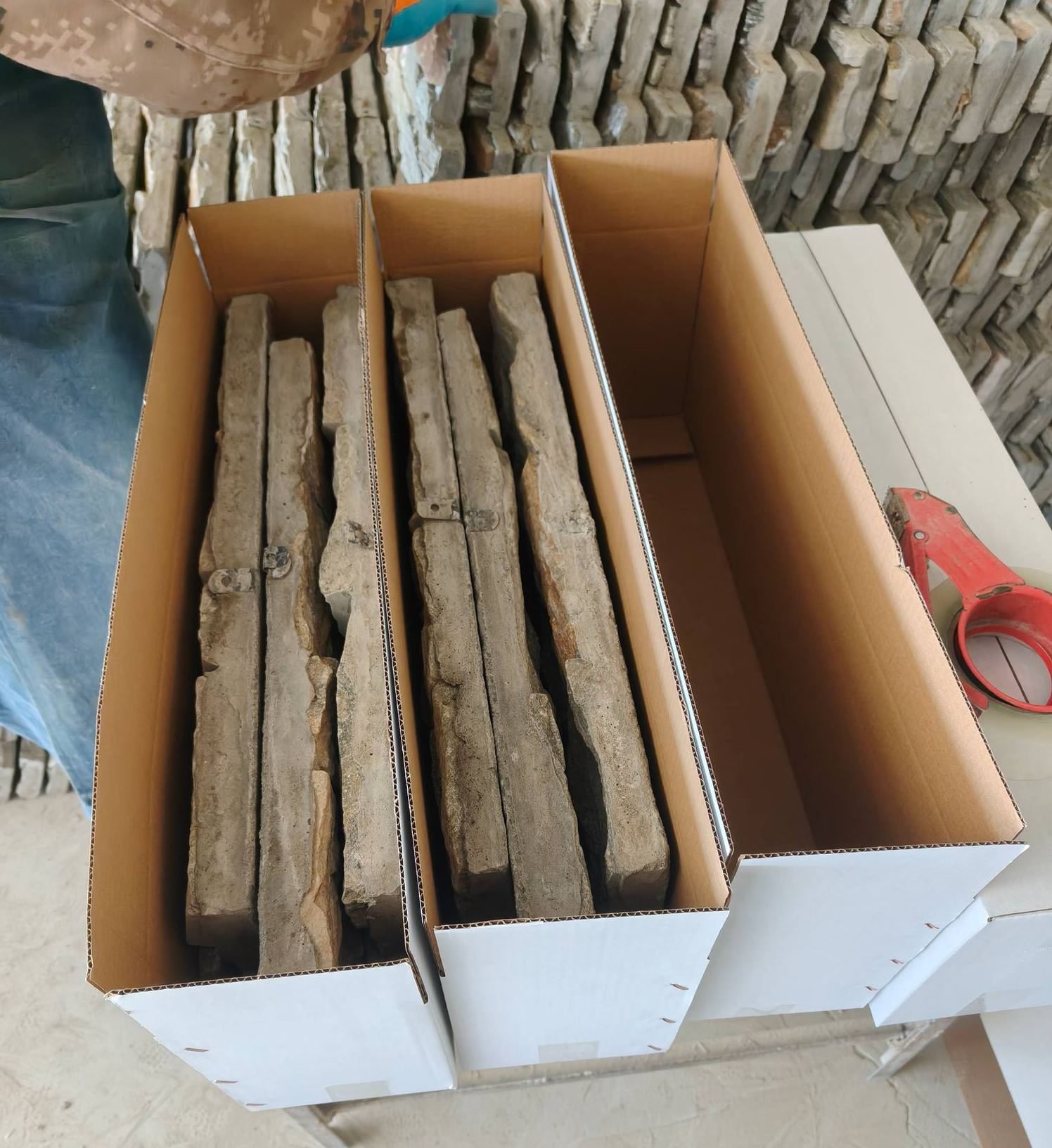
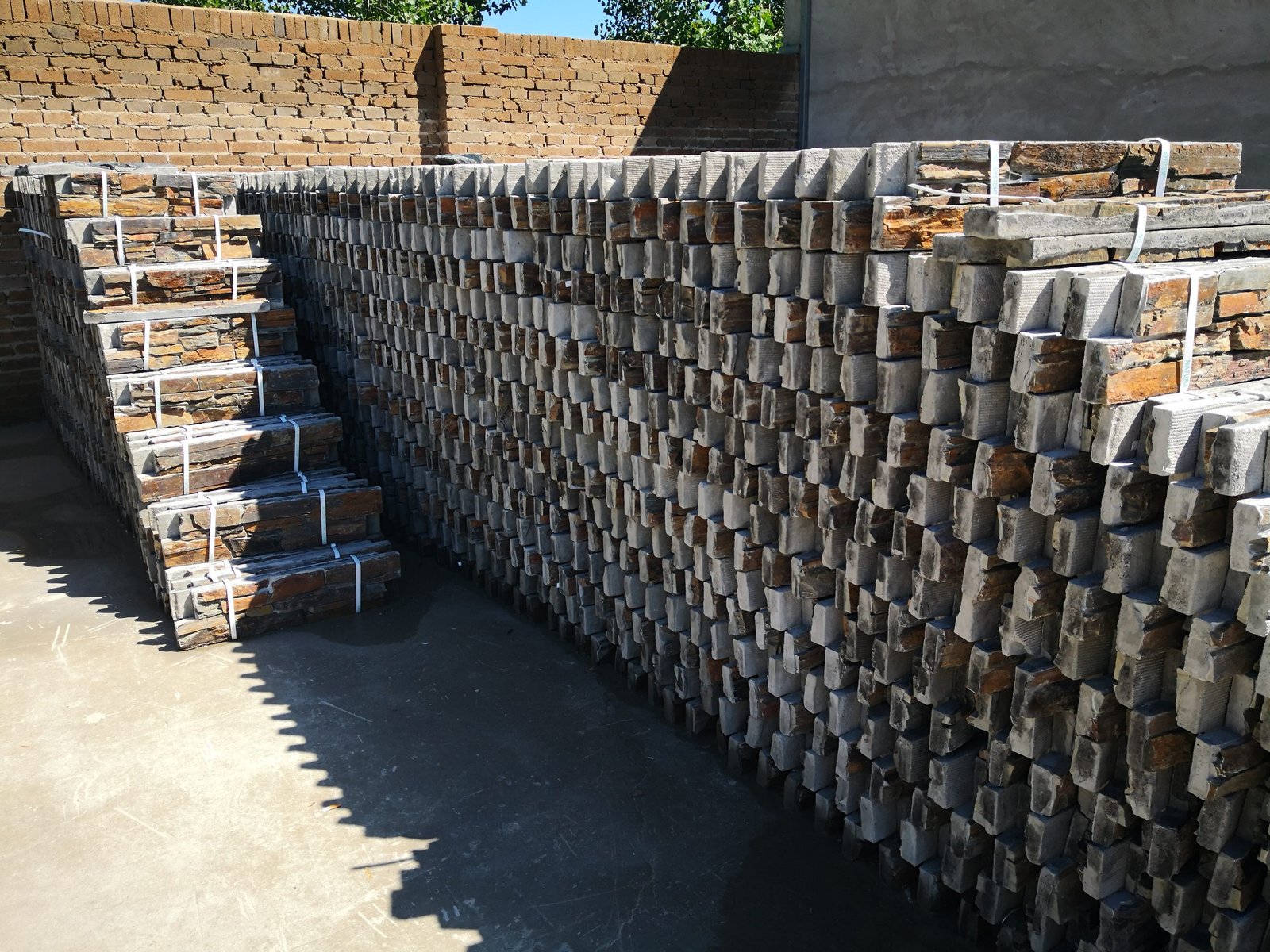
| Packing | Zero-breakage protocol: reinforced cartons, wooden crates, steel strapping, container air bags — ask to see it |
Container buying changes the conversation, too. Mixing multiple stone types in one container is standard practice among experienced factories, and the quantity planning guide for mixed-container ordering shows how the pricing shifts when you combine products. The packing and loading standards themselves are covered in our container loading guide.
Clearance is the part that bites after the flight home. Confirm the document package in writing at the fair — commercial invoice, packing list, and the origin and fumigation certificates needed at your border. The import side of the process is mapped in our customs clearance guide for stone imports.
Highlights: Own quarry | Six product lines, one 20GP MOQ | Pre-shipment inspection video
After the Fair: Factory Visits and Samples
The fair is the screening room; the factory visit is the real test. Serious stone buyers fly into Guangzhou for Phase 1, spend two or three days on the floor, and then travel to the production districts — the extra four days are where decisions actually get made.
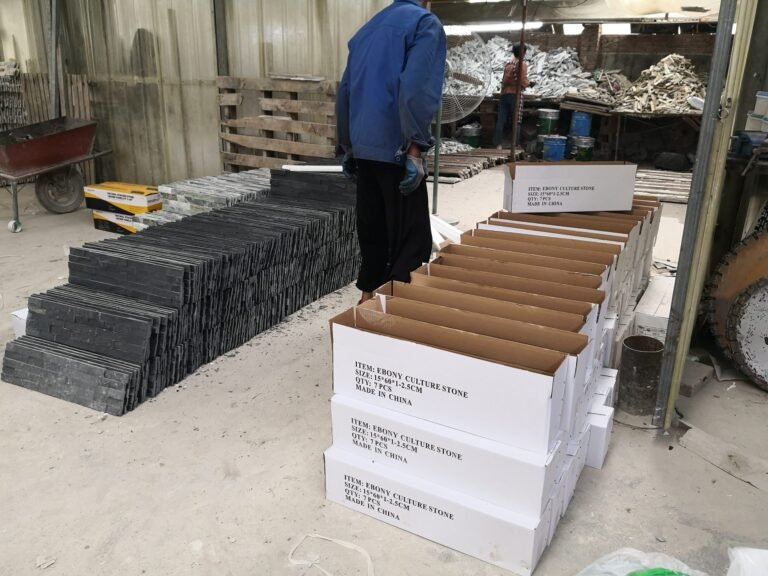
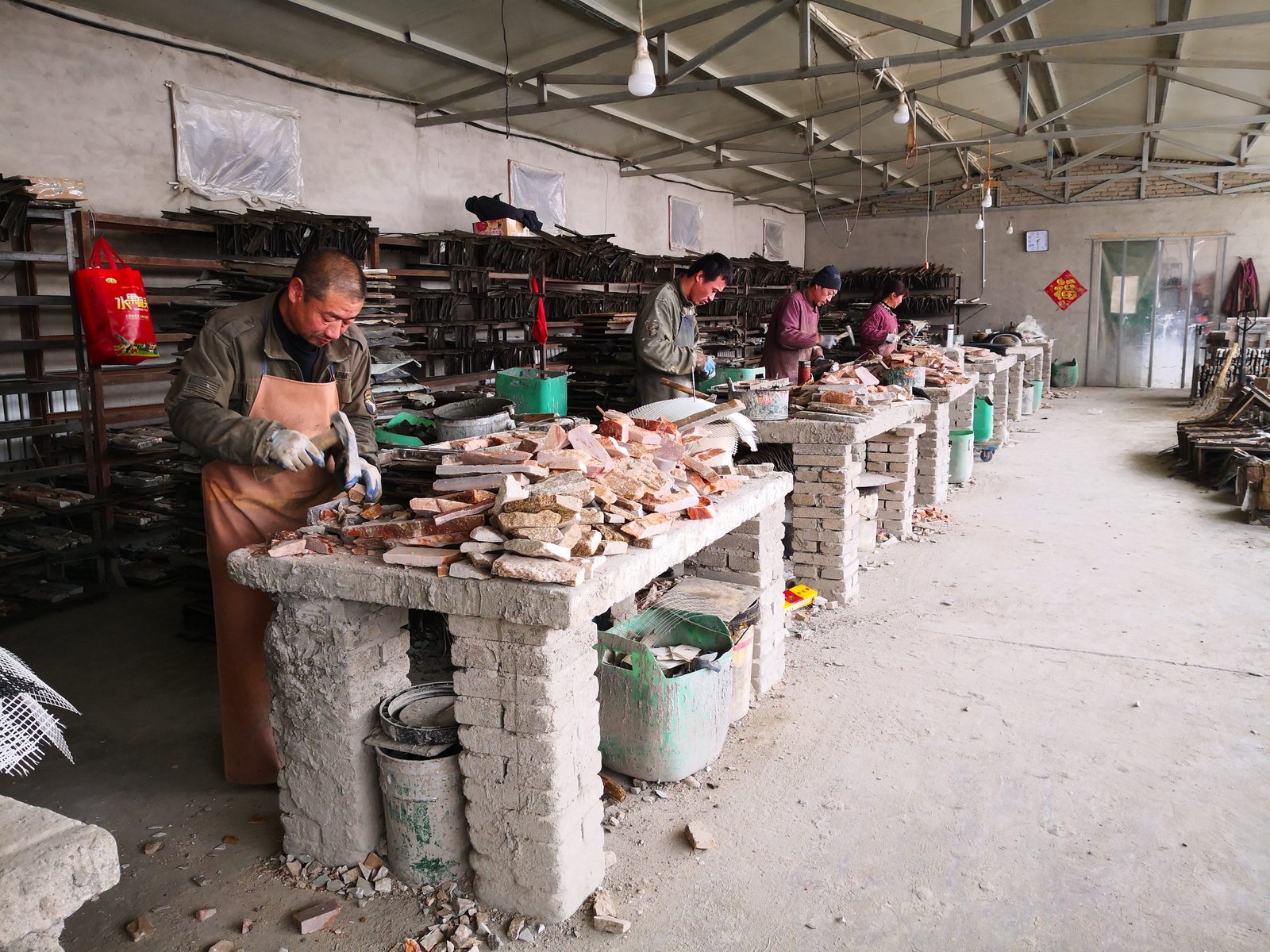
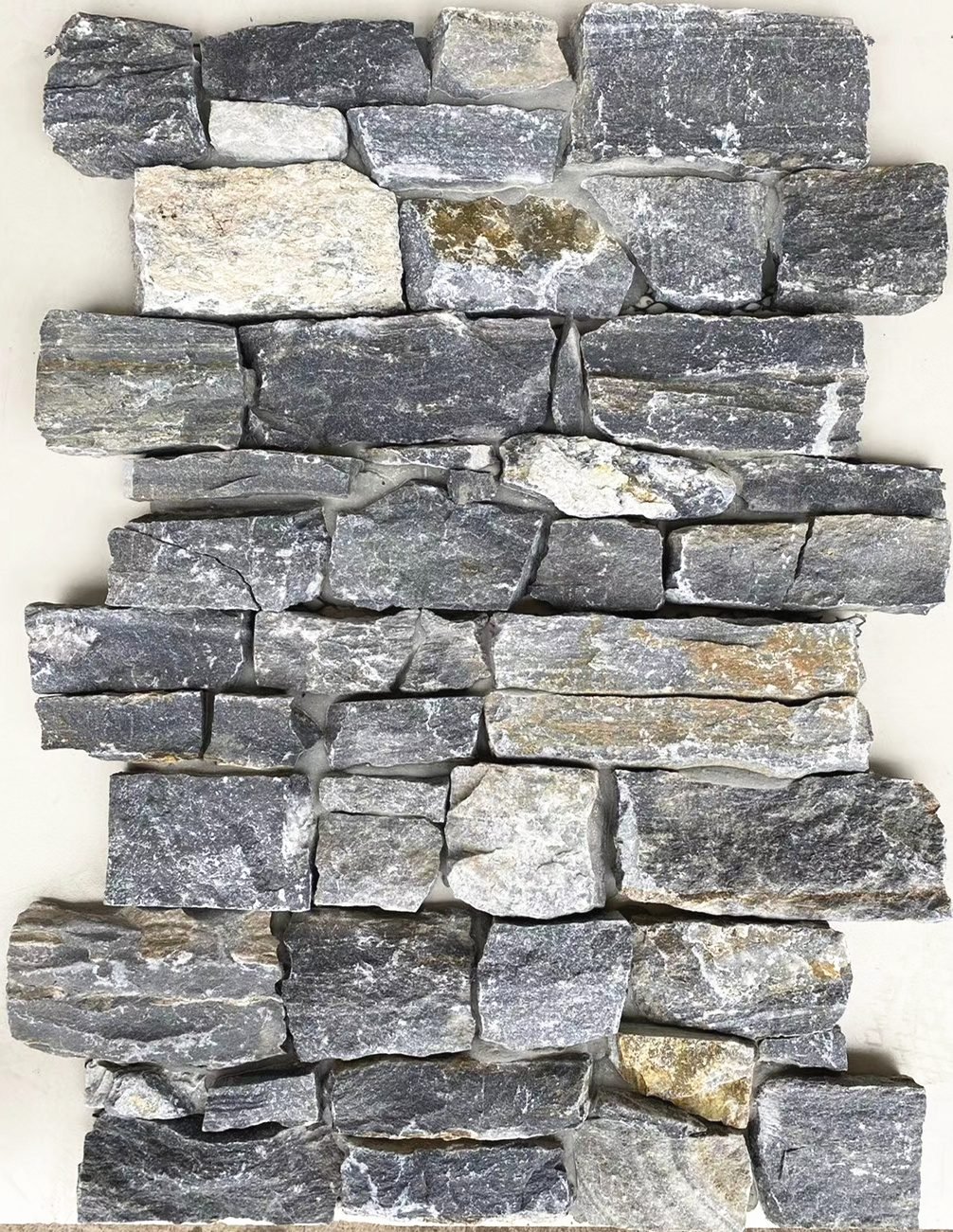
Hebei, roughly two hours from Beijing by high-speed rail and reachable from the international airports at Beijing and Shijiazhuang, is China’s slate and culture-stone heartland. The Yixian district where Top Stone Panels operates is a short hop from Baoding station, and a visit takes you through quarry blocks, the infrared CNC cutting line, the backing station, and the packing floor in a single morning. Product lines worth inspecting in person include stacked stone panels, ultra-thin ledgestone, thin stone veneer strips, flagstone and crazy paving, stone column kits, and interlocking z-panels.
Book the factory visit before you leave home. Factories schedule production to the day during fair season, and the good ones close their visit calendars early. Ask the supplier to confirm samples are physically set aside for you before you arrive — a first trip that ends with “the sample is still in production” wastes a flight.
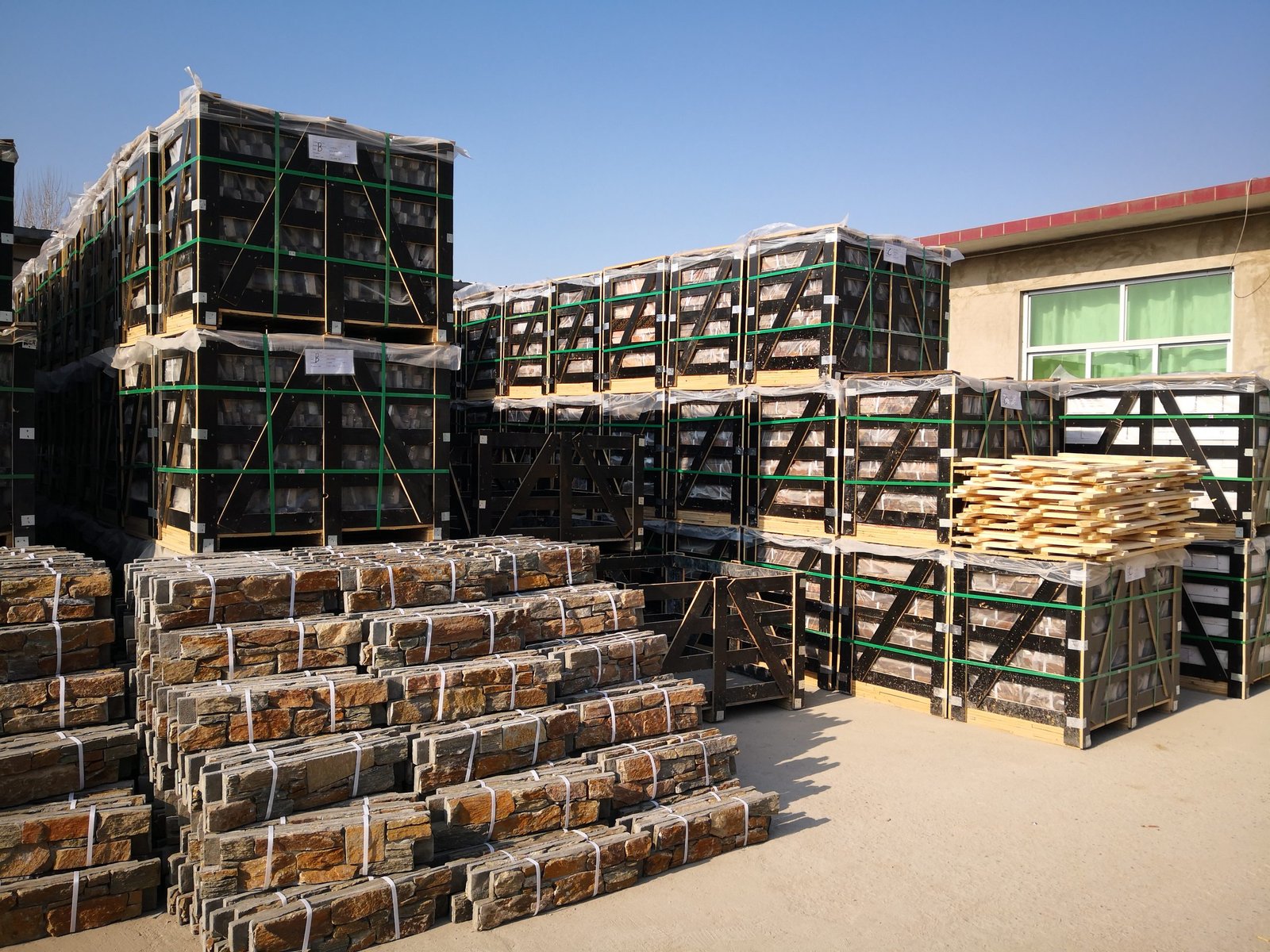
On the floor of the factory, look for the evidence the brochures skip: pallets waiting with breakage-resistant strapping, labeled batches with vein selection notes, and a QC checkpoint that authors paperwork rather than impressions. The pre-shipment inspection checklist turns that tour into a repeatable audit you can run on later orders without flying out.
Seven Mistakes That Turn a Good Trip Sour
Most failed Canton Fair trips follow the same pattern. The mistakes are avoidable once you see them named:
- Flying in for the wrong phase — scheduling the trip around a holiday or a later phase and missing the stone halls entirely.
- Collecting forty business cards and no labeled samples; every quote becomes untraceable by Thursday night.
- Buying from the nicest booth instead of the verified factory; staging is a skill that has nothing to do with production.
- Skipping the test-report question at the booth and discovering only after the deposit that the data is vague or missing.
- Negotiating price before terms; the low FOB number evaporates when inspection, packing, and documents get priced in.
- Not booking the factory visit in advance and spending the post-fair days chasing availability.
- Forgetting that the deposit wires at the end of the journey — a supplier that wants money before sharing a dated test report has already failed the audit.
The mirror image of the warranty discussion is worth reading before you commit: our stone panel warranty guide explains what a supplier should stand behind on a container order, and how to compare offers that only differ on paper.
Frequently Asked Questions
When is the Canton Fair for buying building materials?
Building and decoration materials, including natural stone cladding, are in Phase 1 of each session. The 140th session’s Phase 1 runs October 15-19, 2026.
How do I attend the Canton Fair as a buyer?
Register online in advance at the official Canton Fair site or on-site with your passport and business card. Overseas buyer registration is free, and an invitation letter can support your visa application.
Is the Canton Fair worth it for stone sourcing?
Yes. A week in Guangzhou plus a short factory trip reaches every major stone production district in China, including the slate and quartzite factories of Hebei.
Do I need a visa to attend the Canton Fair?
Most overseas visitors need a China entry visa. Apply early using an invitation letter from the fair or an exhibiting company; processing can take weeks.
Where is the Canton Fair held?
At the China Import and Export Fair Complex in Pazhou, Guangzhou, served by Metro Line 8 (Pazhou and Xingang East stations).
How many days should I spend at the Canton Fair for stone?
Plan two to three days on the Phase 1 floor for screening and quote collection, then add travel days for factory visits in districts like Yixian, Hebei.
Conclusion
The Canton Fair rewards preparation more than any other sourcing trip in this industry. Know the phase, register early, carry a real inquiry form, and screen against a fixed question set — the trip then produces what it should: a shortlist of factories, labeled samples, and comparable quotes.
Keep the action route to memory:
- Book Phase 1 of the 140th session, October 15-19, 2026, and add post-fair days for Hebei factory visits.
- Register online early; overseas buyer badges are free and invitation letters support your visa.
- Screen every booth with the same ten-minute pass: manufacturer, quarry, MOQ, lead time, test report, port.
- Take physical samples home and run a scored comparison before any deposit.
Top Stone Panels exhibits and ships from its Yixian, Hebei facility year-round — physical samples in 1-3 days, container production in 20-25 working days — so whether you meet the team in Guangzhou or simply skip the queue and request the sample tray, the factory visit and the order can happen on your timeline.