Nobody can give you a price forecast with a straight face, and any supplier who claims one is guessing with a sales hat on. What is knowable is the machine: the layers that build a stone panel price, which ones move, why they move, and where to look for the signals before they hit your quote. This article walks through that machine with dates attached — 2021’s freight spike, 2023’s correction, 2024’s tariff and Red Sea turbulence, and the 2025 tariff changes — not so you can predict the next number, but so the next quote you receive does not surprise you.
Price trends matter to a B2B stone buyer for one practical reason: timing. A distributor who understands that freight, not quarry dust, is the volatile layer will hold a quote for the right week, book a container in the right quarter, and treat a freight-rate climate as part of the product cost. This is an update written for the fall of 2026, and every figure below carries the year it came from.
- A stone panel price is four layers — quarry block, processing, packing and inland, ocean freight plus duty — and freight is the layer that swings hardest.
- China’s 2024 customs data put natural stone exports at about US$5.03 billion, down 20.9% year over year: the demand headline of the past two years.
- Ocean container rates swung hard since 2021, and 2024’s Red Sea diversions showed how fast a single route decision can move every lane.
- US tariffs on China-origin stone changed through 2025; the rate on the sailing date applies, so confirm it with a broker in writing, not from memory.
- Because stone weighs out before it cubes out, lighter thin-veneer formats carry lower per-square-meter freight than dense panels.
- Buyers protect margin with quote validity, forward scheduling before peak seasons, and batch orders that keep price adjustments visible.
- How Stone Panel Prices Are Built
- Quarry Blocks: The Slow-Turning Base Layer
- Processing, Energy, and Labor in the Factory
- Packing and Ocean Freight: The Fast-Turning Layer
- Exchange Rates and Tariffs at the Border
- Demand Signals: What Buyers Are Ordering
- Why the Same Panel Gets Different Quotes in the Same Month
- The Price Outlook: Directional, Not Definitive
- How Buyers Protect Their Margin
- FAQ
- Conclusion
How Stone Panel Prices Are Built
Strip a delivered stone panel quote down to its skeleton and four layers support it. The quarry sells split or cut block. The factory turns that block into panels, bonds backing, and packs. The forwarder moves it from the factory to the vessel and across the ocean. And at the end, duty and taxes land on top. Each layer has a different cost driver and a different volatility.
| Layer | Cost driver | How fast it moves |
|---|---|---|
| Quarry block and splitting | Extraction cost, vein availability, environmental compliance | Slow — years |
| Processing and backing | Labor, energy, adhesive, CNC tooling | Moderate — months to a year |
| Export packing and inland trucking | Plywood, cartons, steel banding, diesel | Moderate — quarters |
| Ocean freight and duties | Container rates, lane supply, tariffs, exchange rates | Fast — weeks |
The honest takeaway from the table: nearly all short-term price movement in imported stone is freight and borders, not stone. That is why two buyers can pay different numbers for the same panel in the same month. The cost breakdown guide on this site works a full FOB-to-door example per product line if you want the arithmetic behind a real quote.
Quarry Blocks: The Slow-Turning Base Layer
The quarry layer moves in years, not weeks. Dense natural stone is a mined commodity, and the cost of pulling it out of the ground — diesel for machinery, labor, blasting consumables, and the compliance budget for quarries in China’s Hebei and Fujian producing regions — sets a floor under everything else. When a vein gets thinner, the same square meter of usable panel carries more waste overhead, and prices edge up quietly for that color. When a sorted spring or winter batch comes out of the ground clean, prices hold or soften slightly.
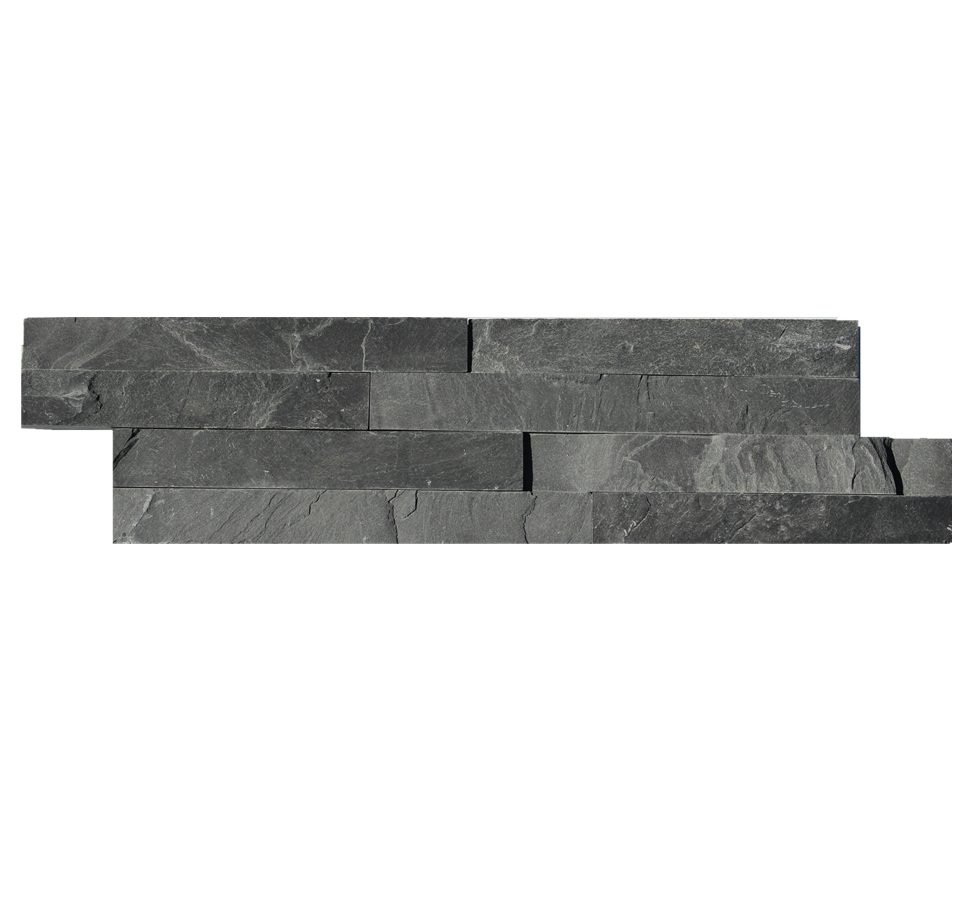
Buyers feel this layer through color, not through headlines. A grey slate that stays available for years can hold its line, while a quartzite vein that turns variable becomes a small premium on the quotation. The practical countermeasure is batch discipline: ask the factory to hold the same vein and block source across your reorders. The Hebei vs Fujian production comparison explains how the two big Chinese regions differ in material type and cost structure, and the global slate industry background covers the raw side of the slate supply chain.
Processing, Energy, and Labor in the Factory
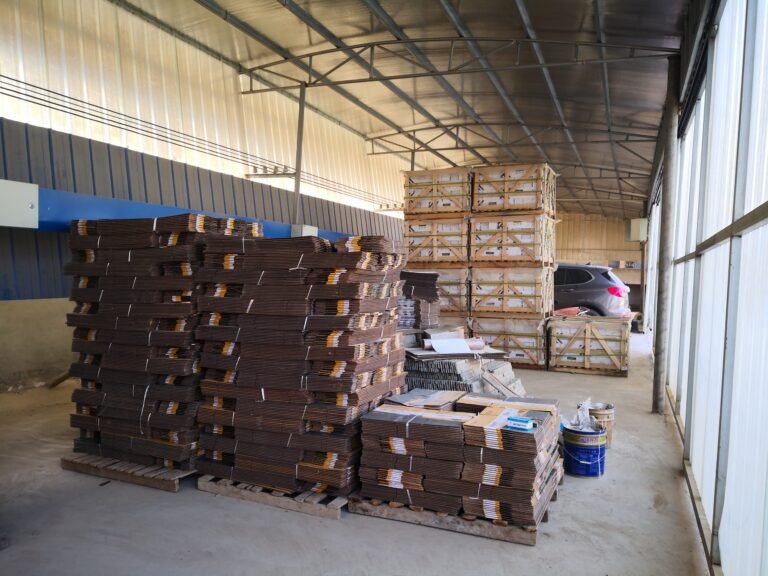
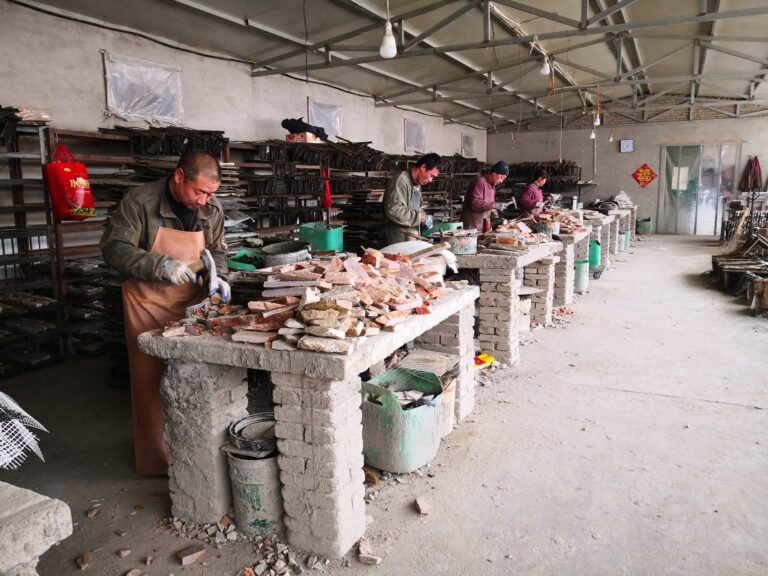
The factory layer moves with input costs. Infrared CNC cutting machines burn power; epoxy and cement backing consume adhesive and materials; and every panel that leaves the line goes through cartons, pallets, and steel banding whose prices track plywood and steel markets. Labor in China’s stone regions has trended up steadily for years as mills compete for experienced cutters, and energy policy shifts — electricity pricing for industrial users, diesel prices for trucks — feed straight into quotes.
None of this moves overnight, but it explains why “same product, same size” quotes drift upward between years even when the stone itself is abundant. The honest signal for a buyer is the mill’s own efficiency: a factory that cuts tight, backs panels well, and packs in fewer but denser cartons absorbs input increases better than an operation running on waste. Our 2026 cladding market trends article covers the production-side shifts buyers should price into their five-year view.
Packing and Ocean Freight: The Fast-Turning Layer
This is the layer that makes buyers swear. Container shipping is a giant, integrated logistics system, and it swings on supply, not demand alone. The last five years are the clearest possible lesson: rates hit record highs in 2021, corrected sharply in 2023 as capacity came back, and spiked again in 2024 when container ship schedules were rewritten around the Red Sea. A published benchmark such as the Shanghai Containerized Freight Index gives you the trend line without trusting any one rate quote.
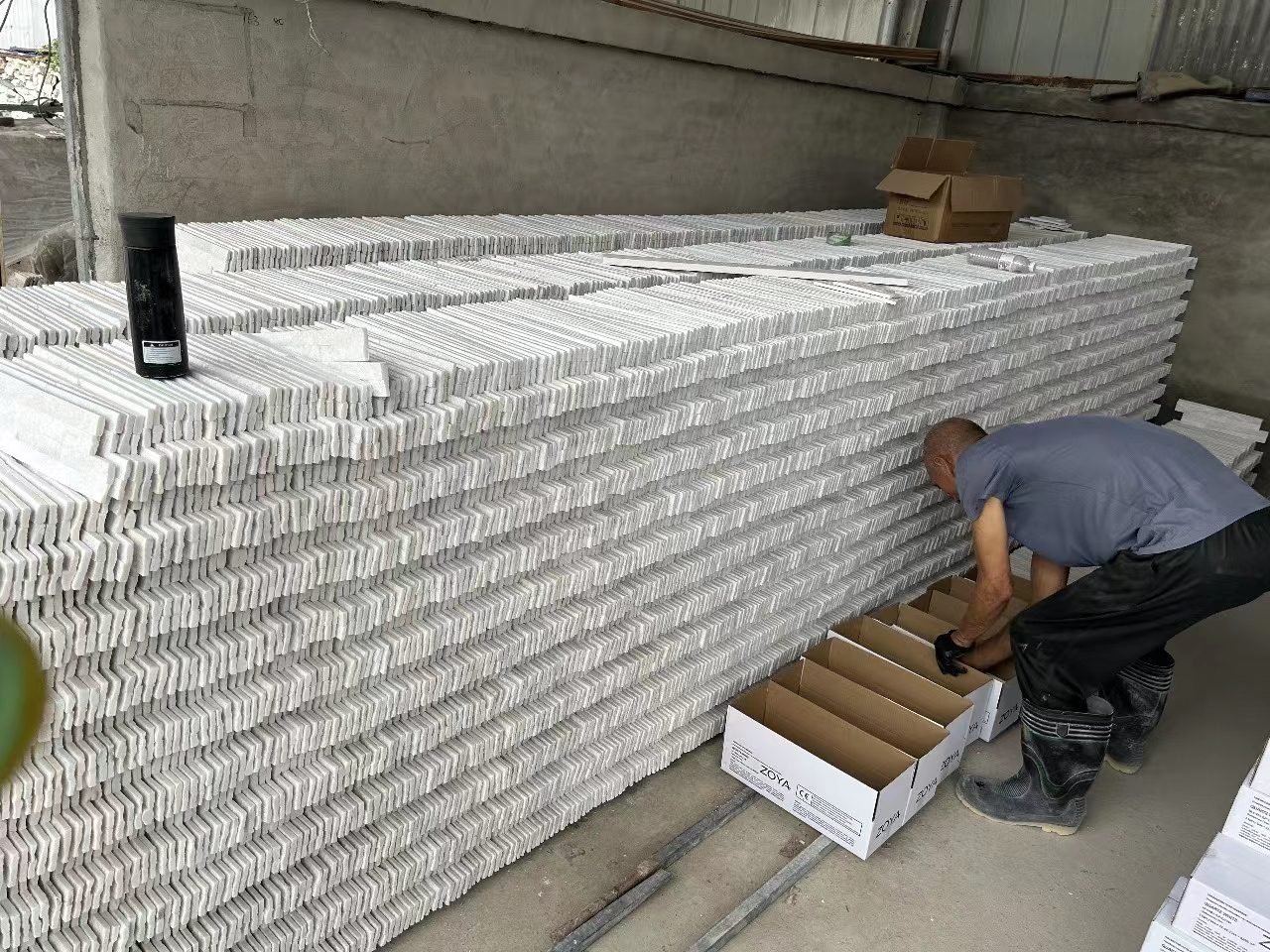
Stone has one quirk that makes freight math different from most cargo: it is weight-limited, not volume-limited. A 20GP container that weighs out near 26.5 tons carries roughly 500-530 square meters of panels at about 50 kg per square meter — the container capacity guide runs the full arithmetic. Thin veneer formats at 25-35 kg per square meter load more square meters per container, so their per-square-meter freight is lower, which is one reason ultra-thin ledgestone and veneer exports grew into such a popular import category. Dense 40 mm panels deliver the opposite math. The layer table below shows how freight per square meter falls as panel weight drops.
| Panel weight (kg/m²) | Approx. m² per 20GP at ~26.5 t payload | Relative freight per m² |
|---|---|---|
| ~25 (ultra-thin veneer) | roughly 900-1,000 | Lowest |
| ~50 (standard panels) | roughly 500-530 | Baseline |
| ~80-100 (dense formats) | roughly 265-330 | Highest |

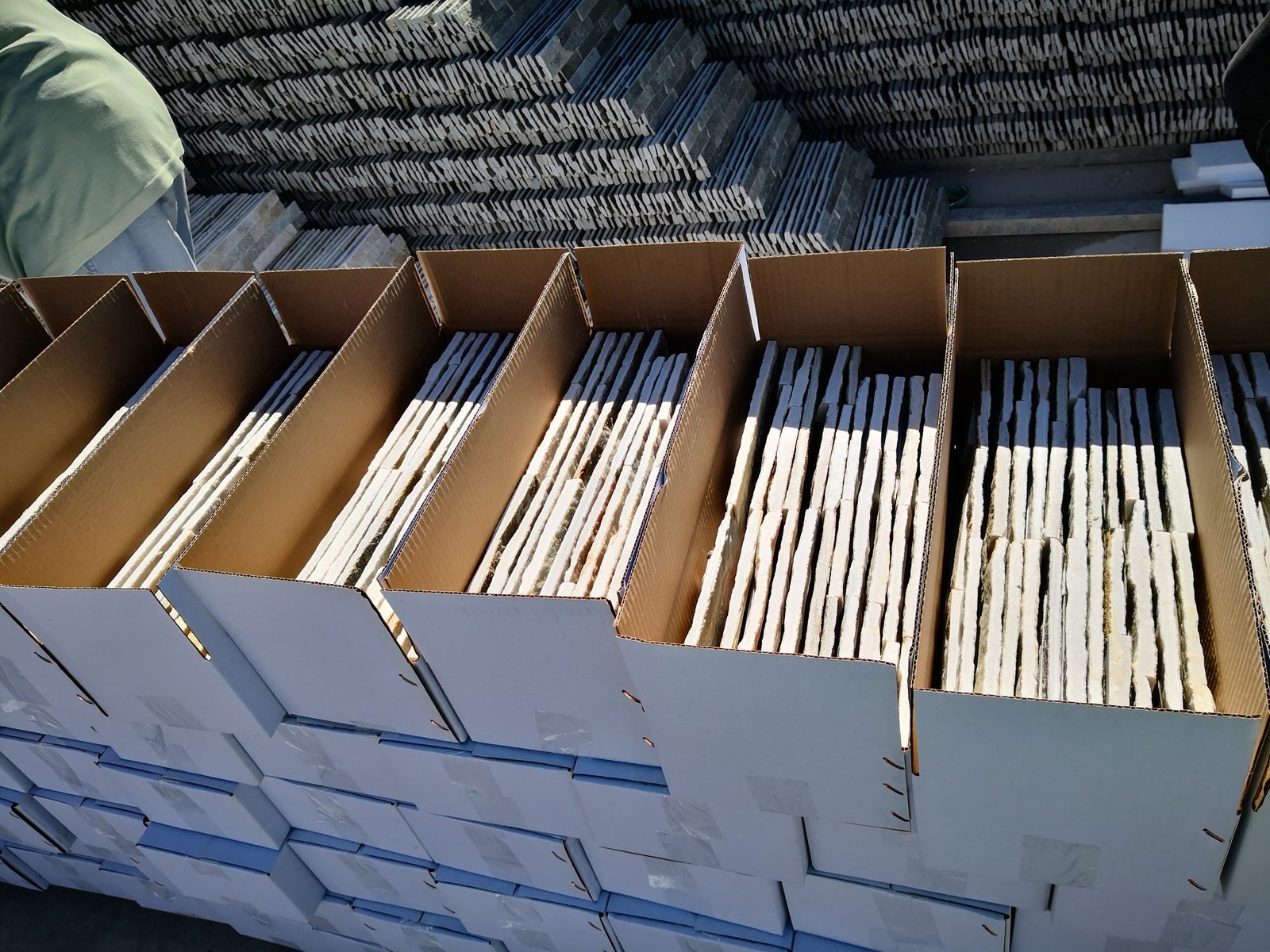
Packing quality is the hidden freight cost. Bad packing turns a cheap freight quote into damaged-goods claims, and buyers know what that does to effective price. The zero-breakage container loading guide and the damaged shipment claims process together define what “cheap freight” actually costs when a corner arrives crumbled.
Exchange Rates and Tariffs at the Border
Two border effects decide how much of a factory price actually reaches you. The first is the exchange rate. Chinese factories quote in US dollars for exports, and their costs are in renminbi; when the dollar strengthens against the yuan, factories can hold dollar prices longer, and when it weakens, FOB lines drift up. Buyers who operate in the euro or the pound watch their own currency move against the dollar just as closely.
The second is the tariff line, and for US buyers this has been the loudest border story in recent years. US customs duties on China-origin natural stone changed repeatedly through 2025 — Section 301 measures on top of a broad 2025 tariff increase — and any rate quote from last year is history. The rate that applies is the one in effect on the sailing date, for the HS number you declare, at the origin you show. The guide to importing stone into the USA walks through the entry and tariff process, and the HS code guide shows how slate, quartzite, and sandstone divide into different headings. Do not take a duty number from memory — a broker’s written confirmation on your specific shipment is the only rate that counts.
Demand Signals: What Buyers Are Ordering
Demand sets the pace for everything above. China’s customs data put 2024 natural stone exports at about US$5.03 billion, down 20.9% year over year, with volume roughly flat and the mix shifting — the clearest year-labeled headline of how import demand cooled through 2024-2025. North American construction spending, outdoor living, and commercial cladding projects remain the structural demand drivers, but the pace bends quarterly.
Watch four demand signals if you want to read the market like a trader: residential and commercial construction starts in your region (they are the first thing to slow or accelerate), freight volume indicators like port throughput statistics, seasonal demand from the spring-summer installation peak, and the ordering patterns at trade events and fairs. The global stone trade data review puts the export and import numbers side by side, and the 2027 market outlook projects where the demand curve is heading.
Why the Same Panel Gets Different Quotes in the Same Month
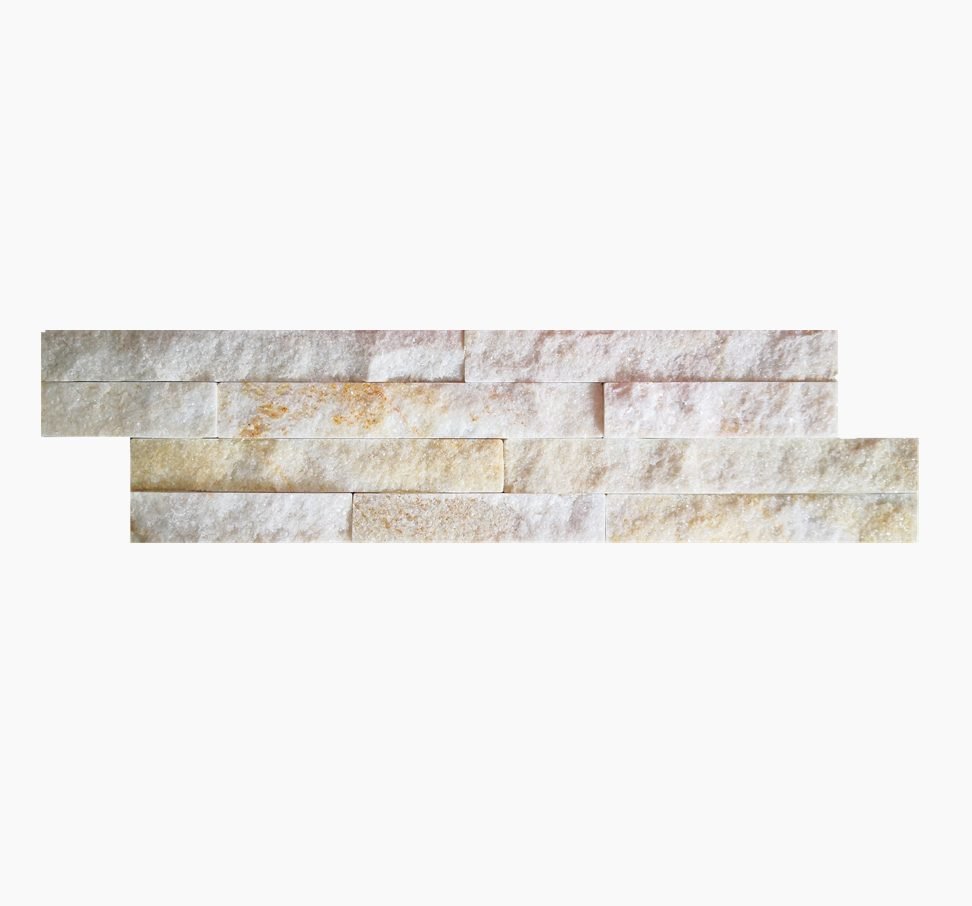
Ask five factories for a delivered price on the same stacked stone and the spread will upset you long before the freight market does. Part of the spread is configuration: one quote includes L-corner pieces, another does not; one prices a full 15×60 cm panel set, another quotes per piece; one quotes FOB, another DDP, and the DDP numbers carry different duty assumptions. Part of it is cost position: a mill with its own quarry and backing line can out-price a trader who buys panels at the factory gate. The FOB-to-door cost breakdown shows where those differences hide once you line quotes up.
The part that moves with trends is smaller than buyers think. Quarry and processing costs change slowly; what changes your effective price within a month is the freight quotation date and the duty assumption printed on the proforma. That is why the practical price-trend question is rarely “will stone cost more next year?” and almost always “will the freight on my sailing month cost more or less?” Answer that with a dated index, not a mood, and the spread between quotes becomes information instead of noise.
The Price Outlook: Directional, Not Definitive
Dated honestly, the outlook for late 2026 has three directional features. Quarry and processing layers look stable to gradually rising — input costs and labor do not fall, but neither are they spiking. Freight is the wildcard; the market has learned that a single route disruption can bend rates for a quarter, so the working assumption for buyers should be volatility, not trend. And the tariff layer for US buyers is an upward bias until Congress, the administration, or a trade agreement changes the rate sheet — which is why confirmation-on-sailing-date is the only safe planning assumption.
The signals to watch are not secret. Put them on one sheet and check it monthly, and you will catch most price moves before your supplier’s amended quote arrives.
| Signal | What it moves | Where to check |
|---|---|---|
| Container rate index (e.g., SCFI) | Ocean freight layer | Published indices, forwarder rate sheets |
| Lane congestion and blank sailings | Transit time and premium rates | Carrier advisories, port live data |
| USD/CNY and your local currency | All dollar-denominated layers | Bank rates, forward contract quotes |
| Tariff announcements | Duty layer for US/EU buyers | Customs notices, broker updates |
| Construction starts in your region | Demand and factory lead times | Building permits, industry association data |
| Lunar New Year timing | Lead time before the factory shutdown | Calendar, factory capacity notes |
How Buyers Protect Their Margin
You do not control the freight market or the tariff sheet, but you control three things that decide what you pay: when you buy, how you commit, and how you split the order. The playbook below assumes you are comparing real quotes, not articles — the seven-factor FOB negotiation guide and the cost breakdown guide give you the numbers to negotiate on.
| Buyer situation | Price protection move | Why it works |
|---|---|---|
| Planning a fall order | Fix quote validity in writing | Locks the panel price while freight is quoted later |
| Buying for a spring install | Book production before Lunar New Year | Avoids the post-holiday capacity squeeze and rush premiums |
| First order from a new factory | One 20GP, paid against sample and inspection | Keeps exposure small while price and quality prove out |
| Volume distributor | Split into batches with transparent price adjustments | Breadth of market is visible; mistakes stay small |
| Currency-sensitive buyer | Watch USD/CNY and forward-cover when volatility is high | Turns a currency swing into a planned cost |
Stone is not a commodity you speculatively hoard, but it is a material you can schedule intelligently. The lead time and production scheduling guide shows how far ahead to book, and the export documents guide makes sure the quote, invoice, and duty line all agree before money moves. A buyer who holds those three things — dated quotes, a seasonal calendar, and a written border plan — has protected margin better than anyone who just tracked a forecast.
FAQ
Are stone panel prices going up or down?
Directionally, quarry and processing costs have been steadier than freight, freight has been the volatile layer, and US tariffs on China-origin stone add an upward push for US buyers. Trust a dated quote over any forecast.
What drives the price of natural stone panels?
Quarry block prices, cutting and backing labor, energy, export packing, ocean freight, exchange rates, and import tariffs. Ocean freight is the fast-moving layer for imported panels.
When is the best time of year to order stone?
Many North American buyers place volume orders in fall and winter, outside the spring-summer installation peak, and schedule before the Lunar New Year factory shutdown to protect capacity and lead time.
Do US tariffs affect stone panel prices?
Yes. Tariffs on China-origin goods changed through 2025, so the duty applied on the sailing date matters. Confirm the current rate for your HS number and origin with a customs broker in writing.
Why is stone freight more expensive than other cargo?
Stone is weight-limited cargo: a container reaches its payload before it fills up, so you pay freight for the weight you cannot spread across more floor area. Lighter thin-veneer formats carry lower freight per square meter for that reason.
How can I lock in a good stone price?
Fix quote validity, approve samples before production, commit to a container size, and book before peak freight season. Split larger orders into batches so price adjustments are visible and mistakes stay small.
Conclusion
A stone panel price is not a mystery set by a distant market; it is a four-layer machine you can read. Quarry and processing layers move slowly and behave themselves. Packing and freight move fast and deserve a monthly glance at the index. Border effects — exchange rates and tariffs — can move in a week and need a written confirmation on every shipment. None of it requires predicting the future; it requires tracking the present with dates attached, which is what separates buyers who get surprised by amended quotes from buyers who never see them.
Key takeaways:
- Freight and borders, not stone, drive short-term price swings on imported panels.
- China’s 2024 stone exports of about US$5.03 billion were down 20.9% year over year — the demand headline to keep dated.
- Watch one container index, the USD/CNY rate, tariff notices, and your regional construction starts on a monthly sheet.
- Treat every duty rate as provisional until a broker confirms it for your shipment and sailing date.
- Protect margin with quote validity, a seasonal booking calendar, and batch-sized orders.
When you are ready to turn a trend into a quote, contact Top Stone Panels for a dated, layer-by-layer price on your mix — the stacked stone panels, thin stone veneer, and flagstone lines are the usual starting points.