Pick the wrong adhesive for a stone veneer wall and nothing fails at once. The mortar cures, the wall looks perfect, and then the first hard freeze or wet season works on the bond line for two years. Choosing among stone veneer adhesive types is the single decision that decides whether a commercial wall survives, and it is the one most buyers skip because the catalog lists “poly-modified” and “Type S” with no explanation.
There are three practical families: Type S or N masonry mortar, polymer-modified thin-set, and exterior-grade construction adhesive. Each has a job it does well, one it does badly, and a substrate rule that is not negotiable. This comparison covers all three using verified technical guidance and first-party factory data from Top Stone Panels, a quarry-owning slate and quartzite exporter in Yixian County, Hebei.
- Type S or N mortar (ASTM C270) is the full-bed standard for irregular split stone and exterior walls that carry freeze-thaw loads.
- Polymer-modified thin-set rated to ANSI A118.4-class bond is the flat-substrate choice for panels on cement backer board.
- Exterior-grade adhesive is only legitimate for pre-backed panels on rigid, clean substrates; it never replaces mortar on foam or uneven masonry.
- The factory backing decides the field adhesive: marine-grade epoxy bond, cement backing, and mesh backing each mark a different best-fit setting method.
- Sourcing is container-based: one 20GP MOQ, 20-25 working-day production, physical samples in 1-3 days for bond testing.
- Clean as you go: fresh mortar wipes off stone in seconds; cured mortar is a chisel job that scars the face.
- 1. The Three Adhesive Families at a Glance
- 2. Type S or N Mortar: The Full-Bed Workhorse
- 3. Polymer-Modified Thin-Set: The Flat-Substrate Choice
- 4. Exterior-Grade Adhesive: The Pre-Backed Panel Shortcut
- 5. How Panel Backing Decides the Adhesive
- 6. Which Adhesive Fits Whom
- 7. Application Sequence and Joint Technique
- 8. Sourcing and Container Economics
- FAQ
- Conclusion
1. The Three Adhesive Families at a Glance
The table below is the working map. Read it as a decision spine: identify the panel backing and the substrate, and the correct family is the intersection of those two rows. The bottom line separates the three more honestly than brand claims do.
| Setting material | What it bonds | Best on | Hard limit |
|---|---|---|---|
| Type S / N mortar | Full-bed support of irregular stone, masonry walls | CMU, brick, concrete, scratch coat over lath | Needs 10-13 mm consolidated bed; skim coats fail |
| Polymer-modified thin-set | Flat-backed panels, flat rigid substrates | Cement backer board, mortar beds, level plywood | Not a leveling compound over uneven masonry |
| Exterior-grade adhesive | Pre-backed panels to rigid, clean surfaces | Backer board, plywood, masonry, panels on rainscreen | Never on foam, insulation, or loose surfaces |
Notice what the table does not include: a “best overall” column. There is no such product. A bed of Type S mortar costs less per kilogram than a tube of adhesive, and it is the right call for an exterior stacked stone wall. The same wall, assembled from flat cement-backed panels on backer board, sets faster with a polymer-modified thin-set. First-time buyers tend to over-specify glue because it is the fastest, and that is exactly where the freeze-thaw failures start.
2. Type S or N Mortar: The Full-Bed Workhorse
Type S and Type N masonry mortars are the traditional setting beds for natural stone veneer, classified under ASTM C270 by their compressive range. Type S runs higher compressive strength and suits load-bearing and below-grade work; Type N is more flexible and forgiving on above-grade veneer. For adhered veneer, either is accepted practice, and polymer-modified adhered-veneer mortar is the recommended upgrade when the stone goes over a flat backing surface.
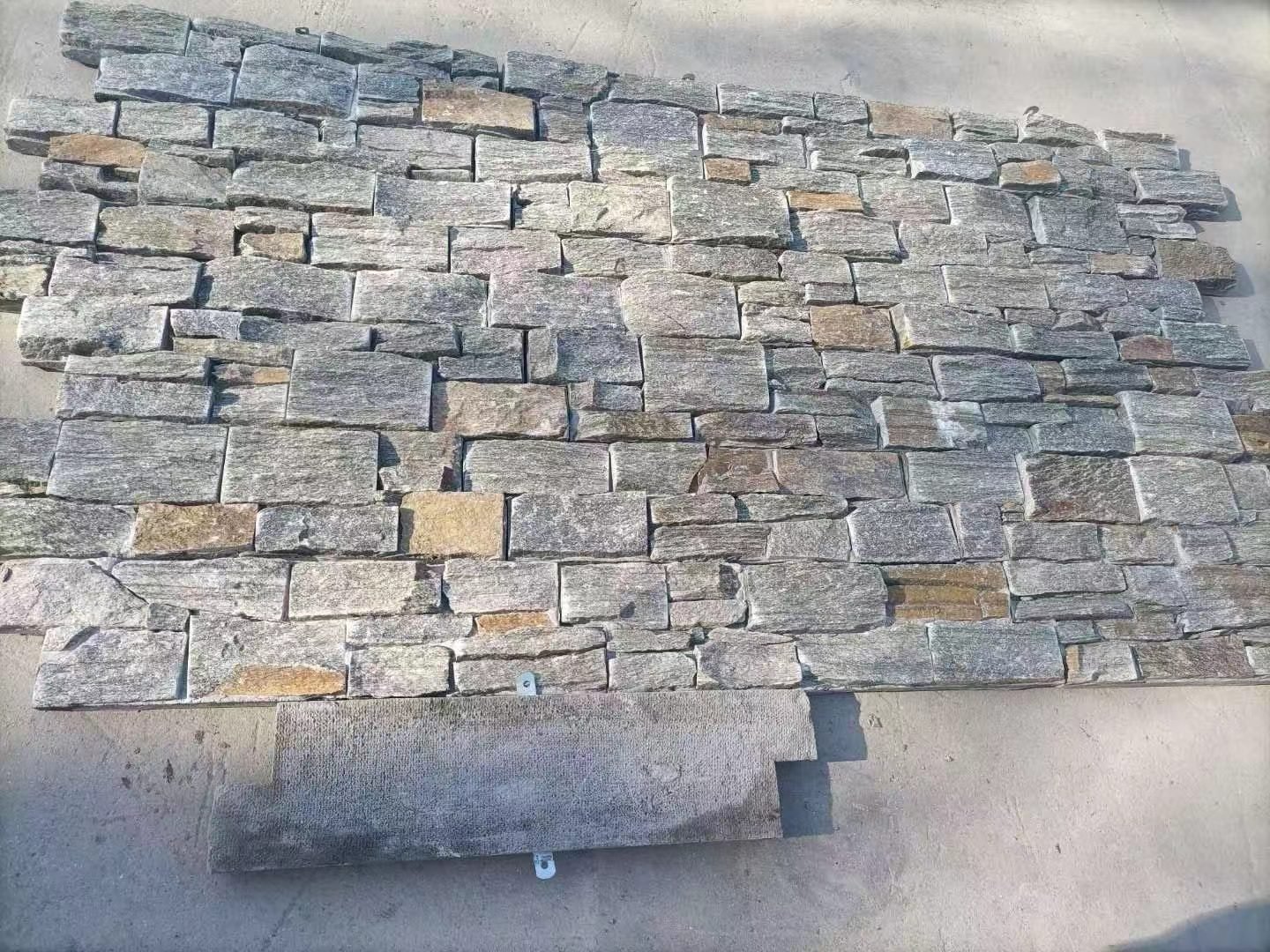
The reason mortar is called the workhorse is coverage of irregular geometry. A split-faced ledger or random stone strip has a back side that is every shape but flat. Thin-set, applied 6 mm thick with a notch trowel, cannot fill that back side. A full mortar bed is worked onto the stone, the stone is pressed into a fresh bed on the wall, and the mortar consolidates to carry the entire face. That support, not the adhesive film, is what keeps a heavy panel from bridging and cracking in a cold climate.
Three practical rules keep Type S honest. First, consolidate the bed: pressing stone into a skim coat is not setting. Second, keep the bed mortar between roughly 10-13 mm so it supports without squeezing out; a bed too thick slumps and a bed too thin skips. Third, on insulating or CMU walls confirm the substrate is rigid and clean, or the mortar bond is only as good as the surface behind it. The stone veneer installation mistakes guide lists the full-bed errors that show up in the first winter.
3. Polymer-Modified Thin-Set: The Flat-Substrate Choice
Polymer-modified thin-set is a portland-cement-based adhesive with fine aggregate and a latex or re-dispersible polymer added to improve bond. For natural stone veneer the practical reference is the ANSI A118.4 class of bond on cement backer board and mortar beds. Where Type S mortar builds support through thickness, thin-set builds support through surface area: flat panel back to flat substrate, polymer filling the small pores.
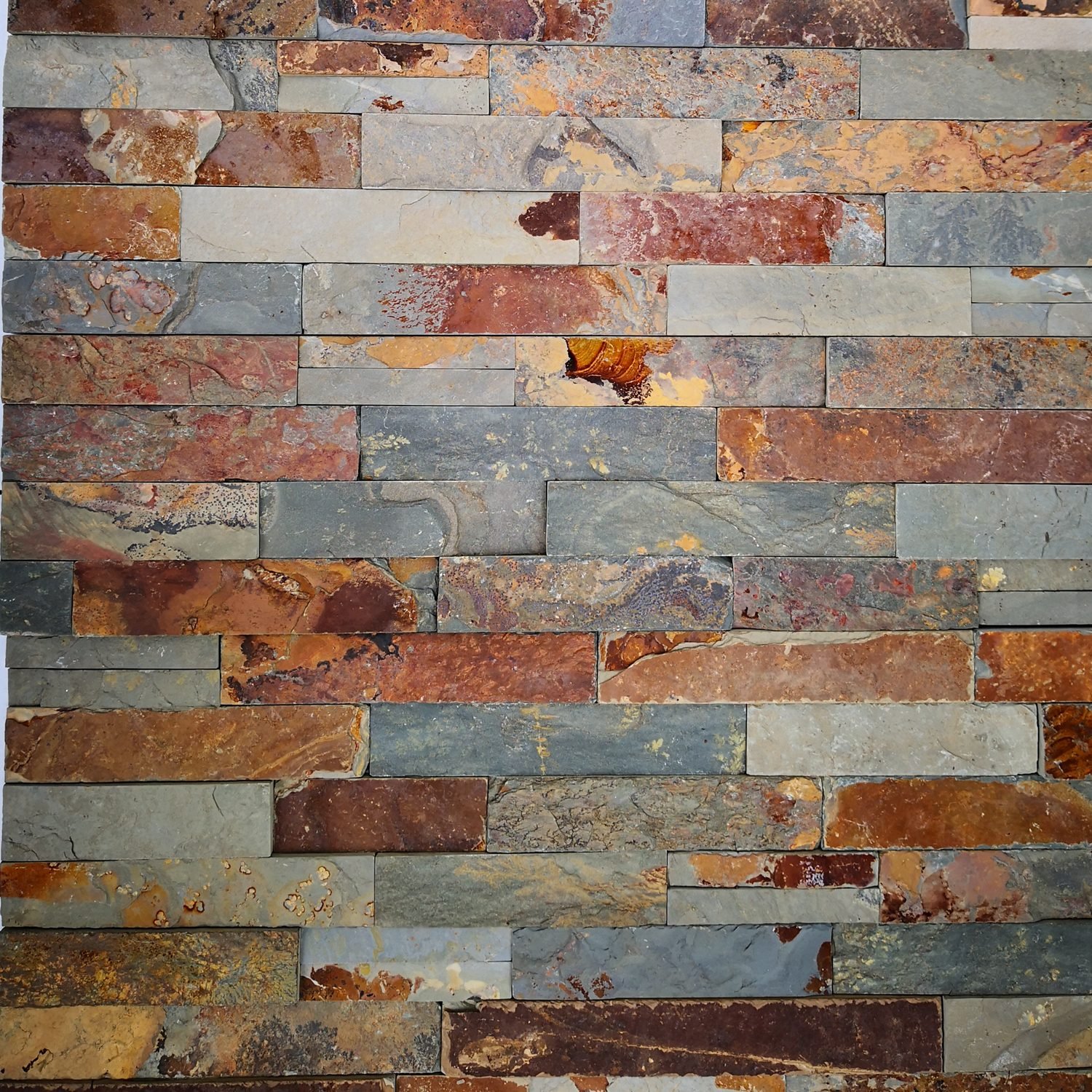
That geometry makes thin-set the right tool for the flat-backed formats in a standard product line. Thin ledgestone at 36×10 cm ultra-thin and interlocking Z-panels at 20×55 or 15.2×61 cm carry factory cement or mesh backing that presents a flat setting face. Over cement backer board, dry-set or modified thin-set gives a strong, fast-curing bond. The trade is flatness: thin-set will not level a wavy wall, and it slides off masonry that still has trowel lines.
Bare drywall is not an approved veneer substrate with any setting material; cement backer board must be screwed through the drywall into studs first. The same rule applies to thin-set as to mortar, and installers who skip it see delamination at the seam. For joint design and the flush-versus-recessed question that comes right after setting, the stacked stone joint and grout guide carries the finishing details.
4. Exterior-Grade Adhesive: The Pre-Backed Panel Shortcut
Exterior-grade construction adhesive is the elastomeric, paintable-bond product that comes in tubes and sets panels without a mortar bed. It is legitimate in exactly one configuration: a pre-backed panel on a flat, rigid, clean substrate where the panel’s own factory backing does the structural bridging. Used that way, adhesive cuts install time sharply and eliminates mortar cleanup.
The catch is what the adhesive cannot fix. Foam board is compressible, so a panel glued to rigid foam flexes under wind load and thermal movement until the bond pops. New masonry or painted surfaces may be too slick for a glue bond. And a substrate that is not flat leaves the panel bridging voids, which no adhesive film can carry. Every one of these failures is the classic “why did my glue job fail” call to a manufacturer, and the answer is always the same: the substrate was wrong, not the glue.
The factory side matters more than buyers think. Top Stone Panels bonds its backings with marine-grade epoxy bond, cement backing, or mesh backing before packing. That factory-applied bond carries the shear between stone and backing; the field adhesive or mortar only has to carry panel-to-substrate shear. Do not assume a strong factory bond lets you cut corners on the field material, but do read the difference: it is why the same panel can legitimately be adhered rather than mortared on a flat wall.
5. How Panel Backing Decides the Adhesive
The four reference backings in the catalog map one-to-one onto setting methods. A buyer who names the backing can name the adhesive; a buyer who cannot name the backing is spec-ing blind.
| Panel backing | Typical formats | Best setting method | Why |
|---|---|---|---|
| Cement backing | Z-panels 20×55 / 15.2×61 cm | Modified thin-set or Type S; mechanical fastening option | Flat setting face bonds like tile |
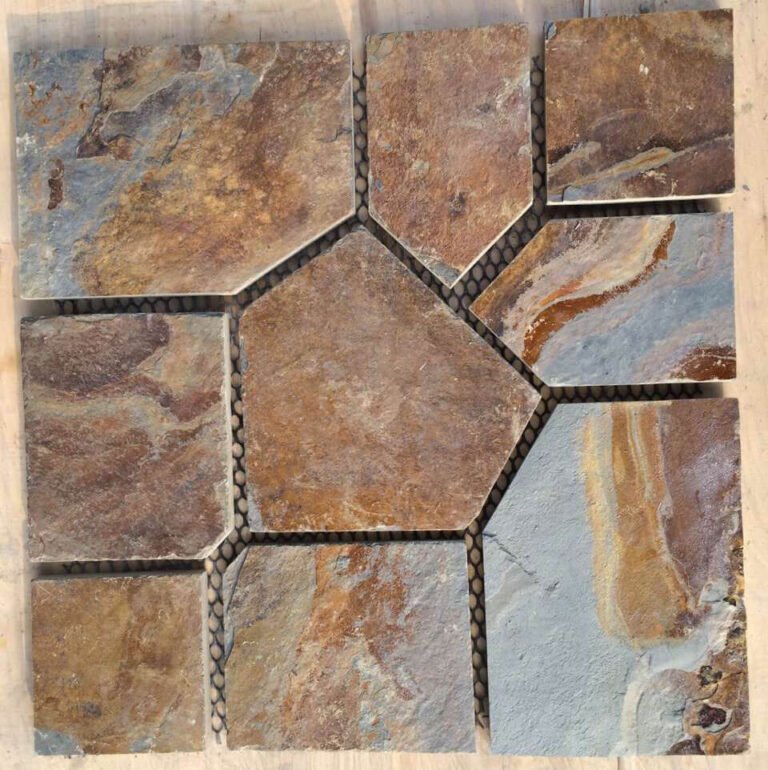
| Mesh backing | Flagstone sheets, crazy paving | Thin-set or thin mortar bed | Mesh carries sheet, mortar carries face |
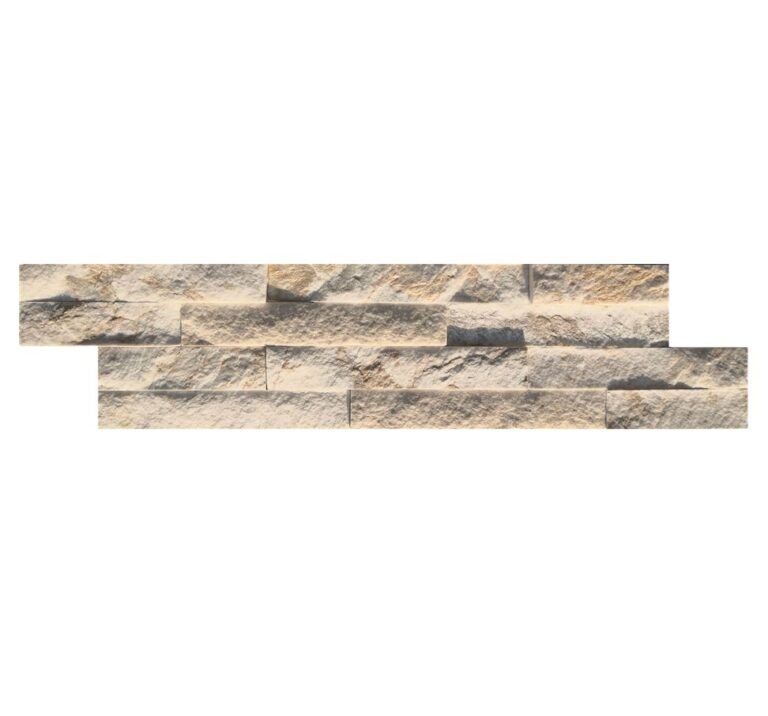
| Epoxy bond (marine-grade) | Thin ledgestone strips, custom panels | Thin-set on flat substrate; adhesive per approval | Factory bond handles stone-to-backing shear |
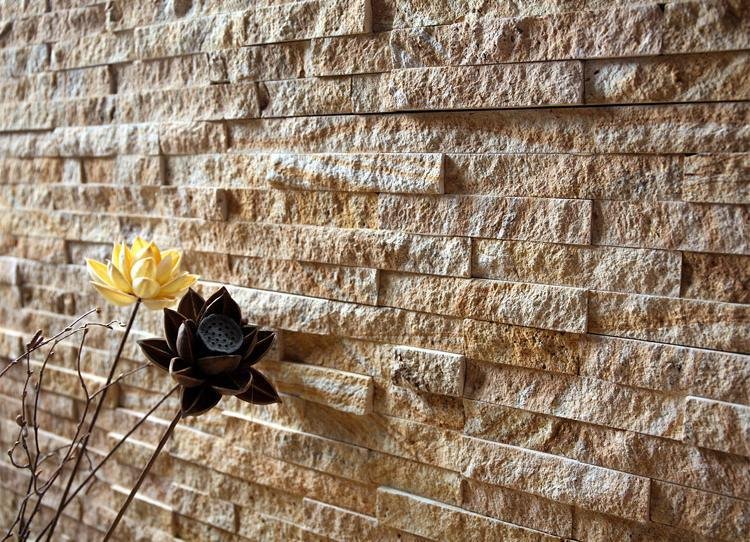
| Unbacked split face | Random stone strips, stacked stone | Full type S / N bed only | Irregular back requires bed consolidation |
Interlocking Z-panels are the format where the backing and the adhesive decision merge. Because the panels carry male-female edges and factory cement backing, they can go on flat substrates with modified thin-set or, for larger commercial facades, a mechanically fastened rainscreen route where the adhesive is no longer the load path. The Z-panel backing systems guide explains which route fits concrete, steel, and wood-framed buildings, and the interlocking Z-panel product page lists the 20×55 and 15.2×61 cm formats.
6. Which Adhesive Fits Whom
Match the setting material to the wall you are actually building. The job-type table collapses the choices into four common scenarios; the opinion column is where the decision stops being theoretical.
| Scenario | Setting material | Why |
|---|---|---|
| Interior accent wall over drywall | Polymer-modified thin-set on backer board | Fast, flat bond; backer board required |
| Exterior veneer over CMU or brick | Type S full bed | Irregular face needs consolidation |
| Exterior over wood frame with insulation | Backer board or lath + mortar, or rainscreen | Foam cannot carry adhesive or mortar |
| Large commercial facade panels | Mechanically fastened Z-panels; adhesive as sealant aid | Fastest earn-back on big elevations |
The opinion that matters most in B2B: for cold-climate exteriors over insulated framing, do not glue. The mechanical path, either metal lath with a scratch coat or a mechanically fastened rainscreen, removes the bond line from the freeze-thaw equation entirely. The extra week of install is cheaper than the call-back season.
7. Application Sequence and Joint Technique
Sequence beats enthusiasm. With any of the three families, the wall performs only as well as the last panel set, so the steps below are the ones installers should brief crews on before the first trowel.
- Verify the substrate is flat, rigid, clean, and dry; backer board over interior studs and approved lath or masonry on exteriors.
- Mix the setting material to the manufacturer’s water ratio; a stiff, just-slump batch bonds better than a thin one.
- Apply with a notch trowel sized to the panel back: roughly 1.27 cm notch for flat-backed panels, full-buttering for split faces.
- Back-butter each panel before pressing, so no hollow spots remain behind the face.
- Set to a straight reference line and keep joints consistent; stacked stone typically runs 1.3-2.0 cm joints.
- Clean as you go. Fresh mortar wipes off stone in seconds; cured mortar is a chisel job and a scar.
- Strike joints to flush or recessed while the mortar is still soft, then follow the weatherproof joint guide for exterior sealing details.
Do not set in freezing conditions or when rain can wash a fresh wall. Most adhered veneer failures trace to one of three causes: no back-buttering, a skimp coat instead of a consolidated bed, or a substrate change at a seam. Each is preventable at the trowel, which is why crew training, not product selection, is the highest-leverage variable.
8. Sourcing and Container Economics
Adhesive selection ends at the factory gate in one sense: the buyer who sources panels with the right backing removes most of the field risk before the container ships. The five product lines, their formats, and their monthly capacity are the sourcing sheet below.
| Product line | Format | Monthly capacity | MOQ / lead time |
|---|---|---|---|
| Stacked stone | 15×60 / 15×55 cm + L-corners | 80,000 m² | 1 x 20GP / 20-25 days |
| Thin ledgestone | 36×10 cm ultra-thin | 60,000 m² | 1 x 20GP / 20-25 days |
| Interlocking Z-panels | 20×55 / 15.2×61 cm | 50,000 m² | 1 x 20GP / 20-25 days |
| Thin stone veneer | Random split-face strips | 40,000 m² | 1 x 20GP / 20-25 days |
| Stone column kits | Custom 40×40 / 50×50 cm | 10,000 sets | 1 x 20GP / 20-25 days |
Before committing a container, order physical samples and set a test board with the exact setting material you plan to use. A 1-3 day sample shipment is cheaper than a rejected facade. Ask for a dated FOB Xingang quotation per line, and confirm the backing spec in writing so the field adhesive decision is documented before arrival.
FAQ
Can I glue stone veneer directly to foam insulation?
No. Foam board is compressible and not a structural substrate. Adhered stone over continuous insulation requires backer board or metal lath mechanically fastened through the insulation into framing.
Is thinset as strong as mortar for stone veneer?
On flat, rigid substrates polymer-modified thin-set carries an ANSI A118.4-class bond. On irregular split faces a full Type S mortar bed provides the support thin-set cannot give because it is applied too thin to fill an uneven back.
Do stone panels come pre-glued?
Panels arrive with factory-applied backing, such as marine-grade epoxy bond, cement backing, or mesh backing. The field setting material is a separate product chosen for the substrate, not the backing alone.
What trowel size should I use for stone veneer?
For flat-backed panels use a 1.27 cm notch trowel and back-butter each face. For irregular stone, use a full mortar bed and work the stone into position until the bed consolidates.
Can I mix mortar and thinset on one wall?
Match the setting material to each substrate section, but do not mix two wet systems in one bed. Plan the wall zone by zone so each area cures as a single system.
Conclusion
Stone veneer adhesive types are not interchangeable, and the pairing rule is simpler than the product literature makes it: the backing, the substrate, and the climate decide the setting material. Type S or N mortar carries irregular stone in full beds, polymer-modified thin-set bonds flat-backed panels on rigid substrates, and exterior adhesive is a speed tool that earns its keep only where the substrate is flat and the panel is pre-backed.
For buyers sourcing container quantities, the decision starts before the container: confirm the backing spec in writing, test the setting material against a physical sample, and document the adhesive choice per project. Top Stone Panels ships all five product lines at a one-20GP MOQ with 20-25 working-day production, and the sample board you order today is the bond test that protects the facade tomorrow.
Key Takeaways
- Full-bed Type S or N mortar is the exterior standard for irregular split stone; thin-set is the flat-substrate specialist.
- Adhesive on foam is a freeze-thaw failure waiting for winter; use backer board or lath through insulation.
- Factory backing, whether epoxy, cement, or mesh, decides which field setting material fits.
- A one-20GP MOQ, 20-25 day production, and 1-3 day samples make bond testing cheap before a container ships.
Talk to Top Stone Panels before you spec the adhesive: the factory can confirm the backing on each line and point you to the setting method that matches it.