Every week, importers discover that a “$12/sqm FOB” quote and a “$18/sqm DDP” quote for the same product can land at nearly identical total cost once all logistics charges are tallied. The difference is not price. It is who controls the supply chain and where risk transfers between seller and buyer.
This guide breaks down the four Incoterms that matter most for stone panel imports from China: FOB Xingang, CIF destination port, DDP door-to-door, and EXW factory pickup. You will see real cost ranges, risk transfer points, and a decision framework built for building material distributors and procurement managers making actual purchasing decisions.
What Are Incoterms and Why They Matter for Stone Imports
Incoterms (International Commercial Terms) are standardized three-letter trade codes published by the International Chamber of Commerce. They define exactly where the seller’s responsibility ends and the buyer’s begins across three dimensions: cost (who pays for what), risk (who bears loss or damage), and logistics obligations (who arranges transport, customs, and documentation).
For natural stone products, Incoterms carry outsized importance because of three factors specific to this product category:
- Weight and volume: A 20GP container of stone panels typically weighs 18-24 metric tons. Ocean freight charges are heavily weight-sensitive for stone, making the freight component a significant percentage of landed cost.
- Fragility: Natural stone cladding requires careful handling. Risk transfer points determine who files the insurance claim when panels arrive cracked.
- Regulatory requirements: Wood packaging must comply with ISPM 15 fumigation standards, and certain stone products require Certificates of Origin for preferential duty rates.
The four Incoterms relevant to stone panel imports from China are EXW (Ex Works), FOB (Free On Board), CIF (Cost, Insurance, and Freight), and DDP (Delivered Duty Paid). Each shifts a different slice of cost and risk between supplier and buyer.
FOB Xingang: The Standard Term for Chinese Stone Exports
FOB Xingang is the default trade term for the vast majority of natural stone exports from northern China. Xingang (literally “new port”) is the main container terminal of Tianjin port, located roughly 250 km from the stone manufacturing cluster in Hebei province where Top Stone Panels operates its production facilities.
What FOB Xingang Includes
When Top Stone Panels quotes you FOB Xingang, the price covers:
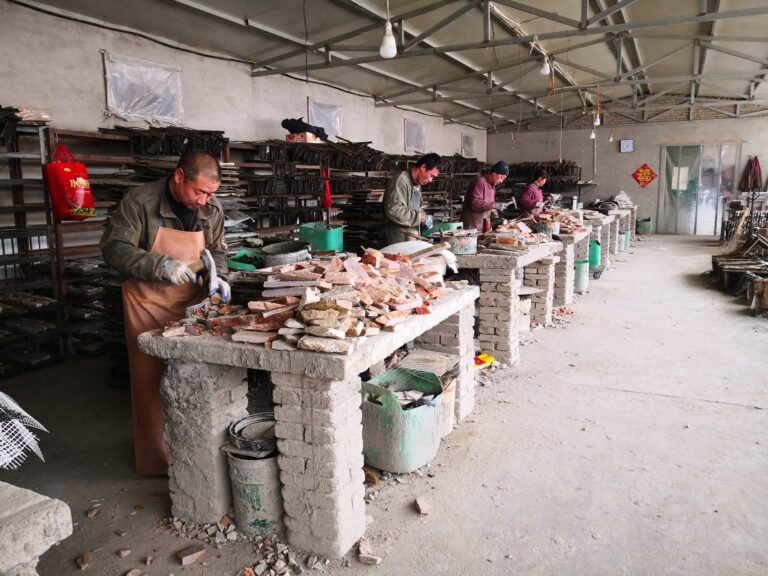
- Manufacturing of stone panels to your specifications
- Quality inspection and pre-shipment photos (HD loading video provided)
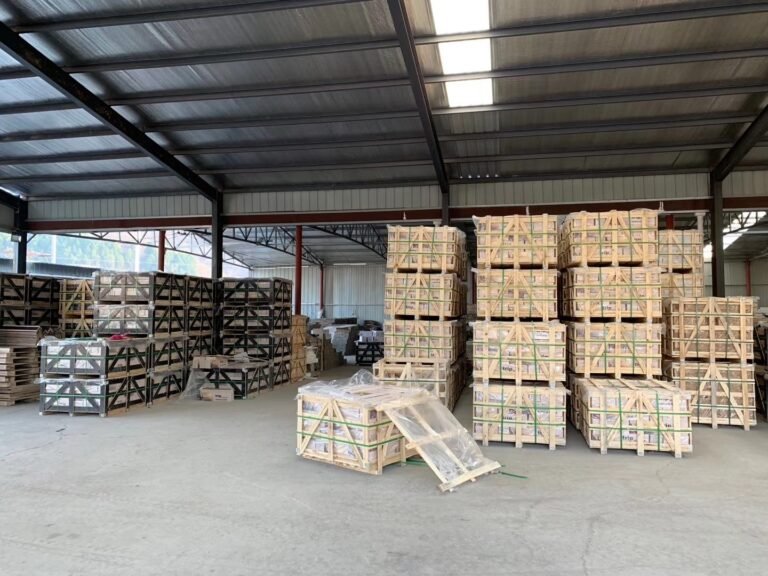
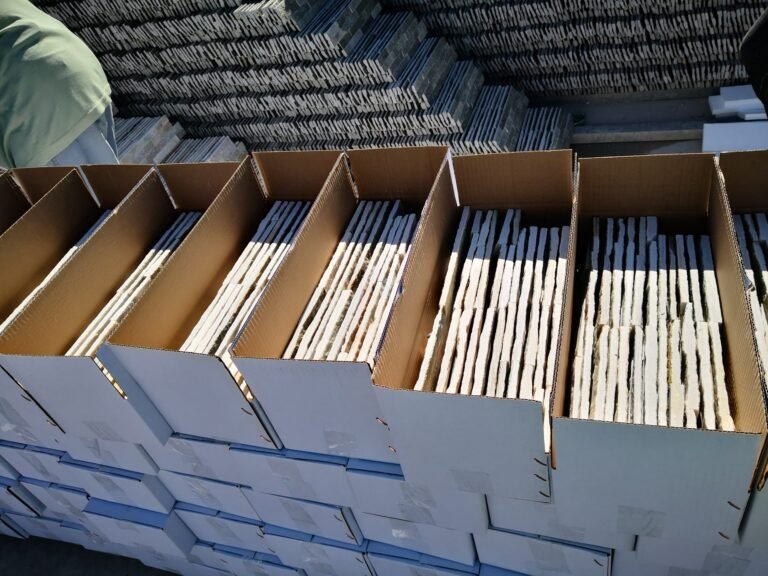
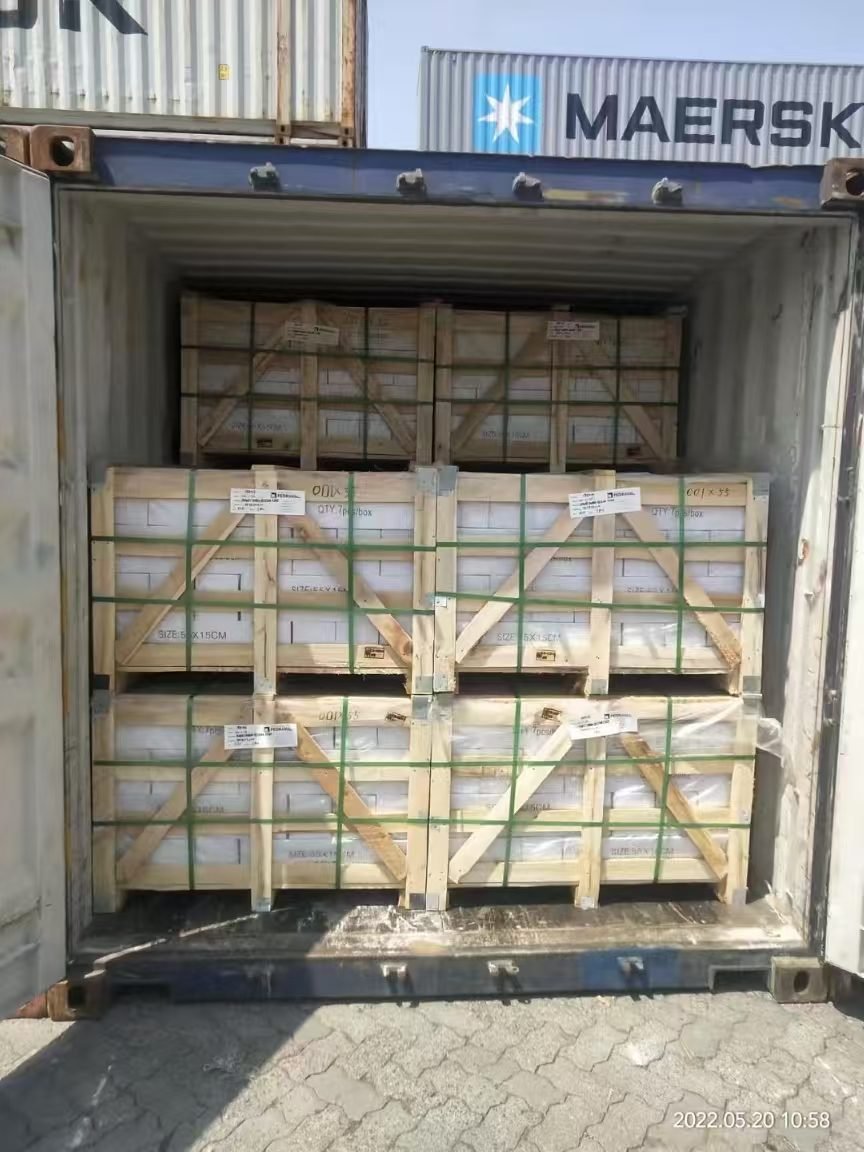
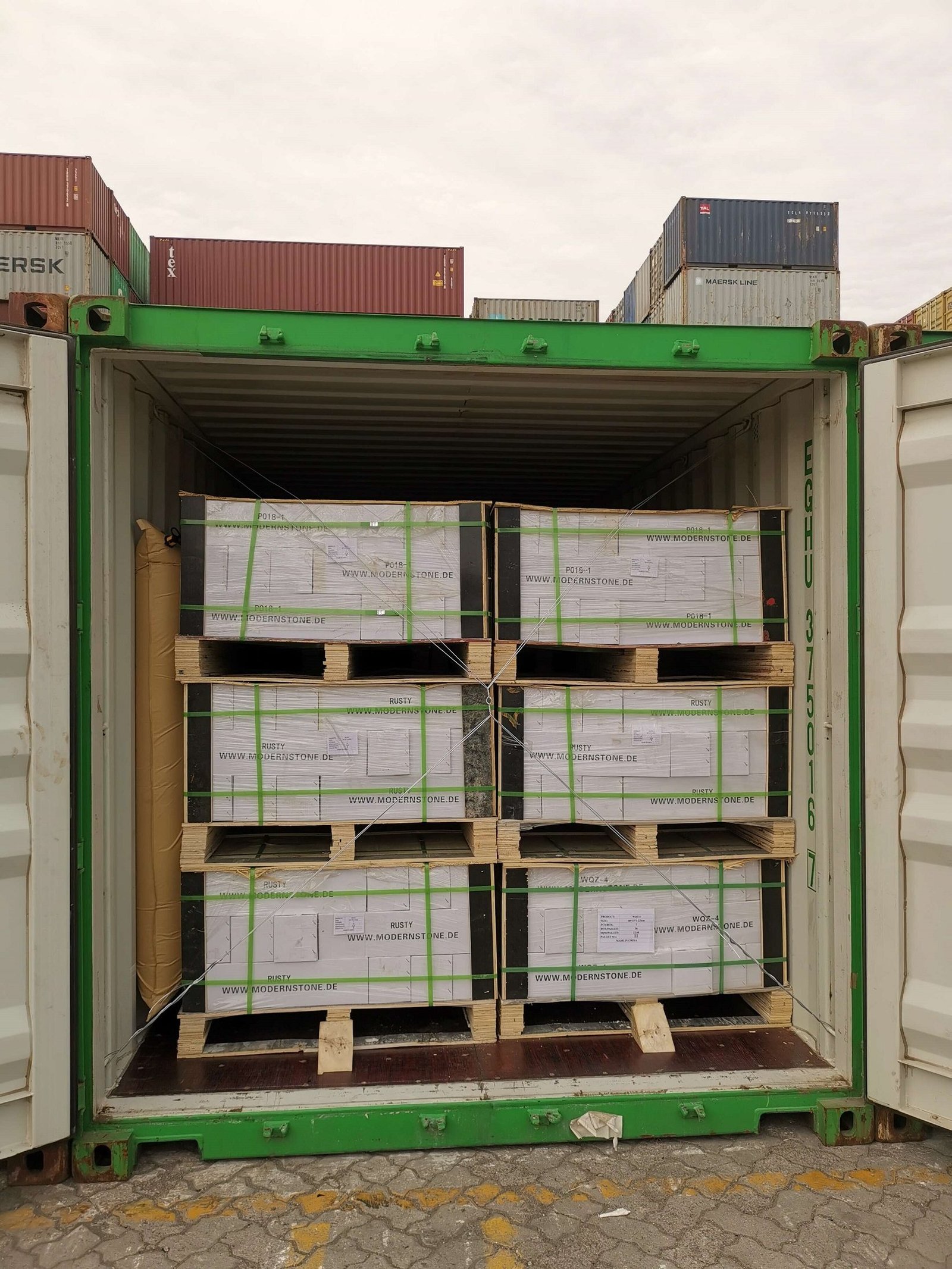
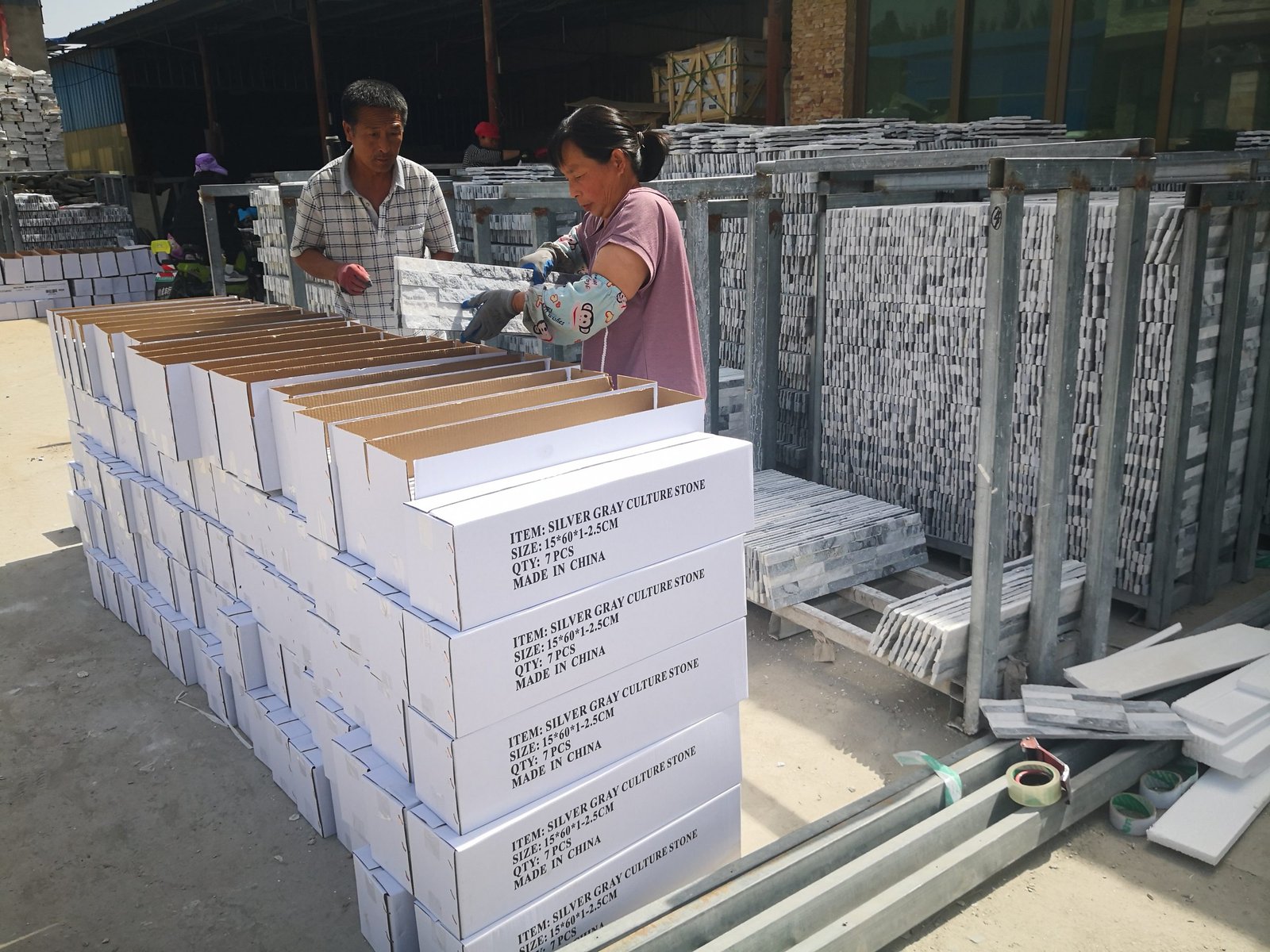
- Export packaging under the Zero-Breakage Protocol: 3-5 layer reinforced cartons, fumigation-free wooden or plywood pallets, 4-6 steel straps, and industrial airbag fill
- Inland trucking from factory to Tianjin Xingang port
- Chinese export customs declaration and documentation
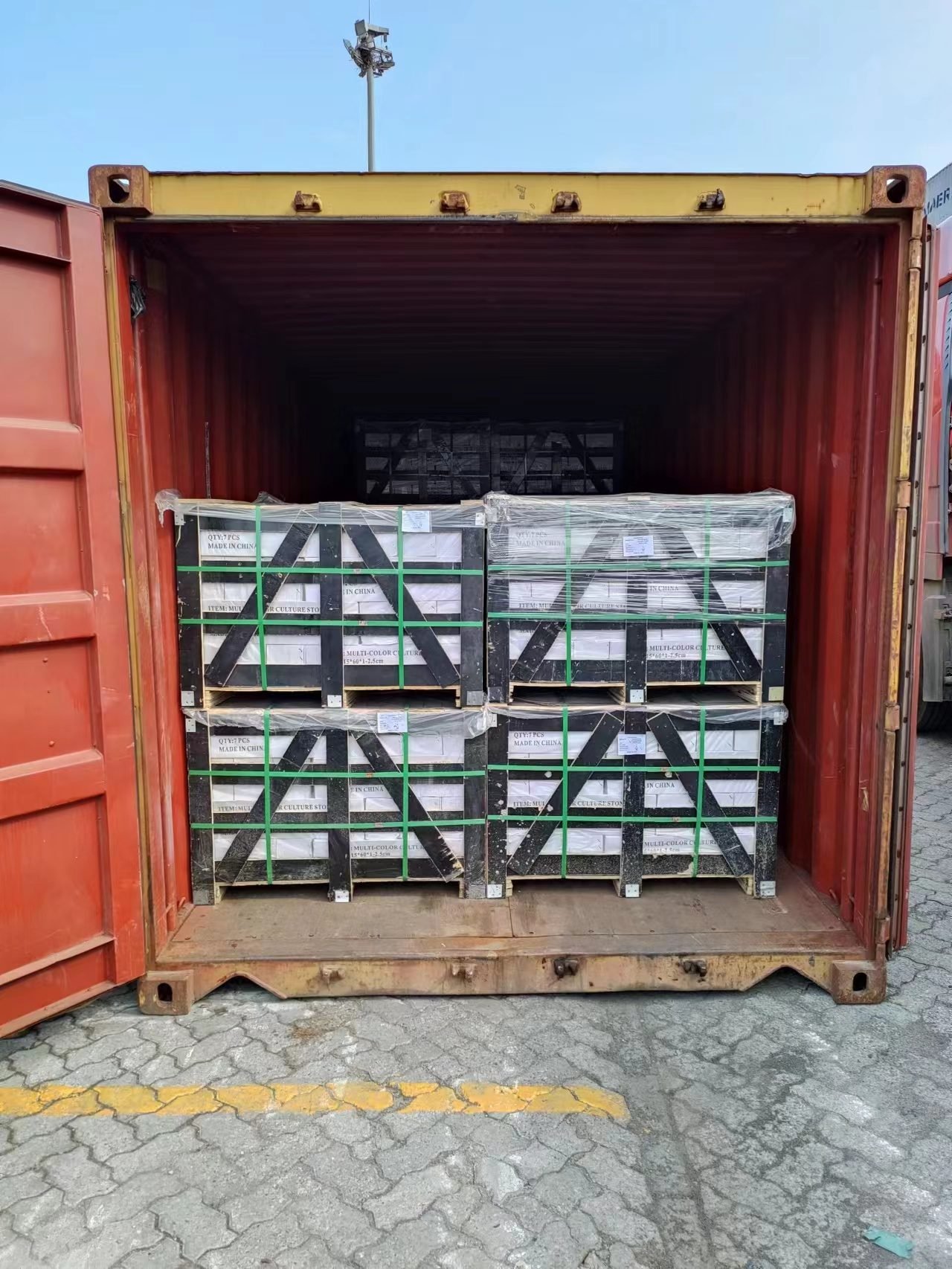
- Container loading at the port terminal
- ISPM 15 compliant packaging certification and Certificate of Origin
What the Buyer Handles Under FOB
Once the container passes the ship’s rail at Xingang, all subsequent costs and risks transfer to the buyer:
- Ocean freight to destination port (typically $2,500-$4,000 per 20GP to US West Coast; $3,200-$5,500 to European ports)
- Marine cargo insurance (0.3%-0.5% of declared cargo value)
- Destination port terminal handling charges (THC): $800-$1,500 depending on the port
- Import customs clearance and brokerage fees: $150-$400
- Applicable import duties and taxes based on HS classification
- Inland freight from destination port to your warehouse
Why FOB Dominates Stone Trade
Experienced stone importers prefer FOB because it gives them direct control over the two most expensive and variable cost components: ocean freight and destination logistics. Building material distributors who import multiple containers per month negotiate volume-based freight rates with their own forwarders that are often lower than what a Chinese supplier can offer. FOB also provides full visibility into freight costs, which matters when you need to calculate precise landed cost per square meter for your wholesale pricing.
The payment structure under FOB is straightforward. Top Stone Panels operates on 30% T/T deposit at order confirmation, with the remaining 70% due before shipment. Before the balance payment, you receive loading video and HD photo confirmation of your container. This is standard practice across the Chinese stone export industry and protects both parties.
CIF Destination: When the Seller Handles Ocean Freight
Under CIF (Cost, Insurance, and Freight), the supplier takes on additional responsibility beyond the FOB scope: arranging and paying for ocean freight to your destination port, plus purchasing marine cargo insurance on your behalf.
What CIF Includes Beyond FOB
A CIF quote from Top Stone Panels covers everything in the FOB scope, plus:
- Ocean freight from Tianjin Xingang to your named destination port
- Marine cargo insurance (minimum cover per Institute Cargo Clauses C, though buyers can request Clause A for broader coverage)
- Freight documentation and bill of lading arrangement
Where Risk Transfers Under CIF
This is where many buyers get confused. Under CIF, the seller pays for freight and insurance to the destination port, but risk transfers to the buyer at the port of origin the moment the container is loaded on board the vessel. If the container is damaged during ocean transit, the buyer files the insurance claim, not the seller. The seller has fulfilled their obligation by arranging and paying for the freight and insurance policy.
From the destination port onward, all costs shift to the buyer: terminal handling charges, import clearance, duties, taxes, and inland delivery.
When CIF Makes Sense for Stone Buyers
CIF is practical in these situations:
- You are a first-time importer without an established relationship with a freight forwarder
- You are ordering a single container and cannot negotiate competitive standalone freight rates
- Your procurement team lacks bandwidth to manage international logistics
- You want a single point of contact for production and shipping coordination
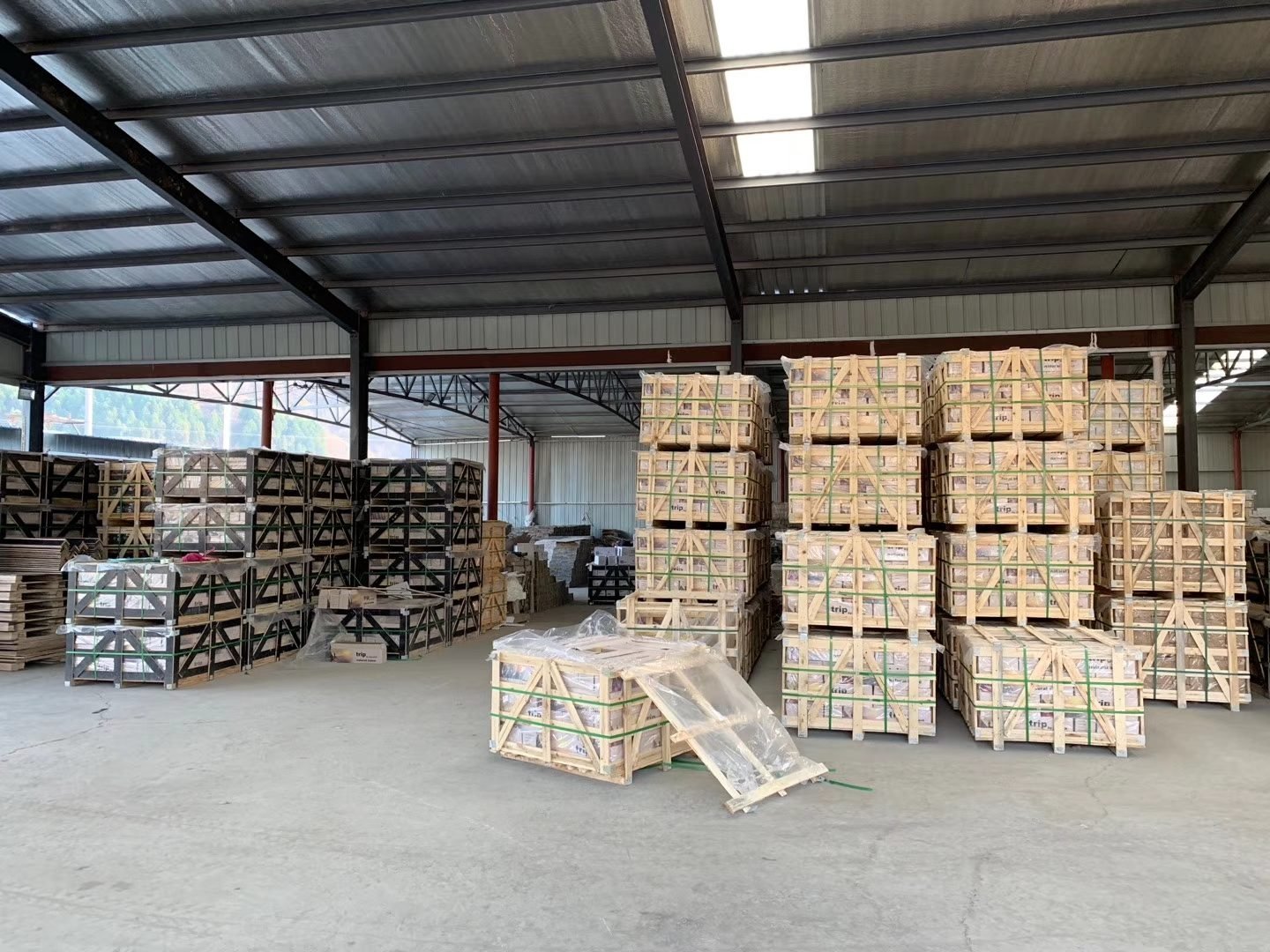
A supplier shipping over 220 containers per year has established freight contracts with major shipping lines. That volume leverage can translate to ocean freight rates that are competitive with or better than what a single-container buyer secures independently. For products like thin stone veneer or thin ledgestone panels, where weight per container is at the lower end of the range, CIF can be a cost-effective choice.
DDP Delivery: Door-to-Door Stone Shipping Explained
DDP (Delivered Duty Paid) is the most comprehensive Incoterm available. The supplier handles everything from factory production to delivery at your warehouse door, including import customs clearance and payment of all applicable duties and taxes in your country.
Full Scope of DDP for Stone Panels
A DDP quote covers:
- All FOB scope items (production, packaging, inland transport, export customs)
- Ocean freight to destination port
- Marine cargo insurance
- Destination port terminal handling and unloading
- Import customs clearance in the buyer’s country
- Payment of all import duties, tariffs, and applicable taxes
- Inland trucking from the destination port to your specified delivery address
Why DDP Is Rare for Stone Products
DDP is the least common Incoterm in the stone trade, and for practical reasons:
- Cost opacity: The buyer cannot see the breakdown between product cost, freight, and duty payments. This makes it difficult to audit landed cost or negotiate improvements.
- Tax complications: In some jurisdictions, the seller must register for tax purposes in the buyer’s country to pay VAT or GST, creating administrative overhead.
- Weight penalty: Stone panels are heavy. The per-kilogram trucking cost for the last-mile delivery from port to warehouse is substantial, and suppliers add a margin on top of actual charges.
- Customs complexity: Each country has different HS classification rules for natural stone. A Chinese supplier may not have the expertise to optimize duty rates or handle customs examinations in the destination country.
When DDP Works
DDP can be the right choice for:
- Project-based buyers who need a fixed, all-in price for budgeting purposes
- Companies without any import logistics capability or customs broker relationships
- Small orders (sample containers or trial shipments) where the administrative overhead of managing freight independently is not justified
Top Stone Panels offers DDP terms to qualified buyers in North America and Europe. However, for recurring orders above one container, the company generally recommends FOB or CIF paired with the buyer’s own customs broker and freight forwarder. The total cost is usually lower, and the buyer maintains full visibility and control. If you are evaluating whether real stone versus manufactured stone panels makes sense for your project, understanding DDP pricing for both can help with a true apples-to-apples comparison.
FOB vs CIF vs DDP: Cost Comparison for Stone Panels
The following table breaks down approximate cost components for a 20GP container of stacked stone panels (approximately 450-550 sqm per container) shipped from Tianjin Xingang to Los Angeles. All figures are in USD and represent typical 2024-2025 market ranges.
| Cost Component | FOB Xingang | CIF Los Angeles | DDP Los Angeles Warehouse |
|---|---|---|---|
| Product cost (stone panels + packaging) | $5,400 – $8,250 | $5,400 – $8,250 | $5,400 – $8,250 |
| Inland trucking (China factory to Xingang port) | Included | Included | Included |
| Export customs + documentation | Included | Included | Included |
| Ocean freight (Xingang to LA) | $2,500 – $3,800 (buyer pays) | Included | Included |
| Marine cargo insurance | $25 – $45 (buyer pays) | Included | Included |
| Destination port THC + handling | $900 – $1,400 (buyer pays) | $900 – $1,400 (buyer pays) | Included |
| Import customs brokerage | $200 – $350 (buyer pays) | $200 – $350 (buyer pays) | Included |
| Import duty (varies by HS code) | Buyer pays at entry | Buyer pays at entry | Included in quote |
| Inland trucking (LA port to warehouse) | $400 – $1,200 (buyer pays) | $400 – $1,200 (buyer pays) | Included |
| Total estimated landed cost | $9,425 – $15,045 | $9,100 – $14,500 | $10,200 – $16,500 |
| Approximate cost per sqm (landed) | $17.14 – $33.43 | $16.55 – $31.82 | $18.55 – $36.67 |
Note: Product cost ranges reflect standard stacked stone panel pricing. Premium products like interlocking Z-panels or custom-cut flagstone will be at the higher end. Actual freight rates fluctuate with market conditions. These figures are for planning purposes and should be confirmed with current quotes.
Which Incoterm Should You Choose? Decision Framework
The right Incoterm depends on your import experience level, internal logistics capability, and order volume. Here is a practical decision framework:
Choose FOB Xingang If:
- You import at least 5-10 containers per year and have a relationship with a freight forwarder
- Your company has a logistics or procurement team that manages international shipping
- You want full cost transparency and the ability to negotiate freight independently
- You need to control shipment routing, carrier selection, or consolidate cargo from multiple Chinese suppliers
- You are purchasing stone columns or other heavy products where freight cost per unit is a major budget line
Choose CIF Destination If:
- You are placing your first order from China and do not yet have a freight forwarder
- You order 1-4 containers per year and cannot negotiate volume freight discounts
- Your team lacks experience with ocean freight booking and documentation
- You want the supplier to handle shipping logistics while you focus on import clearance at destination
Choose DDP If:
- You need a single, fixed delivered price for project budgeting or client quoting
- Your company has zero import experience and no customs broker
- You are ordering a trial container to evaluate product quality before committing to larger volumes
- The administrative burden of managing customs, duties, and inland freight outweighs the cost premium
Choose EXW (Ex Works) If:
- You have a freight forwarder with a China office that can handle pickup, export customs, and consolidation
- You are consolidating products from multiple Chinese factories into one container
- You want the lowest possible unit price and are willing to manage all logistics yourself
EXW deserves a note of caution. While the unit price is lowest, the buyer assumes responsibility from the factory gate onward, including Chinese export customs clearance. Many first-time importers underestimate the complexity of arranging inland trucking, export documentation, and port handling in China without a local agent. If you are comparing thin veneer versus full thickness stone options, the EXW price difference between the two can be misleading once you add full logistics costs.
Common Mistakes B2B Buyers Make with Stone Import Terms
After 18+ years of exporting natural stone products, the Top Stone Panels team has seen the same mistakes repeat across new importers. Avoiding these errors can save thousands of dollars and weeks of delay per shipment.
Mistake 1: Confusing Cost Transfer with Risk Transfer
Under CIF, the seller pays for freight to the destination port, but risk transfers at the port of origin. Many buyers assume that because the seller “handles shipping,” the seller is responsible if goods arrive damaged. That is incorrect. Once the container is loaded on board at Xingang, damage during transit is the buyer’s problem. The buyer must file the insurance claim with the policy the seller purchased on their behalf.
Mistake 2: Underestimating Destination Port Charges
Terminal Handling Charges (THC), port congestion surcharges, chassis fees, and demurrage penalties can add $1,500-$3,000 to a container’s cost if not anticipated. Demurrage charges at US ports typically start at $150-$300 per day after the free period (usually 4-5 days) expires. Buyers who delay customs clearance or lack a trucking appointment can accumulate these charges rapidly.
Mistake 3: Ignoring ISPM 15 Compliance
International Standards for Phytosanitary Measures No. 15 (ISPM 15) requires that all solid wood packaging materials used in international trade be heat-treated or fumigated and stamped with a certification mark. Stone panels are often shipped on wooden pallets or in wooden crates. If the packaging is not ISPM 15 compliant, customs authorities at the destination port can refuse entry, order re-export, or mandate on-site fumigation at the importer’s expense.
Top Stone Panels uses fumigation-free plywood pallets as standard, which are exempt from ISPM 15 requirements. For buyers who specifically request solid wood crates, ISPM 15 certified treatment and stamping is applied. This is a detail that a proper factory audit should verify.
Mistake 4: Not Budgeting for Customs Examination
Approximately 3-5% of containers entering US ports are selected for customs examination (VACIS exam, CET exam, or MET exam). The cost of the examination ($250-$1,000+) is borne by the importer, regardless of whether any violation is found. Under FOB and CIF, this cost is always the buyer’s responsibility. Budget a small contingency for this possibility.
Mistake 5: Quoting Project Prices Based on FOB Without Adding Logistics
Construction project estimators sometimes plug the FOB unit price into their bid calculations without factoring in freight, insurance, duties, and last-mile delivery. The gap between FOB price and actual landed cost can be 40-80% for stone products, depending on destination. Always calculate landed cost before submitting project bids. Our guide on how to source stone cladding from China covers the complete procurement workflow including landed cost calculation.
Frequently Asked Questions About Stone Export Incoterms
What is the most common Incoterm for importing stone from China?
FOB Xingang is the most widely used Incoterm for natural stone panel exports from China. The supplier handles production, export packaging, inland transport to the port, customs clearance, and container loading. The buyer manages ocean freight, insurance, and all destination logistics. This split gives experienced importers maximum control over freight costs while keeping the supplier responsible for everything within China’s borders.
What does FOB Xingang include for stone panel shipments?
FOB Xingang covers product manufacturing, quality inspection, export-standard packaging (reinforced cartons on fumigation-free pallets with steel straps and airbag fill), trucking from factory to Tianjin Xingang port, export customs documentation, and container loading. The supplier’s risk and cost obligation ends once the container is loaded on board the vessel. ISPM 15 certification and Certificate of Origin are included.
Is CIF more expensive than FOB for stone imports?
The CIF quoted price is higher because it includes ocean freight and insurance. However, total landed cost under CIF can be competitive with or even lower than FOB if the supplier ships high volumes and negotiates favorable freight rates. A supplier handling 220+ containers per year typically secures better ocean freight pricing than a first-time importer booking a single container. The real trade-off is control over carrier selection and cost transparency.
Can Top Stone Panels ship DDP to my warehouse?
Yes. Top Stone Panels offers DDP delivery to warehouses in North America and Europe. DDP covers all logistics from factory to your door, including ocean freight, import clearance, duty payment, and final truck delivery. While convenient, DDP is the most expensive Incoterm for stone products due to weight-based logistics costs. For recurring orders, the company recommends FOB or CIF with the buyer’s own forwarder for better cost control.
What additional costs should I expect beyond FOB price?
Budget for ocean freight ($2,500-$4,000 per 20GP to major ports), marine insurance (0.3%-0.5% of cargo value), destination port terminal handling ($800-$1,500), customs brokerage ($150-$400), import duties (varies by HS code and country), and inland trucking to your warehouse. A realistic total logistics add-on for a 20GP container under FOB terms is $4,000-$8,000 depending on destination, duty rate, and local charges.
Making the Right Choice for Your Stone Import Business
The Incoterm you select shapes your entire import operation: cost structure, risk exposure, administrative workload, and ultimately your margin on every container of stone panels that arrives at your warehouse. There is no universally “best” option. FOB Xingang gives experienced importers maximum control and cost transparency. CIF simplifies logistics for buyers who prefer to focus on their core business rather than freight management. DDP offers turnkey convenience at a premium.
What matters is that you make this decision with full visibility into every cost component, not after discovering unexpected port charges on your first shipment. The cost comparison table in this guide provides the framework. Your actual numbers will depend on your destination port, order volume, and product specifications.
Ready to get a detailed FOB quote for your next stone panel order? Top Stone Panels has been exporting natural stone cladding from Hebei province for over 18 years, shipping 220+ containers annually from Tianjin Xingang. Whether you need FOB, CIF, or DDP terms, the team will provide a transparent cost breakdown so you can calculate your exact landed cost.
Production lead time is 20-25 working days (25-30 days for first orders with custom carton printing). Sample turnaround is 1-3 days. MOQ is one 20GP container per product.