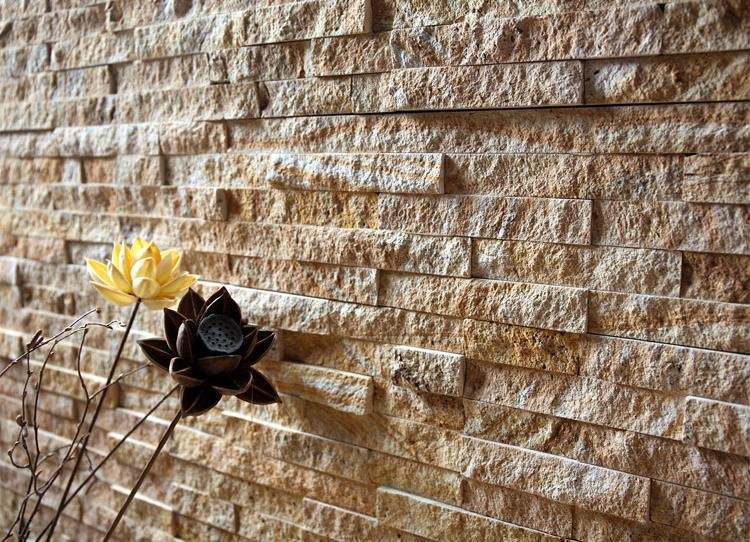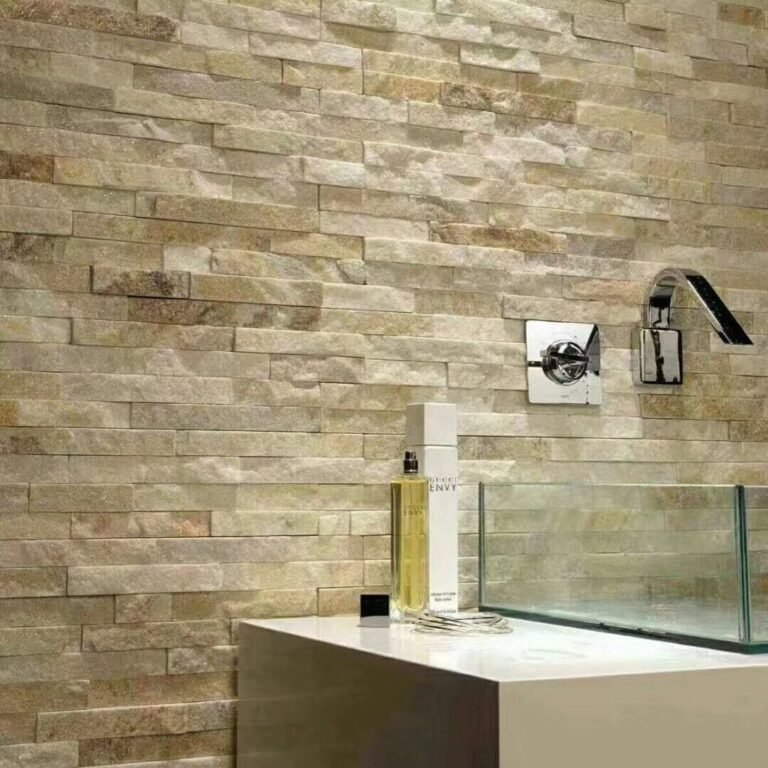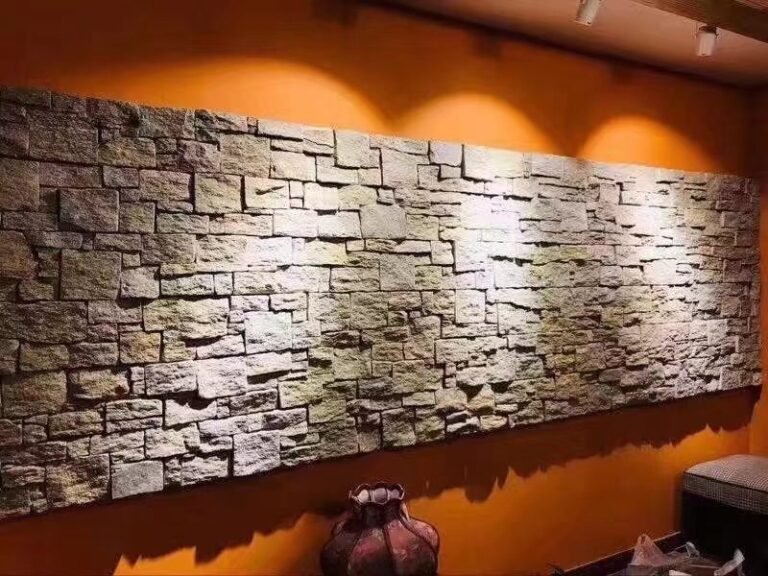
Walkways get more daily contact than any other surface on a property. They get walked on in rain, scraped by snow shovels, washed by sprinklers, and they frame the front door that buyers judge first. Flagstone solves the walkway problem with a material that is quarried rather than manufactured — and the natural split face of slate flagstone stays grippy in the wet, which is exactly what a path needs in November.
What separates an ordinary stone path from a walkway people photograph is the layout. The same flagstone can read as calm and formal, rugged and organic, or minimal and modern depending on joints, shapes, and plantings. This guide covers the five flagstone walkway designs that earn their keep in residential landscape work, with the base, joint, and material notes that make each one last.
- The five proven flagstone walkway layouts: random ashlar, crazy paving, stepping stones, mortared paths, and poolside salt-resistant walks.
- Flagstone is not one product — stone shape, joint width, and joint material define the design as much as the rock does.
- Natural slate flagstone is non-slip when wet and salt-resistant, making it the standard for pool surrounds and cold-climate paths.
- Base and joints decide longevity: compacted gravel plus bedding sand for sand-set paths, concrete for mortared or vehicle-loaded paths.
- Top Stone Panels ships flagstone and crazy paving at 30,000 m²/month with samples in 1-3 days and a 1x20GP MOQ.
Why Flagstone for Walkways
Walkway materials fail in predictable ways. Concrete develops control joints and cracks — control joints that collect dirt no matter how well it was designed. Pavers can shift, chip at the edges, and lose color because the pigment is a surface layer. Flagstone fails at none of those points: it is quarried rock, its color runs through the full thickness, and the texture is native to the mineral.
Two properties drive flagstone’s dominance in walkways specifically. First, the natural split face of slate flagstone is inherently non-slip in wet conditions — the surface is stepped and crystalline, not polished. Second, dense natural slate is salt-resistant, so winter de-icing and coastal spray do not attack it the way they attack softer masonry. Those two qualities explain why the same material handles both a northern New England doorstep and a Florida pool surround.
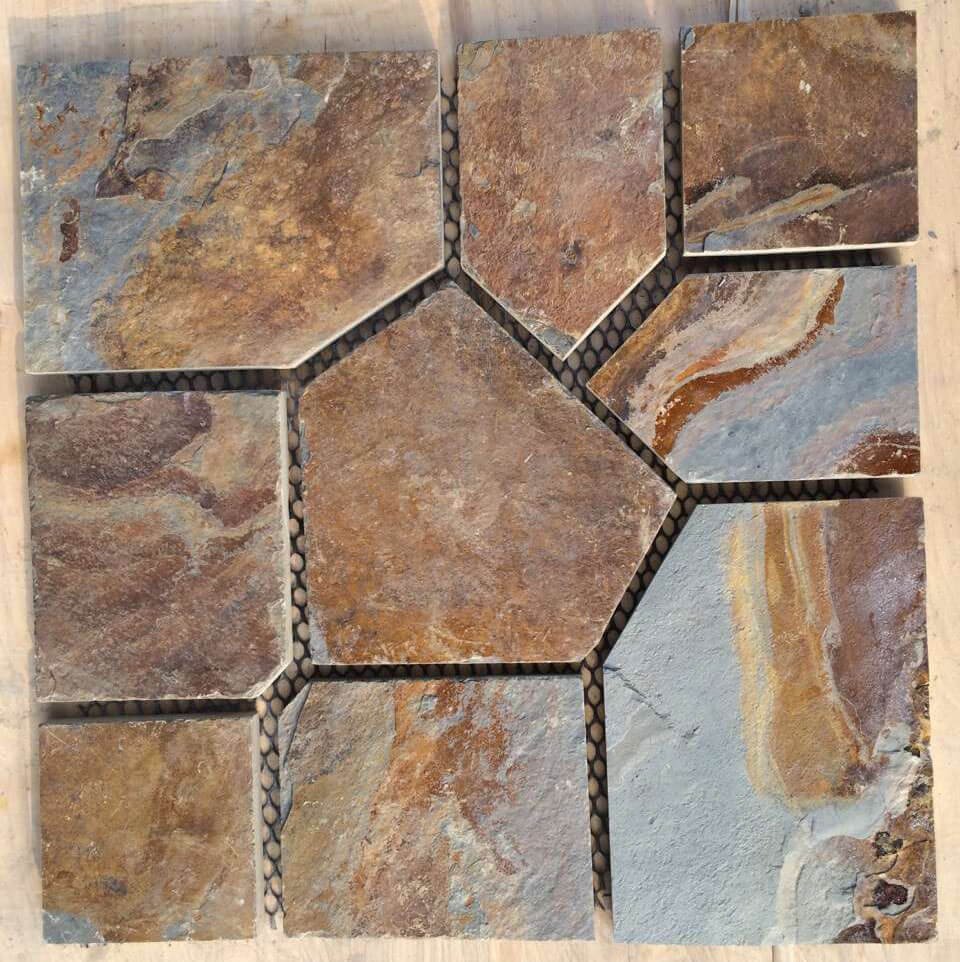
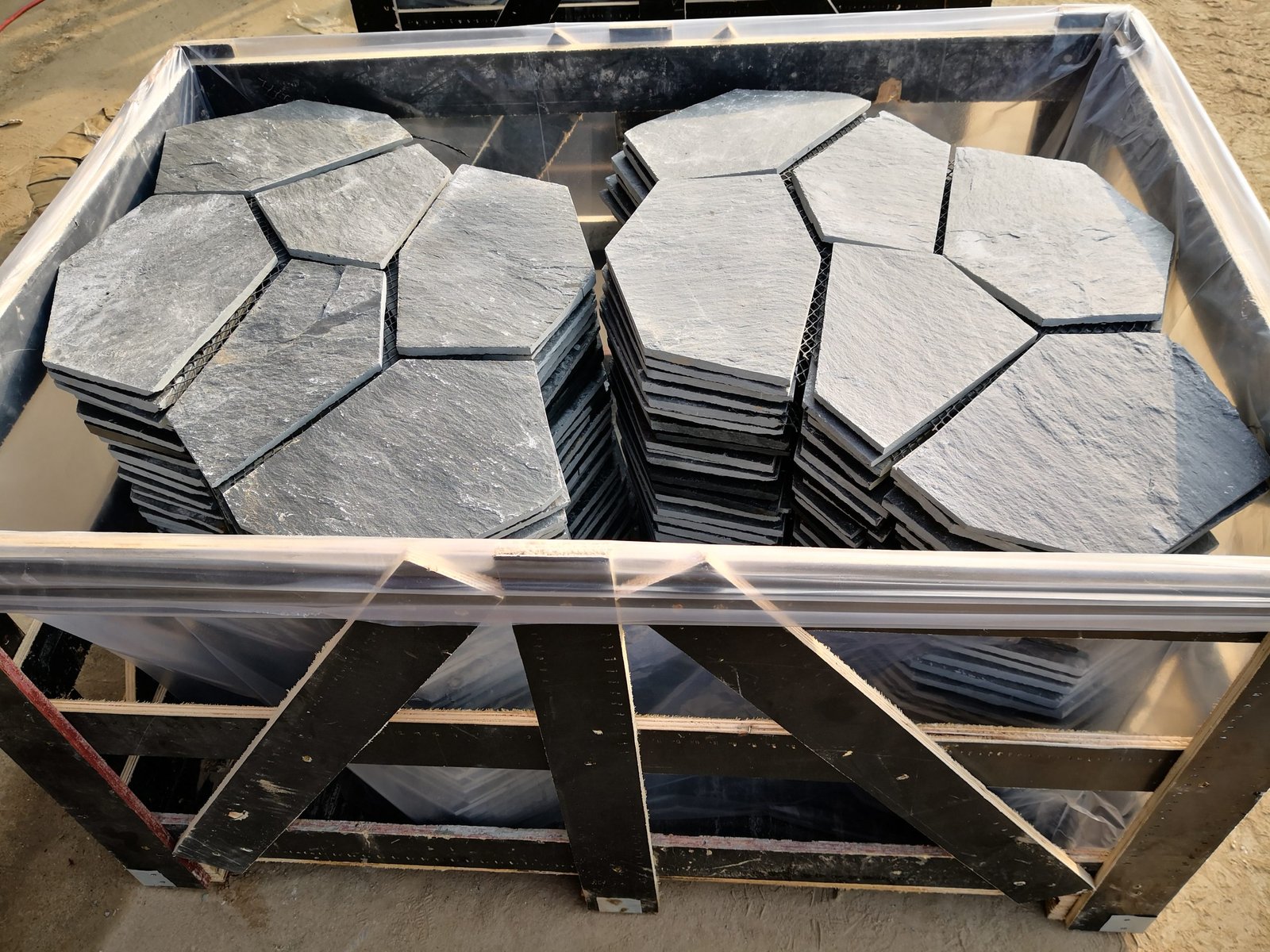
Flagstone arrives two practical ways: as individual stones in random shapes for laying, or as mesh-backed crazy paving — irregular pieces pre-arranged on netting that the crew sets as manageable sections. The mesh format is a labor saver on tight install schedules; the loose stone is the classic flexible format for creative layouts. Both come from the same quarry vein selection, and the flagstone buyer’s guide explains the formats, thicknesses, and sourcing basics end to end.
Design 1: Random Ashlar Walkway
The look: rectangular flagstone pieces laid in staggered courses with narrow, consistent joints — the classic “courtyard” flagstone pattern you see at Mediterranean hotels and English-garden estates. Because every edge is a clean rectangle, the eye reads order even when the sizes alternate.
Best for: front entry paths, formal gardens, and anyone who wants a structured stone path that still has the texture of real rock. It is also the easiest flagstone layout for a homeowner to plan, because the pieces control the grid.
What to know: Random ashlar rewards stone that is cut with control. The factory-side term is an ashlar pattern — coursed, in contrast to the classic random versus linear versus ashlar family of patterns. Keep joint widths tight — roughly the width of a thumb or less — and fill with sand or a fine gravel. Every 2-3 m², stop and step back: the course rhythm should look hand-set, not machine-gridded.
This walkway design pairs naturally with an entrance renovation, and the full ecosystem of stone around the front door — including porch column and pillar options — is covered across the design collection.
Design 2: Crazy Paving Walkway
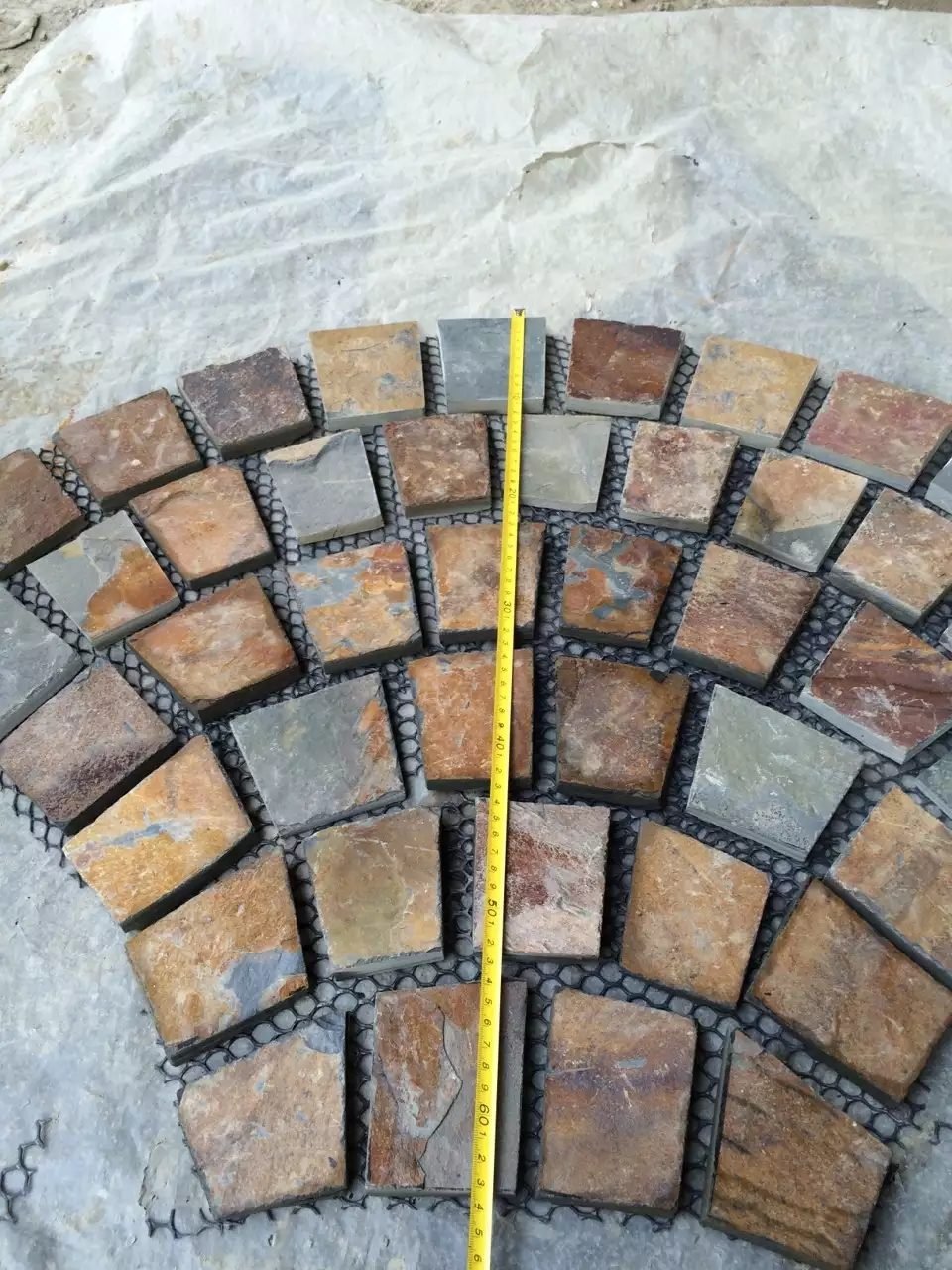
The look: irregular, jigsaw-like pieces of slate fitted together with wide, organic joints — the “crazy paving” classic. No two pieces match, and the pattern reads as geology arranged by hand.
Best for: cottage gardens, woodland paths, coastal properties, and modern naturalistic landscapes. The wide joints become a design feature, and you fill them with gravel, ground cover, or small planting to soften the path into the garden.
What to know: Crazy paving is where random pieces create the design — a jumble of shapes in the cart becomes a floor plan on the ground. The mesh-backed format from Top Stone Panels comes as pre-arranged netted sections, which is a big labor saver here because there is no pattern to dry-fit by eye. The product runs 30,000 m² per month of flagstone and crazy paving, and the difference between random and patterned crazy paving is broken down in the crazy paving layout guide.
For joint material, keep it simple: compacted gravel in a color that echoes the stone, or ground cover if you want the path to disappear into the planting bed. Wide joints are also the most forgiving if the base settles a few millimeters — the joints absorb it instead of cracking.
Design 3: Stepping Stone Path through Planting
The look: individual flat stones floating across a lawn, a mulch bed, or a moss garden, with nothing but greenery between them — the classic stepper.
Best for: side yards, garden routes, and casual transitions from patio to lawn where a full-width path would feel heavy. Steppers make a narrow yard feel wider and keep the lawn visual.
What to know: The spacing rule is stride-gap: spaces should feel natural at two strolling paces, never so far that walking turns into stepping, never so close that you are crossing a rock bridge. Aim for roughly one stone per pace, with the stones seated flush enough that a lawn mower can pass over rather than around. Each stone needs a stable bed of compacted sand so the tops sit at the same height and no stone rocks.
Pair steppers with ground cover in the gaps — thyme, moss, or creeping sedum — for the softest version of this design. If the garden route runs through the side yard to a gate or pool area, the flagstone pavers size guide lists the sizes that step well with different foot traffic.
Design 4: Mortared Flagstone Path
The look: flagstone set rigidly in a mortar bed with tight, controlled joints — the permanent path. This is the design that reads as “integrated with the house” rather than “laid in the garden.”
Best for: front entries, terraces connected to the house, driveways, and any path that will carry furniture, wheelbarrows, or a gate that swings over it. Mortared stone does not move.
What to know: A mortared path buys permanence with a full base — the structural depth under the stone becomes part of the design. Counterintuitively, mortared doesn’t mean sealed forever: wide enough joints and a slight fall on the surface keep water draining, and expansion room at the edges stops frost pressures from lifting the field. The flagstone base and jointing guide walks the concrete-base and mortar-page decision line by line.
Mortared flagstone is also the right call near a home’s foundation, where the point of the walk is to carry water away from the building — an engineered grade matters more than any decorative choice. For the layout-meets-grade question on a bigger scale, the flagstone patio pattern guide shows how the same mortared discipline scales from path to terrace.
Design 5: Poolside Salt-Resistant Walkway
The look: dense slate flagstone ringing a pool, spa, or water feature — wide, cool, non-slip stone with joints set for bare feet and constant wetness.
Best for: pool surrounds, spa aprons, and any wet walkway where slip resistance and chemical resistance both matter.
What to know: Two things separate poolside stone from garden stone. First, the surface: chlorinated water and wet feet demand the non-slip split face that slate flagstone is known for — never a polished stone anywhere adults will be barefoot or wet. Second, the joints: tight, well-packed joints or a mortar set that won’t erode under splashing and chemical treatments. Salt and chlorine are brutal on softer materials; dense slate shrugs both off, which is why the same flagstone product line is specified for pool surrounds, driveway edging, and patio bands.
Keep the poolside layout generous — wide enough for two loungers and a path of traffic — and pitch the surface a couple of degrees away from the pool so splash water drains outward instead of pooling against the pool base. For the sand-set variant of a wet-zone walk, the sand-base walkway guide explains how drainage behaves when stone sits on compacted aggregate.
Choosing the Right Stone for Your Walk
Four decisions turn “flagstone” into a spec — shape, color, thickness, and surface. The shape choice is a design choice: clean rectangles for ashlar and mortared paths, irregular pieces for crazy paving, large flats for steppers. Color follows the house: grey and blue-grey slate disappears into most landscapes; black slate reads dramatic and modern; multi-tone mixes warm up a garden. Thickness follows traffic: pedestrian walkway stone runs roughly 3-5cm, and vehicle-loaded surfaces call for heavier quarry stock. The surface is a fixed decision for a reason — split face for walkways, never polished where feet go.
Order from one quarry lot. Flagstone is natural mineral, and two lots from the same quarry can drift in tone; a walkway needs one continuous lot so the path does not change color halfway down. Top Stone Panels’ vein-controlled batch color selection is exactly what keeps a pallet-to-pallet walkway coherent.
Base and Joint Options, Compared
| Walkway type | Base | Joint | Watch out for |
| Sand-set (ashlar, crazy paving, steppers) | Compacted crushed gravel base with a bedding sand layer | Sand, fine gravel, or ground cover | Edges need restraint — a steel or paver edge keeps loose-set stone from walking sideways |
| Mortared path | Concrete slab or wet mortar bed | Mortar, tight and controlled | Must drain — a fall across the surface and edge expansion joints are not optional |
| Poolside (wet zone) | Compacted base or mortar bed with drainage pitch | Tight packed joints or mortar set | Keep splash water draining away from the pool and the joints erosion-resistant |
One rule outranks all joint and base preferences: water moves away from the house, across the path, and into the garden — never back into the foundation. Every layout choice follows from that grade.
Keeping It Clean Without Maint-Creep
Flagstone’s maintenance story is shorter than most hardscapes: sweep, rinse occasionally, and re-top loose joint sand when the joints settle. Skip high-pressure washing on a regular basis — it scours joint sand and is the main way owners turn a good walk into a maintenance project. In winter, choose sand or de-icers rated as safe for stone; chloride salts on slate are generally not a problem thanks to its density, but keeping de-icer away from adjacent mortar beds preserves the joints. Repair is the design’s saving grace: a cracked stone lifts out, a new piece from the spare pallet drops in, and the walk continues.
Frequently Asked Questions
What is the difference between flagstone and crazy paving? Flagstone is the general family of flat natural paving stone; crazy paving is the specific random-shape layout with wide joints. Some suppliers use “crazy paving” for the random pieces themselves, which is why the mesh-backed irregular format is often called crazy paving flagstone.
How much flagstone do I need for a walkway? Measure the path length times width in square feet, add a 5-10% cutting and breakage overage, and keep spares from the same lot. A 2 ft wide, 30 ft long path is about 60 sq ft plus overage.
Do walkway stones need to be sealed? No, and on most projects sealing is unnecessary for dense slate. Sealing changes the surface sheen and adds a maintenance layer; leave it off unless the design calls for a wet look.
Can flagstone walkways withstand frost heave? Dense slate resists frost damage because it absorbs little water. Proper base drainage and edge restraint do the rest — a well-drained base is what keeps a northern walk flat through freeze-thaw years.
Conclusion
Five flagstone walkway designs cover nearly every residential situation: random ashlar for ordered front entries, crazy paving for organic gardens, steppers for lawn crossings, mortared paths for permanent service, and poolside slate for wet zones. The stone does the heavy lifting — dense natural slate is non-slip when wet, salt-resistant, and color-fast through the full thickness — and the layout decides the character.
Treat the walkway as an assembly: design first, base second, joints third, material always natural. Order from one quarry lot, keep a spare pallet for repairs, and let the grade shed water away from the house. That is the whole recipe for a path that carries daily traffic and still draws the eye twenty years later.
Top Stone Panels produces natural slate flagstone and crazy paving — loose random pieces or mesh-backed sections, 30,000 m² per month, samples in 1-3 days. Browse the flagstone product line and request an assortment sample before you set your first course.