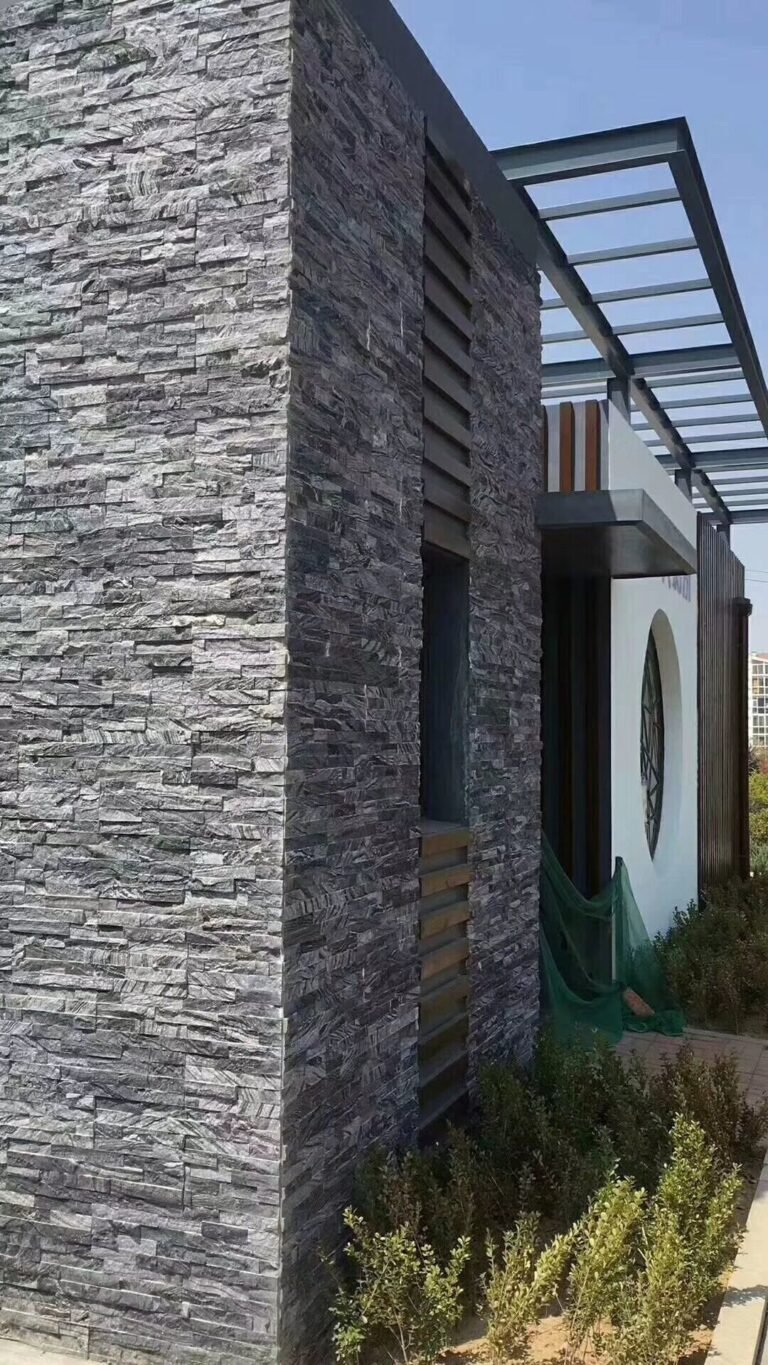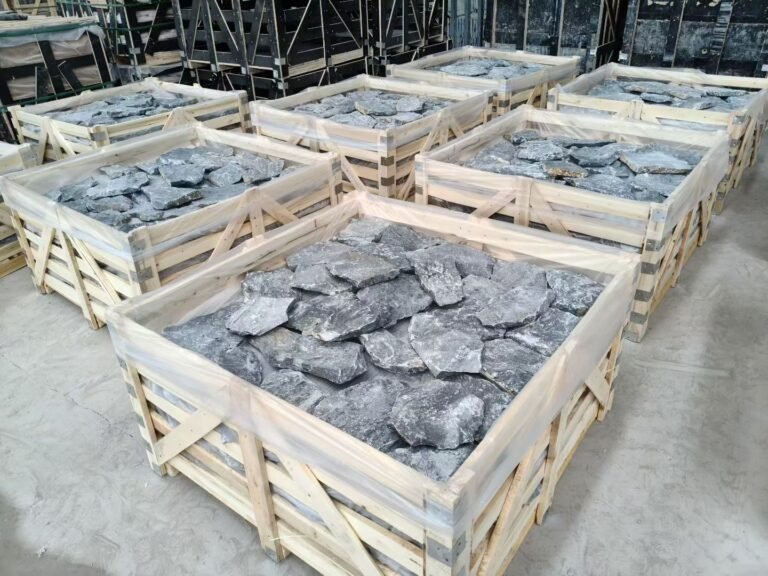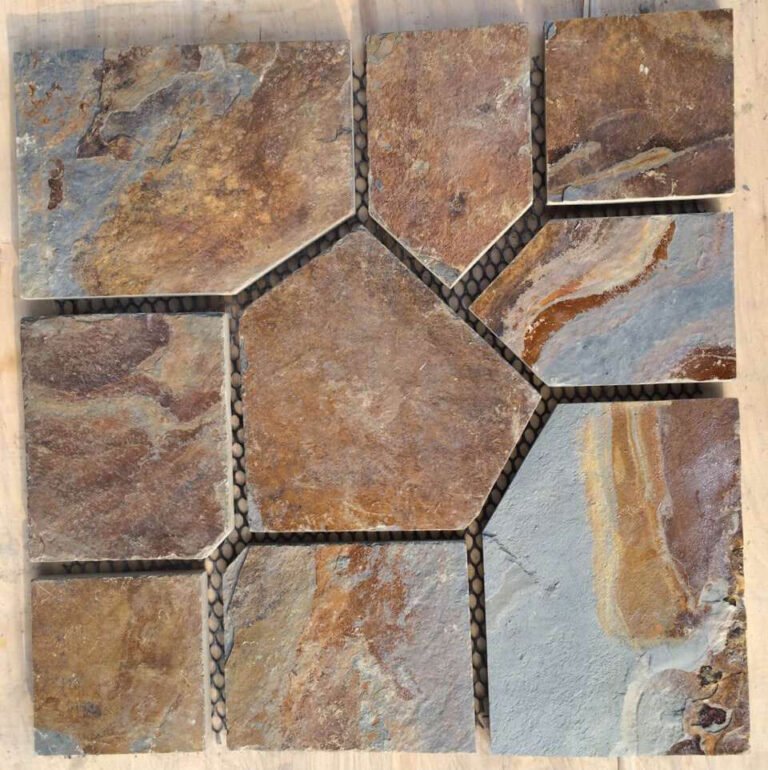
The media wall is the one surface in a living room that gets looked at every day, day and night. When the television is off, it is a wall; when the television is on, it is the stage behind every evening the room hosts. Stone veneer keeps earning a place in that role because it turns a flat, expectant wall into a textured focal point — and because thin stone veneer is thin enough to go around a television without burying the whole room in material.
This article walks five living room media wall directions that we see work repeatedly at real installs: full-wall stacked stone, ledgestone niches, split-face ashlar with shelving, two-tone fireplace combos, and grey minimalist strips. Each one names the stone format, the layout logic, and the honest trade-off, so you can match a direction to the room rather than to a showroom photo.
- Stone veneer gives a media wall real thickness and texture at a fraction of full-stone weight — formats from 36x10cm ledgestone strips to 15x60cm stacked panels.
- Plan the television before the stone: recessed niches, bracket blocking, and cable runs all need decisions that are expensive to make after install.
- Every design direction below names its best-fit room; force-fitting the wrong texture is the most common media wall mistake.
- Pair stone with wood, lighting, or a fireplace to keep a large wall from reading as one cold slab.
- Wholesale media wall orders start at one 20GP container, with L-corner kits and 1-3 day samples from the factory.
- Why Stone Veneer Works Behind the Screen
- Design 1: Full-Wall Stacked Stone with Floating Console
- Design 2: Ledgestone with a Recessed TV Niche
- Design 3: Split-Face Ashlar with Integrated Shelving
- Design 4: Two-Tone Stone with a Fireplace Focal
- Design 5: Minimalist Grey Ledger Strips
- How to Choose: Color, Format, and Lighting
- Installation and Fireplace Safety Notes
- FAQ
- Conclusion
Why Stone Veneer Works Behind the Screen
Three properties make thin stone veneer the right answer for media walls. First, thickness: the formats that matter here run from ultra-thin 36x10cm ledgestone strips to 15x60cm stacked panels, all thin enough to install over drywall framing without chasing wall set-backs. Second, texture: a cleft stone face catches side light the way paint cannot, so the wall stays interesting even when the screen is dark. Third, modularity: panels arrive as pre-sorted sheets and strips, so a change of mood — more grey, more rust, more white — is a board choice, not a structural commitment.
There is also a practical procurement reason. Because the stone is natural, every panel is slightly different, and batch-specific vein selection at the factory keeps one container reading as one wall. That consistency is exactly what a media wall needs: it is a large, uninterrupted surface where mismatched color blocks show instantly. If you are choosing between the panel families, the stacked panel vs individual stone comparison covers the labor and appearance trade-offs that drive most buying decisions.
Design 1: Full-Wall Stacked Stone with Floating Console
The idea: run stacked stone from floor to ceiling behind the television, and let the screen float on a wall that reads as a solid stone field.
Best for: larger living rooms and open-plan spaces where the media wall is the room’s main focal point. The texture gives the room a scale that plain drywall cannot carry.
How it works: Stacked stone panels in the standard 15x60cm / 15x55cm format lay in horizontal courses with a clean, linear rhythm. Because the panels are pre-fabricated and cover roughly the height of a wall in predictable courses, a full wall stays orderly — less puzzle-laying than individual stone loose strips.
The verdict: the most dramatic of the five, and the most forgiving to install, since panel courses keep everything plumb. The trade-off is weight perception: in a small room a full wall of stacked stone can feel heavy unless you break it with wood shelving, a pale color, or a generous floating console.
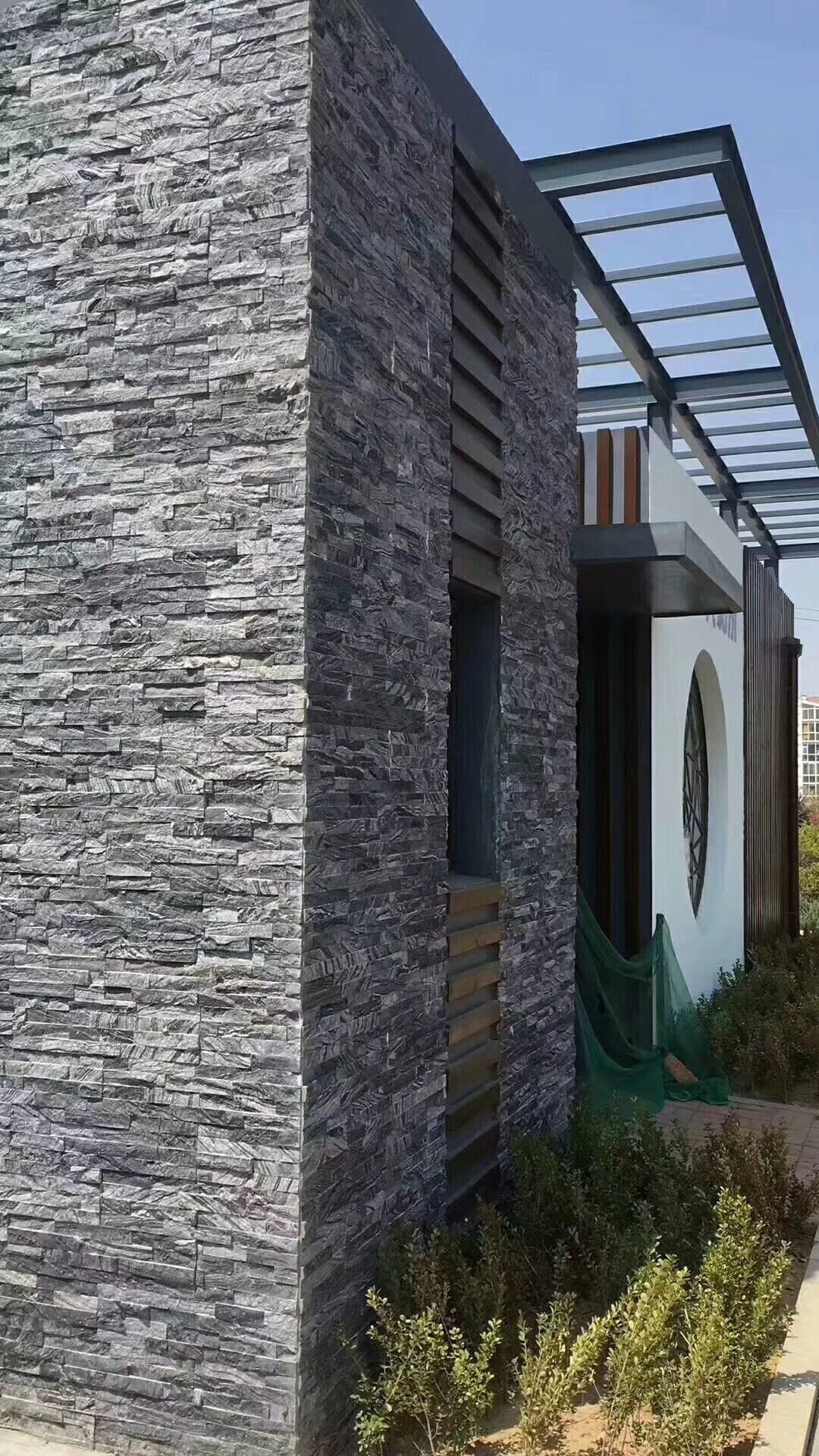
For a quieter alternative that still reads as full-wall, the loose thin stone veneer family lets you run a random-length linear wall with the same coverage logic. The eight feature wall directions article has more full-wall composition ideas.
Design 2: Ledgestone with a Recessed TV Niche
The idea: set the television into a recessed niche surrounded by ledgestone, so the screen sits flush with the stone face instead of sticking out in front of it.
Best for: modern interiors that want the “hidden television” look — the screen disappears into the wall when off, and the ledgestone reads as architecture.
How it works: frame the niche in advance, run the ledgestone around the opening, and use thin 36x10cm ledgestone strips so the surround stays slim and precise. Ledgestone’s horizontal, linear profile suits a horizontal screen, and the narrow strip format keeps the frame around the niche visually tight.
The verdict: this is the design where thin ledgestone earns its keep. A recessed niche needs a surround thin enough to hug the opening, and the ultra-thin format also keeps the wall depth minimal — important when the niche shares the wall with door casing or other trim. The trade-off: a niche locks the screen size and position permanently, so it only fits a room where you are sure the television does not need to move.
Niche edges are where installs go wrong, so order the wall with thin ledgestone panels that include matching corner or trim pieces; a factory that runs 60,000 m² of this format per month has the vein-matched stuff on hand.
Design 3: Split-Face Ashlar with Integrated Shelving
The idea: pair split-face ashlar panels with built-in open shelves, so the wall carries both the television and the room’s display storage in one composition.
Best for: families and media-heavy rooms — the type of wall that stores games, records, books, and the soundbar without a separate piece of furniture doing double duty.
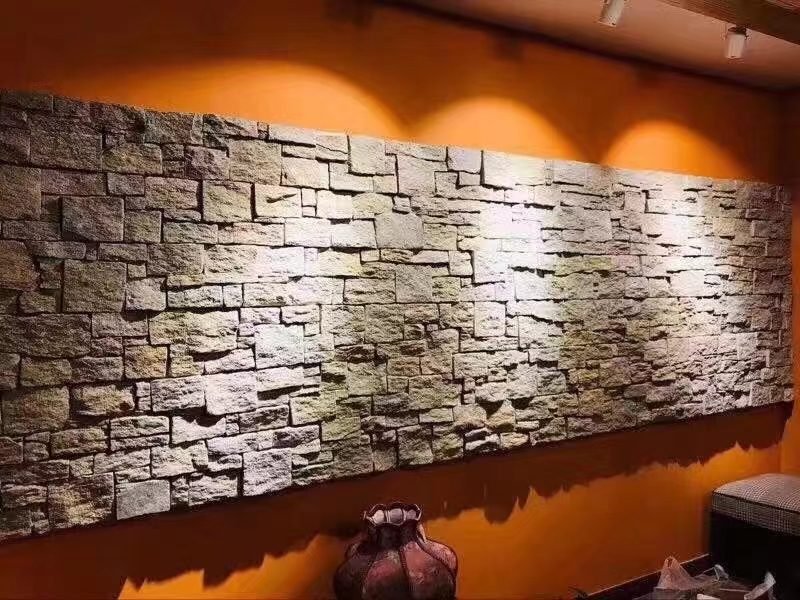
How it works: split-face panels give a taller, chunkier texture than ledger strips, and open shelving breaks the field into rhythm: stone, void, stone. Run the shelves in a contrasting material — wood, black steel, or white oak — so the texture of the stone gets framed rather than swallowed.
The verdict: the most useful design of the five, because it gives the stone a job beyond looking good. The trade-off is planning: shelf depths, cable paths, and the television position all have to be settled before the wall goes up. The feature wall designs for commercial spaces use the same stone-plus-storage logic at a bigger scale, useful if you are planning a hospitality or office media wall.
Design 4: Two-Tone Stone with a Fireplace Focal
The idea: combine a fireplace and media wall in one composition — a lighter stone field behind the screen paired with a darker stone surround or hearth around the firebox, or the reverse.
Best for: rooms where the media wall is also the winter gathering point; the fireplace gives the wall a reason to exist even when the screen is off.
How it works: choose one dominant stone for the field and one accent tone for the fireplace zone. Warm tones — rustic copper, bronze sparkle, multicolor blends — work opposite pale greys, and the two-tone move keeps a tall wall from reading as one flat color block. Because both zones are commonly available in the same factory line, you can keep vein consistency across the contrast.
The verdict: the most living-room-of-any-season option. The trade-off is the safety choreography: a fireplace and television share the same wall, so appliance clearances, heat deflection, and the TV’s mounting height all have to be settled together. The stone fireplace design guide sets out the hearth-and-mantel rules, and the fireplace-specific installation notes at the end of this article apply double here.
Design 5: Minimalist Grey Ledger Strips
The idea: a restrained wall of pale-to-mid grey ledgestone strips, hung as one clean field with no recess, no shelves, no fireplace — the wall as quiet instrument behind the screen.
Best for: small, modern, and rental-light rooms where the stone should cost less visual space than it takes up.
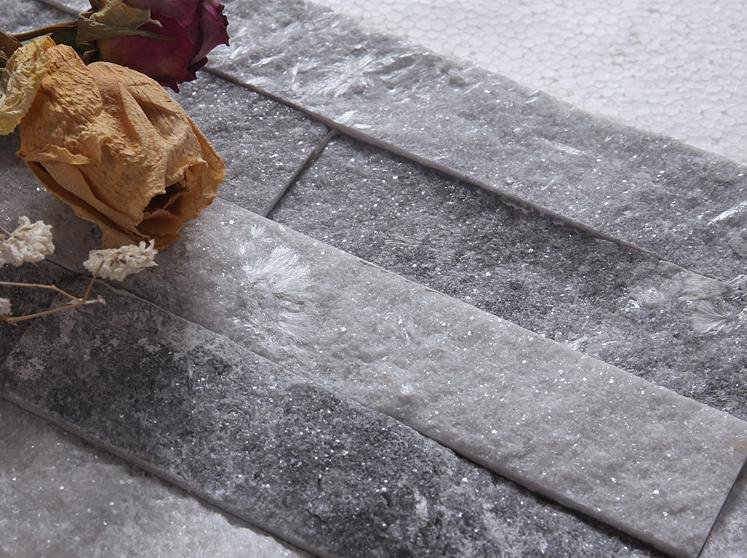
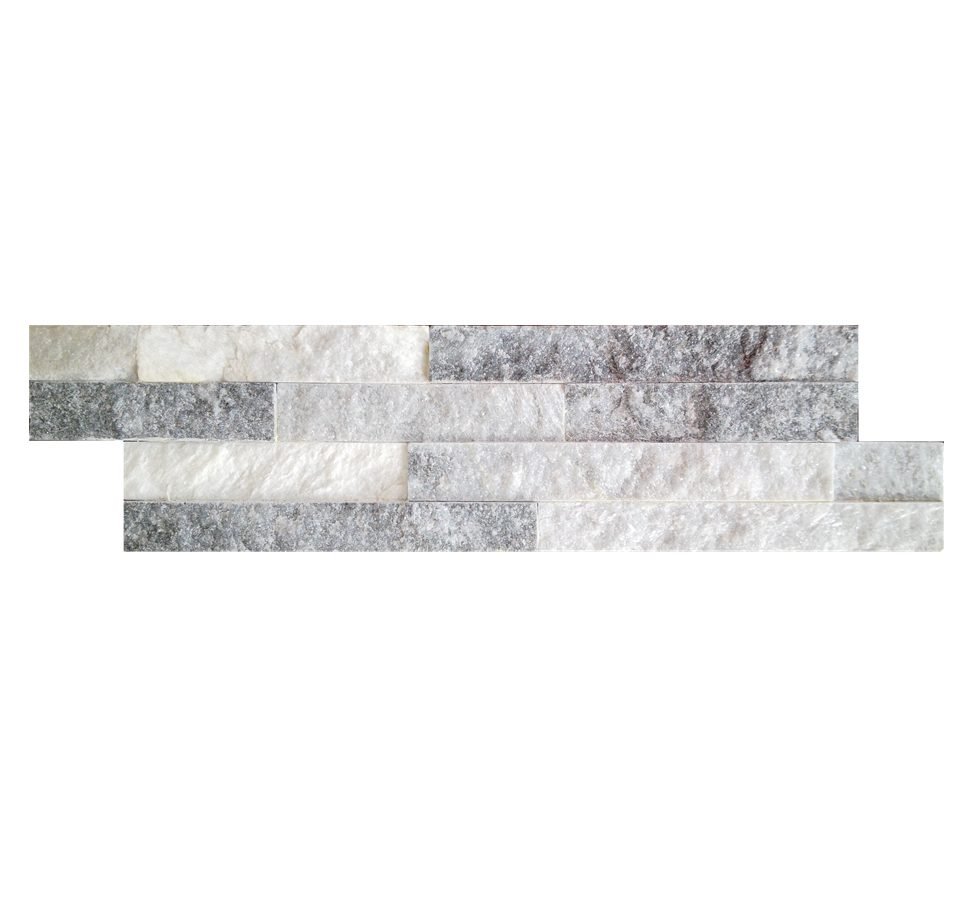
How it works: a single consistent grey tone — sparkle ice grey, rotia grey, or a charcoal range — laid in horizontal ledger strips. The narrow format and low contrast keep the eye on the screen, while the subtle shadow lines between strips give the wall just enough life. This is the design with the smallest physical footprint because there is no niche depth and no shelf projection.
The verdict: the safest and most repeatable choice. The trade-off: minimalism has no place to hide — batch color consistency is load-bearing. Grey quartzite mini-ledgestone in the 10x36cm format is the strip profile to spec, with matching details pieces so corners do not interrupt the line. The grey stone veneer color guide breaks down the tone differences that are hard to see on a phone screen.
How to Choose: Color, Format, and Lighting
Five directions is a lot of wall. Here is the fast filter.
| Design | Format | Best-fit room | Watch-out |
|---|---|---|---|
| Full-wall stacked stone | 15x60cm / 15x55cm panels | Large, open-plan | Can feel heavy in small rooms |
| Ledgestone recessed niche | 36x10cm ultra-thin strips | Modern, hidden-screen | Screen size locked in |
| Split-face with shelving | Split-face panels + shelving | Family, media-heavy | All storage heights decided up front |
| Two-tone with fireplace | Field + accent panels | Year-round gathering room | Heat and clearance choreography |
| Minimalist grey ledger | 10x36cm ledgestone, one tone | Small, modern | Color consistency critical |
Color rule of thumb: warm tones (rust, bronze, copper, multicolor) make a media wall feel cozier and work with wood floors and warm lights; pale grey and white tones make the room feel bigger and work where natural light is low. If the room already has a strong rug or sofa color, pick the stone second — it should frame the room, not compete with it.
Lighting decides whether the texture reads at night. A recessed LED strip washing up from below the console, or a cove light throwing across the cleft face, will show the stone’s micro-relief in the dark. The color options overview for stacked panels walks the tone families in more depth if you are still deciding.
Installation and Fireplace Safety Notes
Whatever direction you choose, the wall is only as good as what is behind it.
- Plan the television first. If the screen mounts on stone, install blocking through to the studs before the panels go on. Stone veneer carries weight along its face only through the substrate; the brackets must land on framing.
- Recessed niches and cable runs — frame, rough in cables, and confirm the niche depth against the television’s mounting bracket before the dressing coat.
- L-corners at the wall edge — prefabricated corners make the returns look continuous and cut on-site cutting work. Factory L-corner guide covers the measurements.
- Fireplace coexistence: follow the appliance manufacturer’s clearance for combustible and non-combustible materials, and keep the television out of the firebox’s radiant heat cone. Natural stone is A-class non-combustible, but the TV next to it is definitely not, and the exact clearances are set by the appliance and local code — not by the stone supplier.
- Avoid heat-logging TVs — a recessed niche without airflow can cook a television. Add venting if the screen is set into a tight pocket.
The stacked stone panel installation guide and the ledgestone fireplace install steps have the mortar, lath, and tight-joint procedures these walls depend on.
FAQ
What is a stone veneer media wall?
A stone veneer media wall is a living room accent wall behind a television, surfaced with thin natural stone panels — stacked stone, ledgestone strips, or split-face ashlar — that give the wall the look of full stone at a fraction of the weight and depth.
Can you mount a TV on a stone veneer wall?
Yes, if the bracket lands on framing. Install blocking through to the studs before the veneer goes on, and use a bracket long enough to reach it; the stone face itself is not a load-bearing surface for a hanging television.
What is the best stone veneer for a media wall?
It depends on the look: 15x60cm stacked panels for a full-height dramatic wall, 36x10cm ledgestone strips for a hidden-screen recessed niche, and split-face ashlar panels when the wall carries shelving. Grey and white quartzite-ledgestone suits minimalist rooms.
Is a stone media wall heavy?
Thin stone veneer is dramatically lighter than full natural stone — typical veneer formats are designed to install over standard framing with metal lath and mortar, or with panels on engineered substrates over a dressed surface.
How much stone do I need for a media wall?
Measure the wall width by the height the stone will run, subtract the television opening and any shelving voids, then add roughly 8-10 percent for cutting. A 4 m by 2.6 m wall is about 10.4 m², so a covered area near that plus waste is the number to quote.
Conclusion
A stone veneer media wall stops being decoration and starts being the room’s backbone in the five directions above: full-wall stacked stone for drama, ledgestone niches for hidden screens, split-face ashlar for storage, two-tone fireplaces for year-round gathering, and grey minimalist strips for small modern rooms. They all share one rule — plan the television, the cables, and the mounting before the first panel goes on.
Key takeaways:
- Choose the format by the room: stacked panels for scale, ledgestone strips for thin surrounds, ashlar for storage walls.
- Block the studs for the TV bracket and vent any recessed niche — stone can handle heat, electronics cannot.
- Keep color consistent with batch-matched panels from one source; vein control is what makes a big wall look intentional.
- Order a sample wall section before the container, and confirm corners and trims ship with the panels.
Start with a physical sample before you commit the wall’s palette. Contact Top Stone Panels for media wall samples in 1-3 days, or browse the stacked stone, thin ledgestone, and thin stone veneer lines that anchor these five designs.